Reptilia 110 - Bearded dragons

Article no: reptilia110

CHF 12.00

Stock: 0

Ready for dispatch in 1-3 days, delivery time 7 working days

Delivery between Wednesday, 30 September and Thursday, 1 October
Zahlungsarten
Product information "Reptilia 110 - Bearded dragons"

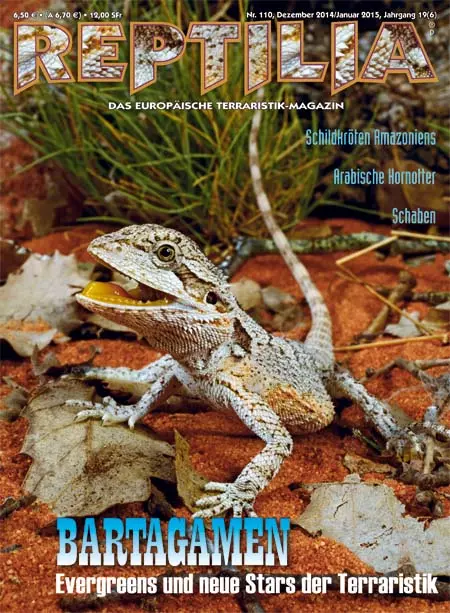
Reptilia 110 - Bearded dragons

Amazonian turtles
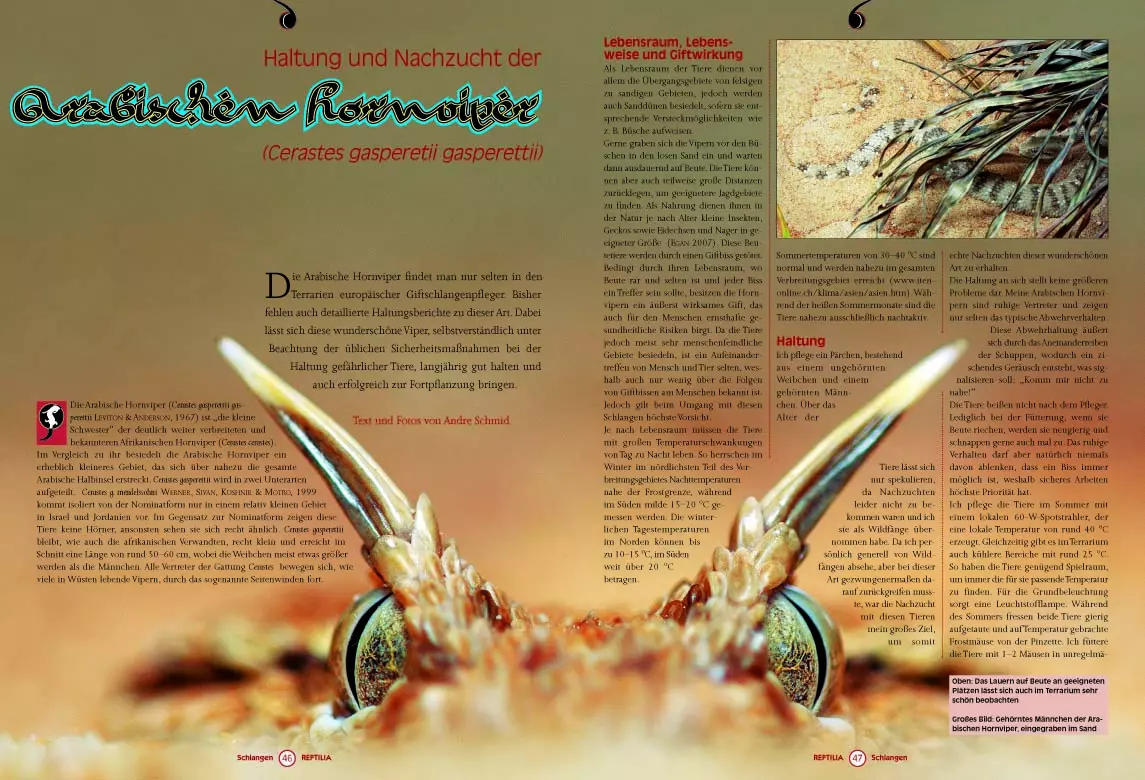
Arabian horned viper
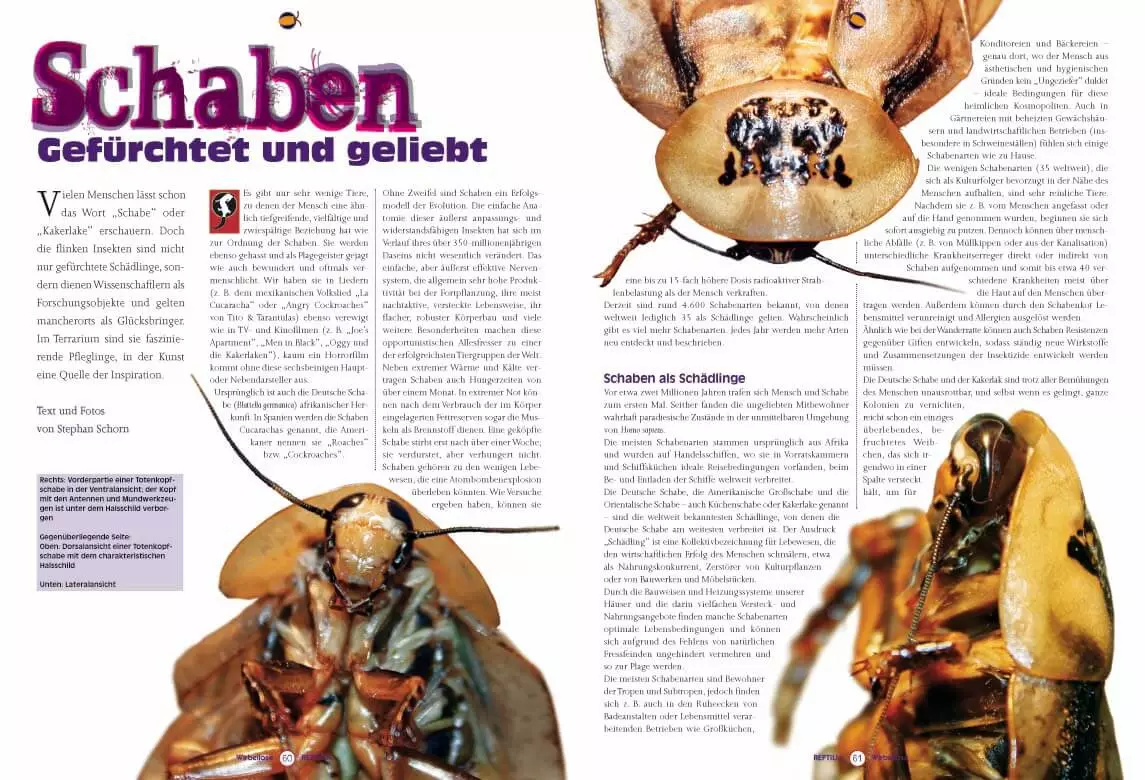
Cockroaches
 
Contents:

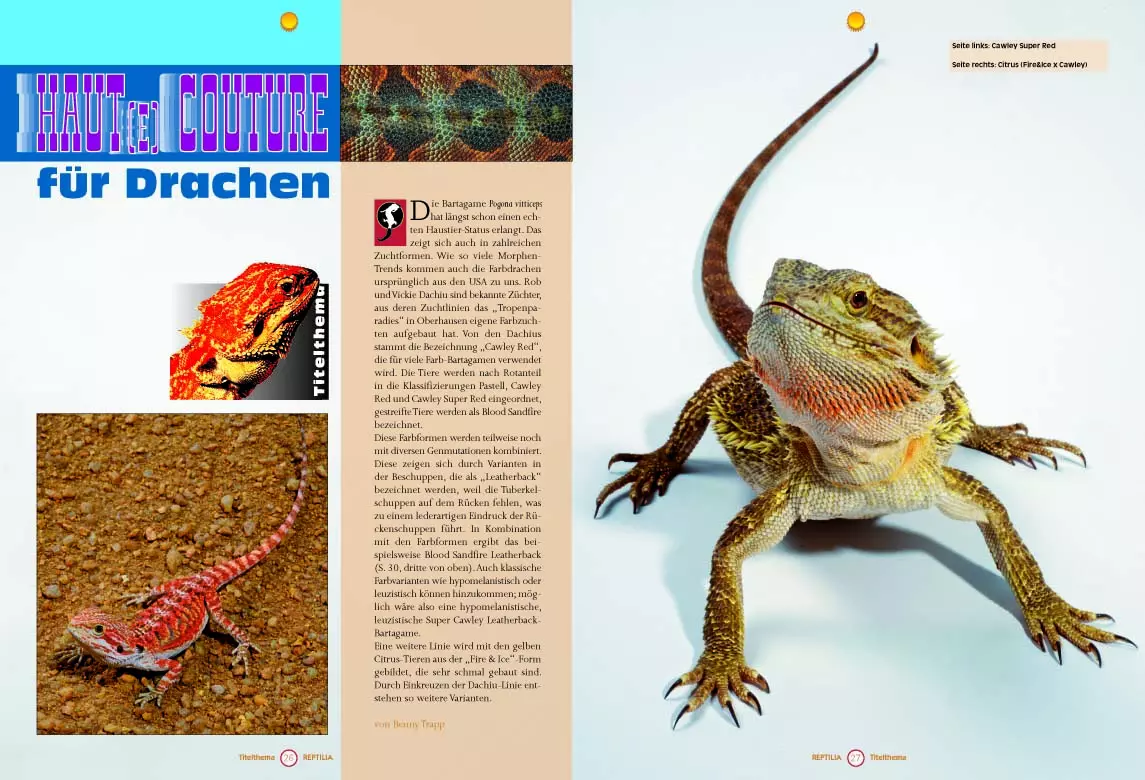
Cover story: Bearded dragons – evergreens and new stars of the terrarium hobby

Bearded dragons are still the most popular lizards for keeping in terrariums and can be recommended to beginners without hesitation. We provide the necessary tools and an initial overview of keeping these likeable creatures. But even “old hands” will get their money’s worth: we present new findings on life expectancy and introduce a “new” species of bearded dragon, Pogona minor, which is now making a strong push onto the market.

Editorial
Magazine
DATES

WESTERN HERP PERSPECTIVES
The business with fear
B. Love

Photo story
Still ideal terrarium animals even for beginners: bearded dragons
M. Rogner

Gallery
Skin(e) couture for dragons
B. Trapp

Keeping and breeding
On the potential life expectancy of bearded dragons (Pogona vitticeps)
P. M. Müller 

Keeping and breeding
A new dragon conquers the world: Pogona minor in the terrarium
H. Werning

Keeping and breeding
Keeping and breeding the Arabian horned viper (Cerastes gasperetii gasperetii)
A. Schmid

Herpetofauna
Encounters with turtles in the Venezuelan state of Amazonas. Part 1: Aquatic turtles
M. Heart

Reportage
Cockroaches. Feared and loved
S. Schorn

Service
Library
ALSO NEAR YOU

Journey
Of snakes, toads and crocodiles in the tropical “Top End” of Australia. A travel and study report
M. Mayer

PREVIEW

BRUTKASTEN
Cats in the cooking pot!
H. Werning

Composition
Feeding recommendation
Technical details
Size information

0 of 0 reviews

Give us a rating!

Share your experience with the product with other customers.


Suggested products

Handbook of food plants for tortoises and other reptiles
Handbook of forage plants 2nd revised editionMarion Minch is not only a successful breeder of diverse tortoises for many years, but also an excellent connoisseur of native wild herbs. She founded and runs samenkiste.de, which is well known to many tortoise keepers and nature lovers. Her name is inextricably linked with reptile care and species-appropriate nutrition for tortoises. Her handbook of food plants summarises the most important native food plants for herbivorous and omnivorous reptiles. She not only considers tortoises, but also iguanas, spiny-tailed dragons and even chameleons. From the basics of plant biology to native wild herbs to suitable food plants for hardy tropical reptile species, this comprehensive work provides the basis for species-appropriate keeping. In the expanded and supplemented 2nd edition, the plant section is divided according to flower colour. This makes it even easier to identify wild herbs. The work has also been supplemented with a wealth of additional information and many pictures.

CHF 46.50

Geckos
Geckos in the terrarium by Astrid FalkThe book offers a comprehensive introduction to geckos and their species-appropriate keeping in terrariums. It explains what you need to think about before buying a gecko and what preparations should be made. The book describes in detail how the terrarium is technically equipped and set up. The care of the animals, their special features and behaviour, their diet, reproduction and rearing of young animals are described, as well as diseases and husbandry problems with tried and tested suggestions for prevention and treatment. Individual gecko species that are particularly suitable for keeping and breeding in terrariums are portrayed in detail in the second part of the book.

CHF 28.50

Jumping spiders Phidippus, Hyllus, Plexippus
Book Jumping Spiders - Phidippus, Hyllus & Plexippus A guide to keeping jumping spiders of the genera Phidippus, Hyllus & Plexippus. Who can resist the charm of jumping spiders? The childlike appearance of their expressive face simply leaves no one cold! In addition, their behavior is extremely exciting to observe, their colors are bright and their requirements for species-appropriate keeping are very easy to meet. No wonder these likeable jumpers are all the rage! This volume in the "Species by Species" series describes in detail what to look out for when buying and keeping them, introduces the most commonly kept species and color forms and provides plenty of tips on how to keep them successfully - so you can be sure they will breed well! Species by Species introduces you to the books in this series, which present the most popular terrarium animals. Each volume offers you detailed, practical care instructions and all the information you need to successfully breed your animals. All important questions from the required tank size to terrarium set-up, technical equipment, species-appropriate nutrition and disease prevention are answered with numerous tricks and tips. Experienced, long-standing breeders reveal how you can encourage the animals to reproduce and raise healthy young. All this in full color, generously illustrated and attractively designed - just about your terrarium animal - species by species

CHF 23.90

Book Breeding live food yourself
Book "Grow your own live food" - The perfect guide for pet owners Discover practical and detailed instructions on how you can easily breed food for your reptiles, birds, fish or other animals yourself in the book "Breeding live food yourself". With valuable tips on various food insects, their care and breeding, you can save money and ensure a species-appropriate diet for your pets. Contents of the book: Step-by-step instructions for breeding feeder insects Information on the best types of food for reptiles, birds and fish Care instructions and breeding conditions for various live food species Tips for sustainable and cost-effective food production Why breed your own live food? Get healthy, fresh food for your animals Save money and reduce dependence on pet shops Promote the health and well-being of your animals with species-appropriate food Whether you are a beginner or an experienced pet owner, this book provides you with everything you need to successfully breed live food yourself.

CHF 46.50

Marginata 69 - New Guinea tortoises
Marginata 69 - New Guinea tortoises – the genus ElseyaCover storyThe unrecognised beauties: New Guinea tortoises (Andreas S. Hennig)My experiences with Branderhorst's New Guinea tortoise, Elseya (Elseya) branderhorsti (Ouwens, 1914) (Andreas S. Hennig)Keeping and breeding of Rhodin's New Guinea tortoise, Elseya (Hanwarachelys) rhodini Thomson, Amepou, Anamiato & Georges, 2015 (Andreas S. Hennig)PortraitGeoemyda spengleri, Chinese serrated tortoise (Andreas S. Hennig)ReportageMacrochelys temminckii – Experiences and impressions with vulture tortoises part 2 (Reiner Praschag)KeepingAn alternative to year-round keeping of the Egyptian tortoise in the terrarium – my experiences with seasonal outdoor keeping of Testudo kleinmanni (Ricarda Schramm)EtymologySawbacks and living maps part 4: Graptemys gibbonsi, Pascagoula humpback tortoise (Holger Vetter)Classifieds & animal placement

CHF 16.50

Marginata 8 - Panther tortoises
Marginata 8 - Panther tortoises Food plants 3Pakistani tortoisesEuropean pond turtles Contents: 2 EDITORIAL 3 READER LETTERS 5 MAGAZINE 9 DATES 10 PHOTO REPORTAGE Panther tortoises (Stigmochelys pardalis (Bell, 1828)) Hans - Dieter Philippen 16 BREEDING IN HUMAN CARE Breeding of the South African panther tortoise (Stigmochelys p. pardalis (Bell, 1828)) at Prague Zoo (Czech Republic) – Initial findings Petr Velensky & Natasha Velenska 21 BREEDING IN HUMAN CARE Biotopes of the panther tortoises (Stigmochelys pardalis (Bell, 1828)) as well as information on the care and breeding of the subspecies S. pardalis babcocki (Loveridge, 1935) Bernd Wolff 31 PORTRAIT Three-keeled black-bellied tortoise, (Melanochelys tricarinata) (Blyth, 1856) Hans - Dieter Philippen 36 FIELD RESEARCH Comments on the morphology, biology and distribution of the Baluch tortoise (Agrionemys horsfieldii baluchiorum (Annandale, 1906)) Muhammad Sharif Khan 43 REPORT Albino Marginated Tortoise (Testudo marginata) Hans - Dieter Philippen 44 REPORT Harriet – at 175 years old, probably the oldest vertebrate on earth Alf Jacob Nilsen 46 REPORT Food plants for tortoises part 3 Susanne Vogel 52 REPORTAGE The last pond turtles in the east of Slovakia? Stanislav Danko 58 BOOK TIP 61 CLASSIFIEDS 62 REGIONAL GUIDE 64 AGATHA MARGINATA

CHF 14.70

Draco 44 - Constrictor
Draco 44 - Giant SnakesContents:EditorialReproduction and breeding of giant snakesDieter SchmidtMating triggers in giant snakesMichaela & Marco SchulzeA few thoughts on feeding giant snakesErich Koerber & Christian BittnerPregnancy and confinement of boas - initial care of offspring and possible complicationsHermann & Erika StöcklAn aberrant form of Boa constrictor longicauda – the ‘Zeros’Hermann & Erika StöcklThe green tree python - success through natural breedingMichèl KroneisKeeping and breeding the Jungle carpet python, Morelia spilota cheyneiSteven Arth & Sandra BausKeeping and breeding the Woma, Aspidites ramsayiManuel Uhlhaas & Philipp Pohlscheid

CHF 18.40

Draco 43 - Day geckos
Draco 43 - Day geckos The genus Phelsuma Contents: Madagascar is the first place one associates with phelsumas – and indeed, the majority of known day gecko species are at home on this large island in the Indian Ocean, the fourth largest in the world. Two recognised Madagascar specialists, Philip-Sebastian Gehring and Frank Glaw, inform us about the "state of affairs" in the genus Phelsuma and provide exciting insights into current research topics on the "Darwin’s finches of the Indian Ocean", as the two biologists call them. Madagascar is also the focus of three further articles in this issue. Patrick and Stefanie Schönecker, who have been travelling to the island for many years, take us on an exciting search for phelsumas in Madagascar, introducing worthwhile destinations for beginners and advanced enthusiasts. Additionally, the authors discuss a day gecko in a detailed husbandry and breeding report – one that has risen from a "very little known Phelsuma species" to one of the most popular at present: the cross-striped day gecko, Phelsuma standingi. Hans-Peter Berghof, who has cared for phelsumas for many years, on the other hand, describes first experiences with an extremely rare and scarcely kept species from southern Madagascar: Phelsuma malamakibo. You can read this and much more in this issue. EditorialColourful diversity in modern light – day geckos of the genus PhelsumaPhilip-Sebastian Gehring & Frank Glaw Biology, husbandry and breeding of the cross-striped day gecko – Phelsuma standingi Methuen & Hewitt, 1913Patrick Schönecker & Stefanie Schönecker Colour-spraying beauties on dream islands – the day geckos of the Inner SeychellesMichael Wirth Day geckos of the island of MauritiusSilvia Budzinski & Ralph-M. Budzinski First experiences in the care and breeding of Phelsuma malamakibo Nussbaum, Raxworthy, Raselimananam & Ramanamanjato, 2000Hans-Peter Berghof The day geckos of the genus Phelsuma from the Comoros island of MayotteHans-Peter Berghof Phelsuma search in Madagascar – recommended destinations for nature experiences with day geckos Patrick Schönecker & Stefanie Schönecker Experiences in the care and reproduction of the small Seychelles day gecko, Phelsuma astriata astriata Tornier,1901Silvia Budzinski & Ralph-M. Budzinski

CHF 18.40

NTV - Scorpions
NTV - ScorpionsAll about the fascinating and exciting animals 143 pages 104 colour photos 9 drawings Paperback 2nd revised and expanded edition Authors Stephan Kallas, Rüdiger Lippe and Dieter Mahsberg Scorpions fascinate with their primal, bizarre appearance as well as their extremely exciting behaviour. This completely revised, redesigned edition of the classic book on scorpions, which has been expanded to include ten species portraits, describes the biology of the animals in detail and provides all the information terrarium keepers need for their safe, species-appropriate and successful care and breeding. In addition, the large number of species profiles provide specific husbandry advice on the scorpions presented

CHF 35.90

Reptilia 121 - More light - Terrarium lighting for sun-loving reptiles
Reptilia 121 - More lightTerrarium lighting for sun-loving reptiles CubaTerrarium for emerald monitor lizardsPeacock-eyed terrapinsContents:Cover story: More light! – Terrarium lighting for sun-loving reptilesThere are few topics that occupy terrarium keepers as much as the question of the right lighting, especially for sun-loving species. Which lamps give off the most light, how do I ensure that my animals get enough UV rays, what do I need to do to provide the ideal lighting? In our cover story, we take a closer look at this sometimes complex subject and analyse the suitability of HQI spotlights & co. as terrarium lamps. EditorialMAGAZINEDATES WESTERN HERP PERSPECTIVESA political view of today's terrarium challengesB. Love REPORTAGEThe right terrarium lighting for chameleons and other reptilesM. Grimm Terrarium technologyMetal halide lamps in terrariumsU. Geissel Keeping and breedingPeacock-eyed terrapins. The genus SacaliaM. Rogner ReportageA lifelong dream comes true. 40 years Reptile House UnteruhldingenA. Kwet TerraristicsA terrarium for the emerald monitor (Varanus prasinus)S. & S. Leber SERVICE Animals of our homelandThe little water frogR. Leptien ALSO NEAR YOU JourneyCuba all inclusive. Part 2: the centre and the westI. Kober PREVIEW BRUTKASTEN A day with ReinerJ. Bulian

CHF 12.00

Terraria 16 - Outdoor terrariums
Terraria 16 - Outdoor Terrariums New Species 2008 Socialisations Contents: Spring is approaching, the outdoor season begins. And what could be nicer for a terrarium keeper than to care for their charges outdoors in the warm season, under natural conditions in their own garden. Our cover story deals with the various facets ofoutdoor terrarium keeping. The well-known outdoor terrarium keeper Martin Hallmen presents, this time in detail, the planning and construction of an outdoor terrarium for tortoises. Werner Lantermann reports on experiences with keeping European lizards outdoors. And Helmut Kreyerhoff not only has wonderful outdoor terrariums for garter snakes, but also shows how to use them to take fantastic "nature photos" of the charges. Magazine - A reptile zoo including export station in Arusha, Tanzania - The beet-tailed viper gecko Teratolepis fasciata – or not? - The more similar, the safer – especially in the dry season … - It also works without … - Legal matters - Marketplace14 TERRAglobal Machu Picchu Maik DOBIEY Onan – Memories of a Legend Karl-Heinz SWITAKCover Story: Outdoor Terrarium Facilities18 Construction of an outdoor facility with greenhouse for year-round keeping of Greek tortoises (Testudo hermanni boettgeri) Martin HALLMEN30 First experiences with European lizards in the outdoor terrarium Werner & Yvonne LANTERMANN37 Naturalistic photography of garter snakes in the outdoor terrarium Helmut KREYERHOFF44 Cockroaches in the terrarium – a brief overview Alexandra CHEBOTAEVA50 Thoughts on and experiences with the socialisation of reptiles using a special case: corn snakes with leopard geckos Karin MANNS56 Frogs in the leaf litter – representatives of the genera Ischnocnema, Haddadus and Proceratophrys in Santa Teresa, Espírito Santo Weslei PERTEL, Rogério L. TEIXEIRA & Dennis RÖDDER62 Travel Zambia – in the heart of Africa Philipp WAGNER72 New Species List of amphibian and reptile species newly described in 2008 Axel KWET88 Near You91 Subscription & Service94 Preview96 Incubator Shit happens Heiko WERNING

CHF 12.00

Reptilia 13 - Scorpions
Reptilia 13 - ScorpionsZurich's giant tortoisesGreen tree pythonNamibiaContents:Page 2 - EditorialPage 3 - Letters to the editorPage 7 - MagazinePage 13 - DatesPage 16 - Western Herp Perspectives: Stock market stress for snakes, by B. LovePage 18 - Photo reportage: Scorpions, by I. CastellvíPage 24 - Report: Scorpions - Social predators? by D. MahsbergPage 29 - Keeping and breeding: Scorpions in the terrarium, by R. LippePage 34 - Comment: Scorpions - still waste products of the terrarium hobby, by H. SchiejokPage 35 - Report: Spanish scorpions, by I. CastellvíPage 39 - Travelogue: The herpetofauna of the Namib Desert, by M. GabrielPage 47 - Portrait and poster: Ophisaurus apodus, by B. TrappPage 52 - Keeping and breeding: Keeping and breeding Argentine large tejus Tupinambis merianae, by B. LangerwerfPage 57 - Care and Breeding: The Green Tree Python – a 'Juwel' in the terrarium, by P. SchuPage 62 - Report: Zurich's giant tortoises, by R. E. HoneggerPage 71 - Keeping and breeding: An ideal pet for the terrarium - Phyllobates Iugubris, the small leaf frog, by H. DivossenPage 74 - Report: Crocodiles and international species conservation policy - CITES and sustainable use, Part 2, by H. WerningPage 88 - Advice and actionPage 91 - LibraryPage 96 - Incubator: Bon Maman tells Godzilla, by H. Evers

CHF 9.80