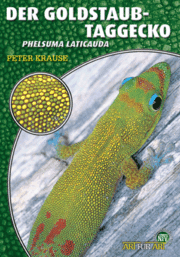
The gold dust day gecko

Article no: 978-3-937285-26-9

CHF 21.90

Stock: 0

Ready for dispatch in 1-3 days, delivery time 14 working days

Delivery between Friday, 4 September and Monday, 7 September
Zahlungsarten
Product information "The gold dust day gecko"

All about the gold-dusted day gecko by Peter Krause

  • 64 pages
  • Format: 14.8 x 21 cm
  • numerous colour photos
  • 3rd edition
  • Author Peter Krause
  • Publisher NTV

Contents:

The gold-dusted day gecko is one of the most commonly kept day gecko species. As it is also one of the most colourful species of the genus, even long-time phelsum keepers enjoy these animals time and time again. What also makes the gold-dust day gecko so popular and extremely suitable as a terrarium pet is its agile, lively nature and easy keeping.

  • Systematics and body structure
  • The fascinating biology: From the life of the gold dust day gecko
  • All information on species-appropriate keeping: from suitable terrariums to equipment and technology to feeding
  • Successful breeding: Mating stimulation, incubation of the eggs and rearing the young
  • Solutions to problems: How to avoid the most common mistakes in care and how to help sick animals
  • Brilliant photos
Composition
Feeding recommendation
Technical details
Size information

0 of 0 reviews

Give us a rating!

Share your experience with the product with other customers.


Suggested products

Handbook of food plants for tortoises and other reptiles
Handbook of forage plants 2nd revised editionMarion Minch is not only a successful breeder of diverse tortoises for many years, but also an excellent connoisseur of native wild herbs. She founded and runs samenkiste.de, which is well known to many tortoise keepers and nature lovers. Her name is inextricably linked with reptile care and species-appropriate nutrition for tortoises. Her handbook of food plants summarises the most important native food plants for herbivorous and omnivorous reptiles. She not only considers tortoises, but also iguanas, spiny-tailed dragons and even chameleons. From the basics of plant biology to native wild herbs to suitable food plants for hardy tropical reptile species, this comprehensive work provides the basis for species-appropriate keeping. In the expanded and supplemented 2nd edition, the plant section is divided according to flower colour. This makes it even easier to identify wild herbs. The work has also been supplemented with a wealth of additional information and many pictures.

CHF 46.50

Geckos
Geckos in the terrarium by Astrid FalkThe book offers a comprehensive introduction to geckos and their species-appropriate keeping in terrariums. It explains what you need to think about before buying a gecko and what preparations should be made. The book describes in detail how the terrarium is technically equipped and set up. The care of the animals, their special features and behaviour, their diet, reproduction and rearing of young animals are described, as well as diseases and husbandry problems with tried and tested suggestions for prevention and treatment. Individual gecko species that are particularly suitable for keeping and breeding in terrariums are portrayed in detail in the second part of the book.

CHF 28.50

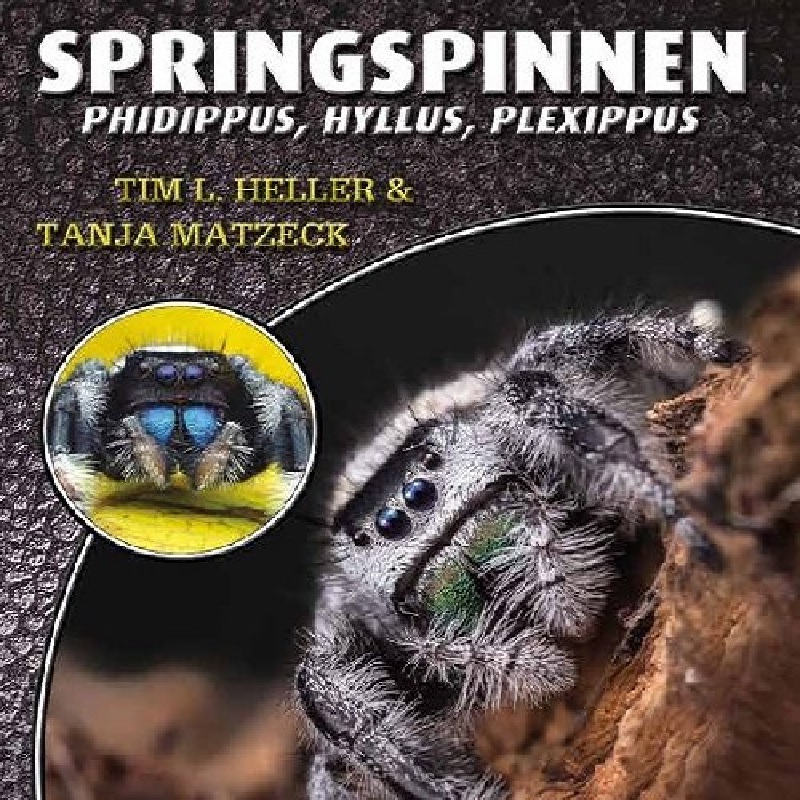
Jumping spiders Phidippus, Hyllus, Plexippus
Book Jumping Spiders - Phidippus, Hyllus & Plexippus A guide to keeping jumping spiders of the genera Phidippus, Hyllus & Plexippus. Who can resist the charm of jumping spiders? The childlike appearance of their expressive face simply leaves no one cold! In addition, their behavior is extremely exciting to observe, their colors are bright and their requirements for species-appropriate keeping are very easy to meet. No wonder these likeable jumpers are all the rage! This volume in the "Species by Species" series describes in detail what to look out for when buying and keeping them, introduces the most commonly kept species and color forms and provides plenty of tips on how to keep them successfully - so you can be sure they will breed well! Species by Species introduces you to the books in this series, which present the most popular terrarium animals. Each volume offers you detailed, practical care instructions and all the information you need to successfully breed your animals. All important questions from the required tank size to terrarium set-up, technical equipment, species-appropriate nutrition and disease prevention are answered with numerous tricks and tips. Experienced, long-standing breeders reveal how you can encourage the animals to reproduce and raise healthy young. All this in full color, generously illustrated and attractively designed - just about your terrarium animal - species by species

CHF 23.90

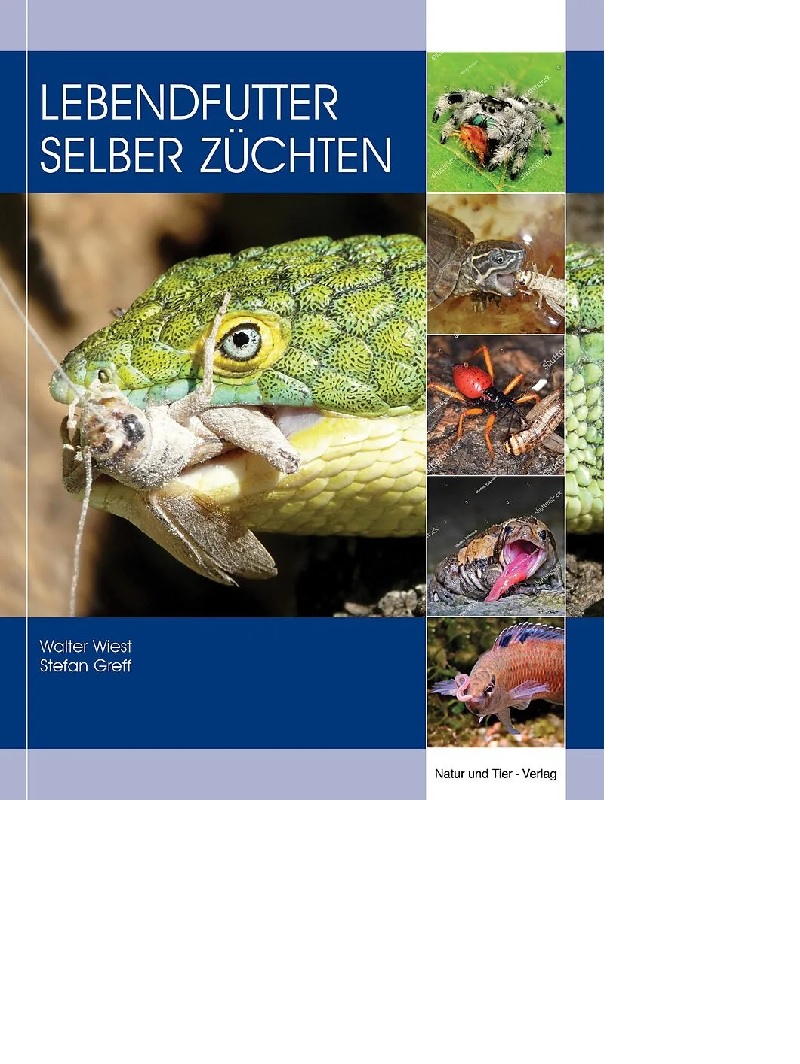
Book Breeding live food yourself
Book "Grow your own live food" - The perfect guide for pet owners Discover practical and detailed instructions on how you can easily breed food for your reptiles, birds, fish or other animals yourself in the book "Breeding live food yourself". With valuable tips on various food insects, their care and breeding, you can save money and ensure a species-appropriate diet for your pets. Contents of the book: Step-by-step instructions for breeding feeder insects Information on the best types of food for reptiles, birds and fish Care instructions and breeding conditions for various live food species Tips for sustainable and cost-effective food production Why breed your own live food? Get healthy, fresh food for your animals Save money and reduce dependence on pet shops Promote the health and well-being of your animals with species-appropriate food Whether you are a beginner or an experienced pet owner, this book provides you with everything you need to successfully breed live food yourself.

CHF 46.50

Marginata 69 - New Guinea tortoises
Marginata 69 - New Guinea tortoises – the genus ElseyaCover storyThe unrecognised beauties: New Guinea tortoises (Andreas S. Hennig)My experiences with Branderhorst's New Guinea tortoise, Elseya (Elseya) branderhorsti (Ouwens, 1914) (Andreas S. Hennig)Keeping and breeding of Rhodin's New Guinea tortoise, Elseya (Hanwarachelys) rhodini Thomson, Amepou, Anamiato & Georges, 2015 (Andreas S. Hennig)PortraitGeoemyda spengleri, Chinese serrated tortoise (Andreas S. Hennig)ReportageMacrochelys temminckii – Experiences and impressions with vulture tortoises part 2 (Reiner Praschag)KeepingAn alternative to year-round keeping of the Egyptian tortoise in the terrarium – my experiences with seasonal outdoor keeping of Testudo kleinmanni (Ricarda Schramm)EtymologySawbacks and living maps part 4: Graptemys gibbonsi, Pascagoula humpback tortoise (Holger Vetter)Classifieds & animal placement

CHF 16.50

The blue arrow frog
Tobias Eisenberg 64 Seiten 14,8 x 21 cm zahlreiche Farbfotos Inhalt: Der Blaue Pfeilgiftfrosch zählt mit Sicherheit zu den spektakulärsten Terrarientieren überhaupt. Aber nicht nur seine leuchtende Färbung und die stattliche Größe, sondern auch sein interessantes Verhalten machen ihn so attraktiv.Der erfahrene Terrarianer und auf Amphibien und Reptilien spezialisierte Tierarzt Tobias Eisenberg gibt Ihnen in diesem Ratgeber alle Informationen rund um die Lebensweise und die Terrarienhaltung der schönen Frösche und erklärt leicht nachvollziehbar, wie man die Tiere erfolgreich nachzüchtet und die Jungen aufzieht. Systematik und Körperbau Die faszinierende Biologie: Aus dem Leben der Blauen Pfeilgiftfrösche Alle Informationen zur artgerechten Haltung: Vom geeigneten Terrarium über Einrichtung und Technik bis hin zur Fütterung Erfolgreich nachzüchten: Paarungsstimulation, Aufzucht der Kaulquappen und Jungtiere Problemlösungen: Wie man die häufigsten Fehler bei der Pflege vermeidet, und wie man kranken Tieren helfen kann Brillante Fotos  

CHF 18.50

Reptilia 09 - Ornate tortoises
Reptilia 09 - Ornate tortoisesThe snake in the bibleGhost frogsCultural successorContents:Page 2 - EditorialPage 3 - Letters to the editorPage 5 - MagazinePage 16 - Western Herp Perspectives: The origin of our interest, by B. LovePage 18 - Photo reportage: Ornamental and decorative tortoises, by M. RognerPage 24 - Report: What to do with large tortoises, by E. MeierPage 28 - Keeping and breeding: Ornamental tortoises of the genus Chrysemys, by Dr U. ThiemePage 33 - Report: Reptiles and amphibians as cultural successors, by Dr M. GaulkePage 39 - Portrait and poster: Boa constrictor, by W. WenglerPage 43 - Keeping and breeding: Keeping and breeding ghost frogs, by C. ProyPage 48 - Keeping and breeding: Paleosuchus trigonatus, by K. HirschfeldPage 51 - Keeping and breeding: Peculiar care animals: Pug-headed iguanas, by U. SchlüterPage 55 - Herpetofauna: Salamanders of the family Plethodontidae in Costa Rica, by J. EhmckePage 59 - Herpetofauna and culture: The snake in the Bible, by Dr C. ThiedePage 68 – Reptilia on the road: La ferme aux crocodiles, by T. Wiegmann and V. SteffenPage 71 - LibraryPage 74 - Advice and actionPage 80 - Incubator: A chat from the sewing box, by Prof. Dr W. Böhme

CHF 9.80

Marginata 06 - Four-toed turtles
Marginata 06 - Four-toed tortoises Food plants 1Pallas's tortoiseJapanese soft-shelled turtle farm Contents: 2 EDITORIAL 3 MAGAZINE 7 READERS' LETTERS 8 DATES 10 PHOTO REPORTAGEThe four-toed tortoise Agrionemys horsfieldiiHans - Dieter Philippen 16 BREEDING IN HUMAN CAREKeeping and breeding of Agrionemys horsfieldii kazachstanica CHKHIKVADZE, 1988) in the indoor terrariumNatasa Velenská 22 FIELD RESEARCHExperiences in the turtle steppe of UzbekistanPetr Velensky 28 FIELD RESEARCHResearch into ecology and conservation status of Agrionemys horsfieldii in ChinaShi Haitao and Xe She-ke 31 PORTRAITBrazilian snake-necked tortoiseHydromedusa maximiliani (MIKAN, 1820)Hans - Dieter Philippen 35 REPORTAGEFood plants for tortoisesPart 1Susanne Vogel 42 SHORT REPORTLegendary giant soft-shelled turtle Rafetus leloii sightedJörg Adler 45 REPORTAGEA visit to a commercial soft-shelled turtle farm in JapanPetr Petras 48 FIELD RESEARCHTestudo greaca pallasi CHKHIKVADZE & BAKRADZE, 2002, a little-known tortoise from DagestanAlexander Pieh and Markus Auer 52 REPORTAGEObservations on the feeding behaviour of Podocnemis unifilisHans - Dieter Philippen 54 BREEDING IN HUMAN CAREEuropean first breeding of the spiny tortoise (Heosemys spinosa) Durrelll Wildlife Conservation Trust 60 RAT & TAT 60 BOOK TIP 61 CLASSIFIEDS 62 REGIONAL GUIDE 64 AGATHA MARGINATA

CHF 14.70

Reptilia 110 - Bearded dragons
Reptilia 110 - Bearded dragons Amazonian turtlesArabian horned viperCockroaches Contents:Cover story: Bearded dragons – evergreens and new stars of the terrarium hobbyBearded dragons are still the most popular lizards for keeping in terrariums and can be recommended to beginners without hesitation. We provide the necessary tools and an initial overview of keeping these likeable creatures. But even “old hands” will get their money’s worth: we present new findings on life expectancy and introduce a “new” species of bearded dragon, Pogona minor, which is now making a strong push onto the market. EditorialMagazineDATES WESTERN HERP PERSPECTIVESThe business with fearB. Love Photo storyStill ideal terrarium animals even for beginners: bearded dragonsM. Rogner GallerySkin(e) couture for dragonsB. Trapp Keeping and breedingOn the potential life expectancy of bearded dragons (Pogona vitticeps)P. M. Müller  Keeping and breedingA new dragon conquers the world: Pogona minor in the terrariumH. Werning Keeping and breedingKeeping and breeding the Arabian horned viper (Cerastes gasperetii gasperetii)A. Schmid HerpetofaunaEncounters with turtles in the Venezuelan state of Amazonas. Part 1: Aquatic turtlesM. Heart ReportageCockroaches. Feared and lovedS. Schorn ServiceLibraryALSO NEAR YOU JourneyOf snakes, toads and crocodiles in the tropical “Top End” of Australia. A travel and study reportM. Mayer PREVIEW BRUTKASTEN Cats in the cooking pot!H. Werning

CHF 12.00

Bugs No. 07 - Colorful bird spiders
Bugs No. 07 - Colourful tarantulas Journey: Thailand and BorneoCockroaches: Deropeltis paulinoiRearing substrate: Flake SoilContents:Tarantulas are gloomy grey-brown? Not at all! Many species display fantastic, bright colours! We introduce you to the most beautiful representatives and show you how to keep and breed them using two species as examples.The colourful theme continues: Necroscia annulipes, one of the most colourful stick insects currently to be found in our terrariums, is presented. You can find out everything you need to know to keep them successfully in this issue of Bugs.Our travel report takes you to the forests of Thailand, where, for example, a lot of brightly coloured praying mantises live.For cockroach lovers we have an article about Deropeltis paulinoi – the authors report in detail about the breeding of this impressive species.In addition, of course, a number of other exciting topics are addressed, so that there will be something for fans of various invertebrate groups. Plus practical tips and news from the world of science and much more ...Table of contents EditorialFacetsDatesFlown in Cover storyColourful splendour on eight legs Blue is beautiful! FledgedA journey to the praying mantises and grasshoppers of Thailand and Borneo Keeping & BreedingAbout the breeding of the privet hawk moth PracticeFlake Soil – Quality offensive in beetle breeding Keeping & BreedingTurquoise blue stick insect CultureCockroaches in the mouth Keeping & BreedingVelvet cockroaches – Noble terrarium inhabitants Kids CornerA chirping and chirping Book scorpionAlso in your neighbourhoodService & ImprintPreview

CHF 12.00

The Garter Snake
The garter snake - Everything you need to know about keeping and caring for Thamnophis species 192 pages 125 colour photos 8 graphics 30 distribution maps Format: 16.8 x 21.8 cm Authors Martin Hallmen, Jürgen Chlebowy Contents: Presented in a competent manner and always with a focus on practical terrarium management, all Thamnophis species, subspecies and captive-bred forms kept in terrarium keeping are presented. Specialised areas such as outdoor husbandry, selective breeding or garter snakes on the Internet are also discussed in depth. In addition, the reader receives in-depth background information on the versatile biology of these water snakes, and finally all scientifically recognised species are presented. An identification key, specially tailored to the needs of terrarium keepers and particularly easy to use, rounds off this outstanding and richly illustrated work. About the author: Martin Hallmen, studied Biology and Geography at the Johann Wolfgang von Goethe University in Frankfurt am Main; since 1987 teacher at the Franziskaner-Gymnasium Kreuzburg in Grosskrotzenburg near Hanau, head of the school vivarium and the school's biological Hymenoptera Centre there. Long-standing keeper and breeder of garter snakes, with experience in keeping over 20 species/subspecies/colour morphs of the genus Thamnophis. Author of more than 50 specialist articles on garter snakes in national and international journals, editor of the journal "The Garter Snake", the official publication of the European Garter Snake Association.Jürgen Chlebowy, carpenter, has been keeping and breeding over 50 Thamnophis species/subspecies/colour morphs since childhood. He enjoys international renown within the garter snake scene and has excellent contacts within Europe and to the USA/Canada, enabling him to regularly acquire spectacular imports and subsequently breed rare taxa. Author of numerous specialist articles and webmaster of "thamnophis.com".

CHF 32.50

Reptilia 64 - Web spiders
Reptilia 64 - Web spidersColour variations of the web pythonAmerican tree frogChamaeleo montiumContents: 2 EDITORIAL 3 MAGAZINE 12 DATES 16 WESTERN HERP PERSPECTIVESThe thing with the rubbishFrom B. Love 18 PHOTO REPORTAGEWeb spiders and their amazing survival strategiesBy F. Tomasinelli 26 REPORTAGEThe thousand uses of spider silk - from catching prey to brood careBy F. Tomasinelli 31 KEEPING AND REPRODUCTIONBiology and breeding of hunting spiders of the genus CupienniusBy F. Tomasinelli 35 ARACHNOFAUNAThe European Tarantulas - Introduction to the genus Lycosa in Western EuropeBy E. Biggi & F. Tomasinelli 40 TRAVELWestern emerald lizards(Lacerta bilineata) on the Atlantic coast in BrittanyBy W. & Y. Lantermann 44 TRAVELWith harpoon and machete - the hunt for moor caimans in the AmazonasBy P. Ulmer 51 PORTRAIT AND POSTERMacropisthodon flavicepsBy A. Gumprecht & D. Trautmann 56 KEEPING AND REPRODUCTIONThe breeding of the American tree frog, Hyla cinerea (SCHNEIDER 1799), in the aquarium of Cologne ZooBy K. van der Straeten, D. Karbe, S. Olbort & T. Ziegler 64 KEEPING AND REPRODUCTIONKeeping offspring of the mountain chameleon, Chamaeleo (Trioceros) montiumBy T. Paechl 70 REPORTAGEUnknown diversity: colour and pattern variations of the reticulated python(Python reticulatus)By K. Wöllner 75 HERPETOFAUNAHydromedusa maximiliani - The Brazilian snake-necked tortoiseBy F. L. Souza 80 HUSBANDRY AND REPRODUCTIONCare and breeding of the Peruvian leaf-fingered gecko Phyllodactylus reissi (PETERS 1862)By U. Schlüter 87 FAQ - FREQUENTLY ASKED QUESTIONSAnacondasBy L. Dirksen 94 LIBRARY 104 BRUTKASTENHigh mountain hallucinations, part 2By H. Werning

CHF 11.20