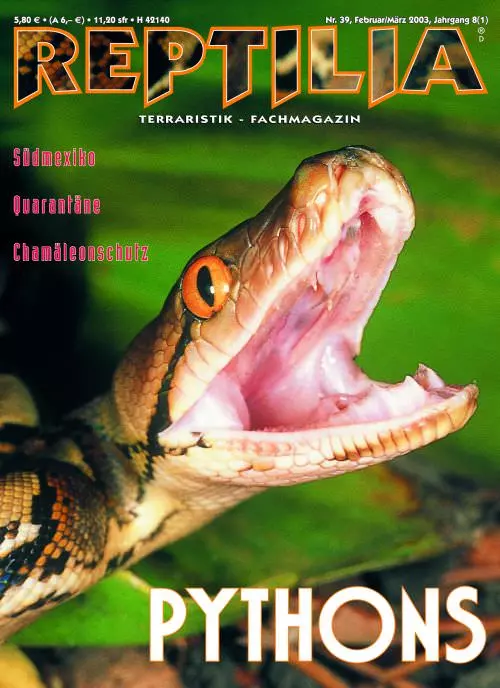
Reptilia 39 - Pythons

Article no: reptilia39

CHF 11.20

Stock: 0

Ready for dispatch in 1-3 days, delivery time 7 working days

Delivery between Tuesday, 20 October and Wednesday, 21 October
Zahlungsarten
Product information "Reptilia 39 - Pythons"

Reptilia 39 - Pythons

Southern Mexico
Quarantine
Chameleon protection

Contents:

    • 2 EDITORIAL
    • 3 READER LETTERS
    • 7 MAGAZINE
    • 17 DATES
    • 20 WESTERN HERP PERSPECTIVES
      New citizen
      by B. Love
    • 22 PHOTO REPORTAGE
      Pythons
      by V. Franz
    • 30 KEEPING AND BREEDING
      Morelia spilota – Keeping and breeding the Diamond Python by U. Amundsen
    • 34 KEEPING AND BREEDING
      Python anchietae – Keeping and breeding the Angolan Python by V. Franz
    • 37 REPORTAGE
      Fascination record snake. Part 1: From childhood dream to research by H. Bellosa
    • 40 TRAVEL
      Southern Mexico
      by S. Vogler
    • 51 PORTRAIT AND POSTER
      Geochelone nigra
      by H. Werning
    • 56 REPORTAGE
      Chamaeleo africanus in Europe: On a conservation project to preserve a reptile species threatened with extinction in Europe
      by B. Trapp
    • 62 Herpetofauna
      Contribution to the knowledge and first report on breeding the Vietnamese swamp turtle, Mauremys annamensis (SIEBENROCK, 1903)
      by M. Schilde
    • 66 REPORTAGE
      How should a professional quarantine be carried out?
      by T. Eisenberg
    • 72 REPORTAGE
      Fire-bellied newts of the genus Cynops. Part 2: Breeding and newt register
      by P. Bachhausen
    • 78 REPORTAGE
      With pencil and ink: treasures conjured on paper
      by R. Fenske
    • 88 CLASSIFIED ADS
    • 90 RAT & TAT
    • 93 LIBRARY
  • 104 GLOSS
    State guest in Chile
    by H. Werning
Composition
Feeding recommendation
Technical details
Size information

0 of 0 reviews

Give us a rating!

Share your experience with the product with other customers.


Customers also bought

Reptilia 98 - Sick due to reptiles? About the [alleged] danger of salmonella
Reptilia 98 - Sick due to reptiles? About the [alleged] danger of salmonella Drosophila food animal breedingUnderwoodisaurus miliiToad-headed tortoises Contents: EDITORIALMAGAZINEDATES AROUND THE WORLD IN 5 YEARSTree creepers instead of flowersA. Pachmann WESTERN HERP PERSPECTIVES   American herp problemsB. Love REPORTAGEAttack with bioweapons: Salmonella tactics against the terrarium hobbyH. Werning ReportageSalmonella in amphibians and reptiles. The importance of terrarium animals as sources of infection for humansF. Mutschmann HerpetofaunaPhrynops. The genus of toad-headed tortoisesH. - D. Philippen ReportageIn the land of the golden ants. Splendour to the end of the worldM. Freuding Keeping and breedingThe Australian fat-tailed gecko, Underwoodisaurus miliiS. Arth & S. Baus Terrarium practiceCursed in the kitchen, loved in the terrarium: fruit fliesU. Dost Terrarium displaysLa Ferme aux Crocodiles in Pierrelatte/Southern FranceM. Dieckmann LibraryTest runTips & tricksSUBSCRIPTION & SERVICEALSO NEAR YOU TRAVELDzanga-Sangha. In search of frogs between elephants and gorillasJ. M. Dehling & D. M. Dehling PREVIEWBRUTKASTENSpecies protection reportH. Werning

CHF 12.00

Reptilia 115 - Adders for the terrarium
Reptilia 115 - Adders for the Terrarium Flamingo flowersBlue rock iguanaNew Zealand mantis Contents:Cover story: Adders for the TerrariumAdders are among the classic and most popular terrarium animals. This extremely species-rich group of snakes has produced some of the most popular reptile pets. We provide an overview of the terrarium-relevant species and focus in particular on those adders suitable for beginners, among which there are many truly perfect pets. But we also have a real beauty for advanced keepers and report on the keeping and breeding of red bamboo adders. EditorialMAGAZINEDATES WESTERN HERP PERSPECTIVESThe dark sideB. Love FotostoryEvergreens in the terrarium: AddersK. Kunz PracticeAdders. Species and tips for beginnersD. Schmidt Husbandry and breedingThai bamboo adders (Oreocryptophis porphyraceus coxi) in the terrariumM. Hornig Husbandry and breedingThe New Zealand mantis, Orthodera novaezealandiae. A praying mantis from the other side of the worldB. Fuhrmann & C. Sehorz Husbandry and breedingThe keeping and breeding of the Blue rock iguana (Petrosaurus thalassinus) in the terrariumJ. Schulz PlantsArum family in the terrarium. Part 3: The genus AnthuriumB. Akeret Husbandry and breedingFirst ever natural rearing of the critically endangered Philippine crocodiles (Crocodylus mindorensis) in Europe successfulT. Ziegler, A. Rauhaus & C. Niggemann, AG Zoological Garden Cologne Animals of our homelandThe fire salamanderR. Leptien ALSO IN YOUR AREA Service TravelOn an excursion through the Colombian Amazon rainforestJ. Cañas-Orozco PREVIEW INCUBATOR Attention – more cat contentH. Werning

CHF 12.00

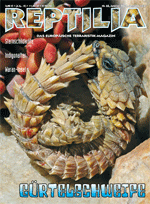
Reptilia 65 - Girdled lizards
Reptilia 65 - Girdled TailStar tortoiseIndigo snakeMonitor IslandContents: 2 EDITORIAL 3 READER LETTERS 4 MAGAZINE 12 DATES 14 WESTERN HERP PERSPECTIVESA country tripFrom B. Love 16 PHOTO REPORTAGEBelt-tailed lizards – the genus CordylusBy H. Schwier 24 KEEPING AND REPRODUCTIONDwarf Belted Tails: keeping and Breeding of Cordylus tropidosternum(Cope, 1869)From P. Fritz 32 KEEPING AND REPRODUCTIONCordylus mossambicus FitzSimons, 1958A persistent and interesting keeperFrom H.-P. Berghof 40 HERPETOFAUNAThe giant belted skink Cordylus giganteus – unique and mysterious at the same timeFrom H. Schwier 45 REPORTAGEThe radiated tortoise of Madagascar -an armoured beautyFrom J. Hammer 51 PORTRAIT AND POSTERPhilothamnus punctatusFrom M. Dobiey 56 KEEPING AND REPRODUCTIONNewts of the genus Paramesotriton- The Vietnamese and Laotian warty newtsFrom P. Bachhausen 64 KEEPING AND REPRODUCTIONDrymarchon couperi – the Eastern Indigo SnakeFrom N. Miele 72 TRAVELThe island of the monitor lizardsFrom A. Gumprecht 88 FAQ - FREQUENTLY ASKED QUESTIONSCorn snakesBy K. Kunz 92 REPORTAGESerpentário SanmaruFrom M. Junge 95 LIBRARY 104 BRUTKASTEN Chicken heart, be braveBy H. Werning

CHF 11.20

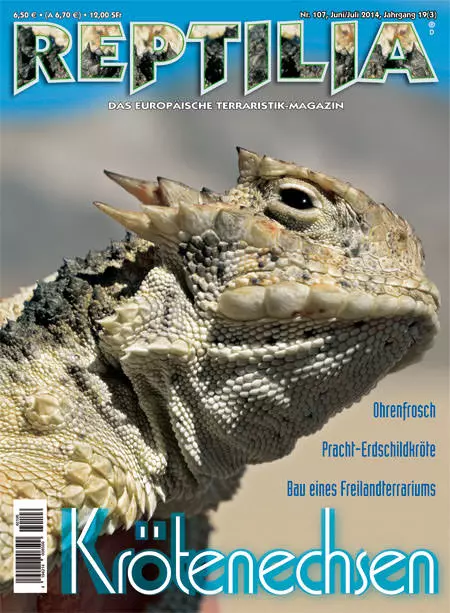
Reptilia 107 - Toad lizards
Reptilia 107 Toad lizards Eared frogMagnificent tortoiseConstruction of an outdoor terrarium Contents:Cover story: Toad lizardsThe bizarre toad lizards of the genus Phrynosoma are among the almost legendary terrarium animals. Every reptile lover is probably enchanted by the appearance of these small North American iguanas, but they have a reputation for being impossible to keep. However, more and more dedicated terrarium keepers are succeeding not only in keeping these food specialists for many years, but also in breeding them successfully. We provide an overview of the genus, discuss the problem of feeding these animals and provide two examples of successful keeping and breeding. EditorialMAGAZINEDATES WESTERN HERP PERSPECTIVESThe invisible ark B. Love PHOTOSTORYToad lizards – a (very good) freak of natureH. Werning REPORTAGEConsiderations on the diet of toad lizardsB. Fabian KEEPING AND BREEDINGKeeping and breeding the giant toad lizard (Phrynosoma asio) in the terrariumK. Haase KEEPINGPhrynosoma orbiculare – a toad lizard  from the highlands in captive careK. Haase KEEPINGThe eared frog, a little-known guest in the terrariumP. Janzen KEEPING AND BREEDINGSilent observers – on the lifestyle and keeping of the Central American magnificent tortoiseL. Spinner PracticeConstruction of an outdoor enclosure for emerald lizardsM. Herz TEST RUNSuccessful combination of terrarium and rackK. Kunz ANIMALS OF OUR HOMEThe spadefoot toadR. Leptien LIBRARYSERVICEALSO NEAR YOU TRAVELTerra incognita in the middle of Madagascar's rice fields – the herpetofauna of BetaolanaS. Wolf PREVIEW BRUTKASTEN Tangimangi – or: Take what you need!M. Zawadzki 

CHF 12.00

Reptilia 06 - Mimicry - The perfect deception
Reptilia 06 - Mimicry - The perfect illusion MaltaBuilding polystyrene terrariumsNutrition of tortoises Contents: Page 2 - EditorialPage 3 - Letters to the editorPage 5 - MagazinePage 11 - DatesPage 14 - Western Herp Perspectives: The Queen of Snakes, by B. LovePage 16 - Photo reportage: Mimicry, by L. AissefairePage 24 - Report: Mimicry - Saving energy through camouflage, by Dr M. GaulkePage 32 - Keeping and breeding: Like a leaf in the wind. The walking leaf Phyllum celebicum in the terrarium, by H. FischerPage 38 - Travelogue: Temples, disc-tongued frogs and reptiles – impressions of a trip to Malta, by U. SchlüterPage 43 - Photographic profile: Reptiles and amphibians in the Du Tsingy de Bamaraha nature reserve (West Madagascar), by G. Hallmann, E. Hoffmann, J. Krüger, P. Schlagböhmer and G. TrautmannPage 47 - Portrait and poster: Gastrotheca riobambae, by H. WerningPage 51 - Report: Nutrition of European tortoises, Part 2, by Dr C. DennertPage 59 - Keeping and breeding: A mini-crocodile for the paludarium – The keeled skink Tropidophorus grayi, by U. DostPage 64 - Terrarium practice: Styrofoam terrariums, by D. HasselbergPage 69 - Herpetofauna: The Bismarck Dwarf Python Liasis boa – keeping and breeding a colourful giant snake, by V. FranzPage 72 - Herpetology and culture: Snakes go to school – Part 2, by M. HallmenPage 81 - Reptilia on the road: Zoo Berlin-Friedrichsfelde, by H. WerningPage 84 - Advice and HelpPage 90 - LibraryPage 96 - Satire: Something different, by A. Scheffler

CHF 9.80

Reptilia 49 - Food animal breeding
Reptilia 49 - Food animal breedingScorpion crust lizardSpotted pythonChinese mountain dragonContents: 2 EDITORIAL 4 READER LETTERS 5 MAGAZINE 14 DATES 18 WESTERN HERP PERSPECTIVESHurricane Sale in Floridaby B. Love 20 PHOTO REPORTAGE Breeding food animals yourself - a problem?by F. Bruse & H. Werning 27 REPORTAGEEfficient and productive cricket breeding by F. Bruse 33 REPORTAGEBreeding the chocolate cockroach (Shellfordella tartara) by F. Bruse 36 REPORTAGEA simple Drosophila breeding project by F. Bruse 40 HERPETOFAUNANotes on the Motagua lizard (Cnemidophorus motaguae) by U. Schlüter 43 TRAVELHerpetological observations and more from Gambia by U. Thieme 51 PORTRAIT AND POSTERGeoclemys hamiltoniby H. - D. Philippen 56 KEEPING AND BREEDINGKeeping and Breeding the Chinese Mountain Agame (Japalura splendida) by H. Schradin 68 HERPETOFAUNADendrobates pumilioThe strawberry frog on the Bocas Islands by B. Schwarz 72 KEEPING AND BREEDING The black Mexican chain snake (Lampropeltis getula nigrita in the terrariumby M. Thums 79 REPORTAGEAntaresia maculosa (PETERS, 1873)Spotted pythonby D. Hasselberg 85 CLASSIFIED ADS 90 RAT & TAT 93 LIBRARY 104 GLOSSESIn search of Uracentron azureumPart 1by H. Werning

CHF 11.20

Suggested products

Handbook of food plants for tortoises and other reptiles
Handbook of forage plants 2nd revised editionMarion Minch is not only a successful breeder of diverse tortoises for many years, but also an excellent connoisseur of native wild herbs. She founded and runs samenkiste.de, which is well known to many tortoise keepers and nature lovers. Her name is inextricably linked with reptile care and species-appropriate nutrition for tortoises. Her handbook of food plants summarises the most important native food plants for herbivorous and omnivorous reptiles. She not only considers tortoises, but also iguanas, spiny-tailed dragons and even chameleons. From the basics of plant biology to native wild herbs to suitable food plants for hardy tropical reptile species, this comprehensive work provides the basis for species-appropriate keeping. In the expanded and supplemented 2nd edition, the plant section is divided according to flower colour. This makes it even easier to identify wild herbs. The work has also been supplemented with a wealth of additional information and many pictures.

CHF 46.50

Geckos
Geckos in the terrarium by Astrid FalkThe book offers a comprehensive introduction to geckos and their species-appropriate keeping in terrariums. It explains what you need to think about before buying a gecko and what preparations should be made. The book describes in detail how the terrarium is technically equipped and set up. The care of the animals, their special features and behaviour, their diet, reproduction and rearing of young animals are described, as well as diseases and husbandry problems with tried and tested suggestions for prevention and treatment. Individual gecko species that are particularly suitable for keeping and breeding in terrariums are portrayed in detail in the second part of the book.

CHF 28.50

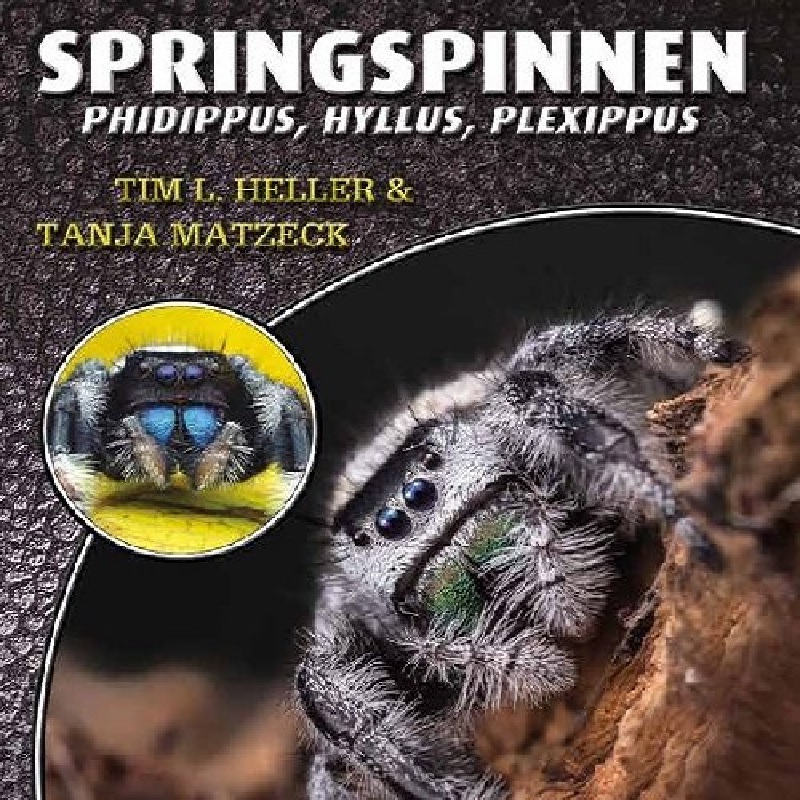
Jumping spiders Phidippus, Hyllus, Plexippus
Book Jumping Spiders - Phidippus, Hyllus & Plexippus A guide to keeping jumping spiders of the genera Phidippus, Hyllus & Plexippus. Who can resist the charm of jumping spiders? The childlike appearance of their expressive face simply leaves no one cold! In addition, their behavior is extremely exciting to observe, their colors are bright and their requirements for species-appropriate keeping are very easy to meet. No wonder these likeable jumpers are all the rage! This volume in the "Species by Species" series describes in detail what to look out for when buying and keeping them, introduces the most commonly kept species and color forms and provides plenty of tips on how to keep them successfully - so you can be sure they will breed well! Species by Species introduces you to the books in this series, which present the most popular terrarium animals. Each volume offers you detailed, practical care instructions and all the information you need to successfully breed your animals. All important questions from the required tank size to terrarium set-up, technical equipment, species-appropriate nutrition and disease prevention are answered with numerous tricks and tips. Experienced, long-standing breeders reveal how you can encourage the animals to reproduce and raise healthy young. All this in full color, generously illustrated and attractively designed - just about your terrarium animal - species by species

CHF 23.90

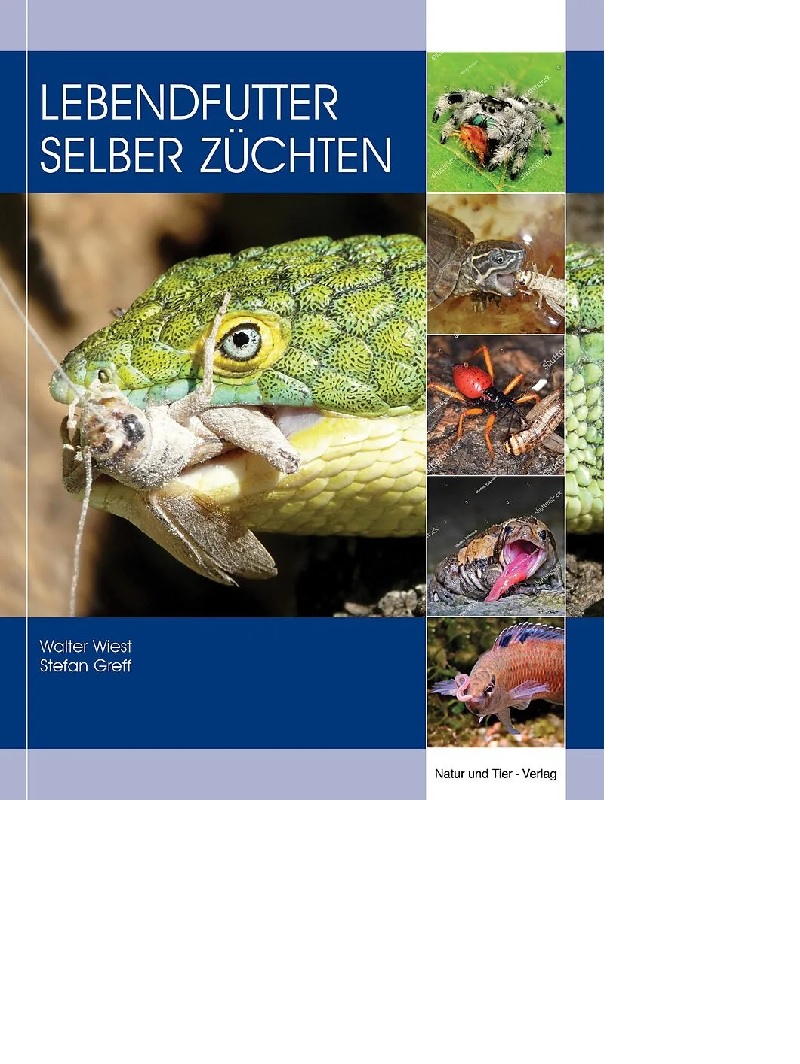
Book Breeding live food yourself
Book "Grow your own live food" - The perfect guide for pet owners Discover practical and detailed instructions on how you can easily breed food for your reptiles, birds, fish or other animals yourself in the book "Breeding live food yourself". With valuable tips on various food insects, their care and breeding, you can save money and ensure a species-appropriate diet for your pets. Contents of the book: Step-by-step instructions for breeding feeder insects Information on the best types of food for reptiles, birds and fish Care instructions and breeding conditions for various live food species Tips for sustainable and cost-effective food production Why breed your own live food? Get healthy, fresh food for your animals Save money and reduce dependence on pet shops Promote the health and well-being of your animals with species-appropriate food Whether you are a beginner or an experienced pet owner, this book provides you with everything you need to successfully breed live food yourself.

CHF 46.50

Marginata 69 - New Guinea tortoises
Marginata 69 - New Guinea tortoises – the genus ElseyaCover storyThe unrecognised beauties: New Guinea tortoises (Andreas S. Hennig)My experiences with Branderhorst's New Guinea tortoise, Elseya (Elseya) branderhorsti (Ouwens, 1914) (Andreas S. Hennig)Keeping and breeding of Rhodin's New Guinea tortoise, Elseya (Hanwarachelys) rhodini Thomson, Amepou, Anamiato & Georges, 2015 (Andreas S. Hennig)PortraitGeoemyda spengleri, Chinese serrated tortoise (Andreas S. Hennig)ReportageMacrochelys temminckii – Experiences and impressions with vulture tortoises part 2 (Reiner Praschag)KeepingAn alternative to year-round keeping of the Egyptian tortoise in the terrarium – my experiences with seasonal outdoor keeping of Testudo kleinmanni (Ricarda Schramm)EtymologySawbacks and living maps part 4: Graptemys gibbonsi, Pascagoula humpback tortoise (Holger Vetter)Classifieds & animal placement

CHF 16.50

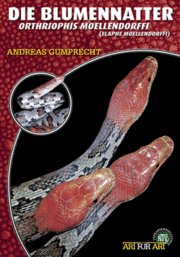
The flower snake
All about the flower snake 64 pages Format: 14.8 x 21 cm numerous colour photos Author Andreas Gumprecht Contents: A large proportion of the animal imports that reach us every year from China consist of various climbing snakes. The majority of these are the flower snakes presented in this book in the "Species by Species" series.Despite this, reports of the successful keeping and breeding of this attractive snake have largely failed to materialise, although from a purely statistical point of view, the flower snake should by now be firmly established in the terrarium hobby.In this guidebook, long-time terrarium keeper and snake expert Andreas Gumprecht shares his positive experiences with the care and reproduction of the flower snake with the reader. Systematics and body structure The fascinating biology: From the life of the flower snake All information on species-appropriate keeping: from suitable terrariums to equipment and technology to feeding Successful breeding: Mating stimulation, incubation of the eggs and rearing the young Solutions to problems: How to avoid the most common mistakes in care and how to help sick animals Brilliant photos

CHF 18.50

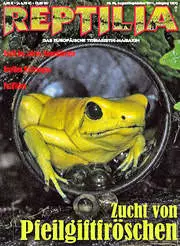
Reptilia 90 - Breeding of poison dart frogs
Reptilia 90 - Breeding of poison dart frogs Reptil des Jahres: MauereidechseSchmuckschildkrötenPazifikboa Inhalt: EditorialMAGAZINTERMINEWESTERN HERP PERSPECTIVESSweet (New) Home ArizonaB. LoveFOTOSTORYDie Zucht von PfeilgiftfröschenM. Wirth &  F. RiedelHaltung und Nachzucht Haltung und Nachzucht des Schrecklichen Pfeilgiftfroschs, Phyllobates terribilis M. Wirth & F. RiedelNACHZUCHTDas Einmaleins der QuappenaufzuchtM. SchmidtREISE Eine herbstliche Stippvisite in MontenegroB. TrappPORTRÄT UND POSTERPhrynosoma platyrhinos. WüstenkrötenechseH. WerningHerpetofaunaAuf dem Weg ins All. Die Welt der Buchstaben-Schmuckschildkröte, Trachemys scripta Teil 1A. S. HennigHerpetofaunaDie Mauereidechse – Reptil des Jahres 2011U. Schulte, A. Kwet & A. NöllertHALTUNG UND ZUCHTCandoia paulsoni paulsoni: Haltung und Nachzucht der Pazifikboa M. Borer & L. MeierREPORTAGEMit Schülerpraktikanten in der Iguana-Station auf der Insel Utila, Honduras Teil 1: Eine neue Herausforderung M. HallmenBibliothekABO & SERVICEAUCH IN IHRER NÄHEVORSCHAUBRUTKASTEN Klapperschlangen und Mexikaner Teil 1 H. Werning  

CHF 12.00

Reptilia 81 - Hognose snakes
Reptilia 81 - Hook-nosed snakes Samar cobraPantanal flatback turtleGalápagos Contents: The hook-nosed snakes of the genus Heterodon are currently experiencing an unimagined terraristic boom. Previously rather underappreciated, various very attractive colour forms have recently been bred, and this has led to a real boom. But even the normally coloured animals – and the natural spectrum of the eastern hook-nosed snake in particular covers an extremely wide range of colours – are extremely lovable terrarium pets.We present all species in detail, offer detailed breeding reports even on rarer forms, and a splendidly illustrated overview of current developments in colour variety breeding is of course also included. EDITORIAL MAGAZINE DATES PHOTOSTORY Hooked on Hogs! Hooked on hook-nosed snakes by K. Kunz KEEPING AND REPRODUCTION The Western hook-nosed snake of North America "trend snake" by B. Bumgardner HERPETOFAUNA Unleashed East! – The Eastern hook-nosed snake, Heterodon platirhinos by L. Spinner KEEPING AND REPRODUCTION Small but mighty! The Southern hook-nosed snake by K. Kunz & N. Nickel HERPETOFAUNA The Pantanal flatback turtle, Acanthochelys macrocephala – A turtle that still raises many questions by T. & S. Vinke PORTRAIT AND POSTER Gekko gecko (Linnaeus, 1758). Tokay gecko von M. Gaulke TRAVEL In the footsteps of Darwin through South America Part 4: Galápagos – The Darwin Archipelago by H. Werning KEEPING AND REPRODUCTION Keeping and breeding Samar cobra (Naja samarensis) by C. Frömberg KEEPING AND REPRODUCTION Sicarius terrosus in the terrarium by R. Hübers ANIMALS OF OUR HOME The forest lizard by R. Leptien WESTERN HERP PERSPECTIVES The big frost by B. Love LIBRARYBook review: Fläschendräger & Wijffel (2009): Anolisby U. Bartelt SUBSCRIPTION & SERVICE ALSO NEAR YOU PREVIEW BRUTKASTEN Alone among sheep. Part 1 by H. Werning

CHF 12.00

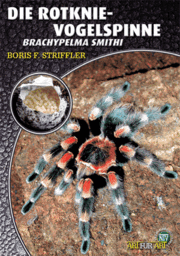
The redknee tarantula
All about the redknee tarantula (Brachypelma smithi) from Boris F. Striffler 64 Seiten 14,8 x 21 cm zahlreiche Farbfotos Taschenbuch Autor Boris F. Striffler Verlag NTV Inhalt: Die Rotknie-Vogelspinne ist sicherlich nicht nur die bekannteste Vogelspinne, sondern auch eine der schönsten. Aber nicht nur ihre attraktive Färbung und das eindrucksvolle Äussere, sondern auch ihr ruhiges Wesen und die leichte Haltbarkeit machten diese Art zu einem der begehrtesten Terrarienpfleglinge überhaupt. Boris F. Striffler beschäftigt sich seit langem wissenschaftlich und als Terrarianer mit Vogelspinnen. In diesem Band der Reihe „Art für Art“ geht er im Detail und leicht verständlich auf sämtliche wissenswerten Aspekte der Haltung und Pflege von Rotknie-Vogelspinnen ein. Und selbstverständlich vermittelt er Ihnen auch, wie Sie Ihre Lieblinge zur Vermehrung bringen und die Jungspinnen aufziehen können. Systematik und Körperbau Die faszinierende Biologie: Aus dem Leben der Rotknie-Vogelspinne Alle Informationen zur artgerechten Haltung: Vom geeigneten Terrarium über Einrichtung und Technik bis hin zur Fütterung Erfolgreich nachzüchten: Paarungsstimulation, verschiedene Methoden zur Eizeitigung und Aufzucht der Jungtiere Problemlösungen: Wie man die häufigsten Fehler bei der Pflege vermeidet, und wie man kranken Tieren helfen kann Brillante Fotos

CHF 21.90

Boa Constrictor
All about Boa Constrictor by Stefan Binder 96 pages 89 photos 2 graphics 1 table 11 distribution maps Format: 16.8 x 21.8 cm  Contents: The boa constrictor (Boa constrictor) is the epitome of the giant snake. Contrary to its popular reputation, however, it is neither dangerous to humans, nor does it reach excessive body sizes. Rather, it is an animal that is excellently suited to terrarium keeping, extremely elegant and attractive, and is even recommended for beginners in giant snake keeping. In this book, snake enthusiasts will find everything they need to know for the successful keeping and breeding of these beautiful reptiles:- Physique and sensory abilities- Classification: all subspecies and local forms- All colour and pattern variants- Keeping boas correctly: furnishing and technical equipment of a species-appropriate terrarium- Problem solutions: prophylaxis and therapy of diseases- How to breed your boas; rearing of the young- Brilliant colour photos Press reviews: Reviewing this book was a real pleasure for me. When reading it (...) the impression is confirmed that the author can convey the subject clearly and understandably. (...)A book that should not be missing from any (giant snake) keeper's shelf!Bruno Treu in Sauria 25/2 (2003)

CHF 68.00

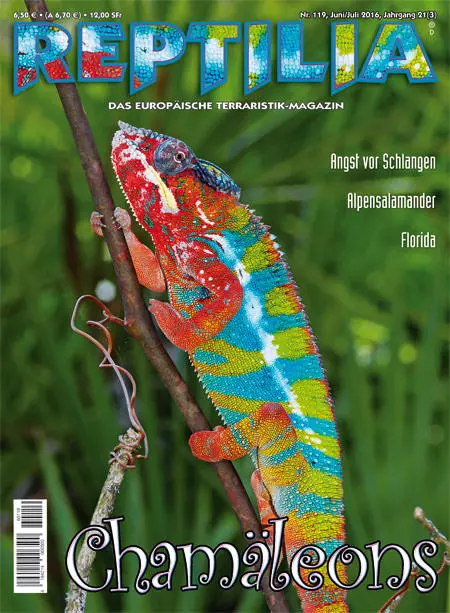
Reptilia 119 - Chameleons
Reptilia 119 - Chameleons Fear of snakesAlpine salamanderFloridaContents:Cover story: ChameleonsThey used to be considered untenable, but today they are among the most popular terrarium animals. Chameleons, the "dragons of our time". We indulge in pictures of these extremely photogenic animals, present in detail the keeping and breeding of one of the most prominent representatives of this group, the lobed chameleon, and devote ourselves to the legendary colour-changing ability of these lizards. EditorialMagazineDates Photo storyChameleons. Always something newN. Lutzmann Keeping and breedingKeeping and breeding the elephant-eared chameleon (Trioceros melleri)C. Malberg & A. Schäberle ResearchInfluence of various factors on colour change in the Yemen chameleon (Chamaeleo calyptratus) and the Madagascar giant chameleon (Furcifer oustaleti)A. Schmidt MAN AND ANIMALFear of snakes: innate, learnt or groundless?D. Schmidt ReportageViper snakes for breakfast. Observations of Natrix maura in southern PortugalW. & Y. Lantermann SERVICEALSO NEAR YOU Animals of our homelandThe Alpine SalamanderR. Leptien LIBRARY WESTERN HERP PERSPECTIVESEuropeans are known for …B. Love TRAVELThe great trek.  Part 2: Spring rivers and eternal swampsH. Werning PREVIEW BRUTKASTEN The spider's web (or: Stuttgart 21 will not be the last victim of these green lizard spiders)Ancestor

CHF 12.00

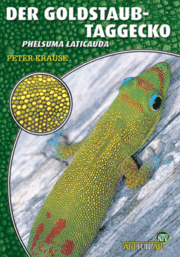
The gold dust day gecko
All about the gold-dusted day gecko by Peter Krause 64 pages Format: 14.8 x 21 cm numerous colour photos 3rd edition Author Peter Krause Publisher NTV Contents: The gold-dusted day gecko is one of the most commonly kept day gecko species. As it is also one of the most colourful species of the genus, even long-time phelsum keepers enjoy these animals time and time again. What also makes the gold-dust day gecko so popular and extremely suitable as a terrarium pet is its agile, lively nature and easy keeping. Systematics and body structure The fascinating biology: From the life of the gold dust day gecko All information on species-appropriate keeping: from suitable terrariums to equipment and technology to feeding Successful breeding: Mating stimulation, incubation of the eggs and rearing the young Solutions to problems: How to avoid the most common mistakes in care and how to help sick animals Brilliant photos

CHF 21.90