


.jpg "Lucky Reptile Desert decoration set")




Moos & Cork
Everything about moss and cork – natural highlights for your terrarium
With moss and cork for your terrarium, you can add more naturalness, structure and function to your setup in no time at all. Whether as a moisture-retaining substrate additive, decorative element or safe hiding place, terrarium moss and cork tubes/bark are classics for rainforest, forest and bioactive terrariums – and are also popular in many drier setups as hiding places or climbing elements.
Moss in the terrarium: decoration, climate aid and retreat
Moss not only looks good – it can also support the microclimate. Especially in damp and transitional zones, it helps to store moisture and provides cover for small inhabitants.
What is terrarium moss suitable for?
- Humid zones for geckos, frogs and amphibians
- Egg-laying sites and hiding places (depending on species)
- Bioactive terrariums as a natural component of the soil layer
- Appearance & structure: natural forest and rainforest appearance
Tip for use: Do not leave moss permanently soaking wet in poorly ventilated areas. Good air circulation reduces the risk of musty spots and ensures a healthy climate.
Cork in the terrarium: lightweight, stable and animal-friendly
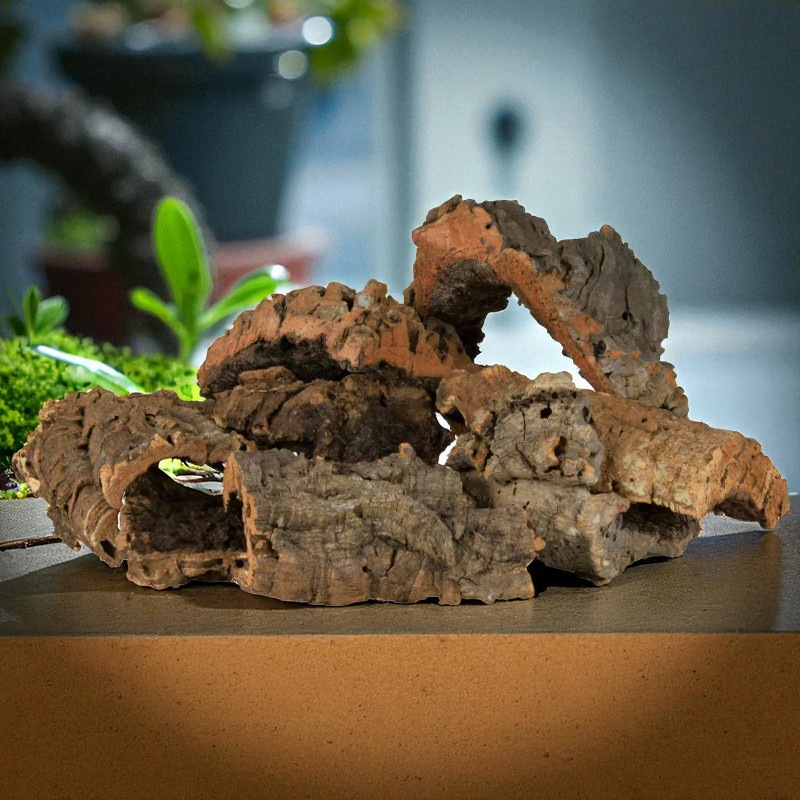
Cork bark and cork tubes are truly versatile: they are lightweight, more mould-resistant than many types of wood, offer a non-slip surface and are ideal for use as hiding places, climbing aids or back wall elements.
Advantages of cork at a glance
- Natural hiding places: cork tubes as cave substitutes
- Climbing fun: non-slip surface, ideal for geckos and insects
- Lightweight and versatile: perfect for stacking, building and fixing
- Suitable for many types of terrariums: tropical, forest, even drier setups
Which cork and moss products are suitable for your setup?
Depending on the type of animal and style of terrarium, it is worth making the right choice:
For tropical and rainforest terrariums
- Sphagnum moss for wet areas and as a humidity booster
- Cork tubes as sleeping and retreat places for crowned geckos & day geckos
- Cork panels for natural climbing surfaces and rear wall design
For forest and bioactive terrariums
- Moss cushion as a decorative top layer on the substrate
- Cork pieces as hiding places for springtails, woodlice and soil dwellers
- Combined with leaves, pieces of bark and natural wood, the layout looks particularly authentic.
For desert terrariums & dry setups
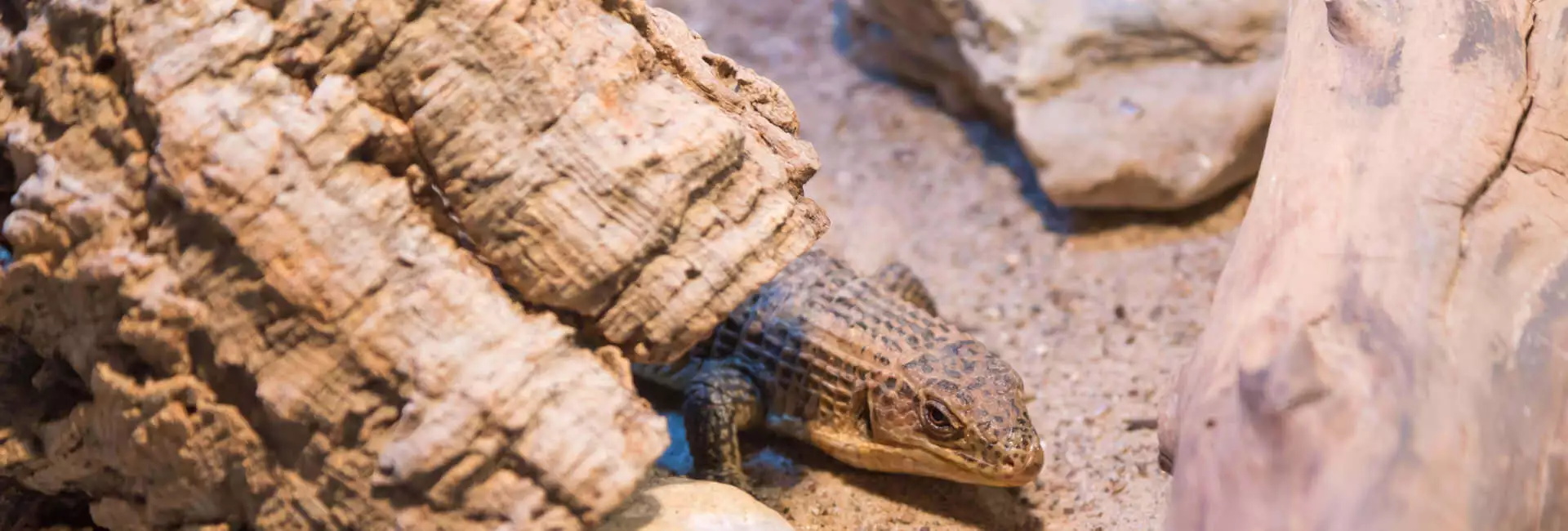
- Cork works excellently here too – especially as a light hiding place, as a structure or as a "shady spot".
- Moss is used more selectively (e.g. small humidity box), depending on the species.
Frequently asked questions about moss and cork
Is moss suitable for all animals?
Moss is versatile, but not necessary for every setup. It is ideal for many humid terrariums, but should only be used selectively in very dry terrariums (e.g. humid zones).
Does cork mould in terrariums?
Cork is relatively resistant, but in permanently wet environments with little air circulation, deposits can still form. Good ventilation helps the most.
Which is better: cork tube or cork bark?
Cork tubes are ideal for hiding places, while cork bark/plates are better suited for back walls and surfaces. Many setups benefit from a combination of both.
Zoo Roco – Your Swiss online shop for moss and cork


