Rep Calcium +D3
Nekton Rep Calcium + D3 is a high-quality calcium supplement for reptiles and amphibians that supports optimal bone and muscle development. Enriched with vitamin D3, it promotes the absorption of calcium in the body and thus contributes to a healthy skeletal structure and an intact metabolism. Especially for reptiles kept in terrariums, a regular supply of calcium and vitamin D3 is crucial to avoid deficiency symptoms such as bone softening or deformities.
The powder is easy to dose and can be sprinkled directly over the food or added to the drinking water. Nekton Rep Calcium + D3 is an ideal supplement for all reptile species that have an increased need for calcium, such as tortoises, geckos and agamas.
Advantages:
Optimum calcium supply: Promotes healthy bone and skeletal development and supports the muscular system.
Enriched with vitamin D3: Improves calcium absorption in the body and ensures optimum utilization.
Prevents deficiency symptoms: Reduces the risk of calcium deficiencies that can lead to health problems.
Easy to use: The powder is easy to dose and can be added directly to the feed or drinking water.
High-quality composition: Specially developed for the needs of reptiles and amphibians.
Zoo Roco tips:
Correct dosage: Pay attention to the recommended dosage depending on the species and age of the animal to avoid overdosing.
Combine with UVB lighting: Vitamin D3 needs UVB radiation to be optimally processed. So provide good UVB lighting in the terrarium to maximize the effect of Nekton Rep Calcium + D3.
Feeding frequency: Sprinkle the calcium supplement 2-3 times a week on the food or in the drinking water, depending on the animal's needs.
Combination with other supplements: In some cases, it may be useful to combine Nekton Rep Calcium + D3 with other nutrients your pet needs, especially if a special diet is required.
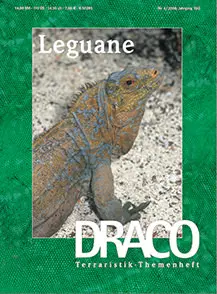
Draco 04 - Iguanas
Contents:
Page content
2 Editorial
4 Iguanas, by H. Werning
18 Sex differences in iguanas, by U. Schlüter
29 Islands - Hot spots of biodiversity as habitat of a unique iguana fauna, by M. Monzel
38 About the iguanas of Madagascar, by W. Schmidt and K. Liebel
44 Desert keel-tailed iguanas from Peru, by U. Schlüter
50 Keeping, breeding and care of Anolis cybotes, by M. Rogner
54 The desert iguana Dipsosaurus dorsalis: lifestyle, keeping and breeding, by H. Wölfel
62 Care of green iguanas, by G. Köhler
70 Psychogenic egg-laying difficulties in a green iguana (Iguana iguana rhinolopha), by J. Rauh
73 Iguana farming, by G. Köhler
79 Book box
93 Magazine
Reptilia 123 - Planting of poison dart frog terrariums
Contents:
Cover story: Planting poison dart frog terrariumsPoison dart frog terrariums can be real gems. Not only because of the "jewels from the rainforest" themselves – but also because of the rainforest around them. Poison dart frogs come to us from biotopes that are also home to countless attractive tropical plants, many of which are available to us and can be cultivated excellently. The experienced terrarium plant specialist Beat Akeret explains in the cover story of this REPTILIA exactly which plants are suitable for poison dart frog terrariums, so that these not only look great and meet the needs of the frogs, but even conjure up an authentic Latin American rainforest section in the living room.Also in REPTILIA No. 123Keeping and breeding one of the most mystical reptiles of all: the Bornean earless monitor in the terrariumDanger in the magic of blossoms: crab spidersThe great trek 3: with REPTILIA editor-in-chief Heiko Werning from coast to coast through the south of the USAand much more
4 editorial
6 MAGAZINE
14 DATES
16 WESTERN HERP PERSPECTIVES
Only in America
By B. Love
18 PHOTOSTORY
Plants in the poison dart frog terrarium
By B. Akeret
26 Terrarium technology
Plant care in the poison dart frog terrarium
Basic considerations
By B. Akeret
32 plants
Suitable plants for poison dart frog terrariums
By B. Akeret
44 KEEPING AND BREEDING
Notes on keeping and breeding of the earless monitor, Lanthanotus borneensis
By M. Zollweg & R. Seipp
54 Terrarium technology
Even more light
Comments by S. Wunderlich and O. Fischer
61 SERVICE
64 travel
The great trek
Part 3: Georgia on my Mind
By H. Werning
76 ALSO NEAR YOU
80 PREVIEW
82 INCUBATOR
If this sets a precedent
Part 2
By H. Werning
Draco 56 - Terrarium equipmentContents:EditorialTerrarium designPatrick SchöneckerSeven steps to a self-built back wallDiana & Oliver FinkA piece of North American desert in your living room: building and designing a terrarium for collared iguanasJana BuchwaldA near-natural terrarium for the carpet pythonDaniel Renner Redesign of a terrarium for Lampropeltis alternaMalte Hornig Buyable and good: cork backgrounds and other furnishings from specialised retailers and their use in terrariumsDiana & Oliver FinkConstruction of a polystyrene terrarium system for the animal-friendly keeping, breeding and rearing of lizardsHans Esterbauer Lizards and succulents in the winter garden terrariumBeat Akeret
Reptilia 65 - Girdled TailStar tortoiseIndigo snakeMonitor IslandContents:
2 EDITORIAL
3 READER LETTERS
4 MAGAZINE
12 DATES
14 WESTERN HERP PERSPECTIVESA country tripFrom B. Love
16 PHOTO REPORTAGEBelt-tailed lizards – the genus CordylusBy H. Schwier
24 KEEPING AND REPRODUCTIONDwarf Belted Tails: keeping and Breeding of Cordylus tropidosternum(Cope, 1869)From P. Fritz
32 KEEPING AND REPRODUCTIONCordylus mossambicus FitzSimons, 1958A persistent and interesting keeperFrom H.-P. Berghof
40 HERPETOFAUNAThe giant belted skink Cordylus giganteus – unique and mysterious at the same timeFrom H. Schwier
45 REPORTAGEThe radiated tortoise of Madagascar -an armoured beautyFrom J. Hammer
51 PORTRAIT AND POSTERPhilothamnus punctatusFrom M. Dobiey
56 KEEPING AND REPRODUCTIONNewts of the genus Paramesotriton- The Vietnamese and Laotian warty newtsFrom P. Bachhausen
64 KEEPING AND REPRODUCTIONDrymarchon couperi – the Eastern Indigo SnakeFrom N. Miele
72 TRAVELThe island of the monitor lizardsFrom A. Gumprecht
88 FAQ - FREQUENTLY ASKED QUESTIONSCorn snakesBy K. Kunz
92 REPORTAGESerpentário SanmaruFrom M. Junge
95 LIBRARY
104 BRUTKASTEN Chicken heart, be braveBy H. Werning
The Pet Factory - Decorative foliage
The Pet Factory decorative foliage - holm oak leaves for natural decoration of terrariums.
Oak leaves for terrariums
pH lowering in aquariumsFood for shrimps
for rearing poison dart frog tadpoles
has an antifungal and disinfecting effect
also as decoration for small mammal terrariums
1 liter corresponds to approx. 15 grams
When used in aquariums, the pH-reducing properties must be taken into account and the foliage can also be used for breeding poison dart frog tadpoles. Decorative foliage has an antifungal and disinfecting effect.
Tip:It is also ideal as decoration for small mammal terrariums, as it is only gnawed on a little. It simply does not taste good!
Handbook of forage plants 2nd revised editionMarion Minch is not only a successful breeder of diverse tortoises for many years, but also an excellent connoisseur of native wild herbs. She founded and runs samenkiste.de, which is well known to many tortoise keepers and nature lovers. Her name is inextricably linked with reptile care and species-appropriate nutrition for tortoises. Her handbook of food plants summarises the most important native food plants for herbivorous and omnivorous reptiles. She not only considers tortoises, but also iguanas, spiny-tailed dragons and even chameleons. From the basics of plant biology to native wild herbs to suitable food plants for hardy tropical reptile species, this comprehensive work provides the basis for species-appropriate keeping. In the expanded and supplemented 2nd edition, the plant section is divided according to flower colour. This makes it even easier to identify wild herbs. The work has also been supplemented with a wealth of additional information and many pictures.
Geckos in the terrarium by Astrid FalkThe book offers a comprehensive introduction to geckos and their species-appropriate keeping in terrariums. It explains what you need to think about before buying a gecko and what preparations should be made. The book describes in detail how the terrarium is technically equipped and set up. The care of the animals, their special features and behaviour, their diet, reproduction and rearing of young animals are described, as well as diseases and husbandry problems with tried and tested suggestions for prevention and treatment. Individual gecko species that are particularly suitable for keeping and breeding in terrariums are portrayed in detail in the second part of the book.
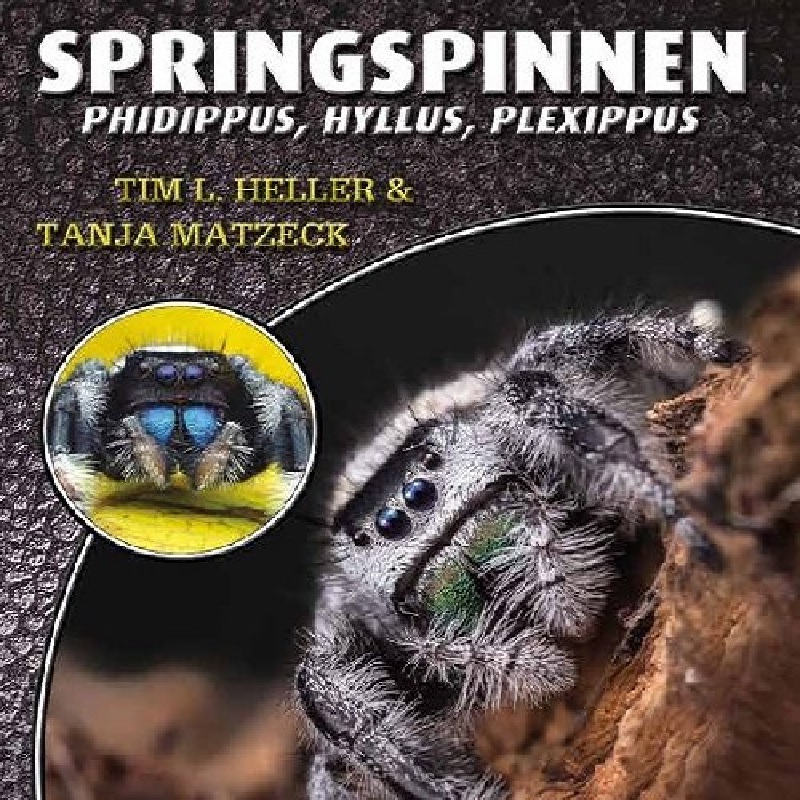
Book Jumping Spiders -
Phidippus, Hyllus & Plexippus
A guide to keeping jumping spiders of the genera Phidippus, Hyllus & Plexippus. Who can resist the charm of jumping spiders? The childlike appearance of their expressive face simply leaves no one cold! In addition, their behavior is extremely exciting to observe, their colors are bright and their requirements for species-appropriate keeping are very easy to meet. No wonder these likeable jumpers are all the rage!
This volume in the "Species by Species" series describes in detail what to look out for when buying and keeping them, introduces the most commonly kept species and color forms and provides plenty of tips on how to keep them successfully - so you can be sure they will breed well!
Species by Species introduces you to the books in this series, which present the most popular terrarium animals. Each volume offers you detailed, practical care instructions and all the information you need to successfully breed your animals.
All important questions from the required tank size to terrarium set-up, technical equipment, species-appropriate nutrition and disease prevention are answered with numerous tricks and tips.
Experienced, long-standing breeders reveal how you can encourage the animals to reproduce and raise healthy young.
All this in full color, generously illustrated and attractively designed - just about your terrarium animal - species by species
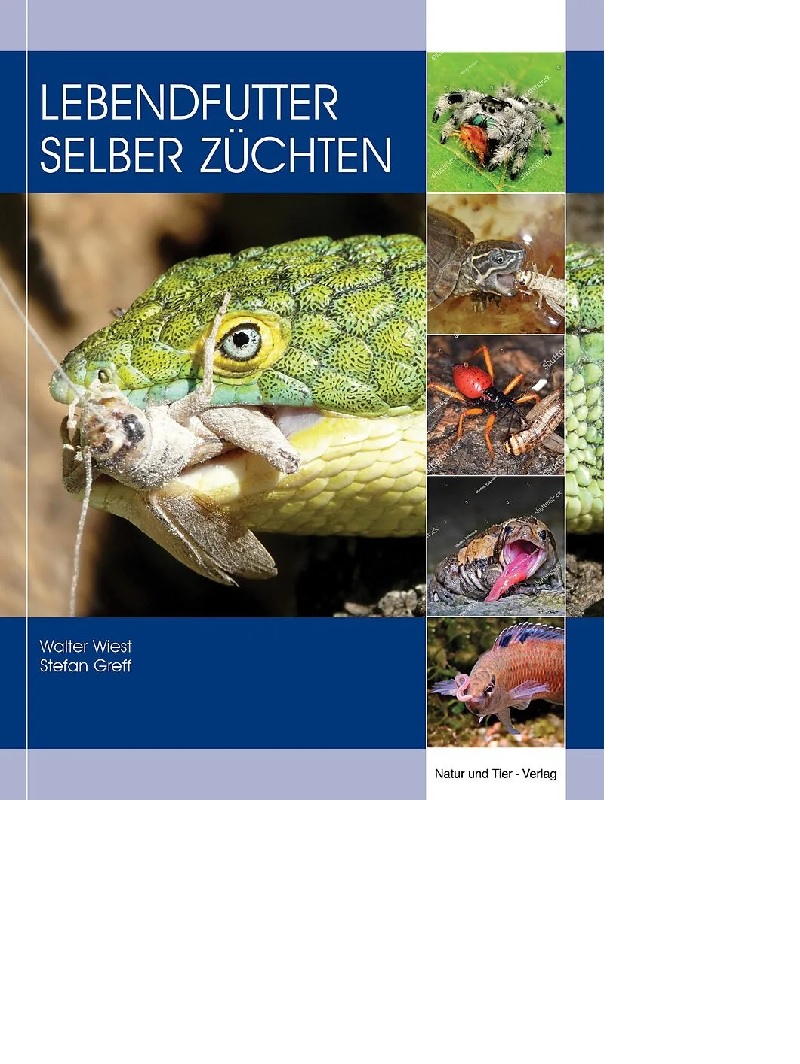
Book "Grow your own live food" - The perfect guide for pet owners
Discover practical and detailed instructions on how you can easily breed food for your reptiles, birds, fish or other animals yourself in the book "Breeding live food yourself". With valuable tips on various food insects, their care and breeding, you can save money and ensure a species-appropriate diet for your pets.
Contents of the book:
Step-by-step instructions for breeding feeder insects
Information on the best types of food for reptiles, birds and fish
Care instructions and breeding conditions for various live food species
Tips for sustainable and cost-effective food production
Why breed your own live food?
Get healthy, fresh food for your animals
Save money and reduce dependence on pet shops
Promote the health and well-being of your animals with species-appropriate food
Whether you are a beginner or an experienced pet owner, this book provides you with everything you need to successfully breed live food yourself.
Marginata 69 - New Guinea tortoises – the genus ElseyaCover storyThe unrecognised beauties: New Guinea tortoises (Andreas S. Hennig)My experiences with Branderhorst's New Guinea tortoise, Elseya (Elseya) branderhorsti (Ouwens, 1914) (Andreas S. Hennig)Keeping and breeding of Rhodin's New Guinea tortoise, Elseya (Hanwarachelys) rhodini Thomson, Amepou, Anamiato & Georges, 2015 (Andreas S. Hennig)PortraitGeoemyda spengleri, Chinese serrated tortoise (Andreas S. Hennig)ReportageMacrochelys temminckii – Experiences and impressions with vulture tortoises part 2 (Reiner Praschag)KeepingAn alternative to year-round keeping of the Egyptian tortoise in the terrarium – my experiences with seasonal outdoor keeping of Testudo kleinmanni (Ricarda Schramm)EtymologySawbacks and living maps part 4: Graptemys gibbonsi, Pascagoula humpback tortoise (Holger Vetter)Classifieds & animal placement
Terraria 01 - Terrarium lighting
PantanalBlack toad
Contents:
2 Editorial Heiko Werning
3 The TERRARIA team Editorial and advisory board TITLE TOPIC
6 • Basic knowledge of terrarium lighting – a key to successful keeping Ingo Kober & Uwe Geissel
17 • Which type suits me? The different lamps used in terrariums Ingo Kober & Uwe Geissel
22 • Lighting of terrariums – 10 case studies from practice Ingo Kober & Uwe Geissel SCIENCE
26 Herpetorama Snake evolution/Fast aga toads/Shrill frogs
28 New species New lizards from New Caledonia / Two new Telmatobius species from Bolivia/Two new Liolaemus species from Argentina
31 Among researchers Biodiversity research in the Amazon Andreas Schlüter
36 A rarity in the terrarium: Mitchell’s bearded dragon – Pogona mitchelli (Badham, 1976) Thomas Hörenberg
44 Melanophryniscus – not just black toads Part 1: General information on the genus Melanophryniscus Axel Kwet
54 The Tunisian tortoise, Testudo nabeulensis (Highfield, 1990) Manfred Rogner
59 Diversity instead of boredom – Care and breeding of the striped house snake (Lamprophis lineatus) Kriton Kunz
65 Biology, husbandry and breeding of the Arizona bark scorpion, Centruroides vittatus (Say, 1821) Alexander Tietz
72 TRAVEL In the land of the Jacarés – the Pantanal Heiko Werning TERRARIUM PRACTICE
84 Test run terraform hide trays
85 Prelude Quarantine and sampling for parasitological examination of terrarium animals Sascha Hanig & Michael Kluge A good start: the large Madagascar day gecko Phelsuma madagascariensis grandis Ingo Kober
90 Eye-catcher A facility for breeding pine-cone lizards Axel Kwet
94 Also in your vicinity
96 TERRAnet AmphibiaWeb/Homepage Axel Kwet
98 TERRAglobal Environmental education in Guatemalan Lester S. Meléndez García The coffin as an incubator Joachim Bulian
103 Preview
104 TERRAwinn
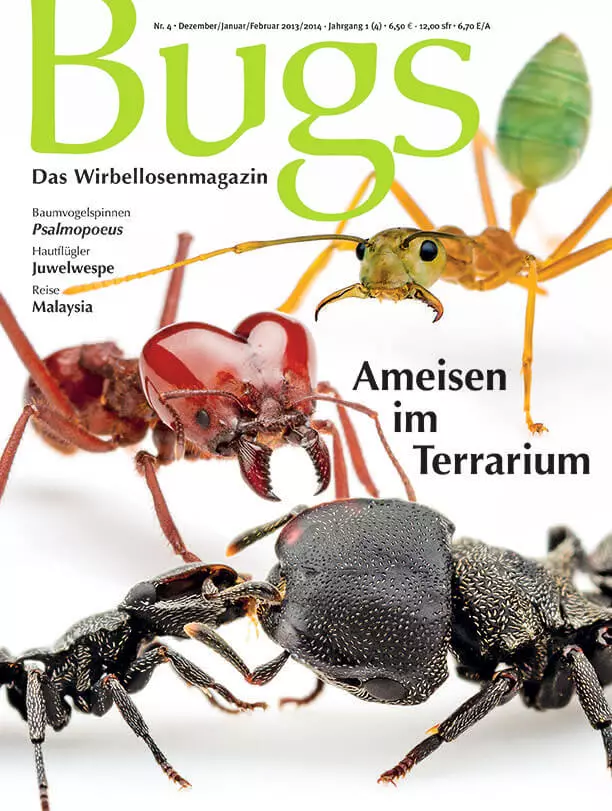
Bugs No. 04 - Ants in the terrariumThe cover story of Bugs No. 4 is about tiny creatures that achieve great things: ants are the gardeners of nature, pruning grasses, bushes and trees, guarding entire shrubs and ensuring targeted "pest extermination". But they also act as cattle breeders, keeping small colonies of aphids in order to obtain their sweet droppings. Caring for these fascinating animals is highly interesting and there is always something to observe! Reason enough to take you, dear readers, on a journey into the realm of ants and show you how you can keep these colony-forming insects safely and in a species-appropriate way.Table of contentsEditorialFacetsDatesFlown inCover storyThe diversity of the superorganismMyrmecia vindex – archaic AustraliansSnap-jaw ants of the genus MyrmoterasFledgedInvertebrates in MalaysiaIn the crosshairsThe rainbow stag beetleKeeping & BreedingLittle rubies – two Centrobolus speciesReportageExemplary arthropods - Bionics, Part 2Keeping & Breeding The Jewel WaspKeeping & BreedingHorse-headed grasshoppersKeeping & BreedingThe genus PsalmopoeusPotter beeHomemade lime source for snailsBook scorpionAlso in your neighbourhoodKids CornerA small miracleShowcase The master of the MantodeaService & ImprintPreviewMetamorphosesAutumn
Marginata 22 - North American Tropical TurtlesGreek tortoisesSea turtlesOldest Aldabra giant tortoiseContents:2 EDITORIAL3 READER LETTERS4 MAGAZINE8 DATES10 REPORTAGE Wetlands as islands of tranquillity and happiness - experiences from Long-term studies on Clemmys guttata in Canada Jacqueline D. Litzgus20 BREEDING IN HUMAN CARE Long-standing offspring of the dropback turtle (Clemmys guttata) Ingo Schaefer28 REPORTAGE Experiences with outdoor keeping of the Spotted Turtle (Clemmys guttata) Georg Storms & Hans - Dieter Philippen31 POSTER The Argentine tortoise (Chelonoidis chilensis) Hans - Dieter Philippen36 REPORTAGE By Greek Tortoises Testudo boettgeri Mojsisovics, 1889 in Greece. Part 2 Michael Wirth, Peter Fritz & Johann Meier46 REPORT Threats to, protection and utilisation of Sea turtles - Part 2: Costa Rica Gerald & Christa Benyr54 REPORTAGE The respiratory system of turtles - helpful for taxonomy and systematics? Markus Lambertz57 REPORTAGE Esmeralda - the oldest living Aldabra Giant tortoise (Dipsochelys dussumieri) of the world Jürgen Hellwing58 BOOK TIP60 CLASSIFIEDS61 SUBSCRIPTION & SERVICE63 REGIONAL GUIDE
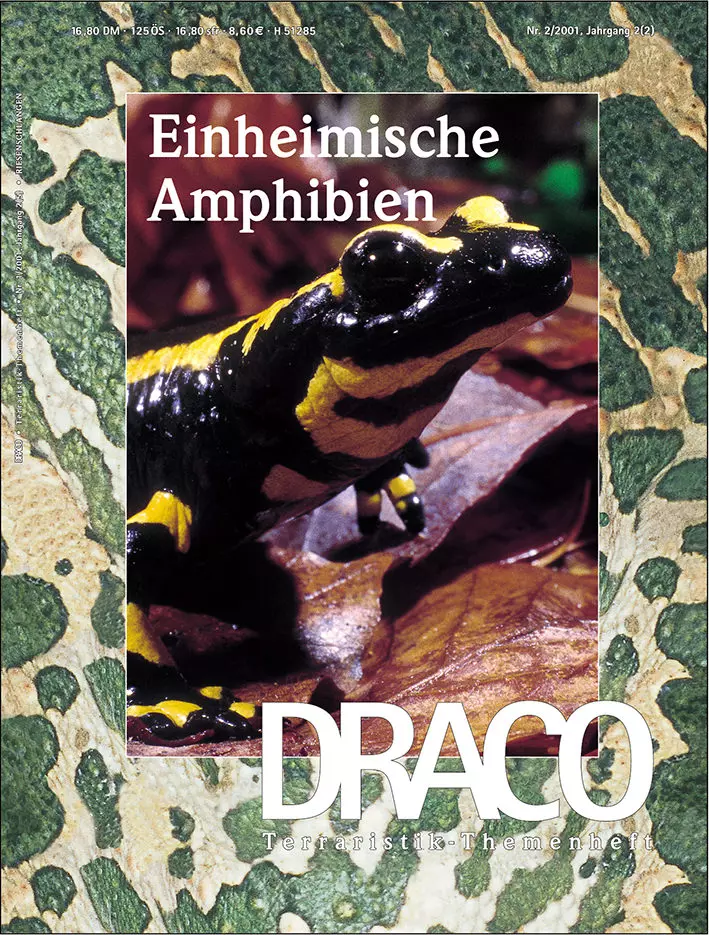
Draco 06 - Native amphibians
Contents:
Page content
2 Editorial
4 The native amphibians - an overview, by Dr B. Thiesmeyer
22 A king without a kingdom, by E. Meier & T. Mutz
30 The moor frog Rana arvalis NILSSON, 1842, by H. Laufer & A. Pieh
38 The green toad Bufo viridis LAURENTI, 1768, by A. Pieh & N. Braitmayer
45 Midwife toads (genus Alytes, discoglossidae): Biology, care and breeding, by H.-J. Schekeler
53 Great crested newts: Little water dragons in our ponds and pools, by A. Kupfer
58 Long time in the forest: Long live the salamander!, by Dr B. Thiesmeyer
69 First photos of the birth of the Alpine salamander (Salamandra atra atra)
78 Book box
89 Magazine
Reptilia 22 - Still hope for Asian turtles?Incubation of phelsum eggsHomeopathyCosta RicaContents:Page 2 - EditorialPage 4 - MagazinePage 13 - DatesPage 16 - Western Herp Perspectives: A rattlesnake under every bush, by B. LovePage 18 - Photo report: The incredible diversity of Asian turtles, by E. MeierPage 26 - Report: The turtles of Asia: Sacred animals, food and medical wonder weapon, by E. MeierPage 30 - Report: The end of Asian turtles? The live animal markets of Southeast Asia, by E. MeierPage 34 - Report: An ark for the last of their kind: The planned conservation breeding centre at the Allwetterzoo Münster, by E. MeierPage 40 - Travelling: Herpetological travel impressions from Costa Rica, Part 1: Rara Avis rainforest lodge, by T. EisenbergPage 47 - Portrait and poster: Parasphendale affinis, by I. & R. BischoffPage 51 - Report: Elaphe mandarina: A problem animal in terraristics? by Dr R. Fesser & H. SommerauerPage 57 - Keeping and breeding: Notes on egg laying in day geckos of the genus Phelsuma, by J. KrügerPage 63 - Herpetofauna: The poison dart frog Epipedobates tricolor, by J. & J. Canela Agraz & J. Vazquez SuñéPage 67 - Herpetology and culture: The arachno- and herpetofauna in homeopathic medicine, by K. KunzPage 78 - REPTILIA on the move: The Exotarium in Frankfurt am Main Zoological Garden, by T. WilmsPage 81 - Help and advicePage 87 - LibraryPage 96 - Glossary: Moving with lizards, once again. Part 1: Good preparation is half the move, by H. Werning
Draco 32 - Mediterranean tortoises
Contents:
2 Editorial
4 Mediterranean tortoises Alexander Pieh & Hans - Dieter Philippen
35 The natural outdoor enclosure for species-appropriate keeping Mediterranean tortoises Peter Buchert
42 Construction and operation of a small greenhouse for keeping Mediterranean tortoises Thomas Wilms & Beate Löhr
47 A rare ectoparasite infestation: snake mites (Ophionyssus natricis) among Greek tortoises of the subspecies Testudo hermanni boettgeri Jutta Wiechert
50 The tortoises of IranPersian populations of the Moorish tortoise Markus Auer & Mario Herz
56 The tortoises of IranSteppe tortoises in Persia Mario Herz & Markus Auer
61 Species-appropriate husbandry and reproduction of the Greek tortoise Peter Kern
74 The Egyptian Tortoise (Testudo kleinmanni)Very popular and critically endangered Henk Zwartepoorte
79 Behind the scenes at a Slovenian tortoise farm Hans - Dieter Philippen
88 Book box
96 Magazine
Reptilia 07 - Climbing snakesTurtle conservation in NepalStump crocodiles in the CongoRed-footed tarantulaContents:Page 2 - EditorialPage 4 - Letters to the editorPage 5 - MagazinePage 16 - Photo reportagePage 22 - Keeping and breeding: The Persian Climbing Snake Elaphe persica, by K.-D. SchulzePage 25 - Report: Endangerment and protection of the Aesculapian snake in Germany, by M. WaitzmannPage 29 - Keeping and breeding: Elaphe guttata, by J. BergadáPage 33 - Travel report: Stump crocodiles in the Congo, by A. Brieger, F. W. Huchzermeyer and J. RileyPage 39 - Portrait and poster: Corucia zebrata, by M. Aresté and J. L. FarriolsPage 43 - Report: A species conservation programme for tortoises in Nepal, by K. Ernst, K. B. Shah and H. SchleichPage 49 - Keeping and breeding: Dendrobates galactonotus, by R. and B. PieperPage 53 - Keeping and breeding: Avicularia avicularia, by J. M. Marínez NadalPage 57 - Herpetology and Culture: Traditional Chinese Medicine, Part 2: Turtles as fire extinguishers, by G. PetersPage 62 - Western Herp Perspectives, by B. LovePage 64 - Prize puzzlePage 69 - Reptilia on the road: Arizona Sonora Desert Museum Tucson, by H. WerningPage 74 - Advice and actionPage 77 - LibraryPage 80 - Incubator: Glossary by H. Werning