Bugs No. 04 - Ants in the terrarium

Article no: bugs04

CHF 12.00

Stock: 0

Ready for dispatch in 1-3 days, delivery time 7 working days

Delivery between Tuesday, 20 October and Wednesday, 21 October
Zahlungsarten
Product information "Bugs No. 04 - Ants in the terrarium"

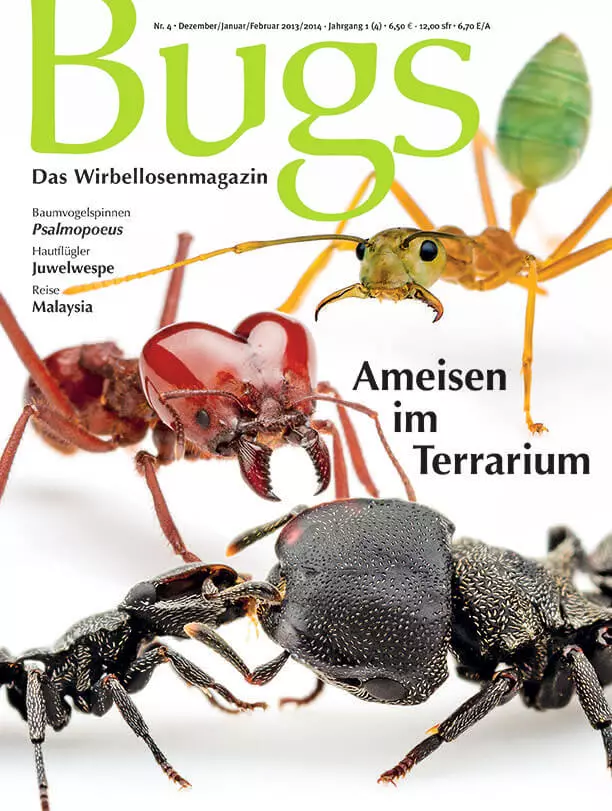
Bugs No. 04 - Ants in the terrarium

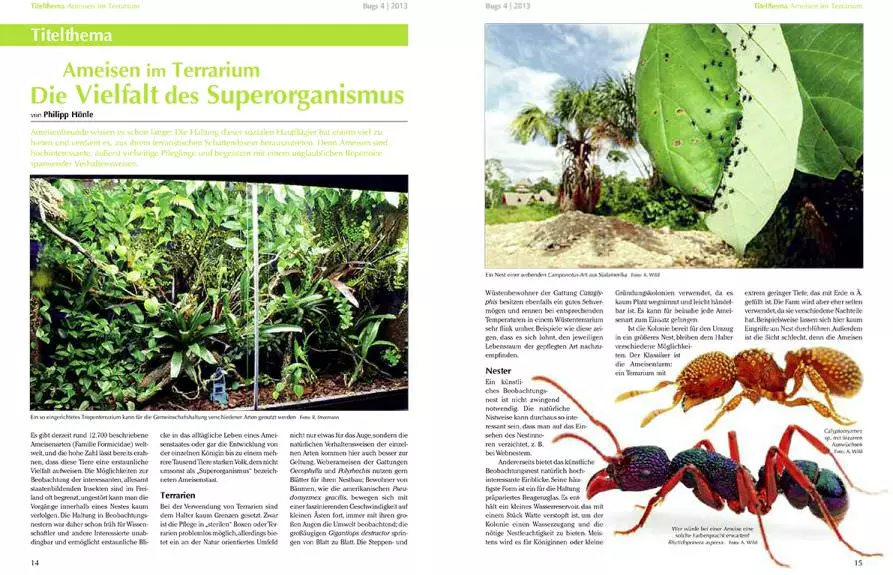
The cover story of Bugs No. 4 is about tiny creatures that achieve great things: ants are the gardeners of nature, pruning grasses, bushes and trees, guarding entire shrubs and ensuring targeted "pest extermination". But they also act as cattle breeders, keeping small colonies of aphids in order to obtain their sweet droppings. Caring for these fascinating animals is highly interesting and there is always something to observe! Reason enough to take you, dear readers, on a journey into the realm of ants and show you how you can keep these colony-forming insects safely and in a species-appropriate way.

Table of contents

Editorial
Facets
Dates
Flown in

Cover story
The diversity of the superorganism

Myrmecia vindex – archaic Australians

Snap-jaw ants of the genus Myrmoteras

Fledged
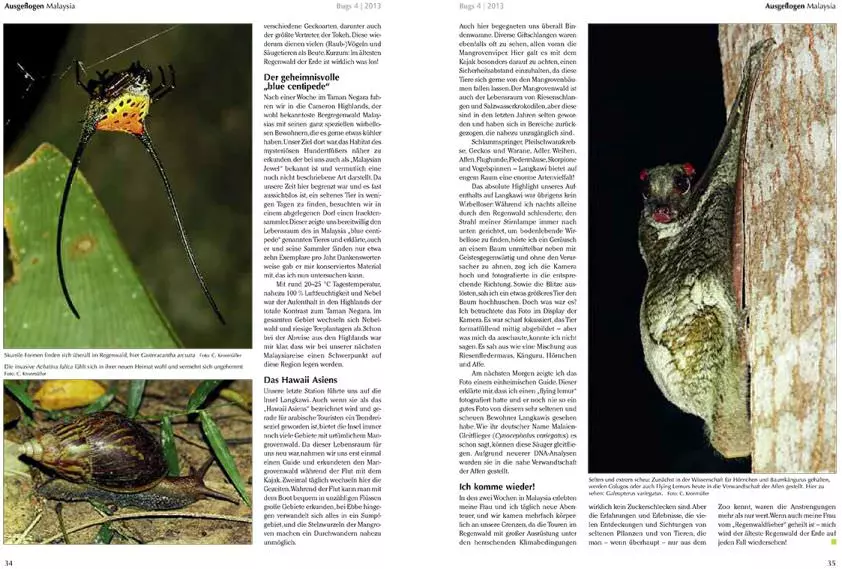
Invertebrates in Malaysia

In the crosshairs
The rainbow stag beetle

Keeping & Breeding
Little rubies – two Centrobolus species

Reportage
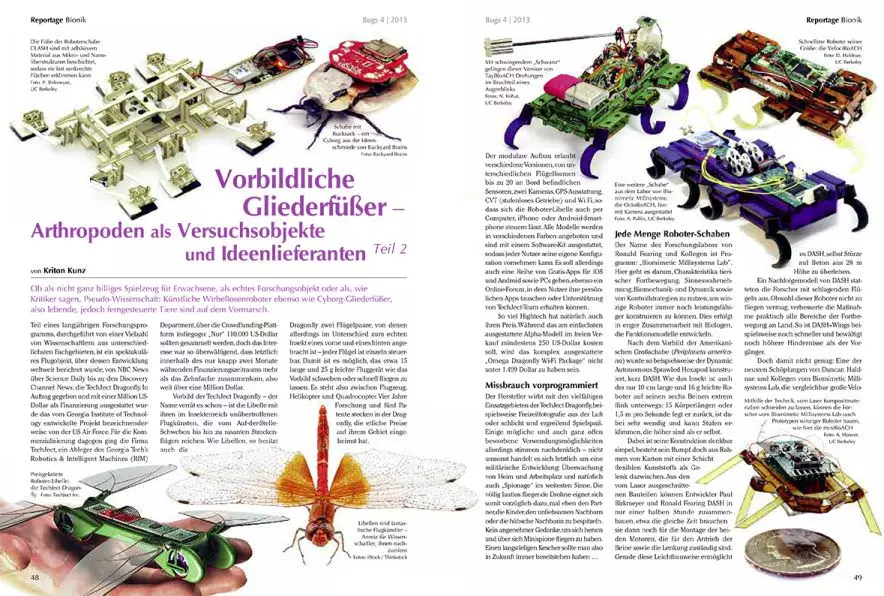
Exemplary arthropods - Bionics, Part 2

Keeping & Breeding
The Jewel Wasp

Keeping & Breeding
Horse-headed grasshoppers

Keeping & Breeding
The genus Psalmopoeus

Potter bee
Homemade lime source for snails

Book scorpion
Also in your neighbourhood

Kids Corner
A small miracle

Showcase
The master of the Mantodea

Service & Imprint
Preview

Metamorphoses
Autumn

Composition
Feeding recommendation
Technical details
Size information

0 of 0 reviews

Give us a rating!

Share your experience with the product with other customers.


Suggested products

Handbook of food plants for tortoises and other reptiles
Handbook of forage plants 2nd revised editionMarion Minch is not only a successful breeder of diverse tortoises for many years, but also an excellent connoisseur of native wild herbs. She founded and runs samenkiste.de, which is well known to many tortoise keepers and nature lovers. Her name is inextricably linked with reptile care and species-appropriate nutrition for tortoises. Her handbook of food plants summarises the most important native food plants for herbivorous and omnivorous reptiles. She not only considers tortoises, but also iguanas, spiny-tailed dragons and even chameleons. From the basics of plant biology to native wild herbs to suitable food plants for hardy tropical reptile species, this comprehensive work provides the basis for species-appropriate keeping. In the expanded and supplemented 2nd edition, the plant section is divided according to flower colour. This makes it even easier to identify wild herbs. The work has also been supplemented with a wealth of additional information and many pictures.

CHF 46.50

Geckos
Geckos in the terrarium by Astrid FalkThe book offers a comprehensive introduction to geckos and their species-appropriate keeping in terrariums. It explains what you need to think about before buying a gecko and what preparations should be made. The book describes in detail how the terrarium is technically equipped and set up. The care of the animals, their special features and behaviour, their diet, reproduction and rearing of young animals are described, as well as diseases and husbandry problems with tried and tested suggestions for prevention and treatment. Individual gecko species that are particularly suitable for keeping and breeding in terrariums are portrayed in detail in the second part of the book.

CHF 28.50

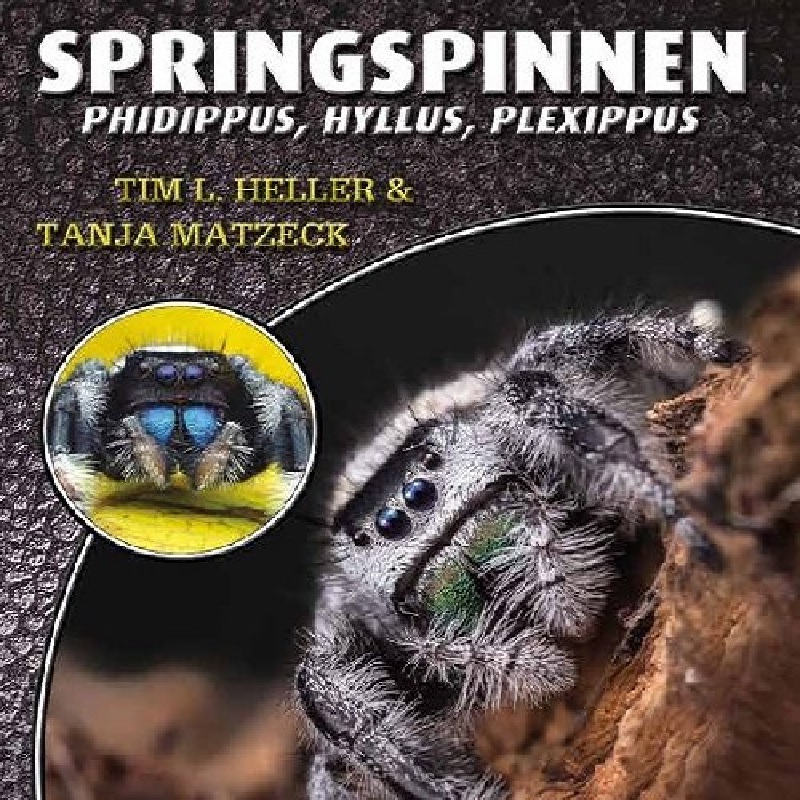
Jumping spiders Phidippus, Hyllus, Plexippus
Book Jumping Spiders - Phidippus, Hyllus & Plexippus A guide to keeping jumping spiders of the genera Phidippus, Hyllus & Plexippus. Who can resist the charm of jumping spiders? The childlike appearance of their expressive face simply leaves no one cold! In addition, their behavior is extremely exciting to observe, their colors are bright and their requirements for species-appropriate keeping are very easy to meet. No wonder these likeable jumpers are all the rage! This volume in the "Species by Species" series describes in detail what to look out for when buying and keeping them, introduces the most commonly kept species and color forms and provides plenty of tips on how to keep them successfully - so you can be sure they will breed well! Species by Species introduces you to the books in this series, which present the most popular terrarium animals. Each volume offers you detailed, practical care instructions and all the information you need to successfully breed your animals. All important questions from the required tank size to terrarium set-up, technical equipment, species-appropriate nutrition and disease prevention are answered with numerous tricks and tips. Experienced, long-standing breeders reveal how you can encourage the animals to reproduce and raise healthy young. All this in full color, generously illustrated and attractively designed - just about your terrarium animal - species by species

CHF 23.90

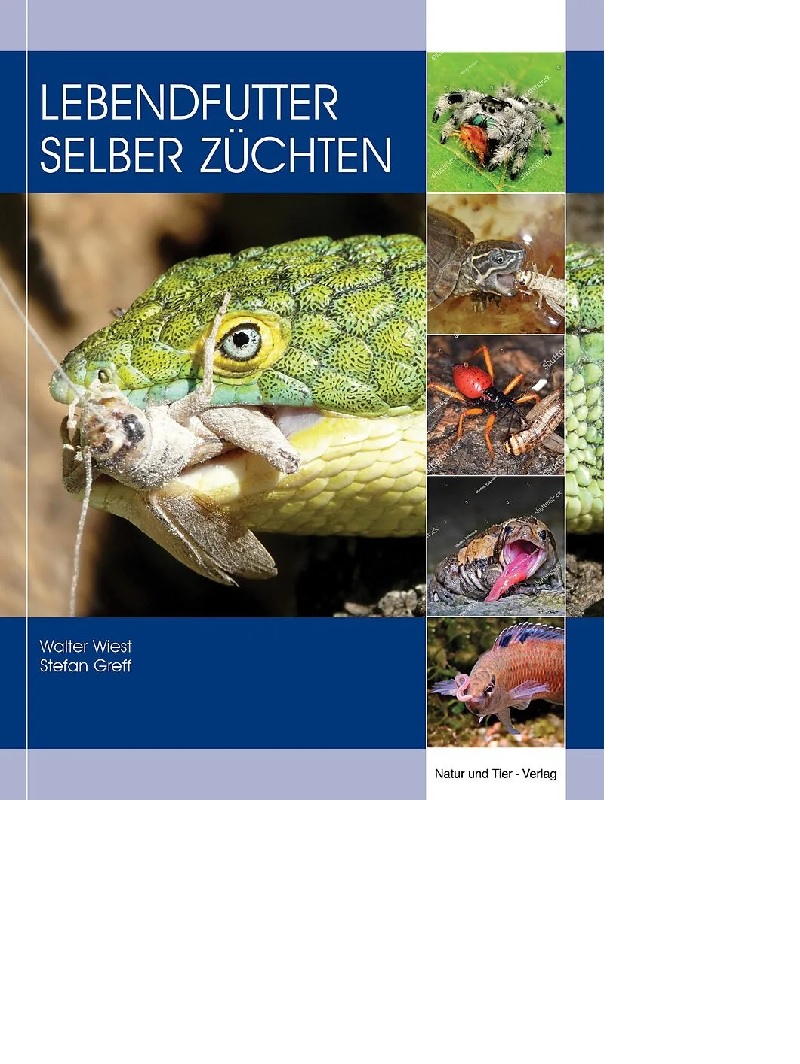
Book Breeding live food yourself
Book "Grow your own live food" - The perfect guide for pet owners Discover practical and detailed instructions on how you can easily breed food for your reptiles, birds, fish or other animals yourself in the book "Breeding live food yourself". With valuable tips on various food insects, their care and breeding, you can save money and ensure a species-appropriate diet for your pets. Contents of the book: Step-by-step instructions for breeding feeder insects Information on the best types of food for reptiles, birds and fish Care instructions and breeding conditions for various live food species Tips for sustainable and cost-effective food production Why breed your own live food? Get healthy, fresh food for your animals Save money and reduce dependence on pet shops Promote the health and well-being of your animals with species-appropriate food Whether you are a beginner or an experienced pet owner, this book provides you with everything you need to successfully breed live food yourself.

CHF 46.50

Marginata 69 - New Guinea tortoises
Marginata 69 - New Guinea tortoises – the genus ElseyaCover storyThe unrecognised beauties: New Guinea tortoises (Andreas S. Hennig)My experiences with Branderhorst's New Guinea tortoise, Elseya (Elseya) branderhorsti (Ouwens, 1914) (Andreas S. Hennig)Keeping and breeding of Rhodin's New Guinea tortoise, Elseya (Hanwarachelys) rhodini Thomson, Amepou, Anamiato & Georges, 2015 (Andreas S. Hennig)PortraitGeoemyda spengleri, Chinese serrated tortoise (Andreas S. Hennig)ReportageMacrochelys temminckii – Experiences and impressions with vulture tortoises part 2 (Reiner Praschag)KeepingAn alternative to year-round keeping of the Egyptian tortoise in the terrarium – my experiences with seasonal outdoor keeping of Testudo kleinmanni (Ricarda Schramm)EtymologySawbacks and living maps part 4: Graptemys gibbonsi, Pascagoula humpback tortoise (Holger Vetter)Classifieds & animal placement

CHF 16.50

NTV - The dyeing dart frog
The Dyer Frog by Dirk Wagner 64 pages Format: 14.8 x 21 cm 67 colour photos Contents: Foreword Relationship Description Distribution, habitat and way of life Colour forms Care Socialisation Poison Species protection Acquisition Transport and quarantine The terrarium Terrarium technology Light Warmth Water and humidity Furnishing and planting Food Care work Health Breeding Further information Literature

CHF 18.50

Draco 09 - Invertebrates in the terrarium
Draco 09 - Invertebrates in the terrarium Content: 2 - Editorial 3 - Invertebrates, by Dieter Masberg 20 - The Landing Crab, by Harry Wölfel 27 - Phasmids (ghost insects, stick insects and walking leaves), by Sven Bradler and Christoph Seiler 33 - Phasmids as pets, by Christoph Seiler and Sven Bradler 38 - The Australian Pfeffermins stick insect Megacrania batesii - no simple fosterling, by Christoph Seiler and Sven Bradler 41 - essence of darkness - essence of light: The Mysterious Life of the Giant and Rose Beetles, by Arndt Löwenberg 55 - Exotic cord feet in the terrarium, by Timm Adam 67 - Safety in scorpion keeping: 10 golden rules, by Herbert Schiejok 70 - Own experiences with the keeping of Euscorpius carpaticus mauretanicus (THORELL, 1876), by Mario Schedel 74 - Pseudoscorpions in nature and in small terrariums, by Kriton Kunz 82 - Book case 94 - Magazine The content at a glance:Invertebrates - the large army of the animal world, fascinatingly multi-layered, mostly hardly researched and weathered by the otherness to the vertebrates and to us humans since ancient mystery. Dieter Mahsberg's introduction to this unusual DRACO fans out the entire prism of the invertebrates: What characterizes all invertebrates, what groups are there, how do they live? After this overview you will also find a list of all taxa with species numbers that are relevant for keeping - a huge potential of highly interesting animals that will certainly not leave your thirst for research cold!Phasmids (ghost insects, stick insects and wandering leaves)Phasmids are certainly among the stars of the invertebrate boom: Sven Bradler and Christoph Seiler present the basics of the systematics and biology of these interesting animals, which include the longest insect still living today. Learn everything you need to know about the way of life of the well camouflaged invertebrates, marvel at sophisticated protection and defence mechanisms or unusual reproductive strategies. By the way, an extra section of the richly illustrated article is dedicated to the European species: so why not keep your eyes open during your next holiday!Phasmids as petsAnd on we go with the phasmids, because Christoph Seiler and Sven Bradler naturally also explain to you the keeping and breeding of the insects, which are often quite easy to care for, and which as pure herbivores make the time-consuming breeding of feed animals superfluous. The authors name the most important food plants, describe the types of terrariums with which you can meet the different requirements of the animals, and give insider tips on how to reproduce the beautiful insects - and of course they also point out possible sources of error that should be avoided! For beginners in phasmid breeding as well as for old hands an absolute must!The Australian peppermint stick insect Megacrania batesii - no simple fosterlingAnd to make sure that the absolute phasmid experts also get their money's worth, Seiler and Bradler go into detail about the keeping and breeding of this little kept and quite difficult to reproduce species in this article, in which especially the young animals captivate with their rich colors. The secret of the success in the reproduction of the Australian peppermint stick insect begins already with the suitable food, because the animals are very choosy. Seiler and Bradler will give you tips on how to get the plants you need to breed this very special stick insect without spending a lot of money. And, of course, the authors also give you insight into their successful breeding methods, so that after reading this article you have acquired all the prerequisites to try your hand at cultivating this Australian jewel yourself!The hermit crabThey often appear in pet shops and on dealer lists, these cute crustaceans, but hardly anyone knows how to keep them successful. Harry Wölfel presents amazing facts from the biology of these crustaceans, which are not very species-rich but all the more interesting - or did you know that the largest species in this group can reach a range of up to 1 m? Our DRACO author will not only tell you where the land hermit crabs occur and how they "function", but will also explain what to look out for when keeping them, how to set up the terrarium adequately, and he will even give you hints on how to breed them, which is not easy. One of the very few articles in the relevant literature, and in addition so expert and detailed - it's your own fault who as a crab fan escapes this treat!Beings of darkness - Beings of light. The mysterious life of the giant and rose beetlesThese magnificent beetles are certainly among the most beautiful insects of all, and even people who otherwise have nothing to do with "crawling animals" cannot escape the aesthetics of the animals. Did you know why nature has endowed many species of rose beetles with such lavish splendour? Arndt Löwenberg will not only tell you this, but will also give you a comprehensive introduction to the biology of these increasingly cultivated animals. And he gives a practical description of where these pearls and giants of the beetle world come from, how they are kept and bred and what the key to success is!Exotic cord feet in the terrariumUnfortunately, there is almost nothing to be found in the literature about keeping and breeding the quaint string feet. Timm Adam is a competent remedy. What is a string foot, how do these bizarre animals live? The author does not only go into detail about the stars of his contribution, but also about their relatives, for example the Skolopender. But the focus is clearly on the string feet and the role they play in science and terraristics. Are string feet poisonous? How can I set up a suitable terrarium, what do I have to consider with the climatic conditions, how can I feed the animals? And how do you breed these interesting invertebrates? Timm Adam has all the answers ready and does not leave out any hints of problems with their breeding. In short: The ultimate string foot hit!Own experiences with the keeping of Euscorpius carpaticus mauretanicus (Thorell, 1876)If you are fascinated by scorpions, but don't want to bring the most poisonous ones into your house, you are well advised to use specimens of this small species. Their keeping and breeding are not particularly difficult and can therefore be recommended to beginners in scorpion keeping. To make sure that you do everything right from the start, Mario Schedel will show you what to look out for. From the suitable terrarium over aspects like socialization up to the successful offspring all important aspects are covered!Safety in keeping scorpionsTopic number 1 in the keeping of these fascinating arachnids is, of course, always safety, which must be absolutely guaranteed. Scorpion expert Herbert Schiejok points out all the important parameters that have to be observed for a safe keeping, gives tips on which terrarium types are best suited, what has to be taken into account when setting up the tank and what has to be observed when handling the animals in the terrarium. How, for example, do you catch a scorpion safely, how do you move it, and what do I do if the animal has been stabbed in spite of all caution? A responsible terrarium keeper who cares about his own protection and that of his fellow human beings will certainly not miss this contribution!Pseudoscorpions in nature and in the smallest terrariumDo you find scorpions fascinating, but shy away from the risk of a poison sting? You would like to take care of really special animals? How about pseudoscorpions? These tiny creatures, which you can easily find in your garden, in the forest or perhaps even in your house, are very similar to their big relatives, but unlike them they do not have a "tail" with a poison sting. Kriton Kunz overhears with you the secret activities of the funny little guys, presents them fascinating details from the widely unknown biology of the unusual arachnids and gives you tips on where and how you can capture the dwarves. And anyone who has ever maintained or even recreated the bizarre "mini scorpions" in a neatly furnished mini-terrarium will certainly not be able to get rid of them in a hurry!

CHF 16.80

Draco 32 - Mediterranean tortoises
Draco 32 - Mediterranean tortoises Contents: 2 Editorial 4 Mediterranean tortoises Alexander Pieh & Hans - Dieter Philippen 35 The natural outdoor enclosure for species-appropriate keeping Mediterranean tortoises Peter Buchert 42 Construction and operation of a small greenhouse for keeping Mediterranean tortoises Thomas Wilms & Beate Löhr 47 A rare ectoparasite infestation: snake mites (Ophionyssus natricis) among Greek tortoises of the subspecies Testudo hermanni boettgeri Jutta Wiechert 50 The tortoises of IranPersian populations of the Moorish tortoise Markus Auer & Mario Herz 56 The tortoises of IranSteppe tortoises in Persia Mario Herz & Markus Auer 61 Species-appropriate husbandry and reproduction of the Greek tortoise Peter Kern 74 The Egyptian Tortoise (Testudo kleinmanni)Very popular and critically endangered Henk Zwartepoorte 79 Behind the scenes at a Slovenian tortoise farm Hans - Dieter Philippen 88 Book box 96 Magazine

CHF 18.40

Draco 19 - Madagascar
Draco 19 - Madagascar Contents: 2 Editorial 4 The herpetofauna of Madagascar:Diversity, way of life and endangermentFrank Glaw 22 Journey to the east of MadagascarSebastian Wolf 30 Masoala – The eye of the forestNicolá Lutzmann 37 Mysterious Madagascar boas: Sanzinia & Acrantophis Frank Glaw & Kathrin Glaw 44 On the road in the “Reserve Speziale” of AnkaranaHans-Peter Berghof 50 In search of chameleons along the Route National 2 from Antananarivo to the east coast near Ambila-LemaitsoNicolá Lutzmann, Guy Kremer, Nico van Steendam & Achim Flamme 56The gecko genera of MadagascarPatrick Schönecker & Andreas Böhle 68 Biology, care and breeding of the short-headed day gecko (Phelsuma breviceps) BOETTGER, 1894 Patrick Schönecker 7 The “Madagascan poison dart frogs”– Keeping and breeding of Mantella Hartmut Lipp 82 A journey through the Madagascan highlandsAndreas Böhle 90 Magazine

CHF 16.80

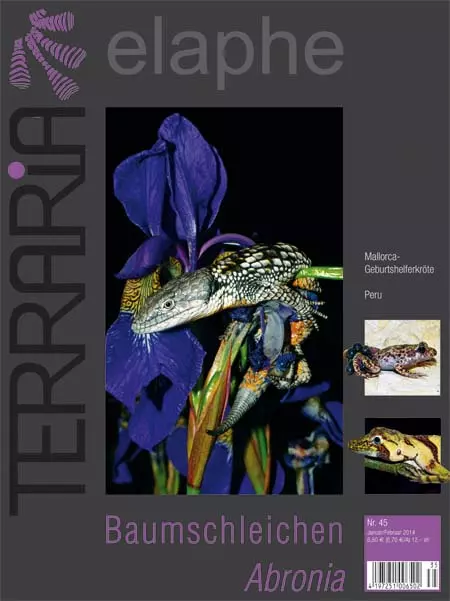
Terraria 45 - Tree creepers Abronia
Terraria 45 - Tree creepers AbroniaMajorca Treehugger ToadPeruContents:The fascinating tree creepers are a little-known but particularly magnificent reptile. In their Central American homeland, they are sometimes highly endangered, but in the terrarium hobby more and more species are being successfully kept and bred. We offer a comprehensive overview.TerritorialHerpetoramaCover storyTree Snakes of the Genus AbroniaChristian LangnerKeeping and breeding the tree snake Abronia lythrochilaChristian LangnerPanoramaIn search of amphibians and reptiles at the AmazonasTobias EisenbergResearchAmong researchersBlack toads with red bellies: the genus Melanophryniscus in UruguayRaúl ManeyroNew speciesTwo species of treehollow toad frogsAxel KwetThe Italian slow worm is a separate speciesAxel KwetSun protection for snakes. Investigation into the UV light transmission of the eye scales and skin of some speciesJochen Geiger & Frank BuchterSalamandraTerraristicsKeeping and breeding the Ceylon lancehead, Trimeresurus trigonocephalusKarsten HoerCare and breeding of the Majorcan midwife toad, Alytes muletensisSergé Bogaerts & Uwe SeidelNature and species conservationField notesSnake wedding at the Lopper - Dice snakes at Lake Alpnach, SchweizerUrs & Heidi JöstLate discovery of young sand lizardsAxel Kwet Wall gecko with tickGuntram DeichselCaution poisonous!The amphibian of the year 2014 - a toad with warning colourAndreas Nöllert, Axel Kwet & Richard PodlouckySubscription & ServiceAlso in your neighbourhoodPreviewIncubator Lost Dutchman Part 2Heiko Werning

CHF 12.00

NTV, bromeliads, orchids and ferns in the tropical terrarium
NTV - Bromeliads, orchids and ferns in tropical terrariums 128 pages 181 colour photos 1 graphic Format: 16.8 x 21.8 cm Author Benjamin & Wolfgang Schwarz Publisher NTV Contents: A tropical terrarium without lush plant splendour? Unthinkable! The plants not only ensure a balanced climate and high humidity, but also provide the animals with hiding places or even egg-laying sites. Bromeliads and orchids in particular, but also ferns, are also wonderful to look at and an ornament for any terrarium. How to care properly for these jewels among plants is shown by the experienced “tropical terrarium keepers” Wolfgang and Benjamin Schwarz in this guide. They convey from their own many years of practice what is particularly important in caring for these plants, give tips on lighting, temperature, humidity and of course also on species-appropriate watering and fertilising. The authors offer detailed advice on the construction, technology and sensible setup of a beautifully planted tank and clearly explain, step by step, how to tie and attach epiphytes or how to plant a cork oak trunk. A comprehensive species section, lavishly illustrated with colour photos, presents in detail those bromeliads, orchids and ferns suitable for care and addresses their particular requirements. The overview with all species particularly recommended for beginners also makes it easier for less experienced terrarium keepers to select suitable plants. And, as the icing on the cake, the construction of an artificial waterfall is described – vividly illustrated by a large photo series – an adornment for every tropical terrarium.Named Book of the Month by DATZ!Beautifully planted tropical terrariums – no problem with this book!Wolfgang and Benjamin Schwarz reveal the best tips and tricks from their many years of experience with the jewels among plants: everything you need to know about bromeliads, orchids, ferns and their care set up the tropical terrarium close to nature the right terrarium technology: how to invest your money wisely tying epiphytes consistently practical instructions all species suitable for beginners at a glance huge species section with wonderful colour photos Extra: building an artificial waterfall

CHF 35.90

NTV, amphibians at the garden pond
NTV, amphibians at the garden pond André de Saint-Paul, Ingo Brand & Wolfgang Schmidt 104 pages 96 photos Format: 16,8 x 21,8 With references to"Chemistry in the garden pond""Safety at the garden pond""Design" Content: You will not only get a beautifuland interesting small biotope to theown property, but can also be usedmake an important contribution to nature conservation! Everything you need to know in order for amphibians to settle in your pond The amphibian-friendly garden pond Large species part with splendid pictures With "amphibian calendar" for the garden pond Press commentaries: Following a taste of the time more and more garden pond friends lay themselves ponds, many of them become so-called natural ponds. Surely, only the fewest investors consider thereby, what they can cause. For these a book appeared, which can answer each question, which they could ask, exhaustively, if it refers to the topic: Amphibien at the garden pond . Who knows them all, toads, toads, frogs and newts? All animal species that before man had settled in the places of today's ponds had long been resident and indigenous and had been suppressed for the time being. What to do when they return suddenly and inconspicuously? Many gardeners are aware of the fact that this can happen in well-designed gardens and have been described in some articles (...). So what should we do to get to know these new citizens of the garden better and, if possible, to help them even more? Very simple: Buy and read the book discussed here!Rarely has a book summarized so much worth knowing about this topic so succinctly and comprehensibly.Some garden friends, who are not quite firm with the determination, will use the many clear photos beside the text, in order to determine its pond inhabitants correctly. The text leaves also no wish open, there are chapters about the animal species themselves and such, which have apparently secondary meaning, but for a longer existence of pond and animal are extremely important: "Nature as a model", "Legal regulations", "Settlement of amphibians", "Water supply", "Pond technology" and "Safety at the garden pond" are just a few examples. Everything is presented very clearly and comprehensibly for zoological laymen and is also exciting to read.Conclusion: A 5-star book!Walther Rohdich in The Aquarium 08/2002Recommended(...)Altogether (...) a recommendable book for garden owners who are interested in amphibians, as well as for all amphibian friends and those who want to become one.Petra Kölle in DATZ 9/2002(...)(This book) is intended to serve those who want to create a garden pond in their garden that is as close to nature as possible.The book first of all examines the question of whether the garden pond can be a Noah's ark for amphibians and what position amphibians occupy in the biotope garden pond. The next chapter gives a brief overview of amphibians: evolution, systematics, way of life, catching prey, breathing, voice, reproduction, from egg to lurch, migrations and enemies and diseases. This gives everyone the basic knowledge they need to better understand amphibians. (...)In the following kind descriptions all amphibian-types native with us are introduced except for two (...) in text and picture. Thereby, distribution, way of life and reproduction are discussed in detail. The garden ponds for amphibians are taken into account afterwards, whereby also the remaining garden is included in the discussion. The question "Fish and amphibians in a body of water - is that possible?", which is important for many people, is answered as well as questions about legal regulations, settlement in one's own garden and the construction and maintenance of a garden pond. (...)The last part of the book is about safety at the garden pond, care tips and an "amphibian calendar", which gives an overview of important events in the course of the year of the native species. At the end there is a glossary, a bibliography and an index.The book can be considered as quite successful and gives also the interested layman the possibility of making itself fast familiar with the topic. (...) Altogether a recommendable reading for "newcomers" or advanced readers who are interested in this topic.Peter Janzen, DGHT-AG Anuren, in elaphe 3/2002A feel-good garden for frogsA beautiful garden pond is not just a piece of quality of life. It can also make a contribution to nature and species conservation, according to André de Saint-Paul, Ingo Brand and Wolfgang Schmidt in the book "Amphibien am Gartenteich", published by Natur und Tier - Verlag. Location, pond type, water supply, planting and technology - nothing is left out. In addition the Artenteil equipped like the entire book with excellent color photos presents all domestic tail and frog through species with detailed information and refers also to their special needs.Review in Dresdner newest News of 30.05.2002(...)The book shows the right way. More and more garden owners want to create a piece of nature with frogs, toads and newts.One is also reasonably informed about the work involved in setting up and maintaining such a watercourse. The care of the small water is also important, and here the author gives many care tips.Also the amphibian calendar is valuable, which clearly tells each owner of a garden pond what is happening at which time of the year in his water and when he can find which kind of amphibian there.Get a beautiful and interesting small biotope on your own property. Well informed you can make an important contribution to nature conservation!

CHF 32.50

Customers also saw

Drosophila mite separator
Drosophila Mite Separator The Drosophila mite separator is a practical aid for the hygienic preparation of feeder insects. It reliably separates mites from Drosophila (food flies) before they are fed to reptiles, amphibians or other insectivores. This reduces the risk of mite transmission and supports clean feeding. Product features - at a glance - Effectively separates mites from Drosophila - Facilitates the hygienic preparation of feeding flies - Reduces the risk of mite transmission - Quick and easy to use - Suitable for daily feeding - Ideal for terrariums and breeding - Reusable and easy to clean The Drosophila mite separator was specially developed to separate mites from the Drosophila before feeding. Especially in terrariums and insect breeding, mites can multiply quickly and be unintentionally transferred to terrariums. (Food mites do not go to terrarium animals such as reptiles and amphibians) By using the mite separator, the food flies can be hygienically prepared before feeding. The Drosophila are separated, while mites remain in the container or are separated out. This contributes to cleaner feeding and the well-being of the animals. The mite separator is easy to use, quickly ready for use and is suitable for both hobby keepers and professional breeders. Zoo Roco tip Use the mite separator regularly, especially with freshly purchased or home-bred Drosophila. Clean the tool after use to prevent mites from accumulating again.

CHF 9.90