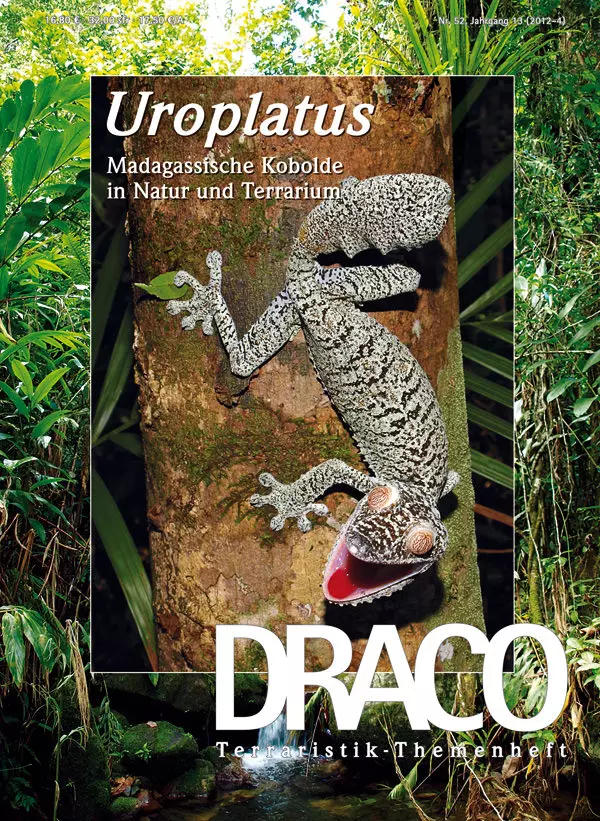
Draco 56 - Terrarium Equipment

Article no: draco56

CHF 32.00

Stock: 0

Ready for dispatch in 1-3 days, delivery time 7 working days

Delivery between Monday, 31 August and Tuesday, 1 September
Zahlungsarten
Product information "Draco 56 - Terrarium Equipment"

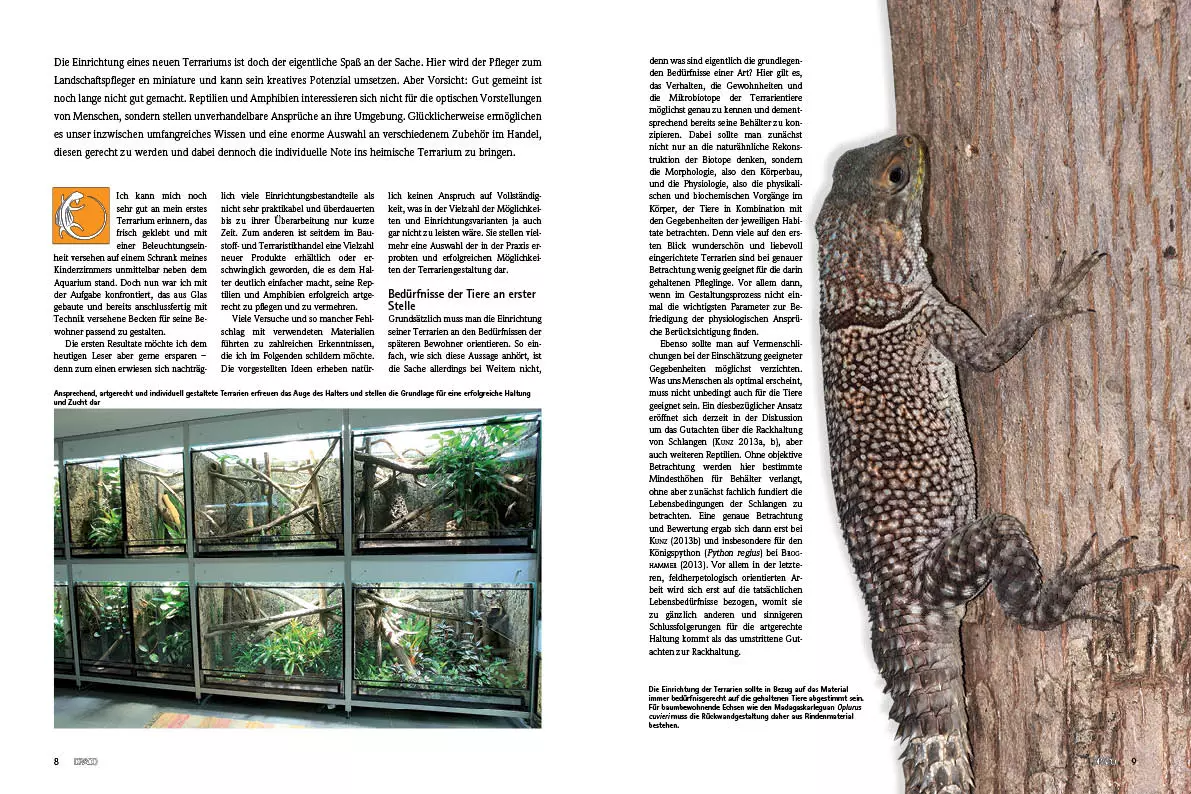
Draco 56 - Terrarium equipment

Contents:

Editorial

Terrarium design
Patrick Schönecker

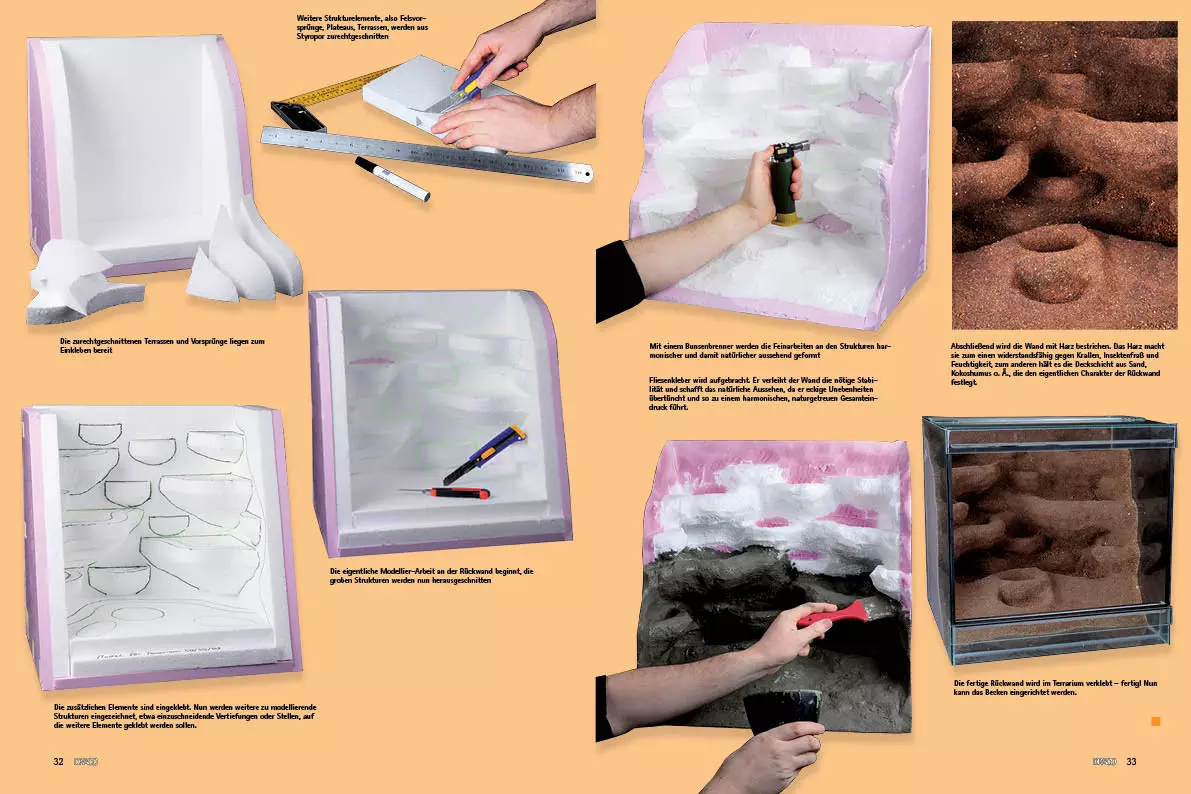
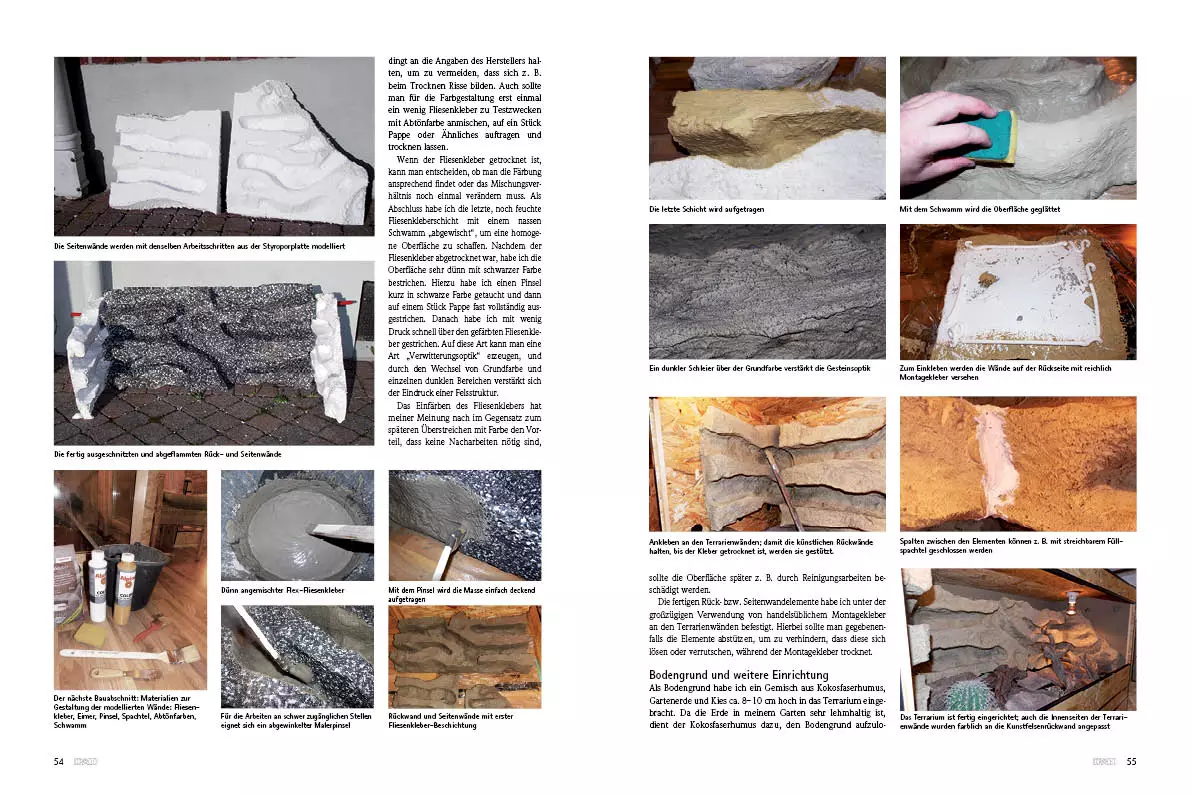
Seven steps to a self-built back wall
Diana & Oliver Fink

A piece of North American desert in your living room: building and designing a terrarium for collared iguanas
Jana Buchwald

A near-natural terrarium for the carpet python
Daniel Renner

Redesign of a terrarium for Lampropeltis alterna
Malte Hornig

Buyable and good: cork backgrounds and other furnishings from specialised retailers and their use in terrariums
Diana & Oliver Fink

Construction of a polystyrene terrarium system for the animal-friendly keeping, breeding and rearing of lizards
Hans Esterbauer

Lizards and succulents in the winter garden terrarium
Beat Akeret

Composition
Feeding recommendation
Technical details
Size information

0 of 0 reviews

Give us a rating!

Share your experience with the product with other customers.


Customers also bought

Draco 62 - Succulents as terrarium planting
Draco 62 - Succulents as terrarium plants Contents: Editorial Succulents – survival artists in arid regionsBeat Akeret Reptiles and succulentsBeat Akeret  Succulents as terrarium plantsBeat Akeret Succulents in the dry terrariums in the Wilhelma Zoological and Botanical Gardens, StuttgartJoscha Schulz & Björn Schäfer Aloes, pachypodiums, euphorbias and orchids - dry habitats in the south-central highlands of MadagascarMoritz Grubenmann Pointed tongues from Central Gondwana – Sansevierias as terrarium plantsBeat Akeret  Planting an outdoor terrarium for toad lizards Joschka Schulz  Succulent plant sources and associationsBeat Akeret

CHF 32.00

Draco 04 - Iguanas
Draco 04 - Iguanas Contents: Page content 2 Editorial 4 Iguanas, by H. Werning 18 Sex differences in iguanas, by U. Schlüter 29 Islands - Hot spots of biodiversity as habitat of a unique iguana fauna, by M. Monzel 38 About the iguanas of Madagascar, by W. Schmidt and K. Liebel 44 Desert keel-tailed iguanas from Peru, by U. Schlüter 50 Keeping, breeding and care of Anolis cybotes, by M. Rogner 54 The desert iguana Dipsosaurus dorsalis: lifestyle, keeping and breeding, by H. Wölfel 62 Care of green iguanas, by G. Köhler 70 Psychogenic egg-laying difficulties in a green iguana (Iguana iguana rhinolopha), by J. Rauh 73 Iguana farming, by G. Köhler 79 Book box 93 Magazine

CHF 14.90

Draco 10 - Animals, Terrariums, Habitats
Draco 10 - Animals, Terrariums, Habitats Contents: 2 Editorial4 Deserts – cold land under a hot sunSurvival strategies of desert-dwelling amphibians and reptilesThomas Wilms & Heiko Werning26 Planning, building and setting up a desert terrariumThomas Ackermann41 Colourful jewels in the terrarium – experiences with the long-term care and breeding of Uromastyx ornata (Heyden, 1827) up to the second filial generationThomas Wilms, Hans Dietmar Müller & Beate Löhr 50 The bearded toadhead Phrynocephalus mystaceus (Pallas, 1776) in the terrariumHans Dietmar Müller58 The fringed-fingered lizards (Acanthodactylus) of North AfricaUwe Schlüter 66 The kings of the North American desert: ChuckwallasHeiko Werning74The horned vipers (Cerastes) of North AfricaUwe Schlüter79 Namibia – hot land on a cold currentFelix Hulbert & Mirko Barts 94 Magazine

CHF 16.80

Draco 27 - Highland
Draco 27 - HighlandContents: 2 Editorial 4 Mountains and highlands - reptiles and amphibians in an extreme habitat Heiko Werning & Claudia Wolf 28 New Zealand - the discovery of new geckos at the end of the worldRonald Coleman 32 Giant toads and co. in the highlands of south-west ChinaKlaus Detlef Kühnel 36 Rwenzori - in search of amphibians in the mountains of the moonKatharina C. Wollenberg & Stefan Lötters 40 The keeping of highland chameleonsAndreas Böhle 45 chameleons in the Oster Usambara Mountains in northern TanzaniaWerner & Yvonne Lantermann 49 Spanish adders are also poisonous ...Axel Kwet 54 In search of mountain lizards in three continents Wolfgang Bischoff 74 Life, care and breeding of the alligator skink Mesaspis moreletii (Bocourt, 1871)Uwe Schlüter 81 Magazine

CHF 18.40

Draco 41 - Terrarium planting
Draco 41 - Terrarium plantingContents:EditorialTerrarium plantsBeat AkeretPlants in aquaterrariumsBeat SchmitterA touch of the Mediterranean - planting outdoor enclosures for Mediterranean tortoisesMichael WirthSucculents and other plants for the dry terrariumBeat AkeretClimbing plants and epiphytes - character plants in the forest terrariumBeat AkeretArtificial plants in the terrariumRoger AeberhardHerbs, grasses, houseplants, whatever is beautiful should grow in the tank - selected examples of planted terrariumsBeat Akeret

CHF 18.40

Reptilia 65 - Girdled lizards
Reptilia 65 - Girdled TailStar tortoiseIndigo snakeMonitor IslandContents: 2 EDITORIAL 3 READER LETTERS 4 MAGAZINE 12 DATES 14 WESTERN HERP PERSPECTIVESA country tripFrom B. Love 16 PHOTO REPORTAGEBelt-tailed lizards – the genus CordylusBy H. Schwier 24 KEEPING AND REPRODUCTIONDwarf Belted Tails: keeping and Breeding of Cordylus tropidosternum(Cope, 1869)From P. Fritz 32 KEEPING AND REPRODUCTIONCordylus mossambicus FitzSimons, 1958A persistent and interesting keeperFrom H.-P. Berghof 40 HERPETOFAUNAThe giant belted skink Cordylus giganteus – unique and mysterious at the same timeFrom H. Schwier 45 REPORTAGEThe radiated tortoise of Madagascar -an armoured beautyFrom J. Hammer 51 PORTRAIT AND POSTERPhilothamnus punctatusFrom M. Dobiey 56 KEEPING AND REPRODUCTIONNewts of the genus Paramesotriton- The Vietnamese and Laotian warty newtsFrom P. Bachhausen 64 KEEPING AND REPRODUCTIONDrymarchon couperi – the Eastern Indigo SnakeFrom N. Miele 72 TRAVELThe island of the monitor lizardsFrom A. Gumprecht 88 FAQ - FREQUENTLY ASKED QUESTIONSCorn snakesBy K. Kunz 92 REPORTAGESerpentário SanmaruFrom M. Junge 95 LIBRARY 104 BRUTKASTEN Chicken heart, be braveBy H. Werning

CHF 11.20

Suggested products

Handbook of food plants for tortoises and other reptiles
Handbook of forage plants 2nd revised editionMarion Minch is not only a successful breeder of diverse tortoises for many years, but also an excellent connoisseur of native wild herbs. She founded and runs samenkiste.de, which is well known to many tortoise keepers and nature lovers. Her name is inextricably linked with reptile care and species-appropriate nutrition for tortoises. Her handbook of food plants summarises the most important native food plants for herbivorous and omnivorous reptiles. She not only considers tortoises, but also iguanas, spiny-tailed dragons and even chameleons. From the basics of plant biology to native wild herbs to suitable food plants for hardy tropical reptile species, this comprehensive work provides the basis for species-appropriate keeping. In the expanded and supplemented 2nd edition, the plant section is divided according to flower colour. This makes it even easier to identify wild herbs. The work has also been supplemented with a wealth of additional information and many pictures.

CHF 46.50

Geckos
Geckos in the terrarium by Astrid FalkThe book offers a comprehensive introduction to geckos and their species-appropriate keeping in terrariums. It explains what you need to think about before buying a gecko and what preparations should be made. The book describes in detail how the terrarium is technically equipped and set up. The care of the animals, their special features and behaviour, their diet, reproduction and rearing of young animals are described, as well as diseases and husbandry problems with tried and tested suggestions for prevention and treatment. Individual gecko species that are particularly suitable for keeping and breeding in terrariums are portrayed in detail in the second part of the book.

CHF 28.50

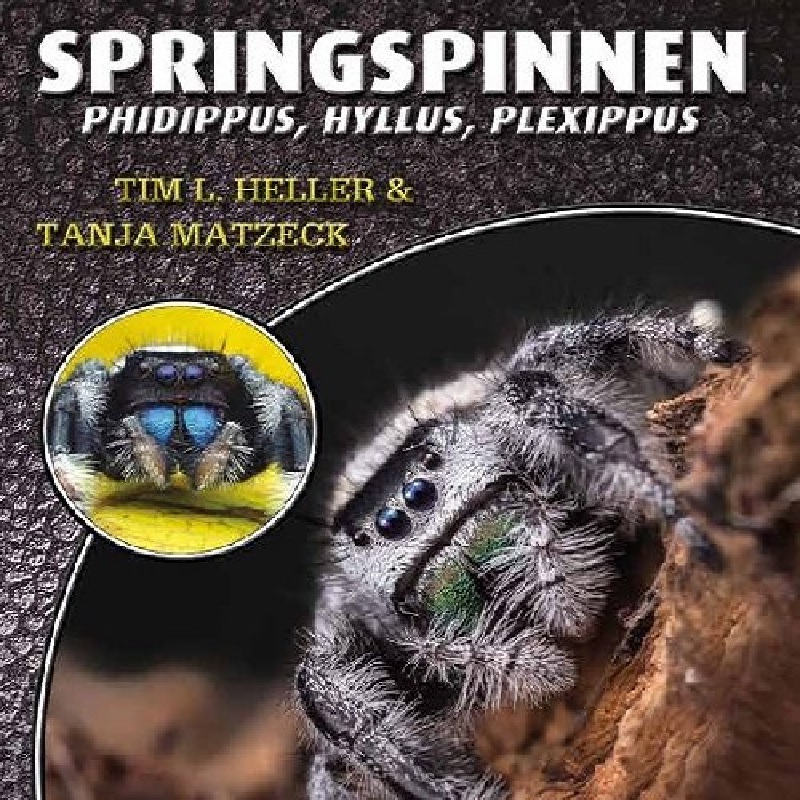
Jumping spiders Phidippus, Hyllus, Plexippus
Book Jumping Spiders - Phidippus, Hyllus & Plexippus A guide to keeping jumping spiders of the genera Phidippus, Hyllus & Plexippus. Who can resist the charm of jumping spiders? The childlike appearance of their expressive face simply leaves no one cold! In addition, their behavior is extremely exciting to observe, their colors are bright and their requirements for species-appropriate keeping are very easy to meet. No wonder these likeable jumpers are all the rage! This volume in the "Species by Species" series describes in detail what to look out for when buying and keeping them, introduces the most commonly kept species and color forms and provides plenty of tips on how to keep them successfully - so you can be sure they will breed well! Species by Species introduces you to the books in this series, which present the most popular terrarium animals. Each volume offers you detailed, practical care instructions and all the information you need to successfully breed your animals. All important questions from the required tank size to terrarium set-up, technical equipment, species-appropriate nutrition and disease prevention are answered with numerous tricks and tips. Experienced, long-standing breeders reveal how you can encourage the animals to reproduce and raise healthy young. All this in full color, generously illustrated and attractively designed - just about your terrarium animal - species by species

CHF 23.90

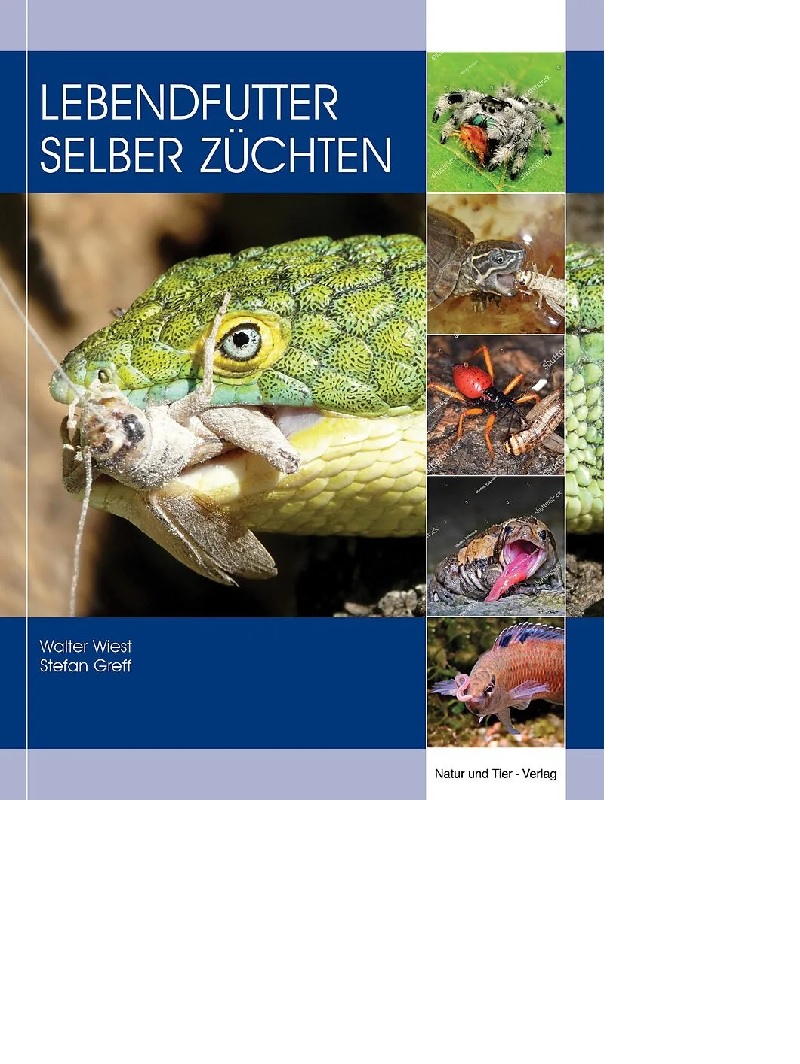
Book Breeding live food yourself
Book "Grow your own live food" - The perfect guide for pet owners Discover practical and detailed instructions on how you can easily breed food for your reptiles, birds, fish or other animals yourself in the book "Breeding live food yourself". With valuable tips on various food insects, their care and breeding, you can save money and ensure a species-appropriate diet for your pets. Contents of the book: Step-by-step instructions for breeding feeder insects Information on the best types of food for reptiles, birds and fish Care instructions and breeding conditions for various live food species Tips for sustainable and cost-effective food production Why breed your own live food? Get healthy, fresh food for your animals Save money and reduce dependence on pet shops Promote the health and well-being of your animals with species-appropriate food Whether you are a beginner or an experienced pet owner, this book provides you with everything you need to successfully breed live food yourself.

CHF 46.50

Marginata 69 - New Guinea tortoises
Marginata 69 - New Guinea tortoises – the genus ElseyaCover storyThe unrecognised beauties: New Guinea tortoises (Andreas S. Hennig)My experiences with Branderhorst's New Guinea tortoise, Elseya (Elseya) branderhorsti (Ouwens, 1914) (Andreas S. Hennig)Keeping and breeding of Rhodin's New Guinea tortoise, Elseya (Hanwarachelys) rhodini Thomson, Amepou, Anamiato & Georges, 2015 (Andreas S. Hennig)PortraitGeoemyda spengleri, Chinese serrated tortoise (Andreas S. Hennig)ReportageMacrochelys temminckii – Experiences and impressions with vulture tortoises part 2 (Reiner Praschag)KeepingAn alternative to year-round keeping of the Egyptian tortoise in the terrarium – my experiences with seasonal outdoor keeping of Testudo kleinmanni (Ricarda Schramm)EtymologySawbacks and living maps part 4: Graptemys gibbonsi, Pascagoula humpback tortoise (Holger Vetter)Classifieds & animal placement

CHF 16.50

The redknee tarantula
All about the redknee tarantula (Brachypelma smithi) from Boris F. Striffler 64 Seiten 14,8 x 21 cm zahlreiche Farbfotos Taschenbuch Autor Boris F. Striffler Verlag NTV Inhalt: Die Rotknie-Vogelspinne ist sicherlich nicht nur die bekannteste Vogelspinne, sondern auch eine der schönsten. Aber nicht nur ihre attraktive Färbung und das eindrucksvolle Äussere, sondern auch ihr ruhiges Wesen und die leichte Haltbarkeit machten diese Art zu einem der begehrtesten Terrarienpfleglinge überhaupt. Boris F. Striffler beschäftigt sich seit langem wissenschaftlich und als Terrarianer mit Vogelspinnen. In diesem Band der Reihe „Art für Art“ geht er im Detail und leicht verständlich auf sämtliche wissenswerten Aspekte der Haltung und Pflege von Rotknie-Vogelspinnen ein. Und selbstverständlich vermittelt er Ihnen auch, wie Sie Ihre Lieblinge zur Vermehrung bringen und die Jungspinnen aufziehen können. Systematik und Körperbau Die faszinierende Biologie: Aus dem Leben der Rotknie-Vogelspinne Alle Informationen zur artgerechten Haltung: Vom geeigneten Terrarium über Einrichtung und Technik bis hin zur Fütterung Erfolgreich nachzüchten: Paarungsstimulation, verschiedene Methoden zur Eizeitigung und Aufzucht der Jungtiere Problemlösungen: Wie man die häufigsten Fehler bei der Pflege vermeidet, und wie man kranken Tieren helfen kann Brillante Fotos

CHF 21.90

NTV, Plants in the terrarium
NTV - Plants in the Terrarium 408 pages over 1205 illustrations Format: 17.5 x 23.2 cm Hardcover Author Beat Akeret Contents: If you want to fulfil your desire to bring a piece of nature into your home with a terrarium, you cannot do without plants to create a natural habitat for your pets. Plants not only increase the visual value of a terrarium, they also improve the climate and provide the animals with cover and hiding places. Some amphibians and reptiles are also very closely tied to certain plants. Planting in the terrarium therefore fulfils a whole range of functions and is an important part of the furnishings.This book offers everything you need to know about caring for terrarium plants, designing near-natural terrariums and selecting suitable plant species! With 400 pages and over 1000 illustrations, this is probably the most comprehensive German standard work on the subject of terrarium planting!

CHF 52.00

Marginata 48 - Turtles in animal protection
Marginata 48 - Turtles in animal welfarePeloponneseRarities from VietnamEuropean pond turtleTable of contents EditorialMagazineTOPIC"Chelonia" - Germany's largest turtle sanctuaryPatrick BoncourtTOPICSanctuary for tortoises in Stuttgart - a feel-good garden for tortoises Humans and animalsNicole Gehringer & Thomas SchällingTOPICTurtle animal welfare Supersize - the Phoenix Herpetological SocietyHeiko WerningPORTRAITEmys orbicularis (Linnaeus, 1758) European pond turtle, East Mediterranean pond turtleBenny Trapp TRAVELIn search of the "shy beauty" and the "Cave turtles" (2)Torsten Blanck, Sebastian Braun, Timothy McCormack, Hoang Van Ha, Nguyen Tai Thang, Nguyen Van Luc & Minh LeSCIENCETrachemys emolli or T. grayi in Honduras? Alexander GutscheTRAVELMorea - in search of turtles and other reptiles in the West the Peloponnese (2)Axel KwetSubscription & ServiceRegional guide

CHF 16.50

The gold dust day gecko
All about the gold-dusted day gecko by Peter Krause 64 pages Format: 14.8 x 21 cm numerous colour photos 3rd edition Author Peter Krause Publisher NTV Contents: The gold-dusted day gecko is one of the most commonly kept day gecko species. As it is also one of the most colourful species of the genus, even long-time phelsum keepers enjoy these animals time and time again. What also makes the gold-dust day gecko so popular and extremely suitable as a terrarium pet is its agile, lively nature and easy keeping. Systematics and body structure The fascinating biology: From the life of the gold dust day gecko All information on species-appropriate keeping: from suitable terrariums to equipment and technology to feeding Successful breeding: Mating stimulation, incubation of the eggs and rearing the young Solutions to problems: How to avoid the most common mistakes in care and how to help sick animals Brilliant photos

CHF 21.90

Draco 01 - Chameleons
Draco 01 - Chameleons Contents: 2 Editorial 4 Chameleons, the ancestry and systematics of the terrestrial lions, by P. Necas/D. Modry 20 On the trail of chameleons in southern Africa, by D. Jörgens 25 The play of colours of chameleons, by T. Stegemann 29 The tongue of the chameleons, by T. Stegemann 32 Chameleons in human care - review and current status, by G. Masurat 52 The Yemen Chameleon Chamaeleo calyptrates, by U. Dost 57 Coccidial infections in Chamaeleo calyptratus – a ‘trivial’ problem in the terrarium? by D. Modry, P. Necas, B. Koudela 61 On the keeping and breeding of Chamaeleo pfefferi, by A. Böhle and F. Steffen 63 About the terrestrial, leaf or stump-tailed chameleons of the genera Brookesia and Rhampholeon, by W. Schmidt 68 The chameleon in African mythology, by D. and M. Schuster 77 Magazine 86 Book box 89 Family Chamaeleoniade - List of recent species and subspecies

CHF 14.90

Terraria 62 - Unusual food animals
Terraria 62 - Unusual Food Animals Campbell’s Tree Lizard Succulents Contents: Cover Story: Unusual Food Animals A healthy diet plays a decisive role in the successful care and breeding of our terrarium animals. The famous mealworm as a standard food is far from sufficient. Fortunately, specialist retailers now offer a wide range of suitable food insects such as house crickets, crickets, flies or cockroaches, which are available all year in any quantity. However, many pets also like to eat food animals outside the mainstream and some specialists are even dependent on a special diet for their well-being. In this issue of TERRARIA/elaphe, we take a closer look at some of these little-known, rather unusual food animals such as field slugs, woodlice, moth flies or a small-growing fruit fly variant. 3          Territorial 8          Herpetorama             Results of the 17th CITES Conference in Johannesburg – new regulations for some reptiles and amphibians             Synanthrope: Creeping Schnapps             Leaf Climber: Wasted “Time”             Thorny Devil: A Rural Keel-Tailed Iguana   Cover Story 14        Food Animals             A perennial topic in terraristics             Krition Kunz 20        Slippery Snacks             Breeding and use of the Mediterranean field slug as live food             Frank Täufer 25        Woodlice as Food Animals             Dominik Hoffses 30        A Small-Growing Variant of the Fruit Fly: Drosophila melanogaster “Ant”             Boris Stockmann 34        A Frog Farm for Feeding Reptiles and Amphibians: the Painted Disk-Tongued Frog (Discoglossus pictus)             Frank Pasmans, Sergé Bongaerts & An Martel 39        Moth Flies             A new food animal for small nocturnal hunters             Ingo Fritzsche   Panorama 42        Snake searching in the Ecuadorian Chocó rainforest             Daniel Jestrzemski   Research 50        New Species             A new slender boa from the Bahamas: the Conception Silver Boa (Chilabothrus argentum)             Axel Kwet             A new Borneo bush frog from Mt. Kinabalu             Axel Kwet 52        Among Researchers             The Comoros, a forgotten hotspot of diversity             Oliver Hawlitschek 56        Salamandra   Terraristics 60        Ant plants, leaf cacti and other succulent epiphytes for the terrarium             Beat Akeret   Nature and Species Conservation 70        Field Notes             Grass snake eating             Günther Vater             The feeding behaviour of the wall lizard Part 2             Malte Hornig 72        Project to protect the critically endangered tree lizard Abronia campbelli in eastern Guatemala             Brad Lock & Mónica Torres 84        Terrarino – the children’s page              The fire salamander – not a lucky animal             Alexa Sabarth   81        Subscription & Service 86        Also in your area 88        Preview 90        Incubator              No mercy for Mouse Z             Part 2             Heiko Werning

CHF 12.00

Reptilia 39 - Pythons
Reptilia 39 - Pythons Southern MexicoQuarantineChameleon protection Contents: 2 EDITORIAL 3 READER LETTERS 7 MAGAZINE 17 DATES 20 WESTERN HERP PERSPECTIVESNew citizenby B. Love 22 PHOTO REPORTAGE Pythonsby V. Franz 30 KEEPING AND BREEDINGMorelia spilota – Keeping and breeding the Diamond Python by U. Amundsen 34 KEEPING AND BREEDINGPython anchietae – Keeping and breeding the Angolan Python by V. Franz 37 REPORTAGEFascination record snake. Part 1: From childhood dream to research by H. Bellosa 40 TRAVELSouthern Mexicoby S. Vogler 51 PORTRAIT AND POSTERGeochelone nigraby H. Werning 56 REPORTAGEChamaeleo africanus in Europe: On a conservation project to preserve a reptile species threatened with extinction in Europeby B. Trapp 62 HerpetofaunaContribution to the knowledge and first report on breeding the Vietnamese swamp turtle, Mauremys annamensis (SIEBENROCK, 1903)by M. Schilde 66 REPORTAGEHow should a professional quarantine be carried out?by T. Eisenberg 72 REPORTAGEFire-bellied newts of the genus Cynops. Part 2: Breeding and newt registerby P. Bachhausen 78 REPORTAGEWith pencil and ink: treasures conjured on paperby R. Fenske 88 CLASSIFIED ADS 90 RAT & TAT 93 LIBRARY 104 GLOSSState guest in Chileby H. Werning

CHF 11.20