Reptilia 123 - Planting of poison dart frog terrariums

Article no: reptilia123

CHF 13.50

Stock: 0

Ready for dispatch in 1-3 days, delivery time 7 working days

Delivery between Tuesday, 7 July and Wednesday, 8 July
Zahlungsarten
Product information "Reptilia 123 - Planting of poison dart frog terrariums"

Reptilia 123 - Planting of poison dart frog terrariums

Contents:

Cover story: Planting poison dart frog terrariums

Poison dart frog terrariums can be real gems. Not only because of the "jewels from the rainforest" themselves – but also because of the rainforest around them. Poison dart frogs come to us from biotopes that are also home to countless attractive tropical plants, many of which are available to us and can be cultivated excellently. The experienced terrarium plant specialist Beat Akeret explains in the cover story of this REPTILIA exactly which plants are suitable for poison dart frog terrariums, so that these not only look great and meet the needs of the frogs, but even conjure up an authentic Latin American rainforest section in the living room.

Also in REPTILIA No. 123

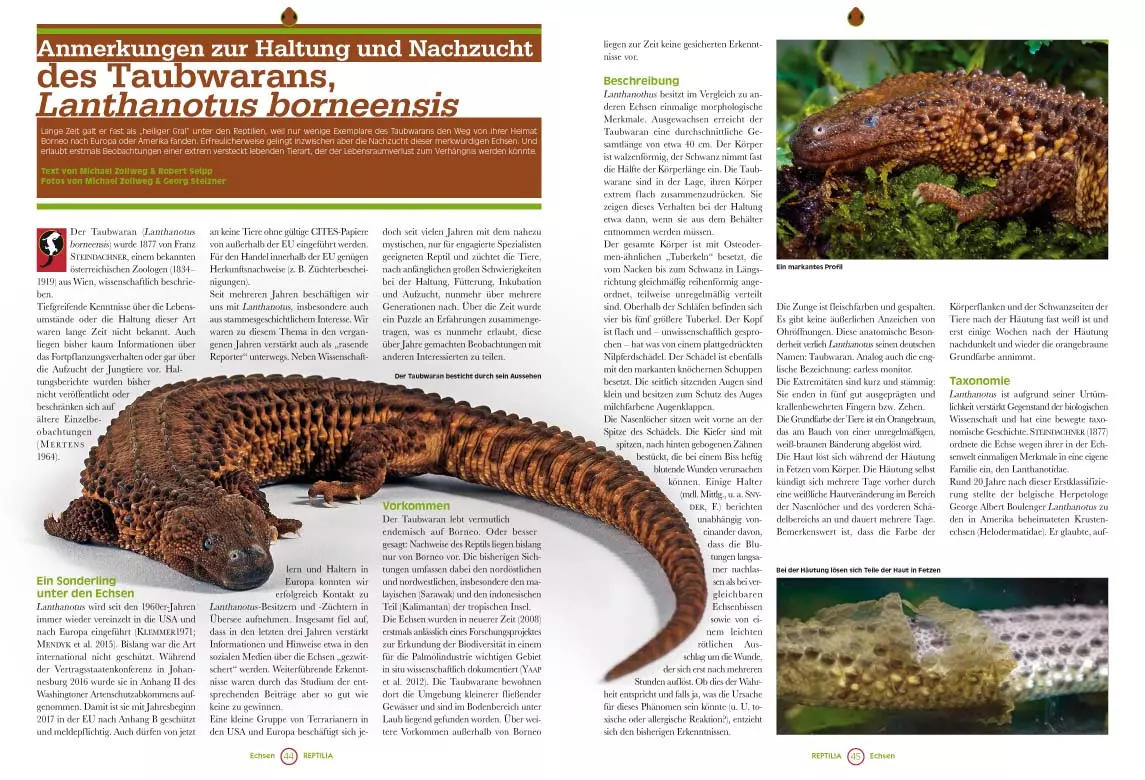
Keeping and breeding one of the most mystical reptiles of all: the Bornean earless monitor in the terrarium
Danger in the magic of blossoms: crab spiders
The great trek 3: with REPTILIA editor-in-chief Heiko Werning from coast to coast through the south of the USA
and much more

4          editorial

            6          MAGAZINE

            14        DATES

            16        WESTERN HERP PERSPECTIVES

                                   Only in America

                                   By B. Love

            18        PHOTOSTORY

                                   Plants in the poison dart frog terrarium

                                   By B. Akeret

            26        Terrarium technology

                                   Plant care in the poison dart frog terrarium

                                   Basic considerations

                                   By B. Akeret

            32        plants

                                   Suitable plants for poison dart frog terrariums

                                   By B. Akeret

            44        KEEPING AND BREEDING

                                   Notes on keeping and breeding of the earless monitor, Lanthanotus borneensis

                                   By M. Zollweg & R. Seipp

            54        Terrarium technology

                                   Even more light

                                   Comments by S. Wunderlich and O. Fischer

            61        SERVICE

            64        travel

                                   The great trek

                                   Part 3: Georgia on my Mind

                                   By H. Werning

            76        ALSO NEAR YOU

            80        PREVIEW

            82        INCUBATOR 

                                   If this sets a precedent

                                   Part 2

                                   By H. Werning

Composition
Feeding recommendation
Technical details
Size information

0 of 0 reviews

Give us a rating!

Share your experience with the product with other customers.


Customers also bought

Reptilia 40 - Terrarium Planting
Reptilia 40 - Terrarium Planting MarajóCopperheadFrogs of Costa Rica Contents: 2 EDITORIAL 3 READER LETTERS 7 MAGAZINE 17 DATES 20 WESTERN HERP PERSPECTIVESA juvenile snake hunting fiascoby B. Love 22 PHOTO REPORTAGE Terrarium plantingby B. Akeret 31 REPORTAGEPlanting of desert terrariums by B. Akeret 36 REPORTAGEPlanting an epiphyte branch for the terrarium by B. & W. Schwarz 40 REPORTAGECarnivorous plants in the terrarium by A. Glück 47 HERPETOFAUNABiology and distribution of Podocnemis vogli in Venezuelaby M. Merchán, A. M. Fidalgo & C. Pérez 51 PORTRAIT AND POSTERWrestling match in the rainforestby M. Ruckgaber 56 HUSBANDRY AND BREEDINGThe copperhead (Agkistrodon contortrix) – a “beginner's” snake?by D. Schmidt 65 HUSBANDRY AND BREEDINGHusbandry and breeding of Sind rock geckos, Cyrtopodion kachhensis (STOLICKA, 1872)by U. Schlüter 69 REPTORTAGEIn search of frogs in Costa Ricaby T. Eisenberg 75 TRAVELMarajó – Hot and humid Amazon paradiseby L. Dirksen 84 CLASSIFIEDS 90 TIPS & TRICKS 93 LIBRARY 104 GLOSSELiving in scalesby L. Hogeback

CHF 11.20

Reptilia 117 - Amphibian Rarities
Reptilia 117 - Amphibian raritiesFlooridaNight lizardIberian adderContents: Cover story: Amphibian raritiesIn all amphibian groups there are species which, for various reasons, are not kept as frequently in terrariums as fire salamanders, dyer frogs etc.: some species are only imported rarely and in small numbers, some have no lobby, others are highly sought after but not easy to breed.In the cover story of this issue of REPTILIA, we present such rarities in detail - with captivating photos and detailed reports on extremely pleasing breeding successes. We also visit a project in South America in which species sought after by terrarists are selectively propagated - and which simultaneously promotes science, nature conservation and environmental education.EditorialMAGAZINEDATES WESTERN HERP PERSPECTIVESThe fate of books, part 1B. LovePhoto storyAmphibian raritiesK. KunzKeeping and breedingCharming little fellows: Keeping and breeding Riobamba pouched frogs (Gastrotheca riobambae)D. SchmidtKeeping and breedingBreeding a Ryabov’s Phantom Moss Frog (Theloderma ryabovi) in a terrariumE. RyboltovskyReportageSustainable marketing of frogs for terraristics in EcuadorS. CondeKeeping and breedingKeeping and breeding the Iberian viper (Vipera seoanei)A. SchmidServicesKeeping and breedingCare and breeding of the night lizard Lepidophyma smithiG. KöhlerReportageTuataras. The living fossils of New ZealandO. DrewesAlso in your neighbourhoodJourneyThe great trek. Part 1: Melting Pot South FloridaH. WerningPreviewIncubatorNobody warns you about this before you have childrenH. Werning

CHF 12.00

Nekton Rep Calcium + D3
Rep Calcium +D3 Nekton Rep Calcium + D3 is a high-quality calcium supplement for reptiles and amphibians that supports optimal bone and muscle development. Enriched with vitamin D3, it promotes the absorption of calcium in the body and thus contributes to a healthy skeletal structure and an intact metabolism. Especially for reptiles kept in terrariums, a regular supply of calcium and vitamin D3 is crucial to avoid deficiency symptoms such as bone softening or deformities. The powder is easy to dose and can be sprinkled directly over the food or added to the drinking water. Nekton Rep Calcium + D3 is an ideal supplement for all reptile species that have an increased need for calcium, such as tortoises, geckos and agamas. Advantages: Optimum calcium supply: Promotes healthy bone and skeletal development and supports the muscular system. Enriched with vitamin D3: Improves calcium absorption in the body and ensures optimum utilization. Prevents deficiency symptoms: Reduces the risk of calcium deficiencies that can lead to health problems. Easy to use: The powder is easy to dose and can be added directly to the feed or drinking water. High-quality composition: Specially developed for the needs of reptiles and amphibians. Zoo Roco tips: Correct dosage: Pay attention to the recommended dosage depending on the species and age of the animal to avoid overdosing. Combine with UVB lighting: Vitamin D3 needs UVB radiation to be optimally processed. So provide good UVB lighting in the terrarium to maximize the effect of Nekton Rep Calcium + D3. Feeding frequency: Sprinkle the calcium supplement 2-3 times a week on the food or in the drinking water, depending on the animal's needs. Combination with other supplements: In some cases, it may be useful to combine Nekton Rep Calcium + D3 with other nutrients your pet needs, especially if a special diet is required.

From CHF 5.90

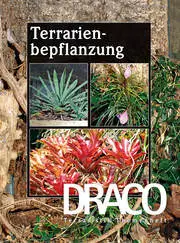
Draco 41 - Terrarium planting
Draco 41 - Terrarium plantingContents:EditorialTerrarium plantsBeat AkeretPlants in aquaterrariumsBeat SchmitterA touch of the Mediterranean - planting outdoor enclosures for Mediterranean tortoisesMichael WirthSucculents and other plants for the dry terrariumBeat AkeretClimbing plants and epiphytes - character plants in the forest terrariumBeat AkeretArtificial plants in the terrariumRoger AeberhardHerbs, grasses, houseplants, whatever is beautiful should grow in the tank - selected examples of planted terrariumsBeat Akeret

CHF 18.40

Oak leaves decorative foliage 1 liter
The Pet Factory - Decorative foliage The Pet Factory decorative foliage - holm oak leaves for natural decoration of terrariums. Oak leaves for terrariums pH lowering in aquariumsFood for shrimps for rearing poison dart frog tadpoles has an antifungal and disinfecting effect also as decoration for small mammal terrariums 1 liter corresponds to approx. 15 grams When used in aquariums, the pH-reducing properties must be taken into account and the foliage can also be used for breeding poison dart frog tadpoles. Decorative foliage has an antifungal and disinfecting effect. Tip:It is also ideal as decoration for small mammal terrariums, as it is only gnawed on a little. It simply does not taste good!

CHF 4.60

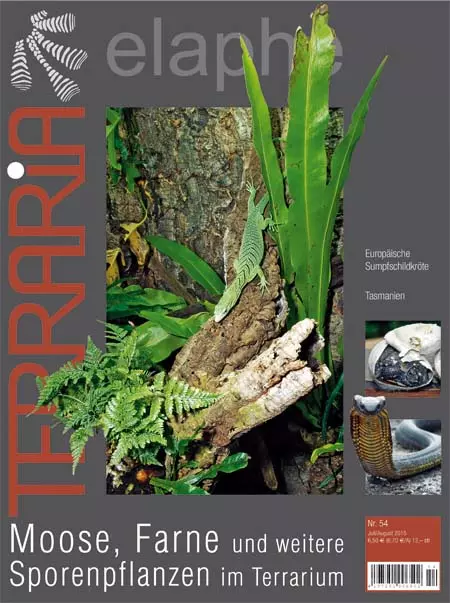
Terraria 54 - Mosses, ferns and further spore plants in the terrarium
Terraria 54 - Mosses, ferns and other spore plants in the terrariumEuropean pond turtleTasmaniaContents:Cover story: Mosses, ferns and other spore plants in the terrariumIn 1892, the English physician Dr N.B. Ward realised that ferns could be cultivated in closed glass containers. This gave rise to Victorian plant display cases planted with ferns and mosses - the forerunners of today's terrariums. However, mosses, ferns and other spore plants are more than just decorative accessories in humid terrariums. Their reproduction by means of alternation of generations, which can also be observed in the terrarium, is particularly interesting. In addition to many interesting aspects of spore plants, the next issue will also contain numerous tips and tricks on how these plants can thrive in the terrarium and how they can best be kept together with reptiles and amphibians.ContentsTerritorialHerpetoramaNew study by the Federal Agency for Nature Conservation: What really jeopardises biodiversity in Germany LookupThorn Devil: The Variable Rain FrogCultural successors: tortoises in ViennaWhat did the first snakes look like?Leafhoppers: In the NewsCover storyWitnesses of the dinosaur era - about terrarium plants with generational changeBeat AkeretMosses - unrecognised dwarfs among terrarium plantsBeat AkeretEpiphytic ferns in the terrariumBeat AkeretNeither moss nor fern. Lycopodiopsida as terrarium plantsBeat AkeretPanoramaTiger otters: an invitation to get to know the reptiles of Tasmania Guillaume GomardResearchNew speciesIn wild Kurdistan - a spectacular large monitor lizard from the Zagros MountainsAxel KwetAmong researchersThe miracle black toad, one of the rarest amphibian species in the worldLuis Fernando Marin da FonteSalamandraTerraristicsMany years of experience in keeping and breeding the European pond turtle. Part 2: Egg laying, incubation, rearing the young, hibernation, husbandry problemsBernd WolffFirst herpetological assistance from Cologne at Saigon ZooThomas Ziegler & Anna RauhausNature and species conservationField notesLate finds of yellow-bellied toad and natterjack toad larvaeJürgen GebhartMysterious deaths of frogs and newtsAxel KwetAlso in your neighbourhoodSubscription & ServicePreviewIncubator The danger seekersHeiko Werning 

CHF 12.00

Suggested products

Handbook of food plants for tortoises and other reptiles
Handbook of forage plants 2nd revised editionMarion Minch is not only a successful breeder of diverse tortoises for many years, but also an excellent connoisseur of native wild herbs. She founded and runs samenkiste.de, which is well known to many tortoise keepers and nature lovers. Her name is inextricably linked with reptile care and species-appropriate nutrition for tortoises. Her handbook of food plants summarises the most important native food plants for herbivorous and omnivorous reptiles. She not only considers tortoises, but also iguanas, spiny-tailed dragons and even chameleons. From the basics of plant biology to native wild herbs to suitable food plants for hardy tropical reptile species, this comprehensive work provides the basis for species-appropriate keeping. In the expanded and supplemented 2nd edition, the plant section is divided according to flower colour. This makes it even easier to identify wild herbs. The work has also been supplemented with a wealth of additional information and many pictures.

CHF 46.50

Geckos
Geckos in the terrarium by Astrid FalkThe book offers a comprehensive introduction to geckos and their species-appropriate keeping in terrariums. It explains what you need to think about before buying a gecko and what preparations should be made. The book describes in detail how the terrarium is technically equipped and set up. The care of the animals, their special features and behaviour, their diet, reproduction and rearing of young animals are described, as well as diseases and husbandry problems with tried and tested suggestions for prevention and treatment. Individual gecko species that are particularly suitable for keeping and breeding in terrariums are portrayed in detail in the second part of the book.

CHF 28.50

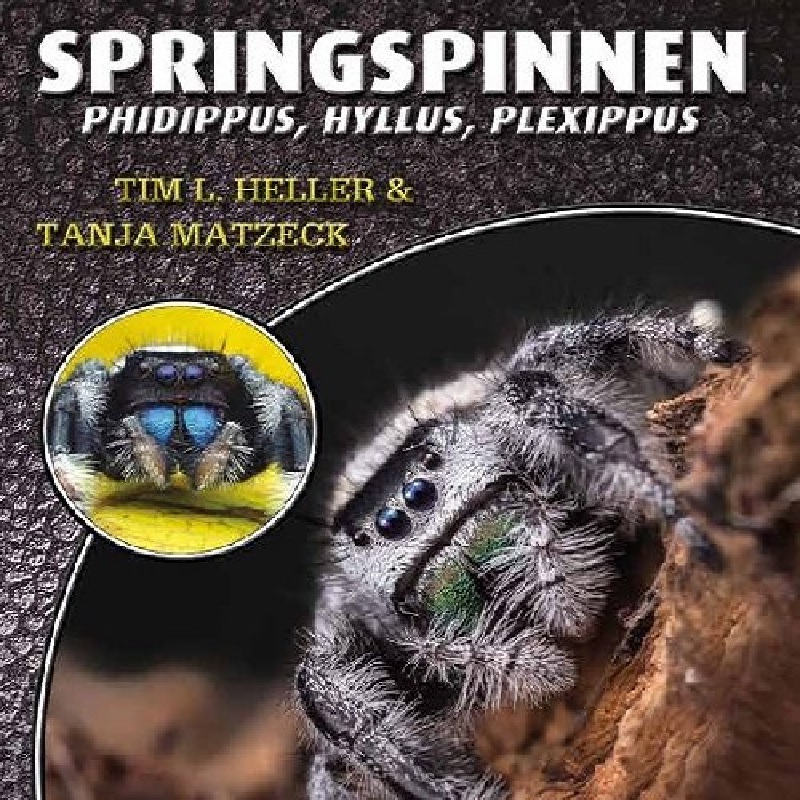
Jumping spiders Phidippus, Hyllus, Plexippus
Book Jumping Spiders - Phidippus, Hyllus & Plexippus A guide to keeping jumping spiders of the genera Phidippus, Hyllus & Plexippus. Who can resist the charm of jumping spiders? The childlike appearance of their expressive face simply leaves no one cold! In addition, their behavior is extremely exciting to observe, their colors are bright and their requirements for species-appropriate keeping are very easy to meet. No wonder these likeable jumpers are all the rage! This volume in the "Species by Species" series describes in detail what to look out for when buying and keeping them, introduces the most commonly kept species and color forms and provides plenty of tips on how to keep them successfully - so you can be sure they will breed well! Species by Species introduces you to the books in this series, which present the most popular terrarium animals. Each volume offers you detailed, practical care instructions and all the information you need to successfully breed your animals. All important questions from the required tank size to terrarium set-up, technical equipment, species-appropriate nutrition and disease prevention are answered with numerous tricks and tips. Experienced, long-standing breeders reveal how you can encourage the animals to reproduce and raise healthy young. All this in full color, generously illustrated and attractively designed - just about your terrarium animal - species by species

CHF 23.90

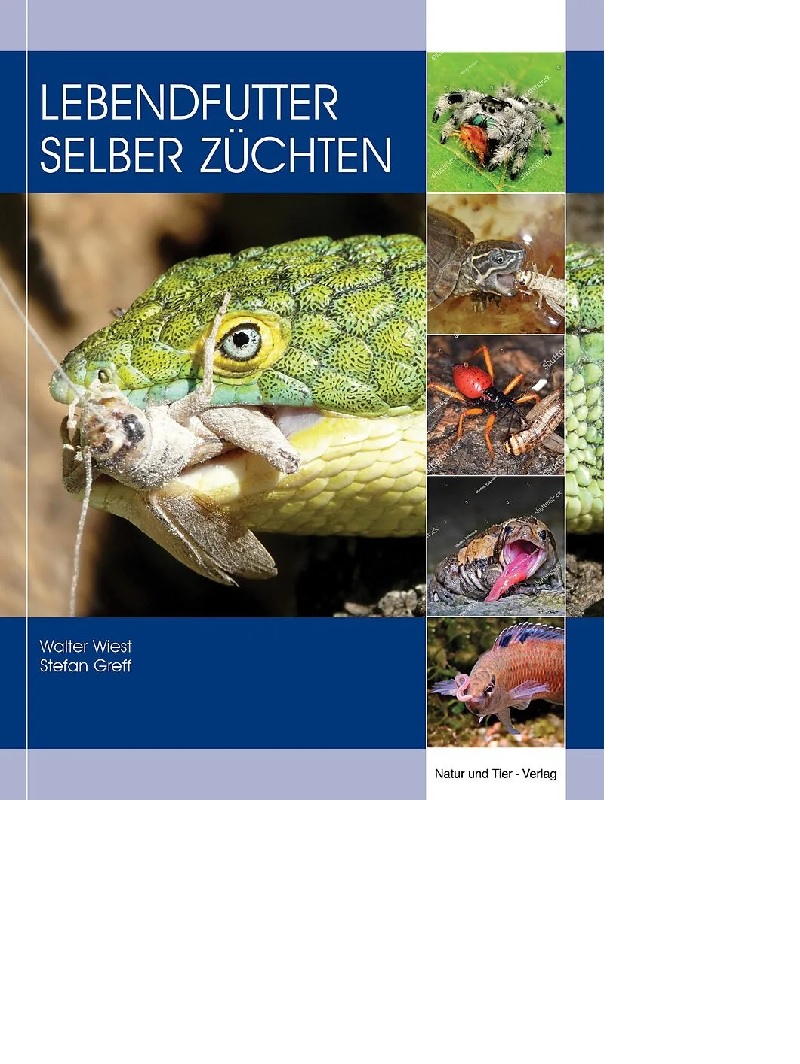
Book Breeding live food yourself
Book "Grow your own live food" - The perfect guide for pet owners Discover practical and detailed instructions on how you can easily breed food for your reptiles, birds, fish or other animals yourself in the book "Breeding live food yourself". With valuable tips on various food insects, their care and breeding, you can save money and ensure a species-appropriate diet for your pets. Contents of the book: Step-by-step instructions for breeding feeder insects Information on the best types of food for reptiles, birds and fish Care instructions and breeding conditions for various live food species Tips for sustainable and cost-effective food production Why breed your own live food? Get healthy, fresh food for your animals Save money and reduce dependence on pet shops Promote the health and well-being of your animals with species-appropriate food Whether you are a beginner or an experienced pet owner, this book provides you with everything you need to successfully breed live food yourself.

CHF 46.50

Marginata 69 - New Guinea tortoises
Marginata 69 - New Guinea tortoises – the genus ElseyaCover storyThe unrecognised beauties: New Guinea tortoises (Andreas S. Hennig)My experiences with Branderhorst's New Guinea tortoise, Elseya (Elseya) branderhorsti (Ouwens, 1914) (Andreas S. Hennig)Keeping and breeding of Rhodin's New Guinea tortoise, Elseya (Hanwarachelys) rhodini Thomson, Amepou, Anamiato & Georges, 2015 (Andreas S. Hennig)PortraitGeoemyda spengleri, Chinese serrated tortoise (Andreas S. Hennig)ReportageMacrochelys temminckii – Experiences and impressions with vulture tortoises part 2 (Reiner Praschag)KeepingAn alternative to year-round keeping of the Egyptian tortoise in the terrarium – my experiences with seasonal outdoor keeping of Testudo kleinmanni (Ricarda Schramm)EtymologySawbacks and living maps part 4: Graptemys gibbonsi, Pascagoula humpback tortoise (Holger Vetter)Classifieds & animal placement

CHF 16.50

Terraria 11 - Tokeh & Co.
Terraria 11 - Tokeh & Co. As a backpacker in AustraliaMantella Contents: 2 Editorial Heiko WERNING TOPIC4 The geckos of the genus Gekko – an overviewWolfgang GROSSMANN14 The Gekko-petricolus group (G. petricolus, G. grossmanni, G. ulikovskii & G. badenii) – Summary of the current state of knowledge, with some personal observations on Gekko ulikovskiiPeter POGADA24 From Tokeh Wolfgang GROSSMANN SCIENCE31 New speciesList of reptiles newly described in 2007 42 The garden boa, Corallus hortulanus, in the terrariumThorsten SCHMIDT54 Snapping turtles– dangerous, fauna-distorting or interesting pets?Dieter SCHMIDT65 Observations of Madagascan mantella frogs of the genus Mantella in the wildPhilip - Sebastian GEHRING TRAVEL73 Backpacking in down under – for the sake of reptilesDavid PROETZEL TERRARIUM PRACTICE84 Test run Artificial aquatic plants / Internal filter / Digital second timer86 Prelude Wandering spiders of the genus CupienniusKriton KUNZ90 Eye-catcherA rooftop oasis for reptilesAxel KWET94 Also near you 97 TERRAnetzRattlesnake pages 98 TERRAglobal Of cobras and Siamese fighting fishJoachim BULIANHerpetologists will find what they are looking for: Curiosities at the witches' market in La PazMartin JANSEN104 TERRAwinn

CHF 12.00

Reptilia 31 - Rainforest terrariums
Reptilia 31 rainforest terrariums Giant millipedesCrocodile-tailed crested lizardsBamboo otters Contents: 2 EDITORIAL 3 READER LETTERS 5 MAGAZINE 12 DATES 18 WESTERN HERP PERSPECTIVES: Reptile Television, By B. Love 20 PHOTOREPORTAGE: Rainforest terrariums, By M. Schmidt 28 REPORTAGE: Rain for the rainforest – Mist and irrigation in the rainforest terrarium, By P. Nowark 32 REPORTAGE: Materials for back wall design in rainforest terrariums, By T. Doussier 37 REPORTAGE: Plants in the rainforest terrarium, By B. & W. Schwarz 43 TRAVEL: The herpetofauna of south-west Morocco, By U. Schlüter 51 PORTRAIT AND POSTER: Natrix natrix, By H. P. Eckstein & B. Trapp 55 KEEPING AND BREEDING: On the lifestyle, keeping, care and reproduction of the crocodile-tailed humpback lizard Shinisaurus crocodilurus, By M. Rogner 62 HERPETOFAUNA: Information on the lifestyle and husbandry of the bamboo otter Trimeresurus kanburiensis, By J. Bulian 67 REPORTAGE: Saving the giant tortoises on Galápagos, By H. W. Köhler 74 KEEPING AND BREEDING: Tropical giant millipedes, By F. Gast 77 HERPETOCULTURE: Devilish, divine snake. Aspects of snake symbolism from a psychological perspective Part 2: Psychological foundations, the snake as a symbol of the unconscious, ambivalence of the snake symbol, By K. Kunz 87 CLASSIFIED ADS 91 ADVICE AND ACTION 93 LIBRARY 104 GLOSSE: An autumn morning dream, By L. Hogeback

CHF 9.80

Terraria 46 - Iguanas in the "Wild West"
Terraria 46 - Iguanas in the "Wild West" Abronia deppiiNew amphibians 2013 Contents: The small iguanas from the North American arid regions are among the most popular pets in our terrariums. They include such prominent representatives as collared iguanas, chuckwallas, desert iguanas, toad lizards, leopard iguanas and spiny iguanas. We report on these sun-worshippers in the wild and present examples of successful terrarium keeping.Table of contents:TerritorialHerpetoramaCover storyIguanas in the “Wild West”Heiko WerningThe leopard among the reptilesKarl-Heinz SwitakPhrynosoma modestum. Tiny little creatures with interesting behaviourJörg Wernicke & Klaus HaaseAlways hugging the wall: The Baja California rock iguana, Petrosaurus repens, in the terrariumPeter Schulze NiehoffPanoramaHerpetological observations in the habitat of Abronia deppii in the Valle de Bravo, State of Mexico, MexicoChristian LangnerResearchNew speciesList of new amphibians described in 2013Axel KwetSalamandraAlso in your neighbourhoodTerraristicsThe animal world in human handsWalter SachsseNature and species conservationField notesStartle response in the common frog (Rana temporaria)Rudolf MalkmusTerrestrial hibernation of Pelophylax ridibundus in a garden bedAndreas Nöllert Long-term data on the reproductive biology of the grass frog under the influence of global warmingRudolf MalkmusSubscription & ServicePreviewIncubator Tasty giraffeHeiko Werning

CHF 12.00

Terraria 12 - On Reptile Search in Madagascar
Terraria 12 - In search of reptiles in Madagascar Jackson's three-horned chameleonRattlesnake Contents: 2 Editorial Heiko WERNING TOPIC 4 The infamous coastal road from Tolanaro to Vangaindrano - or how I found Phelsuma berghofi Hans-Peter BERGHOF 14 The herpetofauna of a coastal forest near Cap Est, north-east Madagascar Sebastian WOLF 23 Herpetological travel impressions from the Montagne des Francais massif in northern Madagascar Steven ARTH & Sandra BAUS SCIENCE 30 Herpetorama Origin of the Turtles / Vampire Hunter 32 New species Luperosaurus / Tsingymantis antitra 34 Among researchers Sulawesi's herpetofauna: Underestimated diversity in a turbulent environment André KOCH 39 When species evolve - the evolution of the rattlesnake (Crotalus durissus) in northern South America Christian NEUMANN 50 Grey giants among themselves - of panther tortoises and elephants in Addo Elephant National Park, South Africa Part 1: The panther tortoise and the Addo Elephant National Park Michael WIRTH 58 Breeding Chamaeleo (Trioceros) jacksonii merumontanus at moderate temperatures Thomas PAECH 64 Biology, husbandry and breeding of the small spotted bark scorpion, Isometrus maculatus (DeGeer, 1778) Alexander TIETZ TERRARIUM PRACTICE 74 Test run Coating compound for rainforest terrariums 75 Prelude Keeping and breeding the New Caledonian Crowned Gecko (Rhacodactylus ciliatus), an uncomplicated gecko Verena HOTZ 81 Eye-catcher In the house of the iguanas - a visit to Jürgen Schmidt Heiko WERNING 86 Also in your neighbourhood 89 TERRAnet Snake page 90 TERRAglobal The coastal deserts and the first field trip Maik DOBIEY The Cape Cobras of the Kalahari Karl-Heinz SWITAK 96 TERRAwinn

CHF 12.00

Draco 08 - Tropical Tortoises
Draco 08 - Tropical tortoises Contents: 2 Editorial 4 Tropical tortoises, by Matthias Mähn & Thomas Wilms 26 Construction of greenhouses for tropical tortoises, by Stefan Kundert 34 On the care and breeding of the East African leopard tortoise Geochelone pardalis babcocki (LOVERIDGE, 1935), by Matthias Mähn 50 On the care and breeding of the brown tortoise, Manouria emys emys (SCHLEGEL & MÜLLER, 1844), by Matthias Mähn 56 Keeping and breeding the smooth-edged box turtle (Kinixys belliana GREY, 1831), by Sylvia & Volker Büddefeld 61 Keeping and breeding Indotestudo elongata (BLYTH, 1853), by Gabriela Eberling 72 Successful husbandry and breeding of the Carbonara tortoise (Geochelone carbonaria) from northern South America, by Christoph Fritz 78 Between merciless aridity and tropical humidity: Habitats of the charcoal tortoise in South America, by Thomas & Sabine Vinke 92 Magazine

CHF 16.80

Reptilia 83 - Argentina
Reptilia 83 - ArgentinaAmphibian of the year: the pond newtUsambara bush viperPoison dart frog Ameerega trivittata - the orange variety Contents:Argentina is still an insider tip among travellers. The Pampa state is one of the most diverse countries in the world and is home to an extremely rich herpetofauna. In this huge South American country, you can marvel at sub-Antarctic glaciers, climb mountains almost reaching the 7,000 metre mark, hike through steaming rainforests, marvel at perhaps the most spectacular waterfalls in the world, traverse gigantic swamps or sweat in some of the hottest spots on the planet. And eat more fantastic beef than anywhere else. REPTILIA has asked leading Latin American experts on the country's reptiles and amphibians to introduce us to this "blank spot" on the map, which is not only home to some terraristic or well-known highlights such as the southern boa, black caiman, yellow anaconda or Argentine tortoise, but also to a large number of species that are largely unknown to us but are extremely interesting and fascinating - from the high-mountain iguana to the black toad.Table of contentsEDITORIALMAGAZINESeveral amphibian and reptile species newly included in the Washington Convention on International Trade in Endangered Species of Wild Fauna and Flora (CITIS)Alexander Gutsche Conservation status WA II for the entire genus AgalychnisTobias Eisenberg The earthquake in Chile in 2010Johara Bourke Information conference "Dangerous animals - keeping, trade and risks"Florian GieseDATESWESTERN HERP PERSPECTIVES"Florgia Herping"from B. LovePHOTOSTORYThe reptiles of Argentinaby S. WinchellHERPETOFAUNAThe Southern Boa or Argentine Boa, Boa constrictor occidentalisby T. & S. VinkeTERRARIUM PRACTICEThe Southern Boa (Boa constrictor occidentalis) and the mandatory marking requirementby H. & E. StöcklHERPETOFAUNAThe Red Teju, Tupinambis rufescensby T. & S. VinkeKEEPING AND REPRODUCTIONFringed-finger lizards (Acanthodactylus) in the wild and in the terrariumPart 5a: The Acanthodactylus scutellatus groupby U. SchlüterPORTRAIT and posterEpidalea calamita (Bufo calamita) (Laurenti, 1768). Natterjack toadvon J. M. Dehling & D. M. DehlingTRAVELThe orange variant of the poison dart frog Ameerega trivittata from the Nassau Mountains in Surinameby H. DivossenKEEPING AND REPRODUCTIONCare and breeding of the Usambara bush viper Atheris ceratophoraby Georg JachanKEEPING AND REPRODUCTIONThe Macrothele genus in the terrarium. Description, care and breedingvon R. HübersHERPETOFAUNAThe common newt (Lissotriton vulgaris) – Amphibian of the Year 2010by A. Kwet, A. Nöllert & J. HillLIBRARYBook review: Whistling frogs in Peru, Duellman & Lehr (2009): Terrestrial-breeding frogs (Strabomanidae) in PeruAndreas SchlüterBook review: Henkel & Schmidt (2009): Leopard GeckosMartin DieckmannSUBSCRIPTION & SERVICEALSO NEAR YOUPREVIEW

CHF 12.00

NTV - Rat snakes
NTV - Pointed-headed snakes are one of the most popular snakes among snake lovers. 64 pages Paperback 14.8 x 21 cm numerous colour photos Andreas Gumprecht Contents: Beautiful colouring, elegance and strength are combined in one of the most attractive snakes of all, the pointed-headed snake. No wonder it has long been one of the most sought-after snakes among snake lovers. The fact that it does not make any unrealistic demands in terms of keeping does the rest. Snake expert Andreas Gumprecht has been propagating this species for years and has also tracked it down in its natural habitats. In this volume of the "Species by Species" series, he therefore provides first-hand information on all the important aspects of the proper care of the pointed-headed snake. And as an additional delicacy, he also deals with the related Jansen's climbing snake. Tips and tricks on mating stimulation, incubating the eggs and rearing the young make this book an indispensable guidebook for anyone interested in the pointed-headed snake and/or Jansen's climbing snake. Systematics and body structure The fascinating biology: From the life of the pointed-headed snake and Jansen's climbing snake All information on species-appropriate keeping: from suitable terrariums to equipment and technology to feeding Successful breeding: Mating stimulation, incubation of the eggs and rearing the young Solutions to problems: How to avoid the most common mistakes in care and how to help sick animals Brilliant photos

CHF 21.90