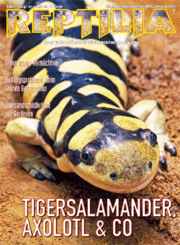
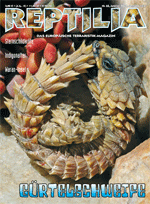
Reptilia 07 - Climbing snakes

Article no: reptilia07

CHF 9.80

Stock: 0

This article is currently not available

Product information "Reptilia 07 - Climbing snakes"

Reptilia 07 - Climbing snakes

Turtle conservation in Nepal
Stump crocodiles in the Congo
Red-footed tarantula

Contents:

Page 2 - Editorial
Page 4 - Letters to the editor
Page 5 - Magazine
Page 16 - Photo reportage
Page 22 - Keeping and breeding: The Persian Climbing Snake Elaphe persica, by K.-D. Schulze
Page 25 - Report: Endangerment and protection of the Aesculapian snake in Germany, by M. Waitzmann
Page 29 - Keeping and breeding: Elaphe guttata, by J. Bergadá
Page 33 - Travel report: Stump crocodiles in the Congo, by A. Brieger, F. W. Huchzermeyer and J. Riley
Page 39 - Portrait and poster: Corucia zebrata, by M. Aresté and J. L. Farriols
Page 43 - Report: A species conservation programme for tortoises in Nepal, by K. Ernst, K. B. Shah and H. Schleich
Page 49 - Keeping and breeding: Dendrobates galactonotus, by R. and B. Pieper
Page 53 - Keeping and breeding: Avicularia avicularia, by J. M. Marínez Nadal
Page 57 - Herpetology and Culture: Traditional Chinese Medicine, Part 2: Turtles as fire extinguishers, by G. Peters
Page 62 - Western Herp Perspectives, by B. Love
Page 64 - Prize puzzle
Page 69 - Reptilia on the road: Arizona Sonora Desert Museum Tucson, by H. Werning
Page 74 - Advice and action
Page 77 - Library
Page 80 - Incubator: Glossary by H. Werning

Composition
Feeding recommendation
Technical details
Size information

0 of 0 reviews

Give us a rating!

Share your experience with the product with other customers.


Suggested products

Handbook of food plants for tortoises and other reptiles
Handbook of forage plants 2nd revised editionMarion Minch is not only a successful breeder of diverse tortoises for many years, but also an excellent connoisseur of native wild herbs. She founded and runs samenkiste.de, which is well known to many tortoise keepers and nature lovers. Her name is inextricably linked with reptile care and species-appropriate nutrition for tortoises. Her handbook of food plants summarises the most important native food plants for herbivorous and omnivorous reptiles. She not only considers tortoises, but also iguanas, spiny-tailed dragons and even chameleons. From the basics of plant biology to native wild herbs to suitable food plants for hardy tropical reptile species, this comprehensive work provides the basis for species-appropriate keeping. In the expanded and supplemented 2nd edition, the plant section is divided according to flower colour. This makes it even easier to identify wild herbs. The work has also been supplemented with a wealth of additional information and many pictures.

CHF 46.50

Geckos
Geckos in the terrarium by Astrid FalkThe book offers a comprehensive introduction to geckos and their species-appropriate keeping in terrariums. It explains what you need to think about before buying a gecko and what preparations should be made. The book describes in detail how the terrarium is technically equipped and set up. The care of the animals, their special features and behaviour, their diet, reproduction and rearing of young animals are described, as well as diseases and husbandry problems with tried and tested suggestions for prevention and treatment. Individual gecko species that are particularly suitable for keeping and breeding in terrariums are portrayed in detail in the second part of the book.

CHF 28.50

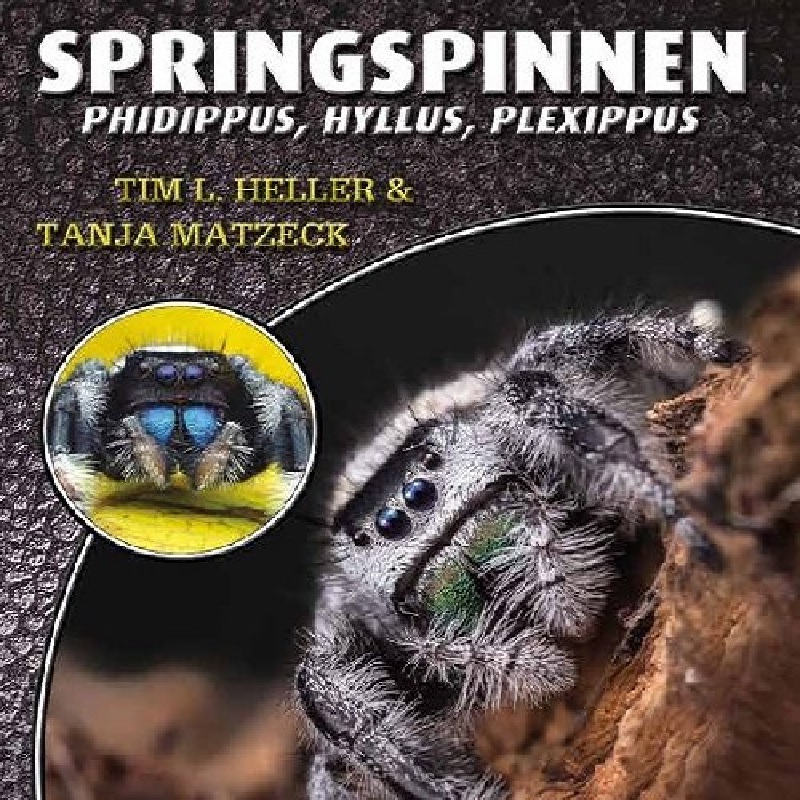
Jumping spiders Phidippus, Hyllus, Plexippus
Book Jumping Spiders - Phidippus, Hyllus & Plexippus A guide to keeping jumping spiders of the genera Phidippus, Hyllus & Plexippus. Who can resist the charm of jumping spiders? The childlike appearance of their expressive face simply leaves no one cold! In addition, their behavior is extremely exciting to observe, their colors are bright and their requirements for species-appropriate keeping are very easy to meet. No wonder these likeable jumpers are all the rage! This volume in the "Species by Species" series describes in detail what to look out for when buying and keeping them, introduces the most commonly kept species and color forms and provides plenty of tips on how to keep them successfully - so you can be sure they will breed well! Species by Species introduces you to the books in this series, which present the most popular terrarium animals. Each volume offers you detailed, practical care instructions and all the information you need to successfully breed your animals. All important questions from the required tank size to terrarium set-up, technical equipment, species-appropriate nutrition and disease prevention are answered with numerous tricks and tips. Experienced, long-standing breeders reveal how you can encourage the animals to reproduce and raise healthy young. All this in full color, generously illustrated and attractively designed - just about your terrarium animal - species by species

CHF 23.90

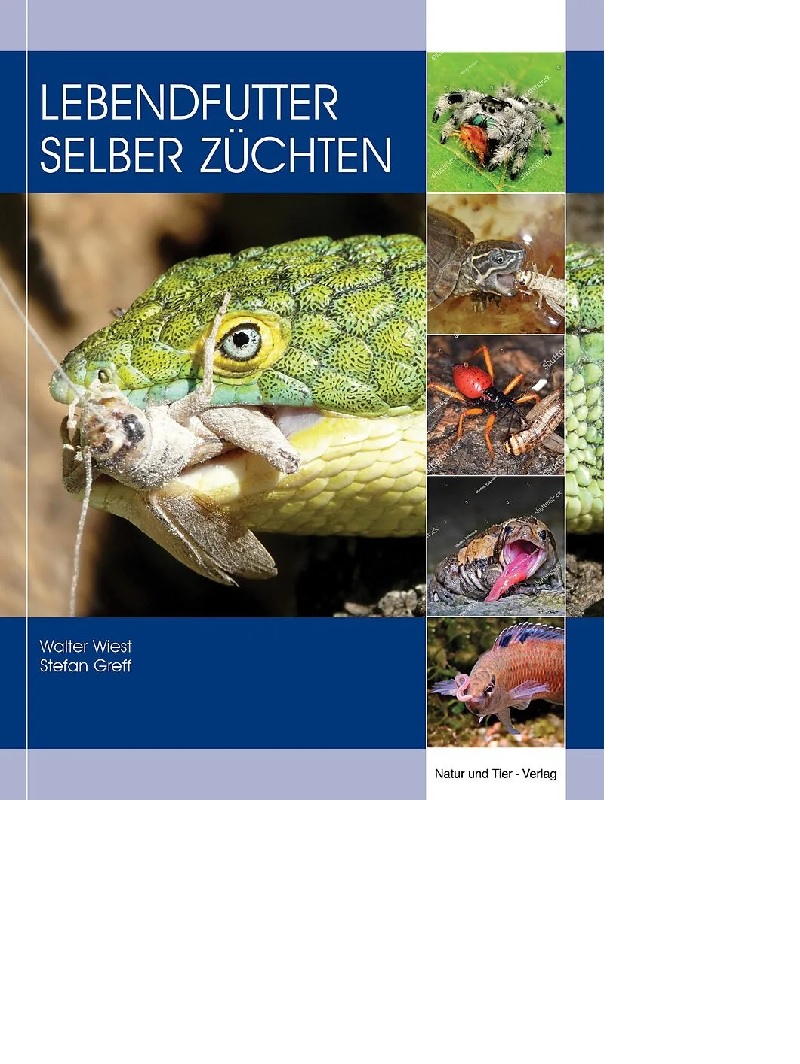
Book Breeding live food yourself
Book "Grow your own live food" - The perfect guide for pet owners Discover practical and detailed instructions on how you can easily breed food for your reptiles, birds, fish or other animals yourself in the book "Breeding live food yourself". With valuable tips on various food insects, their care and breeding, you can save money and ensure a species-appropriate diet for your pets. Contents of the book: Step-by-step instructions for breeding feeder insects Information on the best types of food for reptiles, birds and fish Care instructions and breeding conditions for various live food species Tips for sustainable and cost-effective food production Why breed your own live food? Get healthy, fresh food for your animals Save money and reduce dependence on pet shops Promote the health and well-being of your animals with species-appropriate food Whether you are a beginner or an experienced pet owner, this book provides you with everything you need to successfully breed live food yourself.

CHF 46.50

Marginata 69 - New Guinea tortoises
Marginata 69 - New Guinea tortoises – the genus ElseyaCover storyThe unrecognised beauties: New Guinea tortoises (Andreas S. Hennig)My experiences with Branderhorst's New Guinea tortoise, Elseya (Elseya) branderhorsti (Ouwens, 1914) (Andreas S. Hennig)Keeping and breeding of Rhodin's New Guinea tortoise, Elseya (Hanwarachelys) rhodini Thomson, Amepou, Anamiato & Georges, 2015 (Andreas S. Hennig)PortraitGeoemyda spengleri, Chinese serrated tortoise (Andreas S. Hennig)ReportageMacrochelys temminckii – Experiences and impressions with vulture tortoises part 2 (Reiner Praschag)KeepingAn alternative to year-round keeping of the Egyptian tortoise in the terrarium – my experiences with seasonal outdoor keeping of Testudo kleinmanni (Ricarda Schramm)EtymologySawbacks and living maps part 4: Graptemys gibbonsi, Pascagoula humpback tortoise (Holger Vetter)Classifieds & animal placement

CHF 16.50

Reptilia 55 - Colour breeding
Reptilia 55 - Colour breedingSaharaAga toadFlorida soft-shelled turtleContents: 2 EDITORIAL 3 MAGAZINE 11 DATES 14 WESTERN HERP PERSPECTIVESTerrarium animals suitable for investmentFrom B. Love 16 PHOTO REPORTAGEColour and pattern breeding in the terrarium hobbyBy M. Hallmen 23 REPORTAGECrash course in crossbreeding geneticsBy M. Hallmen 33 REPORTAGEThe king's new clothesNew colour and pattern variations in the royal python(Python regius)By T. Kölpin 42 OPINIONRebuttal: On the sense and nonsense of "colour breeding"From H. Schneider 44 TRAVELChott el Djerid From U. Schlüter 51 PORTRAIT AND POSTERChondrodactylus anguliferBy M. Barts 56 REPORTAGEBufo marinus – on the fatal consequences of faunal distortionFrom H.-G. Horn 60 KEEPING AND BREEDINGThe European half-fingered geckoHemidactylus turcicusBy M. C. Haupt 63 HERPETOFAUNAThe black desert cobra - Ecological and behavioural biology Observations on Walterinnesia aegyptiaBy H. Esterbauer 68 HERPETOFAUNAThe Florida soft-shelled turtle (Apalone ferox)and the benefits of knowing scientific namesBy S. Barone 73 REPORTAGEHealing with snake venomsSnake venom as pain therapy for disc problemsBy W. Schäberle 76 REPORTAGESeven decades a friend of reptiles - once upon a timeFrom W. Rohdich 86 CLASSIFIED ADS 91 RAT & TAT 94 LIBRARY 104 BRUTKASTENBreakfast televisionFrom H. Werning

CHF 11.20

Draco 47 - Scorpions
Draco 47 - Scorpions Contents: Editorial Scorpions – hunters of the nightBoris F. StrifflerKeeping and breeding scorpions of the genus Tityus in the terrariumMichael Seiter African giant scorpions of the genus Pandinus – more than just the emperor scorpionBoris F. StrifflerKeeping and rearing two Parabuthus speciesHeiko WehnerNorth African scorpionsBoris F. StrifflerThe moment of birth: rare insights into the brood care of Diplocentrus lindoKriton KunzThe scorpions of Europe – Euscorpius, Buthus & Co.Boris F. StrifflerScorpions as dangerous animals – the national regulationsLawyer Dietrich Rössel The Instituto Butantan – Institute of PoisonsBoris F. Striffler

CHF 18.40

Reptilia 16 - Uromastyx
Reptilia 16 - Thorntails Food animal breeding: CockroachesChameleon keepingPeloponnese Contents: Page 2 - EditorialPage 3 - MagazinePage 9 - Herpetofauna: Crocodile newts, by Dr J. FleckPage 12 - DatesPage 16 - Western Herp Perspecives: Souvenirs from Florida, by B. LovePage 18 - Photo reportage: Spiny-tailed agamas, by T. WilmsPage 25 - Keeping and breeding: The care and breeding of spiny-tailed agamas in the terrarium, by T. WilmsPage 30 - Report: Arabia Felix - in search of Uromastyx thomasi, by F. Hulbert and T. WilmsPage 34 - Keeping and breeding: The reproductive behaviour of the Uromastyx species, by T. WilmsPage 38 - Travelogue: Herpetological observations on the Peloponnese, by L. Siegmund and B. TrappPage 44 - Report: The brown-edged tortoise Testudo marginata in the surroundings of Tolo (Peloponnese), by H. RautertPage 47 - Portrait and poster: Atelopus flavescens, M. SchmidtPage 51 - Keeping and breeding: Introduction to keeping chameleons, by R. LeptienPage 56 - Report: Breeding the Argentine cockroach (Blaptica dubia), by B. HauschildPage 63 - Keeping and breeding: Experiences with the Typhloneces compressicauda, by H. WallaysPage 68 - Keeping and breeding: Keeping and breeding the silver-grey slender boa Epicrates striatus striatus, by J.-M. HerrmannPage 73 - Herpetology and culture: ...but more and more often. Reptiles in advertising, by L. HogebackPage 82 - Reptilia on the road: Parque Seminario in Guayaquil, Ecuador, by H. WerningPage 85 - Advice and actionPage 91 - LibraryPage 96 - Glossary: Iguana à la carte, by H. Werning

CHF 9.80

Draco 13 - Pond turtles
Draco 13 - terrapins Contents: 2 Editorial 4 terrapinsFritz Jürgen Obst 19 The European pond turtle Emys orbicularis (LINNAEUS, 1759) – the ideal turtle for the garden pondMatthias Mähn 25 Glass fibre reinforced Plastic (GRP) – a perfect material for the construction of ponds for the Outdoor keeping of aquatic turtlesAlfred Langer 32 Experiences in keeping and breeding the marsh turtle Glyptemys muhlenbergii SCHOEPFF (1801)Helgard and Klaus Lambertz 37 The spiny turtles of the genus Cyclemys BELL, 1834Maik Shields 42 Care and breeding of the three-keeled pond turtle Mauremys muticaUlrich Hennen 46 Notes on the keeping and breeding of the Spiny-backed Tortoise (Geoemyda spengleri GMELIN 1789) Irmtraud Jasser-Häger & Hans-Dieter Philippen 53Construction of a facility for keeping large aquatic turtles at Landau ZooPeter Buchert & Jens-Ove Heckel 59 On the keeping, care and breeding of the three-toed box turtle – Terrapene carolina triunguis (AGASSIZ, 1857) – up to the F2 generationBeate Löhr &Thomas Wilms 66 Notes on the keeping and breeding of the Japanese pond turtle Mauremys japonica (TEMMINCK & SCHLEGEL, 1835)Herbert Becker 73 Ornate turtles from North America Andreas S. Hennig 81 Book box 87 Magazine

CHF 16.80

The Australian giant ghost insect
NTV The Australian Giant Stick Insect Everything about keeping and caring for Australian giant stick insects. 64 pages Format: 14.8 x 21 cm 57 colour photos Author Stefan Schorn Publisher NTV Contents: Foreword Classification Physique Size, mass and age Sexual differences and colouration Distribution and habitat Defence Legal basis and acquisition Moulting Preparation Diseases and parasites Nutrition The terrarium Furnishings Terrarium climate Socialisation Handling the animals Breeding Acknowledgements Further information References and further reading

CHF 19.90

Reptilia 101 - Outdoor terrariums
Reptilia 101 - Outdoor terrariums Planting of poison dart frog terrariumsSouth American tarantulasTravelling through the USA in a motorhome Contents: Many terrarium animals flourish in natural sunlight and fresh air. Keeping them outdoors, even if only for a few weeks in summer, is good for almost all of our reptiles. However, many species can also live outside all year round.REPTILIA presents the most beautiful outdoor enclosures, documents the construction of two different terrariums as examples and deals with keeping lizards in the garden. EDITORIALMAGAZINEDATES PHOTOREPORTAGELet's get out! The fascination of outdoor terrariumsMartin Hallmen HOLDINGOutdoor keeping of pearl lizardsIngo Kober TERRARIUM PRACTICEUp close to the little adders - building a raised terrarium in the garden and first experiencesH. Kreyerhoff TERRARIUM PRACTICEFear of loss - the protection of outdoor enclosures for tortoisesMichael Wirth KEEPING AND BREEDINGUnusual South American tarantulas of the genus EphebopusKarin Manns TERRARIUM PRACTICEJewels in stainless steel Building a terrarium for poison dart frogs Part 2: PlantingMichael Schulte Animals of our homelandThe yellow-bellied toadRolf Leptien LIBRARYTIPS AND TRICKS WESTERN HERP PERSPECTIVESBoa fantasiesBill Love ServiceALSO NEAR YOU JourneyBest of Southwest. Travelling with the family in search of reptiles. A small travel guide through the south-west of the USAHeiko Werning PREVIEW BRUTKASTENProblem discussionJörg Hofmann

CHF 12.00

Terraria 64 - Croatia
Terraria 64 - Croatia Contents: Cover story: Croatia – herpetological pearl on the Adriatic Sea Croatia from Istria to Dubrovnik: The northern Balkan peninsula is famous for its wild beauty and yet is only a few hours' drive from Germany. We travel to the Adriatic coast with its rugged islands and the mountains of the Dinaric Karst. There we encounter a diverse herpetofauna, which for Croatia comprises a total of 20 amphibian and 39 reptile species and is perfectly adapted to the often harsh habitat conditions. Also in TERRARIA/elaphe 2/2017: Human fish: Stories about the European olm Keeping large ornate tortoises List of newly described amphibian species 2016 and much more Territorial HerpetoramaFaster than the eye allows – Record-breaking snake bites/Leaf creepers: Prehistoric creatures in Florida/Cultural followers: Large lizards on Tenerife/Thorn devil: Colourful tree toads Cover storyWonderful natural heritage. The herpetofauna of CroatiaMartin Dieckmann The Kvarner Bay. An interface between the ecosystems of EuropeMartin Dieckmann The Lacertids of CroatiaMartin Dieckmann On the trail of Winnetou. Croatia's wild westMartin Dieckmann PanoramaHuman fish and stories about the cave olm in the HarzWolf-Rüdiger Grosse, Anne Ipsen & Friedhart Knolle ResearchNew species. List of amphibians newly described in 2016Axel Kwet Salamandra TerraristicsAn alternative way to keep large ornate tortoisesSebastian Nickl Nature and species conservationField notesPartial leucism in the North American bullfrogMichael Waitzmann Artful toad deathAxel Kwet TERRARINO – The children's pageCommon toads. Love at second sightUte Nüsken Subscription & ServiceAlso in your areaPreview IncubatorMedia education Part 2Heiko Werning

CHF 13.50