Reptilia 22 - Still hope for Asian turtles?

Article no: reptilia22

CHF 9.80

Stock: 0

Ready for dispatch in 1-3 days, delivery time 7 working days

Delivery between Friday, 28 August and Monday, 31 August
Zahlungsarten
Product information "Reptilia 22 - Still hope for Asian turtles?"

Reptilia 22 - Still hope for Asian turtles?

Incubation of phelsum eggs
Homeopathy
Costa Rica

Contents:

Page 2 - Editorial
Page 4 - Magazine
Page 13 - Dates
Page 16 - Western Herp Perspectives: A rattlesnake under every bush, by B. Love
Page 18 - Photo report: The incredible diversity of Asian turtles, by E. Meier
Page 26 - Report: The turtles of Asia: Sacred animals, food and medical wonder weapon, by E. Meier
Page 30 - Report: The end of Asian turtles? The live animal markets of Southeast Asia, by E. Meier
Page 34 - Report: An ark for the last of their kind: The planned conservation breeding centre at the Allwetterzoo Münster, by E. Meier
Page 40 - Travelling: Herpetological travel impressions from Costa Rica, Part 1: Rara Avis rainforest lodge, by T. Eisenberg
Page 47 - Portrait and poster: Parasphendale affinis, by I. & R. Bischoff
Page 51 - Report: Elaphe mandarina: A problem animal in terraristics? by Dr R. Fesser & H. Sommerauer
Page 57 - Keeping and breeding: Notes on egg laying in day geckos of the genus Phelsuma, by J. Krüger
Page 63 - Herpetofauna: The poison dart frog Epipedobates tricolor, by J. & J. Canela Agraz & J. Vazquez Suñé
Page 67 - Herpetology and culture: The arachno- and herpetofauna in homeopathic medicine, by K. Kunz
Page 78 - REPTILIA on the move: The Exotarium in Frankfurt am Main Zoological Garden, by T. Wilms
Page 81 - Help and advice
Page 87 - Library
Page 96 - Glossary: Moving with lizards, once again. Part 1: Good preparation is half the move, by H. Werning

Composition
Feeding recommendation
Technical details
Size information

0 of 0 reviews

Give us a rating!

Share your experience with the product with other customers.


Suggested products

Handbook of food plants for tortoises and other reptiles
Handbook of forage plants 2nd revised editionMarion Minch is not only a successful breeder of diverse tortoises for many years, but also an excellent connoisseur of native wild herbs. She founded and runs samenkiste.de, which is well known to many tortoise keepers and nature lovers. Her name is inextricably linked with reptile care and species-appropriate nutrition for tortoises. Her handbook of food plants summarises the most important native food plants for herbivorous and omnivorous reptiles. She not only considers tortoises, but also iguanas, spiny-tailed dragons and even chameleons. From the basics of plant biology to native wild herbs to suitable food plants for hardy tropical reptile species, this comprehensive work provides the basis for species-appropriate keeping. In the expanded and supplemented 2nd edition, the plant section is divided according to flower colour. This makes it even easier to identify wild herbs. The work has also been supplemented with a wealth of additional information and many pictures.

CHF 46.50

Geckos
Geckos in the terrarium by Astrid FalkThe book offers a comprehensive introduction to geckos and their species-appropriate keeping in terrariums. It explains what you need to think about before buying a gecko and what preparations should be made. The book describes in detail how the terrarium is technically equipped and set up. The care of the animals, their special features and behaviour, their diet, reproduction and rearing of young animals are described, as well as diseases and husbandry problems with tried and tested suggestions for prevention and treatment. Individual gecko species that are particularly suitable for keeping and breeding in terrariums are portrayed in detail in the second part of the book.

CHF 28.50

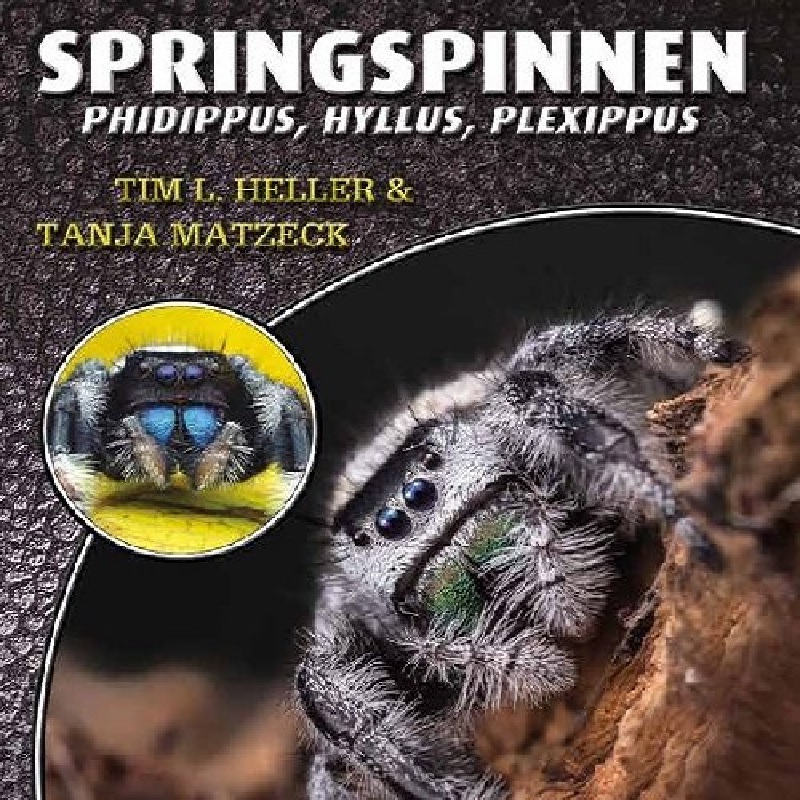
Jumping spiders Phidippus, Hyllus, Plexippus
Book Jumping Spiders - Phidippus, Hyllus & Plexippus A guide to keeping jumping spiders of the genera Phidippus, Hyllus & Plexippus. Who can resist the charm of jumping spiders? The childlike appearance of their expressive face simply leaves no one cold! In addition, their behavior is extremely exciting to observe, their colors are bright and their requirements for species-appropriate keeping are very easy to meet. No wonder these likeable jumpers are all the rage! This volume in the "Species by Species" series describes in detail what to look out for when buying and keeping them, introduces the most commonly kept species and color forms and provides plenty of tips on how to keep them successfully - so you can be sure they will breed well! Species by Species introduces you to the books in this series, which present the most popular terrarium animals. Each volume offers you detailed, practical care instructions and all the information you need to successfully breed your animals. All important questions from the required tank size to terrarium set-up, technical equipment, species-appropriate nutrition and disease prevention are answered with numerous tricks and tips. Experienced, long-standing breeders reveal how you can encourage the animals to reproduce and raise healthy young. All this in full color, generously illustrated and attractively designed - just about your terrarium animal - species by species

CHF 23.90

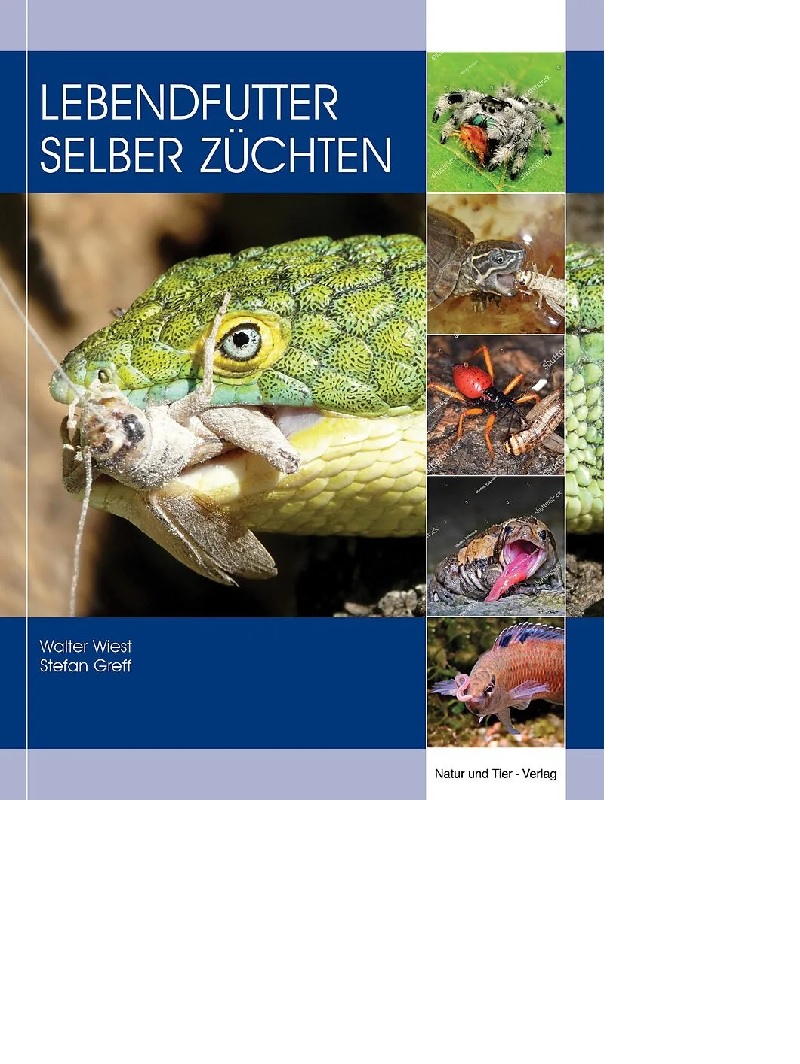
Book Breeding live food yourself
Book "Grow your own live food" - The perfect guide for pet owners Discover practical and detailed instructions on how you can easily breed food for your reptiles, birds, fish or other animals yourself in the book "Breeding live food yourself". With valuable tips on various food insects, their care and breeding, you can save money and ensure a species-appropriate diet for your pets. Contents of the book: Step-by-step instructions for breeding feeder insects Information on the best types of food for reptiles, birds and fish Care instructions and breeding conditions for various live food species Tips for sustainable and cost-effective food production Why breed your own live food? Get healthy, fresh food for your animals Save money and reduce dependence on pet shops Promote the health and well-being of your animals with species-appropriate food Whether you are a beginner or an experienced pet owner, this book provides you with everything you need to successfully breed live food yourself.

CHF 46.50

Marginata 69 - New Guinea tortoises
Marginata 69 - New Guinea tortoises – the genus ElseyaCover storyThe unrecognised beauties: New Guinea tortoises (Andreas S. Hennig)My experiences with Branderhorst's New Guinea tortoise, Elseya (Elseya) branderhorsti (Ouwens, 1914) (Andreas S. Hennig)Keeping and breeding of Rhodin's New Guinea tortoise, Elseya (Hanwarachelys) rhodini Thomson, Amepou, Anamiato & Georges, 2015 (Andreas S. Hennig)PortraitGeoemyda spengleri, Chinese serrated tortoise (Andreas S. Hennig)ReportageMacrochelys temminckii – Experiences and impressions with vulture tortoises part 2 (Reiner Praschag)KeepingAn alternative to year-round keeping of the Egyptian tortoise in the terrarium – my experiences with seasonal outdoor keeping of Testudo kleinmanni (Ricarda Schramm)EtymologySawbacks and living maps part 4: Graptemys gibbonsi, Pascagoula humpback tortoise (Holger Vetter)Classifieds & animal placement

CHF 16.50

Bugs No. 08 - Centipede
Bugs No. 08 - CentipedeCentipedes are on the rise in terraristics! Christian Kronmüller, a specialist in these fascinating animals and author of a book on the subject, presents these many-legged predators in detail in the next issue of Bugs and reveals tips and tricks on how to keep and breed them.Insights into the way of life of invertebrates in nature provide valuable information on species-appropriate husbandry. Our Colombian author Jorge Cañas-Orozco has compiled exciting details and impressive photos of scorpions of the genus Opisthacanthus.During the hot season, wasps and hornets become a nuisance in some places in this country. In Bugs No. 8, we show you what these insects are used for in the Far East - surprises are guaranteed!Cuba is home to an absolutely spectacular arachnid fauna. Michael Seiter takes you on an expedition in search of flagellate spiders, scorpions and more.In addition, of course, a number of other exciting topics are addressed, so that there will be something for fans of various invertebrate groups. Plus practical tips and news from the world of science and much more ...Table of contentsEditorialFacetsDatesCover storyArmoured hunters and gentle parents - centipedes in the terrariumThe top 10 centipedes for beginnersFlown outIn search of arachnids in Cubareportage Opisthacanthus elatus: Observations from ColombiaKids Corner Colourful hummersreportage Beetle breeding made easy: white rotten wood from sustainable mushroom productionCulture Harvest festival in Japanese - Wasps as a delicacy in the Japanese countrysideBook scorpionAlso in your neighbourhoodService & Imprint

CHF 12.00

Reptilia 55 - Colour breeding
Reptilia 55 - Colour breedingSaharaAga toadFlorida soft-shelled turtleContents: 2 EDITORIAL 3 MAGAZINE 11 DATES 14 WESTERN HERP PERSPECTIVESTerrarium animals suitable for investmentFrom B. Love 16 PHOTO REPORTAGEColour and pattern breeding in the terrarium hobbyBy M. Hallmen 23 REPORTAGECrash course in crossbreeding geneticsBy M. Hallmen 33 REPORTAGEThe king's new clothesNew colour and pattern variations in the royal python(Python regius)By T. Kölpin 42 OPINIONRebuttal: On the sense and nonsense of "colour breeding"From H. Schneider 44 TRAVELChott el Djerid From U. Schlüter 51 PORTRAIT AND POSTERChondrodactylus anguliferBy M. Barts 56 REPORTAGEBufo marinus – on the fatal consequences of faunal distortionFrom H.-G. Horn 60 KEEPING AND BREEDINGThe European half-fingered geckoHemidactylus turcicusBy M. C. Haupt 63 HERPETOFAUNAThe black desert cobra - Ecological and behavioural biology Observations on Walterinnesia aegyptiaBy H. Esterbauer 68 HERPETOFAUNAThe Florida soft-shelled turtle (Apalone ferox)and the benefits of knowing scientific namesBy S. Barone 73 REPORTAGEHealing with snake venomsSnake venom as pain therapy for disc problemsBy W. Schäberle 76 REPORTAGESeven decades a friend of reptiles - once upon a timeFrom W. Rohdich 86 CLASSIFIED ADS 91 RAT & TAT 94 LIBRARY 104 BRUTKASTENBreakfast televisionFrom H. Werning

CHF 11.20

Reptilia 54 - Terrarium construction
Reptilia 54 - Terrarium construction PrachtskinkAtelopus zetekiRainbow boas Contents: 2 EDITORIAL 6 MAGAZINE 14 DATES 18 PHOTO REPORTAGE Terrarium constructionby H. Werning 26 REPORTAGEBiotopArt - the terrariums of the Dresden artist Andreas Deißig by J. Jungnickel & U. Prokoph 28 REPORTAGEDetermining the weight of terrariums by P.M. Müller 34 REPORTAGEThe rock wall in the living room on I. Kober 39 REPORTAGEA conservatory for iguanas by S. Winkle 44 TRAVELHerpetological observations in the Dalyan delta by U. Thieme 51 PORTRAIT AND POSTERQuedenfeldtia trachyblepharusby U. Schlüter 56 KEEPING AND BREEDINGKeeping and breeding the Red Rainbow Boa (Epicrates cenchria cenchria) by H. Bellosa 62 KEEPING AND BREEDINGArgentine rainbow boa (Epicrates cenchria alvarezi) by V. Knietsch 66 KEEPING AND BREEDINGOn keeping and breeding the Prachtskink(Mochlus fernandi)by I. Veltum El Copé - In the forest of the Atelopus zetekiby P. Janzen 76 KEEPING AND BREEDINGA pirate's lifeKeeping and breeding Ancylometes fishing spiders - Part 2by K. Kunz 85 LIBRARY 89 CLASSIFIED ADS 94 RAT & TAT 96 WESTERN HERP PERSPECTIVESMorphsby B. Love 104 INCUBATORBegging flight periodBy H. Werning

CHF 11.20

Terraria No. 31 - Collared lizards
Nordamerikanische WassernatternAufzucht europäischer Landschildkröten Inhalt: Halsbandleguane gehören schon lange zu den beliebtesten Echsen im Terrarium. Sie sind farbenprächtig, werden sehr zutraulich und können gut vermehrt werden. Aber auch bei diesen scheinbar so bekannten Evergreens der Terraristik gibt es viel Neues zu berichten. So stellen wir nicht nur in Bild und Text einige „exotische“ Crotaphytus-Arten vor, sondern auch spektakuläre Farbformen des Östlichen Halsbandleguans, von denen einige glücklicherweise bei uns inzwischen gehalten werden. Natürlich darf ein ausgiebiger Haltungs- und Nachzuchtbericht zu C. collaris nicht fehlen. Und über neue Erkenntnisse zur Überwinterung berichtet der wohl bekannteste Experte für diese Tiere, Robert Schumacher. EditorialMagazinKennzeichnung von Reptilien durch neuen Mini-Transponder / Verschollene Regenbogenkröte auf Borneo wiederentdeckt / Beobachtungen an Europäischen Chamäleons (Chamaeleo chamaeleon) auf Malta / Gemeinschaftsbaue bei sozialen Skinken / RechtlichesTERRAglobalGiftige SchönheitenMaik Dobiey TitelthemaSympathieträger aus dem Wilden Westen – Halsbandleguane Heiko Werning & Michael WirthClowns im Terrarium – Langjährige Haltung und Nachzucht Östlicher Halsbandleguane, Crotaphytus collaris Michael Wirth & Florian RiedelDurch die Jahreszeiten der Halsbandleguane in Natur und TerrariumYvonne & Robert SchumacherZu Besuch beim Mountainboomer, dem Staatsreptil von Oklahoma Robert SchumacherDas Schildkrötenjahr Freilandbiologie und Haltung europäischer Landschildkröten über den Jahreslauf Teil 4: Spätsommer und HerbstbeginnMichael WirthDie Gattung Nerodia. Wassernattern aus Nordamerika: Lebensweise sowie Haltung und Vermehrung im Terrarium Teil 2Dieter SchmidtSoziale Vogelspinnen? – Teil 2 Beispiele aus Asien und Europa Frank Schneider, Ingo Wendt & Boris F. StrifflerErste Erfahrungen bei der Haltung und Nachzucht des Chinesischen Wasserskinks (Tropidophorus sinicus) Steven ArthNeue ArtenAus eins mach zwei: neue Gopherschildkröte aus der Sonora-Wüste beschrieben Axel KwetAbo & ServiceUnter Forschern Malpelo – lebender Fels im PazifikMatthias JurczykBlickfangSchildkrötenhimmel im Schnäppchenparadies. Zu Gast in der „Villa Testudo“ in Metzingen Michael WirthIn Ihrer Nähe Vorschau BrutkastenTouristisch im Dschungel Teil 1: Reisende soll man nicht ansprechen Heiko Werning  

CHF 12.00

Draco 13 - Pond turtles
Draco 13 - terrapins Contents: 2 Editorial 4 terrapinsFritz Jürgen Obst 19 The European pond turtle Emys orbicularis (LINNAEUS, 1759) – the ideal turtle for the garden pondMatthias Mähn 25 Glass fibre reinforced Plastic (GRP) – a perfect material for the construction of ponds for the Outdoor keeping of aquatic turtlesAlfred Langer 32 Experiences in keeping and breeding the marsh turtle Glyptemys muhlenbergii SCHOEPFF (1801)Helgard and Klaus Lambertz 37 The spiny turtles of the genus Cyclemys BELL, 1834Maik Shields 42 Care and breeding of the three-keeled pond turtle Mauremys muticaUlrich Hennen 46 Notes on the keeping and breeding of the Spiny-backed Tortoise (Geoemyda spengleri GMELIN 1789) Irmtraud Jasser-Häger & Hans-Dieter Philippen 53Construction of a facility for keeping large aquatic turtles at Landau ZooPeter Buchert & Jens-Ove Heckel 59 On the keeping, care and breeding of the three-toed box turtle – Terrapene carolina triunguis (AGASSIZ, 1857) – up to the F2 generationBeate Löhr &Thomas Wilms 66 Notes on the keeping and breeding of the Japanese pond turtle Mauremys japonica (TEMMINCK & SCHLEGEL, 1835)Herbert Becker 73 Ornate turtles from North America Andreas S. Hennig 81 Book box 87 Magazine

CHF 16.80

Reptilia 124 - North American poisonous snakes
Reptilia 124 - North American venomous snakes Contents:Cover story: North American venomous snakesRattlesnakes fascinate every reptile lover! But North America is also home to other interesting venomous snakes, from the coral viper to the water moccasin snake. We offer an overview of the North American venomous snake fauna and then take an in-depth look at the rattlesnakes of the USA and the “cottonmouth” in the wild and in the terrarium. Spectacular new pictures by our photographer Bill Love included. Editorial   Farewell words Something of mine remains here L. Hogeback   MAGAZINE DATES   WESTERN HERP PERSPECTIVES The return to Australia B. Love   PHOTOSTORY The rattlesnakes of the USA in nature and terrarium L. Spinner   KEEPING AND BREEDING On the lookout: Water moccasin snakes in the wild and in the terrarium L. Spinner   TERRARIUM PLANTS The beach almond. Versatile use for small reptiles B. Röll   ALSO NEAR YOU   KEEPING AND BREEDING Jewels in the garden. The Western Green Lizard (Lacerta bilineata) in an outdoor terrarium C. Malberg & A. Schäberle   SERVICE   Journey Terribilis trip to Colombia. Excursion to a country in upheaval B. Encke, Frogs & Friends   PREVIEW   INCUBATOR  Three bright colours H. Werning

CHF 13.50

Marginata 03 - Endangered tortoises
Marginata 03 - Endangered tortoises Three-striped roofed turtleCoahuila box turtle Contents: 2 EDITORIAL 3 READER LETTERS 4 MAGAZINE 7 DATES 9 PHOTO REPORTAGEEndangered tortoisesHans - Dieter Philippen 13 REPORTAGEIn search of mates for "Lonesome George" – Results of the Pinta Expedition 2003Peter C. H. Pritchard 21 REPORTAGESouth Africa – attempt to conserve one third of the world's known tortoisesMargaretha D. Hofmeyr and Brian T. Henen 31 PORTRAITMadagascan beaked tortoiseAstrochelys yniphora (VAILLANT, 1885)Hans - Dieter Philippen 36 REPORTAGEThe Seychelles giant tortoisesA contribution to nature conservation and species preservationJustin Gerlach 44 REPORTAGEThe species conservation project for the three-striped roofed turtle (Kachuga trivittata) at Mandalay ZooGerald Kuchling and U Twint Lwin 52 REPORTAGEKeeping and breeding the Coahuila box turtle Terrapene coahuila SCHMIDT & OWENS, 1944)Part 1 Markus Baur & Irmtraud Jasser-Häger 60 BOOK TIP 61 CLASSIFIEDS 62 REGIONAL GUIDE 64 AGATHA MARGINATA

CHF 14.70

Customers also saw

Handbook of food plants for tortoises and other reptiles
Handbook of forage plants 2nd revised editionMarion Minch is not only a successful breeder of diverse tortoises for many years, but also an excellent connoisseur of native wild herbs. She founded and runs samenkiste.de, which is well known to many tortoise keepers and nature lovers. Her name is inextricably linked with reptile care and species-appropriate nutrition for tortoises. Her handbook of food plants summarises the most important native food plants for herbivorous and omnivorous reptiles. She not only considers tortoises, but also iguanas, spiny-tailed dragons and even chameleons. From the basics of plant biology to native wild herbs to suitable food plants for hardy tropical reptile species, this comprehensive work provides the basis for species-appropriate keeping. In the expanded and supplemented 2nd edition, the plant section is divided according to flower colour. This makes it even easier to identify wild herbs. The work has also been supplemented with a wealth of additional information and many pictures.

CHF 46.50