Terraria 58 – Amazonas setups

Article no: terraria58

CHF 12.00

Stock: 0

Ready for dispatch in 1-3 days, delivery time 7 working days

Delivery between Friday, 28 August and Monday, 31 August
Zahlungsarten
Product information "Terraria 58 – Amazonas setups"

Terraria 58 – ‘Amazonas’ setups

Newly described amphibians 2015
Responsible venomous snake care

Contents:

Cover story: Amazonian setups – Amazonas

Territorial

Herpetorama
Salamander in amber - a spectacular find
Cultural successor: Crocodile in the Allgäu
Thorn devils: confusion of names for African toads
Invasive red-cheeked tortoise spreads its wings
Blattsteiger: A dead man helps the survivors - with a turtle

Lookup

Cover story
Natural habitats at Wilhelma: a living, man-made ‘Amazonas’ biotope
Isabel Koch & Björn Schäfer

The Amazon House at Dortmund Zoo: Territory of the green iguanas
Simone Karlowski

The Guiana dragon tree (Dracaena guianensis) at Schönbrunn Zoo
Doris Preininger, Manuela Sirny, Eveline Dungl & Anton Weissenbacher

Panorama

Rio Douro - The Grand Canyon of Portugal
Rudolf Malkmus

Research

New species
List of new amphibians described in 2015
Axel Kwet

Unknown invaders: the African clawed frog in Europe
John Measey, Thierry Backeljau, Anthony Herrel, Rui Rebeio & Dennis Rödder

Salamandra

Terraristics
A checklist of safety precautions when keeping venomous snakes
Gerald Benyr

Important and invasive infectious diseases in amphibians: chytrid mycosis and ranavirus infections
Rachel E. Marschang, Kim Oster Heckers & Janosch Dietz 

Nature and species conservation

Field notes
Light at the end of the tunnel
Ute Nüsken & Christoph Leeb

Autumn mating of grass snakes
Benny Trapp

The dice snake (Natrix tesselata) at the reintroduction site in Knorre near Meissen: current situation and a look back at the floods of June 2013
Peter Strasser & Torsten Peters

Terrarino - the children's page
The spring frogs
Alexa Sabarth

Subscription & Service
Also in your neighbourhood
Preview

Incubator
In praise of bondage
Heiko Werning

Composition
Feeding recommendation
Technical details
Size information

0 of 0 reviews

Give us a rating!

Share your experience with the product with other customers.


Customers also bought

Terraria No. 35 - Reptile search
Terraria No. 35 - Reptile search Rhacophorus feaeTrugnattern Inhalt: Titelthema: Reptiliensuche in der NaturReptilien in freier Natur zu suchen und zu beobachten, macht nicht nur Spaß, sondern dabei lassen sich auch viele wichtige Erkenntnisse für die Haltung der betreffenden Arten sammeln. Allerdings ist es nicht einfach damit getan, rauszugehen und darauf zu hoffen, dass einem die Tiere nur so über den Weg laufen. Worauf es ankommt, um bei der Suche nach Reptilien auch wirklich Erfolg und damit schöne Erlebnisse zu haben, das erfahren Sie in den ausführlichen Beiträgen des Titelthemas der nächsten TERRARIA/elaphe-Ausgabe. TerritorialHerpetoramaTitelthema„Fieldherping“. Die erfolgreiche Suche nach Reptilien im FreilandMichael WirthVon Kratzern, gutem Müll und gebräunten Nacken. Praxistipps für die ReptiliensucheMichael WirthBitte nicht stören! Verantwortungsbewusstes Verhalten bei der Suche nach ReptilienBenny TrappPanoramaTerraglobal. Reptilien rund um Haus und GartenAlfred Schleicher Reptilienerinnerungen à la GuatemalaLester MeléndezForschungUnter Forschern. Vielfalt zwischen Tempeln und Landminen – Herpetologische Feldarbeit in KambodschaTimo HartmannNeue ArtenListe der im Jahr 2011 neu beschriebenen Reptilien Axel KwetSalamandraTerraristikKlassikerDer Grüne LeguanBasiliscus plumifrons, der Stirnlappenbasilisk: Erfahrungen aus 20 Jahren Haltung und Vermehrung im Terrarium. Teil 2: Pflege und NachzuchtIngo KoberGiftbisse von giftigen und „harmlosen“ Schlangen. Teil 2Dieter SchmidtErstnachzucht von Feas Riesenruderfrosch, Rhacophorus feae, im Leningrad Zoo Anna A. Bagaturova & Mikhail F. BagaturovNatur- und ArtenschutzFeldnotizen. Die Rote Liste der Amphibien und Reptilien Deutschlands. Teil 2: Verantwortlichkeit, Gefährdungsursachen, Schutz- und HilfsmaßnahmenKlaus-Detlef Kühnel, Arno Geiger & Richard PodlouckyVermisstHalbschwimmer-Nasenfrosch (Rhinoderma rufum)Alexander GutscheAuch in Ihrer NäheAbo & ServiceGalerie100 Jahre Herpetologia EuropaeaAxel Kwet

CHF 12.00

Terraria 25 - Livebearers
Terraria 25 - Livebearing Reptiles Breeding of tarantulasDiadem snakeSpur-thighed tortoise Contents: Not all reptiles lay eggs. A whole range of species bear live young, to the delight of many terrarium enthusiasts. However, even though the often problematic artificial incubation of clutches is no longer necessary: Even with livebearing reptiles, many things can go wrong when breeding them in the terrarium, and keepers often find it difficult to recognise the causes of problems. Uwe Schlüter presents the different forms of livebearing in reptiles and explains everything you need to know to breed these species as successfully as possible. In addition, we present some livebearing reptiles in the terrarium, including the Madagascar dog-headed boa, Sanzinia madagascariensis, or the strange crocodile night lizard, Lepidophyma flavimaculatum. EditorialMagazineHatching of a completely healthy hatchling of the North African spiny-tailed agama from a mould-infested eggColour change in the monocled cobra from juvenile to adultLuminous heavy metal detectorsDinosaurs with braking assistance?Hundreds of Madagascan tortoises confiscated in MalaysiaPhotosynthesis in salamandersLegal TERRAglobal specialLizards of the Barkly TablelandGunther Schmida Cover storyLivebearing reptilesUwe Schlüter The crocodile night lizard. Lepidophyma flavimaculatum (Duméril, 1851) Jochen Meyer Care and breeding of the northern Canary Islands skink (Chalcides viridanus) Uwe Schlüter Keeping and breeding a crowned beauty: the diadem snake (Spalerosophis diadema [Schlegel, 1837]) Sascha & Stefanie Esser Giants of the desert. The African spurred tortoiseLeo Spinner JourneyCuc Phuong. Spiders and other animals in Vietnam's oldest national parkGordon Ackermann Breeding of tarantulas Karin Manns New speciesDiversity of Philippine banded monitors deciphered – and three new taxa described André Koch Among researchers Searching for venomous snakes in Austria Johannes Hill Eye-catcher Of prosimians, poison dart frogs and geckos. Visiting Ute Thut and Dennis Peukert Michael Wirth Near youSubscription & ServicePreview Incubator On the wall, on the lookout Mike Zawadzki

CHF 12.00

Terraria 50 - Monitor lizards in the terrarium
Terraria 50 - Monitor lizards in a terrariumDrinking behaviour of snakesAndaman lizardsContents:Cover story: Monitor lizards and terrariumsMany monitor lizards are among the most sought-after species in the terrarium hobby. Hobby keepers have made a decisive contribution to our knowledge of these charismatic lizards, discovering species and describing their behaviour. Some island monitor lizards are considered endangered and their trade represents a risk factor. At the same time, breeding successes are now also regularly achieved with rare species. In the cover story of the upcoming TERRARIA/elaphe, we will be focussing on the many facets of the mutual relationship between monitor lizards and terraristics.TerritorialHerpetoramaCover storyHistory of keeping monitor lizards in Germany and SchweizerBeat AkeretThe blue monitor lizard. The incredible story of the discovery of Varanus macraeiManfred Reisinger7 years of keeping and breeding the Blue-spotted Tree Monitor (Varanus macraei) at Cologne Zoo: A look back and a look aheadAnna Rauhaus, Lorraine Gutjahr, Johannes Oberreuter & Thomas ZieglerFirst evidence of parthenogenesis in Varanus rainerguentheri, a Pacific monitor lizard from the indicus groupJulian GrabbePanoramaThe Andaman Islands - A little known animal paradiseGernot VogelResearchNew speciesConfusion about new vulture turtlesAxel KwetNew wolf tooth snake from CambodiaAxel KwetAmong researchersA road in the primary rainforest - a small cause with a big effectRudolf MalkmusHerat: We meet again. As a lecturer in a war zonePhilipp WagnersSalamandraTerraristicsLook smart, snake keeper Observations on the drinking behaviour of snakesRalf HöroldAlso in your neighbourhoodNature and species conservationField notesCrow catches grass snakeRalf GramlichGrass frog cannibals in the spawning watersAxel KwetSubscription & ServiceThe introduced wall lizards of KamenzDieter GramentzPreviewIncubator ElvisHeiko Werning

CHF 12.00

Suggested products

Handbook of food plants for tortoises and other reptiles
Handbook of forage plants 2nd revised editionMarion Minch is not only a successful breeder of diverse tortoises for many years, but also an excellent connoisseur of native wild herbs. She founded and runs samenkiste.de, which is well known to many tortoise keepers and nature lovers. Her name is inextricably linked with reptile care and species-appropriate nutrition for tortoises. Her handbook of food plants summarises the most important native food plants for herbivorous and omnivorous reptiles. She not only considers tortoises, but also iguanas, spiny-tailed dragons and even chameleons. From the basics of plant biology to native wild herbs to suitable food plants for hardy tropical reptile species, this comprehensive work provides the basis for species-appropriate keeping. In the expanded and supplemented 2nd edition, the plant section is divided according to flower colour. This makes it even easier to identify wild herbs. The work has also been supplemented with a wealth of additional information and many pictures.

CHF 46.50

Geckos
Geckos in the terrarium by Astrid FalkThe book offers a comprehensive introduction to geckos and their species-appropriate keeping in terrariums. It explains what you need to think about before buying a gecko and what preparations should be made. The book describes in detail how the terrarium is technically equipped and set up. The care of the animals, their special features and behaviour, their diet, reproduction and rearing of young animals are described, as well as diseases and husbandry problems with tried and tested suggestions for prevention and treatment. Individual gecko species that are particularly suitable for keeping and breeding in terrariums are portrayed in detail in the second part of the book.

CHF 28.50

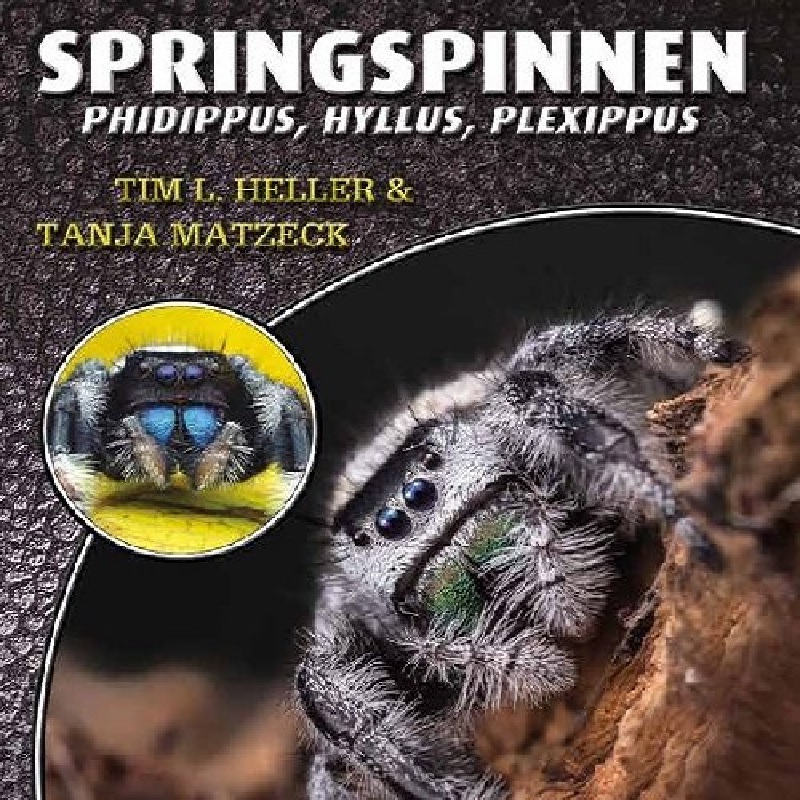
Jumping spiders Phidippus, Hyllus, Plexippus
Book Jumping Spiders - Phidippus, Hyllus & Plexippus A guide to keeping jumping spiders of the genera Phidippus, Hyllus & Plexippus. Who can resist the charm of jumping spiders? The childlike appearance of their expressive face simply leaves no one cold! In addition, their behavior is extremely exciting to observe, their colors are bright and their requirements for species-appropriate keeping are very easy to meet. No wonder these likeable jumpers are all the rage! This volume in the "Species by Species" series describes in detail what to look out for when buying and keeping them, introduces the most commonly kept species and color forms and provides plenty of tips on how to keep them successfully - so you can be sure they will breed well! Species by Species introduces you to the books in this series, which present the most popular terrarium animals. Each volume offers you detailed, practical care instructions and all the information you need to successfully breed your animals. All important questions from the required tank size to terrarium set-up, technical equipment, species-appropriate nutrition and disease prevention are answered with numerous tricks and tips. Experienced, long-standing breeders reveal how you can encourage the animals to reproduce and raise healthy young. All this in full color, generously illustrated and attractively designed - just about your terrarium animal - species by species

CHF 23.90

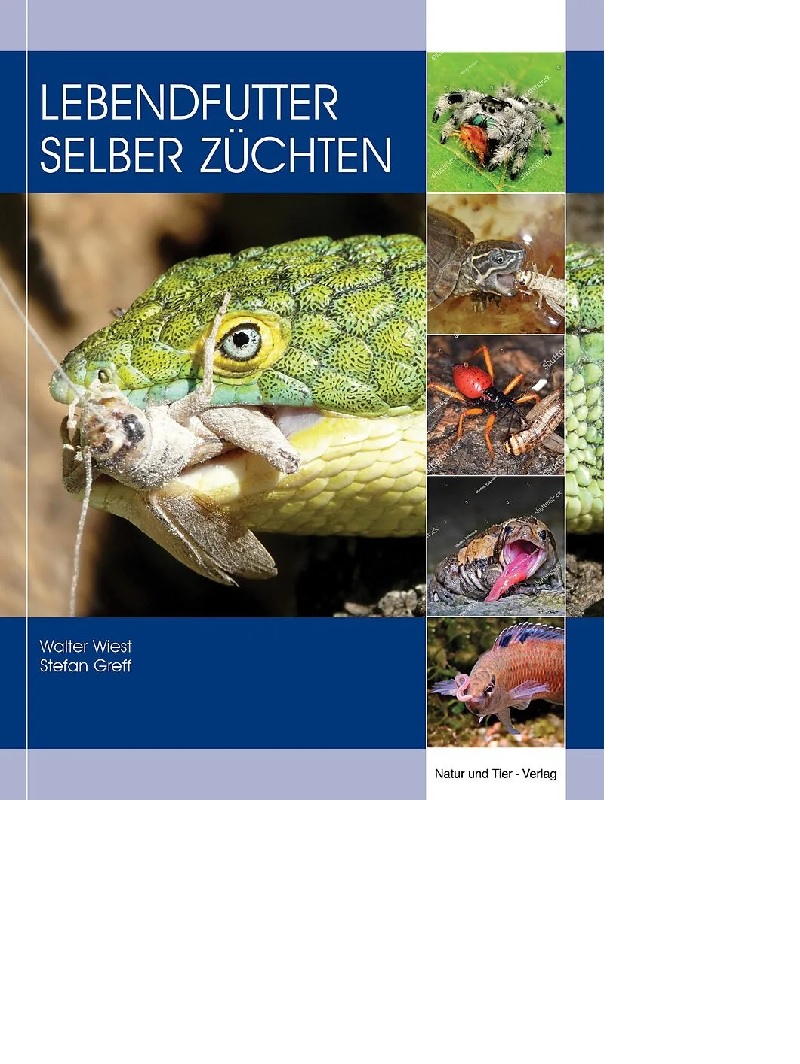
Book Breeding live food yourself
Book "Grow your own live food" - The perfect guide for pet owners Discover practical and detailed instructions on how you can easily breed food for your reptiles, birds, fish or other animals yourself in the book "Breeding live food yourself". With valuable tips on various food insects, their care and breeding, you can save money and ensure a species-appropriate diet for your pets. Contents of the book: Step-by-step instructions for breeding feeder insects Information on the best types of food for reptiles, birds and fish Care instructions and breeding conditions for various live food species Tips for sustainable and cost-effective food production Why breed your own live food? Get healthy, fresh food for your animals Save money and reduce dependence on pet shops Promote the health and well-being of your animals with species-appropriate food Whether you are a beginner or an experienced pet owner, this book provides you with everything you need to successfully breed live food yourself.

CHF 46.50

Marginata 69 - New Guinea tortoises
Marginata 69 - New Guinea tortoises – the genus ElseyaCover storyThe unrecognised beauties: New Guinea tortoises (Andreas S. Hennig)My experiences with Branderhorst's New Guinea tortoise, Elseya (Elseya) branderhorsti (Ouwens, 1914) (Andreas S. Hennig)Keeping and breeding of Rhodin's New Guinea tortoise, Elseya (Hanwarachelys) rhodini Thomson, Amepou, Anamiato & Georges, 2015 (Andreas S. Hennig)PortraitGeoemyda spengleri, Chinese serrated tortoise (Andreas S. Hennig)ReportageMacrochelys temminckii – Experiences and impressions with vulture tortoises part 2 (Reiner Praschag)KeepingAn alternative to year-round keeping of the Egyptian tortoise in the terrarium – my experiences with seasonal outdoor keeping of Testudo kleinmanni (Ricarda Schramm)EtymologySawbacks and living maps part 4: Graptemys gibbonsi, Pascagoula humpback tortoise (Holger Vetter)Classifieds & animal placement

CHF 16.50

Terraria 22 - European tortoises in the nature observe
Terraria 22 - Observe European tortoises in the wildNews from the reticulated pythonList of newly described species 2009Contents:EditorialMagazineTraditional use of the Great Honeycomb Toad (Pipa pipa) by the indigenous population of French Guiana / A success for species conservation: reintroduction of young hawksbill turtles from Frankfurt Zoo to the Seychelles / Snake booklet for the further training of biology teachers / MarketplaceTERRAglobalThe "water snake"Fabio CupulVisiting the Red-throated Leaf-tailed Gecko, Saltuarius salebrosusGunther SchmidaCover storyObserving European tortoises in the wildMichael WirthThe tortoise project of MurciaBenny TrappThe Marginated Tortoise, Testudo marginata – black giants from the Greek PhryganaMichael WirthBetween rubbish and mines: the Dalmatian tortoise Testudo hermanni hercegovinensis Part 1Michael WirthSome remarks on systematics, care and reproduction of the reticulated pythonHenry Bellosa & Ralf MößleA grateful fosterling: The Oman lizard, Omanosaura jayakari, its keeping and breeding Sascha EsserNew speciesList of amphibian and reptile species newly described in 2009Axel KwetTest runRearing racksKriton KunzNear youSubscription & ServicePreviewIncubatorAxolotl RoadwayHeiko Werning

CHF 12.00

Reptilia 114 - Jurassic World in the living room, dinosaur for the terrarium
Reptilia 114 - Jurassic World in the living room, dinosaurs for the terrarium Florida climbing plantsTropical land snailsContents:Cover story: Jurassic World in the living room – dinosaurs for the terrarium“Jurassic World” is this summer’s blockbuster. Hardly anyone can escape the fascination of dinosaurs. And our modern-day prehistoric creatures quickly catch the eye. Many lizards actually look like real dinosaurs in miniature. They enchant with their prehistoric charm and make many people want to keep such a miniature dinosaur at home. And the best thing is: with many species, this is very possible! We present the best “dinosaurs” for the terrarium. And, of course, we take a closer look at “Jurassic World” and talk to a palaeontologist about the chances of us actually being able to see real dinosaurs one day – and whether they would even look like they do in the cinema. EditorialMagazineDates Western Herp PerspectivesThe end of the golden age for terrariumsB. LovePhoto story The return of the prehistoric lizardsH. Werning Keeping and breedingJurassic World in the living room. Mini dinosaurs for the terrariumH. Werning Film reviewJurassic World – The park is openH. Werning InterviewJurassic World – Questions about the filmA. Kwet in conversation with R. Schoch Keeping and breedingThe Green Water Dragon (Physignathus cocincinus) in the terrariumM. Rogner PlantsArum plants in the terrarium Part 2: Climbing araceaeB. Akeret Keeping and breedingThe local variants of Rhacodactylus leachianus in terrarium keeping Part 2: The island formsS. Cemelli & F. Fast ReportageSlowing down through the rainforestM. Gaulke Animals of our homelandThe pond frogR. Leptien LibraryAlso in your neighbourhoodService JourneyA round trip through Sri LankaV. Harport Preview Incubator The holiday jobA. “Spider” Krenzke

CHF 12.00

Reptilia 55 - Colour breeding
Reptilia 55 - Colour breedingSaharaAga toadFlorida soft-shelled turtleContents: 2 EDITORIAL 3 MAGAZINE 11 DATES 14 WESTERN HERP PERSPECTIVESTerrarium animals suitable for investmentFrom B. Love 16 PHOTO REPORTAGEColour and pattern breeding in the terrarium hobbyBy M. Hallmen 23 REPORTAGECrash course in crossbreeding geneticsBy M. Hallmen 33 REPORTAGEThe king's new clothesNew colour and pattern variations in the royal python(Python regius)By T. Kölpin 42 OPINIONRebuttal: On the sense and nonsense of "colour breeding"From H. Schneider 44 TRAVELChott el Djerid From U. Schlüter 51 PORTRAIT AND POSTERChondrodactylus anguliferBy M. Barts 56 REPORTAGEBufo marinus – on the fatal consequences of faunal distortionFrom H.-G. Horn 60 KEEPING AND BREEDINGThe European half-fingered geckoHemidactylus turcicusBy M. C. Haupt 63 HERPETOFAUNAThe black desert cobra - Ecological and behavioural biology Observations on Walterinnesia aegyptiaBy H. Esterbauer 68 HERPETOFAUNAThe Florida soft-shelled turtle (Apalone ferox)and the benefits of knowing scientific namesBy S. Barone 73 REPORTAGEHealing with snake venomsSnake venom as pain therapy for disc problemsBy W. Schäberle 76 REPORTAGESeven decades a friend of reptiles - once upon a timeFrom W. Rohdich 86 CLASSIFIED ADS 91 RAT & TAT 94 LIBRARY 104 BRUTKASTENBreakfast televisionFrom H. Werning

CHF 11.20

Terraria 37 - The correct light
Terraria 37 - The right lightSchool vivariumAtelopus hoogmoediContents:Cover story: The right lightHardly any other topic in terraristics is as important and at the same time as intensively discussed as the right terrarium lighting. What do you need to look out for to ensure that your pets get the best possible replacement for sunlight in their terrarium? What do you think of new lighting technologies such as LEDs? And: How do reptiles actually perceive light? The cover story of the next issue attempts to provide some answers. TerritorialHerpetoramaTOPICThe fluorescent tube - a classic newly illuminatedSteven ArthThe use of UV measuring devices in terraristicsSarina WunderlichColour temperature and colour rendering index: Useful parameters in terraristicsSarina WunderlichPANORAMATerraglobal: Close to death, part 2Joachim BulianSince when do agamas eat peanuts - and crocodile bread?Alfred SchleicherThe school vivarium at the Edith-Stein-Schule in Erfurt - much more than just animals at schoolRica Kepter & Achim KempterRESEARCHNew species: The frog and the prince - splendid tree frogs from EcuadorAxel KwetAmong researchers: Inhabitants of the elfin forest: Herpetofauna at Picu La Picucha in the Sierra de Angalta National Park, HondurasAlexander GutscheNews from Indochina: The amphibians and reptiles of the Cat Thien National Park in South VietnamPeter GeisslerSalamandraTERRARISTICSClassic: The DreicksnatterExperiences in rearing spiny-edged soft-shelled turtles (Apalone spinifera)Sebastian NicklFirst successful breeding of the short-toed toad Atelopus hoohmoedi at the Aquazoo/Löbbecke Museum in DüsseldorfSandra Honigs, Marc Messing & Beate PelzerSome additional information on the article about the mysterious death of hatchlings of the green tree pythonJoachim BulianNATURE AND SPECIES CONSERVATIONField notes: Toad under iceStefan MeyerLate reproduction of the fire-bellied toad in SaxonyWolf-Rüdiger Grosse & Andreas NöllertTwo examples of accidental anthropogenic displacement of lizards due to their flight behaviourAndreas ArnoldMissing: Pinta giant tortoise (Chelonoides abingdonii)Also in your neighbourhoodSubscription & ServiceGALERIAKomodo’s Centenarian DragonsPreviewBRUTKASTENCrocodile alarm at the swimming lake: human tragedy narrowly avertedJakob Hein

CHF 12.00

NTV - Terrarium technology
Book Terrarium Technology - Ingo Kober & Uwe Geissel 248 pages numerous illustrations Format: 17.5 x 23.2 cm, hardcover Contents: A comprehensive book on all aspects of terrarium technology, from lighting and UV irradiation to heating mats and sprinkler systems.Practical, easy to understand, up-to-date. For all those seeking guidance in the large market of terrarium equipment. Written by two scientists who work in technical professions and can therefore professionally present the complex interrelationships, but who are passionate terrarium keepers as a hobby and know exactly what is important when caring for your animals. What are LED lamps good for? Which light do terrarium animals prefer? How do I ensure the UV supply? How many lamps do I need for which terrariums? How do I operate a waterfall? When should I use nebulisers? Foreword Environmental requirements of terrarium animals     Terrarium animals are wild animals in human care     Environmental parameters Basic considerations on terrarium technology Terrarium types     Dry terrariums         General considerations         Terrestrial care animals         Arboreal care animals         Rock wall-dwelling care animals         Nocturnal pets     Humid terrariums         General considerations         Soil-dwelling caretakers of the forest interior         Tree and forest edge dwellers         Bank and water dwellers         Variations on a theme     Terrariums for highland dwellers         General considerations         Highland rainforest/cloud forest terrarium         Highland dry terrarium Light     The origin of light         Temperature radiators         Luminescence         Fluorescence         Gas discharge     The different types of light: invisible and visible light         Infrared light (IR) (wavelength µm– nm)         Visible light (VIS) (– nm)         Ultraviolet light (UV)     Types of light spectrum         Continuous spectrum         Line spectrum     The technical parameters of light         Orientation of light sizes towards humans         Parameters for describing light                 Luminous flux                 Light intensity                 Luminance of a light source                 Luminance of an object that is not self-luminous                 Illuminance (brightness)                 Colour temperature (light temperature)                 Colour rendering     Light propagation             Point-shaped light sources             Rod-shaped light sources     Sunlight         The alteration of light by the atmosphere         Consequences for the alteration of light colour during the day         Consequences for the alteration of UV radiation during the day         Night light or moonlighting     The subjective perception of light         Colour sensation         White balance         Colour saturation and contrast         Sensation of brightness         Colour perception         Flickering         Conclusion Basics of lighting technology     Use of reflectors         Beam angle: spot and flood         Degree of reflection         Light distribution         Luminaire efficiency     Mounting the luminaires         Alignment     Uniformity of lighting – the difference between    natural sunlight and artificial lighting     Power consumption         The relationship between power consumption and heat         Saving energy by sensibly selecting the lighting     Luminaires and lamps         Protection types         Light efficiency         Markings on lighting equipment     Light sources at a glance         Incandescent bulbs         Halogen lamps         Fluorescent lamps         Energy-saving lamps and compact fluorescent lamps         Mercury vapour lamps         Metal halide lamps         Mixed light lamps         LEDs Lamps for the terrarium     Temperature radiators         Incandescent bulbs         Halogen lamps         Halogen-IRC lamps         Low-voltage halogen         High-voltage halogen         Halogen work lamps     Discharge lamps         A brief overview of the various types of        discharge lamps         Ballasts: EVG, VVG, KVG         Mercury vapour lamps         Metal halide lamps         Mixed light lamps         Fluorescent lamps         Compact fluorescent lamps and energy-saving lamps         LEDs     All light sources at a glance     Light and vitamins         What are vitamins?         A vitamin with a special role         Terrarium technology and vitamin D synthesis         Which and how much UV-B does my terrarium animal need?         How long must irradiation last?         Safety net: supplementation with vitamin D         UV lamps and UV emitters             UV lamps for short-term irradiation or for large terrariums             UV lamps for all-day irradiation             Do-it-yourself UV emitters             UV incandescent or UV neodymium lamps             UV-C emitters Heating of terrariums     Heat         Heat radiation (infrared radiation)         Heat transfer         Cold and cold radiation         Thermal conductivity         Heat capacity         Sensation of warmth         Insulation     Heat balance in the terrarium         Where is heat lost in the terrarium?         Cooling speed in the evening     Heating technology for the terrarium         Heating by thermal conduction             Heating cables and heating mats             Heating stones             Heating with ballasts         Heating with radiant heat             Infrared heaters             Low-light radiant heaters - inexpensive DIY             Terrarium heater             Heat wave heating             Heat radiation of other light sources Water in the terrarium     Spraying systems         General preliminary considerations         Irrigation systems from the pet store         Irrigation systems from the garden centre         DIY     Fog systems         General considerations         Mininebler or room humidifier? Which fogger for which purpose?         Mounting         Operation and maintenance     Drainage     Waterfalls and streams         General considerations         Complete systems         DIY         Centrifugal pumps         Flow pumps         Air lifters         Aquarium air pumps     Filters for the water section in the terrarium         Nitrate filter         Vodka filter         Sulphur filter         Filter substrates         DIY filters         The use of ozone in larger water sections     Air humidity in the flat – mould and correct ventilation Measuring, controlling, regulating     Control of temperature, humidity and brightness in the terrarium         Measuring temperature         Types of thermometers         Measuring humidity         Measuring brightness         Measuring UV light     Controlling and regulating in the terrarium         Timers         Regulation of the technology in the terrarium         The optimal terrarium regulation Saving with terrarium technology     Saving energy in the terrarium     Buying used equipment         Electrical devices         Luminaires Safety     Electrical safety     Residual current device (RCD) – FI switch     Fire detector Further information Bibliography

CHF 37.90

Draco 13 - Pond turtles
Draco 13 - terrapins Contents: 2 Editorial 4 terrapinsFritz Jürgen Obst 19 The European pond turtle Emys orbicularis (LINNAEUS, 1759) – the ideal turtle for the garden pondMatthias Mähn 25 Glass fibre reinforced Plastic (GRP) – a perfect material for the construction of ponds for the Outdoor keeping of aquatic turtlesAlfred Langer 32 Experiences in keeping and breeding the marsh turtle Glyptemys muhlenbergii SCHOEPFF (1801)Helgard and Klaus Lambertz 37 The spiny turtles of the genus Cyclemys BELL, 1834Maik Shields 42 Care and breeding of the three-keeled pond turtle Mauremys muticaUlrich Hennen 46 Notes on the keeping and breeding of the Spiny-backed Tortoise (Geoemyda spengleri GMELIN 1789) Irmtraud Jasser-Häger & Hans-Dieter Philippen 53Construction of a facility for keeping large aquatic turtles at Landau ZooPeter Buchert & Jens-Ove Heckel 59 On the keeping, care and breeding of the three-toed box turtle – Terrapene carolina triunguis (AGASSIZ, 1857) – up to the F2 generationBeate Löhr &Thomas Wilms 66 Notes on the keeping and breeding of the Japanese pond turtle Mauremys japonica (TEMMINCK & SCHLEGEL, 1835)Herbert Becker 73 Ornate turtles from North America Andreas S. Hennig 81 Book box 87 Magazine

CHF 16.80

Draco 44 - Constrictor
Draco 44 - Giant SnakesContents:EditorialReproduction and breeding of giant snakesDieter SchmidtMating triggers in giant snakesMichaela & Marco SchulzeA few thoughts on feeding giant snakesErich Koerber & Christian BittnerPregnancy and confinement of boas - initial care of offspring and possible complicationsHermann & Erika StöcklAn aberrant form of Boa constrictor longicauda – the ‘Zeros’Hermann & Erika StöcklThe green tree python - success through natural breedingMichèl KroneisKeeping and breeding the Jungle carpet python, Morelia spilota cheyneiSteven Arth & Sandra BausKeeping and breeding the Woma, Aspidites ramsayiManuel Uhlhaas & Philipp Pohlscheid

CHF 18.40