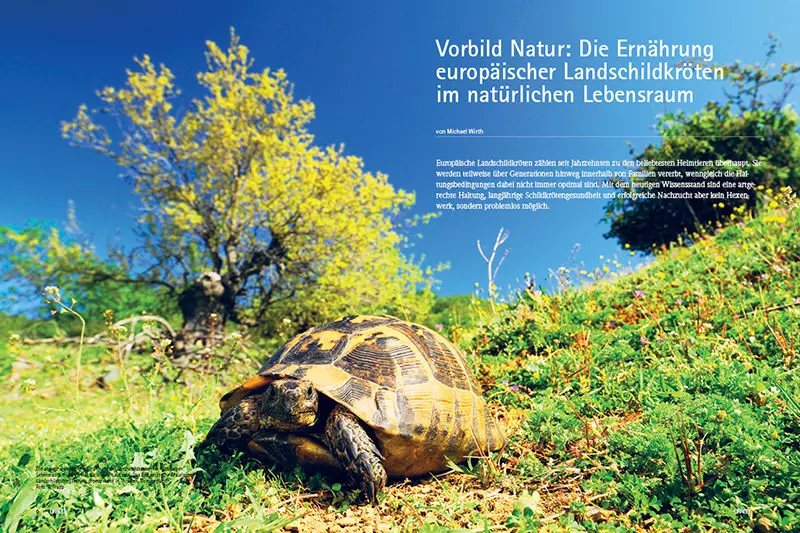
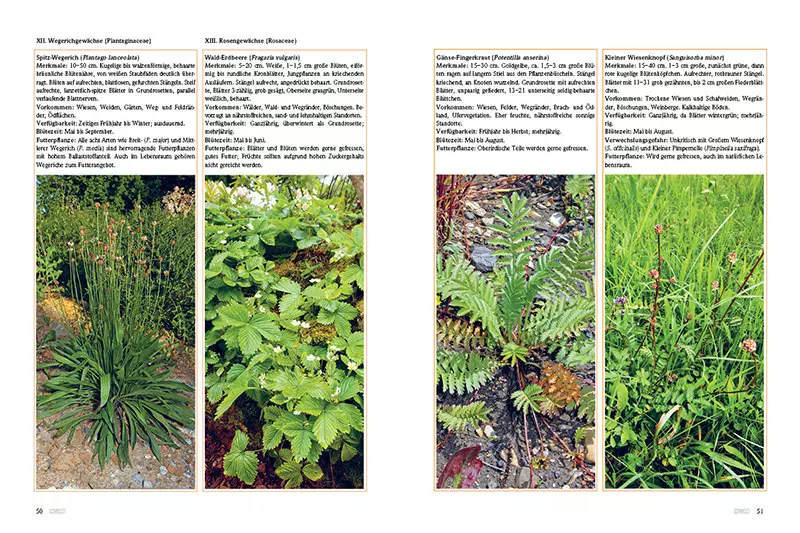
Handbook of forage plants 2nd revised editionMarion Minch is not only a successful breeder of diverse tortoises for many years, but also an excellent connoisseur of native wild herbs. She founded and runs samenkiste.de, which is well known to many tortoise keepers and nature lovers. Her name is inextricably linked with reptile care and species-appropriate nutrition for tortoises. Her handbook of food plants summarises the most important native food plants for herbivorous and omnivorous reptiles. She not only considers tortoises, but also iguanas, spiny-tailed dragons and even chameleons. From the basics of plant biology to native wild herbs to suitable food plants for hardy tropical reptile species, this comprehensive work provides the basis for species-appropriate keeping. In the expanded and supplemented 2nd edition, the plant section is divided according to flower colour. This makes it even easier to identify wild herbs. The work has also been supplemented with a wealth of additional information and many pictures.
Geckos in the terrarium by Astrid FalkThe book offers a comprehensive introduction to geckos and their species-appropriate keeping in terrariums. It explains what you need to think about before buying a gecko and what preparations should be made. The book describes in detail how the terrarium is technically equipped and set up. The care of the animals, their special features and behaviour, their diet, reproduction and rearing of young animals are described, as well as diseases and husbandry problems with tried and tested suggestions for prevention and treatment. Individual gecko species that are particularly suitable for keeping and breeding in terrariums are portrayed in detail in the second part of the book.
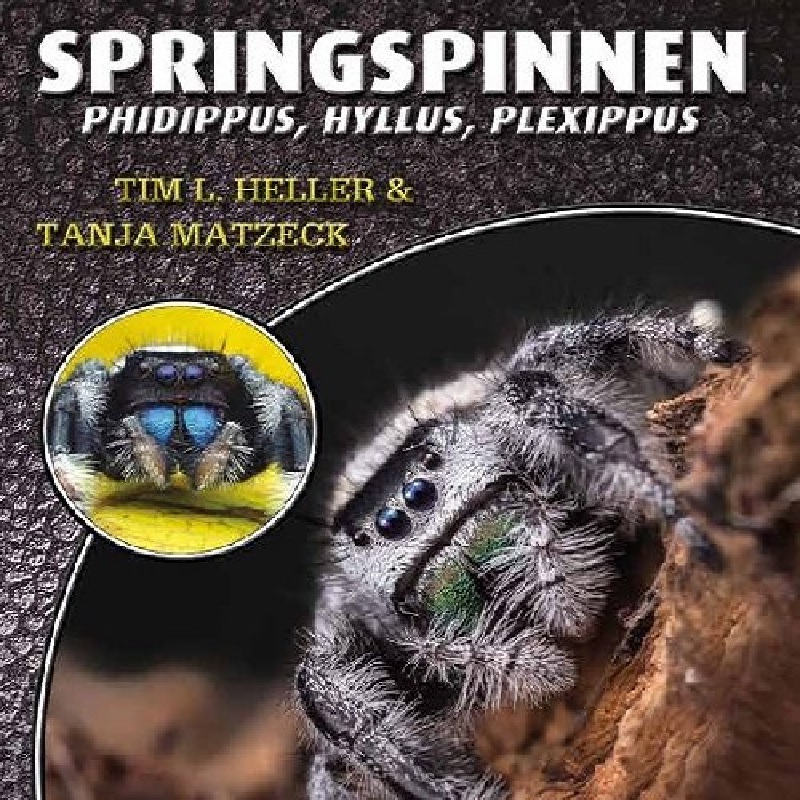
Book Jumping Spiders -
Phidippus, Hyllus & Plexippus
A guide to keeping jumping spiders of the genera Phidippus, Hyllus & Plexippus. Who can resist the charm of jumping spiders? The childlike appearance of their expressive face simply leaves no one cold! In addition, their behavior is extremely exciting to observe, their colors are bright and their requirements for species-appropriate keeping are very easy to meet. No wonder these likeable jumpers are all the rage!
This volume in the "Species by Species" series describes in detail what to look out for when buying and keeping them, introduces the most commonly kept species and color forms and provides plenty of tips on how to keep them successfully - so you can be sure they will breed well!
Species by Species introduces you to the books in this series, which present the most popular terrarium animals. Each volume offers you detailed, practical care instructions and all the information you need to successfully breed your animals.
All important questions from the required tank size to terrarium set-up, technical equipment, species-appropriate nutrition and disease prevention are answered with numerous tricks and tips.
Experienced, long-standing breeders reveal how you can encourage the animals to reproduce and raise healthy young.
All this in full color, generously illustrated and attractively designed - just about your terrarium animal - species by species
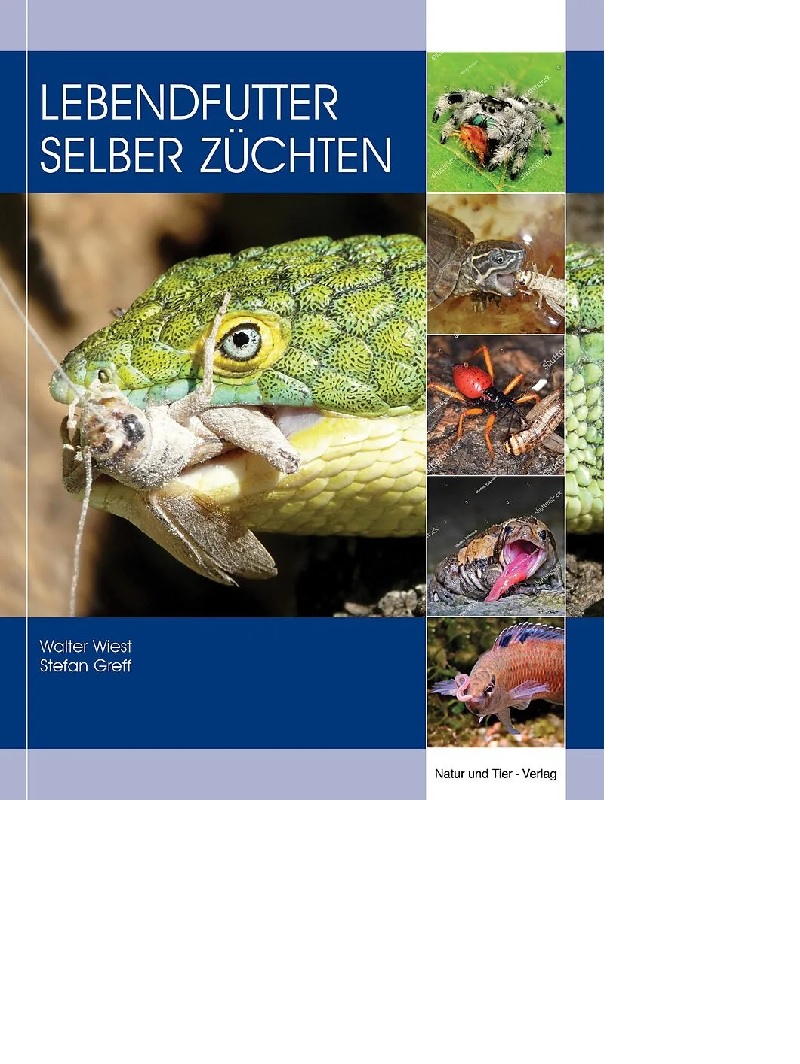
Book "Grow your own live food" - The perfect guide for pet owners
Discover practical and detailed instructions on how you can easily breed food for your reptiles, birds, fish or other animals yourself in the book "Breeding live food yourself". With valuable tips on various food insects, their care and breeding, you can save money and ensure a species-appropriate diet for your pets.
Contents of the book:
Step-by-step instructions for breeding feeder insects
Information on the best types of food for reptiles, birds and fish
Care instructions and breeding conditions for various live food species
Tips for sustainable and cost-effective food production
Why breed your own live food?
Get healthy, fresh food for your animals
Save money and reduce dependence on pet shops
Promote the health and well-being of your animals with species-appropriate food
Whether you are a beginner or an experienced pet owner, this book provides you with everything you need to successfully breed live food yourself.
Marginata 69 - New Guinea tortoises – the genus ElseyaCover storyThe unrecognised beauties: New Guinea tortoises (Andreas S. Hennig)My experiences with Branderhorst's New Guinea tortoise, Elseya (Elseya) branderhorsti (Ouwens, 1914) (Andreas S. Hennig)Keeping and breeding of Rhodin's New Guinea tortoise, Elseya (Hanwarachelys) rhodini Thomson, Amepou, Anamiato & Georges, 2015 (Andreas S. Hennig)PortraitGeoemyda spengleri, Chinese serrated tortoise (Andreas S. Hennig)ReportageMacrochelys temminckii – Experiences and impressions with vulture tortoises part 2 (Reiner Praschag)KeepingAn alternative to year-round keeping of the Egyptian tortoise in the terrarium – my experiences with seasonal outdoor keeping of Testudo kleinmanni (Ricarda Schramm)EtymologySawbacks and living maps part 4: Graptemys gibbonsi, Pascagoula humpback tortoise (Holger Vetter)Classifieds & animal placement
Draco 56 - Terrarium equipmentContents:EditorialTerrarium designPatrick SchöneckerSeven steps to a self-built back wallDiana & Oliver FinkA piece of North American desert in your living room: building and designing a terrarium for collared iguanasJana BuchwaldA near-natural terrarium for the carpet pythonDaniel Renner Redesign of a terrarium for Lampropeltis alternaMalte Hornig Buyable and good: cork backgrounds and other furnishings from specialised retailers and their use in terrariumsDiana & Oliver FinkConstruction of a polystyrene terrarium system for the animal-friendly keeping, breeding and rearing of lizardsHans Esterbauer Lizards and succulents in the winter garden terrariumBeat Akeret
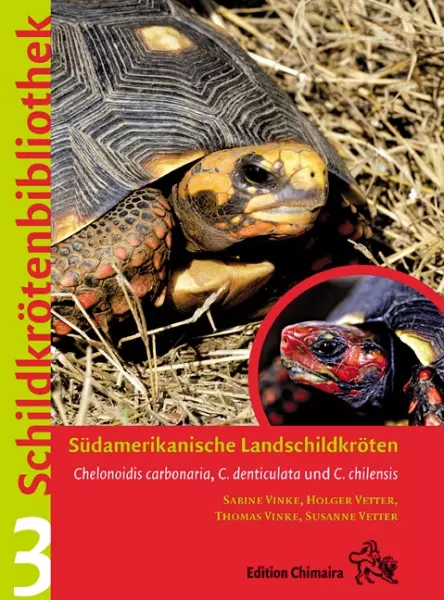
Turtle library 3 - The South American tortoises
Sabine & Thomas Finke, Susanne & Holger Vetter
355 pages
285 color photos
2 drawings 4 distribution maps
Format: 15 x 21.5 cm
Content:
This book is by far the most comprehensive collection of information from all parts of the Southern Turtle's tortoise range: Chelonoidis carbonaria, C. denticulata and C. chilensis.
All about the king climbing snake
64 pages
Format: 14.8 x 21 cm
numerous colour photos
Author Andreas Gumprecht
Contents:
Terrarium keeper and snake expert Andreas Gumprecht has been keeping terrarium animals for 25 years now and would like to share his positive experiences with the care and breeding of the king climbing snake with the reader in this guide. br>Let yourself be impressed by perhaps the most imposing representative of the climbing snake complex.
Systematics and body structure
The fascinating biology: From the life of the king climbing snake
All information on species-appropriate keeping: from suitable terrariums to equipment and technology to feeding
Successful breeding: Mating stimulation, incubation of the eggs and rearing of the young
Problem solving: How to avoid the most common mistakes in care and how to help sick animals
Brilliant photos
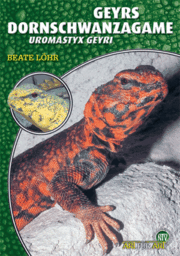
All about the Gery's spiny-tailed lizard from Beate Löhr
62 pages
14.8 x 21 cm
numerous color photos
2nd Edition
Author Beate Löhr
Publisher NTV
Content:Geyr's spiny-tailed lizard is a terrarium care that attracts animal lovers right off the bat. Attractive coloring and prehistoric appearance quickly give rise to the desire to cultivate this lovable lizard in the home terrarium.And that is certainly not rocket science, if one observes the practical instructions for their care and breeding, presented the expert Beate Löhr in this volume of the series "Art for Art". Of course, the author also explains how to stimulate the beautiful lizards for mating, how to incubate the eggs and raise the cute boys.Systematics and physique
The fascinating biology: From the life of Geyr's spiny-tailed lizard
All information on the species-appropriate attitude: From the suitable terrarium over equipment and technology up to the feeding
Successfully breeding: mating stimulation, incubation of the eggs and breeding of the young
Troubleshooting: How to avoid the most common mistakes in care, and how to help sick animals
Brilliant photos
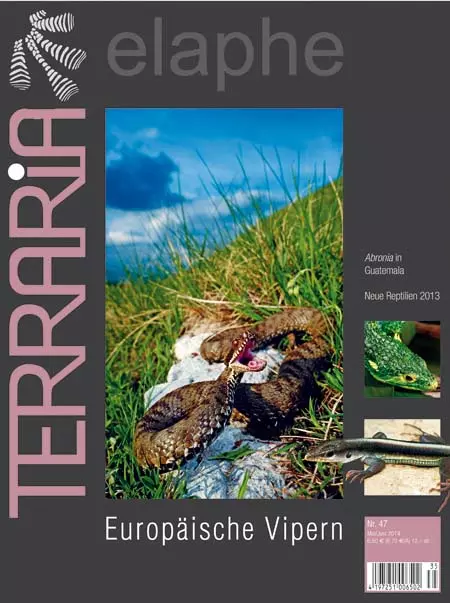
Terraria 47 - European vipers
Abronia in GuatemalaNew reptiles 2013
Contents:The venomous snakes on our doorstep are one of the most fascinating nature experiences for most reptile lovers. We present the species with the usual splendid pictures by photographer Benny Trapp, dedicate ourselves to the protection of the rare meadow viper and introduce the mountain viper and the milo viper in detailed articles.
TerritorialHerpetorama
Cover storyEuropean vipersBenny Trapp
The Hungarian meadow viper – long protected, yet highly endangeredHans-Jürgen Luef
The Milos viper, Macrovipera schweizeri, an endemic of the CycladesGuido Kreiner
In search of mountain vipers (Montivipera xanthina) in north-eastern Greece Part 1Michael Wirth
PanoramaTree snakes of the genus Abronia in GuatemalaChristian Ariano-Sánchez
Bulgaria in May. Excursions through a natural outdoor terrariumPeter Kattke
Research
New speciesList of reptiles newly described in 2013Axel Kwet
Salamandra
TerraristicsThe chytrid fungus and terraristicsBenedikt R. Schmidt
Also in your neighbourhoodNature and species conservation
Field notesObservations of active midwife toads in FebruaryKlemens Fritz
Fire salamander in the tyre trapRudolf Malkmus
GalleryHerpetology always in view. Historical wall charts for educational purposesMichael Markert, Uwe Hossfeld, Günter Stephan & Alexander Kupfer
Subscription & ServicePreview
Incubator Packing stationHeiko Werning
You can find out all about these reptiles in this NTV - Angle-headed Dragons book.
64 pages
with colour photos
Paperback
Date of publication 26.05.2010
Author Michael Evers
Everything about keeping, care, the terrarium, nutrition and much more about the angle-headed dragons. Different species and their differences are explained.
Contents:
Foreword
Relationship
Description of the genus Gonocephalus
Description and main distinguishing features of the species presented
Gonocephalus bellii
Gonocephalus chamaeleontinus
Gonocephalus doriae abbotti
Sex differentiation
Distribution and way of life
Preliminary remarks on keeping
Legal regulations
Purchase
Transport and quarantine
The terrarium
Furnishings
Planting
Technique
Climate values in the terrarium
Care work
Nutrition
Vitamins and minerals
Drinking water and humidity
Familiarisation
Stocking and socialisation
Behaviour of the three species in the community terrarium
Age and health
Mating behaviour, pregnancy and egg laying
Incubation and hatching
Rearing the young
Thanks
Further information
Literature used and further reading
Terraria 39 - Animal welfare and terraristics
Emerald skinkPyrenean frogs and bearded vultures
Contents:
Cover story:Animal welfare and terraristicsWhat should actually belong together as a matter of course is sometimes irreconcilably opposed. Most terrarium enthusiasts see themselves as animal rights activists, while many animal rights activists completely reject terraristics. And within the terrarium hobby, there are always new insights and the need to improve animal welfare for the pets.In the cover story of the next TERRARIA/elaphe, we take a look at the most important aspects of animal welfare in the terrarium hobby, investigate what drives our worst opponents, the animal rights activists, and devote ourselves to the important topic of stress-related illnesses in terrarium animals.
TerritorialHerpetorama
Cover story"It takes more than a good heart to protect animals"Interview with Markus Baur
You don't need a human brain to be depressedRobert Köhler
In the realm of the wild animal rights activistsAn essay by Heiko Werning
Panorama
TerraglobalHow important are ponds for frogs?Mirco Solé
About the problems of writing an articleJoachim Bulian
The Barbados Wildlife Reserve – a worthwhile destinationJens Jungnickel
ResearchNew speciesNew snail snake sets an example against overexploitationSebastian Lotzkat
New tree frogs with a bend in the toe – twoScinax species from southern BrazilAxel Kwet
Among researchersThe reintroduction of the Siamese crocodile (Crocodylus siamensis) in Vietnam – a pioneering project?Kristian Robert Pahl
Apothecary skinks and bionicsUwe Schlüter
Salamandra
Terraristics
ClassicsThe King Python
The Philippine Emerald Skink (Lamprolepis smaragdina philippinica) – Taxonomy, Biology, Care and BreedingMaren Gaulke
Nature and species conservation
Field notesUnusual year for midwife toads in Leinebergland (Lower Saxony)Stefan Meyer
Double-headed smooth snakeMario Schweiger
Forensic herpetology – A pond thrillerGuntram Deichsel
Between bearded vulture and Pyrenean frogChristoph F. Robiller
MissingPointed-snouted stream frog (Taudactylus acutirostris)
Subscription & Service
Also in your neighbourhood
Gallery
2013 – The year of the snake
Preview
IncubatorBreaking Bad Wedding. Part 2Heiko Werning
CHF 12.00
❅
❆
❅
❆
❅
❆
❅
❆
❅
❆
❅
❆
This website uses cookies to ensure the best experience possible. More information...