Terraria No. 35 - Reptile search

Article no: terraria35

CHF 12.00

Stock: 5

Available, delivery time: 1-3 days

Delivery between Monday, 24 August and Tuesday, 25 August
Zahlungsarten
Product information "Terraria No. 35 - Reptile search"

Terraria No. 35 - Reptile search

Rhacophorus feae
Trugnattern

Inhalt:

Titelthema: Reptiliensuche in der Natur
Reptilien in freier Natur zu suchen und zu beobachten, macht nicht nur Spaß, sondern dabei lassen sich auch viele wichtige Erkenntnisse für die Haltung der betreffenden Arten sammeln. Allerdings ist es nicht einfach damit getan, rauszugehen und darauf zu hoffen, dass einem die Tiere nur so über den Weg laufen. Worauf es ankommt, um bei der Suche nach Reptilien auch wirklich Erfolg und damit schöne Erlebnisse zu haben, das erfahren Sie in den ausführlichen Beiträgen des Titelthemas der nächsten TERRARIA/elaphe-Ausgabe.

Territorial
Herpetorama

Titelthema
„Fieldherping“. Die erfolgreiche Suche nach Reptilien im Freiland
Michael Wirth

Von Kratzern, gutem Müll und gebräunten Nacken. Praxistipps für die Reptiliensuche

Michael Wirth

Bitte nicht stören! Verantwortungsbewusstes Verhalten bei der Suche nach Reptilien
Benny Trapp

Panorama
Terraglobal. Reptilien rund um Haus und Garten
Alfred Schleicher

Reptilienerinnerungen à la Guatemala
Lester Meléndez

Forschung
Unter Forschern. Vielfalt zwischen Tempeln und Landminen – Herpetologische Feldarbeit in Kambodscha
Timo Hartmann

Neue Arten
Liste der im Jahr 2011 neu beschriebenen Reptilien
Axel Kwet

Salamandra

Terraristik

Klassiker
Der Grüne Leguan

Basiliscus plumifrons, der Stirnlappenbasilisk: Erfahrungen aus 20 Jahren Haltung und Vermehrung im Terrarium. Teil 2: Pflege und Nachzucht
Ingo Kober

Giftbisse von giftigen und „harmlosen“ Schlangen. Teil 2
Dieter Schmidt

Erstnachzucht von Feas Riesenruderfrosch, Rhacophorus feae, im Leningrad Zoo
Anna A. Bagaturova & Mikhail F. Bagaturov

Natur- und Artenschutz
Feldnotizen. Die Rote Liste der Amphibien und Reptilien Deutschlands. Teil 2: Verantwortlichkeit, Gefährdungsursachen, Schutz- und Hilfsmaßnahmen
Klaus-Detlef Kühnel, Arno Geiger & Richard Podloucky

Vermisst
Halbschwimmer-Nasenfrosch (Rhinoderma rufum)
Alexander Gutsche

Auch in Ihrer Nähe
Abo & Service

Galerie
100 Jahre Herpetologia Europaea
Axel Kwet

Composition
Feeding recommendation
Technical details
Size information

0 of 0 reviews

Give us a rating!

Share your experience with the product with other customers.


Customers also bought

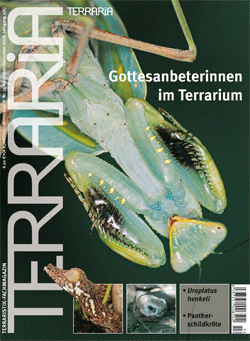
Terraria 58 – Amazonas setups
Terraria 58 – ‘Amazonas’ setupsNewly described amphibians 2015Responsible venomous snake careContents:Cover story: Amazonian setups – AmazonasTerritorialHerpetoramaSalamander in amber - a spectacular findCultural successor: Crocodile in the AllgäuThorn devils: confusion of names for African toadsInvasive red-cheeked tortoise spreads its wingsBlattsteiger: A dead man helps the survivors - with a turtleLookupCover storyNatural habitats at Wilhelma: a living, man-made ‘Amazonas’ biotopeIsabel Koch & Björn SchäferThe Amazon House at Dortmund Zoo: Territory of the green iguanasSimone KarlowskiThe Guiana dragon tree (Dracaena guianensis) at Schönbrunn ZooDoris Preininger, Manuela Sirny, Eveline Dungl & Anton WeissenbacherPanoramaRio Douro - The Grand Canyon of PortugalRudolf MalkmusResearchNew speciesList of new amphibians described in 2015Axel KwetUnknown invaders: the African clawed frog in EuropeJohn Measey, Thierry Backeljau, Anthony Herrel, Rui Rebeio & Dennis RödderSalamandraTerraristicsA checklist of safety precautions when keeping venomous snakesGerald BenyrImportant and invasive infectious diseases in amphibians: chytrid mycosis and ranavirus infectionsRachel E. Marschang, Kim Oster Heckers & Janosch Dietz Nature and species conservationField notesLight at the end of the tunnelUte Nüsken & Christoph LeebAutumn mating of grass snakesBenny TrappThe dice snake (Natrix tesselata) at the reintroduction site in Knorre near Meissen: current situation and a look back at the floods of June 2013Peter Strasser & Torsten PetersTerrarino - the children's page The spring frogsAlexa SabarthSubscription & ServiceAlso in your neighbourhoodPreviewIncubator In praise of bondageHeiko Werning

CHF 12.00

Terraria 25 - Livebearers
Terraria 25 - Livebearing Reptiles Breeding of tarantulasDiadem snakeSpur-thighed tortoise Contents: Not all reptiles lay eggs. A whole range of species bear live young, to the delight of many terrarium enthusiasts. However, even though the often problematic artificial incubation of clutches is no longer necessary: Even with livebearing reptiles, many things can go wrong when breeding them in the terrarium, and keepers often find it difficult to recognise the causes of problems. Uwe Schlüter presents the different forms of livebearing in reptiles and explains everything you need to know to breed these species as successfully as possible. In addition, we present some livebearing reptiles in the terrarium, including the Madagascar dog-headed boa, Sanzinia madagascariensis, or the strange crocodile night lizard, Lepidophyma flavimaculatum. EditorialMagazineHatching of a completely healthy hatchling of the North African spiny-tailed agama from a mould-infested eggColour change in the monocled cobra from juvenile to adultLuminous heavy metal detectorsDinosaurs with braking assistance?Hundreds of Madagascan tortoises confiscated in MalaysiaPhotosynthesis in salamandersLegal TERRAglobal specialLizards of the Barkly TablelandGunther Schmida Cover storyLivebearing reptilesUwe Schlüter The crocodile night lizard. Lepidophyma flavimaculatum (Duméril, 1851) Jochen Meyer Care and breeding of the northern Canary Islands skink (Chalcides viridanus) Uwe Schlüter Keeping and breeding a crowned beauty: the diadem snake (Spalerosophis diadema [Schlegel, 1837]) Sascha & Stefanie Esser Giants of the desert. The African spurred tortoiseLeo Spinner JourneyCuc Phuong. Spiders and other animals in Vietnam's oldest national parkGordon Ackermann Breeding of tarantulas Karin Manns New speciesDiversity of Philippine banded monitors deciphered – and three new taxa described André Koch Among researchers Searching for venomous snakes in Austria Johannes Hill Eye-catcher Of prosimians, poison dart frogs and geckos. Visiting Ute Thut and Dennis Peukert Michael Wirth Near youSubscription & ServicePreview Incubator On the wall, on the lookout Mike Zawadzki

CHF 12.00

Terraria 50 - Monitor lizards in the terrarium
Terraria 50 - Monitor lizards in a terrariumDrinking behaviour of snakesAndaman lizardsContents:Cover story: Monitor lizards and terrariumsMany monitor lizards are among the most sought-after species in the terrarium hobby. Hobby keepers have made a decisive contribution to our knowledge of these charismatic lizards, discovering species and describing their behaviour. Some island monitor lizards are considered endangered and their trade represents a risk factor. At the same time, breeding successes are now also regularly achieved with rare species. In the cover story of the upcoming TERRARIA/elaphe, we will be focussing on the many facets of the mutual relationship between monitor lizards and terraristics.TerritorialHerpetoramaCover storyHistory of keeping monitor lizards in Germany and SchweizerBeat AkeretThe blue monitor lizard. The incredible story of the discovery of Varanus macraeiManfred Reisinger7 years of keeping and breeding the Blue-spotted Tree Monitor (Varanus macraei) at Cologne Zoo: A look back and a look aheadAnna Rauhaus, Lorraine Gutjahr, Johannes Oberreuter & Thomas ZieglerFirst evidence of parthenogenesis in Varanus rainerguentheri, a Pacific monitor lizard from the indicus groupJulian GrabbePanoramaThe Andaman Islands - A little known animal paradiseGernot VogelResearchNew speciesConfusion about new vulture turtlesAxel KwetNew wolf tooth snake from CambodiaAxel KwetAmong researchersA road in the primary rainforest - a small cause with a big effectRudolf MalkmusHerat: We meet again. As a lecturer in a war zonePhilipp WagnersSalamandraTerraristicsLook smart, snake keeper Observations on the drinking behaviour of snakesRalf HöroldAlso in your neighbourhoodNature and species conservationField notesCrow catches grass snakeRalf GramlichGrass frog cannibals in the spawning watersAxel KwetSubscription & ServiceThe introduced wall lizards of KamenzDieter GramentzPreviewIncubator ElvisHeiko Werning

CHF 12.00

Suggested products

Handbook of food plants for tortoises and other reptiles
Handbook of forage plants 2nd revised editionMarion Minch is not only a successful breeder of diverse tortoises for many years, but also an excellent connoisseur of native wild herbs. She founded and runs samenkiste.de, which is well known to many tortoise keepers and nature lovers. Her name is inextricably linked with reptile care and species-appropriate nutrition for tortoises. Her handbook of food plants summarises the most important native food plants for herbivorous and omnivorous reptiles. She not only considers tortoises, but also iguanas, spiny-tailed dragons and even chameleons. From the basics of plant biology to native wild herbs to suitable food plants for hardy tropical reptile species, this comprehensive work provides the basis for species-appropriate keeping. In the expanded and supplemented 2nd edition, the plant section is divided according to flower colour. This makes it even easier to identify wild herbs. The work has also been supplemented with a wealth of additional information and many pictures.

CHF 46.50

Geckos
Geckos in the terrarium by Astrid FalkThe book offers a comprehensive introduction to geckos and their species-appropriate keeping in terrariums. It explains what you need to think about before buying a gecko and what preparations should be made. The book describes in detail how the terrarium is technically equipped and set up. The care of the animals, their special features and behaviour, their diet, reproduction and rearing of young animals are described, as well as diseases and husbandry problems with tried and tested suggestions for prevention and treatment. Individual gecko species that are particularly suitable for keeping and breeding in terrariums are portrayed in detail in the second part of the book.

CHF 28.50

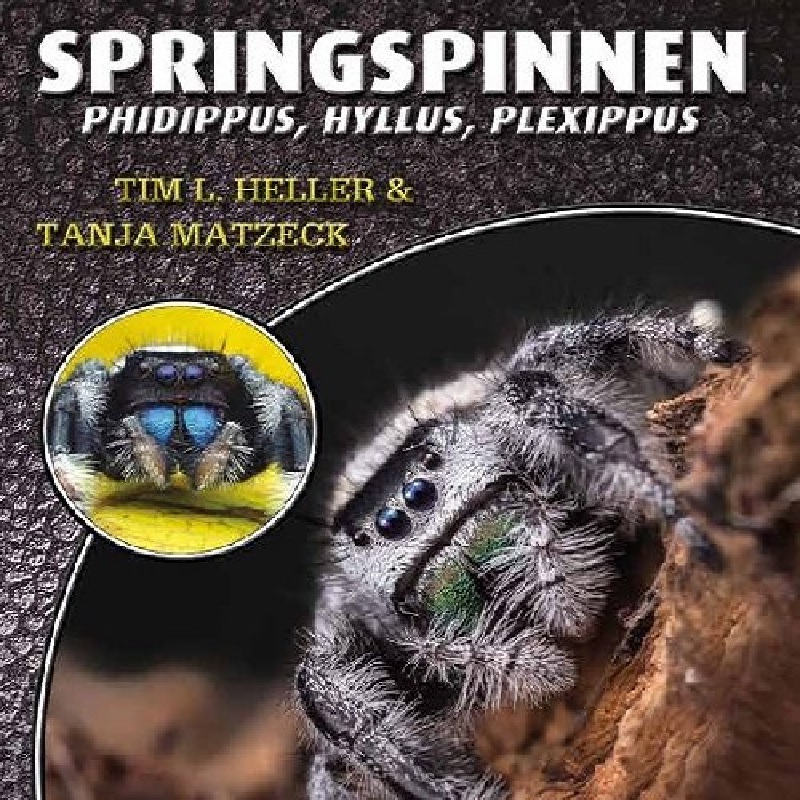
Jumping spiders Phidippus, Hyllus, Plexippus
Book Jumping Spiders - Phidippus, Hyllus & Plexippus A guide to keeping jumping spiders of the genera Phidippus, Hyllus & Plexippus. Who can resist the charm of jumping spiders? The childlike appearance of their expressive face simply leaves no one cold! In addition, their behavior is extremely exciting to observe, their colors are bright and their requirements for species-appropriate keeping are very easy to meet. No wonder these likeable jumpers are all the rage! This volume in the "Species by Species" series describes in detail what to look out for when buying and keeping them, introduces the most commonly kept species and color forms and provides plenty of tips on how to keep them successfully - so you can be sure they will breed well! Species by Species introduces you to the books in this series, which present the most popular terrarium animals. Each volume offers you detailed, practical care instructions and all the information you need to successfully breed your animals. All important questions from the required tank size to terrarium set-up, technical equipment, species-appropriate nutrition and disease prevention are answered with numerous tricks and tips. Experienced, long-standing breeders reveal how you can encourage the animals to reproduce and raise healthy young. All this in full color, generously illustrated and attractively designed - just about your terrarium animal - species by species

CHF 23.90

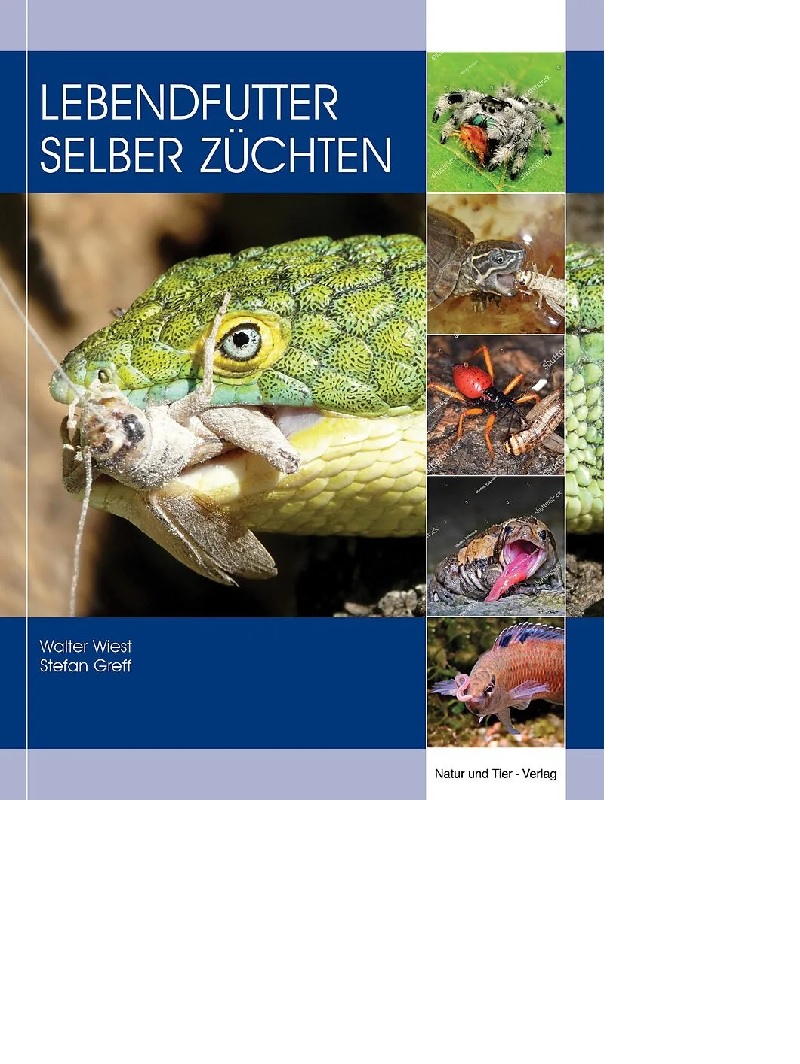
Book Breeding live food yourself
Book "Grow your own live food" - The perfect guide for pet owners Discover practical and detailed instructions on how you can easily breed food for your reptiles, birds, fish or other animals yourself in the book "Breeding live food yourself". With valuable tips on various food insects, their care and breeding, you can save money and ensure a species-appropriate diet for your pets. Contents of the book: Step-by-step instructions for breeding feeder insects Information on the best types of food for reptiles, birds and fish Care instructions and breeding conditions for various live food species Tips for sustainable and cost-effective food production Why breed your own live food? Get healthy, fresh food for your animals Save money and reduce dependence on pet shops Promote the health and well-being of your animals with species-appropriate food Whether you are a beginner or an experienced pet owner, this book provides you with everything you need to successfully breed live food yourself.

CHF 46.50

Marginata 69 - New Guinea tortoises
Marginata 69 - New Guinea tortoises – the genus ElseyaCover storyThe unrecognised beauties: New Guinea tortoises (Andreas S. Hennig)My experiences with Branderhorst's New Guinea tortoise, Elseya (Elseya) branderhorsti (Ouwens, 1914) (Andreas S. Hennig)Keeping and breeding of Rhodin's New Guinea tortoise, Elseya (Hanwarachelys) rhodini Thomson, Amepou, Anamiato & Georges, 2015 (Andreas S. Hennig)PortraitGeoemyda spengleri, Chinese serrated tortoise (Andreas S. Hennig)ReportageMacrochelys temminckii – Experiences and impressions with vulture tortoises part 2 (Reiner Praschag)KeepingAn alternative to year-round keeping of the Egyptian tortoise in the terrarium – my experiences with seasonal outdoor keeping of Testudo kleinmanni (Ricarda Schramm)EtymologySawbacks and living maps part 4: Graptemys gibbonsi, Pascagoula humpback tortoise (Holger Vetter)Classifieds & animal placement

CHF 16.50

Reptilia 56 - African land tortoises
Reptilia 56 - African tortoises Red bamboo snakeFisher's ChameleonXenagama taylori Contents: 2 EDITORIAL 6 MAGAZINE & READERS' LETTERS 14 DATES 16 WESTERN HERP PERSPECTIVES  The blue Mexican  From B. Love 18  PHOTO REPORTAGE  African tortoises  By J. Valverde 26 REPORTAGE  The tortoises of Africa – diversity through  Adaptation to extreme habitats  By T. & S. Vinke 31 HERPETOFAUNA  Taxonomy, ecology and protection of the   Panther tortoise (Stigmochelys pardalis)  By J. S. Massana & A. M. Silvestre 36 KEEPING AND BREEDING  The areola tortoise Hompus areola-  tus (THUNBERG, 1787) – Observations   and experiences: Lifestyle, husbandry,   Breeding and rearing  By A. Schleicher 42 TRAVEL  Excursion in western Cuba   By L. Geißler 51 PORTRAIT AND POSTER  Bradypodion occidentale  By M. Dobiey 56 KEEPING AND BREEDING  Keeping, care and breeding of Taylors   Beavertail dragon, Xenagama taylori   (PARKER, 1935)  By P. M. Müller 62 KEEPING AND BREEDING  Terrarium keeping of the Thai Red bamboo snake (Oreophis porphyraceus coxi)  and a rare birth of twins   By V. Knietsch 67 HERPETOFAUNA On the breeding of the red broad-banded bamboo snake, Oreophis porphyraceus laticinctus SCHULZ & HELFENBERGER 1998   By J. Bulian, B Siebert & M. Ansermet 72 HERPETOFAUNA   Chameleons in the western Usambara-  Mountains in northern Tanzania   By W. & Y. Lantermann 78 REPORTAGE  A cyclone in Sri Lanka   By P. Janzen 86 CLASSIFIED ADS 91 RAT & TAT 94 LIBRARY 104 BRUTKASTEN  My flat-sharing community  Part 1: I wouldn't have any time at all,  Set cars on fire!  By H. Werning

CHF 11.20

Marginata 16 - African spurred tortoises
Marginata 16 - Spur-thighed tortoises Frozen food part 1Mauritius impressionsSea turtles Contents: 2 EDITORIAL 3 READER LETTERS 4 MAGAZINE 8 DATES 10 REPORTAGEThe spur-thighed tortoise - the largest tortoise of the African mainlandHans - Dieter Philippen 18 BREEDING IN HUMAN CAREBreeding of the spur-thighed tortoise(Centrochelys sulcata) at Pilsen Zoo, Czech RepublicVeronika Kodymová and Jan Konás 24 REPORTAGE A house for spur-thighed tortoises part 1Hilko Funsch 31 PORTRAITArgentine snake-necked turtles (Hydromedusa tectifera Pope, 1820)Hans - Dieter Philippen 35 REPORTAGEFrozen food part 1Hans - Dieter Philippen 40 BREEDING IN HUMAN CAREKeeping and breeding the Australian snake-necked turtle (Chelodina longicollis) part 2Stefan Thierfeldt & Sabine Höfler-Thierfeldt 48 REPORTAGEA visit to the giant tortoises in the "La Vanille Crocodile Park" of MauritiusPetra and Jens Jungnickel 54 REPORTAGEThe conservation status of the loggerhead sea turtle (Caretta caretta): an introduction to the current issuesJosé C. Báez, Raimundo Real & Juan A. Caminas 60 BOOK TIP 61 CLASSIFIEDS 62 REGIONAL GUIDE

CHF 14.70

Reptilia 26 – Amazonas
Reptilia 26 - Amazonas Grasshopper breedingToad tree frogsHook-nosed snakes Contents: 2 Editorial 3 Letters to the editor 6 Magazine 12 Dates 14 Western Herp Perspectives: The Evolution of Hunting, by B. Love 16 Photo report: Amazonas, by H. Werning 24 Vibrant Forests – The Flooded Forests of the Amazonas, by H. Werning and H. Kreibich 30 Report: In search of the largest anaconda, by L. Dirksen and P. Strimple 35 Report: Seeing the wood for the trees – What to do on the Amazonas, by H. Werning 42 Terrarium keeping: Breeding feeder insects: The Egyptian Migratory Locust Locusta migratoria, by T. Eisenberg 47 Care and breeding: The Mexican Hook-nosed Snake Heterodon nsicus kennerlyi, by D. Hasselberg 51 Portrait and poster: Geochelone sulcata, by M. Aresté 55 Care and breeding: The "flying lizard" – Care and breeding of Holaspis guentheri laevis, by Dr. M. Meyer 58 Care and breeding: Care and breeding of the tree cavity-dwelling toad tree frog (Phrynohyas resinifictrix GOELDI 1907) in the terrarium 65 Terrarium keeping: Construction of a snake-free enclosure, Part 2: Execution of the work 70 Herpetology and culture: "The dragon's old brood lives in caves", A look at ideas about dragons in East and West, part 2, by K. Kunz 75 Reptilia on tour: The Snake Park in Nairobi, Kenya, by A. S. Henning 82 Advice and action 97 Library 104 Gloss: Anaconda! (Part 1), by H. Werning

CHF 9.80

Draco 02 - Mediterranean tortoises
Draco 02 - Mediterranean tortoises Contents: 2 Editorial 4 Species and subspecies of Mediterranean tortoises, by A. Pieh 18 Insights into the natural lifestyle of Testudo hermanni hermanni, by K. Matthes 25 Impressions from various habitats of the Moorish tortoise (Testudo graeca) in Morocco – a travel report, by A. Pieh 32 On the reproductive biology of European tortoises using the marginated tortoise (Testudo marginata, SCHÖPF 1792) as an example, by M. Mähn and N. Graf 42 Planning and construction of an outdoor enclosure for European tortoises, by K. Simon 48 Tips for the hibernation of Mediterranean tortoises, by T. Wilms 52 Use of hay cobs as supplementary food for tortoises, by C. Dennert 56 On the keeping and breeding of the Horsfield’s tortoise (Testudo horsfieldii, GRAY 1844), by T. Wilms and B. Löhr 60 The Mediterranean tortoise in veterinary practice, by J. Wiechert 72 The teeth of tortoises, by D. Losansky 79 Book box 87 Magazine

CHF 14.90

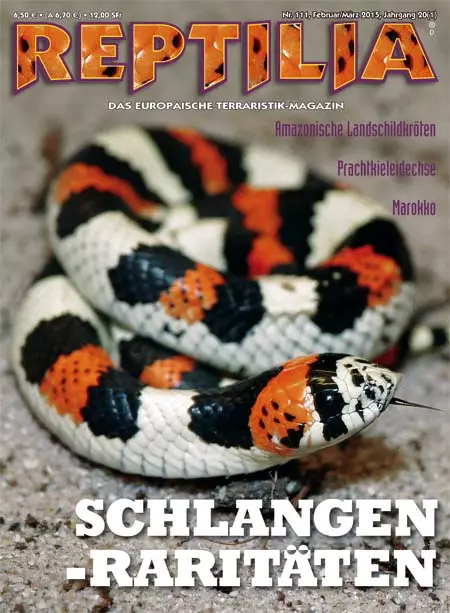
Reptilia 113 - Rhacodactylus, the giants from New Caledonia
Reptilia 113 - RhacodactylusThe giants of New Caledonia Arum familyRed spitting cobraMilos Cover story: Rhacodactylus, the giants of New Caledonia. EditorialMAGAZINEDATES Photo storyRhacodactylus – Diverse giants from New CaledoniaP. Schoenecker Keeping and breedingDark giants in the terrarium: keeping and breeding Rhacodactylus leachianus , the local form from Mont KoghisP. Schoenecker ReportageIn search of New Caledonian giant geckosC. Langner Keeping and breedingThe local variants of Rhacodactylus leachianus in terrarium keeping Part 1: Grande TerreS. Cemelli PlantsArum plants in the terrarium Part 1: Species diversity, biology and special featuresB. Akeret Keeping and breedingThe jewel of venomous snake keeping. The red spitting cobra, Naja pallida, as a pet in the terrariumO. S. Rudolphi ReportageQueensland's spiders and their venoms Part 2: The araneomorph spiders T. J. Hauke ALSO NEAR YOUService Animals of our homelandThe fire-bellied toadR. Leptien WESTERN HERP PERSPECTIVESWalk the boardsB. Love JourneyFeta cheese, sun and snakes. Welcome to Milos!A. Schmid PREVIEW BRUTKASTENChuckwalla anecdotes. Part 2H. Werning

CHF 12.00

Terraria 65 - Better Photography of Reptiles and Amphibians
Terraria 65 - Photographing Reptiles and Amphibians Better Contents: Cover story: Photographing reptiles and amphibians better Whether out in the field or at home in a terrarium: Everyone wants beautiful photos of amphibians and reptiles. This has never been easier than in the age of digital photography. But a camera does not make a photographer. We show how to create studio conditions for terrarium animals at home. Even with smartphones, you can sometimes achieve good results – we give tips for this. An area largely neglected until now in amphibian and reptile photography is underwater images. Many species are regularly or exclusivelyto be found in the water. We offer a brief introduction to underwater photography. Also in TERRARIA/elaphe 2/2017: Annotated and illustrated list of the newreptiles described in 2016 The slow worm: Reptile of the Year 2017 With reptile enthusiasts on an Aesculapian snake excursion and much more Territorial HerpetoramaWhen amphibians glow: neon frogs from ArgentinaThorn devil: divers in the mudCall: observations on sex distribution in amphibiansLeftoversPoison dart frog: the terrarium room crime sceneUrban adapter: monster in Vienna Cover storyPhotographing reptiles and amphibians betterBill Love Great photos with smartphone & coDaniel Knop Underwater photos and videos for beginnersDaniel Knop PanoramaThe Aesculapian snake – searching for a legendary reptile in native climesNiko Weinbeer, Volker Harport & Harald Löffler Better than any zoo visit: Chameleon search in PortugalLasse and Greta Herwig ResearchNew species: List of reptiles newly described in 2016Axel Kwet ConservationThe slow worm – “a fragile snake” is the Reptile of the Year 2017Axel Kwet & Dirk Alfermann TERRARINO – THE CHILDREN'S PAGEThe tree frog. A green superheroAlexa Sabarth Subscription & ServiceAlso in your neighbourhoodPreview IncubatorOn the Dream ShipAndreas “Spider” Krenzke

CHF 13.50

Reptilia 58 - Crustacean lizards
Reptilia 58 - Crustacean lizards Bush crocodileAgate snailsPlains snake Contents: 2 EDITORIAL 4 MAGAZINE 8 DATES 12 REPORTAGEExperience with keeping and breedingof dinos in the terrariumBy D. Schmidtwith a review by H. Werning 16 WESTERN HERP PERSPECTIVESThe Madagascan turtle crisisBy B. Love 18 PHOTO REPORTAGECrustacean lizards – the genus HelodermaBy T. Wilms 26 KEEPING AND BREEDINGThe successful and continuouskeeping and breeding of the scorpion-crustacean lizard Heloderma horridumexasperatumBy M. Reisinger 36 HERPETOFAUNAThe Guatemalan scorpion crustacean lizard, Heloderma horridum charlesbogertiCampbell & Vannini, 1998By L. S. Meléndez Garcia 39 SPECIES CONSERVATIONPoisonous giants facing extinction?REPTILIA project for the protection of theGuatemalan scorpion crustacean lizardBy K. Kunz 44 REPORTAGEHunting anacondas with sonar and guillotineBy L. Dirksen 51 PORTRAIT AND POSTERBufo brongersmaiBy U. Schlüter 55 KEEPING AND BREEDINGThe bush crocodile – secret beauty in theterrariumBy M. Evers 63 KEEPING AND BREEDINGKeeping and breeding of the ChineseDione snake (Elaphe dione)By M. Diekmann & A. Weyers 72 KEEPING AND BREEDING Agate snails in the terrariumBy K. Wandtke 81 REPTILIA ON THE ROAD30 years Reptile Zoo HappBy D. Schmidt 88 CLASSIFIED ADS 93 RAT & TAT 94 LIBRARY 104 INCUBATORProtocol of a failed attempt at acautious approach, at first sight based on mutualsympathy and intersexualattraction, during a jubilantcelebrationBy H. Werning

CHF 11.20

Customers also saw

Terraria 25 - Livebearers
Terraria 25 - Livebearing Reptiles Breeding of tarantulasDiadem snakeSpur-thighed tortoise Contents: Not all reptiles lay eggs. A whole range of species bear live young, to the delight of many terrarium enthusiasts. However, even though the often problematic artificial incubation of clutches is no longer necessary: Even with livebearing reptiles, many things can go wrong when breeding them in the terrarium, and keepers often find it difficult to recognise the causes of problems. Uwe Schlüter presents the different forms of livebearing in reptiles and explains everything you need to know to breed these species as successfully as possible. In addition, we present some livebearing reptiles in the terrarium, including the Madagascar dog-headed boa, Sanzinia madagascariensis, or the strange crocodile night lizard, Lepidophyma flavimaculatum. EditorialMagazineHatching of a completely healthy hatchling of the North African spiny-tailed agama from a mould-infested eggColour change in the monocled cobra from juvenile to adultLuminous heavy metal detectorsDinosaurs with braking assistance?Hundreds of Madagascan tortoises confiscated in MalaysiaPhotosynthesis in salamandersLegal TERRAglobal specialLizards of the Barkly TablelandGunther Schmida Cover storyLivebearing reptilesUwe Schlüter The crocodile night lizard. Lepidophyma flavimaculatum (Duméril, 1851) Jochen Meyer Care and breeding of the northern Canary Islands skink (Chalcides viridanus) Uwe Schlüter Keeping and breeding a crowned beauty: the diadem snake (Spalerosophis diadema [Schlegel, 1837]) Sascha & Stefanie Esser Giants of the desert. The African spurred tortoiseLeo Spinner JourneyCuc Phuong. Spiders and other animals in Vietnam's oldest national parkGordon Ackermann Breeding of tarantulas Karin Manns New speciesDiversity of Philippine banded monitors deciphered – and three new taxa described André Koch Among researchers Searching for venomous snakes in Austria Johannes Hill Eye-catcher Of prosimians, poison dart frogs and geckos. Visiting Ute Thut and Dennis Peukert Michael Wirth Near youSubscription & ServicePreview Incubator On the wall, on the lookout Mike Zawadzki

CHF 12.00