
Terraria 50 - Monitor lizards in the terrarium

Article no: terraria50

CHF 12.00

Stock: 0

Ready for dispatch in 1-3 days, delivery time 7 working days

Delivery between Tuesday, 28 April and Wednesday, 29 April
Zahlungsarten
Product information "Terraria 50 - Monitor lizards in the terrarium"

Terraria 50 - Monitor lizards in a terrarium

Drinking behaviour of snakes
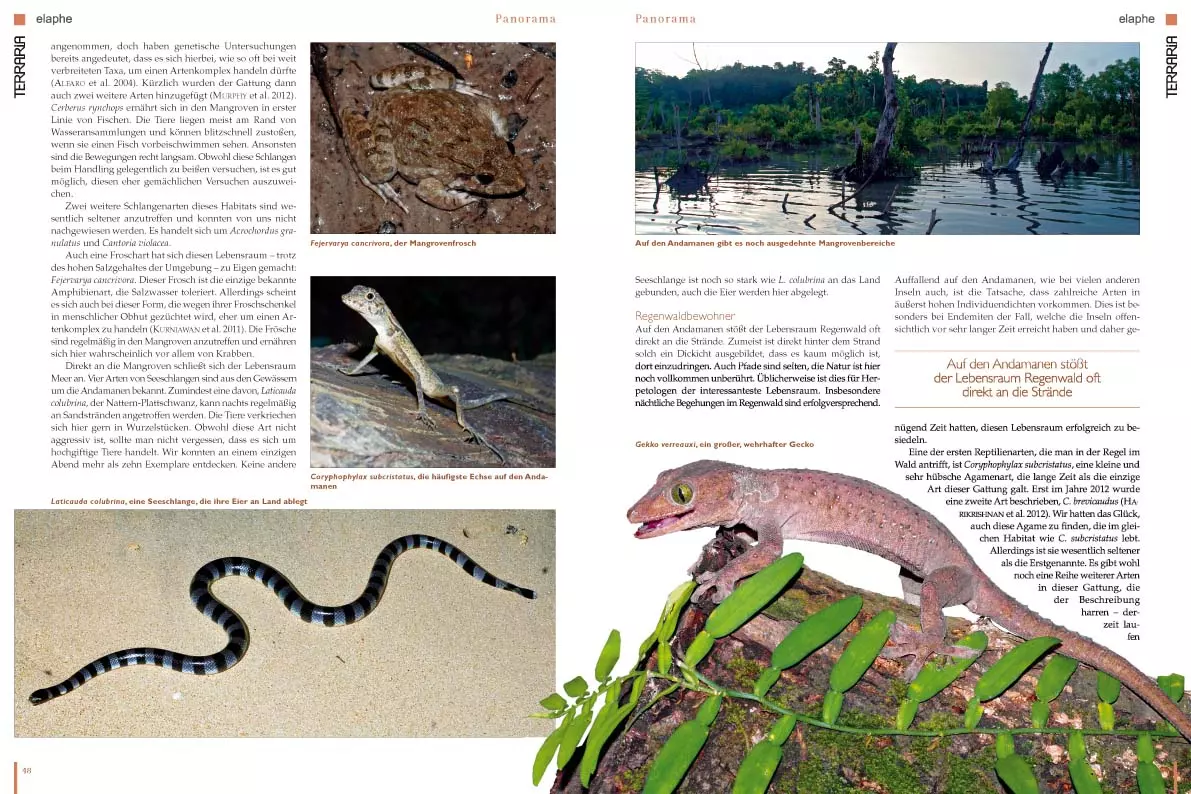
Andaman lizards

Contents:

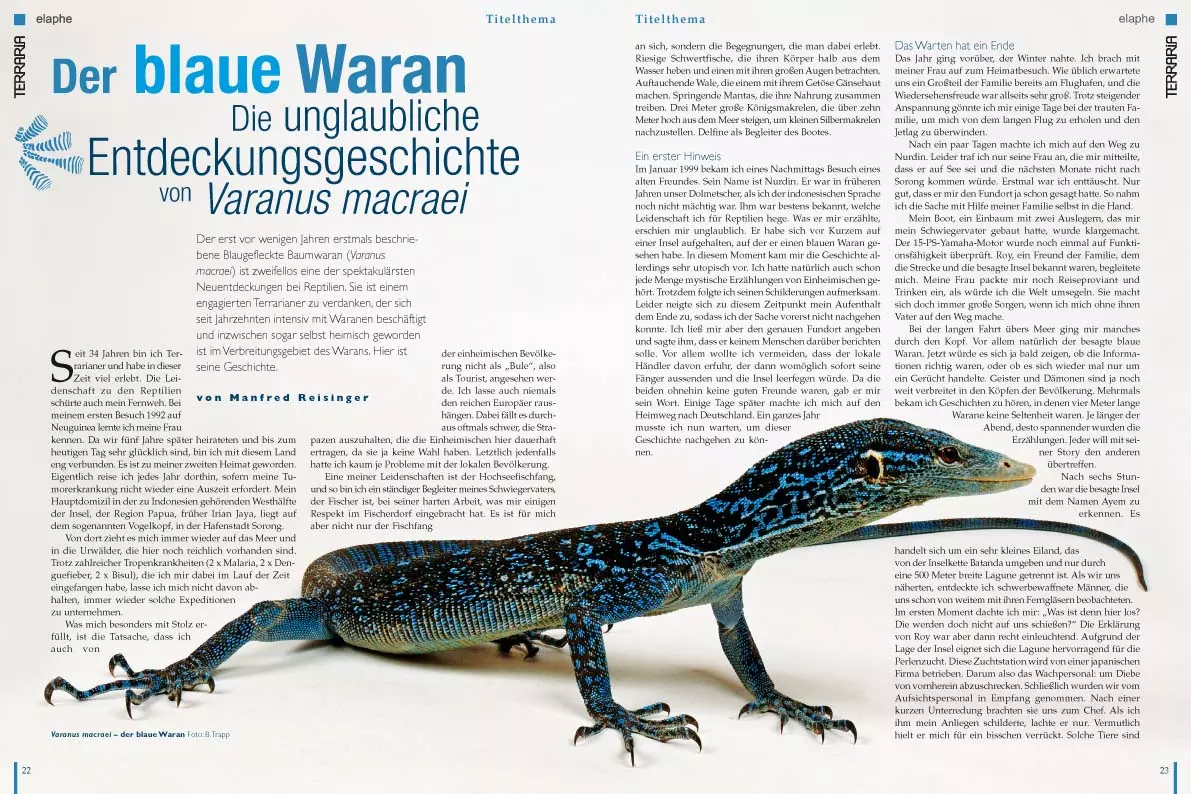
Cover story: Monitor lizards and terrariums

Many monitor lizards are among the most sought-after species in the terrarium hobby. Hobby keepers have made a decisive contribution to our knowledge of these charismatic lizards, discovering species and describing their behaviour. Some island monitor lizards are considered endangered and their trade represents a risk factor. At the same time, breeding successes are now also regularly achieved with rare species. In the cover story of the upcoming TERRARIA/elaphe, we will be focussing on the many facets of the mutual relationship between monitor lizards and terraristics.


Territorial
Herpetorama

Cover story
History of keeping monitor lizards in Germany and Schweizer
Beat Akeret

The blue monitor lizard. The incredible story of the discovery of Varanus macraei
Manfred Reisinger

7 years of keeping and breeding the Blue-spotted Tree Monitor (Varanus macraei) at Cologne Zoo: A look back and a look ahead
Anna Rauhaus, Lorraine Gutjahr, Johannes Oberreuter & Thomas Ziegler

First evidence of parthenogenesis in Varanus rainerguentheri, a Pacific monitor lizard from the indicus group
Julian Grabbe

Panorama

The Andaman Islands - A little known animal paradise
Gernot Vogel

Research

New species
Confusion about new vulture turtles
Axel Kwet

New wolf tooth snake from Cambodia
Axel Kwet

Among researchers
A road in the primary rainforest - a small cause with a big effect
Rudolf Malkmus

Herat: We meet again. As a lecturer in a war zone
Philipp Wagners

Salamandra

Terraristics
Look smart, snake keeper Observations on the drinking behaviour of snakes
Ralf Hörold

Also in your neighbourhood
Nature and species conservation

Field notes
Crow catches grass snake
Ralf Gramlich

Grass frog cannibals in the spawning waters
Axel Kwet

Subscription & Service

The introduced wall lizards of Kamenz
Dieter Gramentz

Preview

Incubator
Elvis
Heiko Werning

Composition
Feeding recommendation
Technical details
Size information

0 of 0 reviews

Give us a rating!

Share your experience with the product with other customers.


Suggested products

Handbook of food plants for tortoises and other reptiles
Handbook of forage plants 2nd revised editionMarion Minch is not only a successful breeder of diverse tortoises for many years, but also an excellent connoisseur of native wild herbs. She founded and runs samenkiste.de, which is well known to many tortoise keepers and nature lovers. Her name is inextricably linked with reptile care and species-appropriate nutrition for tortoises. Her handbook of food plants summarises the most important native food plants for herbivorous and omnivorous reptiles. She not only considers tortoises, but also iguanas, spiny-tailed dragons and even chameleons. From the basics of plant biology to native wild herbs to suitable food plants for hardy tropical reptile species, this comprehensive work provides the basis for species-appropriate keeping. In the expanded and supplemented 2nd edition, the plant section is divided according to flower colour. This makes it even easier to identify wild herbs. The work has also been supplemented with a wealth of additional information and many pictures.

CHF 46.50

Geckos
Geckos in the terrarium by Astrid FalkThe book offers a comprehensive introduction to geckos and their species-appropriate keeping in terrariums. It explains what you need to think about before buying a gecko and what preparations should be made. The book describes in detail how the terrarium is technically equipped and set up. The care of the animals, their special features and behaviour, their diet, reproduction and rearing of young animals are described, as well as diseases and husbandry problems with tried and tested suggestions for prevention and treatment. Individual gecko species that are particularly suitable for keeping and breeding in terrariums are portrayed in detail in the second part of the book.

CHF 28.50

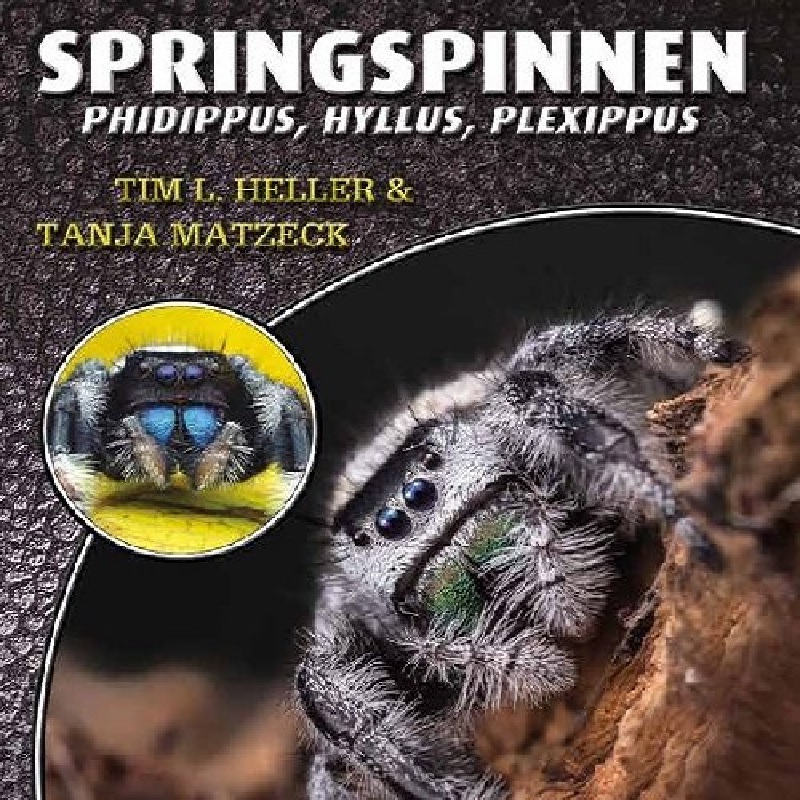
Jumping spiders Phidippus, Hyllus, Plexippus
Book Jumping Spiders - Phidippus, Hyllus & Plexippus A guide to keeping jumping spiders of the genera Phidippus, Hyllus & Plexippus. Who can resist the charm of jumping spiders? The childlike appearance of their expressive face simply leaves no one cold! In addition, their behavior is extremely exciting to observe, their colors are bright and their requirements for species-appropriate keeping are very easy to meet. No wonder these likeable jumpers are all the rage! This volume in the "Species by Species" series describes in detail what to look out for when buying and keeping them, introduces the most commonly kept species and color forms and provides plenty of tips on how to keep them successfully - so you can be sure they will breed well! Species by Species introduces you to the books in this series, which present the most popular terrarium animals. Each volume offers you detailed, practical care instructions and all the information you need to successfully breed your animals. All important questions from the required tank size to terrarium set-up, technical equipment, species-appropriate nutrition and disease prevention are answered with numerous tricks and tips. Experienced, long-standing breeders reveal how you can encourage the animals to reproduce and raise healthy young. All this in full color, generously illustrated and attractively designed - just about your terrarium animal - species by species

CHF 23.90

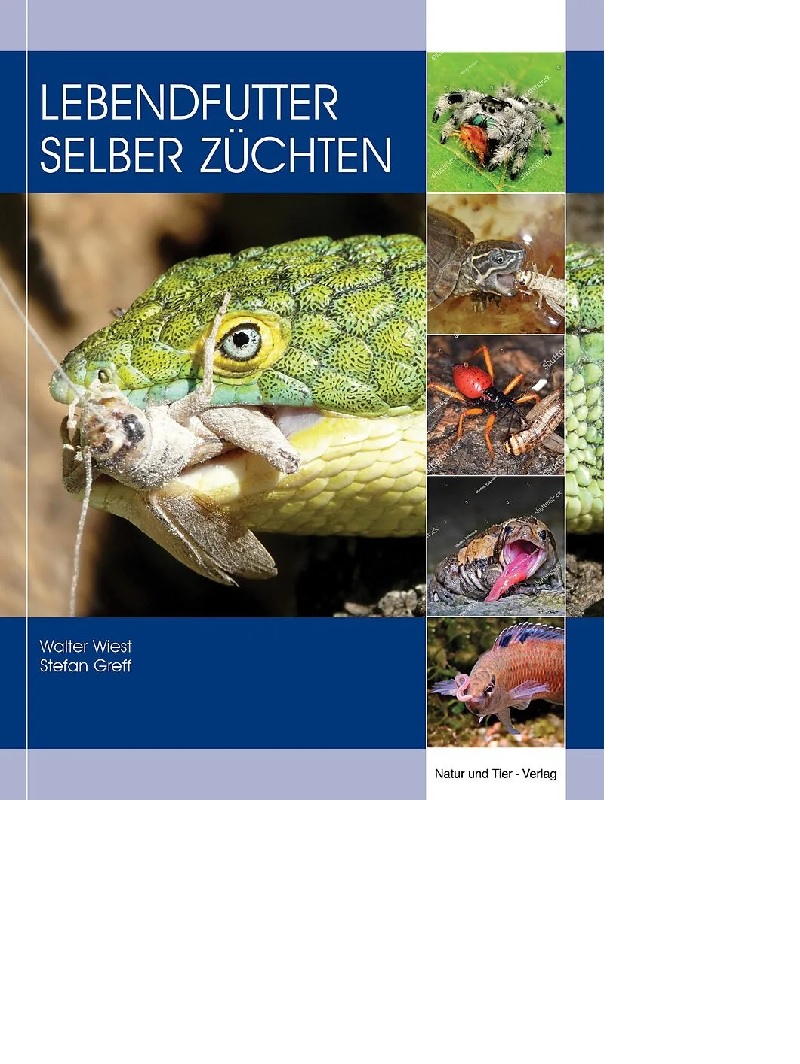
Book Breeding live food yourself
Book "Grow your own live food" - The perfect guide for pet owners Discover practical and detailed instructions on how you can easily breed food for your reptiles, birds, fish or other animals yourself in the book "Breeding live food yourself". With valuable tips on various food insects, their care and breeding, you can save money and ensure a species-appropriate diet for your pets. Contents of the book: Step-by-step instructions for breeding feeder insects Information on the best types of food for reptiles, birds and fish Care instructions and breeding conditions for various live food species Tips for sustainable and cost-effective food production Why breed your own live food? Get healthy, fresh food for your animals Save money and reduce dependence on pet shops Promote the health and well-being of your animals with species-appropriate food Whether you are a beginner or an experienced pet owner, this book provides you with everything you need to successfully breed live food yourself.

CHF 46.50

Marginata 69 - New Guinea tortoises
Marginata 69 - New Guinea tortoises – the genus ElseyaCover storyThe unrecognised beauties: New Guinea tortoises (Andreas S. Hennig)My experiences with Branderhorst's New Guinea tortoise, Elseya (Elseya) branderhorsti (Ouwens, 1914) (Andreas S. Hennig)Keeping and breeding of Rhodin's New Guinea tortoise, Elseya (Hanwarachelys) rhodini Thomson, Amepou, Anamiato & Georges, 2015 (Andreas S. Hennig)PortraitGeoemyda spengleri, Chinese serrated tortoise (Andreas S. Hennig)ReportageMacrochelys temminckii – Experiences and impressions with vulture tortoises part 2 (Reiner Praschag)KeepingAn alternative to year-round keeping of the Egyptian tortoise in the terrarium – my experiences with seasonal outdoor keeping of Testudo kleinmanni (Ricarda Schramm)EtymologySawbacks and living maps part 4: Graptemys gibbonsi, Pascagoula humpback tortoise (Holger Vetter)Classifieds & animal placement

CHF 16.50

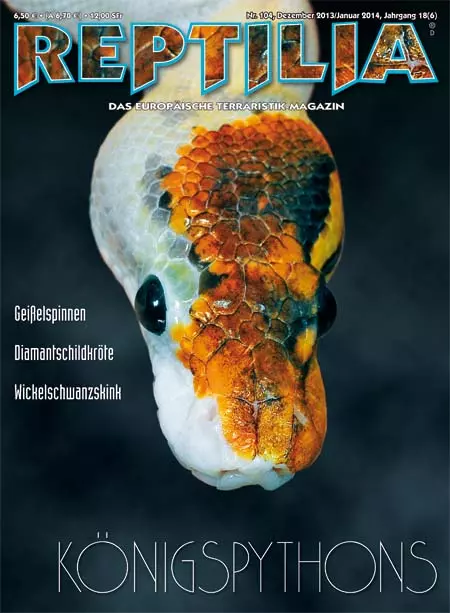
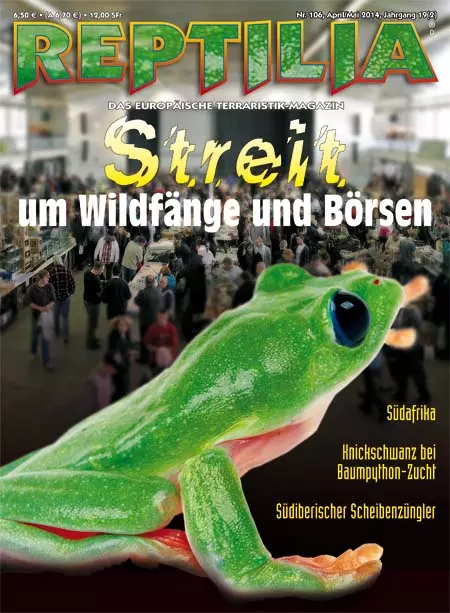
Reptilia 120 - Praying Mantises
Reptilia 120 - Praying Mantises Chinese viperEmerald lizardCosta Rica Contents: Cover story: Praying MantisesNobody can escape the fascination of praying mantises. These predatory insects with their alien appearance and martial mating habits have long secured a permanent place in terrariums. We offer an overview of mantids in breeding, the classics, and the latest trends. We also feature an unusual species from the Philippines and look to eastern Germany, where Mantis religiosa has spread. EditorialMAGAZINEDATES Photo storyThe fascination of praying mantisesK. Kunz Keeping and breedingPraying mantises. The basics of keeping in terrariumsC. J. Schwarz REPORTAGEPraying mantises on the advance in eastern GermanyN. von Lettow-Vorbeck BiologyPraying mantis, change your tune. On the challenge of identifying praying mantises using the Philippine species Creobroter meleagris as an exampleC. J. Schwarz ReportageThe Chinese viper (Deinagkistrodon acutus): a herpetological and cultural phenomenonDr. T. Eimermacher Keeping and breedingThe banded fire salamander (Salamandra salamandra terrestris).  Distribution, habits and breedingM. Rogner RreportageA display terrarium for fire salamandersR. Hoppe Animals of our homelandThe emerald lizardR. Leptien SERVICE WESTERN HERP PERSPECTIVESBut it’s a dry heatB. Love ALSO NEAR YOU TravelCosta Rica – Paradisiacal biodiversity between the Atlantic and the PacificN. Weinbeer PREVIEW INCUBATOR The breakH. Werning

CHF 12.00

Draco 57 - Snakes: Colour and drawing breeding
Draco 57 - Snakes: Colour and markings breedingsContents:Editorial Variety is the trump cardHans - Dieter Philippen Colour forms in garter snakes. A look into the past, the present and the trends of tomorrowDaniel GrübnerHurricane Season Hans-Jörg WinnerSturdy beauties. Colour and pattern variations in PituophisBernd SkubowiusThe latest trends in breeding the green tree python Marcel HoffmannChoose the diamond! Colour and pattern types of diamond pythonsMarc Mense A look at colour breeding in Pantherophis guttatusStephan Drees Colour and pattern forms in the western hook-nosed snakeFilip LonghitanoReal rarities: Colour varieties of the grey-banded king snake Malte Hornig

CHF 32.00

Reptilia 15 - Mantella
Reptilia 15 - MantellaBlack-headed dwarf snakeLong-tailed lizardSri LankaContents:Page 2 - EditorialPage 3 - MagazinePage 5 - Report: Can the turtles of Asia still be saved? by E. MeierPage 16 - DatesPage 18 - Western Herp Pespectives: First contact with Baja, by B. LovePage 20 - Photo report: MantellaPage 26 - Herpetofauna: Mantella - Interesting poison frogs from Madagascar, by K. SchmidtPage 35 - Report: Protection of Madagascan colour poison frogs and their habitats, by H. ZimmermannPage 40 - Travel report: In the dry zone of Sri Lanka, by Dr M. GaulkePage 47 - Portrait and poster: Tylototriton verrucosus, by M. Aresté and J. L. FarriolsPage 51 - Keeping and breeding: The South China long-tailed lizard, by U. SchlüterPage 55 - Keeping and breeding: Rhoptropus barnardi - a day gecko from Namibia, by Dr M. MeyerPage 60 - Report: Cockroaches (Blattoptera) - Rulers of the world? by A. HauschildPage 64 - Keeping and breeding: Observations on the black-headed dwarf snake Rhynchocalamus m. melanocephalus (Jan, 1862), by H. EsterbauerPage 69 - Report: King cobra bite with consequences, by T. Ziegler, H. X. Quang and N. Ba TrinhPage 74 - Herpetology and culture: The snake in Celtic mythology, part 2, by L. Batista Carissimi-PrioriPage 81 - Reptilia on the road: The vivarium at Chemnitz Zoo, by A. S. HennigPage 88 - Advice and actionPage 91 - LibraryPage 96 - Incubator: 5,995 characters Resentment

CHF 9.80

The green water dragon
All about the green water dragon by Heiko Werning 64 pages Format: 14.8 x 21 cm 43 colour photos Paperback Author Heiko Werning Contents: The green water dragon is without question a "classic" of terraristics. For decades it has been a permanent fixture both in the pet trade and in the terrariums of enthusiasts.REPTILIA editor Heiko Werning explains in this volume of the "Species by Species" series what is involved in the species-appropriate keeping and care of the green water dragon and, of course, also reveals how you can successfully breed your favourites and raise the adorable young animals. Systematics and body structure The fascinating biology: From the life of the green water dragon All information on species-appropriate keeping: from suitable terrariums to equipment and technology to feeding Successful breeding: Mating stimulation, incubation of the eggs and rearing the young Solutions to problems: How to avoid the most common mistakes in care and how to help sick animals Brilliant photos

CHF 18.50

NTV, Discover the amphibians
NTV, Discover the amphibians and learn all about these animals. 56 pages colour photos throughout Large format: 20.7 x 28 cm Hardcover Author Kriton Kunz Contents: Every child knows a frog that swims around in its pond and croaks cheerfully, or the black and yellow fire salamander. But how do these friendly animals live? What do they eat, how do they survive the winter? How does a tadpole become a small frog? And what other amazing amphibians are there? "Entdecke die Amphibien" explains what amphibians are, their special features and their incredible abilities in an entertaining and child-friendly way. Fantastic records from the world of frogs, salamanders and the like are included, as well as an exciting quiz about these colourful survival artists. Including 20 great stickers 

CHF 17.90

Marginata 36 - Dwarf tortoises
Marginata 36 - Dwarf tortoisesBreeding Homopus areolatus Part 2Breeding of musk turtlesHibernation in Mediterranean tortoisesContents:EditorialMagazineDatesPHOTOSTORY"Dwarf tortoises" An overview of the smallest forms of tortoiseHans - Dieter PhilippenBreedingExperiences with the husbandry and breeding of the Areolate Flat-shelled Tortoise (Homopus areolatus) under different conditions in Namibia and Switzerland. Part 2: Husbandry and breeding of the species in SwitzerlandVictor MislinBREEDINGThe dwarf Pelomedus tortoise (Pelusios nanus) – the world’s smallest neck-turning tortoise. Experiences with acclimatisation, care and initial breeding attemptsHans - Dieter PhilippenPortraitKalahari tent or ray-eyed tortoise Psammobates oculiferusAlfred Schleicher & Hans - Dieter PhilippenReportageUnusual discovery of a female Okavango flap-breasted Pelomedus turtle (Pelusios bechuanicus)Alfred SchleicherReportageWith the giant tortoises of Prison Island, ZanzibarJens JungnickelReportageTurtles in a caseVienna ZooAttitudeHibernation of European tortoisesThorsten GeierReportageSiamese twin of Testudo graeca iberaBayram GöçmenReportageAs a turtle volunteer in the MaldivesSibylle GausBook tipClassifiedsSubscription & ServiceRegional guide

CHF 16.50

NTV - Dwarf bird spiders
NTV - Dwarf tarantulas all about keeping and caring for these amazing tiny creatures. 160 pages 179 photos Paperback Publication date 24.06.2011 1st edition Author Hans-Werner Auer Anyone interested in dwarf tarantulas, i.e. very small species, has hit the jackpot: These tiny creatures include some of the most exciting, spectacular and colourful species of all!What's more, spider lovers can keep and observe a large number of different tree and ground dwellers in a very small space. And this hobby never gets boring anyway, as new, wonderful species are constantly being discovered and introduced to terraristics.

CHF 35.40

Customers also saw

Bearded dragon
The bearded dragon (Pogona)Area of origin:The native habitat of the bearded dragon (Pogona) is Australia.Habitat:The bearded dragon can be found in semi-deserts, steppes and tree steppes. The bearded dragon is actually quite common in its natural habitat. The bearded dragon likes to live alone. However, their habitat in the wild is close to other members of their species. The males occupy a territory that covers several square metres. They sit and nod frequently. They also like to spend time in populated and agricultural areas.The matching camouflage colouring and the spiny scales help the contours of the bearded dragons to blend in with their surroundings.Keeping:Temperature and humidity are very important when keeping bearded dragons. The average daytime temperature is between 30° and 35 °C. However, the bearded dragon should have different temperature zones between which it can change. At night, the temperature should not be allowed to drop below 20 °C. The optimum humidity is between 30 % and 40 %. Humidity should not exceed 40 % in the long term, as this could lead to fungal skin diseases.What size of terrarium for bearded dragons?As a pet shop, we generally recommend the bigger the better. However, 150 × 60 × 100 cm is the minimum. The higher the better, bearded dragons love to sunbathe.Bearded dragons can be kept very well on their own. Only in sufficiently large and well-structured terrariums is it possible to keep a small harem (one male with 2-3 females) or a pure group of females.Food:Bearded dragons are so-called omnivorous animals. They need fresh green food as well as insects. You have to be very careful with too many insects as this unfortunately leads to obesity. The older the bearded dragon gets, the more they become vegetarians and sometimes refuse insects altogether.Feeding example:MO: courgette, chicory, chives, carrot, hay, Golliwoog food plantMI: Endive, daisies, dandelion, hay and two insects (crickets, desert locusts or zophobas etc.)FR: Pumpkin, rocket, hazelnut leaves, hay, Golliwoog food plantSO:Chicory, dandelion, desert locusts, Argentine cockroaches, hayWhen feeding green food, care must be taken to ensure that it is not too wet and that it is cut into bite-sized pieces. As bearded dragons in the wild rarely have access to juicy, fresh grass, hay helps to make it drier and more digestible.If diarrhoea occurs, more hay can be added to the food, it usually disappears after a week, otherwise a vet who is familiar with reptiles should be consulted.