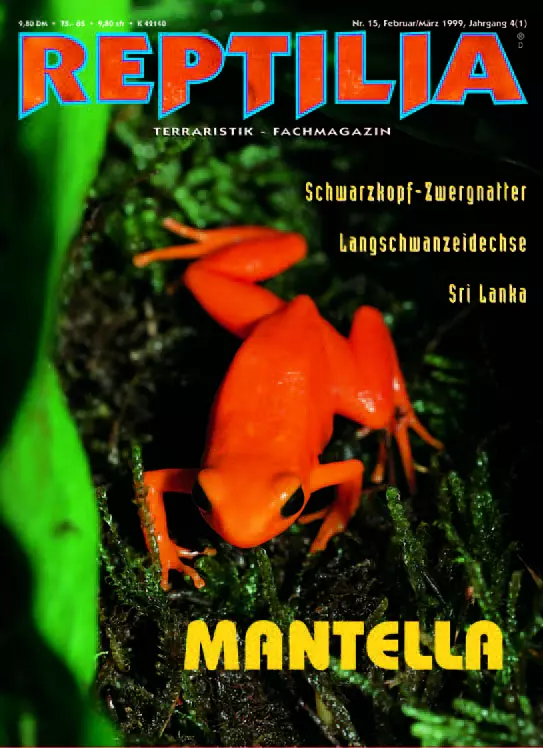
Reptilia 15 - Mantella

Article no: reptilia15

CHF 9.80

Stock: 0

Ready for dispatch in 1-3 days, delivery time 7 working days

Delivery between Monday, 31 August and Tuesday, 1 September
Zahlungsarten
Product information "Reptilia 15 - Mantella"

Reptilia 15 - Mantella

Black-headed dwarf snake
Long-tailed lizard
Sri Lanka

Contents:

Page 2 - Editorial
Page 3 - Magazine
Page 5 - Report: Can the turtles of Asia still be saved? by E. Meier
Page 16 - Dates
Page 18 - Western Herp Pespectives: First contact with Baja, by B. Love
Page 20 - Photo report: Mantella
Page 26 - Herpetofauna: Mantella - Interesting poison frogs from Madagascar, by K. Schmidt
Page 35 - Report: Protection of Madagascan colour poison frogs and their habitats, by H. Zimmermann
Page 40 - Travel report: In the dry zone of Sri Lanka, by Dr M. Gaulke
Page 47 - Portrait and poster: Tylototriton verrucosus, by M. Aresté and J. L. Farriols
Page 51 - Keeping and breeding: The South China long-tailed lizard, by U. Schlüter
Page 55 - Keeping and breeding: Rhoptropus barnardi - a day gecko from Namibia, by Dr M. Meyer
Page 60 - Report: Cockroaches (Blattoptera) - Rulers of the world? by A. Hauschild
Page 64 - Keeping and breeding: Observations on the black-headed dwarf snake Rhynchocalamus m. melanocephalus (Jan, 1862), by H. Esterbauer
Page 69 - Report: King cobra bite with consequences, by T. Ziegler, H. X. Quang and N. Ba Trinh
Page 74 - Herpetology and culture: The snake in Celtic mythology, part 2, by L. Batista Carissimi-Priori
Page 81 - Reptilia on the road: The vivarium at Chemnitz Zoo, by A. S. Hennig
Page 88 - Advice and action
Page 91 - Library
Page 96 - Incubator: 5,995 characters Resentment

Composition
Feeding recommendation
Technical details
Size information

0 of 0 reviews

Give us a rating!

Share your experience with the product with other customers.


Suggested products

Handbook of food plants for tortoises and other reptiles
Handbook of forage plants 2nd revised editionMarion Minch is not only a successful breeder of diverse tortoises for many years, but also an excellent connoisseur of native wild herbs. She founded and runs samenkiste.de, which is well known to many tortoise keepers and nature lovers. Her name is inextricably linked with reptile care and species-appropriate nutrition for tortoises. Her handbook of food plants summarises the most important native food plants for herbivorous and omnivorous reptiles. She not only considers tortoises, but also iguanas, spiny-tailed dragons and even chameleons. From the basics of plant biology to native wild herbs to suitable food plants for hardy tropical reptile species, this comprehensive work provides the basis for species-appropriate keeping. In the expanded and supplemented 2nd edition, the plant section is divided according to flower colour. This makes it even easier to identify wild herbs. The work has also been supplemented with a wealth of additional information and many pictures.

CHF 46.50

Geckos
Geckos in the terrarium by Astrid FalkThe book offers a comprehensive introduction to geckos and their species-appropriate keeping in terrariums. It explains what you need to think about before buying a gecko and what preparations should be made. The book describes in detail how the terrarium is technically equipped and set up. The care of the animals, their special features and behaviour, their diet, reproduction and rearing of young animals are described, as well as diseases and husbandry problems with tried and tested suggestions for prevention and treatment. Individual gecko species that are particularly suitable for keeping and breeding in terrariums are portrayed in detail in the second part of the book.

CHF 28.50

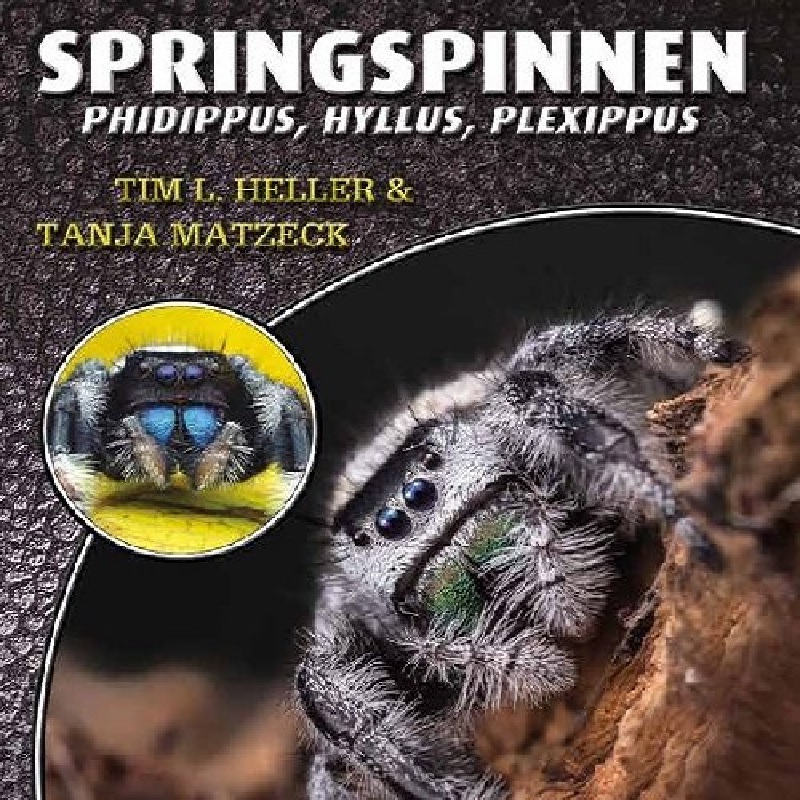
Jumping spiders Phidippus, Hyllus, Plexippus
Book Jumping Spiders - Phidippus, Hyllus & Plexippus A guide to keeping jumping spiders of the genera Phidippus, Hyllus & Plexippus. Who can resist the charm of jumping spiders? The childlike appearance of their expressive face simply leaves no one cold! In addition, their behavior is extremely exciting to observe, their colors are bright and their requirements for species-appropriate keeping are very easy to meet. No wonder these likeable jumpers are all the rage! This volume in the "Species by Species" series describes in detail what to look out for when buying and keeping them, introduces the most commonly kept species and color forms and provides plenty of tips on how to keep them successfully - so you can be sure they will breed well! Species by Species introduces you to the books in this series, which present the most popular terrarium animals. Each volume offers you detailed, practical care instructions and all the information you need to successfully breed your animals. All important questions from the required tank size to terrarium set-up, technical equipment, species-appropriate nutrition and disease prevention are answered with numerous tricks and tips. Experienced, long-standing breeders reveal how you can encourage the animals to reproduce and raise healthy young. All this in full color, generously illustrated and attractively designed - just about your terrarium animal - species by species

CHF 23.90

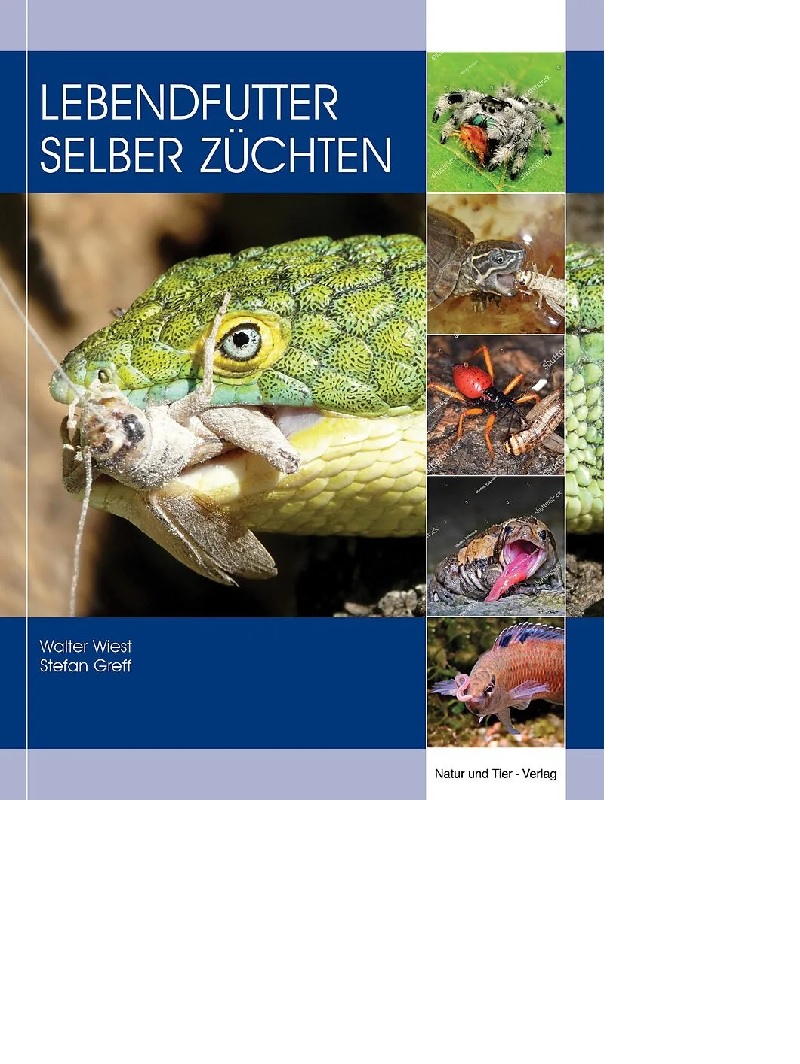
Book Breeding live food yourself
Book "Grow your own live food" - The perfect guide for pet owners Discover practical and detailed instructions on how you can easily breed food for your reptiles, birds, fish or other animals yourself in the book "Breeding live food yourself". With valuable tips on various food insects, their care and breeding, you can save money and ensure a species-appropriate diet for your pets. Contents of the book: Step-by-step instructions for breeding feeder insects Information on the best types of food for reptiles, birds and fish Care instructions and breeding conditions for various live food species Tips for sustainable and cost-effective food production Why breed your own live food? Get healthy, fresh food for your animals Save money and reduce dependence on pet shops Promote the health and well-being of your animals with species-appropriate food Whether you are a beginner or an experienced pet owner, this book provides you with everything you need to successfully breed live food yourself.

CHF 46.50

Marginata 69 - New Guinea tortoises
Marginata 69 - New Guinea tortoises – the genus ElseyaCover storyThe unrecognised beauties: New Guinea tortoises (Andreas S. Hennig)My experiences with Branderhorst's New Guinea tortoise, Elseya (Elseya) branderhorsti (Ouwens, 1914) (Andreas S. Hennig)Keeping and breeding of Rhodin's New Guinea tortoise, Elseya (Hanwarachelys) rhodini Thomson, Amepou, Anamiato & Georges, 2015 (Andreas S. Hennig)PortraitGeoemyda spengleri, Chinese serrated tortoise (Andreas S. Hennig)ReportageMacrochelys temminckii – Experiences and impressions with vulture tortoises part 2 (Reiner Praschag)KeepingAn alternative to year-round keeping of the Egyptian tortoise in the terrarium – my experiences with seasonal outdoor keeping of Testudo kleinmanni (Ricarda Schramm)EtymologySawbacks and living maps part 4: Graptemys gibbonsi, Pascagoula humpback tortoise (Holger Vetter)Classifieds & animal placement

CHF 16.50

Terraria 65 - Better Photography of Reptiles and Amphibians
Terraria 65 - Photographing Reptiles and Amphibians Better Contents: Cover story: Photographing reptiles and amphibians better Whether out in the field or at home in a terrarium: Everyone wants beautiful photos of amphibians and reptiles. This has never been easier than in the age of digital photography. But a camera does not make a photographer. We show how to create studio conditions for terrarium animals at home. Even with smartphones, you can sometimes achieve good results – we give tips for this. An area largely neglected until now in amphibian and reptile photography is underwater images. Many species are regularly or exclusivelyto be found in the water. We offer a brief introduction to underwater photography. Also in TERRARIA/elaphe 2/2017: Annotated and illustrated list of the newreptiles described in 2016 The slow worm: Reptile of the Year 2017 With reptile enthusiasts on an Aesculapian snake excursion and much more Territorial HerpetoramaWhen amphibians glow: neon frogs from ArgentinaThorn devil: divers in the mudCall: observations on sex distribution in amphibiansLeftoversPoison dart frog: the terrarium room crime sceneUrban adapter: monster in Vienna Cover storyPhotographing reptiles and amphibians betterBill Love Great photos with smartphone & coDaniel Knop Underwater photos and videos for beginnersDaniel Knop PanoramaThe Aesculapian snake – searching for a legendary reptile in native climesNiko Weinbeer, Volker Harport & Harald Löffler Better than any zoo visit: Chameleon search in PortugalLasse and Greta Herwig ResearchNew species: List of reptiles newly described in 2016Axel Kwet ConservationThe slow worm – “a fragile snake” is the Reptile of the Year 2017Axel Kwet & Dirk Alfermann TERRARINO – THE CHILDREN'S PAGEThe tree frog. A green superheroAlexa Sabarth Subscription & ServiceAlso in your neighbourhoodPreview IncubatorOn the Dream ShipAndreas “Spider” Krenzke

CHF 13.50

Reptilia 62 - Gopher tortoises
Reptilia 62 - Gopher tortoises Giant crab spiderAgalychnis moreletiiAmeives Contents: 2 EDITORIAL 3 MAGAZINE 16 DATES 18 WESTERN HERP PERSPECTIVESHerp Art - a sign of maturityBy B. Love 20 PHOTO REPORTAGEThe tortoises of North AmericaAn overview of the genus GopherusBy S. Winchell 28 HERPETOFAUNAGopherus flavomarginatus, the Mexican gopher tortoiseBy R. Gonzáles Trápaga & G. Aguirre León 35 HERPETOFAUNAThe gopher tortoise (Gopherus polyphemus) – a civil engineerBy H. R. Mushinsky & E. D. McCoy 41 REPORTAGEScrew trees (Pandanaceae) as microhabitats for reptiles and amphibians in MadagascarBy P.-S. Gehring 43 TRAVELHerpetological excursion to YbbstalBy S. Fallend 51 PORTRAIT AND POSTERRhacophorus pardalisBy M. Gaulke 56 PRACTICEThe diet of ameives and monitor tegus inthe wild and in captivityBy U. Schlüter 63 KEEPING AND BREEDINGKeeping and breeding of Morelet’s leaffrog, Agalychnis moreletii (Duméril, 1853)By T. Eisenberg 72 PRACTICE North American aquatic turtles in the outdoor terrarium Part 3: Description of an outdoor enclosure for the seasonal keeping of North American aquatic turtlesBy A. S. Hennig & D. Symanski 76 KEEPING AND BREEDINGEight-eyed hunters of the nightBrief remarks on the keeping and breeding of Heteropoda venatoria and Holconia sp.By K. Kunz 86 FAQ - FREQUENTLY ASKED QUESTIONSQuestions about purchasing and keeping snakesBy D. Schmidt 92 TERRARIUM EXHIBITSParque "Reptilandia" near Dominical, Costa RicaBy T. Eisenberg 95 LIBRARY 104 INCUBATORHigh mountain hallucinationsBy H. Werning

CHF 11.20

Marginata 04 - Star tortoises
Marginata 04 - Star Tortoises Turtle fauna of the GambiaIncubation Part 1Aquatic box turtle Part 3 Contents: 2 EDITORIAL 3 MAGAZINE 7 READERS’ LETTERS 8 DATES 10 PHOTO REPORTAGEStar tortoisesHans - Dieter Philippen 16 REPORTIn Search of the Star Tortoise (Geochelone elegans) (SCHOEPFF, 1794) Bernd Wolff 22 REPORTLong-standing breeding of the Indian Star Tortoise (Geochelone elegans) (SCHOEPFF, 1794) Georg Storms & Hans - Dieter Philippen 31 PORTRAITPapua Soft-shelled TurtleCarettochelys insculpta (RAMSAY, 1886)Hans - Dieter Philippen 35 REPORTAGETemperature-dependent sex determination in marsh, aquatic, and land turtlesPart 1Claude Pieau & Mireille Dorizzi 43 REPORTThe turtle fauna of the GambiaEvamaria Minuth & Ulrich Thieme 51 REPORTKeeping and breeding the aquatic box turtle Terrapene coahuila (SCHMIDT & OWENS, 1944)Part 2 Markus Baur & Irmtraud Jasser-Häger 59 MARKETPLACE 60 BOOK TIP 61 CLASSIFIEDS 62 REGIONAL GUIDE 64 AGATHA MARGINATA

CHF 14.70

Reptilia 91 - Mexican turtles
Reptilia 91 - Mexican tortoises Crocodile-tailed crested lizardMeasurement and control technologyPacific triangle snake Contents:Mexico is a dream country for all those interested in turtles, as this country is home to more different species of land, water, swamp and sea turtles than almost any other, and many of them are highly sought after in the terrarium hobby!In his splendidly illustrated photo story, Javier Valverde offers you an overview of the exciting and fascinating tortoise fauna of Mexico.Enric Pàmies and Armando Garza report in detail on the way of life, keeping and breeding of the Texas gopher tortoise (Gopherus berlandieri), Nicolas Pellegrin introduces you to the care and reproduction of the cross-breasted tortoise Staurotypus salvinii and reports on the way of life of this species in the wild. SPECIALNow also in Thuringia and Hamburg: "And daily greets the dangerous animal" Axel Kwet DATES WESTERN HERP PERSPECTIVESRattlesnake paradiseBill Love PHOTOSTORYThe turtles of MexicoJ. Valverde Keeping and breedingGopherus berlandieri – Terrarium care and breeding of the Texas gopher tortoiseE. Pàmies & A. Garza CultureMyths, legends and facts about Mexican tortoisesF. Cupul Keeping and breedingCare and breeding of the Salvini’s box turtle, Staurotypus salvinii N. Pellegrin JourneyA visit to the crocodile-tailed lizardM. Zollweg PORTRAIT AND POSTERTrioceros johnstoni J. M. Dehling KEEPING AND BREEDINGKeeping and breeding the Pacific triangle snake, Lampropeltis triangulum oligozona T. Schmidt HERPETOFAUNARainy season at the all-weather zoo. Keeping and breeding of settler agamasK. Theobald & J. Scholdei NUTRITIONHigh-quality nutrition for invertebrates and terrarium inhabitants – Part 1 R. Lautensack & R. Hübers TERRARIUM PRACTICEMeasuring method for monitoring the terrarium climateM. Uhlhaas & P. Pohlscheid REPTORTAGEWith student interns at the Iguana Station on Utila Island, Honduras Part 2: Valuable experiences and ongoing problemsM. Hallmen LIBRARYSUBSCRIPTION & SERVICEALSO NEAR YOUPREVIEW BRUTKASTENRattlesnakes and Mexicans Part 2  H. Werning

CHF 12.00

Green spiny lizards
All about green spiny lizards from Mike Zawadzki 62 Seiten 14,8 x 21 cm zahlreiche Farbfotos 1. Auflage Autor Mike Zawadzki Verlag NTV Inhalt: Was kann es Schöneres geben, als ein munteres Pärchen Malachit-Stachelleguane zu pflegen und sich an der reizenden Schar der selbst nachgezogenen Jungtiere zu erfreuen? Die prächtig gefärbten Tiere lassen mit Sicherheit das Herz eines jeden Echsenfreundes höher schlagen, und ihre Haltung und Pflege gelingen auch dem Einsteiger. Seit vielen Jahren vermehrt Mike Zawadzki erfolgreich Malachit-Stachelleguane. In diesem Ratgeber geht er detailliert auf alle Arten dieser Leguangruppe ein und schildert anschaulich ihre artgerechte Haltung. Und natürlich fehlen auch keineswegs die wichtigen Informationen, wie Sie Ihre Stachelleguane zur Fortpflanzung anregen und wie Sie die Jungtiere aufziehen können. Systematik und Körperbau Die faszinierende Biologie: Aus dem Leben der Malachit-Stachelleguane Alle Informationen zur artgerechten Haltung: Vom geeigneten Terrarium über Einrichtung und Technik bis hin zur Fütterung Erfolgreich nachzüchten: Paarungsstimulation und Aufzucht der Jungtiere Problemlösungen: Wie man die häufigsten Fehler bei der Pflege vermeidet, und wie man kranken Tieren helfen kann Brillante Fotos

CHF 21.90

Draco 56 - Terrarium Equipment
Draco 56 - Terrarium equipmentContents:EditorialTerrarium designPatrick SchöneckerSeven steps to a self-built back wallDiana & Oliver FinkA piece of North American desert in your living room: building and designing a terrarium for collared iguanasJana BuchwaldA near-natural terrarium for the carpet pythonDaniel Renner Redesign of a terrarium for Lampropeltis alternaMalte Hornig Buyable and good: cork backgrounds and other furnishings from specialised retailers and their use in terrariumsDiana & Oliver FinkConstruction of a polystyrene terrarium system for the animal-friendly keeping, breeding and rearing of lizardsHans Esterbauer Lizards and succulents in the winter garden terrariumBeat Akeret

CHF 32.00

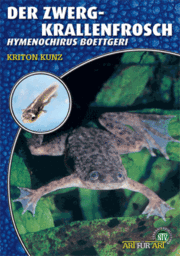
NTV - The African dwarf frog
Kriton Kunz 62 Seiten 14,8 x 21 cm zahlreiche Farbfotos Inhalt: Vielleicht die liebenswertesten Pfleglinge im Aquarium sind Zwergkrallenfrösche. Dem heiteren Anblick einer munter und etwas tollpatschig durchs Becken rudernden Schar dieser kleinen Fröschchen vermag sich wohl niemand zu entziehen. Da es sich außerdem um äußerst pflegeleichte Tiere handelt, kann man diese netten Amphibien auch dem Einsteiger empfehlen. REPTILIA-Redakteur Kriton Kunz hielt als Kind bereits seine ersten Zwergkrallenfrösche und züchtet sie seit Jahren regelmäßig erfolgreich nach. Praxisnah und kompetent, aber jederzeit leicht verständlich geht er detailliert auf alle Aspekte rund um Haltung und Pflege der reizenden Kerlchen ein und verrät Ihnen überdies, wie man Zwergkrallenfrösche zur Paarung bewegt und ihre Kaulquappen sowie die Jungtiere aufzieht. Systematik und Körperbau Die faszinierende Biologie: Aus dem Leben der Zwergkrallenfrösche Alle Informationen zur artgerechten Haltung: Vom geeigneten Aquarium über Einrichtung und Technik bis hin zur Fütterung Erfolgreich nachzüchten: Paarungsstimulation, Aufzucht der Kaulquappen und Jungtiere Problemlösungen: Wie man die häufigsten Fehler bei der Pflege vermeidet, und wie man kranken Tieren helfen kann Brillante Fotos

CHF 19.90