Draco 47 - Scorpions

Article no: draco47

CHF 18.40

Stock: 4

Available, delivery time: 1-3 days

Delivery between Tuesday, 30 June and Wednesday, 1 July
Zahlungsarten
Product information "Draco 47 - Scorpions"

Draco 47 - Scorpions

Contents:

Editorial

Scorpions – hunters of the night
Boris F. Striffler

Keeping and breeding scorpions of the genus Tityus in the terrarium
Michael Seiter

African giant scorpions of the genus Pandinus – more than just the emperor scorpion
Boris F. Striffler

Keeping and rearing two Parabuthus species
Heiko Wehner

North African scorpions
Boris F. Striffler

The moment of birth: rare insights into the brood care of Diplocentrus lindo
Kriton Kunz

The scorpions of Europe – Euscorpius, Buthus & Co.
Boris F. Striffler

Scorpions as dangerous animals – the national regulations
Lawyer Dietrich Rössel

The Instituto Butantan – Institute of Poisons
Boris F. Striffler

Composition
Feeding recommendation
Technical details
Size information

0 of 0 reviews

Give us a rating!

Share your experience with the product with other customers.


Suggested products

Handbook of food plants for tortoises and other reptiles
Handbook of forage plants 2nd revised editionMarion Minch is not only a successful breeder of diverse tortoises for many years, but also an excellent connoisseur of native wild herbs. She founded and runs samenkiste.de, which is well known to many tortoise keepers and nature lovers. Her name is inextricably linked with reptile care and species-appropriate nutrition for tortoises. Her handbook of food plants summarises the most important native food plants for herbivorous and omnivorous reptiles. She not only considers tortoises, but also iguanas, spiny-tailed dragons and even chameleons. From the basics of plant biology to native wild herbs to suitable food plants for hardy tropical reptile species, this comprehensive work provides the basis for species-appropriate keeping. In the expanded and supplemented 2nd edition, the plant section is divided according to flower colour. This makes it even easier to identify wild herbs. The work has also been supplemented with a wealth of additional information and many pictures.

CHF 46.50

Geckos
Geckos in the terrarium by Astrid FalkThe book offers a comprehensive introduction to geckos and their species-appropriate keeping in terrariums. It explains what you need to think about before buying a gecko and what preparations should be made. The book describes in detail how the terrarium is technically equipped and set up. The care of the animals, their special features and behaviour, their diet, reproduction and rearing of young animals are described, as well as diseases and husbandry problems with tried and tested suggestions for prevention and treatment. Individual gecko species that are particularly suitable for keeping and breeding in terrariums are portrayed in detail in the second part of the book.

CHF 28.50

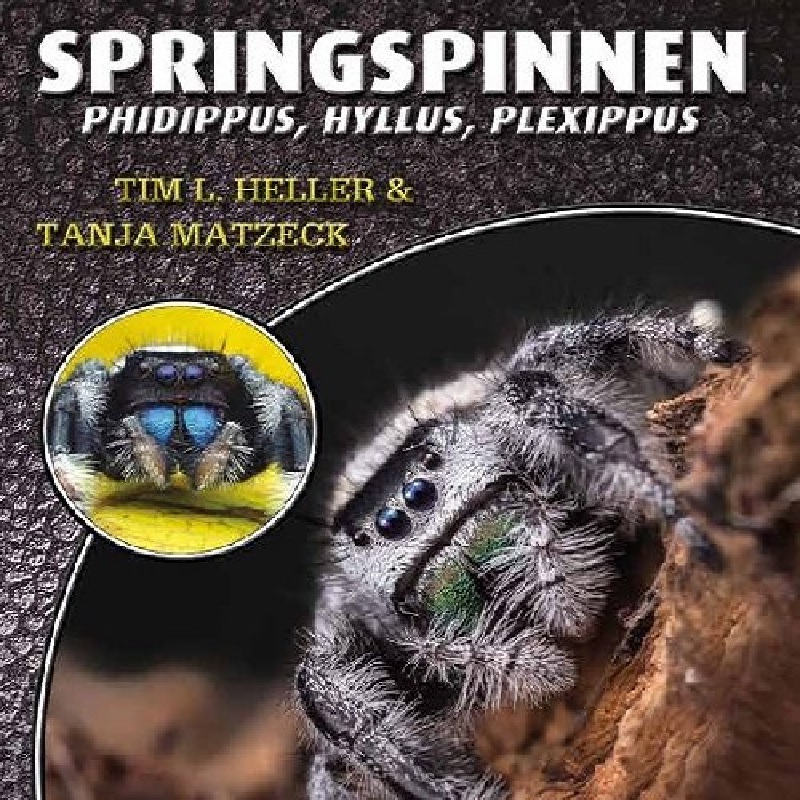
Jumping spiders Phidippus, Hyllus, Plexippus
Book Jumping Spiders - Phidippus, Hyllus & Plexippus A guide to keeping jumping spiders of the genera Phidippus, Hyllus & Plexippus. Who can resist the charm of jumping spiders? The childlike appearance of their expressive face simply leaves no one cold! In addition, their behavior is extremely exciting to observe, their colors are bright and their requirements for species-appropriate keeping are very easy to meet. No wonder these likeable jumpers are all the rage! This volume in the "Species by Species" series describes in detail what to look out for when buying and keeping them, introduces the most commonly kept species and color forms and provides plenty of tips on how to keep them successfully - so you can be sure they will breed well! Species by Species introduces you to the books in this series, which present the most popular terrarium animals. Each volume offers you detailed, practical care instructions and all the information you need to successfully breed your animals. All important questions from the required tank size to terrarium set-up, technical equipment, species-appropriate nutrition and disease prevention are answered with numerous tricks and tips. Experienced, long-standing breeders reveal how you can encourage the animals to reproduce and raise healthy young. All this in full color, generously illustrated and attractively designed - just about your terrarium animal - species by species

CHF 23.90

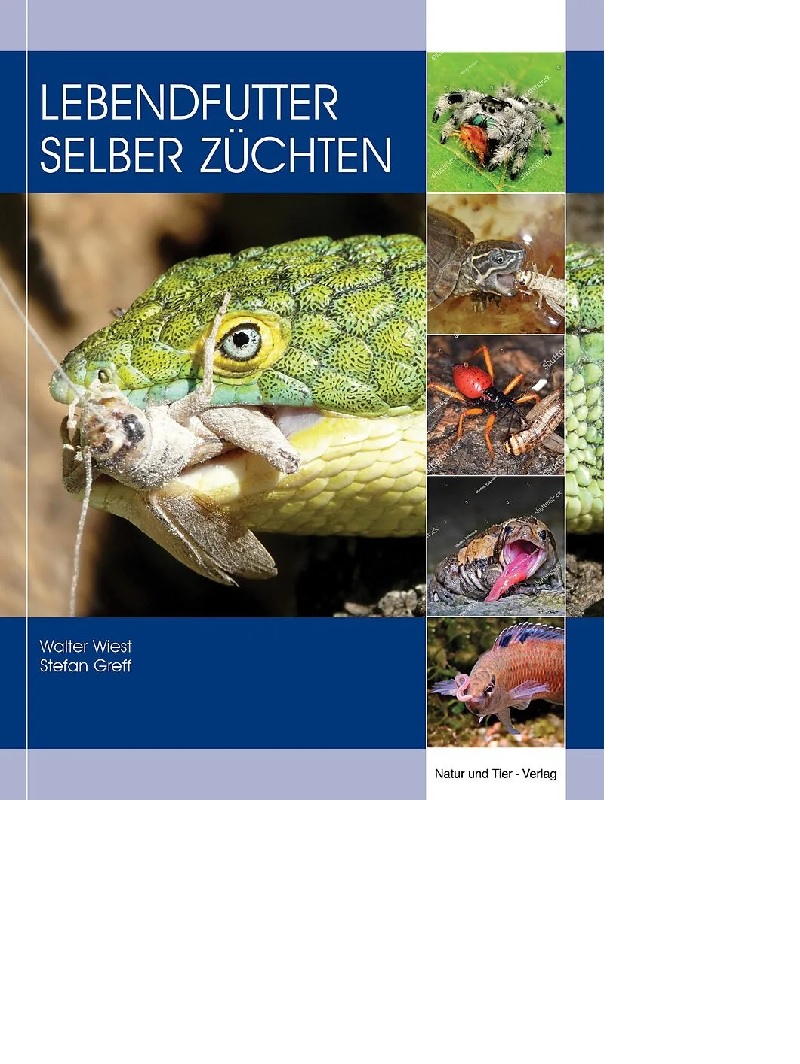
Book Breeding live food yourself
Book "Grow your own live food" - The perfect guide for pet owners Discover practical and detailed instructions on how you can easily breed food for your reptiles, birds, fish or other animals yourself in the book "Breeding live food yourself". With valuable tips on various food insects, their care and breeding, you can save money and ensure a species-appropriate diet for your pets. Contents of the book: Step-by-step instructions for breeding feeder insects Information on the best types of food for reptiles, birds and fish Care instructions and breeding conditions for various live food species Tips for sustainable and cost-effective food production Why breed your own live food? Get healthy, fresh food for your animals Save money and reduce dependence on pet shops Promote the health and well-being of your animals with species-appropriate food Whether you are a beginner or an experienced pet owner, this book provides you with everything you need to successfully breed live food yourself.

CHF 46.50

Marginata 69 - New Guinea tortoises
Marginata 69 - New Guinea tortoises – the genus ElseyaCover storyThe unrecognised beauties: New Guinea tortoises (Andreas S. Hennig)My experiences with Branderhorst's New Guinea tortoise, Elseya (Elseya) branderhorsti (Ouwens, 1914) (Andreas S. Hennig)Keeping and breeding of Rhodin's New Guinea tortoise, Elseya (Hanwarachelys) rhodini Thomson, Amepou, Anamiato & Georges, 2015 (Andreas S. Hennig)PortraitGeoemyda spengleri, Chinese serrated tortoise (Andreas S. Hennig)ReportageMacrochelys temminckii – Experiences and impressions with vulture tortoises part 2 (Reiner Praschag)KeepingAn alternative to year-round keeping of the Egyptian tortoise in the terrarium – my experiences with seasonal outdoor keeping of Testudo kleinmanni (Ricarda Schramm)EtymologySawbacks and living maps part 4: Graptemys gibbonsi, Pascagoula humpback tortoise (Holger Vetter)Classifieds & animal placement

CHF 16.50

Beetle Fibula
Beetle Primer - 96 pages on everything you need to know about successfully keeping different types of beetles. 96 pages 150 photos hardback Author Timm Adam Publisher Dähne Verlag Not everyone can imagine keeping a beetle as a pet, but these fascinating little animals are becoming increasingly popular. The book shows different species and describes everything you need to know about keeping and reproducing them.

CHF 24.90

Reptilia 67 - Tiger Salamander, Axolotl & Co.
Reptilia 67 - Tiger Salamander, Axolotl & Co.Steve Irwin's legacyHusbandry problems with the green tree pythonBroad-shelled turtles in SardiniaContents: 2EDITORIAL 3MAGAZINE 11TERMINE 14WESTERN HERP PERSPECTIVESRevive the old passionFrom B. Love 6 PHOTO REPORTAGEAmbystomatidae Gray, 1850 ?transverse-toothed newtsBy T. Blanck 22HERPETOFAUNAThe cross-toothed newts, family Ambystomatidae Gray, 1850An overview of the speciesBy T. Blanck 36 KEEPING AND REPRODUCTIONKeeping and breeding the banded tiger salamander Ambystoma mavortiumBy T. Blanck & M. Braun 41HERPETOCULTUREThe axolotl in religion, magic and mythBy F. Cupul 45LETTERS11 years ReptiliaVisiting Bill LoveBy H. Werning 51PORTRAIT AND POSTERZamenis longissimusFrom A. Kwet 56 KEEPING AND REPRODUCTIONFringed-fingered lizards (Acanthodactylus) in the wild and in the terrariumPart 2: Basics of terrarium keeping and reproductive biologyBy U. Schlüter 67HERPETOFAUNATestudo marginata - A view of SardiniaBy E. Cimatti 77KEEPING AND REPRODUCTIONThe most common husbandry problems with the green tree python (Morelia viridis)By G. Maxwell 82TERRARIUM SHOW PLANTSCrickey! - A visit to Australia ZooBy K. Grießhammer 90FAQ - FREQUENTLY ASKED QUESTIONSGarter snakesBy M. Hallmen 94LIBRARY 104BROOD BOX The Silence of the Nose Frogs, Part 2 By H. Werning

CHF 11.20

Reptilia 87 - Crocodiles - prehistoric animals in danger
Reptilia 87 - Crocodiles - primeval animals in danger Jewelled box turtleDesign of rainforest terrariumsLong-nosed snake, Rhynchophis boulengeriContents:Cover story: Crocodiles – primeval animals in dangerWhen the great dinosaurs ruled the world, crocodiles were already lurking for prey in the swamps of that era. These reptiles have not changed their design significantly for millions of years – a success story of evolution. It is only today that many species are on the brink of extinction because humans are killing them en masse and, above all, destroying their habitats. With the cover story of the next REPTILIA, a high-calibre team of experts opens a series of articles that shed light on the crucial role that zoos can play in saving these living fossils. Dieter Gramentz also presents the precarious situation of the swamp and saltwater crocodile in Sri Lanka, and Ralf Sommerlad reports on a hopeful project to preserve the extremely rare Siamese crocodile.Endangered crocodiles in Europe's zoological gardens? R. Sommerlad, F. Schmidt & T. Ziegler Table of contents Editorial MAGAZINE DATES WESTERN HERP PERSPECTIVES    “Winter herping” in Florida B. Love PHOTOSTORY Crocodiles – reptile giants in danger R. Sommerlad REPORTAGE Endangered crocodiles in Europe's zoological gardens? R. Sommerlad, F. Schmidt & T. Ziegler REPORTAGE A special conservation project, not only for crocodiles: Danau Mesangat R. Sommerlad REPORTAGE Threats to and "conservation" of the swamp crocodile (Crocodylus  palustris) and the saltwater crocodile (Crocodylus porosus) in Sri Lanka D. Gramentz PORTRAIT AND POSTER Bufo bufo (Linnaeus, 1758). Common toadA. Kwet & J. Fieber PRACTICE Near-natural design of rainforest terrariums    D. Hluschi KEEPING AND REPRODUCTION Information on the care, husbandry and breeding of the  Vietnamese long-nosed snake, Rhynchophis boulengeri Mocquard, 1897 B. Schulz & K.-D. Schulz KEEPING AND REPRODUCTION Care and breeding of the Eastern jewelled box turtle, Terrapene ornata ornata M. Wirth & H. P. Mattern HERPETOFAUNA Black widows. Spiders of the genus Latrodectus C. Nagel & R. Hübers SUBSCRIPTION & SERVICE ALSO NEAR YOU PREVIEW  INCUBATOR Borderlands. Part 2 H. Werning 

CHF 12.00

Draco 12 - Poisonous Snakes
Draco 12 - Venomous snakes EDITORIAL The fascination of venomous snakes Pros and cons of keeping terrariumsDieter Schmidt Venomous snakes - Systematic observations on a difficult word Ulrich Kuch The genus Trimeresurus LACÉPÈDE, 1804On the state of knowledge of researchAndreas Gumprecht & Sergei Ryabov Observations of the monocle cobra (Naja kouthia LESSON, 1831) in the wild and in the terrariumLudwig Trutnau Crotalus willardi MEEK, 1905 - a small mountain rattlesnakeLudwig Trutnau The venomous snakes of Costa RicaAndreas Hohmeister Care and breeding of the Central American lancehead Atropoides nummifer (RÜPPELL, 1845)Andreas Hohmeister A visit to the Queen Saovabha Memorial Institute in ThailandJoachim Bulian & Lawan Chanhome The bird that knows the snakesDieter Mahsberg & K. Eduard Linsenmair Venomous snakes in southern Brazil - zoogeography, ecology and "ofidismo"Markus Monzel BOOKBOX MAGAZINE

CHF 16.80

Marginata No. 30 - Under the spell of the turtle - joy and suffering of turtle research
  Schildkrötenschutz auf SumatraZucht der Rotwangen-KlappschildkröteSchildkröten im Schulunterricht Inhalt: EditorialLESERBRIEFEMagazinTermineREPORTAGEJenseits von Afrika – ein Forschungsaufenthalt in MadagaskarJutta HammerREPORTAGESchildkrötenforschung in Vietnam Inga Fischer, Sarah Wahl und Sandra WeimerHALTUNG UND ZUCHT„Kambodscha – ein Königreich der Wunder“. Feldherpetologische Arbeit an Indotestudo elongataFlora IhlowPOSTERDie Turkana-See-Klappbrustschildkröte (Pelusios broadleyi)Hans - Dieter PhilippenZUCHTHaltung und Nachzucht der Madagassischen Strahlenschildkröte Teil 2Michael Wirth und Peter FritzReportageDie Ernährung europäischer Landschildkröten in der freien Wildbahn Wolfgang WegehauptBuchtippKleinanzeigenAbo & ServiceRegionalführer  

CHF 16.50

Reptilia 25 - Bearded dragons
Reptilia 25 - Bearded dragons Outdoor terrariumsYucatánDragons Contents: 2 Editorial 4 Letters to the Editor 8 Magazine 16 Dates 20 Western Herp Perspectives: Road Cruising - in search of reptiles and amphibians by car 22 Photo report: The bearded dragons, by A. Hauschild 28 Keeping and breeding: An evergreen: Bearded dragons in the terrarium, by A. Hauschild 33 Herpetofauna: Behaviour and interaction of my bearded dragons (Pogona vitticeps) in the terrarium, by R. Kohlmeyer 39 Report: Bearded dragon fever, by B. Love 43 Journey: Travelling in the realm of the Maya, by L. Barkam and H. Werning 51 Portrait and poster: Trapelus pallidus, by L. Rifai and D. Modry 56 Herpetofauna: Notes on Boiga nigriceps(GÜNTHER, 1863) 62 Report: To Madagascar - for the turtles?, by W. Schmidt and K. Liebel 68 Keeping and breeding: Dendrobates azureus, a blue jewel in the terrarium, U. Dost 73 Terraristics: Building a snake enclosure, Part 1: Basic considerations, by M. Hallmen 78 Herpetology and culture: 'In caves lives the dragon's old brood', a look at the ideas of dragons in East and West, Part 1, by K. Kunz 87 Advice and action 91 Library 104 Gloss: Dead texts don't talk, by L. Hogeback

CHF 9.80

Bugs No. 04 - Ants in the terrarium
Bugs No. 04 - Ants in the terrariumThe cover story of Bugs No. 4 is about tiny creatures that achieve great things: ants are the gardeners of nature, pruning grasses, bushes and trees, guarding entire shrubs and ensuring targeted "pest extermination". But they also act as cattle breeders, keeping small colonies of aphids in order to obtain their sweet droppings. Caring for these fascinating animals is highly interesting and there is always something to observe! Reason enough to take you, dear readers, on a journey into the realm of ants and show you how you can keep these colony-forming insects safely and in a species-appropriate way.Table of contentsEditorialFacetsDatesFlown inCover storyThe diversity of the superorganismMyrmecia vindex – archaic AustraliansSnap-jaw ants of the genus MyrmoterasFledgedInvertebrates in MalaysiaIn the crosshairsThe rainbow stag beetleKeeping & BreedingLittle rubies – two Centrobolus speciesReportageExemplary arthropods - Bionics, Part 2Keeping & Breeding The Jewel WaspKeeping & BreedingHorse-headed grasshoppersKeeping & BreedingThe genus PsalmopoeusPotter beeHomemade lime source for snailsBook scorpionAlso in your neighbourhoodKids CornerA small miracleShowcase The master of the MantodeaService & ImprintPreviewMetamorphosesAutumn

CHF 12.00

Customers also saw

Bugs No. 05 - Scorpions of North Africa
Bugs No. 05 - Scorpions of North AfricaTrapdoor spidersPhyllium monteithiSnails of CubaThe cover story of Bugs No. 5 takes us to the arid zones of North Africa and the scorpions that live there. Despite their potent venom, some of these survival artists are very popular with invertebrate enthusiasts and are real treasures for nano terrariums. We introduce you to these fascinating predators and explain what you need to know to keep them successfully and, above all, safely. Table of contentsEditorialFacetsDatesFlown inCover storyScorpions of North Africa in focusAndroctonus liouvilleiHottentotta gentili and H. franzwerneriFledgedViñales, an Eldorado for snail loversIn the crosshairsPoecilotheria ornata from Sri LankaCultureThe Maquech: A beetle as a living broochKeeping & BreedingAustralia's Changing LeafKeeping & BreedingThe Giant Marbled Wood CockroachKeeping & BreedingPeacock eye moths in the terrariumReportageThe fascinating life of trapdoor spidersBook scorpionAlso in your neighbourhoodPotter beeFeeding method for young mantidsKids CornerVisitors from prehistoric timesShowcaseCatching and preserving dragonfliesService & ImprintPreviewMetamorphosesActors!

CHF 12.00