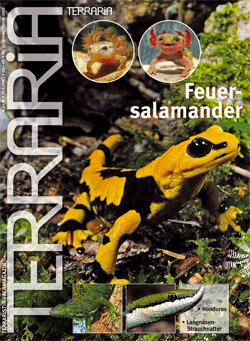
Terraria No. 28 - Fire salamander

Article no: terraria28

CHF 12.00

Stock: 4

Available, delivery time: 1-3 days

Delivery between Tuesday, 30 June and Wednesday, 1 July
Zahlungsarten
Product information "Terraria No. 28 - Fire salamander"

Terraria No. 28 - Fire salamander

Langnasen-Strauchnatter
Honduras

Inhalt:

Die wundervollen Feuersalamander zählen zu den schönsten Amphibien überhaupt und – nicht erst seit Lurchis Abenteuern – auch zu den bekanntesten. Grund genug, den sympathischen Gesellen ein Titelthema zu widmen. Die Übersicht über die europäischen Unterarten – mit prächtigen Bildern von Benny Trapp – gerät zu einem wahren Farbenrausch in Gelb und Schwarz. Umso erfreulicher für Terrarianer ist, dass Feuersalamander einfach und ohne technischen Aufwand zu halten und nachzuziehen sind – wie Thomas und Yvonne Klesius zu berichten wissen. Und umso erstaunlicher für Herpetologen ist, dass manches im Leben dieser vermeintlich gut bekannten Art doch noch unerforscht ist – wie Wolfgang Sauer an seinen über viele Jahre im Aquarium lebenden „Feuer-Wasser-Salamandern“ herausfand, den ersten sicher nachgewiesenen neotenen Salamanderlarven.

Editorial
Magazin
Seltenes Phänomen: Erfolgreiche zweite Reifehäutung eines Männchens von Brachypelma schroederi
Suzette Sprengel

30 Tage im Reptiliencenter Alice Springs
Sandra Fallend

Alarmierender Rückgang von Schlangenpopulationen
Kriton Kunz

Auch Echsen in höchster Gefahr
Kriton Kunz

Nachschlag - Rhinoclemys funerea/Kinosternon scorpioides

TERRAglobal
Der Garten – ein Freilandterrarium
Joachim Bulian

Titelthema
Der Europäische Feuersalamander (Salamandra salamandra) und seine Unterarten
Axel Kwet

„Feuer-Wasser-Salamander“ – meine neotenen Salamanderlarven
Wolfgang Sauer

Biologie, Haltung und Nachzucht des Portugiesischen Feuersalamanders, Salamandra salamandra gallaica
Thomas Klesius und Yvonne Klesius

Grüne Schönheit mit langer Nase – Haltung und Nachzucht der Langnasen-Strauchnatter (Philodryas baroni)
Christian Ehrlich

Das Schildkrötenjahr Freilandbiologie und Haltung europäischer Landschildkröten über den Jahreslauf Teil 1: März bis April – Frühlingserwachen
Michael Wirth

Reise
„Exo Terra“-Expedition 2010 nach Honduras
Roland Zobel

Neue Arten
Liste der im Jahr 2010 neu beschriebenen Amphibien
Axel Kwet

Blickfang
Die Schildkrötenanlage von Irmhild und Klaus Glückert
Michael Wirth

In Ihrer Nähe
Abo & Service
Vorschau

Brutkasten
Bis aufs Blut
Heiko Werning


Composition
Feeding recommendation
Technical details
Size information

0 of 0 reviews

Give us a rating!

Share your experience with the product with other customers.


Suggested products

Handbook of food plants for tortoises and other reptiles
Handbook of forage plants 2nd revised editionMarion Minch is not only a successful breeder of diverse tortoises for many years, but also an excellent connoisseur of native wild herbs. She founded and runs samenkiste.de, which is well known to many tortoise keepers and nature lovers. Her name is inextricably linked with reptile care and species-appropriate nutrition for tortoises. Her handbook of food plants summarises the most important native food plants for herbivorous and omnivorous reptiles. She not only considers tortoises, but also iguanas, spiny-tailed dragons and even chameleons. From the basics of plant biology to native wild herbs to suitable food plants for hardy tropical reptile species, this comprehensive work provides the basis for species-appropriate keeping. In the expanded and supplemented 2nd edition, the plant section is divided according to flower colour. This makes it even easier to identify wild herbs. The work has also been supplemented with a wealth of additional information and many pictures.

CHF 46.50

Geckos
Geckos in the terrarium by Astrid FalkThe book offers a comprehensive introduction to geckos and their species-appropriate keeping in terrariums. It explains what you need to think about before buying a gecko and what preparations should be made. The book describes in detail how the terrarium is technically equipped and set up. The care of the animals, their special features and behaviour, their diet, reproduction and rearing of young animals are described, as well as diseases and husbandry problems with tried and tested suggestions for prevention and treatment. Individual gecko species that are particularly suitable for keeping and breeding in terrariums are portrayed in detail in the second part of the book.

CHF 28.50

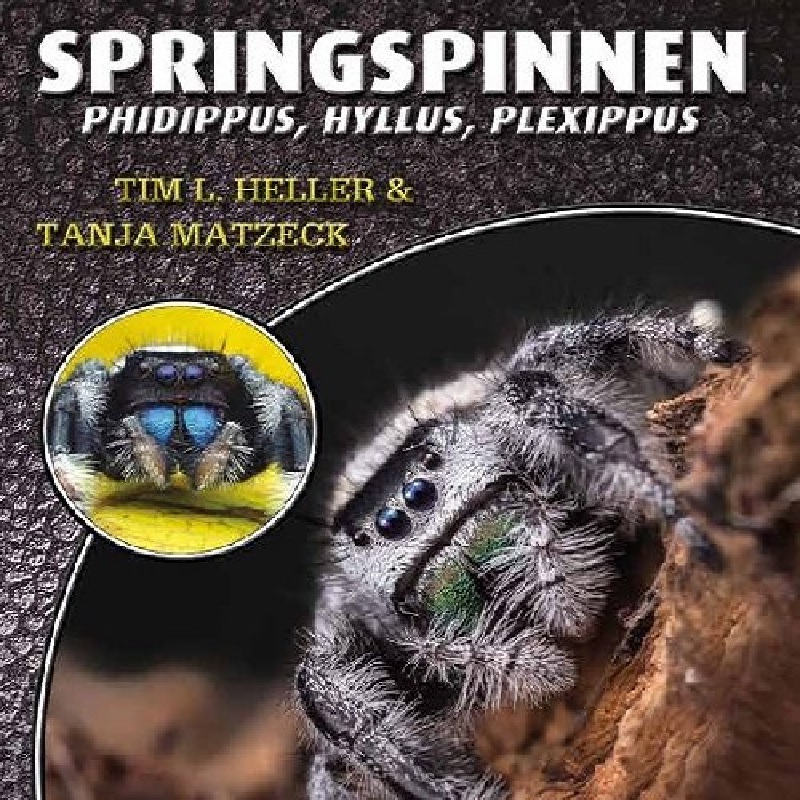
Jumping spiders Phidippus, Hyllus, Plexippus
Book Jumping Spiders - Phidippus, Hyllus & Plexippus A guide to keeping jumping spiders of the genera Phidippus, Hyllus & Plexippus. Who can resist the charm of jumping spiders? The childlike appearance of their expressive face simply leaves no one cold! In addition, their behavior is extremely exciting to observe, their colors are bright and their requirements for species-appropriate keeping are very easy to meet. No wonder these likeable jumpers are all the rage! This volume in the "Species by Species" series describes in detail what to look out for when buying and keeping them, introduces the most commonly kept species and color forms and provides plenty of tips on how to keep them successfully - so you can be sure they will breed well! Species by Species introduces you to the books in this series, which present the most popular terrarium animals. Each volume offers you detailed, practical care instructions and all the information you need to successfully breed your animals. All important questions from the required tank size to terrarium set-up, technical equipment, species-appropriate nutrition and disease prevention are answered with numerous tricks and tips. Experienced, long-standing breeders reveal how you can encourage the animals to reproduce and raise healthy young. All this in full color, generously illustrated and attractively designed - just about your terrarium animal - species by species

CHF 23.90

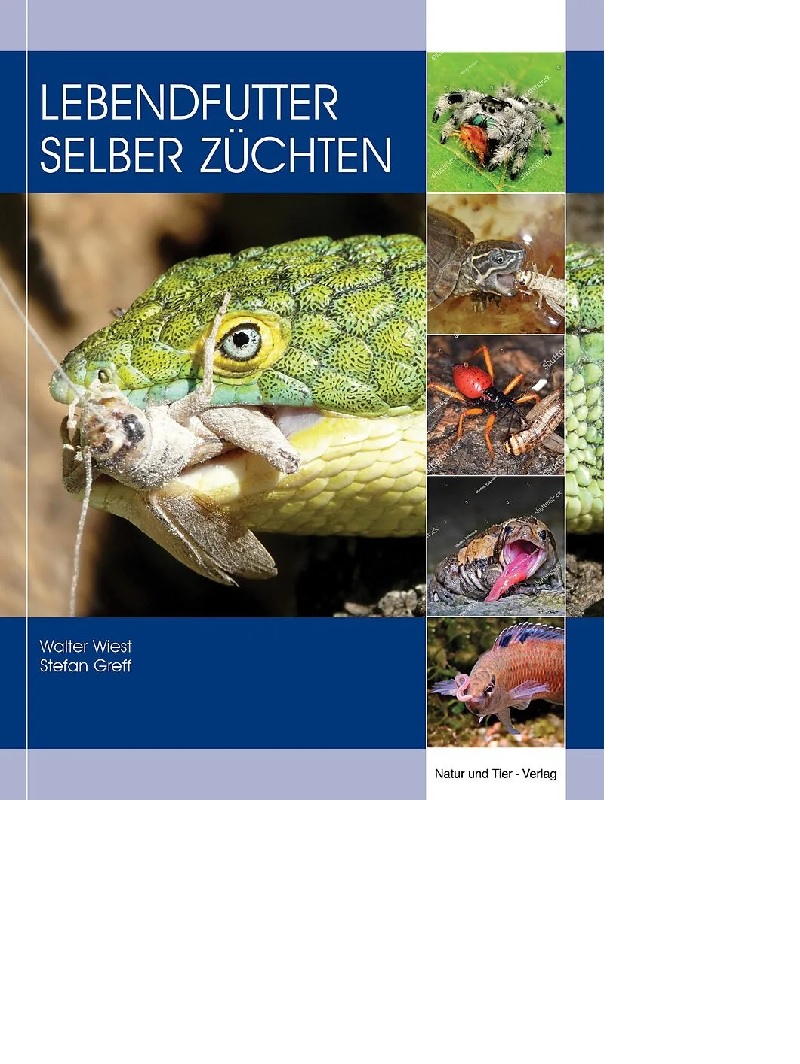
Book Breeding live food yourself
Book "Grow your own live food" - The perfect guide for pet owners Discover practical and detailed instructions on how you can easily breed food for your reptiles, birds, fish or other animals yourself in the book "Breeding live food yourself". With valuable tips on various food insects, their care and breeding, you can save money and ensure a species-appropriate diet for your pets. Contents of the book: Step-by-step instructions for breeding feeder insects Information on the best types of food for reptiles, birds and fish Care instructions and breeding conditions for various live food species Tips for sustainable and cost-effective food production Why breed your own live food? Get healthy, fresh food for your animals Save money and reduce dependence on pet shops Promote the health and well-being of your animals with species-appropriate food Whether you are a beginner or an experienced pet owner, this book provides you with everything you need to successfully breed live food yourself.

CHF 46.50

Marginata 69 - New Guinea tortoises
Marginata 69 - New Guinea tortoises – the genus ElseyaCover storyThe unrecognised beauties: New Guinea tortoises (Andreas S. Hennig)My experiences with Branderhorst's New Guinea tortoise, Elseya (Elseya) branderhorsti (Ouwens, 1914) (Andreas S. Hennig)Keeping and breeding of Rhodin's New Guinea tortoise, Elseya (Hanwarachelys) rhodini Thomson, Amepou, Anamiato & Georges, 2015 (Andreas S. Hennig)PortraitGeoemyda spengleri, Chinese serrated tortoise (Andreas S. Hennig)ReportageMacrochelys temminckii – Experiences and impressions with vulture tortoises part 2 (Reiner Praschag)KeepingAn alternative to year-round keeping of the Egyptian tortoise in the terrarium – my experiences with seasonal outdoor keeping of Testudo kleinmanni (Ricarda Schramm)EtymologySawbacks and living maps part 4: Graptemys gibbonsi, Pascagoula humpback tortoise (Holger Vetter)Classifieds & animal placement

CHF 16.50

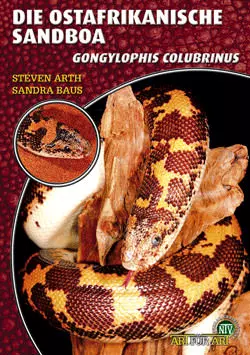
The East African sand boa
All about the East African Sand Boa 64 pages Format 14.5 x 21 cm Colour photos Author Steven Arth & Sandra Baus Contents: Foreword Description of the species Relationship Behaviour and lifestyle Colour variations Legal regulations Considerations before acquisition Acquisition of the animals Transport and quarantine Socialisation Keeping in the terrarium Terrarium and terrarium design Terrarium technology and climate Keeping in the "rack" Care work Feeding Breeding Sexual differences and sexual maturity Mating trigger Pregnancy and birth of the young animals Housing, feeding and further rearing of the young animals Diseases Thanks Further information Literature used and further reading

CHF 19.90

NTV Green snakes
NTV - Grass snakes Thorsten Schmidt 88 pages 17 x 0.9 x 22.3cm many colour photos The splendidly green-coloured, diurnal and completely harmless grass snakes are much sought-after terrarium animals. The fact that they can be easily fed with insects and other invertebrates is another plus point in favour of keeping these lively snakes.This guide tells you everything you need to know to keep and breed grass snakes successfully.Thorsten Schmidt explains here from his rich experience with the animals that properly cared for grass snakes are not at all problematic, but can be easily cared for and also bred. The author explains what to look out for and gives specific tips on setting up and equipping species-appropriate terrariums.

CHF 33.50

Marginata 12 - Giant tortoises
Marginata 12 - Giant tortoises Food plants 7Flat-backed tortoisesEuropean Studbook Foundation Contents: 2 EDITORIAL 3 READER LETTERS 4 MAGAZINE 6 REPORT The giant tortoises of the Galapagos and Seychelles Islands and of the Mascarene Archipelago Roger Bour 16 BREEDING IN HUMAN CARE 15 years of experience in breeding the Galapagos giant tortoise at Zurich Zoo, Switzerland Samuel C. Furrur 24 REPORTAGE Keeping and care of Aldabra giant tortoises (Dipsochelys dussumieri) at Prague Zoo Petr Velensky & Natasha Velenska 31 PORTRAIT The yellow-spotted tortoise Hans - Dieter Philippen 35 DATES 36 SHORT REPORTAGE Limitation of outdoor enclosures for tortoises Rolf Hecht 41 REPORTAGE Food plants for tortoises (Part VII) Susanne Vogel 46 REPORTAGE Hope for the conservation of the flat-backed tortoise (Pyxis planicauda Grandidier, 1867) in its natural habitat? Roland Hilgartner & Mamisolo Raoilison Hilgartner 50 REPORTAGE European Studbook Foundation Hans - Dieter Philippen 56 OBITUARY In memoriam John L. Behler Hans - Dieter Philippen 59 SHORT REPORTAGE Hatching of an eyeless juvenile of Eurotestudo h. hermanni Heinz Frühauf 60 BOOK TIP 61 CLASSIFIEDS 62 REGIONAL GUIDE

CHF 14.70

Draco 30 - Sri Lanka
Draco 30 - Sri Lanka Contents: 2  Editorial  4  Adam's sanctuary: Sri LankaPeter Janzen, Peter Klaas & Stefan Ziesmann  18  Of skinks and other lizardsPeter Janzen, Peter Klaas & Stefan Ziesmann  24  The agama fauna of the islandPeter Janzen, Peter Klaas & Stefan Ziesmann  34  The horned agama Ceratophora stoddartii in its natural habitat and in the terrariumUwe Bartelt & Peter Janzen  38  The diversity of geckosStefan Ziesmann, Peter Janzen & Peter Klaas   45  Crocodiles and turtles in Sri LankaPeter Janzen, Peter Klaas & Stefan Ziesmann  50  Keeping and breeding the star tortoiseGeochelone elegans (SCHOEPFF, 1794) from Sri Lanka Andrea Saus  56  Sri Lanka's snake faunaPeter Janzen, Peter Klaas & Stefan Ziesmann  65  Chaos without end – the taxonomy of the Sri Lankan frogsPeter Janzen, Peter Klaas & Stefan Ziesmann  75  In search of invertebratesPeter Klaas   80  Tarantulas of the genus Poecilotheria in Sri LankaPeter Klaas, Peter Janzen & Stefan Ziesmann  84  Book box  91  Magazine

CHF 18.40

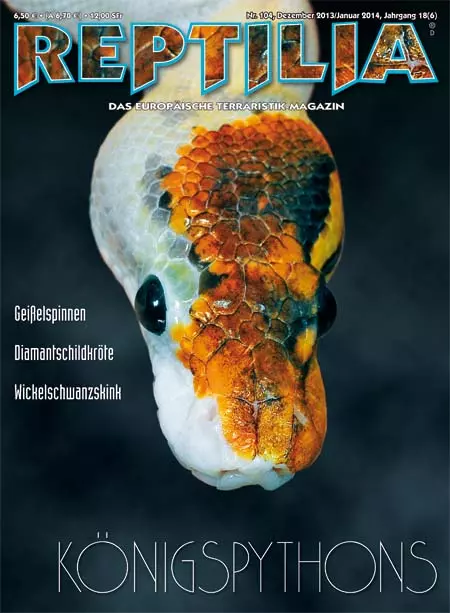
Reptilia 104 - King Pythons
Reptilia 104 - King PythonsFlagellate spidersDiamondback terrapinWraptail skinkContents:What a rise! From an eccentric that was almost impossible to feed to an almost domesticated animal bred hundreds of thousands of times in just two decades - the royal python has had an unparalleled terrarium career. We offer a colourful overview of the breeding varieties of this giant snake, present the latest new breeds, take a close look at possibly the most expensive morph and discuss the controversial issue of rack keeping in this species.EditorialMAGAZINEDATESPHOTOREPORTAGEFrom problem animal to superstarK. KunzTERRARIUM PRACTICENot animal-friendly? Comments on the rack keeping of royal pythonsS. BroghammerKEEPING AND REPRODUCTIONNew colours for the kingS. BroghammerKEEPING AND REPRODUCTION"Not without a Yellowbelly"S. BroghammerREPORTAGEChampagneS. BroghammerKEEPING AND REPRODUCTIONBreeding the diamondback terrapin, Malaclemys terrapinX. WapelhorstReportageWraptail skinks - or: Some are the same, others are more equalM. ZollwegKEEPING AND BREEDINGKeeping and breeding the African whip spider Damon variegatusE. BruinsKEEPING AND BREEDINGLong-tailed lizards from Okinawa. Terrarium keeping and breeding of Takydromus smaragdinusA. DanierLibraryWESTERN HERP PERSPECTIVESThe white magicB. LoveServicesJourneyHerpetological impressions on safaris in East AfricaM. HeartALSO NEAR YOUPREVIEWBRUTKASTEN Sexual dimorphismM. Zawadzki

CHF 12.00

Terraria 49 - Caudates in the terrarium
Terraria 49 - Tail amphibians in the terrarium EvergladesPhelsuma barbonica Contents: Cover story: Tail amphibians in the terrarium Newts and salamanders are among the less favoured terrarium animals. Yet these urodeles offer a wide variety of shapes and an often surprising blaze of colour, not to mention fascinating observation opportunities. We take a detailed look at the famous “father of newts”, Willy Wolterstorff, who was born 150 years ago, and in further articles we present the tiger salamander, the Vietnamese warty newt and, with the lungless salamanders of Central America, a little-known group of urodeles with an even more surprising biology. TerritorialHerpetorama Cover storyKeeping and breeding the tiger salamander Ambystoma tigrinum, A. mavortium and A. californienseJens Benthien With webbed feet and sling tongue. Neotropical lungless salamanders in the wild and in the terrariumThomas Bille F2 offspring of the Vietnamese warty newt (Paramesotriton deloustali) after six years of rearingPaul Bachhausen PanoramaField notes from the Everglades National ParkGuillaume Gomard Research Among researchersThe poison dart frogs at the Rio CristalinoJonas Benner New speciesNews on the Iberian wall lizards aroundPodarcis hispanicusAxel Kwet Vipers of north-eastern Turkey: Gene flow and environmental factors among the taxa of the Vipera-barani-kaznakovi-darevskii complexKonrad Mebert, Nasit Igci, Bayram Göçmen & Sylvain Ursenbacher Salamandra TerraristicsPhelsuma borbonica agalegae. An often overlooked beautyJosua Wohler Subscription & Service Nature and species conservation Field notesRare meal for aspisvipersAxel Kwet The consequences of a horned adder biteHans Pichler Observations of giant green lizards, (Lacerta trilineata polylepidota), in CreteWerner & Yvonne Lantermann Also in your neighbourhoodPreview Incubator Mr. Obama, please take over!Heiko Werning

CHF 12.00

Reptilia 18 - Mimesis
Reptilia 18 - MimesisMaltaBuilding polystyrene terrariumsNutrition of tortoisesContents:Page 2 - EditorialPage 3 - Letters to the editorPage 5 - MagazinePage 11 - DatesPage 14 - Western Herp Perspectives: The Queen of Snakes, by B. LovePage 16 - Photo reportage: Mimicry, by L. AissefairePage 24 - Report: Mimicry - Saving energy through camouflage, by Dr M. GaulkePage 32 - Keeping and breeding: Like a leaf in the wind. The changing leaf Phyllum celebicum in the terrarium, by H. FischerPage 38 - Travelogue: Temples, disc tongues and reptiles - impressions of a trip to Malta, by U. SchlüterPage 43 - Photographic profile: Reptiles and amphibians in the Du Tsingy de Bamaraha nature reserve (western Madagascar), by G. Hallmann, E. Hoffmann, J. Krüger, P. Schlagböhmer and G. TrautmannPage 47 - Portrait and poster: Gastrotheca riobambae, by H. WerningPage 51 - Report: Nutrition of European tortoises, Part 2, by Dr C. DennertPage 59 - Keeping and breeding: A miniature microcodile for the paludarium - The keel skink Tropidophorus grayi, by U. DostPage 64 - Terrarium practice: Styrofoam terrariums, by D. HasselbergPage 69 - Herpetofauna: The Bismarck dwarf python Liasis boa - keeping and reproducing a colourful giant snake, by V. FranzPage 72 - Herpetology and culture: Snakes go to school - Part 2, by M. HallmenPage 81 - Reptilia on the road: Berling-Friedrichsfelde Zoo, by H. WerningPage 84 - Advice and actionPage 90 - LibraryPage 96 - Glossary: Something different, by A. Scheffler

CHF 9.80