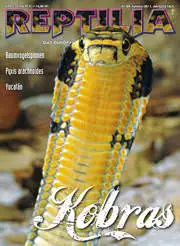
Reptilia 89 - Cobras

Article no: reptilia89

CHF 12.00

Stock: 0

Ready for dispatch in 1-3 days, delivery time 7 working days

Delivery between Friday, 4 December and Monday, 7 December
Zahlungsarten
Product information "Reptilia 89 - Cobras"

Reptilia 89 - Cobras

Baumvogelspinnen
Pyxis arachnoides
Yucatán

Inhalt:

Kaum ein anderes Reptil erfüllt den Menschen seit alters so sehr mit gleichermaßen Faszination und Furcht wie die Kobras. Während in Mühlheim das entfleuchte Jungtier einer solchen Giftnatter gleich dafür sorgt, dass ein ganzes Haus entkernt wird, leben die Menschen kompletter Erdteile dauernd in direkter Nachbarschaft zu diesen Schlangen. Wir nähern uns diesen besonderen Reptilien mit zoologischem Interesse und werfen einen Blick auf ihre Lebensweise. Und berichten natürlich auch über ihre verantwortungsvolle Terrarienhaltung.

Editorial
MAGAZIN
TERMINE

WESTERN HERP PERSPECTIVES
„Okeetee“
B. Love

FOTOSTORY
Kobras
S. Winchell

HERPETOFAUNA
Die Gebänderte Wasserkobra, Boulengerina annulata
M. Dainty

KULTUR
Kobras in der hinduistischen Kultur
R. Avadhani

HALTUNG UND NACHZUCHT
Die Schwarzweiße Kobra, Naja melanoleuca. Teil 1
Von L. Yeomas

Reise
Reise in den Nordosten Yucatáns. Parks und Sehenswürdigkeiten der Reviera Maja
S. Esser & W. Dahm

PORTRÄT und Poster
Ranitomeya uakarii
M. Dobiey

HALTUNG UND NACHZUCHT
Erfahrungen mit Haltung und Nachzucht des Vietnam-Goldgeckos
P. Pogoda

herpetofauna
Afrikanische Baumvogelspinnen im Porträt
K. Manns

Reportage
Unterwegs auf dem Ahr-Rotweinwanderweg
H. Kreyerhoff

herpetofauna
Die Spinnenschildkröte Pyxis arachnoides
J. Soler & A. Martínez Silvestre

Tiere unserer heimat
Die Äskulapnatter
R. Leptien

Bibliothek
ABO & SERVICE
AUCH IN IHRER NÄHE
VORSCHAU

BRUTKASTEN
In den Sand gesetzt
H. Werning


Composition
Feeding recommendation
Technical details
Size information

0 out of 0 reviews

Give us a rating!

Share your experience with the product with other customers.


Suggested products

Handbook of food plants for tortoises and other reptiles
Handbook of forage plants 2nd revised editionMarion Minch is not only a successful breeder of diverse tortoises for many years, but also an excellent connoisseur of native wild herbs. She founded and runs samenkiste.de, which is well known to many tortoise keepers and nature lovers. Her name is inextricably linked with reptile care and species-appropriate nutrition for tortoises. Her handbook of food plants summarises the most important native food plants for herbivorous and omnivorous reptiles. She not only considers tortoises, but also iguanas, spiny-tailed dragons and even chameleons. From the basics of plant biology to native wild herbs to suitable food plants for hardy tropical reptile species, this comprehensive work provides the basis for species-appropriate keeping. In the expanded and supplemented 2nd edition, the plant section is divided according to flower colour. This makes it even easier to identify wild herbs. The work has also been supplemented with a wealth of additional information and many pictures.

CHF 46.50

Geckos
Geckos in the terrarium by Astrid FalkThe book offers a comprehensive introduction to geckos and their species-appropriate keeping in terrariums. It explains what you need to think about before buying a gecko and what preparations should be made. The book describes in detail how the terrarium is technically equipped and set up. The care of the animals, their special features and behaviour, their diet, reproduction and rearing of young animals are described, as well as diseases and husbandry problems with tried and tested suggestions for prevention and treatment. Individual gecko species that are particularly suitable for keeping and breeding in terrariums are portrayed in detail in the second part of the book.

CHF 28.50

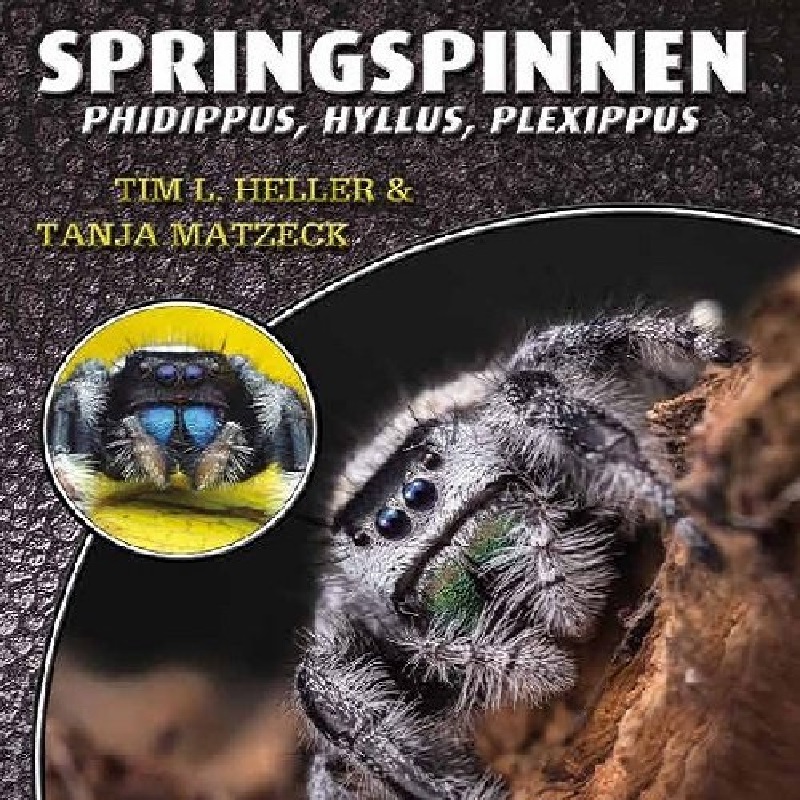
Jumping spiders Phidippus, Hyllus, Plexippus
Book Jumping Spiders - Phidippus, Hyllus & Plexippus A guide to keeping jumping spiders of the genera Phidippus, Hyllus & Plexippus. Who can resist the charm of jumping spiders? The childlike appearance of their expressive face simply leaves no one cold! In addition, their behavior is extremely exciting to observe, their colors are bright and their requirements for species-appropriate keeping are very easy to meet. No wonder these likeable jumpers are all the rage! This volume in the "Species by Species" series describes in detail what to look out for when buying and keeping them, introduces the most commonly kept species and color forms and provides plenty of tips on how to keep them successfully - so you can be sure they will breed well! Species by Species introduces you to the books in this series, which present the most popular terrarium animals. Each volume offers you detailed, practical care instructions and all the information you need to successfully breed your animals. All important questions from the required tank size to terrarium set-up, technical equipment, species-appropriate nutrition and disease prevention are answered with numerous tricks and tips. Experienced, long-standing breeders reveal how you can encourage the animals to reproduce and raise healthy young. All this in full color, generously illustrated and attractively designed - just about your terrarium animal - species by species

CHF 23.90

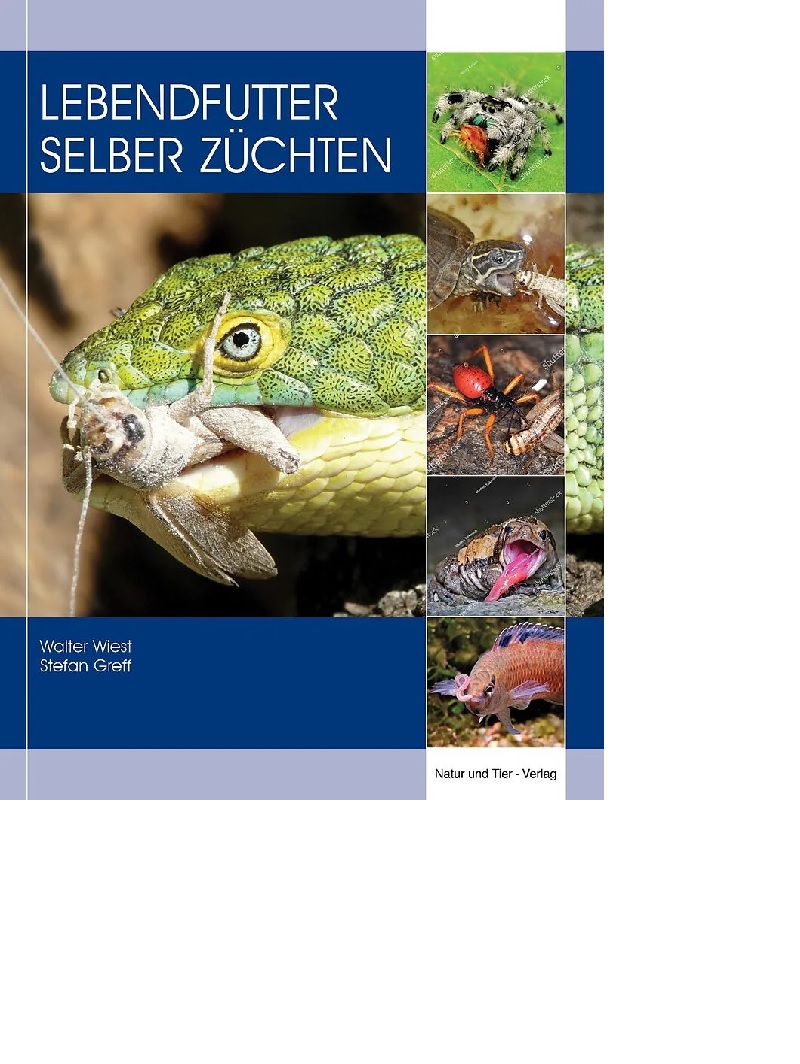
Book Breeding live food yourself
Book "Grow your own live food" - The perfect guide for pet owners Discover practical and detailed instructions on how you can easily breed food for your reptiles, birds, fish or other animals yourself in the book "Breeding live food yourself". With valuable tips on various food insects, their care and breeding, you can save money and ensure a species-appropriate diet for your pets. Contents of the book: Step-by-step instructions for breeding feeder insects Information on the best types of food for reptiles, birds and fish Care instructions and breeding conditions for various live food species Tips for sustainable and cost-effective food production Why breed your own live food? Get healthy, fresh food for your animals Save money and reduce dependence on pet shops Promote the health and well-being of your animals with species-appropriate food Whether you are a beginner or an experienced pet owner, this book provides you with everything you need to successfully breed live food yourself.

CHF 46.50

Marginata 69 - New Guinea tortoises
Marginata 69 - New Guinea tortoises – the genus ElseyaCover storyThe unrecognised beauties: New Guinea tortoises (Andreas S. Hennig)My experiences with Branderhorst's New Guinea tortoise, Elseya (Elseya) branderhorsti (Ouwens, 1914) (Andreas S. Hennig)Keeping and breeding of Rhodin's New Guinea tortoise, Elseya (Hanwarachelys) rhodini Thomson, Amepou, Anamiato & Georges, 2015 (Andreas S. Hennig)PortraitGeoemyda spengleri, Chinese serrated tortoise (Andreas S. Hennig)ReportageMacrochelys temminckii – Experiences and impressions with vulture tortoises part 2 (Reiner Praschag)KeepingAn alternative to year-round keeping of the Egyptian tortoise in the terrarium – my experiences with seasonal outdoor keeping of Testudo kleinmanni (Ricarda Schramm)EtymologySawbacks and living maps part 4: Graptemys gibbonsi, Pascagoula humpback tortoise (Holger Vetter)Classifieds & animal placement

CHF 16.50

Reptilia 24 - Stick insects
Reptilia 24 - Stick insects Incubation of turtle eggsTerrarium photographyArch-snakes Contents: Page 2 - EditorialPage 3 - Letters to the editorPage 6 - MagazinePage 13 - DatesPage 16 - Western Herp Perspectives: Tribute to the Frog, by B. LovePage 18 - Photo report: Stick and ghost grasshoppers, by O. ZomproPage 24 - Keeping and breeding: Ghost insects of the family Heteropterygidae in the terrariumPage 30 - Report: Food animal and terrarium ornament at the same time: The Indian stick insect (Carausius morosus), by F. GastPage 34 - Journey: On a big game hunt for the sticks - Insights into the joys and dangers of a collecting trip, by I. FritzschePage 40 - Herpetology and culture: On the utilisation of some amphibian and reptile species in Peru, by T. EisenbergPage 47 - Portrait and poster: Anolis roquet, by M. SchmidtPage 51 - Herpetofauna: Observations on the ecology and terrarium keeping of the arch-snake Chalcides chalcides mertensi, Klausewitz 1954, by H. EsterbauerPage 55 - Keeping and breeding: Incubation of turtle eggs, by M. MähnPage 63 - Terrarium studies: Herpetological photography – ABC of reptile and amphibian photography for beginners and advanced, by U. StrathemannPage 70 - Herpetofauna: Asaccus – The leaf-fingered geckos of the Oman mountains, by R. LeptienPage 79 - Reptilia on the road: Zoological Garden of the City of Wuppertal, by A. HauschildPage 82 - Advice and actionPage 89 - LibraryPage 96 - Gloss: Forget fighting dogs! A friend for life, by K. Kunz

CHF 9.80

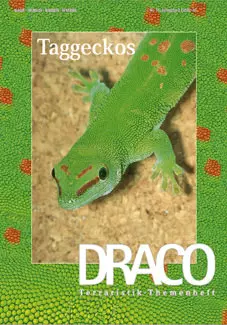
Draco 11 - Day geckos
Draco 11 - Day geckos Contents: 2 Editorial 4 day geckos of the genus PhelsumaJens Krüger 20 A terrarium for PhelumenHartmut Lipp 27 On the diet of day geckos of the genus Phelsuma Gerhard Hallmann 30 Group keeping and socialisation of PhelsumaHartmut Lipp 38 Phelsuma berghofi Krüger, 1996Biology, care and reproductionHand Peter Berghof 43 Experiences in the care and breeding of Phelsuma hielscheri Rösler, Obst & Seipp, 2001 from Isalo National Park Hans Peter Berhof & Roland Gebhard 47 On the keeping and breeding of Phelsuma inexpectata Mertens, 1966Oliver Pürkel 51 Taxonomy, care and breeding of the subspecies of Phelsuma lineata Hartmut Lipp 58 Selective colour breeding in Phelsuma madagascariensis grandis Rudolf Gerhardt 61 It doesn’t always have to be green – the less colourful representatives of the genus Phelsuma Hand Peter Berghof 68 Phelsums on Mauritius – A situation study Holger Schneider 77 To Madagascar – For the sake of day geckos Klaus Liebel & Wolfgang Schmidt 85 Book box 91 Magazine

CHF 16.80

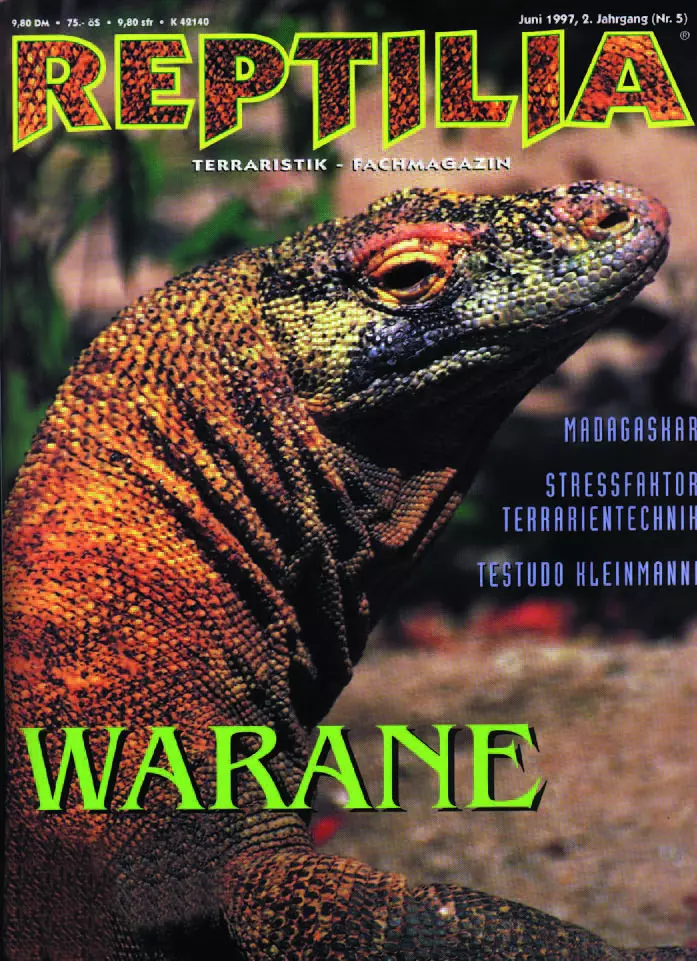
Reptilia 05 - Monitor Lizards
Reptilia 05 - Monitor lizards MadagascarStress factor terrarium technologyTestudo Kleinmanni Contents: Page 2 - EditorialPage 3 - Letters to the editorPage 4 - Discussion: What to do after snake bites?Page 6 - MagazinePage 16 - Photo reportage: Monitor lizards, by J. de Ávalos and P. Martínez CarriónPage 22 - Keeping and breeding: Keeping and breeding monitor lizards, by B. EidenmüllerPage 26 - Herpetofauna: The spoilt dragons of Komodo, by H. WerningPage 28 - Monitor lizards - Use by humans, by Dr M. GaulkePage 33 - Travelogue: Journey to the south-east of Madagascar, by W. Schmidt and K. LiebelPage 39 - Portrait and poster: Dendrobates tinctorius, by M. SchmidtPage 43 - Herpetofauna: Testudo kleinmanni, by B. DevauxPage 52 - Terraristics: Stress in the terrarium, by G. VossPage 56 - Herpetofauna: Frogs of the genus Eleutheradactylus in Costa Rica, by J. EhmckePage 60 - Herpetology and Culture: Magic and superstition, Part 2: Snakes and lizards, by L. B. Carissimi-PrioriPage 69 - Reptilia on the road: Terrazoo Moers, by W. SchmidtPage 74 - Advice and actionPage 75 - LibraryPage 80 - Incubator: Column by H. Werning

CHF 9.80

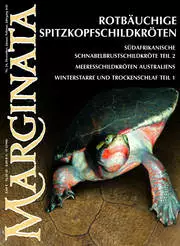
Marginata 24 - Pointed Red-bellied Pond Turtle
Marginata 24 - Red-bellied Pointed Pond Turtle South African Beaked Tortoise Part 2Sea turtles of AustraliaHibernation and dry hibernation Part 1 Contents: EditorialLetters to the editorMagazineDates REPORTAGEThe red-bellied pointed pond turtle, Emydura subglobosa (Krefft, 1876) – long known and yet virtually unknownHans - Dieter Philippen & John Cann BREEDINGLong-term breeding experiences with the red-bellied pointed pond turtle (Emydura subglobosa) – compilation of personal and published data spanning over 40 yearsHans - Dieter Philippen & Martin Leonard Voss POSTERThe Black-bellied Box Turtle, Pelusios niger (Dumeril & Bibron, 1835)Hans - Dieter Philippen REPORTAGEThe African Beaked Tortoise (Chersina angulata). Part 2: Behavioural observationsMichael Wirth REPORTAGEThreats, protection and use of sea turtles. Part 4: Green Turtle (Chelonia mydas) and Loggerhead Turtle (Caretta caretta) in Northwest Australia Gerald & Christa Benyr REPORTAGEPhysiology of rest phases in reptiles, especially tortoises – Part 1: Hibernation – a literature overviewMarkus Baur & Tobias Friz Book tipClassifiedsSubscription & ServiceRegional guide

CHF 16.50

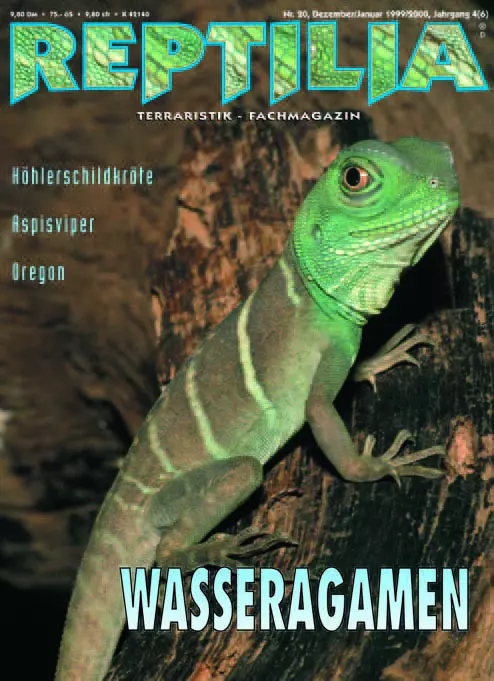
Reptilia 20 - Water dragons
Reptilia 20 - Water dragons Charcoal tortoiseAspis viperOregon Contents: Page 2 - EditorialPage 3 - Letters to the editorPage 6 - MagazinePage 13 - DatesPage 14 - Western Herp Perspectives: a childhood with box turtles, by B. LovePage 15 - Photo report: Water dragons, by. H. WerningPage 22 - Report: Observations of Physignathus concincinus in Thailand and Laos, by S. and U. MantheyPage 24 - Keeping and breeding: 15 years with water dragons, by H. WerningPage 32 - Report: The Australian water dragon Physignathus lesueurii lesueurii, by B. LangerwerfPage 40 - Journey: On tailed amphibian excursions in northern Oregon. Part 1: From the Columbia River Gorge to the north coast, by H. WallaysPage 47 - Portrait and poster: Tribolonotus gracilis, by U. DostPage 51 - Report: the alpine viper Vipera aspis atra, by W. StrassmannPage 56 - Report: Biology, distribution and conservation of the charcoal tortoise Geochelone carbonaria, by M. Merchàn, A. M. Fidalgo and C. PérezPage 64 - Keeping and breeding: Keeping and breeding of some Andean keel-tailed iguanas (Stenocercus) from the Peruvian highlands. Part 2, by U. SchlüterPage 68 - Report: Insects in the terrarium. Part 2, by H. FischerPage 80 - Reptilia on the road: Vivarium Darmstadt, by A. HauschildPage 83 - Advice and actionPage 89 - LibraryPage 96 - Gloss: The crisis in statutory health insurance for reptiles and amphibians, Part 1, by M. Vanselow

CHF 9.80

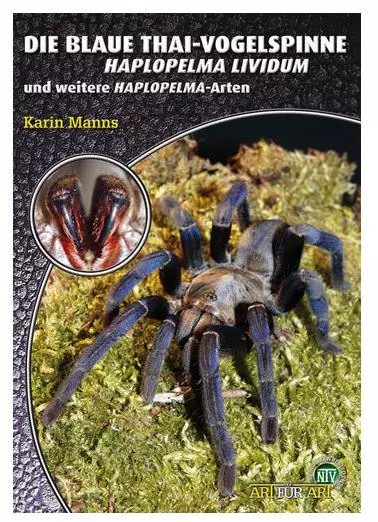
NTV - Haplopelma lividum
Haplopelma lividum - All about the blue Thai tarantula 64 pages numerous colour photos Series species by species A5 Paperback Author Karin Manns Publisher NTV The booklet explains everything about the systematics, anatomy, distribution, appearance, life expectancy and natural enemies. It also explains how poisonous the Haplopelma lividum is, which legal regulations apply to it and acquiring this tarantula. From the contents: Foreword Systematics and anatomy Distribution Appearance and behaviour Natural enemies Life expectancy How poisonous is Haplopelma lividum Legal regulations Acquisition and transport Keeping and care The terrarium Technology and climate Socialisation Nutrition How to handle the tarantula Moulting Diseases and injuries Reproduction - Mating - Cocoon construction and rearing Conclusion

CHF 19.90

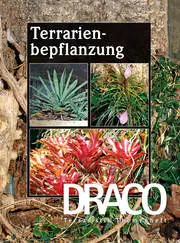
Draco 41 - Terrarium planting
Draco 41 - Terrarium plantingContents:EditorialTerrarium plantsBeat AkeretPlants in aquaterrariumsBeat SchmitterA touch of the Mediterranean - planting outdoor enclosures for Mediterranean tortoisesMichael WirthSucculents and other plants for the dry terrariumBeat AkeretClimbing plants and epiphytes - character plants in the forest terrariumBeat AkeretArtificial plants in the terrariumRoger AeberhardHerbs, grasses, houseplants, whatever is beautiful should grow in the tank - selected examples of planted terrariumsBeat Akeret

CHF 18.40