Chimaira, Turtle nutrition

Article no: CZ-AB10155

CHF 22.90

Stock: 0

Ready for dispatch in 1-3 days, delivery time 14 working days

Delivery between Tuesday, 5 May and Wednesday, 6 May
Zahlungsarten
Product information "Chimaira, Turtle nutrition"

Chimaira turtle nutrition

  • 128 pages
  • 60 colour photos & drawings
  • 15x22 cm
  • Hardcover
  • Edition Chimaira
  • Series PraxisRatgeber

In close consultation with several experts, Dr Michael Meyer has produced a practical and easy-to-understand overview of turtle nutrition. The wealth of information ranges from physiological details of digestion, to the composition of different types of food, to addresses of feed manufacturers, even addresses of seed distributors for wild herb meadows are not missing. Just as little as various recipes for making the "pudding" that is so important for water turtles. The illustrations were specially created by Felix Hulbert for this book and emphasise and clarify the information in the text.

Composition
Feeding recommendation
Technical details
Size information

0 of 0 reviews

Give us a rating!

Share your experience with the product with other customers.


Suggested products

Handbook of food plants for tortoises and other reptiles
Handbook of forage plants 2nd revised editionMarion Minch is not only a successful breeder of diverse tortoises for many years, but also an excellent connoisseur of native wild herbs. She founded and runs samenkiste.de, which is well known to many tortoise keepers and nature lovers. Her name is inextricably linked with reptile care and species-appropriate nutrition for tortoises. Her handbook of food plants summarises the most important native food plants for herbivorous and omnivorous reptiles. She not only considers tortoises, but also iguanas, spiny-tailed dragons and even chameleons. From the basics of plant biology to native wild herbs to suitable food plants for hardy tropical reptile species, this comprehensive work provides the basis for species-appropriate keeping. In the expanded and supplemented 2nd edition, the plant section is divided according to flower colour. This makes it even easier to identify wild herbs. The work has also been supplemented with a wealth of additional information and many pictures.

CHF 46.50

Geckos
Geckos in the terrarium by Astrid FalkThe book offers a comprehensive introduction to geckos and their species-appropriate keeping in terrariums. It explains what you need to think about before buying a gecko and what preparations should be made. The book describes in detail how the terrarium is technically equipped and set up. The care of the animals, their special features and behaviour, their diet, reproduction and rearing of young animals are described, as well as diseases and husbandry problems with tried and tested suggestions for prevention and treatment. Individual gecko species that are particularly suitable for keeping and breeding in terrariums are portrayed in detail in the second part of the book.

CHF 28.50

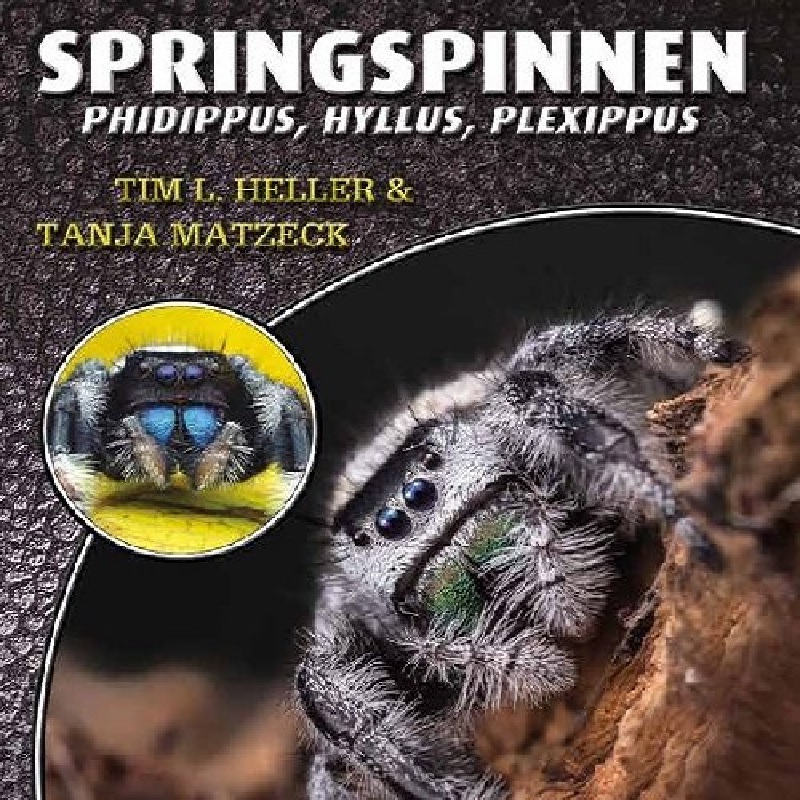
Jumping spiders Phidippus, Hyllus, Plexippus
Book Jumping Spiders - Phidippus, Hyllus & Plexippus A guide to keeping jumping spiders of the genera Phidippus, Hyllus & Plexippus. Who can resist the charm of jumping spiders? The childlike appearance of their expressive face simply leaves no one cold! In addition, their behavior is extremely exciting to observe, their colors are bright and their requirements for species-appropriate keeping are very easy to meet. No wonder these likeable jumpers are all the rage! This volume in the "Species by Species" series describes in detail what to look out for when buying and keeping them, introduces the most commonly kept species and color forms and provides plenty of tips on how to keep them successfully - so you can be sure they will breed well! Species by Species introduces you to the books in this series, which present the most popular terrarium animals. Each volume offers you detailed, practical care instructions and all the information you need to successfully breed your animals. All important questions from the required tank size to terrarium set-up, technical equipment, species-appropriate nutrition and disease prevention are answered with numerous tricks and tips. Experienced, long-standing breeders reveal how you can encourage the animals to reproduce and raise healthy young. All this in full color, generously illustrated and attractively designed - just about your terrarium animal - species by species

CHF 23.90

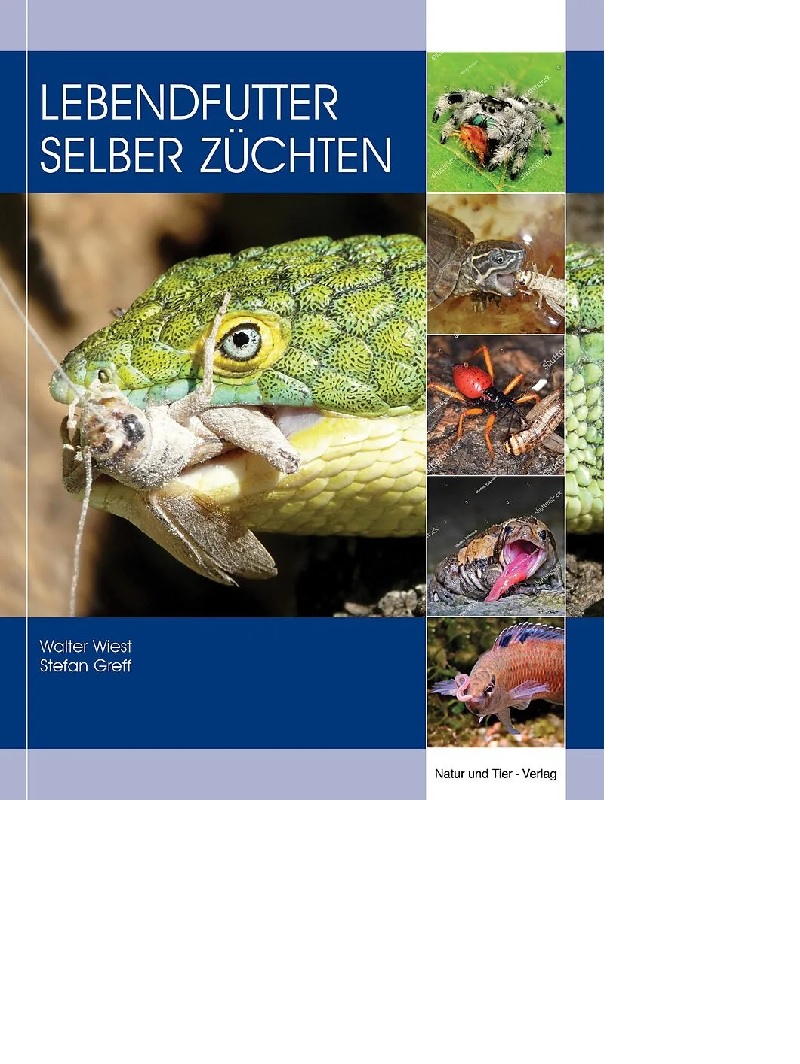
Book Breeding live food yourself
Book "Grow your own live food" - The perfect guide for pet owners Discover practical and detailed instructions on how you can easily breed food for your reptiles, birds, fish or other animals yourself in the book "Breeding live food yourself". With valuable tips on various food insects, their care and breeding, you can save money and ensure a species-appropriate diet for your pets. Contents of the book: Step-by-step instructions for breeding feeder insects Information on the best types of food for reptiles, birds and fish Care instructions and breeding conditions for various live food species Tips for sustainable and cost-effective food production Why breed your own live food? Get healthy, fresh food for your animals Save money and reduce dependence on pet shops Promote the health and well-being of your animals with species-appropriate food Whether you are a beginner or an experienced pet owner, this book provides you with everything you need to successfully breed live food yourself.

CHF 46.50

Marginata 69 - New Guinea tortoises
Marginata 69 - New Guinea tortoises – the genus ElseyaCover storyThe unrecognised beauties: New Guinea tortoises (Andreas S. Hennig)My experiences with Branderhorst's New Guinea tortoise, Elseya (Elseya) branderhorsti (Ouwens, 1914) (Andreas S. Hennig)Keeping and breeding of Rhodin's New Guinea tortoise, Elseya (Hanwarachelys) rhodini Thomson, Amepou, Anamiato & Georges, 2015 (Andreas S. Hennig)PortraitGeoemyda spengleri, Chinese serrated tortoise (Andreas S. Hennig)ReportageMacrochelys temminckii – Experiences and impressions with vulture tortoises part 2 (Reiner Praschag)KeepingAn alternative to year-round keeping of the Egyptian tortoise in the terrarium – my experiences with seasonal outdoor keeping of Testudo kleinmanni (Ricarda Schramm)EtymologySawbacks and living maps part 4: Graptemys gibbonsi, Pascagoula humpback tortoise (Holger Vetter)Classifieds & animal placement

CHF 16.50

Reptilia 24 - Stick insects
Reptilia 24 - Stick insects Incubation of turtle eggsTerrarium photographyArch-snakes Contents: Page 2 - EditorialPage 3 - Letters to the editorPage 6 - MagazinePage 13 - DatesPage 16 - Western Herp Perspectives: Tribute to the Frog, by B. LovePage 18 - Photo report: Stick and ghost grasshoppers, by O. ZomproPage 24 - Keeping and breeding: Ghost insects of the family Heteropterygidae in the terrariumPage 30 - Report: Food animal and terrarium ornament at the same time: The Indian stick insect (Carausius morosus), by F. GastPage 34 - Journey: On a big game hunt for the sticks - Insights into the joys and dangers of a collecting trip, by I. FritzschePage 40 - Herpetology and culture: On the utilisation of some amphibian and reptile species in Peru, by T. EisenbergPage 47 - Portrait and poster: Anolis roquet, by M. SchmidtPage 51 - Herpetofauna: Observations on the ecology and terrarium keeping of the arch-snake Chalcides chalcides mertensi, Klausewitz 1954, by H. EsterbauerPage 55 - Keeping and breeding: Incubation of turtle eggs, by M. MähnPage 63 - Terrarium studies: Herpetological photography – ABC of reptile and amphibian photography for beginners and advanced, by U. StrathemannPage 70 - Herpetofauna: Asaccus – The leaf-fingered geckos of the Oman mountains, by R. LeptienPage 79 - Reptilia on the road: Zoological Garden of the City of Wuppertal, by A. HauschildPage 82 - Advice and actionPage 89 - LibraryPage 96 - Gloss: Forget fighting dogs! A friend for life, by K. Kunz

CHF 9.80

Banded Velvet Gecko & Wahlberg's Gecko
All about the banded velvet gecko and the Wahlberg's gecko by Mirko Barts 64 pages Format: 14.8 x 21 cm numerous colour photos Paperback Author Mirko Barts Contents: This book offers a detailed description of the species Banded Velvet Gecko and Wahlberg's Gecko as well as "instructions" for successful keeping and breeding in the artificial terrarium habitat.Mirko Barts knows more about keeping and breeding these animals than almost anyone else. He provides the reader with the expertise needed to care for these lizards in an expert and easy-to-understand manner. Of course, he also tells you how to breed these adorable animals, hatch the eggs and raise the young. Systematics and body structure The fascinating biology: From the life of the Banded Velvet Gecko and the Wahlberg's Gecko All information on species-appropriate keeping: from suitable terrariums to equipment and technology to feeding Successful breeding: Mating stimulation, incubation of the eggs and rearing the young Solutions to problems: How to avoid the most common mistakes in care and how to help sick animals Brilliant photos

CHF 19.90

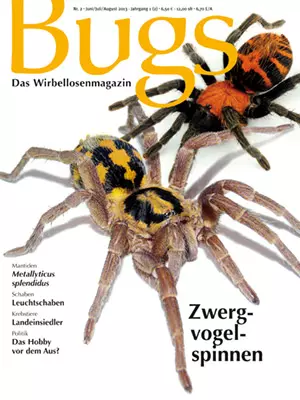
Bugs No. 02 - Miniature tarantulas
Bugs No. 02 - Dwarf tarantulas Metallyticus splendidusLand hermitsIs the hobby on the brink of closure?Table of contents Editorial Team introduction Facets Dates Flown in Cover storyGreat pleasure in small animals Colourful dwarfs “This girl is on fire!” FledgedIn search of stag beetles in southern India In the crosshairsMetallic praying mantis ReportageOn the trail of the field scorpion, part 2 PracticeLuminous cockroaches in the terrarium PracticeBreeding a new ghost stick insect from Sumatra CultureInsects as medicine PracticeA life between land and sea Potter beeSafe handling of centipedes Kids CornerNesting aid for wild bees ShowcasePreserved for eternity – know-how! Book scorpion Also in your area Service & Imprint Preview Metamorphoses Football!

CHF 12.00

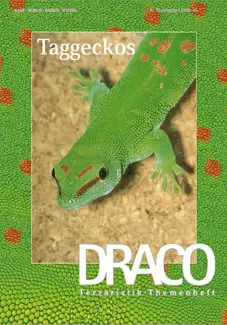
Draco 11 - Day geckos
Draco 11 - Day geckos Contents: 2 Editorial 4 day geckos of the genus PhelsumaJens Krüger 20 A terrarium for PhelumenHartmut Lipp 27 On the diet of day geckos of the genus Phelsuma Gerhard Hallmann 30 Group keeping and socialisation of PhelsumaHartmut Lipp 38 Phelsuma berghofi Krüger, 1996Biology, care and reproductionHand Peter Berghof 43 Experiences in the care and breeding of Phelsuma hielscheri Rösler, Obst & Seipp, 2001 from Isalo National Park Hans Peter Berhof & Roland Gebhard 47 On the keeping and breeding of Phelsuma inexpectata Mertens, 1966Oliver Pürkel 51 Taxonomy, care and breeding of the subspecies of Phelsuma lineata Hartmut Lipp 58 Selective colour breeding in Phelsuma madagascariensis grandis Rudolf Gerhardt 61 It doesn’t always have to be green – the less colourful representatives of the genus Phelsuma Hand Peter Berghof 68 Phelsums on Mauritius – A situation study Holger Schneider 77 To Madagascar – For the sake of day geckos Klaus Liebel & Wolfgang Schmidt 85 Book box 91 Magazine

CHF 16.80

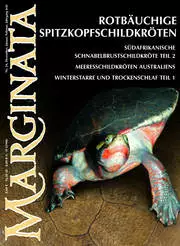
Marginata 24 - Pointed Red-bellied Pond Turtle
Marginata 24 - Red-bellied Pointed Pond Turtle South African Beaked Tortoise Part 2Sea turtles of AustraliaHibernation and dry hibernation Part 1 Contents: EditorialLetters to the editorMagazineDates REPORTAGEThe red-bellied pointed pond turtle, Emydura subglobosa (Krefft, 1876) – long known and yet virtually unknownHans - Dieter Philippen & John Cann BREEDINGLong-term breeding experiences with the red-bellied pointed pond turtle (Emydura subglobosa) – compilation of personal and published data spanning over 40 yearsHans - Dieter Philippen & Martin Leonard Voss POSTERThe Black-bellied Box Turtle, Pelusios niger (Dumeril & Bibron, 1835)Hans - Dieter Philippen REPORTAGEThe African Beaked Tortoise (Chersina angulata). Part 2: Behavioural observationsMichael Wirth REPORTAGEThreats, protection and use of sea turtles. Part 4: Green Turtle (Chelonia mydas) and Loggerhead Turtle (Caretta caretta) in Northwest Australia Gerald & Christa Benyr REPORTAGEPhysiology of rest phases in reptiles, especially tortoises – Part 1: Hibernation – a literature overviewMarkus Baur & Tobias Friz Book tipClassifiedsSubscription & ServiceRegional guide

CHF 16.50

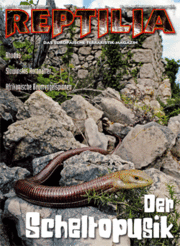
Reptilia 88 - The Cryptopusics
Reptilia 88 - The Scheltopusik RhodesMeaning of UV irradiationColour forms of the western hook-nosed snakeContents:Europe's largest and at the same time strangest lizard captivates all reptile enthusiasts: the Scheltopusik. This equally awe-inspiring and elegant species, with its snake-like shape and lizard head, is one of the best-known reptiles and a classic in terrarium keeping. Nevertheless, reports of successful breeding remain rare. In the upcoming REPTILIA, Benny Trapp and Michael Wirth present Scheltopusiks from all parts of the range, both in text and fantastic photos, while Sascha Esser and his team from the Alexander Koenig Zoological Research Museum also report on breeding in indoor terrariums. This extraordinary cover story is rounded off by Peter Fritz, who describes in a very comprehensible way the construction of an outdoor enclosure for this species – something sure to interest every other outdoor terrarium keeper as well. Table of contents EditorialMAGAZINEDATES WESTERN HERP PERSPECTIVES Insufficiently recognised reptilesB. Love PHOTOSTORY Europe's largest lizard – the Scheltopusik, Pseudopus apodus M. Wirth PRACTICE An outdoor enclosure for the Scheltopusik, Pseudopus apodus P. Fritz REPORTAGE Keeping and breeding of the Scheltopusik, Pseudopus apodus, at the Alexander Koenig Zoological Research Museum S. Esser REPORTAGE The Scheltopusik in Croatia M. Wirth PORTRAIT AND POSTERGopherus polyphemusH. Werning ReportageColour forms of the western hook-nosed snake (Heterodon nasicus) F. Longhitano PRACTICE How important are UV light, vitamin and mineral supplements? New findings on bone metabolic diseases and their prevention using the example of the Yemen chameleon A. Kwet & S. Hoby TRAVEL The herpetofauna of Rhodes U. Schlüter Animals of our homeland. The dice snake R. Leptien TERRARIUM DISPLAYS The paradise of the unloved – the Scheidegg reptile zoo M. Wirth SUBSCRIPTION & SERVICE ALSO NEAR YOU PREVIEW  INCUBATOR  Ilha de Marchanteria   

CHF 12.00

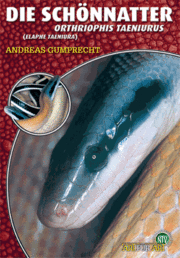
The cave-dwelling rat snake
The cave-dwelling rat snake Andreas Gumprecht 64 Seiten 14,8 x 21 cm zahlreiche Farbfotos Inhalt: Der Name ist Programm: Die Schönnatter zählt mit Sicherheit nicht nur zu den attraktivsten Schlangen, sondern zu den beeindruckendsten Reptilien überhaupt. Überdies kommt sie in verschiedenen Unterarten vor, die jeweils ihre ganz eigene Charakteristik aufweisen. Und ihr umgängliches, ruhiges und wenig anspruchsvolles Wesen macht besonders einige dieser Unterarten zu geradezu idealen Terrarienpfleglingen. Andreas Gumprecht ist Experte für asiatische Schlangen, pflegt und züchtet Schönnattern seit Jahren und hat sie in ihrem natürlichen Lebensraum studiert. In diesem Ratgeber gibt er Ihnen leicht verständlich das nötige Wissen an die Hand, das Sie brauchen, um Schönnattern artgerecht halten zu können. Und natürlich erfahren Sie auch, wie man diese faszinierenden Nattern zur Nachzucht bringt, ihre Eier ausbrütet und die Jungtiere großzieht. Systematik und Körperbau Die faszinierende Biologie: Aus dem Leben der Schönnatter Alle Informationen zur artgerechten Haltung: Vom geeigneten Terrarium über Einrichtung und Technik bis hin zur Fütterung Erfolgreich nachzüchten: Paarungsstimulation, Inkubation der Eier und Aufzucht der Jungtiere Problemlösungen: Wie man die häufigsten Fehler bei der Pflege vermeidet, und wie man kranken Tieren helfen kann Brillante Fotos

CHF 18.50