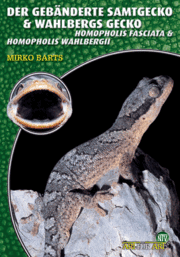
Banded Velvet Gecko & Wahlberg's Gecko

Article no: 978-3-937285-30-6

CHF 19.90

Stock: 0

Ready for dispatch in 1-3 days, delivery time 14 working days

Delivery between Tuesday, 5 May and Wednesday, 6 May
Zahlungsarten
Product information "Banded Velvet Gecko & Wahlberg's Gecko"

All about the banded velvet gecko and the Wahlberg's gecko by Mirko Barts

  • 64 pages
  • Format: 14.8 x 21 cm
  • numerous colour photos
  • Paperback
  • Author Mirko Barts

Contents:

This book offers a detailed description of the species Banded Velvet Gecko and Wahlberg's Gecko as well as "instructions" for successful keeping and breeding in the artificial terrarium habitat.
Mirko Barts knows more about keeping and breeding these animals than almost anyone else. He provides the reader with the expertise needed to care for these lizards in an expert and easy-to-understand manner. Of course, he also tells you how to breed these adorable animals, hatch the eggs and raise the young.

  • Systematics and body structure
  • The fascinating biology: From the life of the Banded Velvet Gecko and the Wahlberg's Gecko
  • All information on species-appropriate keeping: from suitable terrariums to equipment and technology to feeding
  • Successful breeding: Mating stimulation, incubation of the eggs and rearing the young
  • Solutions to problems: How to avoid the most common mistakes in care and how to help sick animals
  • Brilliant photos
Composition
Feeding recommendation
Technical details
Size information

0 of 0 reviews

Give us a rating!

Share your experience with the product with other customers.


Suggested products

Handbook of food plants for tortoises and other reptiles
Handbook of forage plants 2nd revised editionMarion Minch is not only a successful breeder of diverse tortoises for many years, but also an excellent connoisseur of native wild herbs. She founded and runs samenkiste.de, which is well known to many tortoise keepers and nature lovers. Her name is inextricably linked with reptile care and species-appropriate nutrition for tortoises. Her handbook of food plants summarises the most important native food plants for herbivorous and omnivorous reptiles. She not only considers tortoises, but also iguanas, spiny-tailed dragons and even chameleons. From the basics of plant biology to native wild herbs to suitable food plants for hardy tropical reptile species, this comprehensive work provides the basis for species-appropriate keeping. In the expanded and supplemented 2nd edition, the plant section is divided according to flower colour. This makes it even easier to identify wild herbs. The work has also been supplemented with a wealth of additional information and many pictures.

CHF 46.50

Geckos
Geckos in the terrarium by Astrid FalkThe book offers a comprehensive introduction to geckos and their species-appropriate keeping in terrariums. It explains what you need to think about before buying a gecko and what preparations should be made. The book describes in detail how the terrarium is technically equipped and set up. The care of the animals, their special features and behaviour, their diet, reproduction and rearing of young animals are described, as well as diseases and husbandry problems with tried and tested suggestions for prevention and treatment. Individual gecko species that are particularly suitable for keeping and breeding in terrariums are portrayed in detail in the second part of the book.

CHF 28.50

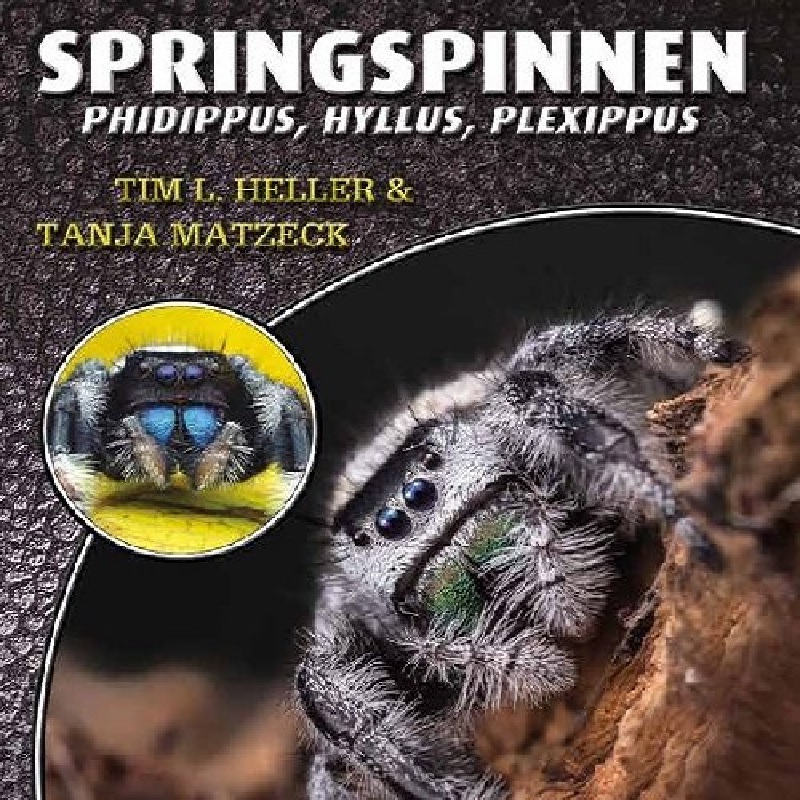
Jumping spiders Phidippus, Hyllus, Plexippus
Book Jumping Spiders - Phidippus, Hyllus & Plexippus A guide to keeping jumping spiders of the genera Phidippus, Hyllus & Plexippus. Who can resist the charm of jumping spiders? The childlike appearance of their expressive face simply leaves no one cold! In addition, their behavior is extremely exciting to observe, their colors are bright and their requirements for species-appropriate keeping are very easy to meet. No wonder these likeable jumpers are all the rage! This volume in the "Species by Species" series describes in detail what to look out for when buying and keeping them, introduces the most commonly kept species and color forms and provides plenty of tips on how to keep them successfully - so you can be sure they will breed well! Species by Species introduces you to the books in this series, which present the most popular terrarium animals. Each volume offers you detailed, practical care instructions and all the information you need to successfully breed your animals. All important questions from the required tank size to terrarium set-up, technical equipment, species-appropriate nutrition and disease prevention are answered with numerous tricks and tips. Experienced, long-standing breeders reveal how you can encourage the animals to reproduce and raise healthy young. All this in full color, generously illustrated and attractively designed - just about your terrarium animal - species by species

CHF 23.90

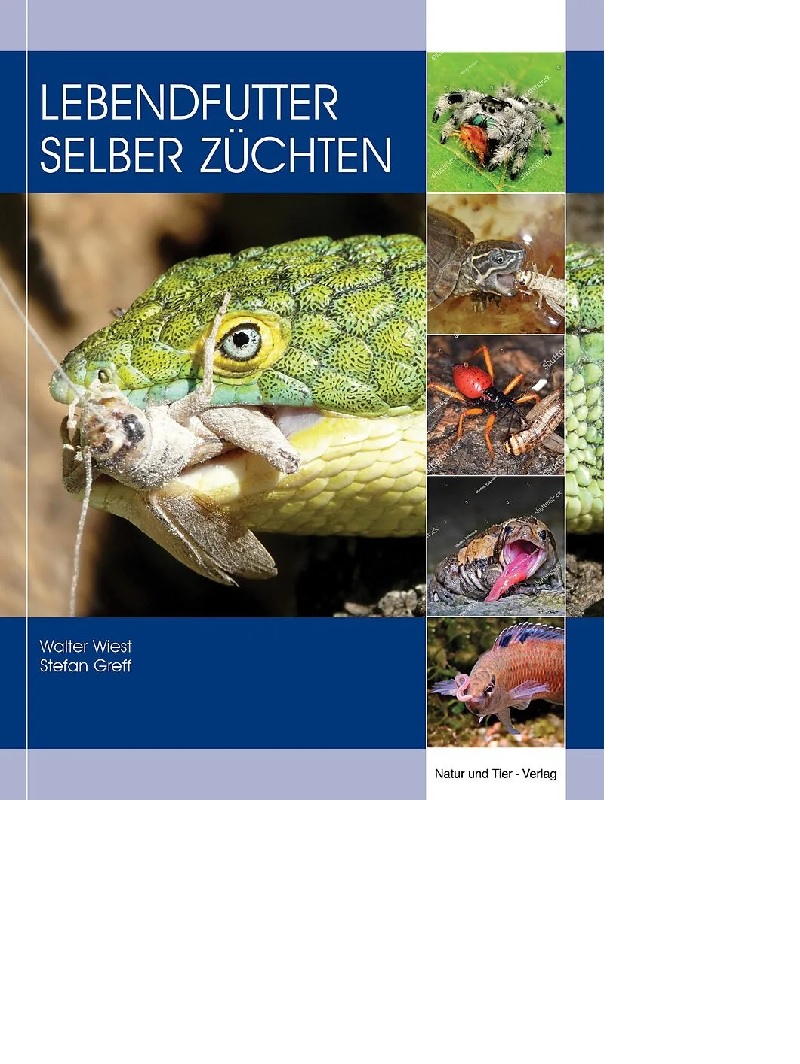
Book Breeding live food yourself
Book "Grow your own live food" - The perfect guide for pet owners Discover practical and detailed instructions on how you can easily breed food for your reptiles, birds, fish or other animals yourself in the book "Breeding live food yourself". With valuable tips on various food insects, their care and breeding, you can save money and ensure a species-appropriate diet for your pets. Contents of the book: Step-by-step instructions for breeding feeder insects Information on the best types of food for reptiles, birds and fish Care instructions and breeding conditions for various live food species Tips for sustainable and cost-effective food production Why breed your own live food? Get healthy, fresh food for your animals Save money and reduce dependence on pet shops Promote the health and well-being of your animals with species-appropriate food Whether you are a beginner or an experienced pet owner, this book provides you with everything you need to successfully breed live food yourself.

CHF 46.50

Marginata 69 - New Guinea tortoises
Marginata 69 - New Guinea tortoises – the genus ElseyaCover storyThe unrecognised beauties: New Guinea tortoises (Andreas S. Hennig)My experiences with Branderhorst's New Guinea tortoise, Elseya (Elseya) branderhorsti (Ouwens, 1914) (Andreas S. Hennig)Keeping and breeding of Rhodin's New Guinea tortoise, Elseya (Hanwarachelys) rhodini Thomson, Amepou, Anamiato & Georges, 2015 (Andreas S. Hennig)PortraitGeoemyda spengleri, Chinese serrated tortoise (Andreas S. Hennig)ReportageMacrochelys temminckii – Experiences and impressions with vulture tortoises part 2 (Reiner Praschag)KeepingAn alternative to year-round keeping of the Egyptian tortoise in the terrarium – my experiences with seasonal outdoor keeping of Testudo kleinmanni (Ricarda Schramm)EtymologySawbacks and living maps part 4: Graptemys gibbonsi, Pascagoula humpback tortoise (Holger Vetter)Classifieds & animal placement

CHF 16.50

Terraria 51 - Amphibian crisis
Terraria 51 - Amphibian crisis ChacoMoroccan day gecko Contents: Cover story: Amphibian crisis The global amphibian crisis is threatening frogs all over the world, and we may be facing a dramatic extinction of species. One glimmer of hope is the so-called amphibian ark, the targeted breeding of particularly endangered species in human care. In the cover story of the next issue of TERRARIA/elaphe, we look at various methods used by zoos, scientific institutions and private keepers to successfully breed frogs in the long term. Territorial Herpetorama Cover story Tailed amphibians in danger a “salamander-eating fungus” spreads in EuropeAxel Kwet Questions about the Salamander EaterInterview with Prof. Frank Pasmans, with questions from Axel Kwet Species conservation and captive breeding of amphibians a new approach to keeping cave-dwelling paddle-footed frogs using Rhacophorus orloviMikhail F. Bagaturov, Anna A. Bagaturova & Rustam K. Berdiev PanoramaImpressions of the herpetofauna in the Chaco of ParaguayStephan Böhm The ruin lizards (Podarcis siculus tyrrhenicus) of the island of GiannutriJürgen Gebhart Research New speciesNew keel-tailed iguanas of the genus TropidurusAxel Kwet Newly described: three Japanese angle-toothed newts from KyushuAxel Kwet Among researchersField study on the Cypriot Levantine viper (Macrovipera lebetina lebetina)Daniel Jestrzemski An observation on ophiophagy in the puff adder (Bitis arietans)Tobias Machts Salamandra TerraristicsThe day gecko of south-western Morocco Quedenfeldtia moerens (Chabanaud, 1916)Uwe Schlüter Also in your neighbourhood Nature and species conservation Field notesFrost effect on the spawn of the grass frogRudolf Malkmus Hail damage to amphibians?Axel Kwet Strange toad observations on the island of SyltWolf-Rüdiger Grosse Subscription & Service GalleryThe Thesaurus of Albertus Seba. Old treasures in the Berlin Museum of Natural HistoryAxel Kwet, Rainer Günther & Aaron Bauer Preview Incubator Smoke detectorRolf Leptien

CHF 12.00

Terraria 20 - Varied poison dart frogs
Terraria 20 - Diverse poison dart frogs Pacific boasComb spiders of the genus Phoneutria Contents: Poison dart frogs are the most popular amphibians in terraristics, and they have been successfully kept and bred for decades. So you should know everything there is to know about the "jewels of the rainforest" by now? Far from it! These magnificent frogs always have tangible surprises and novelties in store for us, even with seemingly well-known species. In a spectacularly illustrated report, Frank Steinmann looks at the countless local forms of the golden tree frog, Dendrobates auratus, and reveals why many of the names circulating in terraristics for the colour forms are misleading. Ivonne Meuche has been researching strawberry frogs in Costa Rica for years and reports on the most interesting results that have not yet been scientifically published. And we also show photos of a beautiful, newly discovered and as yet undescribed dendrobatid, the Golden Supatá poison dart frog, which André Schreiber observed in Colombia.EditorialMagazine Snake systematics special: New systematics of South American Pit vipers Species status again for the Dark Tiger Python, subspecies status for the Sulawesi Dwarf Tiger Python Make five out of one – The new systematics of the chain snake complex Autumn TERRARISTIKA in Hamm Legal: Again: Right of retention of the animal The aga toad – or how to benefit from an aggressively invasive species On the distribution of Hemidactylus mabouia in Paraguay Test run addendum TERRAglobalThe frilled lizard: A miniature dinosaurKarl-Heinz SWITAKBack in the fieldMaik DOBIEYTITLE THEME: Diverse poison dart frogs"Further notes" on Dendrobates auratus – the variability of the golden tree frog in PanamaFrank STEINMANNIn the area of Ranitomeya dorisswansonaeAndré SCHREIBEROophaga pumilio – The strawberry frog in the spotlight of researchIvonne MEUCHE"Rana dorada de Supatá" – the Golden Supatá poison dart frog from ColombiaAndré SCHREIBERPacific boas in the terrarium – Candoia carinata and Candoia paulsoniRenè MEIERKORDThe Northern Pine Snake (Pituophis melanoleucus melanoleucus) in the wild and terrarium. Part 2Bernd SKUBOWIUSThe genus Phoneutria – keeping and breedingReinhard HÜBERS and Dirk REIMANNTRAVEL"Exo Terra" Expedition Tanzania 2008 Part 2: A new chameleon speciesRoland ZOBELNEW SPECIESNew monitor species discovered in IndonesiaAndré KOCHTwo new day geckos from MadagascarAxel KWETBrazilian angel frogAxel KWETAMONG RESEARCHERSHerpetological research in Central AmericaAndreas HERTZ and Sebastian LOTZKATEYE-CATCHERIf you love your lizards, you carry them on your hands. Exceptional successes with toad lizardsKriton KUNZNear youSubscription & ServicePreviewIncubatorThe "Rock Helga" – A Morocco adventure in two parts (Part 2)Mike ZAWADZKI

CHF 12.00

Bugs No. 02 - Miniature tarantulas
Bugs No. 02 - Dwarf tarantulas Metallyticus splendidusLand hermitsIs the hobby on the brink of closure?Table of contents Editorial Team introduction Facets Dates Flown in Cover storyGreat pleasure in small animals Colourful dwarfs “This girl is on fire!” FledgedIn search of stag beetles in southern India In the crosshairsMetallic praying mantis ReportageOn the trail of the field scorpion, part 2 PracticeLuminous cockroaches in the terrarium PracticeBreeding a new ghost stick insect from Sumatra CultureInsects as medicine PracticeA life between land and sea Potter beeSafe handling of centipedes Kids CornerNesting aid for wild bees ShowcasePreserved for eternity – know-how! Book scorpion Also in your area Service & Imprint Preview Metamorphoses Football!

CHF 12.00

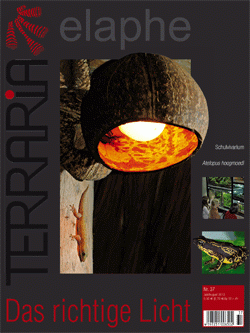
Terraria 37 - The correct light
Terraria 37 - The right lightSchool vivariumAtelopus hoogmoediContents:Cover story: The right lightHardly any other topic in terraristics is as important and at the same time as intensively discussed as the right terrarium lighting. What do you need to look out for to ensure that your pets get the best possible replacement for sunlight in their terrarium? What do you think of new lighting technologies such as LEDs? And: How do reptiles actually perceive light? The cover story of the next issue attempts to provide some answers. TerritorialHerpetoramaTOPICThe fluorescent tube - a classic newly illuminatedSteven ArthThe use of UV measuring devices in terraristicsSarina WunderlichColour temperature and colour rendering index: Useful parameters in terraristicsSarina WunderlichPANORAMATerraglobal: Close to death, part 2Joachim BulianSince when do agamas eat peanuts - and crocodile bread?Alfred SchleicherThe school vivarium at the Edith-Stein-Schule in Erfurt - much more than just animals at schoolRica Kepter & Achim KempterRESEARCHNew species: The frog and the prince - splendid tree frogs from EcuadorAxel KwetAmong researchers: Inhabitants of the elfin forest: Herpetofauna at Picu La Picucha in the Sierra de Angalta National Park, HondurasAlexander GutscheNews from Indochina: The amphibians and reptiles of the Cat Thien National Park in South VietnamPeter GeisslerSalamandraTERRARISTICSClassic: The DreicksnatterExperiences in rearing spiny-edged soft-shelled turtles (Apalone spinifera)Sebastian NicklFirst successful breeding of the short-toed toad Atelopus hoohmoedi at the Aquazoo/Löbbecke Museum in DüsseldorfSandra Honigs, Marc Messing & Beate PelzerSome additional information on the article about the mysterious death of hatchlings of the green tree pythonJoachim BulianNATURE AND SPECIES CONSERVATIONField notes: Toad under iceStefan MeyerLate reproduction of the fire-bellied toad in SaxonyWolf-Rüdiger Grosse & Andreas NöllertTwo examples of accidental anthropogenic displacement of lizards due to their flight behaviourAndreas ArnoldMissing: Pinta giant tortoise (Chelonoides abingdonii)Also in your neighbourhoodSubscription & ServiceGALERIAKomodo’s Centenarian DragonsPreviewBRUTKASTENCrocodile alarm at the swimming lake: human tragedy narrowly avertedJakob Hein

CHF 12.00

Small mammals in terrariums
The book explains everything about the care and keeping of small animals. 144 pages 163 photos 2 graphics Format: 16.8 x 21.8 cm 2nd revised edition Author Christian Ehrlich Publisher NTV Contents: Away from the stuffy cage and towards modern and species-appropriate animal husbandry: many small mammals are best kept in a suitably equipped terrarium. This book presents the most suitable types of terrarium and provides a detailed and practical description of how to breed and care for the animals successfully. Anatomy, lineage and systematics Distribution, biotopes, adaptations All information on species-appropriate keeping: from suitable terrariums to equipment and technology to feeding Successful breeding: Mating stimulation and rearing of young animals Taming small mammals Topic free-range: This is how it is species-appropriate. Solutions to problems: How to avoid the most common mistakes in care, and how to help sick animals: Keeping animals healthy Huge species section with detailed portraits of 80 species of marsupials, predatory marsupials, true marsupials, xenarthrans, insectivores, bats, rodents and sengis Brilliant photos Many animal lovers no longer want to be satisfied with just the classic hamster in the equally classic hamster cage. If you want to keep and observe such exciting animals as hedgehogs, opossums, predatory marsupials, sugar gliders, armadillos, tenrecs, ground squirrels, squirrels, bats & co., this book is a must, because all of them and many more are best kept in a suitably equipped terrarium. Christian Ehrlich, editor of the specialist magazine RODENTIA, has now dealt with this topical subject in detail. The author is able to draw on his many years of experience in keeping and breeding small mammals from various related groups and shares his insights here in an easy-to-read but extremely expert manner. Ehrlich describes the biology of the animals, presents their specific husbandry requirements and gives plenty of tips on their successful care and breeding. The book offers detailed portraits of no less than 80 species of marsupials, predatory marsupials, true marsupials, xenarthrans, insectivores, bats, rodents and sengis. For all friends of very special animals and for all those who strive for species-appropriate animal husbandry, this book is an absolute must.

CHF 35.90

Bird spiders in the terrarium
Alles über Vogelspinnen im Terrarium von Martin Meinhardt 136 Seiten 123 Farbfotos, mit Karte und 4 grafischen Darstellungen Format: 16,8 x 21,8 cm 3. Auflage Taschenbuch Autor Martin Meinhardt Verlag NTV Inhalt: Vogelspinnen sind traumhafte Terrarientiere! Ihr attraktives Äusseres und das spannende Verhalten lassen sie in der Gunst der Spinnenfreunde ganz oben stehen. Der langjährige und versierte Züchter Martin Meinhardt erläutert in dieser überarbeiteten und um viele Artporträts erweiterten Auflage seines Praxis-Ratgebers alles, was Sie für die artgerechte Pflege und die erfolgreiche Nachzucht der Tiere wissen müssen. Systematik – die Verwandtschaft der Vogelspinnen Körperbau – so funktioniert eine Vogelspinne Gift und Brennhaare – warum Vogelspinnen trotzdem nicht gefährlich sind Verhalten – Beuteerwerb, Balz und Fortpflanzung Artgerechte Pflege – Einrichten und Klimatisieren geeigneter Terrarien; Vogelspinnen richtig füttern Erfolgreich nachzüchten – Geschlechtsunterschiede, Verpaarung, Aufzucht der Jungtiere Detaillierte Artporträts – ausführliche Informationen zu besonders geeigneten Arten Faszinierende Farbfotos

CHF 33.50

The cave-dwelling rat snake
The cave-dwelling rat snake Andreas Gumprecht 64 Seiten 14,8 x 21 cm zahlreiche Farbfotos Inhalt: Der Name ist Programm: Die Schönnatter zählt mit Sicherheit nicht nur zu den attraktivsten Schlangen, sondern zu den beeindruckendsten Reptilien überhaupt. Überdies kommt sie in verschiedenen Unterarten vor, die jeweils ihre ganz eigene Charakteristik aufweisen. Und ihr umgängliches, ruhiges und wenig anspruchsvolles Wesen macht besonders einige dieser Unterarten zu geradezu idealen Terrarienpfleglingen. Andreas Gumprecht ist Experte für asiatische Schlangen, pflegt und züchtet Schönnattern seit Jahren und hat sie in ihrem natürlichen Lebensraum studiert. In diesem Ratgeber gibt er Ihnen leicht verständlich das nötige Wissen an die Hand, das Sie brauchen, um Schönnattern artgerecht halten zu können. Und natürlich erfahren Sie auch, wie man diese faszinierenden Nattern zur Nachzucht bringt, ihre Eier ausbrütet und die Jungtiere großzieht. Systematik und Körperbau Die faszinierende Biologie: Aus dem Leben der Schönnatter Alle Informationen zur artgerechten Haltung: Vom geeigneten Terrarium über Einrichtung und Technik bis hin zur Fütterung Erfolgreich nachzüchten: Paarungsstimulation, Inkubation der Eier und Aufzucht der Jungtiere Problemlösungen: Wie man die häufigsten Fehler bei der Pflege vermeidet, und wie man kranken Tieren helfen kann Brillante Fotos

CHF 18.50