Reptilia 86 - Tree-bird spiders of the genus Avicularia

Article no: reptilia86

CHF 12.00

Stock: 0

Ready for dispatch in 1-3 days, delivery time 7 working days

Delivery between Tuesday, 22 September and Wednesday, 23 September
Zahlungsarten
Product information "Reptilia 86 - Tree-bird spiders of the genus Avicularia"

Schlangen für Einsteiger
Madagaskar-Hundskopfboa
Dendrobates auratus

Inhalt:

Viele Vertreter der Gattung Avicularia zählen dank ihres attraktiven Äußeren und des spannenden Verhaltens zu den absoluten Klassikern im Terrarium. Aber gerade in jüngster Zeit werden auch immer wieder spektakuläre neue Arten dieser baumbewohnenden Vogelspinnen importiert.

Unser Titelthema bietet Ihnen einen Überblick über diese prächtigen Kletterkünstler und porträtiert einzelne Arten.

Editorial
MAGAZIN
Bestialische Behandlung indonesischer Großreptilien für westliche Luxusprodukte
André Koch

MAGAZIN
Ungewöhnlich gefärbter Grasfrosch
Mike Zawadzki

MAGAZIN
Gestohlene Geckos zurück
Kriton Kunz

MAGAZIN
Führungswechsel im Exotarium Tula
Kriton Kunz

MAGAZIN
"Crocodile Dundee" gestorben
Kriton Kunz

TERMINE

WESTERN HERP PERSPECTIVES
Ist Herping endlich erwachsen geworden?
Bill Love

FOTOSTORY
Die Gattung Avicularia
Russ Gurley

HALTUNG UND VERMEHRUNG
Haltung und Nachzucht von Avicularia metallica
I. Zubillaga

HALTUNG UND VERMEHRUNG
Die Rotfußvogelspinne Avicularia avicularia
J. F. Taylor

HALTUNG UND VERMEHRUNG
Ernährung nord- und westafrikanischer Warane in der Natur und bei Terrarienhaltung
Uwe Schlüter

PORTRÄT UND POSTER
Terrapene carolina carolina (Linnaeus, 1758). Carolina-Dosenschildkröte
Michael Wirth

RATGEBER
Welche Schlange für mich?
Mark Mense

HALTUNG UND VERMEHRUNG
Sanzinia madagascariensis. Haltung und Zucht der Madagaskar-Hundskopfboa oder des Madagassischen Hundskopfschlingers
M. Borer

HERPETOFAUNA
Calumma tarzan. Eine neue Chamäleonart aus Madaskar braucht dringend Hilfe!
P.-S. Gehring, M. Pabijan, F. M. Ratsoavina, J. Köhler, K. Mebert & F. Glaw

HERPETOFAUNA
Goldbaumsteiger in Kolumbien
F. Steinmann

REPORTAGE
Der Schulzoo des Collegium Josephinum Bonn
M. Uhlhaas & P. Pohlscheid

TIERE UNSERER HEIMAT
Die Mauereidechse
Rolf Leptien

BIBLIOTHEK
Buchbesprechung: Auf Schlangenspuren und Krötenpfaden
Axel Kwet

Lizards of the American Southwest. A Photographic Field Guide
Heiko Werning

Buchbesprechung: Frösche und andere Amphibien
Sebastian Wolf

ABO & SERVICE
AUCH IN IHRER NÄHE
VORSCHAU

BRUTKASTEN
Grenzgebiete Teil 1
Heiko Werning

Composition
Feeding recommendation
Technical details
Size information

0 of 0 reviews

Give us a rating!

Share your experience with the product with other customers.


Suggested products

Handbook of food plants for tortoises and other reptiles
Handbook of forage plants 2nd revised editionMarion Minch is not only a successful breeder of diverse tortoises for many years, but also an excellent connoisseur of native wild herbs. She founded and runs samenkiste.de, which is well known to many tortoise keepers and nature lovers. Her name is inextricably linked with reptile care and species-appropriate nutrition for tortoises. Her handbook of food plants summarises the most important native food plants for herbivorous and omnivorous reptiles. She not only considers tortoises, but also iguanas, spiny-tailed dragons and even chameleons. From the basics of plant biology to native wild herbs to suitable food plants for hardy tropical reptile species, this comprehensive work provides the basis for species-appropriate keeping. In the expanded and supplemented 2nd edition, the plant section is divided according to flower colour. This makes it even easier to identify wild herbs. The work has also been supplemented with a wealth of additional information and many pictures.

CHF 46.50

Geckos
Geckos in the terrarium by Astrid FalkThe book offers a comprehensive introduction to geckos and their species-appropriate keeping in terrariums. It explains what you need to think about before buying a gecko and what preparations should be made. The book describes in detail how the terrarium is technically equipped and set up. The care of the animals, their special features and behaviour, their diet, reproduction and rearing of young animals are described, as well as diseases and husbandry problems with tried and tested suggestions for prevention and treatment. Individual gecko species that are particularly suitable for keeping and breeding in terrariums are portrayed in detail in the second part of the book.

CHF 28.50

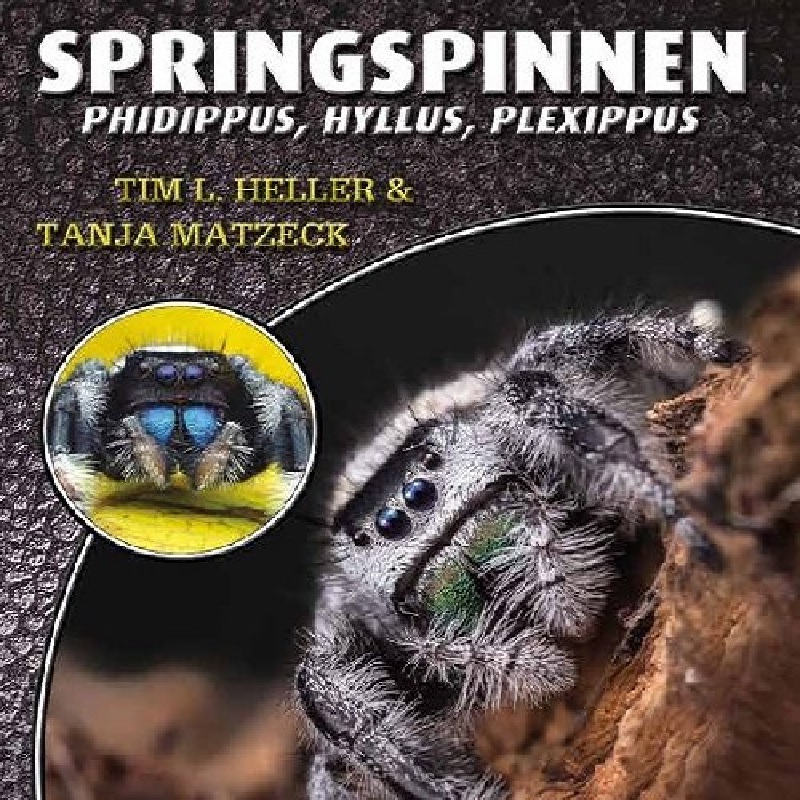
Jumping spiders Phidippus, Hyllus, Plexippus
Book Jumping Spiders - Phidippus, Hyllus & Plexippus A guide to keeping jumping spiders of the genera Phidippus, Hyllus & Plexippus. Who can resist the charm of jumping spiders? The childlike appearance of their expressive face simply leaves no one cold! In addition, their behavior is extremely exciting to observe, their colors are bright and their requirements for species-appropriate keeping are very easy to meet. No wonder these likeable jumpers are all the rage! This volume in the "Species by Species" series describes in detail what to look out for when buying and keeping them, introduces the most commonly kept species and color forms and provides plenty of tips on how to keep them successfully - so you can be sure they will breed well! Species by Species introduces you to the books in this series, which present the most popular terrarium animals. Each volume offers you detailed, practical care instructions and all the information you need to successfully breed your animals. All important questions from the required tank size to terrarium set-up, technical equipment, species-appropriate nutrition and disease prevention are answered with numerous tricks and tips. Experienced, long-standing breeders reveal how you can encourage the animals to reproduce and raise healthy young. All this in full color, generously illustrated and attractively designed - just about your terrarium animal - species by species

CHF 23.90

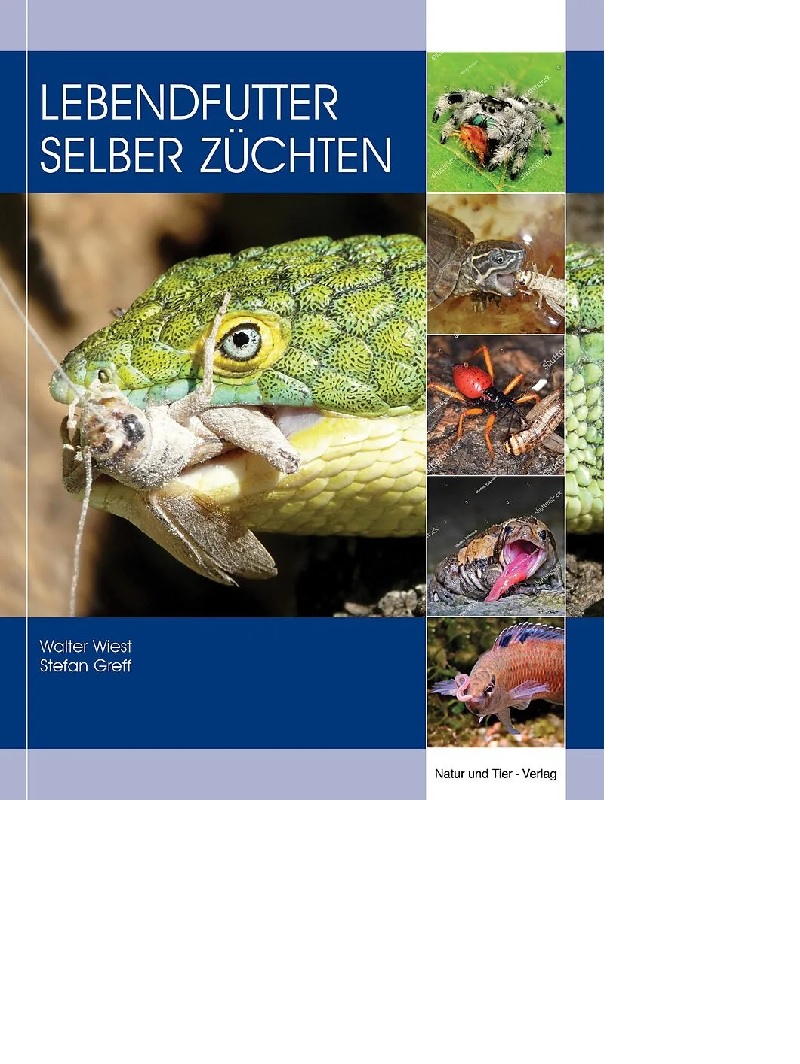
Book Breeding live food yourself
Book "Grow your own live food" - The perfect guide for pet owners Discover practical and detailed instructions on how you can easily breed food for your reptiles, birds, fish or other animals yourself in the book "Breeding live food yourself". With valuable tips on various food insects, their care and breeding, you can save money and ensure a species-appropriate diet for your pets. Contents of the book: Step-by-step instructions for breeding feeder insects Information on the best types of food for reptiles, birds and fish Care instructions and breeding conditions for various live food species Tips for sustainable and cost-effective food production Why breed your own live food? Get healthy, fresh food for your animals Save money and reduce dependence on pet shops Promote the health and well-being of your animals with species-appropriate food Whether you are a beginner or an experienced pet owner, this book provides you with everything you need to successfully breed live food yourself.

CHF 46.50

Marginata 69 - New Guinea tortoises
Marginata 69 - New Guinea tortoises – the genus ElseyaCover storyThe unrecognised beauties: New Guinea tortoises (Andreas S. Hennig)My experiences with Branderhorst's New Guinea tortoise, Elseya (Elseya) branderhorsti (Ouwens, 1914) (Andreas S. Hennig)Keeping and breeding of Rhodin's New Guinea tortoise, Elseya (Hanwarachelys) rhodini Thomson, Amepou, Anamiato & Georges, 2015 (Andreas S. Hennig)PortraitGeoemyda spengleri, Chinese serrated tortoise (Andreas S. Hennig)ReportageMacrochelys temminckii – Experiences and impressions with vulture tortoises part 2 (Reiner Praschag)KeepingAn alternative to year-round keeping of the Egyptian tortoise in the terrarium – my experiences with seasonal outdoor keeping of Testudo kleinmanni (Ricarda Schramm)EtymologySawbacks and living maps part 4: Graptemys gibbonsi, Pascagoula humpback tortoise (Holger Vetter)Classifieds & animal placement

CHF 16.50

Terraria 02 - Monitor lizards and crustacean lizards
Terraria 02 - Monitor lizards and crustacean lizards Puebla King SnakeDevil's Flower Contents: 2 Editorial Axel Kwet TITLE TOPIC 4–23 • Crustacean lizards and monitor lizards: New and familiar facts about the four-footed poisonous clan Hans-Georg Horn SCIENCE 24 Herpetorama New amphibian family tree highly controversial / New names for well-known poison dart frogs 30 New species Melanophryniscus admirabilis – a brightly coloured “black toad” 32 Among researchers In the shadow of the saw – Amphibian communities in selectively logged tropical forests Raffael Ernst 36 My Home Is My Castle Experiences with the self-construction of a terrarium for a Yemen chameleon Frank Angermann 40 A new way to disinfect terrariums Hans-Peter Berghof and Ulf Schwabe 44 Melanophryniscus – not just black toads Part 1: General information on the genus Melanophryniscus Axel Kwet 54 Ornate turtles – the genus Pseudemys Part 1: Introduction, systematics, production and trade Andreas S. Hennig 59 Keeping and breeding the Puebla King Snake, Lampropeltis triangulum campbelli Thorsten Schmidt 63 The devil's flower Idolomantis diabolica (Saussure, 1869) Part 1 Christian J. Schwarz, Jürgen E. Mehl and Jürg Sommerhalder TRAVEL 71 In the land of the Jacarés – the Pantanal Part 2 Heiko Werning TERRARIUM PRACTICE 82 Test run Artificial rock furnishings from Exo Terra84 Prelude A good start: the leopard gecko (Eublepharis macularius) Sven Zeeb 88 Eye-catcher The rainforest in your living room Mike Zawadzk 93 Also in your neighbourhood 96 TERRAnet Of snakes and poisonous snakes 98 TERRAglobal Santa Catalina – Island of the rattleless rattlesnakes Karl H. Switak A new workplace, a plethora of new animals Mirco Solé 103 Preview 104 TERRAwinn

CHF 11.20

Reptilia 52 - Maci frogs
Reptilia 52 - Maci frogs Wrath snakesSnake processionFishing spiders Contents: 2 EDITORIAL 6 MAGAZINE 16 DATES 20 PHOTO REPORTAGE The fairies of the forestThe Maci frogs of the genus Phyllomedusaby E. Biggi 31 HERPETOFAUNAThe Brazilian Maci frog Phyllomedusa burmeisteri by J. Bertoluci, P. S. Santos, M. A. S. Canelas & J. Cassimiro 35 KEEPING AND BREEDINGThe breeding of the giant Maci frog, Phyllomedusa bicolor by S. Soden 41 TRAVELThe emerald lizard forest of CaorleHerpetological observations between Venice and Trieste by S. Meyer 51 PORTRAIT AND POSTERLeiocephalus carinatusby K. Kunz 56 HERPETOFAUNAThe wrath snakes of North Africa by U. Schlüter 66 KEEPING AND BREEDINGA pirate's lifeKeeping and breeding the fishing spiders Ancylometes - Part 1 by K. Kunz 72 HERPTOCULTUREThe snake procession of Coculloby M. Meyer 79 REPTILIA ON THE ROADThe South America rainforest house in Krefeld Zooby A. Hauschild 86 LIBRARY 90 CLASSIFIEDS 95 WESTERN HERP PERSPECTIVESA lovely herping placeby B. Love 104 GLOSSSpider webs – spider lifeby H. Werning

CHF 11.20

Terraria 37 - The correct light
Terraria 37 - The right lightSchool vivariumAtelopus hoogmoediContents:Cover story: The right lightHardly any other topic in terraristics is as important and at the same time as intensively discussed as the right terrarium lighting. What do you need to look out for to ensure that your pets get the best possible replacement for sunlight in their terrarium? What do you think of new lighting technologies such as LEDs? And: How do reptiles actually perceive light? The cover story of the next issue attempts to provide some answers. TerritorialHerpetoramaTOPICThe fluorescent tube - a classic newly illuminatedSteven ArthThe use of UV measuring devices in terraristicsSarina WunderlichColour temperature and colour rendering index: Useful parameters in terraristicsSarina WunderlichPANORAMATerraglobal: Close to death, part 2Joachim BulianSince when do agamas eat peanuts - and crocodile bread?Alfred SchleicherThe school vivarium at the Edith-Stein-Schule in Erfurt - much more than just animals at schoolRica Kepter & Achim KempterRESEARCHNew species: The frog and the prince - splendid tree frogs from EcuadorAxel KwetAmong researchers: Inhabitants of the elfin forest: Herpetofauna at Picu La Picucha in the Sierra de Angalta National Park, HondurasAlexander GutscheNews from Indochina: The amphibians and reptiles of the Cat Thien National Park in South VietnamPeter GeisslerSalamandraTERRARISTICSClassic: The DreicksnatterExperiences in rearing spiny-edged soft-shelled turtles (Apalone spinifera)Sebastian NicklFirst successful breeding of the short-toed toad Atelopus hoohmoedi at the Aquazoo/Löbbecke Museum in DüsseldorfSandra Honigs, Marc Messing & Beate PelzerSome additional information on the article about the mysterious death of hatchlings of the green tree pythonJoachim BulianNATURE AND SPECIES CONSERVATIONField notes: Toad under iceStefan MeyerLate reproduction of the fire-bellied toad in SaxonyWolf-Rüdiger Grosse & Andreas NöllertTwo examples of accidental anthropogenic displacement of lizards due to their flight behaviourAndreas ArnoldMissing: Pinta giant tortoise (Chelonoides abingdonii)Also in your neighbourhoodSubscription & ServiceGALERIAKomodo’s Centenarian DragonsPreviewBRUTKASTENCrocodile alarm at the swimming lake: human tragedy narrowly avertedJakob Hein

CHF 12.00

Reptilia 119 - Chameleons
Reptilia 119 - Chameleons Fear of snakesAlpine salamanderFloridaContents:Cover story: ChameleonsThey used to be considered untenable, but today they are among the most popular terrarium animals. Chameleons, the "dragons of our time". We indulge in pictures of these extremely photogenic animals, present in detail the keeping and breeding of one of the most prominent representatives of this group, the lobed chameleon, and devote ourselves to the legendary colour-changing ability of these lizards. EditorialMagazineDates Photo storyChameleons. Always something newN. Lutzmann Keeping and breedingKeeping and breeding the elephant-eared chameleon (Trioceros melleri)C. Malberg & A. Schäberle ResearchInfluence of various factors on colour change in the Yemen chameleon (Chamaeleo calyptratus) and the Madagascar giant chameleon (Furcifer oustaleti)A. Schmidt MAN AND ANIMALFear of snakes: innate, learnt or groundless?D. Schmidt ReportageViper snakes for breakfast. Observations of Natrix maura in southern PortugalW. & Y. Lantermann SERVICEALSO NEAR YOU Animals of our homelandThe Alpine SalamanderR. Leptien LIBRARY WESTERN HERP PERSPECTIVESEuropeans are known for …B. Love TRAVELThe great trek.  Part 2: Spring rivers and eternal swampsH. Werning PREVIEW BRUTKASTEN The spider's web (or: Stuttgart 21 will not be the last victim of these green lizard spiders)Ancestor

CHF 12.00

Draco 59 - Spectacular invertebrates
Draco 59 - Spectacular Invertebrates Contents: Editorial Spectacular diversity in the terrariumTimm AdamGreat jumpers – jumping insects in the terrariumTimm AdamGiant water bugs (Belostomatidae) and water scorpions (Nepidae) in the aquaterrariumTimm Adam & Hermann ElsasserSpectacular arachnids: whip spiders and whip scorpionsMichael SeiterThe largest invertebrates in the terrarium Timm AdamEnigmatic creatures: hooded spidersFrederic Schramm, Michael Seiter & Johannes NiglSymphony in blue – The large diplurid Linothele megatheloides in ColombiaJorge Cañas-Orozco Giant beetles: armoured insect giantsTom Schouteet & Mark van Bergen   The extraordinary arthropods of the family LiphistiidaeIngo Wendt & Frank Schneider

CHF 32.00

Draco 61 - Eggsnakes
Draco 61 - Egg snakesContents:EditorialThe pacifists among snakes – African egg-eating snakes of the genus DasypeltisHelmut Göthel Pre-packaged food - bird eggs as a food sourceHelmut GöthelThe feeding behaviour of African egg snakesHelmut Göthel Evolutionary biological considerationsHelmut GöthelMimicry and defensive behaviour in egg snakesHelmut Göthel African egg snakes in the terrariumHelmut GöthelBreeding of African egg snakes Helmut Göthel Diseases and parasites in egg snakesHelmut GöthelThe egg snake species of AfricaHelmut GöthelThe Indian egg snake, Elachistodon westermanniHelmut Göthel

CHF 32.00

Draco 44 - Constrictor
Draco 44 - Giant SnakesContents:EditorialReproduction and breeding of giant snakesDieter SchmidtMating triggers in giant snakesMichaela & Marco SchulzeA few thoughts on feeding giant snakesErich Koerber & Christian BittnerPregnancy and confinement of boas - initial care of offspring and possible complicationsHermann & Erika StöcklAn aberrant form of Boa constrictor longicauda – the ‘Zeros’Hermann & Erika StöcklThe green tree python - success through natural breedingMichèl KroneisKeeping and breeding the Jungle carpet python, Morelia spilota cheyneiSteven Arth & Sandra BausKeeping and breeding the Woma, Aspidites ramsayiManuel Uhlhaas & Philipp Pohlscheid

CHF 18.40