Reptilia 72 - Grasshoppers, crickets, house crickets

Article no: reptilia72

CHF 12.00

Stock: 0

Ready for dispatch in 1-3 days, delivery time 7 working days

Delivery between Friday, 4 December and Monday, 7 December
Zahlungsarten
Product information "Reptilia 72 - Grasshoppers, crickets, house crickets"

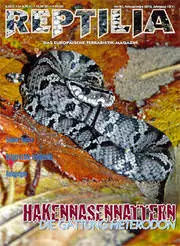
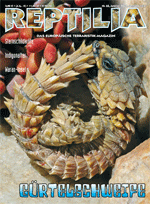
Reptilia 72 - Grasshoppers, Crickets, House Crickets

Jamaican Anole
Indochinese Hinged Turtle
Sunglow Boas

Contents:

  • 2    EDITORIAL
  • 4    REPORTAGE
          Potential Dangers of Giant Snakes
          by B. Akeret
  • 13  MAGAZINE
  • 21  DATES
  • 24  PHOTOSTORY
          Crickets and Grasshoppers
          by F. Tomasinelli
  • 32  REPORTAGE
          Grasshoppers:
          Defence and Survival
          by F. Tomasinelli
  • 36  KEEPING AND BREEDING
          The Egyptian Migratory Locust
         Anacridium aegyptium
         by A. Mangoni
  • 40  REPORTAGE
          Lord of the Bugs
          Visiting Europe’s Largest
          Breeding Facility for Feeder Insects
          by H. Werning
  • 54  HERPETOFAUNA
          The European Tree Frog (Hyla arborea)
          “Frog of the Year” in the “Year of the
          Frog 2008”
          by A. Kwet, A. Nöllert & A. Geiger
  • 64  KEEPING AND BREEDING
          Successful Keeping and Offspring of
          Cistoclemmys (galbinifrons) bouretti,
          the Indochinese Hinged Turtle
          by W. & K. Heuberger
  • 73  TRAVEL/KEEPING AND BREEDING
          Jamaica, its Iguanas and the
          Giant Anole Anolis garmani
          by T. Baum
  • 81  KEEPING AND BREEDING
          And the Sun Rises … the Sunglow Boa
          by R. Ihle & J. Bergman
  • 86  WESTERN HERP PERSPECTIVES
          A Turtle Story
          by B. Love
  • 91  LIBRARY
  • 104 BRUTKASTEN
          Thoughts on the Day of Milk Suffering
          by H. Werning
Composition
Feeding recommendation
Technical details
Size information

0 out of 0 reviews

Give us a rating!

Share your experience with the product with other customers.


Customers also bought

Reptilia 49 - Food animal breeding
Reptilia 49 - Food animal breedingScorpion crust lizardSpotted pythonChinese mountain dragonContents: 2 EDITORIAL 4 READER LETTERS 5 MAGAZINE 14 DATES 18 WESTERN HERP PERSPECTIVESHurricane Sale in Floridaby B. Love 20 PHOTO REPORTAGE Breeding food animals yourself - a problem?by F. Bruse & H. Werning 27 REPORTAGEEfficient and productive cricket breeding by F. Bruse 33 REPORTAGEBreeding the chocolate cockroach (Shellfordella tartara) by F. Bruse 36 REPORTAGEA simple Drosophila breeding project by F. Bruse 40 HERPETOFAUNANotes on the Motagua lizard (Cnemidophorus motaguae) by U. Schlüter 43 TRAVELHerpetological observations and more from Gambia by U. Thieme 51 PORTRAIT AND POSTERGeoclemys hamiltoniby H. - D. Philippen 56 KEEPING AND BREEDINGKeeping and Breeding the Chinese Mountain Agame (Japalura splendida) by H. Schradin 68 HERPETOFAUNADendrobates pumilioThe strawberry frog on the Bocas Islands by B. Schwarz 72 KEEPING AND BREEDING The black Mexican chain snake (Lampropeltis getula nigrita in the terrariumby M. Thums 79 REPORTAGEAntaresia maculosa (PETERS, 1873)Spotted pythonby D. Hasselberg 85 CLASSIFIED ADS 90 RAT & TAT 93 LIBRARY 104 GLOSSESIn search of Uracentron azureumPart 1by H. Werning

CHF 11.20

Reptilia 81 - Hognose snakes
Reptilia 81 - Hook-nosed snakes Samar cobraPantanal flatback turtleGalápagos Contents: The hook-nosed snakes of the genus Heterodon are currently experiencing an unimagined terraristic boom. Previously rather underappreciated, various very attractive colour forms have recently been bred, and this has led to a real boom. But even the normally coloured animals – and the natural spectrum of the eastern hook-nosed snake in particular covers an extremely wide range of colours – are extremely lovable terrarium pets.We present all species in detail, offer detailed breeding reports even on rarer forms, and a splendidly illustrated overview of current developments in colour variety breeding is of course also included. EDITORIAL MAGAZINE DATES PHOTOSTORY Hooked on Hogs! Hooked on hook-nosed snakes by K. Kunz KEEPING AND REPRODUCTION The Western hook-nosed snake of North America "trend snake" by B. Bumgardner HERPETOFAUNA Unleashed East! – The Eastern hook-nosed snake, Heterodon platirhinos by L. Spinner KEEPING AND REPRODUCTION Small but mighty! The Southern hook-nosed snake by K. Kunz & N. Nickel HERPETOFAUNA The Pantanal flatback turtle, Acanthochelys macrocephala – A turtle that still raises many questions by T. & S. Vinke PORTRAIT AND POSTER Gekko gecko (Linnaeus, 1758). Tokay gecko von M. Gaulke TRAVEL In the footsteps of Darwin through South America Part 4: Galápagos – The Darwin Archipelago by H. Werning KEEPING AND REPRODUCTION Keeping and breeding Samar cobra (Naja samarensis) by C. Frömberg KEEPING AND REPRODUCTION Sicarius terrosus in the terrarium by R. Hübers ANIMALS OF OUR HOME The forest lizard by R. Leptien WESTERN HERP PERSPECTIVES The big frost by B. Love LIBRARYBook review: Fläschendräger & Wijffel (2009): Anolisby U. Bartelt SUBSCRIPTION & SERVICE ALSO NEAR YOU PREVIEW BRUTKASTEN Alone among sheep. Part 1 by H. Werning

CHF 12.00

Reptilia 98 - Sick due to reptiles? About the [alleged] danger of salmonella
Reptilia 98 - Sick due to reptiles? About the [alleged] danger of salmonella Drosophila food animal breedingUnderwoodisaurus miliiToad-headed tortoises Contents: EDITORIALMAGAZINEDATES AROUND THE WORLD IN 5 YEARSTree creepers instead of flowersA. Pachmann WESTERN HERP PERSPECTIVES   American herp problemsB. Love REPORTAGEAttack with bioweapons: Salmonella tactics against the terrarium hobbyH. Werning ReportageSalmonella in amphibians and reptiles. The importance of terrarium animals as sources of infection for humansF. Mutschmann HerpetofaunaPhrynops. The genus of toad-headed tortoisesH. - D. Philippen ReportageIn the land of the golden ants. Splendour to the end of the worldM. Freuding Keeping and breedingThe Australian fat-tailed gecko, Underwoodisaurus miliiS. Arth & S. Baus Terrarium practiceCursed in the kitchen, loved in the terrarium: fruit fliesU. Dost Terrarium displaysLa Ferme aux Crocodiles in Pierrelatte/Southern FranceM. Dieckmann LibraryTest runTips & tricksSUBSCRIPTION & SERVICEALSO NEAR YOU TRAVELDzanga-Sangha. In search of frogs between elephants and gorillasJ. M. Dehling & D. M. Dehling PREVIEWBRUTKASTENSpecies protection reportH. Werning

CHF 12.00

Reptilia 115 - Adders for the terrarium
Reptilia 115 - Adders for the Terrarium Flamingo flowersBlue rock iguanaNew Zealand mantis Contents:Cover story: Adders for the TerrariumAdders are among the classic and most popular terrarium animals. This extremely species-rich group of snakes has produced some of the most popular reptile pets. We provide an overview of the terrarium-relevant species and focus in particular on those adders suitable for beginners, among which there are many truly perfect pets. But we also have a real beauty for advanced keepers and report on the keeping and breeding of red bamboo adders. EditorialMAGAZINEDATES WESTERN HERP PERSPECTIVESThe dark sideB. Love FotostoryEvergreens in the terrarium: AddersK. Kunz PracticeAdders. Species and tips for beginnersD. Schmidt Husbandry and breedingThai bamboo adders (Oreocryptophis porphyraceus coxi) in the terrariumM. Hornig Husbandry and breedingThe New Zealand mantis, Orthodera novaezealandiae. A praying mantis from the other side of the worldB. Fuhrmann & C. Sehorz Husbandry and breedingThe keeping and breeding of the Blue rock iguana (Petrosaurus thalassinus) in the terrariumJ. Schulz PlantsArum family in the terrarium. Part 3: The genus AnthuriumB. Akeret Husbandry and breedingFirst ever natural rearing of the critically endangered Philippine crocodiles (Crocodylus mindorensis) in Europe successfulT. Ziegler, A. Rauhaus & C. Niggemann, AG Zoological Garden Cologne Animals of our homelandThe fire salamanderR. Leptien ALSO IN YOUR AREA Service TravelOn an excursion through the Colombian Amazon rainforestJ. Cañas-Orozco PREVIEW INCUBATOR Attention – more cat contentH. Werning

CHF 12.00

Reptilia 65 - Girdled lizards
Reptilia 65 - Girdled TailStar tortoiseIndigo snakeMonitor IslandContents: 2 EDITORIAL 3 READER LETTERS 4 MAGAZINE 12 DATES 14 WESTERN HERP PERSPECTIVESA country tripFrom B. Love 16 PHOTO REPORTAGEBelt-tailed lizards – the genus CordylusBy H. Schwier 24 KEEPING AND REPRODUCTIONDwarf Belted Tails: keeping and Breeding of Cordylus tropidosternum(Cope, 1869)From P. Fritz 32 KEEPING AND REPRODUCTIONCordylus mossambicus FitzSimons, 1958A persistent and interesting keeperFrom H.-P. Berghof 40 HERPETOFAUNAThe giant belted skink Cordylus giganteus – unique and mysterious at the same timeFrom H. Schwier 45 REPORTAGEThe radiated tortoise of Madagascar -an armoured beautyFrom J. Hammer 51 PORTRAIT AND POSTERPhilothamnus punctatusFrom M. Dobiey 56 KEEPING AND REPRODUCTIONNewts of the genus Paramesotriton- The Vietnamese and Laotian warty newtsFrom P. Bachhausen 64 KEEPING AND REPRODUCTIONDrymarchon couperi – the Eastern Indigo SnakeFrom N. Miele 72 TRAVELThe island of the monitor lizardsFrom A. Gumprecht 88 FAQ - FREQUENTLY ASKED QUESTIONSCorn snakesBy K. Kunz 92 REPORTAGESerpentário SanmaruFrom M. Junge 95 LIBRARY 104 BRUTKASTEN Chicken heart, be braveBy H. Werning

CHF 11.20

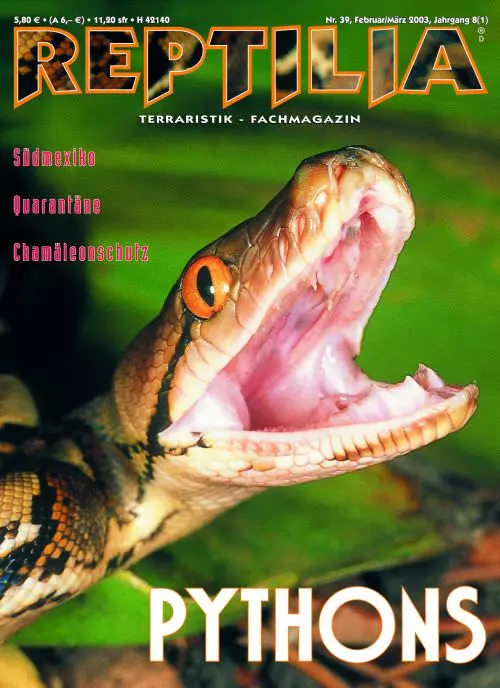
Reptilia 39 - Pythons
Reptilia 39 - Pythons Southern MexicoQuarantineChameleon protection Contents: 2 EDITORIAL 3 READER LETTERS 7 MAGAZINE 17 DATES 20 WESTERN HERP PERSPECTIVESNew citizenby B. Love 22 PHOTO REPORTAGE Pythonsby V. Franz 30 KEEPING AND BREEDINGMorelia spilota – Keeping and breeding the Diamond Python by U. Amundsen 34 KEEPING AND BREEDINGPython anchietae – Keeping and breeding the Angolan Python by V. Franz 37 REPORTAGEFascination record snake. Part 1: From childhood dream to research by H. Bellosa 40 TRAVELSouthern Mexicoby S. Vogler 51 PORTRAIT AND POSTERGeochelone nigraby H. Werning 56 REPORTAGEChamaeleo africanus in Europe: On a conservation project to preserve a reptile species threatened with extinction in Europeby B. Trapp 62 HerpetofaunaContribution to the knowledge and first report on breeding the Vietnamese swamp turtle, Mauremys annamensis (SIEBENROCK, 1903)by M. Schilde 66 REPORTAGEHow should a professional quarantine be carried out?by T. Eisenberg 72 REPORTAGEFire-bellied newts of the genus Cynops. Part 2: Breeding and newt registerby P. Bachhausen 78 REPORTAGEWith pencil and ink: treasures conjured on paperby R. Fenske 88 CLASSIFIED ADS 90 RAT & TAT 93 LIBRARY 104 GLOSSState guest in Chileby H. Werning

CHF 11.20

Suggested products

Handbook of food plants for tortoises and other reptiles
Handbook of forage plants 2nd revised editionMarion Minch is not only a successful breeder of diverse tortoises for many years, but also an excellent connoisseur of native wild herbs. She founded and runs samenkiste.de, which is well known to many tortoise keepers and nature lovers. Her name is inextricably linked with reptile care and species-appropriate nutrition for tortoises. Her handbook of food plants summarises the most important native food plants for herbivorous and omnivorous reptiles. She not only considers tortoises, but also iguanas, spiny-tailed dragons and even chameleons. From the basics of plant biology to native wild herbs to suitable food plants for hardy tropical reptile species, this comprehensive work provides the basis for species-appropriate keeping. In the expanded and supplemented 2nd edition, the plant section is divided according to flower colour. This makes it even easier to identify wild herbs. The work has also been supplemented with a wealth of additional information and many pictures.

CHF 46.50

Geckos
Geckos in the terrarium by Astrid FalkThe book offers a comprehensive introduction to geckos and their species-appropriate keeping in terrariums. It explains what you need to think about before buying a gecko and what preparations should be made. The book describes in detail how the terrarium is technically equipped and set up. The care of the animals, their special features and behaviour, their diet, reproduction and rearing of young animals are described, as well as diseases and husbandry problems with tried and tested suggestions for prevention and treatment. Individual gecko species that are particularly suitable for keeping and breeding in terrariums are portrayed in detail in the second part of the book.

CHF 28.50

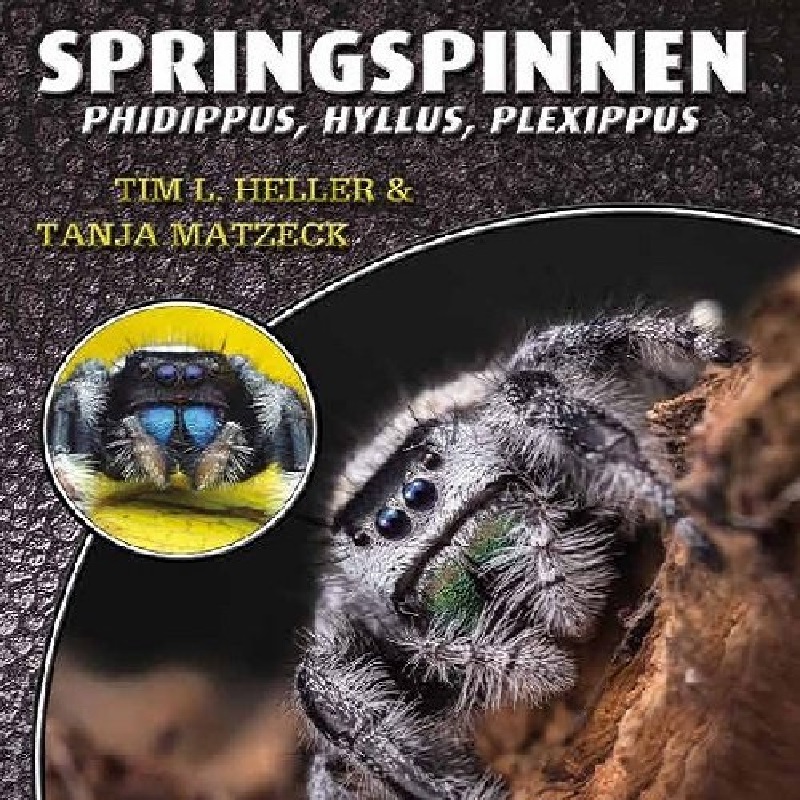
Jumping spiders Phidippus, Hyllus, Plexippus
Book Jumping Spiders - Phidippus, Hyllus & Plexippus A guide to keeping jumping spiders of the genera Phidippus, Hyllus & Plexippus. Who can resist the charm of jumping spiders? The childlike appearance of their expressive face simply leaves no one cold! In addition, their behavior is extremely exciting to observe, their colors are bright and their requirements for species-appropriate keeping are very easy to meet. No wonder these likeable jumpers are all the rage! This volume in the "Species by Species" series describes in detail what to look out for when buying and keeping them, introduces the most commonly kept species and color forms and provides plenty of tips on how to keep them successfully - so you can be sure they will breed well! Species by Species introduces you to the books in this series, which present the most popular terrarium animals. Each volume offers you detailed, practical care instructions and all the information you need to successfully breed your animals. All important questions from the required tank size to terrarium set-up, technical equipment, species-appropriate nutrition and disease prevention are answered with numerous tricks and tips. Experienced, long-standing breeders reveal how you can encourage the animals to reproduce and raise healthy young. All this in full color, generously illustrated and attractively designed - just about your terrarium animal - species by species

CHF 23.90

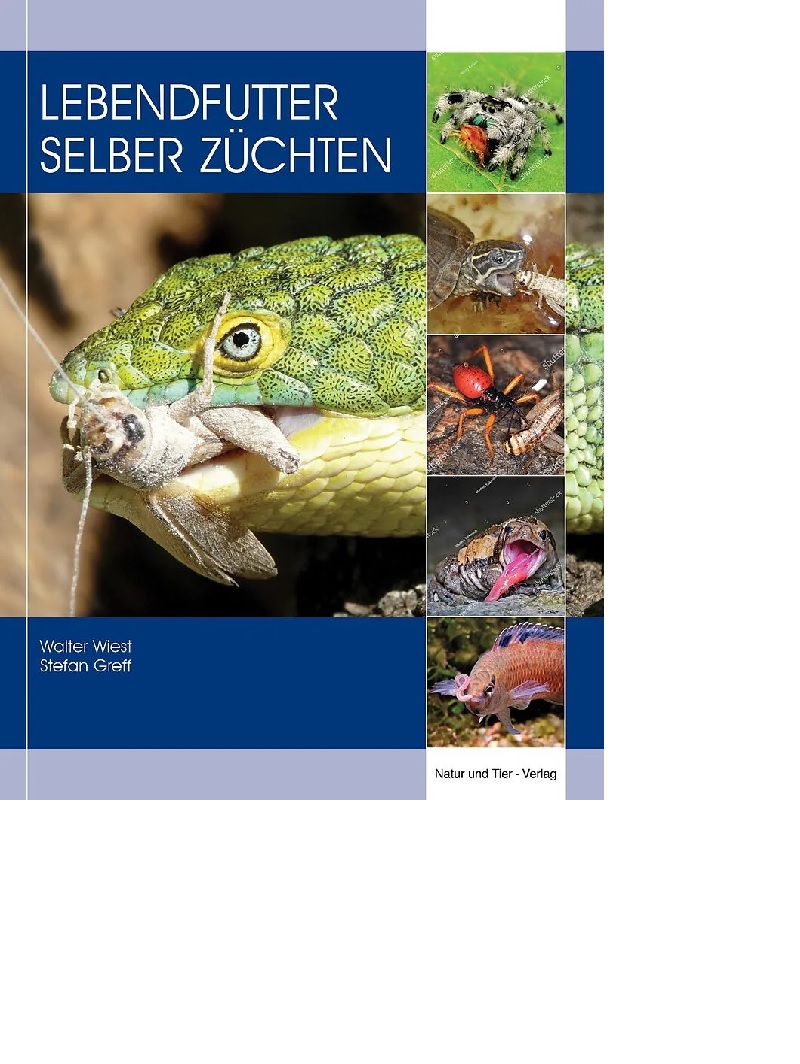
Book Breeding live food yourself
Book "Grow your own live food" - The perfect guide for pet owners Discover practical and detailed instructions on how you can easily breed food for your reptiles, birds, fish or other animals yourself in the book "Breeding live food yourself". With valuable tips on various food insects, their care and breeding, you can save money and ensure a species-appropriate diet for your pets. Contents of the book: Step-by-step instructions for breeding feeder insects Information on the best types of food for reptiles, birds and fish Care instructions and breeding conditions for various live food species Tips for sustainable and cost-effective food production Why breed your own live food? Get healthy, fresh food for your animals Save money and reduce dependence on pet shops Promote the health and well-being of your animals with species-appropriate food Whether you are a beginner or an experienced pet owner, this book provides you with everything you need to successfully breed live food yourself.

CHF 46.50

Marginata 69 - New Guinea tortoises
Marginata 69 - New Guinea tortoises – the genus ElseyaCover storyThe unrecognised beauties: New Guinea tortoises (Andreas S. Hennig)My experiences with Branderhorst's New Guinea tortoise, Elseya (Elseya) branderhorsti (Ouwens, 1914) (Andreas S. Hennig)Keeping and breeding of Rhodin's New Guinea tortoise, Elseya (Hanwarachelys) rhodini Thomson, Amepou, Anamiato & Georges, 2015 (Andreas S. Hennig)PortraitGeoemyda spengleri, Chinese serrated tortoise (Andreas S. Hennig)ReportageMacrochelys temminckii – Experiences and impressions with vulture tortoises part 2 (Reiner Praschag)KeepingAn alternative to year-round keeping of the Egyptian tortoise in the terrarium – my experiences with seasonal outdoor keeping of Testudo kleinmanni (Ricarda Schramm)EtymologySawbacks and living maps part 4: Graptemys gibbonsi, Pascagoula humpback tortoise (Holger Vetter)Classifieds & animal placement

CHF 16.50

Reptilia 77 - Moss frogs - the genus Theloderma
Reptilia 77 - Moss frogs - the genus Theloderma Travelling antsStar tortoiseAnolis roquet summus Contents: The fantastic masters of camouflage of the Asian frog genus Theloderma (moss or lichen frogs) are highly sought-after, extremely attractive terrarium inhabitants. Several species are endangered and urgently require conservation breeding projects – another reason to strive for their propagation. And the fact that their representatives also display many interesting behaviours, such as waving with the hind legs or “toe-twitching” in the context of catching prey, makes working with them even more exciting.REPTILIA editor Kriton KUNZ, who maintains one of the world’s most species-rich Theloderma collections, along with the Russian Theloderma experts Sergei RYABOV and Ivan ARININ, present these remarkable frogs in detail in the feature topic of this REPTILIA. Table of contents: EDITORIAL MAGAZINEBreakthrough in REPTILIA’s nose frog project: opening of a research and breeding station in Conceptión/Chile in collaboration with Leipzig Zoovby H. Werning DATES WESTERN HERP PERSPECTIVESThe hidden value of reptile excursions vby B. Love PHOTOSTORYMarvellous masters of camouflage. The moss frogs of the genus Thelodermaby K. Kunz KEEPING AND BREEDINGKeeping and breeding of Theloderma gordoni in the terrarium vby I. Arinin KEEPING AND BREEDING Experience with the first breeding of paddle frogs of the species Theloderma horridum in the Exotic Terrarium of the City of Tula vby A. A. Evsyunin TRAVEL EPiece of paradise. The Pouso Alegre in the Brazilian Pantanal from the perspective of a reptile friend. Part 2by M. Hallmen PORTRAIT and posterKinabalu bamboo viper. Parias malcolmiby J. M. Dehling KEEPING AND BREEDING The banded hook-nosed snake of the genus Lystrophis. Keeping and breeding a little beauty by A. Hutwalker REPORT First confiscated, then bred: Star tortoises (Geochelone elegans) at Allwetterzoo Münster vby J. Scholdei REPORTTravelling ants. Predatory nomads of the tropics vby D. J. C. Kronauer KEEPING AND BREEDINGBeauty has a name: Anolis roquet summus (Lazell, 1972) vby H. Herfurth LIBRARY ALSO IN YOUR AREA SUBSCRIPTION & SERVICE PREVIEW INCUBATOR In wild Wedding. An Eastern in two parts for three young men of “southern appearance”, a reptile researcher and a cockroach – Part 2 vby H. Werning

CHF 12.00

Marginata 12 - Giant tortoises
Marginata 12 - Giant tortoises Food plants 7Flat-backed tortoisesEuropean Studbook Foundation Contents: 2 EDITORIAL 3 READER LETTERS 4 MAGAZINE 6 REPORT The giant tortoises of the Galapagos and Seychelles Islands and of the Mascarene Archipelago Roger Bour 16 BREEDING IN HUMAN CARE 15 years of experience in breeding the Galapagos giant tortoise at Zurich Zoo, Switzerland Samuel C. Furrur 24 REPORTAGE Keeping and care of Aldabra giant tortoises (Dipsochelys dussumieri) at Prague Zoo Petr Velensky & Natasha Velenska 31 PORTRAIT The yellow-spotted tortoise Hans - Dieter Philippen 35 DATES 36 SHORT REPORTAGE Limitation of outdoor enclosures for tortoises Rolf Hecht 41 REPORTAGE Food plants for tortoises (Part VII) Susanne Vogel 46 REPORTAGE Hope for the conservation of the flat-backed tortoise (Pyxis planicauda Grandidier, 1867) in its natural habitat? Roland Hilgartner & Mamisolo Raoilison Hilgartner 50 REPORTAGE European Studbook Foundation Hans - Dieter Philippen 56 OBITUARY In memoriam John L. Behler Hans - Dieter Philippen 59 SHORT REPORTAGE Hatching of an eyeless juvenile of Eurotestudo h. hermanni Heinz Frühauf 60 BOOK TIP 61 CLASSIFIEDS 62 REGIONAL GUIDE

CHF 14.70

Reptilia 70 - Mambas
Reptilia 70 - Mambas Outdoor terrariumFalse water cobraWarty newts Contents: 2 EDITORIAL 4 MAGAZINE 13 DATES 16 WESTERN HERP PERSPECTIVESDoctor Frankenstein's work continuesBy B. Love 18 PHOTO REPORTAGEMambasBy J. Valverde 26 HERPETOFAUNAObservations on the behaviour of the greencoloured mambas (Dendroaspis viridis,D. angusticeps and D. jamesoni kaimosae) in the terrariumBy R. Aeberhard 31 KEEPING AND BREEDINGDendroaspis jamesoni kaimosae –Keeping and first experiences with the breeding of Jameson's MambaBy R. Aeberhard 38 TRAVELNorth Carolina's southern coastal plain –A paradise for reptile enthusiastsBy H. Luef 51 PORTRAIT AND POSTERMauremys rivulataBy B. Trapp 55 KEEPING AND BREEDINGBreeding of the Vietnamese and theLaos warty newtBy P. Bachhausen & G. Espallargas 65 KEEPING AND BREEDINGHydrodynastes gigas – from rearing tobreeding the false water cobraBy R. Meierkord 70 HERPETOFAUNAFringed-finger lizards (Acanthodactylus) in the wild and in the terrariumPart 3: The Acanthodactylus cantoris groupBy U. Schlüter 76 REPORTAGEFrom one make two – Conversion of an outdoor terrarium for snakesPart 1: The technical side of the conversionBy M. Hallmen 85 FAQ – FREQUENTLY ASKED QUESTIONSDead leaf mantisesBy K. Kunz 91 LIBRARY 104 INCUBATOR Zoo director – Part 1By H. Werning

CHF 12.00

NTV, Discover the amphibians
NTV, Discover the amphibians and learn all about these animals. 56 pages colour photos throughout Large format: 20.7 x 28 cm Hardcover Author Kriton Kunz Contents: Every child knows a frog that swims around in its pond and croaks cheerfully, or the black and yellow fire salamander. But how do these friendly animals live? What do they eat, how do they survive the winter? How does a tadpole become a small frog? And what other amazing amphibians are there? "Entdecke die Amphibien" explains what amphibians are, their special features and their incredible abilities in an entertaining and child-friendly way. Fantastic records from the world of frogs, salamanders and the like are included, as well as an exciting quiz about these colourful survival artists. Including 20 great stickers 

CHF 17.90

Reptilia 95 - Chameleon & Co. The genus Furcifer
  Krokodil-AnlageAsiatische FalltürspinnenHaltung von Schmuckschildkröten Inhalt: Das Pantherchamäleon, Furcifer pardalis, gehört zu den beliebtesten Echsen überhaupt. Diese extrem farbenprächtigen, imposanten Chamäleons aus Madagaskar werden inzwischen in verschiedenen Lokalformen erfolgreich und dauerhaft in unseren Terrarien nachgezüchtet. Die Gattung Furcifer hält aber noch viele weitere hochinteressante Arten bereit – freuen Sie sich auf ein in jeder Hinsicht buntes Titelthema mit viel Praxisbezug! EDITORIALMAGAZINTERMINEIN 5 JAHREN UM DIE WELTBrüllaffen, Klappschildkröten und VulkaneA. PachmannWESTERN HERP PERSPECTIVESAuf Reptiliensuche in AustralienB. LoveFOTOSTORYChamäleons der Gattung FurciferP. NecasHERPETOFAUNAAbenteuer Komorenchamäleon – auf der Suche nach Furcifer cephalolepisR. LeptienPORTÄTIm Porträt: das Teppichchamäleon, Furcifer lateralis P. NecasIm Porträt: das Pantherchamäleon, Furcifer pardalisP. NecasZUCHTDie Entstehung einer neuen Designermorphe der Kornnatter (Pantherophis guttatus)A. SchmidHALTUNG UND VERMEHRUNGPhilippinenkrokodile (Crocodylus mindorensis) im Aquarium des Kölner Zoos. Teil 2: Bau einer Schauanlage für eine der am stärksten bedrohten Krokodilarten der Welt T. Ziegler, R. Sommerlad, W. Brass, K. van der Straeten, D. Karbe & A. RauhausHERPETOFAUNAAuf dem Weg ins All. Die Welt der Buchstaben-Schmuck-schildkröte, Trachemys scripta. Teil 5: Haltung und Vermehrung von Buchstaben-SchmuckschildkrötenA. S. HennigWIRBELLOSEAußergewöhnliche Falltürspinnen aus Asien: die Gattung Cyclocosmia F. Schneider, B. F. Striffler & I. WendtABO & SERVICETerrarienschauanlagen international Der „Rimba Reptile Park“ auf Bali M. HallmenTiere unserer Heimat Die ErdkröteR. LeptienBibliothekTipps & TricksTestlaufAUCH IN IHRER NÄHEREISEZwischen Anolis und Cycluren: Unterwegs auf Puerto RicoH. WerningVORSCHAUBRUTKASTENIguana chilena, Teil 2 H. Werning  

CHF 12.00

Reptilia 18 - Mimesis
Reptilia 18 - MimesisMaltaBuilding polystyrene terrariumsNutrition of tortoisesContents:Page 2 - EditorialPage 3 - Letters to the editorPage 5 - MagazinePage 11 - DatesPage 14 - Western Herp Perspectives: The Queen of Snakes, by B. LovePage 16 - Photo reportage: Mimicry, by L. AissefairePage 24 - Report: Mimicry - Saving energy through camouflage, by Dr M. GaulkePage 32 - Keeping and breeding: Like a leaf in the wind. The changing leaf Phyllum celebicum in the terrarium, by H. FischerPage 38 - Travelogue: Temples, disc tongues and reptiles - impressions of a trip to Malta, by U. SchlüterPage 43 - Photographic profile: Reptiles and amphibians in the Du Tsingy de Bamaraha nature reserve (western Madagascar), by G. Hallmann, E. Hoffmann, J. Krüger, P. Schlagböhmer and G. TrautmannPage 47 - Portrait and poster: Gastrotheca riobambae, by H. WerningPage 51 - Report: Nutrition of European tortoises, Part 2, by Dr C. DennertPage 59 - Keeping and breeding: A miniature microcodile for the paludarium - The keel skink Tropidophorus grayi, by U. DostPage 64 - Terrarium practice: Styrofoam terrariums, by D. HasselbergPage 69 - Herpetofauna: The Bismarck dwarf python Liasis boa - keeping and reproducing a colourful giant snake, by V. FranzPage 72 - Herpetology and culture: Snakes go to school - Part 2, by M. HallmenPage 81 - Reptilia on the road: Berling-Friedrichsfelde Zoo, by H. WerningPage 84 - Advice and actionPage 90 - LibraryPage 96 - Glossary: Something different, by A. Scheffler

CHF 9.80

Reptilia 99 - Saving energy in terraristics
Reptilia 99 - Saving energy in terraristics Red-backed spiderIncubation of monitor lizard eggsHind Indian hinged tortoise Contents: EDITORIALMAGAZINE AROUND THE WORLD IN 5 YEARSWaiting with turtlesA. Pachmann DATES WESTERN HERP PERSPECTIVESAgainst winter depressionB. Love PHOTOREPORTAGEEnergy revolution in the terrarium. Ideas and suggestions on how to reduce power consumption and energy costs when keeping terrarium animalsB. Akeret REPORTAGEAmphibians and reptiles in the energy-saving house. Opportunities and possibilities of the Renewable Energy Sources Act for terrarium husbandryT. Eisenberg REPORTAGELarge terrariums for giant snakes and saving energy – a contradiction?S. Müller KEEPING AND BREEDINGKeeping and breeding the red-backed spider (Latrodectus hasselti)M. Schmidt HERPETOFAUNAFringed-finger lizards (Acanthodactylus) in the wild and in the terrarium. Part 6: The Acanthodactylus-boskianus groupU. Schlüter REPRODUCTIONOn the incubation of clutches of Varanus kingorum, King's dwarf monitorR. Vitt REPORTAGELooking for snakes on a family holiday. A drama in three actsT. Schmidt REPORTAGEThe tortoises of Kalogria (Peloponnese)M. Rogner ANIMALS OF OUR HOMEThe grass frogR. Leptien Test runLibrarySUBSCRIPTION & SERVICEALSO NEAR YOU TRAVELVisiting Cuora galbinifrons on Hainan, ChinaT. Blanck PREVIEW BRUTKASTEN I would even let myself be locked up for REPTILIA – Part 1H. Werning

CHF 12.00

Customers also saw

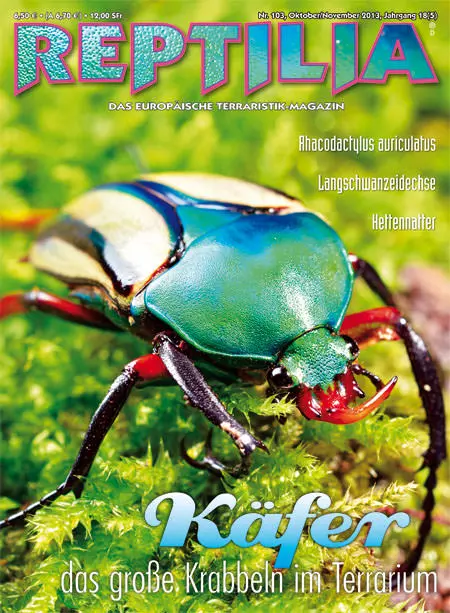
Reptilia 103 - Beetle - The big crawling in the terrarium
Reptilia 103 - Beetles - the big crawl in the terrarium Hibernation of tortoisesRhacodactylus auriculatusChain snake Contents: Beetles are right on trend in terrariums! In addition to a large number of beautiful rose beetles, many stag beetles and giant beetles are now also being successfully bred – thanks in part to new substrates such as flake soil and Kinshi. In addition, splendid, agile ground beetles, social sugar beetles or whimsical black beetles also make it into terrariums time and again. REPTILIA introduces these beautiful animals and reveals how you can achieve breeding success with these colourful Juwel. MAGAZINEDATESWESTERN HERP PERSPECTIVESAnnoying contemporariesB. Love PHOTOREPORTAGEBeetles in the terrarium – A feast of colourF. Rossow TERRARIUM PRACTICEIt all depends on the substrate!F. Rossow KEEPING AND REPRODUCTIONBeetle breeding made easy!F. Rossow KEEPING AND REPRODUCTIONRose chafer beetles – living JuwelH.-G. Kaiser KEEPING AND REPRODUCTIONThe hump-headed gecko Rhacodactylus auriculatus – a colourful representative of the New Caledonian giant geckosK.-U. Volta KEEPING AND REPRODUCTIONThe Speckled Chain Snake, Lampropeltis getula holbrooki – An underrated beautyD. Renner TERRARIUM PRACTICEHibernation of Hermann’s tortoises (Testudo hermanni boettgeri)N. Schaible ANIMALS OF OUR HOMEThe sea frogR. Leptien LibraryTips & tricksServices ALSO NEAR YOU TRAVELAmphibians and reptiles in northern AfghanistanF. Joisten PREVIEW BRUTKASTEN Island of the iguanas part 2H. Werning

CHF 12.00