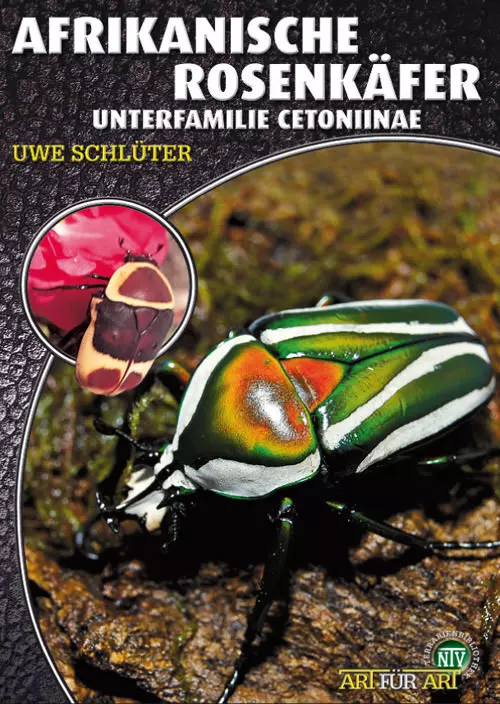
The african rose chafer

Article no: HA-AB13734

CHF 19.90

Stock: 0

Ready for dispatch in 1-3 days, delivery time 14 working days

Delivery between Friday, 4 September and Monday, 7 September
Zahlungsarten
Product information "The african rose chafer"

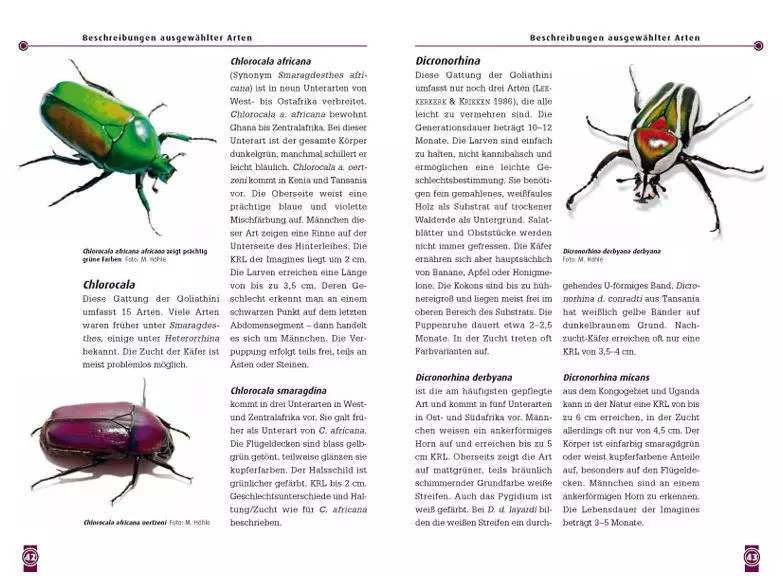
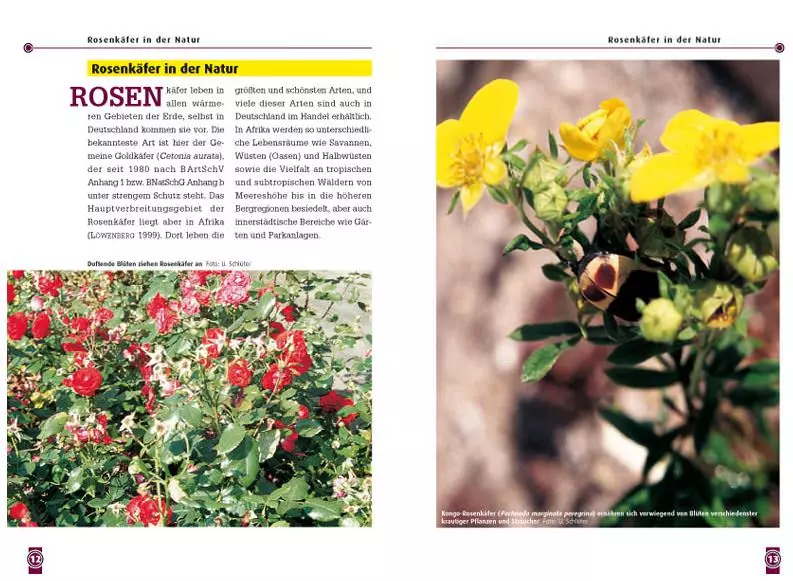
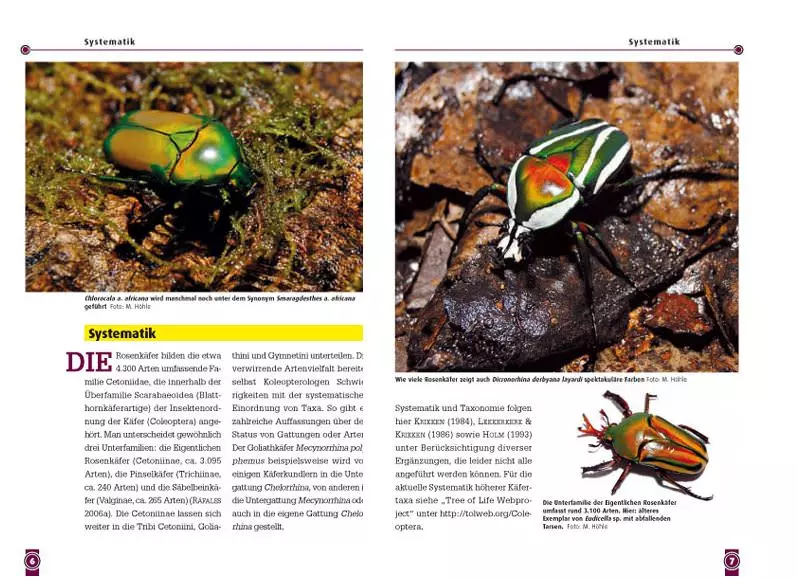
Not just food animals! Everything about keeping and caring for African rose chafer beetles at home.

  • 64 pages
  • Format: 14.8 x 21 cm
  • numerous colour photos
  • Author Uwe Schlüter

Many terrarium keepers only know them as food animals: the larvae of rose chafer beetles. However, these beautiful insects are in turn fascinating, easy-to-keep terrarium animals. Uwe Schlüter presents tropical species of rose chafer beetles from Africa that are currently in vogue, including the impressive goliath beetles. Beetle care made easy!

Contents:

  • Foreword
  • Classification
  • Morphology of rose chafer beetles
  • Imagines of the Cetoniinae
  • Larvae of the Cetoniinae
  • Rose chafer beetles in nature
  • Lifestyle and behaviour
  • Life cycle
  • Care in the terrarium
  • Acquisition and transport
  • Terrarium equipment and climate
  • Socialisation
  • Feeding of imagines and larvae
  • Reproduction in the terrarium
  • Egg laying
  • Rearing the larvae
  • Pupation and hatching of imagines
  • Descriptions of selected species
  • Further information
  • Further and used literature
Composition
Feeding recommendation
Technical details
Size information

1 of 1 reviews

3 out of 5 stars


0%

0%

100%

0%

0%


Give us a rating!

Share your experience with the product with other customers.


1 April 2021 11:36

Please deliver a little faster next time

It took a little while for the book to be delivered, but the condition of the book was perfect.

Suggested products

Handbook of food plants for tortoises and other reptiles
Handbook of forage plants 2nd revised editionMarion Minch is not only a successful breeder of diverse tortoises for many years, but also an excellent connoisseur of native wild herbs. She founded and runs samenkiste.de, which is well known to many tortoise keepers and nature lovers. Her name is inextricably linked with reptile care and species-appropriate nutrition for tortoises. Her handbook of food plants summarises the most important native food plants for herbivorous and omnivorous reptiles. She not only considers tortoises, but also iguanas, spiny-tailed dragons and even chameleons. From the basics of plant biology to native wild herbs to suitable food plants for hardy tropical reptile species, this comprehensive work provides the basis for species-appropriate keeping. In the expanded and supplemented 2nd edition, the plant section is divided according to flower colour. This makes it even easier to identify wild herbs. The work has also been supplemented with a wealth of additional information and many pictures.

CHF 46.50

Geckos
Geckos in the terrarium by Astrid FalkThe book offers a comprehensive introduction to geckos and their species-appropriate keeping in terrariums. It explains what you need to think about before buying a gecko and what preparations should be made. The book describes in detail how the terrarium is technically equipped and set up. The care of the animals, their special features and behaviour, their diet, reproduction and rearing of young animals are described, as well as diseases and husbandry problems with tried and tested suggestions for prevention and treatment. Individual gecko species that are particularly suitable for keeping and breeding in terrariums are portrayed in detail in the second part of the book.

CHF 28.50

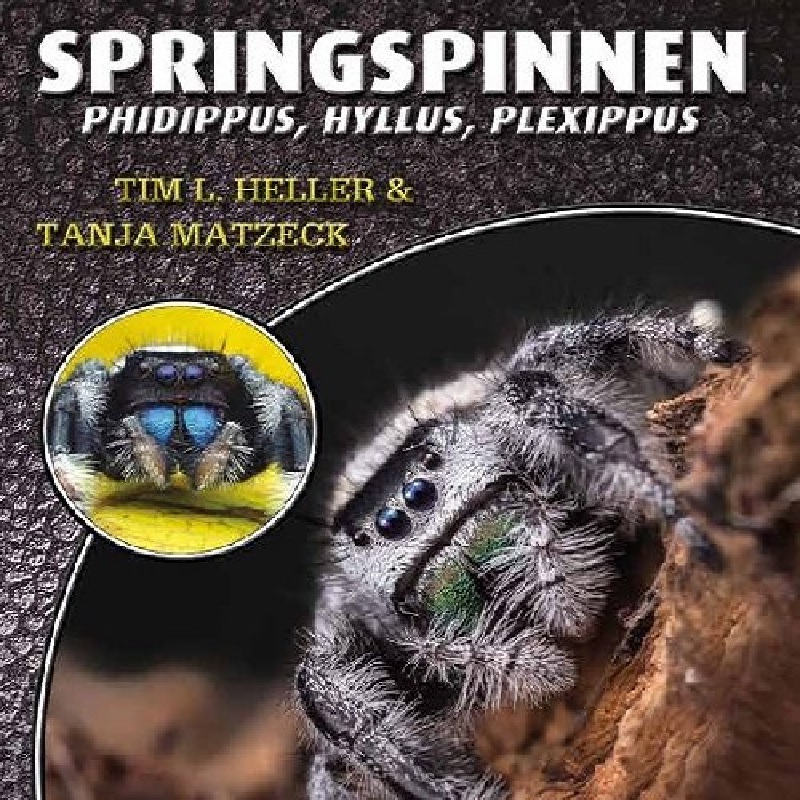
Jumping spiders Phidippus, Hyllus, Plexippus
Book Jumping Spiders - Phidippus, Hyllus & Plexippus A guide to keeping jumping spiders of the genera Phidippus, Hyllus & Plexippus. Who can resist the charm of jumping spiders? The childlike appearance of their expressive face simply leaves no one cold! In addition, their behavior is extremely exciting to observe, their colors are bright and their requirements for species-appropriate keeping are very easy to meet. No wonder these likeable jumpers are all the rage! This volume in the "Species by Species" series describes in detail what to look out for when buying and keeping them, introduces the most commonly kept species and color forms and provides plenty of tips on how to keep them successfully - so you can be sure they will breed well! Species by Species introduces you to the books in this series, which present the most popular terrarium animals. Each volume offers you detailed, practical care instructions and all the information you need to successfully breed your animals. All important questions from the required tank size to terrarium set-up, technical equipment, species-appropriate nutrition and disease prevention are answered with numerous tricks and tips. Experienced, long-standing breeders reveal how you can encourage the animals to reproduce and raise healthy young. All this in full color, generously illustrated and attractively designed - just about your terrarium animal - species by species

CHF 23.90

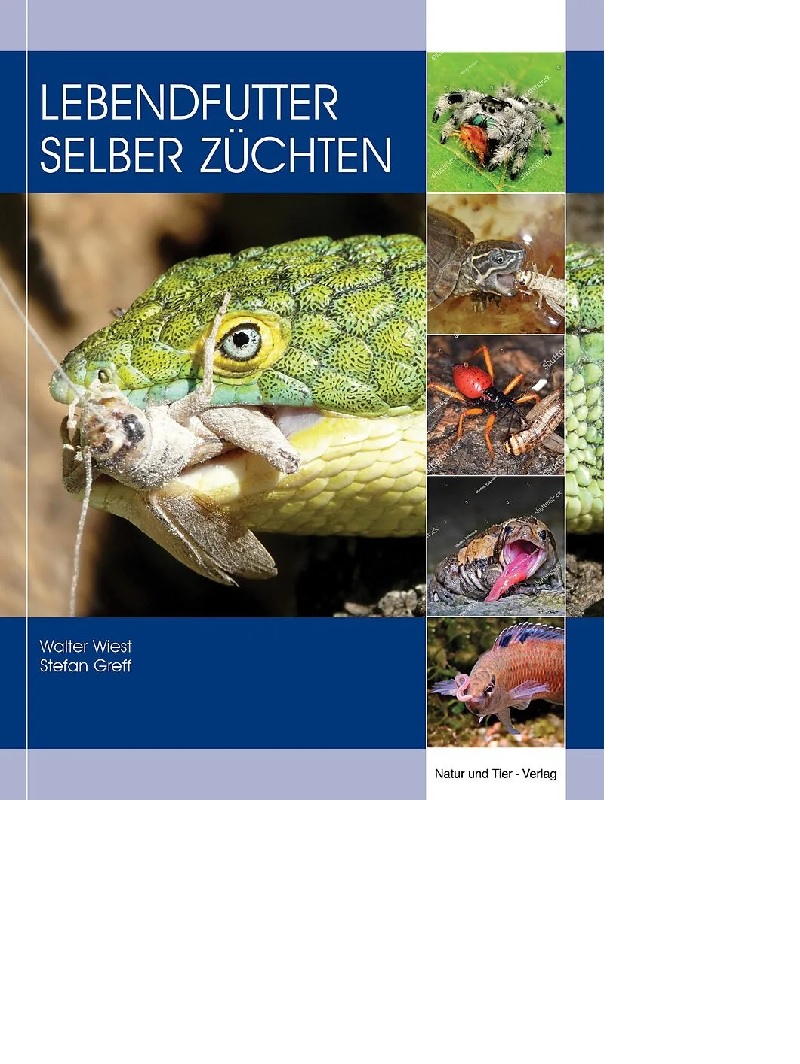
Book Breeding live food yourself
Book "Grow your own live food" - The perfect guide for pet owners Discover practical and detailed instructions on how you can easily breed food for your reptiles, birds, fish or other animals yourself in the book "Breeding live food yourself". With valuable tips on various food insects, their care and breeding, you can save money and ensure a species-appropriate diet for your pets. Contents of the book: Step-by-step instructions for breeding feeder insects Information on the best types of food for reptiles, birds and fish Care instructions and breeding conditions for various live food species Tips for sustainable and cost-effective food production Why breed your own live food? Get healthy, fresh food for your animals Save money and reduce dependence on pet shops Promote the health and well-being of your animals with species-appropriate food Whether you are a beginner or an experienced pet owner, this book provides you with everything you need to successfully breed live food yourself.

CHF 46.50

Marginata 69 - New Guinea tortoises
Marginata 69 - New Guinea tortoises – the genus ElseyaCover storyThe unrecognised beauties: New Guinea tortoises (Andreas S. Hennig)My experiences with Branderhorst's New Guinea tortoise, Elseya (Elseya) branderhorsti (Ouwens, 1914) (Andreas S. Hennig)Keeping and breeding of Rhodin's New Guinea tortoise, Elseya (Hanwarachelys) rhodini Thomson, Amepou, Anamiato & Georges, 2015 (Andreas S. Hennig)PortraitGeoemyda spengleri, Chinese serrated tortoise (Andreas S. Hennig)ReportageMacrochelys temminckii – Experiences and impressions with vulture tortoises part 2 (Reiner Praschag)KeepingAn alternative to year-round keeping of the Egyptian tortoise in the terrarium – my experiences with seasonal outdoor keeping of Testudo kleinmanni (Ricarda Schramm)EtymologySawbacks and living maps part 4: Graptemys gibbonsi, Pascagoula humpback tortoise (Holger Vetter)Classifieds & animal placement

CHF 16.50

Terraria 22 - European tortoises in the nature observe
Terraria 22 - Observe European tortoises in the wildNews from the reticulated pythonList of newly described species 2009Contents:EditorialMagazineTraditional use of the Great Honeycomb Toad (Pipa pipa) by the indigenous population of French Guiana / A success for species conservation: reintroduction of young hawksbill turtles from Frankfurt Zoo to the Seychelles / Snake booklet for the further training of biology teachers / MarketplaceTERRAglobalThe "water snake"Fabio CupulVisiting the Red-throated Leaf-tailed Gecko, Saltuarius salebrosusGunther SchmidaCover storyObserving European tortoises in the wildMichael WirthThe tortoise project of MurciaBenny TrappThe Marginated Tortoise, Testudo marginata – black giants from the Greek PhryganaMichael WirthBetween rubbish and mines: the Dalmatian tortoise Testudo hermanni hercegovinensis Part 1Michael WirthSome remarks on systematics, care and reproduction of the reticulated pythonHenry Bellosa & Ralf MößleA grateful fosterling: The Oman lizard, Omanosaura jayakari, its keeping and breeding Sascha EsserNew speciesList of amphibian and reptile species newly described in 2009Axel KwetTest runRearing racksKriton KunzNear youSubscription & ServicePreviewIncubatorAxolotl RoadwayHeiko Werning

CHF 12.00

NTV - Jewelled horn frogs The genus Ceratophrys
In NTV - Jewelled horn frogs, everything about the so-called "Pacman frogs" is explained. 160 pages 198 colour photos Paperback Genus Ceratophrys Authors Wolfgang Schmidt, Friedrich Wilhelm Henkel Big mouth - and what's behind it! Jewelled horn frogs are real character animals. They impress with their primitive, brightly coloured appearance, with the variety of species and colour morphs now available and, of course, with their irrepressible appetite, which has also earned them the name "Pacman frogs". Anyone who observes a few basic rules can easily keep these wonderful animals in a terrarium and, with a bit of luck, even get them to breed.

CHF 35.90

Reptilia 55 - Colour breeding
Reptilia 55 - Colour breedingSaharaAga toadFlorida soft-shelled turtleContents: 2 EDITORIAL 3 MAGAZINE 11 DATES 14 WESTERN HERP PERSPECTIVESTerrarium animals suitable for investmentFrom B. Love 16 PHOTO REPORTAGEColour and pattern breeding in the terrarium hobbyBy M. Hallmen 23 REPORTAGECrash course in crossbreeding geneticsBy M. Hallmen 33 REPORTAGEThe king's new clothesNew colour and pattern variations in the royal python(Python regius)By T. Kölpin 42 OPINIONRebuttal: On the sense and nonsense of "colour breeding"From H. Schneider 44 TRAVELChott el Djerid From U. Schlüter 51 PORTRAIT AND POSTERChondrodactylus anguliferBy M. Barts 56 REPORTAGEBufo marinus – on the fatal consequences of faunal distortionFrom H.-G. Horn 60 KEEPING AND BREEDINGThe European half-fingered geckoHemidactylus turcicusBy M. C. Haupt 63 HERPETOFAUNAThe black desert cobra - Ecological and behavioural biology Observations on Walterinnesia aegyptiaBy H. Esterbauer 68 HERPETOFAUNAThe Florida soft-shelled turtle (Apalone ferox)and the benefits of knowing scientific namesBy S. Barone 73 REPORTAGEHealing with snake venomsSnake venom as pain therapy for disc problemsBy W. Schäberle 76 REPORTAGESeven decades a friend of reptiles - once upon a timeFrom W. Rohdich 86 CLASSIFIED ADS 91 RAT & TAT 94 LIBRARY 104 BRUTKASTENBreakfast televisionFrom H. Werning

CHF 11.20

NTV - African white-bellied hedgehog
NTV - African white-bellied hedgehog - All about the small, prickly animals you will learn in this book. 64 pages Format: 14.8 x 21 cm numerous color photos Daniela Guist Content: Hedgehogs are simply sympathizers. Who could escape the curiosity of such a little sting-knight? It is no wonder that especially the pretty Weissbauchigel has mixed the kleinsäugerszene and now belongs in all its attractive color variants among the most popular exotics in the domestic animal husbandry. Its multifaceted behavior, the communication among each other and the family life together inspire the owner. Author Daniela Guist has been holding and breeding Weissbauchigel for a long time and is a proven expert in this field. In this book, she describes her experiences and describes in detail and practical ways how the prickly bladders are nurtured and cultivated. A must for all hedgehogs! The barbed dress distribution and habitat Transport and quarantine The enclosure Feed and water behavior health The handling of white belly offspring color forms

CHF 21.90

NTV - Terrarium technology
Book Terrarium Technology - Ingo Kober & Uwe Geissel 248 pages numerous illustrations Format: 17.5 x 23.2 cm, hardcover Contents: A comprehensive book on all aspects of terrarium technology, from lighting and UV irradiation to heating mats and sprinkler systems.Practical, easy to understand, up-to-date. For all those seeking guidance in the large market of terrarium equipment. Written by two scientists who work in technical professions and can therefore professionally present the complex interrelationships, but who are passionate terrarium keepers as a hobby and know exactly what is important when caring for your animals. What are LED lamps good for? Which light do terrarium animals prefer? How do I ensure the UV supply? How many lamps do I need for which terrariums? How do I operate a waterfall? When should I use nebulisers? Foreword Environmental requirements of terrarium animals     Terrarium animals are wild animals in human care     Environmental parameters Basic considerations on terrarium technology Terrarium types     Dry terrariums         General considerations         Terrestrial care animals         Arboreal care animals         Rock wall-dwelling care animals         Nocturnal pets     Humid terrariums         General considerations         Soil-dwelling caretakers of the forest interior         Tree and forest edge dwellers         Bank and water dwellers         Variations on a theme     Terrariums for highland dwellers         General considerations         Highland rainforest/cloud forest terrarium         Highland dry terrarium Light     The origin of light         Temperature radiators         Luminescence         Fluorescence         Gas discharge     The different types of light: invisible and visible light         Infrared light (IR) (wavelength µm– nm)         Visible light (VIS) (– nm)         Ultraviolet light (UV)     Types of light spectrum         Continuous spectrum         Line spectrum     The technical parameters of light         Orientation of light sizes towards humans         Parameters for describing light                 Luminous flux                 Light intensity                 Luminance of a light source                 Luminance of an object that is not self-luminous                 Illuminance (brightness)                 Colour temperature (light temperature)                 Colour rendering     Light propagation             Point-shaped light sources             Rod-shaped light sources     Sunlight         The alteration of light by the atmosphere         Consequences for the alteration of light colour during the day         Consequences for the alteration of UV radiation during the day         Night light or moonlighting     The subjective perception of light         Colour sensation         White balance         Colour saturation and contrast         Sensation of brightness         Colour perception         Flickering         Conclusion Basics of lighting technology     Use of reflectors         Beam angle: spot and flood         Degree of reflection         Light distribution         Luminaire efficiency     Mounting the luminaires         Alignment     Uniformity of lighting – the difference between    natural sunlight and artificial lighting     Power consumption         The relationship between power consumption and heat         Saving energy by sensibly selecting the lighting     Luminaires and lamps         Protection types         Light efficiency         Markings on lighting equipment     Light sources at a glance         Incandescent bulbs         Halogen lamps         Fluorescent lamps         Energy-saving lamps and compact fluorescent lamps         Mercury vapour lamps         Metal halide lamps         Mixed light lamps         LEDs Lamps for the terrarium     Temperature radiators         Incandescent bulbs         Halogen lamps         Halogen-IRC lamps         Low-voltage halogen         High-voltage halogen         Halogen work lamps     Discharge lamps         A brief overview of the various types of        discharge lamps         Ballasts: EVG, VVG, KVG         Mercury vapour lamps         Metal halide lamps         Mixed light lamps         Fluorescent lamps         Compact fluorescent lamps and energy-saving lamps         LEDs     All light sources at a glance     Light and vitamins         What are vitamins?         A vitamin with a special role         Terrarium technology and vitamin D synthesis         Which and how much UV-B does my terrarium animal need?         How long must irradiation last?         Safety net: supplementation with vitamin D         UV lamps and UV emitters             UV lamps for short-term irradiation or for large terrariums             UV lamps for all-day irradiation             Do-it-yourself UV emitters             UV incandescent or UV neodymium lamps             UV-C emitters Heating of terrariums     Heat         Heat radiation (infrared radiation)         Heat transfer         Cold and cold radiation         Thermal conductivity         Heat capacity         Sensation of warmth         Insulation     Heat balance in the terrarium         Where is heat lost in the terrarium?         Cooling speed in the evening     Heating technology for the terrarium         Heating by thermal conduction             Heating cables and heating mats             Heating stones             Heating with ballasts         Heating with radiant heat             Infrared heaters             Low-light radiant heaters - inexpensive DIY             Terrarium heater             Heat wave heating             Heat radiation of other light sources Water in the terrarium     Spraying systems         General preliminary considerations         Irrigation systems from the pet store         Irrigation systems from the garden centre         DIY     Fog systems         General considerations         Mininebler or room humidifier? Which fogger for which purpose?         Mounting         Operation and maintenance     Drainage     Waterfalls and streams         General considerations         Complete systems         DIY         Centrifugal pumps         Flow pumps         Air lifters         Aquarium air pumps     Filters for the water section in the terrarium         Nitrate filter         Vodka filter         Sulphur filter         Filter substrates         DIY filters         The use of ozone in larger water sections     Air humidity in the flat – mould and correct ventilation Measuring, controlling, regulating     Control of temperature, humidity and brightness in the terrarium         Measuring temperature         Types of thermometers         Measuring humidity         Measuring brightness         Measuring UV light     Controlling and regulating in the terrarium         Timers         Regulation of the technology in the terrarium         The optimal terrarium regulation Saving with terrarium technology     Saving energy in the terrarium     Buying used equipment         Electrical devices         Luminaires Safety     Electrical safety     Residual current device (RCD) – FI switch     Fire detector Further information Bibliography

CHF 37.90

Draco 13 - Pond turtles
Draco 13 - terrapins Contents: 2 Editorial 4 terrapinsFritz Jürgen Obst 19 The European pond turtle Emys orbicularis (LINNAEUS, 1759) – the ideal turtle for the garden pondMatthias Mähn 25 Glass fibre reinforced Plastic (GRP) – a perfect material for the construction of ponds for the Outdoor keeping of aquatic turtlesAlfred Langer 32 Experiences in keeping and breeding the marsh turtle Glyptemys muhlenbergii SCHOEPFF (1801)Helgard and Klaus Lambertz 37 The spiny turtles of the genus Cyclemys BELL, 1834Maik Shields 42 Care and breeding of the three-keeled pond turtle Mauremys muticaUlrich Hennen 46 Notes on the keeping and breeding of the Spiny-backed Tortoise (Geoemyda spengleri GMELIN 1789) Irmtraud Jasser-Häger & Hans-Dieter Philippen 53Construction of a facility for keeping large aquatic turtles at Landau ZooPeter Buchert & Jens-Ove Heckel 59 On the keeping, care and breeding of the three-toed box turtle – Terrapene carolina triunguis (AGASSIZ, 1857) – up to the F2 generationBeate Löhr &Thomas Wilms 66 Notes on the keeping and breeding of the Japanese pond turtle Mauremys japonica (TEMMINCK & SCHLEGEL, 1835)Herbert Becker 73 Ornate turtles from North America Andreas S. Hennig 81 Book box 87 Magazine

CHF 16.80

The Tokeh
All about the Tokeh by Wolfgang Grossmann 64 pages Format: 14.8 x 21 cm numerous colour photos Paperback Author Wolfgang Grossmann Contents: The size and strength of tokehs are impressive, as is the enormous defence capability of these geckos. Even after many years of care, specimens of both sexes do not completely shed their primitiveness and ferocity. Their sometimes very attractive colouring makes many other lizards pale in comparison.Tokehs are not beginner lizards, but present the keeper with challenges!In order to keep and breed them for many years, you need to fulfil a few but important basic requirements, which author Wolfgang Grossmann explains in detail and in an easy-to-understand manner in this volume of the "Species by Species" series. Systematics and body structure The fascinating biology: From the life of the Tokeh All information on species-appropriate keeping: from suitable terrariums to equipment and technology to feeding Successful breeding: Mating stimulation, incubation of the eggs and rearing the young Solutions to problems: How to avoid the most common mistakes in care and how to help sick animals Brilliant photos

CHF 21.90