Handbook of forage plants 2nd revised editionMarion Minch is not only a successful breeder of diverse tortoises for many years, but also an excellent connoisseur of native wild herbs. She founded and runs samenkiste.de, which is well known to many tortoise keepers and nature lovers. Her name is inextricably linked with reptile care and species-appropriate nutrition for tortoises. Her handbook of food plants summarises the most important native food plants for herbivorous and omnivorous reptiles. She not only considers tortoises, but also iguanas, spiny-tailed dragons and even chameleons. From the basics of plant biology to native wild herbs to suitable food plants for hardy tropical reptile species, this comprehensive work provides the basis for species-appropriate keeping. In the expanded and supplemented 2nd edition, the plant section is divided according to flower colour. This makes it even easier to identify wild herbs. The work has also been supplemented with a wealth of additional information and many pictures.
Geckos in the terrarium by Astrid FalkThe book offers a comprehensive introduction to geckos and their species-appropriate keeping in terrariums. It explains what you need to think about before buying a gecko and what preparations should be made. The book describes in detail how the terrarium is technically equipped and set up. The care of the animals, their special features and behaviour, their diet, reproduction and rearing of young animals are described, as well as diseases and husbandry problems with tried and tested suggestions for prevention and treatment. Individual gecko species that are particularly suitable for keeping and breeding in terrariums are portrayed in detail in the second part of the book.
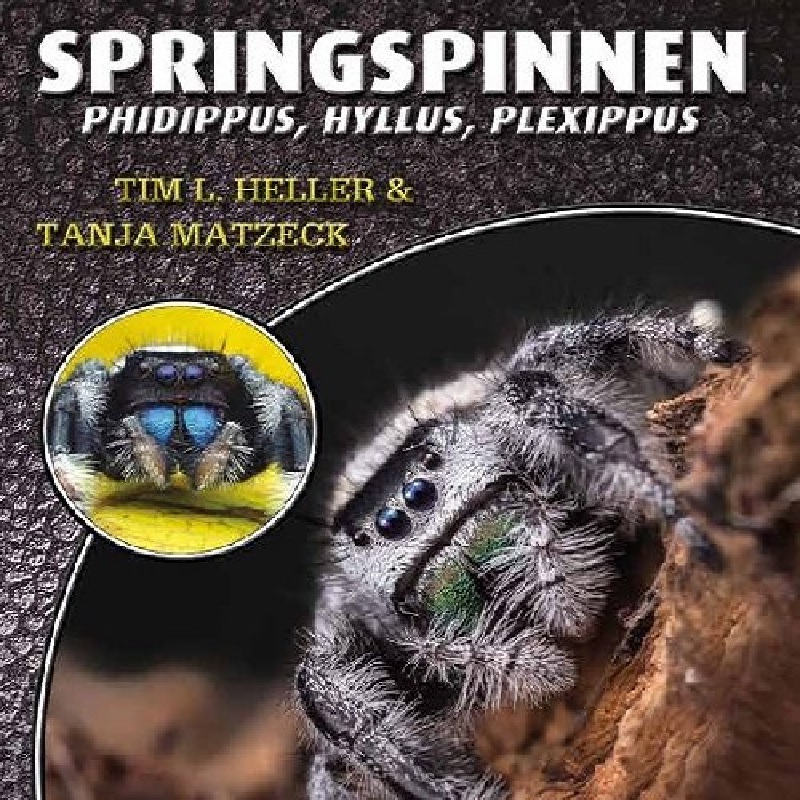
Book Jumping Spiders -
Phidippus, Hyllus & Plexippus
A guide to keeping jumping spiders of the genera Phidippus, Hyllus & Plexippus. Who can resist the charm of jumping spiders? The childlike appearance of their expressive face simply leaves no one cold! In addition, their behavior is extremely exciting to observe, their colors are bright and their requirements for species-appropriate keeping are very easy to meet. No wonder these likeable jumpers are all the rage!
This volume in the "Species by Species" series describes in detail what to look out for when buying and keeping them, introduces the most commonly kept species and color forms and provides plenty of tips on how to keep them successfully - so you can be sure they will breed well!
Species by Species introduces you to the books in this series, which present the most popular terrarium animals. Each volume offers you detailed, practical care instructions and all the information you need to successfully breed your animals.
All important questions from the required tank size to terrarium set-up, technical equipment, species-appropriate nutrition and disease prevention are answered with numerous tricks and tips.
Experienced, long-standing breeders reveal how you can encourage the animals to reproduce and raise healthy young.
All this in full color, generously illustrated and attractively designed - just about your terrarium animal - species by species
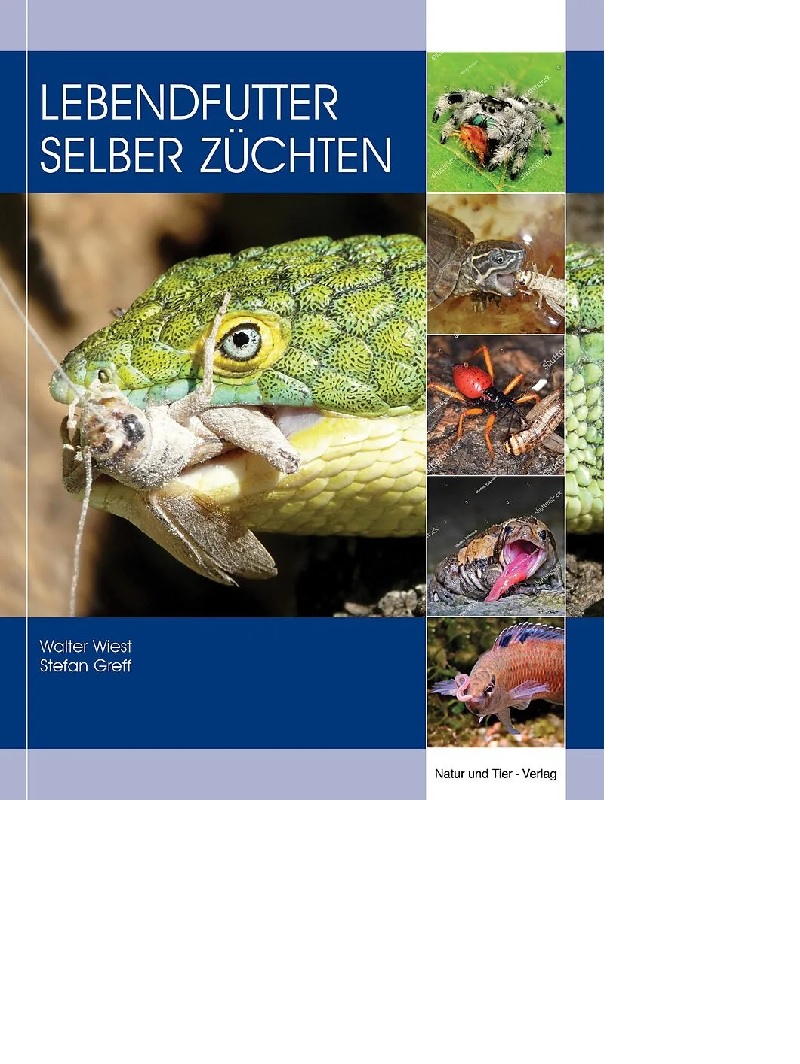
Book "Grow your own live food" - The perfect guide for pet owners
Discover practical and detailed instructions on how you can easily breed food for your reptiles, birds, fish or other animals yourself in the book "Breeding live food yourself". With valuable tips on various food insects, their care and breeding, you can save money and ensure a species-appropriate diet for your pets.
Contents of the book:
Step-by-step instructions for breeding feeder insects
Information on the best types of food for reptiles, birds and fish
Care instructions and breeding conditions for various live food species
Tips for sustainable and cost-effective food production
Why breed your own live food?
Get healthy, fresh food for your animals
Save money and reduce dependence on pet shops
Promote the health and well-being of your animals with species-appropriate food
Whether you are a beginner or an experienced pet owner, this book provides you with everything you need to successfully breed live food yourself.
Marginata 69 - New Guinea tortoises – the genus ElseyaCover storyThe unrecognised beauties: New Guinea tortoises (Andreas S. Hennig)My experiences with Branderhorst's New Guinea tortoise, Elseya (Elseya) branderhorsti (Ouwens, 1914) (Andreas S. Hennig)Keeping and breeding of Rhodin's New Guinea tortoise, Elseya (Hanwarachelys) rhodini Thomson, Amepou, Anamiato & Georges, 2015 (Andreas S. Hennig)PortraitGeoemyda spengleri, Chinese serrated tortoise (Andreas S. Hennig)ReportageMacrochelys temminckii – Experiences and impressions with vulture tortoises part 2 (Reiner Praschag)KeepingAn alternative to year-round keeping of the Egyptian tortoise in the terrarium – my experiences with seasonal outdoor keeping of Testudo kleinmanni (Ricarda Schramm)EtymologySawbacks and living maps part 4: Graptemys gibbonsi, Pascagoula humpback tortoise (Holger Vetter)Classifieds & animal placement
Reptilia 90 - Breeding of poison dart frogs
Reptil des Jahres: MauereidechseSchmuckschildkrötenPazifikboa
Inhalt:
EditorialMAGAZINTERMINEWESTERN HERP PERSPECTIVESSweet (New) Home ArizonaB. LoveFOTOSTORYDie Zucht von PfeilgiftfröschenM. Wirth & F. RiedelHaltung und Nachzucht Haltung und Nachzucht des Schrecklichen Pfeilgiftfroschs, Phyllobates terribilis M. Wirth & F. RiedelNACHZUCHTDas Einmaleins der QuappenaufzuchtM. SchmidtREISE Eine herbstliche Stippvisite in MontenegroB. TrappPORTRÄT UND POSTERPhrynosoma platyrhinos. WüstenkrötenechseH. WerningHerpetofaunaAuf dem Weg ins All. Die Welt der Buchstaben-Schmuckschildkröte, Trachemys scripta Teil 1A. S. HennigHerpetofaunaDie Mauereidechse – Reptil des Jahres 2011U. Schulte, A. Kwet & A. NöllertHALTUNG UND ZUCHTCandoia paulsoni paulsoni: Haltung und Nachzucht der Pazifikboa M. Borer & L. MeierREPORTAGEMit Schülerpraktikanten in der Iguana-Station auf der Insel Utila, Honduras Teil 1: Eine neue Herausforderung M. HallmenBibliothekABO & SERVICEAUCH IN IHRER NÄHEVORSCHAUBRUTKASTEN Klapperschlangen und Mexikaner Teil 1 H. Werning
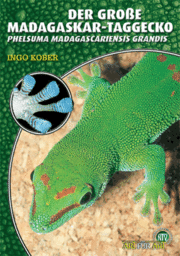
All about the Madagascar Day Gecko by Ingo Kober
64 pages
14.8 x 21 cm
47 colour photos
6th edition
Author Ingo Kober
Publisher NTV
Contents:
They are so colourful that they almost make your eyes water: the Madagascar day gecko is one of the most beautiful reptiles of all. What also makes it so popular and extremely suitable as a terrarium pet is its agile, lively nature and easy keeping. Ingo Kober knows more about keeping and breeding these animals than almost anyone else. In this book, he provides expert and easy-to-understand information on the know-how required for the species-appropriate care of these beautiful lizards. Of course, he also tells you how to breed these adorable animals, hatch the eggs and raise the young.
Systematics and body structure
The fascinating biology: From the life of the Madagascar Day Gecko
All information on species-appropriate keeping: from suitable terrariums to equipment and technology to feeding
Successful breeding: Mating stimulation, incubation of the eggs and rearing the young
Solutions to problems: How to avoid the most common mistakes in care and how to help sick animals
Brilliant photos
All about the Bahamaanolis by the author duo Uwe Bartelt & Iris Zeilfelder
64 pages
Format: 14.8 x 21 cm
numerous colour photos
Paperback
Author Uwe Bartelt & Iris Zeilfelder
Contents:
Nothing is more fascinating than a healthy group of Bahama anoles in a species-appropriate terrarium.The very lively, diurnal animals are not very shy after familiarisation and can be well observed.They prove to be long-lived in the terrarium, forgive even minor husbandry mistakes and, in good conditions, readily reproduce. In short, they give the owner a great deal of pleasure.
Systematics and body structure
The fascinating biology: From the life of the Bahama anolis
All information on species-appropriate keeping: From suitable terrariums and equipment and technology to feeding
Successful breeding: Mating stimulation, incubation of the eggs and rearing the young
Solutions to problems: How to avoid the most common mistakes in care and how to help sick animals
Brilliant photos
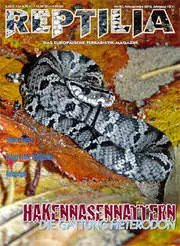
Reptilia 81 - Hook-nosed snakes
Samar cobraPantanal flatback turtleGalápagos
Contents:
The hook-nosed snakes of the genus Heterodon are currently experiencing an unimagined terraristic boom. Previously rather underappreciated, various very attractive colour forms have recently been bred, and this has led to a real boom. But even the normally coloured animals – and the natural spectrum of the eastern hook-nosed snake in particular covers an extremely wide range of colours – are extremely lovable terrarium pets.We present all species in detail, offer detailed breeding reports even on rarer forms, and a splendidly illustrated overview of current developments in colour variety breeding is of course also included. EDITORIAL
MAGAZINE
DATES
PHOTOSTORY
Hooked on Hogs! Hooked on hook-nosed snakes
by K. Kunz
KEEPING AND REPRODUCTION
The Western hook-nosed snake of North America "trend snake"
by B. Bumgardner
HERPETOFAUNA
Unleashed East! – The Eastern hook-nosed snake, Heterodon platirhinos
by L. Spinner
KEEPING AND REPRODUCTION
Small but mighty! The Southern hook-nosed snake
by K. Kunz & N. Nickel
HERPETOFAUNA
The Pantanal flatback turtle, Acanthochelys macrocephala – A turtle that still raises many questions
by T. & S. Vinke
PORTRAIT AND POSTER
Gekko gecko (Linnaeus, 1758). Tokay gecko
von M. Gaulke
TRAVEL
In the footsteps of Darwin through South America
Part 4: Galápagos – The Darwin Archipelago
by H. Werning
KEEPING AND REPRODUCTION
Keeping and breeding Samar cobra (Naja samarensis)
by C. Frömberg
KEEPING AND REPRODUCTION
Sicarius terrosus in the terrarium
by R. Hübers
ANIMALS OF OUR HOME
The forest lizard
by R. Leptien
WESTERN HERP PERSPECTIVES
The big frost
by B. Love
LIBRARYBook review: Fläschendräger & Wijffel (2009): Anolisby U. Bartelt
SUBSCRIPTION & SERVICE
ALSO NEAR YOU
PREVIEW
BRUTKASTEN
Alone among sheep. Part 1
by H. Werning
All about Boa Constrictor by Stefan Binder
96 pages
89 photos
2 graphics
1 table
11 distribution maps
Format: 16.8 x 21.8 cm
Contents:
The boa constrictor (Boa constrictor) is the epitome of the giant snake. Contrary to its popular reputation, however, it is neither dangerous to humans, nor does it reach excessive body sizes. Rather, it is an animal that is excellently suited to terrarium keeping, extremely elegant and attractive, and is even recommended for beginners in giant snake keeping. In this book, snake enthusiasts will find everything they need to know for the successful keeping and breeding of these beautiful reptiles:- Physique and sensory abilities- Classification: all subspecies and local forms- All colour and pattern variants- Keeping boas correctly: furnishing and technical equipment of a species-appropriate terrarium- Problem solutions: prophylaxis and therapy of diseases- How to breed your boas; rearing of the young- Brilliant colour photos
Press reviews:
Reviewing this book was a real pleasure for me. When reading it (...) the impression is confirmed that the author can convey the subject clearly and understandably. (...)A book that should not be missing from any (giant snake) keeper's shelf!Bruno Treu in Sauria 25/2 (2003)
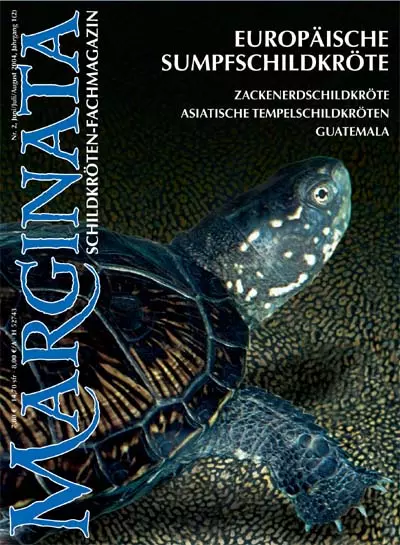
Marginata 02 - European pond turtle
Serrated terrapinsAsian Temple TurtlesGuatemala
Contents:
2 EDITORIAL
3 THE TEAM INTRODUCES ITSELF
4 READER LETTERS
5 MAGAZINE
9 DATES
10 PHOTO REPORTAGEEuropean pond turtles (Emys orbicularis LINNAEUS, 1758)Hans - Dieter Philippen
14 REPORTAGEObservations and experiences regarding the keeping and breeding of the European pond turtle (Emys orbicularis LINNAEUS, 1758)Bernd Wolff
24 REPORTAGEThe relationship between origin, currently known phylogeny (evolutionary history) and habitat of the European pond turtle (Emys orbicularis) using three populations as examplesJens Poschadel
31 PORTRAITMadagascan flat-tailed turtlePyxis [Acinixys] planicauda (GRANDIDIER, 1867)Matthias Mähn
36 REPORTAGESpecies protection on the dream beach –The projects of the organisation ARCAS in GuatemalaKriton Kunz
46 REPORTAGEThe fascination of serrated terrapins (genus GeoemydaSome aspects of their keeping and biologyIngo Schaefer
52 REPORTAGEIntensively exploited without protection: Amyda cartilaginea (BODDART, 1770) and Dogania subplana (GEOFFROY ST.-HILAIRE, 1809) Mark Auliya
56 BOOK TIP
57 CLASSIFIEDS
58 REPORTAGESalmonellosis – Measures to prevent turtle-related transmissionTessa E. H. Römkens and Frank Stam
62 REGIONAL GUIDE
64 AGATHA MARGINATA
Reptilia 24 - Stick insects
Incubation of turtle eggsTerrarium photographyArch-snakes
Contents:
Page 2 - EditorialPage 3 - Letters to the editorPage 6 - MagazinePage 13 - DatesPage 16 - Western Herp Perspectives: Tribute to the Frog, by B. LovePage 18 - Photo report: Stick and ghost grasshoppers, by O. ZomproPage 24 - Keeping and breeding: Ghost insects of the family Heteropterygidae in the terrariumPage 30 - Report: Food animal and terrarium ornament at the same time: The Indian stick insect (Carausius morosus), by F. GastPage 34 - Journey: On a big game hunt for the sticks - Insights into the joys and dangers of a collecting trip, by I. FritzschePage 40 - Herpetology and culture: On the utilisation of some amphibian and reptile species in Peru, by T. EisenbergPage 47 - Portrait and poster: Anolis roquet, by M. SchmidtPage 51 - Herpetofauna: Observations on the ecology and terrarium keeping of the arch-snake Chalcides chalcides mertensi, Klausewitz 1954, by H. EsterbauerPage 55 - Keeping and breeding: Incubation of turtle eggs, by M. MähnPage 63 - Terrarium studies: Herpetological photography – ABC of reptile and amphibian photography for beginners and advanced, by U. StrathemannPage 70 - Herpetofauna: Asaccus – The leaf-fingered geckos of the Oman mountains, by R. LeptienPage 79 - Reptilia on the road: Zoological Garden of the City of Wuppertal, by A. HauschildPage 82 - Advice and actionPage 89 - LibraryPage 96 - Gloss: Forget fighting dogs! A friend for life, by K. Kunz
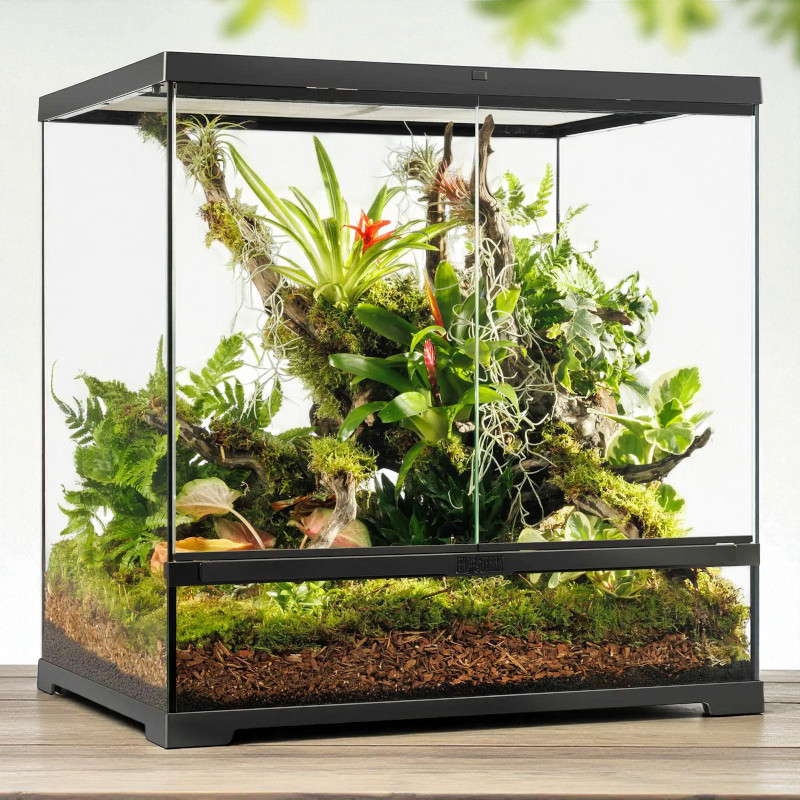
Exo Terra Pro Terrarium Medium Tall (60 × 45 × 60 cm)Innovative natural terrarium for reptiles, amphibians & invertebrates.The Pro Terrarium Medium Tall from Exo Terra combines modern, high-quality design with maximum functionality and was specially developed by European herpetologists for species that like to climb. The raised design, large base area and deep front glass panel make this terrarium the ideal choice for anyone who wants to set up a well-structured, vertically oriented habitat.
The combination of an innovative ventilation system, safe access, first-class UVB penetration and easy handling ensures a stable, healthy microclimate and a species-appropriate habitat for your terrarium animals.Highlights & advantages at a glanceInnovative natural terrarium - ideal for climbing speciesHigh design (60 cm) for plants, branches & vertical structuresDeep front glass pane for maximum visibility3-stage adjustable ventilation system - prevents condensationVertical air flow for a healthy breathing climateEasy maintenance thanks to one or two front doors (depending on model)Spring-loaded pressure lock - secure break-out protectionRemovable stainless steel mesh cover - optimum UVB penetrationEfficient cable & hose managementRaised base frame - ideal for heat matsDeep, waterproof base - perfect for humid setupsCompatible with the Exo Terra Monsoon irrigation systemOptimal visibility & vertically structured habitatThanks to the deep front glass panel, the Medium Tall offers a clear, undistorted view of animals and furnishings. The height of 60 cm opens up countless design options - ideal forClimbing brancheslianastropical plantingnatural retreatsHumidity and temperature gradientsThe generous internal volume promotes activity and supports the well-being of climbing terrarium species such as geckos, tree frogs, anoles and mantids.Innovative ventilation system - healthy climate without condensationThe patented, three-stage adjustable ventilation system generates a precise vertical air flow, which: reduces condensation Ensures clear windowsprevents mold growth improves the air quality supports the animals' airways An integrated dirt trap reliably retains sand and dust.Safe & convenient - single or double-leaf front door depending on modelDepending on the model, the Medium Tall has:
a front-opening door or
two front-opening doors
Both variants have a spring-loaded push lock that prevents unintentional opening and thus ensures secure break-out protection.
The doors also provide extremely convenient access for maintenance, cleaning and set-up.Practical for accessories & technologySeveral lockable inlets for cables and hoses at the rear allow the installation of: Irrigation systems (e.g. Exo Terra Monsoon)foggerssensorsLED and UVB lightingInside, guide channels ensure neat cable routing, while the mounting points simplify the attachment of spray nozzles.
The raised base frame allows the safe use of heat mats to create natural temperature zones.Technical data
Model: Pro Terrarium Medium TallDimensions (W × D × H): 60 × 45 × 60 cmDoor variant: single or double-leaf front door (depending on model)Material: Glass & stainless steel mesh
💡 Lucky Reptile Light Strip LED Mini Modular LED lighting for every terrarium
The Lucky Reptile Light Strip LED Mini is a modern, energy-efficient basic lighting system for terrariums that impresses with its ultra-flat design, modular expandability and individually adjustable light. Whether for tropical, temperate or desert-like habitats - this LED system allows the lighting to be adjusted in a targeted and flexible manner.
Thanks to the 10-stage dimming function and three selectable color temperatures (3000K, 4000K, 6500K), you can adjust the light precisely to the needs of your animals. The integrated 90° beam angle ensures even illumination without disturbing shadows. Also suitable for bird-friendly lighting - thanks to flicker-free LED technology.Good to know:Modules of up to 12 watts can be connected to a plug, regardless of whether they are 2 or 4 watt elements. The cable for the extension measures 14 cm.All combined elements can only be programmed to one light color.✅ Advantages at a glance:
Ultra-flat, space-saving design - ideal for all terrarium sizes
3 light colors selectable: 3000K (warm), 4000K (neutral), 6500K (daylight-like)
10-stage dimmable - precise adjustment to animal species & habitat
Modularly expandable - up to 12 W output can be switched in series
Flicker-free - easy on the eyes, also suitable for birds
90° light angle - uniform light distribution without shadows
Flexible installation - can be surface-mounted, glued or screwed in place
Long-lasting - over 25,000 hours of operating time📋 Product details:
Product name: Lucky Reptile Light Strip LED Mini
Power: 2 W or 4 W per module
Max. Chain power: 12 W in series
Color temperatures: 3000K / 4000K / 6500K
Dimming: 10 levels
Mounting: glass, gauze, screws or adhesive pads
Beam angle: 90°
Suitable for: Reptiles, amphibians, birds
Service life: approx. 25,000 h
System: modularly expandable with plug-in connection
Supply voltage: 12 V DC💡 Zoo Roco tip:
Combine several modules according to animal species and terrarium size. For jungle-like setups, for example, a 3000K setting is recommended, while 6500K creates optimum lighting conditions for desert dwellers. Also ideal for breeding terrariums with changing light requirements.Whether you want to illuminate a single terrarium or extend an entire shelf: the Lucky Reptile Light Strip LED Mini provides flexibility, quality and efficiency in a well thought-out system.
Gerbil
Gerbils are very sociable animals. In their original home, the Mongolian steppe, they live in large family groups. Mongolian gerbils live in dry steppe areas, where it can get very cold in winter (down to -40 °C) and very warm in summer (up to +50 °C), in underground burrows with several tunnels and chambers. They are active during the day and at night, and have one of their resting phases at the time of the greatest midday heat. Resting and waking periods alternate several times a day.
Keeping:
Gerbils should never be kept alone. They need fellow gerbils to feel comfortable. Gerbils kept individually often sit listlessly in the corner and remain shy. Only when in pairs or groups do they feel secure, are terribly curious and trusting.It is best to keep two or more animals of the same sex. A male and female pair gets on very well, but then numerous offspring can be expected.The main activity of gerbils is digging! Therefore, the best cage is a large aquarium with a mesh cover. As gerbils should be given plenty of bedding for digging, a mesh cage is not particularly suitable.
The cage equipment includes:
Bedding at least 30cm deep so the gerbils can fulfil their digging needs
Hay
Various shelter options made of wood or cork, branches for climbing
Sand bath
Food bowl and drinking bottle
The furnishings should not be made of plastic, as gerbils will gnaw everything.
Legal regulations:
Enclosure at least 100x50cm for 2 animals
Bedding / digging layer 25cm
Hay and straw
Hiding places for all animals
Nesting material
Sand bath
Gnawing objects such as softwood or fresh branches
Group housing
Food:
To stay healthy, gerbils - like other living creatures - depend on a varied diet.The balanced basic diet is ensured by the ready-made food offered in pet shops.Fresh foods such as fruit, carrots or dandelion can also be given to gerbils from time to time. The cage should be checked daily for spoiled fresh food so that the gerbils do not eat mouldy food. To wear down their teeth, gerbils always need some hard bread. Hay serves not only as nesting material, but is also partly eaten.Fresh water should always be available to gerbils. The commercially available small animal drinkers are recommended, as an open water bowl is quickly filled with bedding. Gerbils do not drink much, but it is not true that they can do completely without fluids.
Regular costs (per month/for 2 animals):
Food: approx. Fr.15.--
Bedding and hay: approx. Fr. 20.--
Veterinarian: The more species-appropriate and clean the keeping, the less often a visit to the vet threatens. Nevertheless, you must always expect that an animal can become ill at any time and will then incur additional costs.
Before you decide on gerbils, you should definitely have read a relevant specialist book.
For any animal keeping applies: Children (including adolescents) must be guided, supervised and controlled by their parents. Children should know that animals are not toys!For questions and problems, our trained team at Zoo Roco is available to you. They can provide you with expert advice in all matters.