Handbook of forage plants 2nd revised editionMarion Minch is not only a successful breeder of diverse tortoises for many years, but also an excellent connoisseur of native wild herbs. She founded and runs samenkiste.de, which is well known to many tortoise keepers and nature lovers. Her name is inextricably linked with reptile care and species-appropriate nutrition for tortoises. Her handbook of food plants summarises the most important native food plants for herbivorous and omnivorous reptiles. She not only considers tortoises, but also iguanas, spiny-tailed dragons and even chameleons. From the basics of plant biology to native wild herbs to suitable food plants for hardy tropical reptile species, this comprehensive work provides the basis for species-appropriate keeping. In the expanded and supplemented 2nd edition, the plant section is divided according to flower colour. This makes it even easier to identify wild herbs. The work has also been supplemented with a wealth of additional information and many pictures.
Geckos in the terrarium by Astrid FalkThe book offers a comprehensive introduction to geckos and their species-appropriate keeping in terrariums. It explains what you need to think about before buying a gecko and what preparations should be made. The book describes in detail how the terrarium is technically equipped and set up. The care of the animals, their special features and behaviour, their diet, reproduction and rearing of young animals are described, as well as diseases and husbandry problems with tried and tested suggestions for prevention and treatment. Individual gecko species that are particularly suitable for keeping and breeding in terrariums are portrayed in detail in the second part of the book.
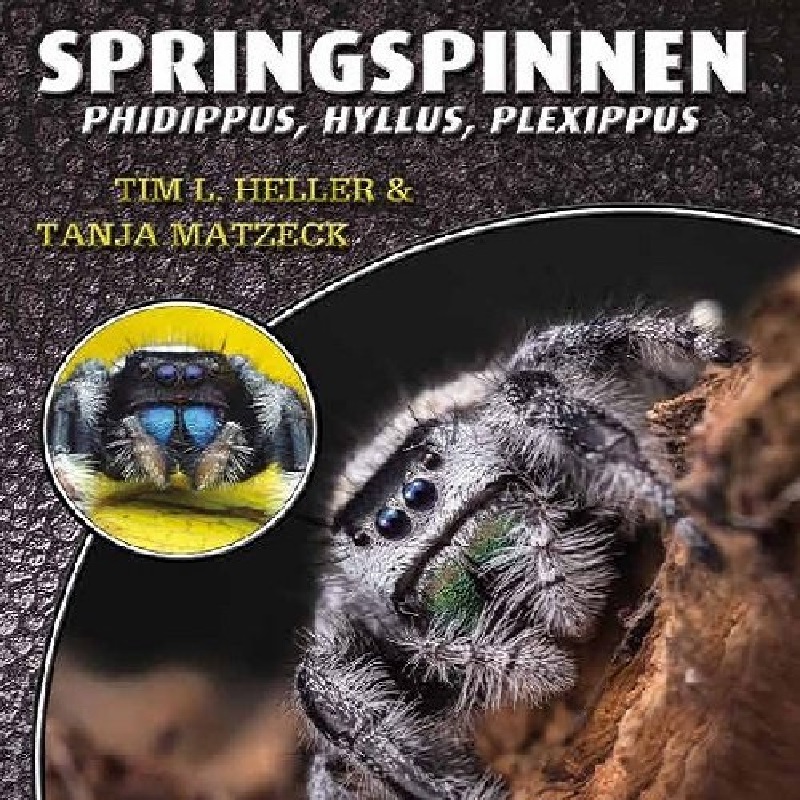
Book Jumping Spiders -
Phidippus, Hyllus & Plexippus
A guide to keeping jumping spiders of the genera Phidippus, Hyllus & Plexippus. Who can resist the charm of jumping spiders? The childlike appearance of their expressive face simply leaves no one cold! In addition, their behavior is extremely exciting to observe, their colors are bright and their requirements for species-appropriate keeping are very easy to meet. No wonder these likeable jumpers are all the rage!
This volume in the "Species by Species" series describes in detail what to look out for when buying and keeping them, introduces the most commonly kept species and color forms and provides plenty of tips on how to keep them successfully - so you can be sure they will breed well!
Species by Species introduces you to the books in this series, which present the most popular terrarium animals. Each volume offers you detailed, practical care instructions and all the information you need to successfully breed your animals.
All important questions from the required tank size to terrarium set-up, technical equipment, species-appropriate nutrition and disease prevention are answered with numerous tricks and tips.
Experienced, long-standing breeders reveal how you can encourage the animals to reproduce and raise healthy young.
All this in full color, generously illustrated and attractively designed - just about your terrarium animal - species by species
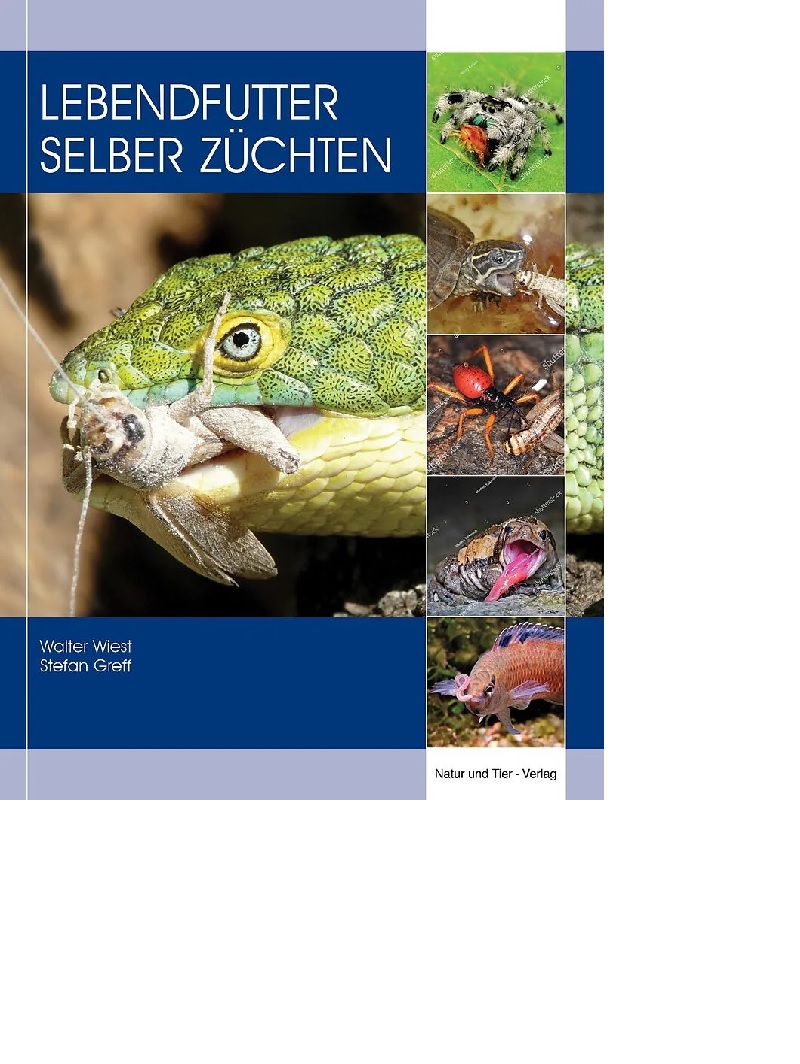
Book "Grow your own live food" - The perfect guide for pet owners
Discover practical and detailed instructions on how you can easily breed food for your reptiles, birds, fish or other animals yourself in the book "Breeding live food yourself". With valuable tips on various food insects, their care and breeding, you can save money and ensure a species-appropriate diet for your pets.
Contents of the book:
Step-by-step instructions for breeding feeder insects
Information on the best types of food for reptiles, birds and fish
Care instructions and breeding conditions for various live food species
Tips for sustainable and cost-effective food production
Why breed your own live food?
Get healthy, fresh food for your animals
Save money and reduce dependence on pet shops
Promote the health and well-being of your animals with species-appropriate food
Whether you are a beginner or an experienced pet owner, this book provides you with everything you need to successfully breed live food yourself.
Marginata 69 - New Guinea tortoises – the genus ElseyaCover storyThe unrecognised beauties: New Guinea tortoises (Andreas S. Hennig)My experiences with Branderhorst's New Guinea tortoise, Elseya (Elseya) branderhorsti (Ouwens, 1914) (Andreas S. Hennig)Keeping and breeding of Rhodin's New Guinea tortoise, Elseya (Hanwarachelys) rhodini Thomson, Amepou, Anamiato & Georges, 2015 (Andreas S. Hennig)PortraitGeoemyda spengleri, Chinese serrated tortoise (Andreas S. Hennig)ReportageMacrochelys temminckii – Experiences and impressions with vulture tortoises part 2 (Reiner Praschag)KeepingAn alternative to year-round keeping of the Egyptian tortoise in the terrarium – my experiences with seasonal outdoor keeping of Testudo kleinmanni (Ricarda Schramm)EtymologySawbacks and living maps part 4: Graptemys gibbonsi, Pascagoula humpback tortoise (Holger Vetter)Classifieds & animal placement
Terraria 06 - The new tropical aquarium at Hagenbeck Zoo
North American soft-shelled turtleCrested toad
Contents:
2 Editorial Heiko Werning
TOPIC
4 Carl Hagenbeck would be amazed – a tour of the new Hamburg tropical aquarium Lutz Dirksen
14 Venomous snake and crocodile training for the new Hagenbeck tropical aquarium in South Africa Thomas Kölpin
26 The Nile crocodiles in the new Hagenbeck tropical aquarium Thomas Kölpin
SCIENCE
29 HerpetoramaTaxonomy of climbing snakes / mosquito repellent in frog skin
32 New speciesUromastyx yemenensis / Varanus rainerguentheri / Gastrotheca
35 Among researchersAmphibian extinction in the tropical Andes Ariadne Angulo
40 The Californian chain snake, Lampropeltis getula californiae (Blainville, 1835), in the terrarium Thorsten Schmidt
45 First breeding of the crested toad frog, Megophrys nasuta, in the aquarium at Cologne Zoo Karin van der Straeten, Detlef Karbe, Sven Olbort & Thomas Ziegler
54 North American soft-shelled turtles of the genus ApalonePart 1: Systematics, trade and endangerment Andreas S. Hennig
59 The North African skinks of the genus Trachylepis in thenatural habitat and in the terrarium Uwe Schlüter
TRAVEL
68 In the mountain forests of Mount Kinabalu/Borneo Rudolf Malkmus
TERRARIUM PRACTICE
82 Test runGazeterrarium from “M & S Reptilien” Kriton Kunz
83 Prelude Hibernating snakes – not that difficult at all Michael Schulze & Marco Schulze
88 Eye-catcherAn outdoor enclosure for Greek tortoises Mike Zawadzki
92 Also in your neighbourhood
96 TERRAnetMediterranean tortoises / praying mantises
98 TERRAglobalHow chocolate protects frogs Mirco SoléIn search of the turtle dwarves Karl H. Switak104 TERRAwinn
Marginata 7 - Magnificent Tortoises
Food plants 2Herpesvirus in tortoisesTurkish tortoises
Contents:
2 EDITORIAL
3 READER LETTERS
4 MAGAZINE
8 DATES
10 PHOTO REPORTAGE Magnificent Tortoises (Rhinoclemmys pulcherrima GRAY, 1856) Hans - Dieter Philippen
16 BREEDING IN HUMAN CARE Keeping, care and breeding of the Magnificent Tortoise Rhinoclemmys pulcherrima incisa (Bocourt, 1868) Andreas Mende & Thomas Berndt
21 BREEDING IN HUMAN CARE The Costa Rican Magnificent Tortoise (Rhinoclemmys pulcherrima manni) Fons Bänziger
26 FIELD RESEARCH The tropical dry forest in north-western Costa Rica Jan Michels
31 PORTRAIT Egyptian tortoise Testudo [Pseudotestudo] kleinmanni (Lortet, 1883) Hans - Dieter Philippen
35 VETERINARY MEDICINE An update on herpesvirus in tortoises Thomas Filip & Anna Kübber-Heiss
45 REPORTAGE Food plants for tortoises Part 2 Susanne Vogel
51 SHORT REPORT A foray through the area of Dalyan and Kaunos, Turkey Franz Hummel
54 SHORT REPORT Oh you big egg ... Heinz Frühauf
55 REPORTAGE ShellShock conservation campaign Hans - Dieter Philippen
59 RAT & TAT
60 BOOK TIP
61 CLASSIFIEDS
62 REGIONAL GUIDE
64 AGATHA MARGINATA
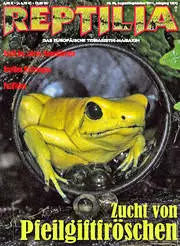
Reptilia 115 - Adders for the Terrarium
Flamingo flowersBlue rock iguanaNew Zealand mantis
Contents:Cover story: Adders for the TerrariumAdders are among the classic and most popular terrarium animals. This extremely species-rich group of snakes has produced some of the most popular reptile pets. We provide an overview of the terrarium-relevant species and focus in particular on those adders suitable for beginners, among which there are many truly perfect pets. But we also have a real beauty for advanced keepers and report on the keeping and breeding of red bamboo adders.
EditorialMAGAZINEDATES
WESTERN HERP PERSPECTIVESThe dark sideB. Love
FotostoryEvergreens in the terrarium: AddersK. Kunz
PracticeAdders. Species and tips for beginnersD. Schmidt
Husbandry and breedingThai bamboo adders (Oreocryptophis porphyraceus coxi) in the terrariumM. Hornig
Husbandry and breedingThe New Zealand mantis, Orthodera novaezealandiae. A praying mantis from the other side of the worldB. Fuhrmann & C. Sehorz
Husbandry and breedingThe keeping and breeding of the Blue rock iguana (Petrosaurus thalassinus) in the terrariumJ. Schulz
PlantsArum family in the terrarium. Part 3: The genus AnthuriumB. Akeret
Husbandry and breedingFirst ever natural rearing of the critically endangered Philippine crocodiles (Crocodylus mindorensis) in Europe successfulT. Ziegler, A. Rauhaus & C. Niggemann, AG Zoological Garden Cologne
Animals of our homelandThe fire salamanderR. Leptien
ALSO IN YOUR AREA
Service
TravelOn an excursion through the Colombian Amazon rainforestJ. Cañas-Orozco
PREVIEW
INCUBATOR Attention – more cat contentH. Werning
Draco 09 - Invertebrates in the terrarium
Content:
2 - Editorial
3 - Invertebrates, by Dieter Masberg
20 - The Landing Crab, by Harry Wölfel
27 - Phasmids (ghost insects, stick insects and walking leaves), by Sven Bradler and Christoph Seiler
33 - Phasmids as pets, by Christoph Seiler and Sven Bradler
38 - The Australian Pfeffermins stick insect Megacrania batesii - no simple fosterling, by Christoph Seiler and Sven Bradler
41 - essence of darkness - essence of light: The Mysterious Life of the Giant and Rose Beetles, by Arndt Löwenberg
55 - Exotic cord feet in the terrarium, by Timm Adam
67 - Safety in scorpion keeping: 10 golden rules, by Herbert Schiejok
70 - Own experiences with the keeping of Euscorpius carpaticus mauretanicus (THORELL, 1876), by Mario Schedel
74 - Pseudoscorpions in nature and in small terrariums, by Kriton Kunz
82 - Book case
94 - Magazine
The content at a glance:Invertebrates - the large army of the animal world, fascinatingly multi-layered, mostly hardly researched and weathered by the otherness to the vertebrates and to us humans since ancient mystery. Dieter Mahsberg's introduction to this unusual DRACO fans out the entire prism of the invertebrates: What characterizes all invertebrates, what groups are there, how do they live? After this overview you will also find a list of all taxa with species numbers that are relevant for keeping - a huge potential of highly interesting animals that will certainly not leave your thirst for research cold!Phasmids (ghost insects, stick insects and wandering leaves)Phasmids are certainly among the stars of the invertebrate boom: Sven Bradler and Christoph Seiler present the basics of the systematics and biology of these interesting animals, which include the longest insect still living today. Learn everything you need to know about the way of life of the well camouflaged invertebrates, marvel at sophisticated protection and defence mechanisms or unusual reproductive strategies. By the way, an extra section of the richly illustrated article is dedicated to the European species: so why not keep your eyes open during your next holiday!Phasmids as petsAnd on we go with the phasmids, because Christoph Seiler and Sven Bradler naturally also explain to you the keeping and breeding of the insects, which are often quite easy to care for, and which as pure herbivores make the time-consuming breeding of feed animals superfluous. The authors name the most important food plants, describe the types of terrariums with which you can meet the different requirements of the animals, and give insider tips on how to reproduce the beautiful insects - and of course they also point out possible sources of error that should be avoided! For beginners in phasmid breeding as well as for old hands an absolute must!The Australian peppermint stick insect Megacrania batesii - no simple fosterlingAnd to make sure that the absolute phasmid experts also get their money's worth, Seiler and Bradler go into detail about the keeping and breeding of this little kept and quite difficult to reproduce species in this article, in which especially the young animals captivate with their rich colors. The secret of the success in the reproduction of the Australian peppermint stick insect begins already with the suitable food, because the animals are very choosy. Seiler and Bradler will give you tips on how to get the plants you need to breed this very special stick insect without spending a lot of money. And, of course, the authors also give you insight into their successful breeding methods, so that after reading this article you have acquired all the prerequisites to try your hand at cultivating this Australian jewel yourself!The hermit crabThey often appear in pet shops and on dealer lists, these cute crustaceans, but hardly anyone knows how to keep them successful. Harry Wölfel presents amazing facts from the biology of these crustaceans, which are not very species-rich but all the more interesting - or did you know that the largest species in this group can reach a range of up to 1 m? Our DRACO author will not only tell you where the land hermit crabs occur and how they "function", but will also explain what to look out for when keeping them, how to set up the terrarium adequately, and he will even give you hints on how to breed them, which is not easy. One of the very few articles in the relevant literature, and in addition so expert and detailed - it's your own fault who as a crab fan escapes this treat!Beings of darkness - Beings of light. The mysterious life of the giant and rose beetlesThese magnificent beetles are certainly among the most beautiful insects of all, and even people who otherwise have nothing to do with "crawling animals" cannot escape the aesthetics of the animals. Did you know why nature has endowed many species of rose beetles with such lavish splendour? Arndt Löwenberg will not only tell you this, but will also give you a comprehensive introduction to the biology of these increasingly cultivated animals. And he gives a practical description of where these pearls and giants of the beetle world come from, how they are kept and bred and what the key to success is!Exotic cord feet in the terrariumUnfortunately, there is almost nothing to be found in the literature about keeping and breeding the quaint string feet. Timm Adam is a competent remedy. What is a string foot, how do these bizarre animals live? The author does not only go into detail about the stars of his contribution, but also about their relatives, for example the Skolopender. But the focus is clearly on the string feet and the role they play in science and terraristics. Are string feet poisonous? How can I set up a suitable terrarium, what do I have to consider with the climatic conditions, how can I feed the animals? And how do you breed these interesting invertebrates? Timm Adam has all the answers ready and does not leave out any hints of problems with their breeding. In short: The ultimate string foot hit!Own experiences with the keeping of Euscorpius carpaticus mauretanicus (Thorell, 1876)If you are fascinated by scorpions, but don't want to bring the most poisonous ones into your house, you are well advised to use specimens of this small species. Their keeping and breeding are not particularly difficult and can therefore be recommended to beginners in scorpion keeping. To make sure that you do everything right from the start, Mario Schedel will show you what to look out for. From the suitable terrarium over aspects like socialization up to the successful offspring all important aspects are covered!Safety in keeping scorpionsTopic number 1 in the keeping of these fascinating arachnids is, of course, always safety, which must be absolutely guaranteed. Scorpion expert Herbert Schiejok points out all the important parameters that have to be observed for a safe keeping, gives tips on which terrarium types are best suited, what has to be taken into account when setting up the tank and what has to be observed when handling the animals in the terrarium. How, for example, do you catch a scorpion safely, how do you move it, and what do I do if the animal has been stabbed in spite of all caution? A responsible terrarium keeper who cares about his own protection and that of his fellow human beings will certainly not miss this contribution!Pseudoscorpions in nature and in the smallest terrariumDo you find scorpions fascinating, but shy away from the risk of a poison sting? You would like to take care of really special animals? How about pseudoscorpions? These tiny creatures, which you can easily find in your garden, in the forest or perhaps even in your house, are very similar to their big relatives, but unlike them they do not have a "tail" with a poison sting. Kriton Kunz overhears with you the secret activities of the funny little guys, presents them fascinating details from the widely unknown biology of the unusual arachnids and gives you tips on where and how you can capture the dwarves. And anyone who has ever maintained or even recreated the bizarre "mini scorpions" in a neatly furnished mini-terrarium will certainly not be able to get rid of them in a hurry!
Terraria 01 - Terrarium lighting
PantanalBlack toad
Contents:
2 Editorial Heiko Werning
3 The TERRARIA team Editorial and advisory board TITLE TOPIC
6 • Basic knowledge of terrarium lighting – a key to successful keeping Ingo Kober & Uwe Geissel
17 • Which type suits me? The different lamps used in terrariums Ingo Kober & Uwe Geissel
22 • Lighting of terrariums – 10 case studies from practice Ingo Kober & Uwe Geissel SCIENCE
26 Herpetorama Snake evolution/Fast aga toads/Shrill frogs
28 New species New lizards from New Caledonia / Two new Telmatobius species from Bolivia/Two new Liolaemus species from Argentina
31 Among researchers Biodiversity research in the Amazon Andreas Schlüter
36 A rarity in the terrarium: Mitchell’s bearded dragon – Pogona mitchelli (Badham, 1976) Thomas Hörenberg
44 Melanophryniscus – not just black toads Part 1: General information on the genus Melanophryniscus Axel Kwet
54 The Tunisian tortoise, Testudo nabeulensis (Highfield, 1990) Manfred Rogner
59 Diversity instead of boredom – Care and breeding of the striped house snake (Lamprophis lineatus) Kriton Kunz
65 Biology, husbandry and breeding of the Arizona bark scorpion, Centruroides vittatus (Say, 1821) Alexander Tietz
72 TRAVEL In the land of the Jacarés – the Pantanal Heiko Werning TERRARIUM PRACTICE
84 Test run terraform hide trays
85 Prelude Quarantine and sampling for parasitological examination of terrarium animals Sascha Hanig & Michael Kluge A good start: the large Madagascar day gecko Phelsuma madagascariensis grandis Ingo Kober
90 Eye-catcher A facility for breeding pine-cone lizards Axel Kwet
94 Also in your vicinity
96 TERRAnet AmphibiaWeb/Homepage Axel Kwet
98 TERRAglobal Environmental education in Guatemalan Lester S. Meléndez García The coffin as an incubator Joachim Bulian
103 Preview
104 TERRAwinn
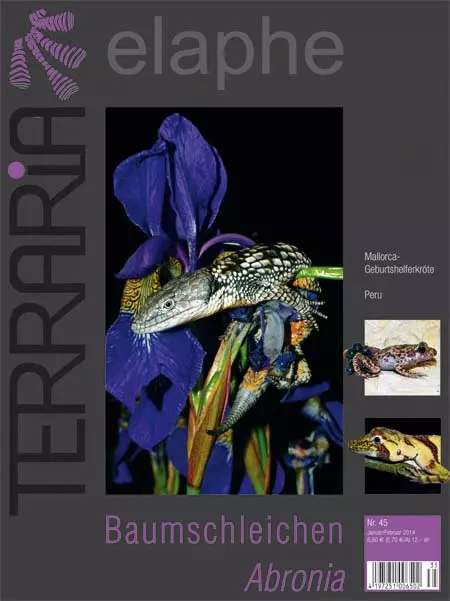
Terraria 45 - Tree creepers AbroniaMajorca Treehugger ToadPeruContents:The fascinating tree creepers are a little-known but particularly magnificent reptile. In their Central American homeland, they are sometimes highly endangered, but in the terrarium hobby more and more species are being successfully kept and bred. We offer a comprehensive overview.TerritorialHerpetoramaCover storyTree Snakes of the Genus AbroniaChristian LangnerKeeping and breeding the tree snake Abronia lythrochilaChristian LangnerPanoramaIn search of amphibians and reptiles at the AmazonasTobias EisenbergResearchAmong researchersBlack toads with red bellies: the genus Melanophryniscus in UruguayRaúl ManeyroNew speciesTwo species of treehollow toad frogsAxel KwetThe Italian slow worm is a separate speciesAxel KwetSun protection for snakes. Investigation into the UV light transmission of the eye scales and skin of some speciesJochen Geiger & Frank BuchterSalamandraTerraristicsKeeping and breeding the Ceylon lancehead, Trimeresurus trigonocephalusKarsten HoerCare and breeding of the Majorcan midwife toad, Alytes muletensisSergé Bogaerts & Uwe SeidelNature and species conservationField notesSnake wedding at the Lopper - Dice snakes at Lake Alpnach, SchweizerUrs & Heidi JöstLate discovery of young sand lizardsAxel Kwet Wall gecko with tickGuntram DeichselCaution poisonous!The amphibian of the year 2014 - a toad with warning colourAndreas Nöllert, Axel Kwet & Richard PodlouckySubscription & ServiceAlso in your neighbourhoodPreviewIncubator Lost Dutchman Part 2Heiko Werning
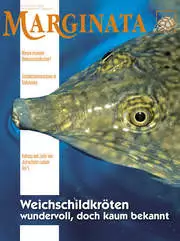
Marginata No. 33 - Softshell Turtles - Wonderful, but hardly known
Warum stranden Meeresschildkröte?Schildkrötenforschung in AndalusienHaltung und Zucht von Astrochelys radiata Teil 5
Inhalt:
Editorial
Magazin
Termine
HALTUNG UND ZUCHT
Erfolgreiche Haltung und Aufzucht junger Weichschildkröten
Hans-Dieter Philippen
REPORTAGE
Thermoregulation bei Weichschildkröten
Dieter Gramentz
REPORTAGE
Bemerkungen zum Wanderverhalten von Weichschildkröten
Dieter Gramentz
Porträt
Kuba-Schmuckschildkröte (Trachemys decussata)
Hans-Dieter Philippen
HALTUNG UND NACHZUCHTHaltung und Nachzucht der Madagassischen Strahlenschildkröte Teil 5
Michael Wirth und Peter Fritz
REPORTAGEStrandende Meeresschildkröten an der andalusischen KüsteJuan J. Bellido & José C. Baez
REPORTAGEMaurische Landschildkröten (Testudo graeca) in Andalusien
Anneliese Pioch
Buchtipp
Kleinanzeigen
Abo & Service
Regionalführer
Royal pythonArea of origin:The royal python (Python regius) is a species of snake within the python family and is native to West and Central Africa.Habitat:The royal python is very adaptable in terms of its habitat. They can be found in closed tropical rainforests, savannahs and agricultural areas. Termite burrows are suitable for hiding, moisturising or basking.Facts:
Royal pythons are active at night and at dusk.
They roam the countryside in search of food and a mate.
In the dry season they do not leave their hiding place for weeks.
Like all members of the family, it is a non-venomous constrictor.
They do not hibernate
Care:Everything at a glance:Ground temperature
27-29°C
With localised heating up to 38°C
Night setback to 20-23°C
Humidity
60-80%
Rise to over 90% for a short time by spraying
The substrate should be loose and absorbent to prevent swallowing.The basic equipment should include climbing facilities, hiding places and a large water container.The dry terrarium has a legal minimum size of 130x65x100 cm for 2 adult animalsFood:This giant snake feeds on small mammals (mice, rats, chicks) and birds.Before you decide on a royal python, you should definitely have read an appropriate specialised book.The following applies to all animal keeping: children must be guided, supervised and controlled by their parents. Children must learn that an animal has its own needs and habits and respect this. Parents should be aware that it is they who are responsible for the animal.Our trained team is available to assist you with any questions or issues at Zoo Roco. They can provide you with expert advice on all matters.