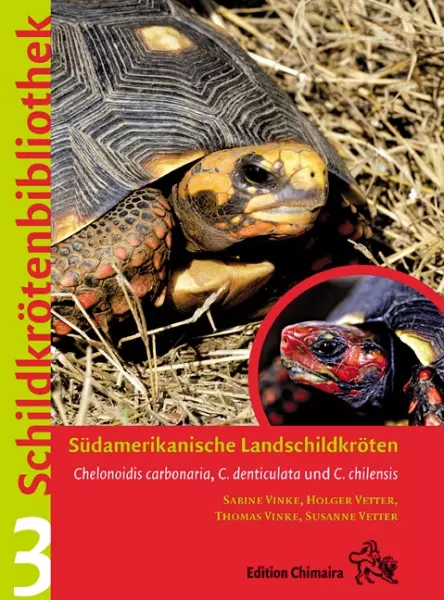
Product information "Turtle library 3 - South American tortoises"
Turtle library 3 - The South American tortoises
Sabine & Thomas Finke, Susanne & Holger Vetter
355 pages
285 color photos
2 drawings 4 distribution maps
Format: 15 x 21.5 cm
Content:
This book is by far the most comprehensive collection of information from all parts of the Southern Turtle's tortoise range: Chelonoidis carbonaria, C. denticulata and C. chilensis.
Composition
Feeding recommendation
Technical details
Size information
0 of 0 reviews
Give us a rating!
Share your experience with the product with other customers.
Login
No reviews found. Go ahead and share your findings with others.
Handbook of forage plants 2nd revised editionMarion Minch is not only a successful breeder of diverse tortoises for many years, but also an excellent connoisseur of native wild herbs. She founded and runs samenkiste.de, which is well known to many tortoise keepers and nature lovers. Her name is inextricably linked with reptile care and species-appropriate nutrition for tortoises. Her handbook of food plants summarises the most important native food plants for herbivorous and omnivorous reptiles. She not only considers tortoises, but also iguanas, spiny-tailed dragons and even chameleons. From the basics of plant biology to native wild herbs to suitable food plants for hardy tropical reptile species, this comprehensive work provides the basis for species-appropriate keeping. In the expanded and supplemented 2nd edition, the plant section is divided according to flower colour. This makes it even easier to identify wild herbs. The work has also been supplemented with a wealth of additional information and many pictures.
Geckos in the terrarium by Astrid FalkThe book offers a comprehensive introduction to geckos and their species-appropriate keeping in terrariums. It explains what you need to think about before buying a gecko and what preparations should be made. The book describes in detail how the terrarium is technically equipped and set up. The care of the animals, their special features and behaviour, their diet, reproduction and rearing of young animals are described, as well as diseases and husbandry problems with tried and tested suggestions for prevention and treatment. Individual gecko species that are particularly suitable for keeping and breeding in terrariums are portrayed in detail in the second part of the book.
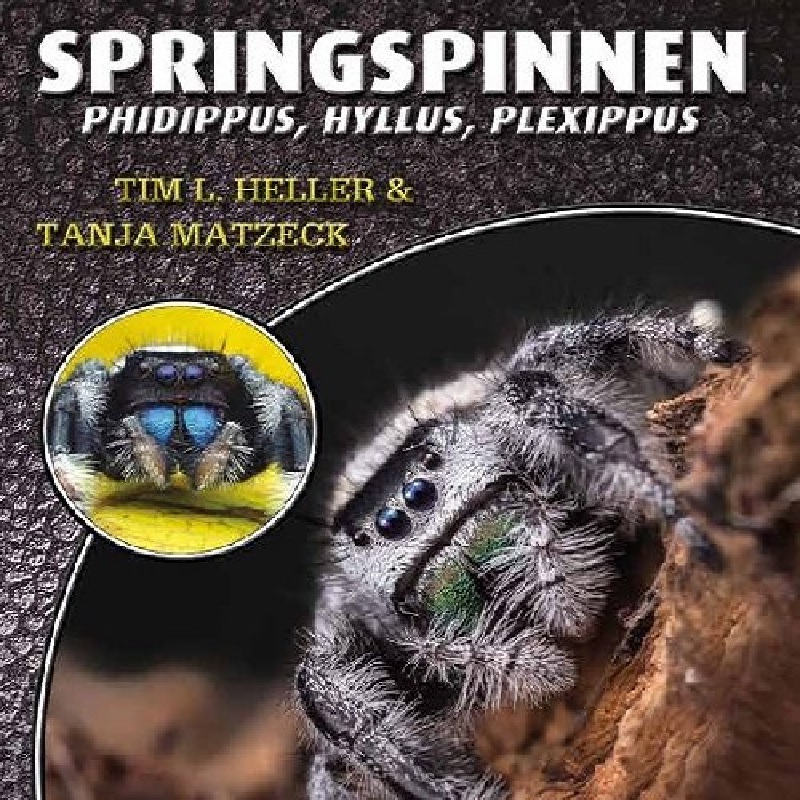
Book Jumping Spiders -
Phidippus, Hyllus & Plexippus
A guide to keeping jumping spiders of the genera Phidippus, Hyllus & Plexippus. Who can resist the charm of jumping spiders? The childlike appearance of their expressive face simply leaves no one cold! In addition, their behavior is extremely exciting to observe, their colors are bright and their requirements for species-appropriate keeping are very easy to meet. No wonder these likeable jumpers are all the rage!
This volume in the "Species by Species" series describes in detail what to look out for when buying and keeping them, introduces the most commonly kept species and color forms and provides plenty of tips on how to keep them successfully - so you can be sure they will breed well!
Species by Species introduces you to the books in this series, which present the most popular terrarium animals. Each volume offers you detailed, practical care instructions and all the information you need to successfully breed your animals.
All important questions from the required tank size to terrarium set-up, technical equipment, species-appropriate nutrition and disease prevention are answered with numerous tricks and tips.
Experienced, long-standing breeders reveal how you can encourage the animals to reproduce and raise healthy young.
All this in full color, generously illustrated and attractively designed - just about your terrarium animal - species by species
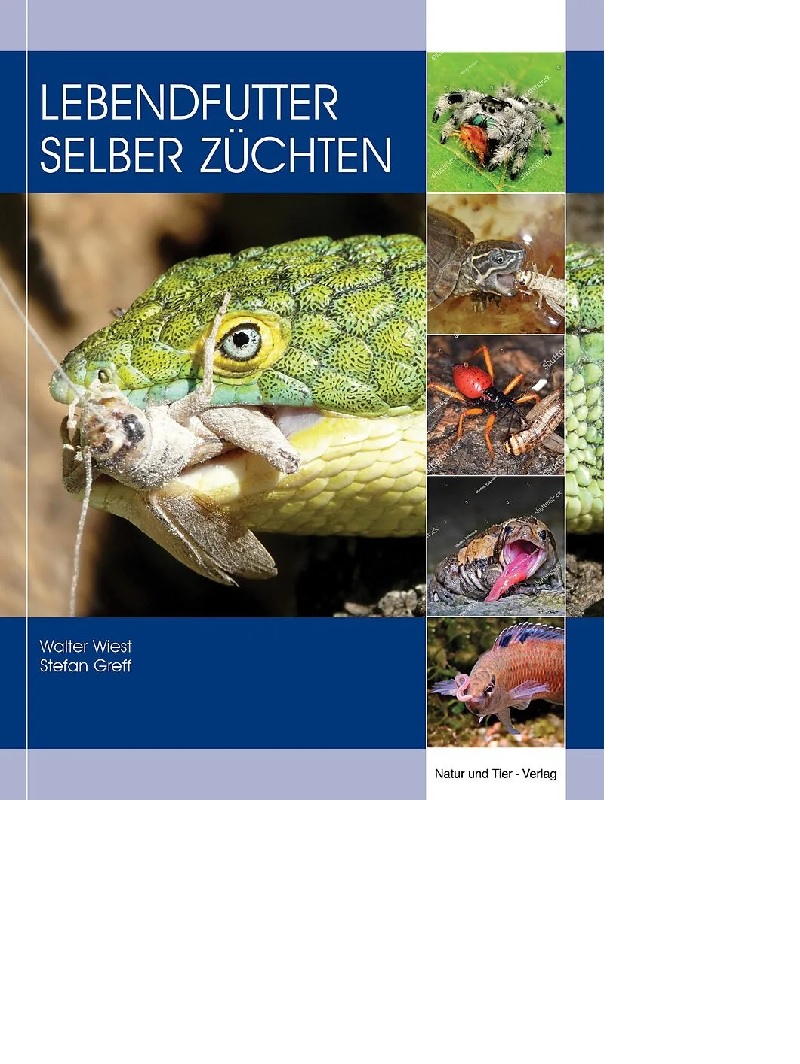
Book "Grow your own live food" - The perfect guide for pet owners
Discover practical and detailed instructions on how you can easily breed food for your reptiles, birds, fish or other animals yourself in the book "Breeding live food yourself". With valuable tips on various food insects, their care and breeding, you can save money and ensure a species-appropriate diet for your pets.
Contents of the book:
Step-by-step instructions for breeding feeder insects
Information on the best types of food for reptiles, birds and fish
Care instructions and breeding conditions for various live food species
Tips for sustainable and cost-effective food production
Why breed your own live food?
Get healthy, fresh food for your animals
Save money and reduce dependence on pet shops
Promote the health and well-being of your animals with species-appropriate food
Whether you are a beginner or an experienced pet owner, this book provides you with everything you need to successfully breed live food yourself.
Marginata 69 - New Guinea tortoises – the genus ElseyaCover storyThe unrecognised beauties: New Guinea tortoises (Andreas S. Hennig)My experiences with Branderhorst's New Guinea tortoise, Elseya (Elseya) branderhorsti (Ouwens, 1914) (Andreas S. Hennig)Keeping and breeding of Rhodin's New Guinea tortoise, Elseya (Hanwarachelys) rhodini Thomson, Amepou, Anamiato & Georges, 2015 (Andreas S. Hennig)PortraitGeoemyda spengleri, Chinese serrated tortoise (Andreas S. Hennig)ReportageMacrochelys temminckii – Experiences and impressions with vulture tortoises part 2 (Reiner Praschag)KeepingAn alternative to year-round keeping of the Egyptian tortoise in the terrarium – my experiences with seasonal outdoor keeping of Testudo kleinmanni (Ricarda Schramm)EtymologySawbacks and living maps part 4: Graptemys gibbonsi, Pascagoula humpback tortoise (Holger Vetter)Classifieds & animal placement
Marginata No. 21 Greek Tortoises
Box turtles Part 2In search of sea turtlesSpanish pond turtle
Contents:
EDITORIALREADER LETTERSMAGAZINEDATES
REPORTAGEThe Greek tortoise (Testudo boettgeri ssp.) – well-known and still fascinatingHans - Dieter Philippen
REPORTAGEThe Greek tortoise (Testudo boettgeri spp.) from the Iron Gate in RomaniaLutz Geissler
BREEDING IN HUMAN CAREBasics of rearing juveniles of the Greek tortoise (Testudo boettgeri ssp.)Thorsten Geier
REPORTAGEAbout Greek tortoises in GreeceMichael Wirth, Peter Fritz & Johann Maier
PORTRAITLarge-headed mud turtle (Claudius angustatus)Hans-Dieter Philippen
REPORTAGENotes on the ecology of Terrapene ornata ornata in the Great Plains region - Part 2Michael Wirth & Hans Peter Mattern
REPORTAGEThreats to, protection and use of sea turtles. Part 1: The relationship of humans to sea turtles through the agesGerald & Christa Benyr
REPORTAGEThe Threat to the Spanish Pond Turtle (Mauremys leprosa)José C. Báez & Davinia Torreblanca
REPORTAGESuccessful year 2008 at the International Centre for Tortoise Conservation (IZS) at Allwetterzoo MünsterElmar Meier, Martina Raffel & Hans-Dieter Philippen
BOOK TIPCLASSIFIED ADSSUBSCRIPTION & SERVICEREGIONAL GUIDE
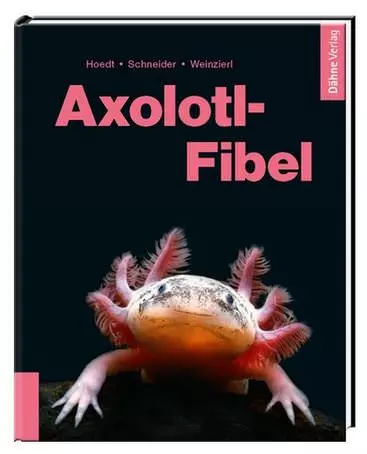
Dähne Verlag - Axolotl Primer
Everything you need to know about keeping and colouring these fascinating amphibians.
96 pages
150 photos
hardback
Authors Hoedt, Schneider and Weinzierl
Publisher Dähne Verlag
The fascinating axolotl has become increasingly popular and there are now also different colour forms. The authors present the most important colour forms and give tips on how to set them up and keep them correctly.
The garter snake - Everything you need to know about keeping and caring for Thamnophis species
192 pages
125 colour photos
8 graphics
30 distribution maps
Format: 16.8 x 21.8 cm
Authors Martin Hallmen, Jürgen Chlebowy
Contents:
Presented in a competent manner and always with a focus on practical terrarium management, all Thamnophis species, subspecies and captive-bred forms kept in terrarium keeping are presented. Specialised areas such as outdoor husbandry, selective breeding or garter snakes on the Internet are also discussed in depth. In addition, the reader receives in-depth background information on the versatile biology of these water snakes, and finally all scientifically recognised species are presented. An identification key, specially tailored to the needs of terrarium keepers and particularly easy to use, rounds off this outstanding and richly illustrated work.
About the author:
Martin Hallmen, studied Biology and Geography at the Johann Wolfgang von Goethe University in Frankfurt am Main; since 1987 teacher at the Franziskaner-Gymnasium Kreuzburg in Grosskrotzenburg near Hanau, head of the school vivarium and the school's biological Hymenoptera Centre there. Long-standing keeper and breeder of garter snakes, with experience in keeping over 20 species/subspecies/colour morphs of the genus Thamnophis. Author of more than 50 specialist articles on garter snakes in national and international journals, editor of the journal "The Garter Snake", the official publication of the European Garter Snake Association.Jürgen Chlebowy, carpenter, has been keeping and breeding over 50 Thamnophis species/subspecies/colour morphs since childhood. He enjoys international renown within the garter snake scene and has excellent contacts within Europe and to the USA/Canada, enabling him to regularly acquire spectacular imports and subsequently breed rare taxa. Author of numerous specialist articles and webmaster of "thamnophis.com".
Marginata 10 - Dalmatian long-necked turtle
Food plants 5Pond turtles of the PhilippinesBreeding of spider tortoises 2
Contents:
2 EDITORIAL
3 READER LETTERS
7 MAGAZINE
8 DATES
10 PHOTO REPORTAGE A land tortoise from Dalmatia: Testudo hercegovinensis (Werner, 1899) Hans - Dieter Philippen
16 REPORTAGE The Dalmatian tortoise Testudo hermanni hercegovinensis (Werner, 1899) Mario Schweiger
25 BREEDING IN HUMAN CARE Keeping and breeding of Testudo hermanni hercegovinensis (Werner, 1899) Hugo Müller & Mario Schweiger
31 PORTRAIT Philippine box turtle, Siebenrockiella (Panyaenemys) leytensis (Taylor, 1920) Hans - Dieter Philippen
35 REPORTAGE Food plants for tortoises part 5 Susanne Vogel
40 BREEDING IN HUMAN CARE Keeping and successful breeding of the Madagascan spider tortoise (Pyxis arachnoides arachnoides) Part 2 Peggy Ahr
48 REPORTAGE The pond turtle fauna of the Philippines Maren Gaulke and Alexander Volker Altenbach
54 SHORT REPORTAGE Common toad vs. pond slider: natural threat of alien invaders? Michael Wirth, Björn Franke and Gunnar Schier
56 BOOK TIP 1
59 BOOK TIP 2
61 CLASSIFIEDS
62 REGIONAL GUIDE
64 AGATHA MARGINATA
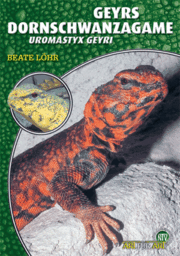
All about the Gery's spiny-tailed lizard from Beate Löhr
62 pages
14.8 x 21 cm
numerous color photos
2nd Edition
Author Beate Löhr
Publisher NTV
Content:Geyr's spiny-tailed lizard is a terrarium care that attracts animal lovers right off the bat. Attractive coloring and prehistoric appearance quickly give rise to the desire to cultivate this lovable lizard in the home terrarium.And that is certainly not rocket science, if one observes the practical instructions for their care and breeding, presented the expert Beate Löhr in this volume of the series "Art for Art". Of course, the author also explains how to stimulate the beautiful lizards for mating, how to incubate the eggs and raise the cute boys.Systematics and physique
The fascinating biology: From the life of Geyr's spiny-tailed lizard
All information on the species-appropriate attitude: From the suitable terrarium over equipment and technology up to the feeding
Successfully breeding: mating stimulation, incubation of the eggs and breeding of the young
Troubleshooting: How to avoid the most common mistakes in care, and how to help sick animals
Brilliant photos
Reptilia 10 - Green Iguanas
Indian Star TortoiseSpringtail Breeding
Contents:
Page 2 - EditorialPage 3 - Letters to the EditorPage 6 - MagazinePage 12 - DatesPage 15 - Western Herp Perspectives: Spiders Steal the Show, by B. LovePage 17 - Photo Report: Green Iguanas, by M. SchardtPage 22 - Keeping and Breeding: Iguana iguana, by M. SchardtPage 28 - Herpetofauna: The Caribbean Green Iguana Iguana delicatissima, by M. SchardtPage 33 - Report: The Herpetofauna of Jordan, Part 2, by D. Modry and P. NečasPage 39 - Portrait and Poster: Dendrobates quinquevittatus, by Dr. H.-J. HermannPage 43 - Keeping and Breeding: Bull Snakes of the Genus Pituophis, by J. BergadáPage 48 - Keeping and Breeding: The Indian Star Tortoise Geochelone elegans, by A. DickPage 52 - Keeping and Breeding: The West African Clawed Gecko Hemitheconyx caudicinctus, by V. KnietschPage 56 - Terraristics: Feeder Breeding: Springtails from the Drawer, by T. SchäfferPage 61 - Herpetology and Culture: Tarantella – The Spider Dance, by L. Batista Carrissmi-PrioriPage 69 - Reptilia on the Move: Bochum Zoo, by M. SchmidtPage 74 - LibraryPage 76 - Help and AdvicePage 80 - Incubator: As an Exchange Student in the USA, by H. Werning
You can find out all about these reptiles in this NTV - Angle-headed Dragons book.
64 pages
with colour photos
Paperback
Date of publication 26.05.2010
Author Michael Evers
Everything about keeping, care, the terrarium, nutrition and much more about the angle-headed dragons. Different species and their differences are explained.
Contents:
Foreword
Relationship
Description of the genus Gonocephalus
Description and main distinguishing features of the species presented
Gonocephalus bellii
Gonocephalus chamaeleontinus
Gonocephalus doriae abbotti
Sex differentiation
Distribution and way of life
Preliminary remarks on keeping
Legal regulations
Purchase
Transport and quarantine
The terrarium
Furnishings
Planting
Technique
Climate values in the terrarium
Care work
Nutrition
Vitamins and minerals
Drinking water and humidity
Familiarisation
Stocking and socialisation
Behaviour of the three species in the community terrarium
Age and health
Mating behaviour, pregnancy and egg laying
Incubation and hatching
Rearing the young
Thanks
Further information
Literature used and further reading
Tortoise food by Eric Schweizer
for tortoises
with ribwort plantain
Composition:Granules made from ribwort plantain, dandelion, white clover blossoms, barley, wheat Analytical constituents:17.3 % crude protein, 3.8 % fat content, 4.8 % crude fibre, 11.1 % crude ash
CHF 9.80
❅
❆
❅
❆
❅
❆
❅
❆
❅
❆
❅
❆
This website uses cookies to ensure the best experience possible. More information...