Draco 18 - Geckos

Article no: draco18

CHF 16.80

Stock: 0

This article is currently not available

Product information "Draco 18 - Geckos"

Draco 18 - Geckos

Contents:

  • 2 Editorial
  • 4 The geckos of the world
    Mirko Barts and Felix Hulbert
  • 18 Diurnal dwarf geckos from Africa and Madagascar: the genus Lygodactylus
    Beate Röll
  • 28 The Madagascar big-headed geckos (Paroedura)
    Klaus Liebel, Michael Mayer and Wolfgang Schmidt
  • 40 News from Madagascar: care, breeding and way of life of Uroplatus pietschmanni BÖHLE & SCHÖNECKEr, 2004
    Patrick Schönecker and Andreas Böhle
  • 45 Narrow-fingered geckos, Stenodactylus sthenodactylus (LIECHTENSTEIN, 1823), in the terrarium
    Karsten Grießhammer
  • 52 Dwarf geckos (Tropiocolotes PETERS, 1880) from North Africa -
    Habitats, behaviour, care and breeding
    Uwe Schlüter
  • 59 Agamura persica – The spider gecko from the Middle East
    Michael Meyer
  • 64 Experiences with the house gecko (Hemidactylus frenatus)
    Peter Maria Müller
  • 68 The fringed-tailed house gecko (Cosymbotus platyurus): keeping and breeding in the terrarium and free-range
    Ingo Kober
  • 76A tiger in the terrarium – keeping and breeding Goniurosaurus araneus (GRISMER; VIETS & BOYLE, 1999)
    Andreas Dickhoff
  • 82 Keeping and breeding the knob-headed gecko, Rhacodactylus auriculatus BAVAY, 1869
    Stefanie Bach
  • 90 Book box
  • 95 Magazine
Composition
Feeding recommendation
Technical details
Size information

0 of 0 reviews

Give us a rating!

Share your experience with the product with other customers.


Suggested products

Handbook of food plants for tortoises and other reptiles
Handbook of forage plants 2nd revised editionMarion Minch is not only a successful breeder of diverse tortoises for many years, but also an excellent connoisseur of native wild herbs. She founded and runs samenkiste.de, which is well known to many tortoise keepers and nature lovers. Her name is inextricably linked with reptile care and species-appropriate nutrition for tortoises. Her handbook of food plants summarises the most important native food plants for herbivorous and omnivorous reptiles. She not only considers tortoises, but also iguanas, spiny-tailed dragons and even chameleons. From the basics of plant biology to native wild herbs to suitable food plants for hardy tropical reptile species, this comprehensive work provides the basis for species-appropriate keeping. In the expanded and supplemented 2nd edition, the plant section is divided according to flower colour. This makes it even easier to identify wild herbs. The work has also been supplemented with a wealth of additional information and many pictures.

CHF 46.50

Geckos
Geckos in the terrarium by Astrid FalkThe book offers a comprehensive introduction to geckos and their species-appropriate keeping in terrariums. It explains what you need to think about before buying a gecko and what preparations should be made. The book describes in detail how the terrarium is technically equipped and set up. The care of the animals, their special features and behaviour, their diet, reproduction and rearing of young animals are described, as well as diseases and husbandry problems with tried and tested suggestions for prevention and treatment. Individual gecko species that are particularly suitable for keeping and breeding in terrariums are portrayed in detail in the second part of the book.

CHF 28.50

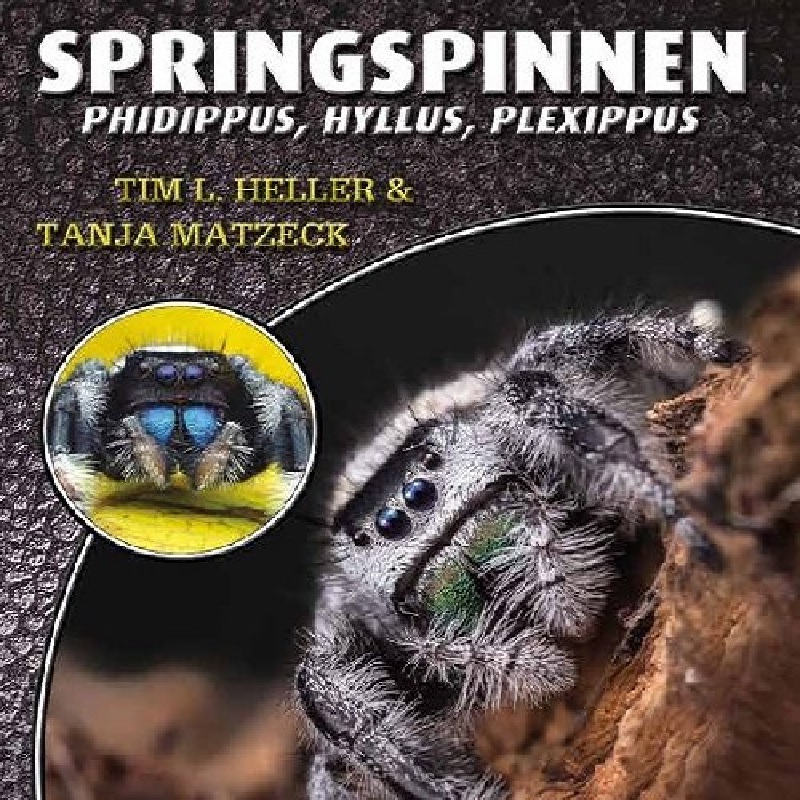
Jumping spiders Phidippus, Hyllus, Plexippus
Book Jumping Spiders - Phidippus, Hyllus & Plexippus A guide to keeping jumping spiders of the genera Phidippus, Hyllus & Plexippus. Who can resist the charm of jumping spiders? The childlike appearance of their expressive face simply leaves no one cold! In addition, their behavior is extremely exciting to observe, their colors are bright and their requirements for species-appropriate keeping are very easy to meet. No wonder these likeable jumpers are all the rage! This volume in the "Species by Species" series describes in detail what to look out for when buying and keeping them, introduces the most commonly kept species and color forms and provides plenty of tips on how to keep them successfully - so you can be sure they will breed well! Species by Species introduces you to the books in this series, which present the most popular terrarium animals. Each volume offers you detailed, practical care instructions and all the information you need to successfully breed your animals. All important questions from the required tank size to terrarium set-up, technical equipment, species-appropriate nutrition and disease prevention are answered with numerous tricks and tips. Experienced, long-standing breeders reveal how you can encourage the animals to reproduce and raise healthy young. All this in full color, generously illustrated and attractively designed - just about your terrarium animal - species by species

CHF 23.90

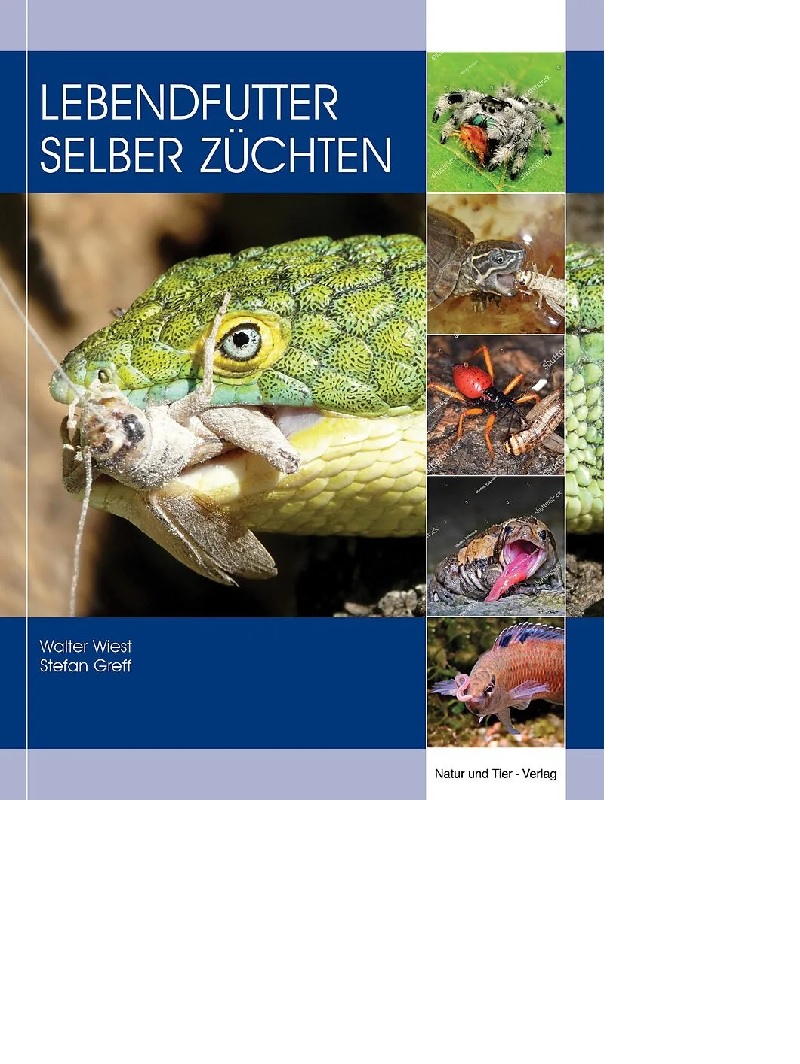
Book Breeding live food yourself
Book "Grow your own live food" - The perfect guide for pet owners Discover practical and detailed instructions on how you can easily breed food for your reptiles, birds, fish or other animals yourself in the book "Breeding live food yourself". With valuable tips on various food insects, their care and breeding, you can save money and ensure a species-appropriate diet for your pets. Contents of the book: Step-by-step instructions for breeding feeder insects Information on the best types of food for reptiles, birds and fish Care instructions and breeding conditions for various live food species Tips for sustainable and cost-effective food production Why breed your own live food? Get healthy, fresh food for your animals Save money and reduce dependence on pet shops Promote the health and well-being of your animals with species-appropriate food Whether you are a beginner or an experienced pet owner, this book provides you with everything you need to successfully breed live food yourself.

CHF 46.50

Marginata 69 - New Guinea tortoises
Marginata 69 - New Guinea tortoises – the genus ElseyaCover storyThe unrecognised beauties: New Guinea tortoises (Andreas S. Hennig)My experiences with Branderhorst's New Guinea tortoise, Elseya (Elseya) branderhorsti (Ouwens, 1914) (Andreas S. Hennig)Keeping and breeding of Rhodin's New Guinea tortoise, Elseya (Hanwarachelys) rhodini Thomson, Amepou, Anamiato & Georges, 2015 (Andreas S. Hennig)PortraitGeoemyda spengleri, Chinese serrated tortoise (Andreas S. Hennig)ReportageMacrochelys temminckii – Experiences and impressions with vulture tortoises part 2 (Reiner Praschag)KeepingAn alternative to year-round keeping of the Egyptian tortoise in the terrarium – my experiences with seasonal outdoor keeping of Testudo kleinmanni (Ricarda Schramm)EtymologySawbacks and living maps part 4: Graptemys gibbonsi, Pascagoula humpback tortoise (Holger Vetter)Classifieds & animal placement

CHF 16.50

Reptilia 72 - Grasshoppers, crickets, house crickets
Reptilia 72 - Grasshoppers, Crickets, House Crickets Jamaican AnoleIndochinese Hinged TurtleSunglow Boas Contents: 2    EDITORIAL 4    REPORTAGE      Potential Dangers of Giant Snakes      by B. Akeret 13  MAGAZINE 21  DATES 24  PHOTOSTORY      Crickets and Grasshoppers      by F. Tomasinelli 32  REPORTAGE      Grasshoppers:      Defence and Survival      by F. Tomasinelli 36  KEEPING AND BREEDING      The Egyptian Migratory Locust     Anacridium aegyptium     by A. Mangoni 40  REPORTAGE      Lord of the Bugs      Visiting Europe’s Largest       Breeding Facility for Feeder Insects      by H. Werning 54  HERPETOFAUNA      The European Tree Frog (Hyla arborea)      “Frog of the Year” in the “Year of the       Frog 2008”      by A. Kwet, A. Nöllert & A. Geiger 64  KEEPING AND BREEDING      Successful Keeping and Offspring of      Cistoclemmys (galbinifrons) bouretti,      the Indochinese Hinged Turtle      by W. & K. Heuberger 73  TRAVEL/KEEPING AND BREEDING      Jamaica, its Iguanas and the      Giant Anole Anolis garmani      by T. Baum 81  KEEPING AND BREEDING      And the Sun Rises … the Sunglow Boa      by R. Ihle & J. Bergman 86  WESTERN HERP PERSPECTIVES      A Turtle Story      by B. Love 91  LIBRARY 104 BRUTKASTEN      Thoughts on the Day of Milk Suffering      by H. Werning

CHF 12.00

Terraria 51 - Amphibian crisis
Terraria 51 - Amphibian crisis ChacoMoroccan day gecko Contents: Cover story: Amphibian crisis The global amphibian crisis is threatening frogs all over the world, and we may be facing a dramatic extinction of species. One glimmer of hope is the so-called amphibian ark, the targeted breeding of particularly endangered species in human care. In the cover story of the next issue of TERRARIA/elaphe, we look at various methods used by zoos, scientific institutions and private keepers to successfully breed frogs in the long term. Territorial Herpetorama Cover story Tailed amphibians in danger a “salamander-eating fungus” spreads in EuropeAxel Kwet Questions about the Salamander EaterInterview with Prof. Frank Pasmans, with questions from Axel Kwet Species conservation and captive breeding of amphibians a new approach to keeping cave-dwelling paddle-footed frogs using Rhacophorus orloviMikhail F. Bagaturov, Anna A. Bagaturova & Rustam K. Berdiev PanoramaImpressions of the herpetofauna in the Chaco of ParaguayStephan Böhm The ruin lizards (Podarcis siculus tyrrhenicus) of the island of GiannutriJürgen Gebhart Research New speciesNew keel-tailed iguanas of the genus TropidurusAxel Kwet Newly described: three Japanese angle-toothed newts from KyushuAxel Kwet Among researchersField study on the Cypriot Levantine viper (Macrovipera lebetina lebetina)Daniel Jestrzemski An observation on ophiophagy in the puff adder (Bitis arietans)Tobias Machts Salamandra TerraristicsThe day gecko of south-western Morocco Quedenfeldtia moerens (Chabanaud, 1916)Uwe Schlüter Also in your neighbourhood Nature and species conservation Field notesFrost effect on the spawn of the grass frogRudolf Malkmus Hail damage to amphibians?Axel Kwet Strange toad observations on the island of SyltWolf-Rüdiger Grosse Subscription & Service GalleryThe Thesaurus of Albertus Seba. Old treasures in the Berlin Museum of Natural HistoryAxel Kwet, Rainer Günther & Aaron Bauer Preview Incubator Smoke detectorRolf Leptien

CHF 12.00

Terraria 37 - The correct light
Terraria 37 - The right lightSchool vivariumAtelopus hoogmoediContents:Cover story: The right lightHardly any other topic in terraristics is as important and at the same time as intensively discussed as the right terrarium lighting. What do you need to look out for to ensure that your pets get the best possible replacement for sunlight in their terrarium? What do you think of new lighting technologies such as LEDs? And: How do reptiles actually perceive light? The cover story of the next issue attempts to provide some answers. TerritorialHerpetoramaTOPICThe fluorescent tube - a classic newly illuminatedSteven ArthThe use of UV measuring devices in terraristicsSarina WunderlichColour temperature and colour rendering index: Useful parameters in terraristicsSarina WunderlichPANORAMATerraglobal: Close to death, part 2Joachim BulianSince when do agamas eat peanuts - and crocodile bread?Alfred SchleicherThe school vivarium at the Edith-Stein-Schule in Erfurt - much more than just animals at schoolRica Kepter & Achim KempterRESEARCHNew species: The frog and the prince - splendid tree frogs from EcuadorAxel KwetAmong researchers: Inhabitants of the elfin forest: Herpetofauna at Picu La Picucha in the Sierra de Angalta National Park, HondurasAlexander GutscheNews from Indochina: The amphibians and reptiles of the Cat Thien National Park in South VietnamPeter GeisslerSalamandraTERRARISTICSClassic: The DreicksnatterExperiences in rearing spiny-edged soft-shelled turtles (Apalone spinifera)Sebastian NicklFirst successful breeding of the short-toed toad Atelopus hoohmoedi at the Aquazoo/Löbbecke Museum in DüsseldorfSandra Honigs, Marc Messing & Beate PelzerSome additional information on the article about the mysterious death of hatchlings of the green tree pythonJoachim BulianNATURE AND SPECIES CONSERVATIONField notes: Toad under iceStefan MeyerLate reproduction of the fire-bellied toad in SaxonyWolf-Rüdiger Grosse & Andreas NöllertTwo examples of accidental anthropogenic displacement of lizards due to their flight behaviourAndreas ArnoldMissing: Pinta giant tortoise (Chelonoides abingdonii)Also in your neighbourhoodSubscription & ServiceGALERIAKomodo’s Centenarian DragonsPreviewBRUTKASTENCrocodile alarm at the swimming lake: human tragedy narrowly avertedJakob Hein

CHF 12.00

Terraria 13 - Overwintering of terrarium animals
Terraria 13 - Hibernation of terrarium animals Breeding the palmatogecko from the NamibKeeping and reproducing the Andean kingsnake Contents: 2 Editorial by Heiko Werning4 Magazine Dangerous animals in Saarland / Zoo Days in Frankfurt / Liability for escaped pets / Climbing ability of snakes at different temperatures / First imports of vipers12 TERRAglobal The finest hour of Bolivian television: Herpetologist on Canal 21 by Martin Jansen The discovery of a new species by Karl-Heinz Switak 16 Cover story: Hibernation of terrarium animals Hibernation – Adaptations to cold climatic conditions by Beat Akeret23 Hibernation of reptiles and amphibians in the outdoor terrarium by Martin Hallmen32 The refrigerator method by Hans-Dieter Philippen37 Hibernation of turtles in the cellar light well by Xaver Wapelhorst 40 Hibernation in tarantulas Hans-Werner Auer44 Grey giants among themselves – of leopard tortoises and elephants in the Addo Elephant National Park, South Africa Part 2: Size and population ecology by Michael Wirth54 Lampropeltis triangulum andesianus – rare terrarium jewel with a dubious reputation Part 1: Biology and keeping by Thorsten Schmidt60 On keeping and breeding the palmatogecko Pachydactylus rangei Andersson, 1908 by Sebastian Schenk & Sebastian Wolf66 Frog die-off in the hotspot – a case study in eastern Brazil by Dennis Rödder70 Travel Costa Rica’s Hitoy Cerere, the gateway to the land of Sibú by Ivonne Meuche82 New species Leaf-fingered geckos of the genus Phyllodactylus/ Three tree frogs from southern Brazil84 Among researchers Bolivia: still a “terra incognita” of herpetology by Martin Jansen88 Test run Irrigation systems by Kriton Kunz94 Eye-catcher A turtle paradise – from the garden to the bathroom by Kriton Kunz99 Near you103 Preview104 Incubator The child does not speak by Heiko Werning

CHF 12.00

Small mammals in terrariums
The book explains everything about the care and keeping of small animals. 144 pages 163 photos 2 graphics Format: 16.8 x 21.8 cm 2nd revised edition Author Christian Ehrlich Publisher NTV Contents: Away from the stuffy cage and towards modern and species-appropriate animal husbandry: many small mammals are best kept in a suitably equipped terrarium. This book presents the most suitable types of terrarium and provides a detailed and practical description of how to breed and care for the animals successfully. Anatomy, lineage and systematics Distribution, biotopes, adaptations All information on species-appropriate keeping: from suitable terrariums to equipment and technology to feeding Successful breeding: Mating stimulation and rearing of young animals Taming small mammals Topic free-range: This is how it is species-appropriate. Solutions to problems: How to avoid the most common mistakes in care, and how to help sick animals: Keeping animals healthy Huge species section with detailed portraits of 80 species of marsupials, predatory marsupials, true marsupials, xenarthrans, insectivores, bats, rodents and sengis Brilliant photos Many animal lovers no longer want to be satisfied with just the classic hamster in the equally classic hamster cage. If you want to keep and observe such exciting animals as hedgehogs, opossums, predatory marsupials, sugar gliders, armadillos, tenrecs, ground squirrels, squirrels, bats & co., this book is a must, because all of them and many more are best kept in a suitably equipped terrarium. Christian Ehrlich, editor of the specialist magazine RODENTIA, has now dealt with this topical subject in detail. The author is able to draw on his many years of experience in keeping and breeding small mammals from various related groups and shares his insights here in an easy-to-read but extremely expert manner. Ehrlich describes the biology of the animals, presents their specific husbandry requirements and gives plenty of tips on their successful care and breeding. The book offers detailed portraits of no less than 80 species of marsupials, predatory marsupials, true marsupials, xenarthrans, insectivores, bats, rodents and sengis. For all friends of very special animals and for all those who strive for species-appropriate animal husbandry, this book is an absolute must.

CHF 35.90

Draco 44 - Constrictor
Draco 44 - Giant SnakesContents:EditorialReproduction and breeding of giant snakesDieter SchmidtMating triggers in giant snakesMichaela & Marco SchulzeA few thoughts on feeding giant snakesErich Koerber & Christian BittnerPregnancy and confinement of boas - initial care of offspring and possible complicationsHermann & Erika StöcklAn aberrant form of Boa constrictor longicauda – the ‘Zeros’Hermann & Erika StöcklThe green tree python - success through natural breedingMichèl KroneisKeeping and breeding the Jungle carpet python, Morelia spilota cheyneiSteven Arth & Sandra BausKeeping and breeding the Woma, Aspidites ramsayiManuel Uhlhaas & Philipp Pohlscheid

CHF 18.40

Marginata 25 - Cyrenaica tortoises
Marginata 25 - Cyrenaica tortoises South African beaked tortoise part 3Argentine tortoisesSea turtles Contents: EditorialMagazineDatesREPORTAGEThe Cyrenaica tortoise (Testudo graeca cyrenaica)Alex PiehBREEDINGKeeping and breeding of the Cyrenaica tortoise (Testudo graeca cyrenaica) in an indoor terrariumBastian EsserBREEDINGOutdoor keeping and breeding of the Cyrenaica tortoise (Testudo graeca cyrenaica)Angelica H.POSTERThe Chaco flatback tortoise Acanthochelys pallidipectoris (Freiberg, 1945)Hans - Dieter PhilippenREPORTAGEThe African beaked tortoise (Chersina angulata). Part 3: Predators and other threats Michael WirthREPORTAGEThreats, protection and utilisation of sea turtles. Part 5: Conservation concepts and ways to sustainably utilise sea turtles Gerald & Christa BenyrBREEDINGKeeping and breeding the rarely kept Argentine tortoise (Trachemys d. dorbigni) Volker NathsBook tipClassifiedsSubscription & ServiceRegional guide

CHF 16.50