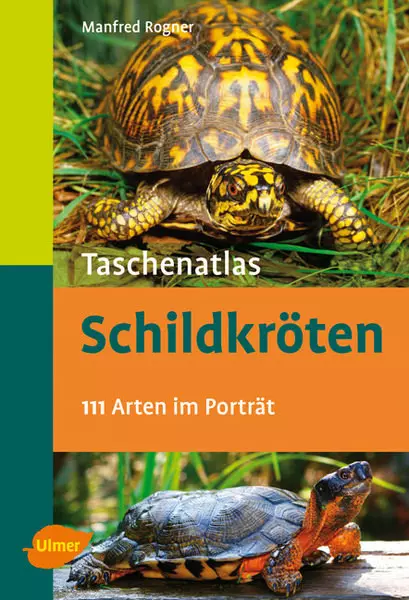
Ulmer, box turtles in a terrarium

Article no: CZ-AB12199

CHF 16.90

Stock: 0

Ready for dispatch in 1-3 days, delivery time 14 working days

Delivery between Tuesday, 14 July and Wednesday, 15 July
Zahlungsarten
Product information "Ulmer, box turtles in a terrarium"

Ulmer Box Turtles in the Terrarium

Box turtles are among the most popular reptiles of all. This book is designed to help you keep, care for and even breed your tortoises properly.

From the contents:
- Natural history
- Diseases
- Keeping
- purchase
- Nutrition
- Reproduction

Composition
Feeding recommendation
Technical details
Size information

0 of 0 reviews

Give us a rating!

Share your experience with the product with other customers.


Suggested products

Handbook of food plants for tortoises and other reptiles
Handbook of forage plants 2nd revised editionMarion Minch is not only a successful breeder of diverse tortoises for many years, but also an excellent connoisseur of native wild herbs. She founded and runs samenkiste.de, which is well known to many tortoise keepers and nature lovers. Her name is inextricably linked with reptile care and species-appropriate nutrition for tortoises. Her handbook of food plants summarises the most important native food plants for herbivorous and omnivorous reptiles. She not only considers tortoises, but also iguanas, spiny-tailed dragons and even chameleons. From the basics of plant biology to native wild herbs to suitable food plants for hardy tropical reptile species, this comprehensive work provides the basis for species-appropriate keeping. In the expanded and supplemented 2nd edition, the plant section is divided according to flower colour. This makes it even easier to identify wild herbs. The work has also been supplemented with a wealth of additional information and many pictures.

CHF 46.50

Geckos
Geckos in the terrarium by Astrid FalkThe book offers a comprehensive introduction to geckos and their species-appropriate keeping in terrariums. It explains what you need to think about before buying a gecko and what preparations should be made. The book describes in detail how the terrarium is technically equipped and set up. The care of the animals, their special features and behaviour, their diet, reproduction and rearing of young animals are described, as well as diseases and husbandry problems with tried and tested suggestions for prevention and treatment. Individual gecko species that are particularly suitable for keeping and breeding in terrariums are portrayed in detail in the second part of the book.

CHF 28.50

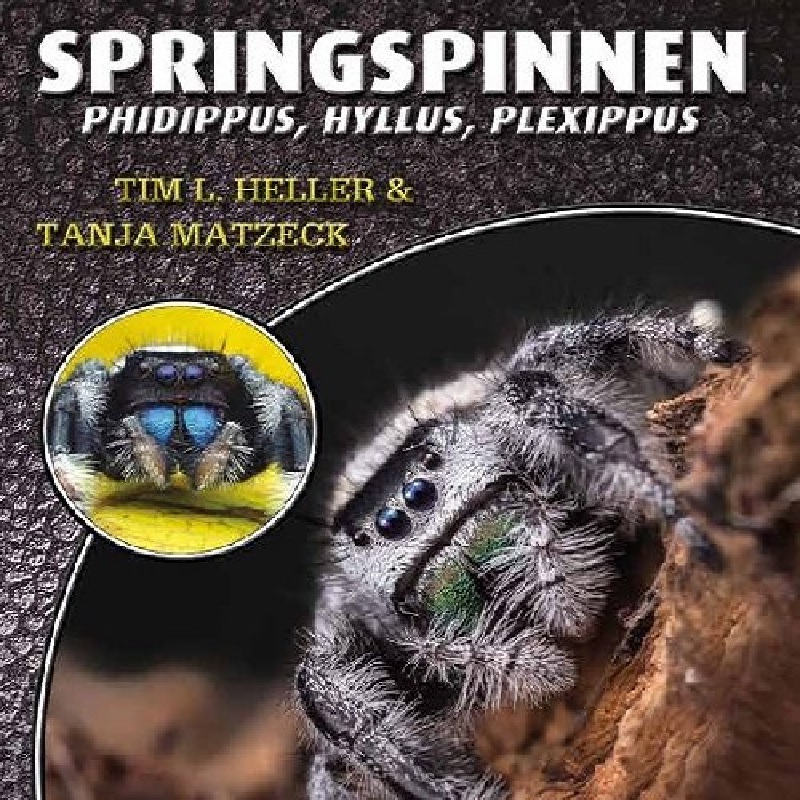
Jumping spiders Phidippus, Hyllus, Plexippus
Book Jumping Spiders - Phidippus, Hyllus & Plexippus A guide to keeping jumping spiders of the genera Phidippus, Hyllus & Plexippus. Who can resist the charm of jumping spiders? The childlike appearance of their expressive face simply leaves no one cold! In addition, their behavior is extremely exciting to observe, their colors are bright and their requirements for species-appropriate keeping are very easy to meet. No wonder these likeable jumpers are all the rage! This volume in the "Species by Species" series describes in detail what to look out for when buying and keeping them, introduces the most commonly kept species and color forms and provides plenty of tips on how to keep them successfully - so you can be sure they will breed well! Species by Species introduces you to the books in this series, which present the most popular terrarium animals. Each volume offers you detailed, practical care instructions and all the information you need to successfully breed your animals. All important questions from the required tank size to terrarium set-up, technical equipment, species-appropriate nutrition and disease prevention are answered with numerous tricks and tips. Experienced, long-standing breeders reveal how you can encourage the animals to reproduce and raise healthy young. All this in full color, generously illustrated and attractively designed - just about your terrarium animal - species by species

CHF 23.90

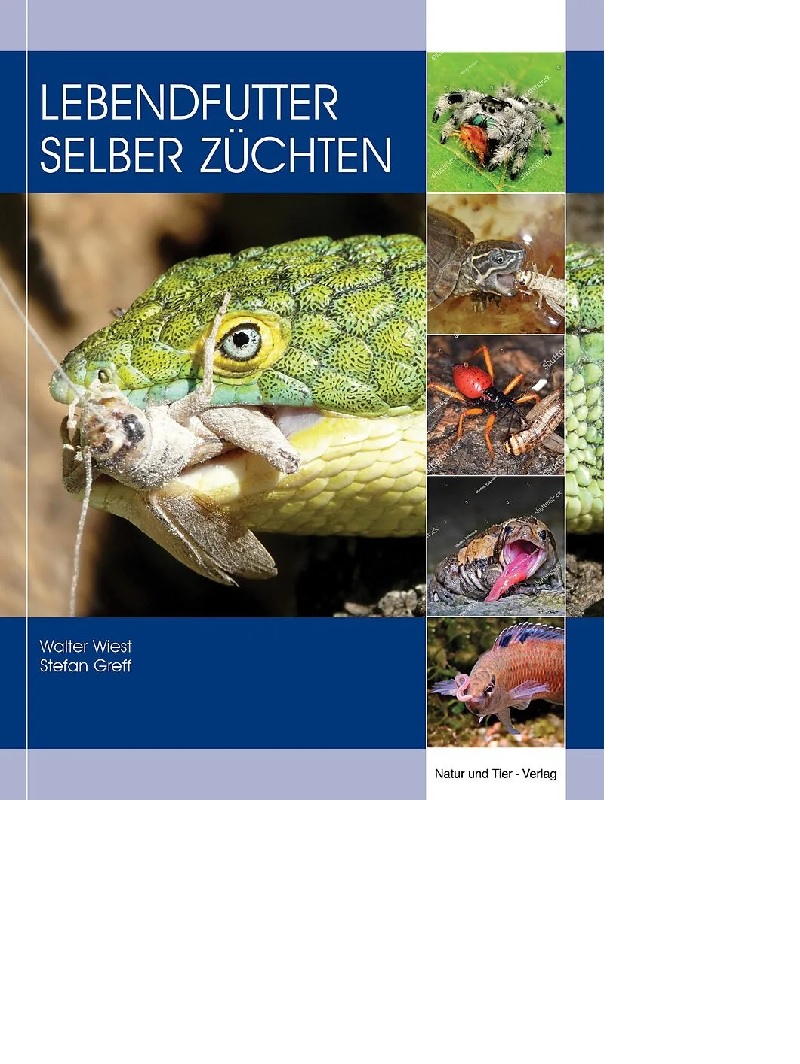
Book Breeding live food yourself
Book "Grow your own live food" - The perfect guide for pet owners Discover practical and detailed instructions on how you can easily breed food for your reptiles, birds, fish or other animals yourself in the book "Breeding live food yourself". With valuable tips on various food insects, their care and breeding, you can save money and ensure a species-appropriate diet for your pets. Contents of the book: Step-by-step instructions for breeding feeder insects Information on the best types of food for reptiles, birds and fish Care instructions and breeding conditions for various live food species Tips for sustainable and cost-effective food production Why breed your own live food? Get healthy, fresh food for your animals Save money and reduce dependence on pet shops Promote the health and well-being of your animals with species-appropriate food Whether you are a beginner or an experienced pet owner, this book provides you with everything you need to successfully breed live food yourself.

CHF 46.50

Marginata 69 - New Guinea tortoises
Marginata 69 - New Guinea tortoises – the genus ElseyaCover storyThe unrecognised beauties: New Guinea tortoises (Andreas S. Hennig)My experiences with Branderhorst's New Guinea tortoise, Elseya (Elseya) branderhorsti (Ouwens, 1914) (Andreas S. Hennig)Keeping and breeding of Rhodin's New Guinea tortoise, Elseya (Hanwarachelys) rhodini Thomson, Amepou, Anamiato & Georges, 2015 (Andreas S. Hennig)PortraitGeoemyda spengleri, Chinese serrated tortoise (Andreas S. Hennig)ReportageMacrochelys temminckii – Experiences and impressions with vulture tortoises part 2 (Reiner Praschag)KeepingAn alternative to year-round keeping of the Egyptian tortoise in the terrarium – my experiences with seasonal outdoor keeping of Testudo kleinmanni (Ricarda Schramm)EtymologySawbacks and living maps part 4: Graptemys gibbonsi, Pascagoula humpback tortoise (Holger Vetter)Classifieds & animal placement

CHF 16.50

NTV Grammostola rosea
NTV - Grammostola rosea The red chile tarantula is one of the common interested tarantulas. It is brownish to gray and her calm demeanor, it becomes a super spider beginners. Boris F. Striffler 64 pages 14.8 x 21cm many color photo   Table of Contents foreword systematology spread endangering anatomy moult way of life Gift and stinging hairs purchase The terrarium care proliferation Hibernation summary thanks Further information Used and further reading

CHF 18.50

NTV, Discover the amphibians
NTV, Discover the amphibians and learn all about these animals. 56 pages colour photos throughout Large format: 20.7 x 28 cm Hardcover Author Kriton Kunz Contents: Every child knows a frog that swims around in its pond and croaks cheerfully, or the black and yellow fire salamander. But how do these friendly animals live? What do they eat, how do they survive the winter? How does a tadpole become a small frog? And what other amazing amphibians are there? "Entdecke die Amphibien" explains what amphibians are, their special features and their incredible abilities in an entertaining and child-friendly way. Fantastic records from the world of frogs, salamanders and the like are included, as well as an exciting quiz about these colourful survival artists. Including 20 great stickers 

CHF 17.90

Terraria 40 - Night-active Geckos
Terraria 40 - Nocturnal Geckos Majorca midwife toadEnclosure of tortoise outdoor enclosures Contents: Cover story: Nocturnal Geckos Nocturnal geckos are among the most popular terrarium animals of all. In the cover story of this issue of TERRARIA/elaphe, we take an in-depth look at the biology, care and breeding of three representatives of this vast group: the house geckos of the genus Hemidactylus, often scorned as “feed geckos”; the impressive green-eyed gecko Gekko siamensis; and finally the eye-spotted arched-toed gecko (Cyrtodactylus peguensis). TerritorialHerpetorama Cover storyHalf-finger geckos: Hemidactylus. The misunderstood genusBernd-Michael Zwanzig & Wolfgang Grossmann Keeping and breeding of Cyrtodactylus peguensisSiriporn Maier Experiences with the Thai green-eyed gecko, Gekko siamensisIngo Kober Panorama TerraglobalReptile search with obstacles - Part 1Joachim Bulian Pond frogs, pond newts, alpine newts. “Quantitative” side notes from our own gardenWerner & Yvonne Lantermann The herpetofauna of the Portuguese Star MountainsRudolf Malkmus Research New speciesList of amphibians newly described in 2012Axel Kwet Salamandra TerraristicsClassic. The smooth clawed frog Setting boundaries with understanding. The enclosure of an outdoor enclosure for European tortoisesPeter Buchert HomerangeIn snake country – A visit to Yvonne and Thomas KlesiusHeiko Werning Nature and species conservationField notes. Eyes bigger than the mouth – unsuccessful prey-catching attempt of a fire-bellied toadStefan Meyer Smooth newt or hybrid newt?Wolf-Rüdiger Grosse & Holger Wawrzyniak The Majorca midwife toad (Alytes muletensis). A fossil from the Ice AgeAxel Hilger MissingTurkestan angular-toothed newt (Hynobius turkestanicus)Alexander Gutsche Subscription & ServiceAlso in your neighbourhood GalleryWilly Wolterstorff – “Father of the newts” Preview IncubatorThe beagle of terraristicsJörg Hofmann

CHF 12.00

Reptilia 95 - Chameleon & Co. The genus Furcifer
  Krokodil-AnlageAsiatische FalltürspinnenHaltung von Schmuckschildkröten Inhalt: Das Pantherchamäleon, Furcifer pardalis, gehört zu den beliebtesten Echsen überhaupt. Diese extrem farbenprächtigen, imposanten Chamäleons aus Madagaskar werden inzwischen in verschiedenen Lokalformen erfolgreich und dauerhaft in unseren Terrarien nachgezüchtet. Die Gattung Furcifer hält aber noch viele weitere hochinteressante Arten bereit – freuen Sie sich auf ein in jeder Hinsicht buntes Titelthema mit viel Praxisbezug! EDITORIALMAGAZINTERMINEIN 5 JAHREN UM DIE WELTBrüllaffen, Klappschildkröten und VulkaneA. PachmannWESTERN HERP PERSPECTIVESAuf Reptiliensuche in AustralienB. LoveFOTOSTORYChamäleons der Gattung FurciferP. NecasHERPETOFAUNAAbenteuer Komorenchamäleon – auf der Suche nach Furcifer cephalolepisR. LeptienPORTÄTIm Porträt: das Teppichchamäleon, Furcifer lateralis P. NecasIm Porträt: das Pantherchamäleon, Furcifer pardalisP. NecasZUCHTDie Entstehung einer neuen Designermorphe der Kornnatter (Pantherophis guttatus)A. SchmidHALTUNG UND VERMEHRUNGPhilippinenkrokodile (Crocodylus mindorensis) im Aquarium des Kölner Zoos. Teil 2: Bau einer Schauanlage für eine der am stärksten bedrohten Krokodilarten der Welt T. Ziegler, R. Sommerlad, W. Brass, K. van der Straeten, D. Karbe & A. RauhausHERPETOFAUNAAuf dem Weg ins All. Die Welt der Buchstaben-Schmuck-schildkröte, Trachemys scripta. Teil 5: Haltung und Vermehrung von Buchstaben-SchmuckschildkrötenA. S. HennigWIRBELLOSEAußergewöhnliche Falltürspinnen aus Asien: die Gattung Cyclocosmia F. Schneider, B. F. Striffler & I. WendtABO & SERVICETerrarienschauanlagen international Der „Rimba Reptile Park“ auf Bali M. HallmenTiere unserer Heimat Die ErdkröteR. LeptienBibliothekTipps & TricksTestlaufAUCH IN IHRER NÄHEREISEZwischen Anolis und Cycluren: Unterwegs auf Puerto RicoH. WerningVORSCHAUBRUTKASTENIguana chilena, Teil 2 H. Werning  

CHF 12.00

Marginata No. 34 - Hinge-back Tortoises, the turtles with the crease in the tank
  Im Biotop der Großkopf-Schienenschildkröte?Zucht von Kinosternon bauriiHaltung und Zucht von Astrochelys radiata Teil 6 Inhalt: Editorial Magazin Termine FOTOSTORY Die Gattung Kinixys. Schildkröten mit „Knick“ im Panzer Hans-Dieter Philippen NACHZUCHT Gemischte Erfahrungen bei Haltung und Nachzucht der Madagassischen oder Dormergues Glattrand Gelenkschildkröte Viktor Mislin & Hans-Dieter Philippen NACHZUCHT Haltung und Nachzucht der Stutz-Gelenkschildkröte (Kinixys homeana) bis zur F2-Generation John Zoran PORTRÄT Weissingers Breitrandschildkröte, Testudo marginata weissingeri Hans-Dieter Philippen HALTUNG UND NACHZUCHT Haltung und Nachzucht der Madagassischen Strahlenschildkröte. Teil 6 Michael Wirth & Peter Fritz REPTORTAGE Im Biotop der Großkopf-Schienenschildkröte (Peltocephalus dumerilianus) Mario Herz ZUCHT Haltung, Pflege und Nachzucht der Dreistreifen-Klappschildkröte, Kinosternon baurii Nicolas Pellegrin Buchtipp Kleinanzeigen Abo & Service Regionalführer    

CHF 16.50

Reptilia 59 - Rose chafer
Reptilia 59 - Rose chafer South American tortoisesBuilding a desert terrariumReptile of the year: Forest lizard Contents: 4 EDITORIAL 6 MAGAZINE 17 DATES 20 PHOTO REPORTAGERose chaferBy M. Tomás Rafáles 28 KEEPING AND REPRODUCTIONCare and breeding of the rose chaferAmaurodes passeriniiBy M. Tomás Rafáles 33 REPORTAGEEuropean rose beetles (family Cetoniidae)By M. Yliana 39 TRAVELThin air – An excursion into the highlands ofIran and TurkeyBy B. Trapp 51 PORTRAIT AND POSTERPsammodynastes pulverulentusBy M. Gaulke 55 HERPETOFAUNAOn the "Reptile of the Year 2006" – The Eurasianforest or mountain lizard (Zootoca vivipara),the world's most successful terrestrial reptileBy W. Böhme & D. Rödder 62 PRACTICEUse of a conservatory as a terrariumlocation for a desert terrariumPart 1: Planning and building the terrariumBy T. Ackermann 71 HERPETOFAUNA The North African-Arab cat snakeTelescopus dhara (Forsskål, 1775)By U. Schlüter 77 REPORTAGEObservations on the occurrence ofGeochelone (Chelonoides) in southern BoliviaBy J. Knaack 87 CLASSIFIED ADS 92 RAT & TAT 96 WESTERN HERP PERSPECTIVESThe new "Good Guys"By B. Love 104 INCUBATORMaggot dispenserBy H. Werning

CHF 11.20

Bearded dragons
GU Bearded Dragon Book The expert beginner's guide to the "mini dragons" from Australia. 64 pages coloured photos Paperback Author Manfred Au Published by Gräfer & Unzer Like creatures from another planet! Bearded dragons are right at the top of the popularity scale for terrarium animals. They fascinate with their bizarre appearance and inquisitive nature. The mini dragons from Australia are also easy to care for and quickly become trusting. In GU Tierratgeber Bartagamen, bearded dragon expert Manfred Au explains everything you need to know about keeping these diurnal lizards: what to look out for when choosing them - detailed portraits of bearded dragons help with this -, how to acclimatise and care for them properly, what tastes good and keeps them fit. There are also tried and tested tips on health care, hibernation and care in the event of illness. In addition, there are many ideas and suggestions for species-appropriate and varied design of the terrarium, so that the animals are completely comfortable. The behaviour interpreter also explains typical bearded dragon behaviour. And with SOS - what to do? help is guaranteed in an emergency.

CHF 12.90