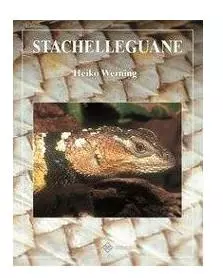
NTV - Stachelleguane - Ein Buch für alle Echsen-Fans!
143 Seiten
141 Farbfotos
8 farbige Zeichnungen
Taschenbuch
Heiko Werning
Die ebenso hübschen wie agilen Stachelleguane zählen mit Recht zu den beliebtesten im Terrarium gehaltenen Echsen. In diesem Buch präsentiert Heiko Werning nun erstmals alles Wissenswerte über diese Gattung praxisnah und aus erster Hand:
Systematik und Erkennungsmerkmale
Verbreitung, Lebensraum und Biotoptypen
Spannende biologische Details, Sozialverhalten und Fortpflanzungsstrategiendie
Terrarienhaltung: sämtliche Informationen von der Einrichtung des Terrariums und den technischen Voraussetzungen über die artgerechte Ernährung bis hin zur Vermehrung der lebhaften Echsen und der Aufzucht der bezaubernden Jungtiere
detaillierte Porträts aller Arten für das Terrarium
Vorstellung sämtlicher Arten und Unterarten der Gattung Sceloporus
durchgehend brillante Farbfotos
Das absolute Muss für jeden Echsen-Fan!
Composition
Feeding recommendation
Technical details
Size information
0 of 0 reviews
Leave a review!
Share your experiences with other customers.
Login
No reviews found. Share your insights with others.
Handbuch der Futterpflanzen 2. überarbeitete AuflageMarion Minch ist nicht nur eine langjährig erfolgreiche Züchterin diverser Landschildkröten, sondern auch eine exzellente Kennerin der heimischen Wildkräuter. Die von Ihr gegründete und geführte samenkiste.de ist vielen Schildkrötenhaltern und Naturliebhabern ein Begriff. Ihr Name ist untrennbar mit der Reptilienpflege und der artgerechten Ernährung von Schildkröten verbunden. Ihr Handbuch der Futterpflanzen bildet eine Zusammenfassung über die wichtigsten heimischen Futterpflanzen für herbi- und omnivore Reptilien. Dabei berücksichtigt sie nicht nur Landschildkröten, sondern u.a. auch Leguane, Dornschwanzagamen und sogar Chamäleons. Angefangen von den Grundlagen der Pflanzenbiologie über heimische Wildkräuter bis hin zu geeigneten Futterpflanzen für winterwache tropische Reptilienarten stellt dieses umfassende Werk die Basis für eine artgerechte Haltung dar. In der erweiterten und ergänzten 2. Auflage ist der Pflanzenteil nach Blütenfarbe gegliedert. So wird das Bestimmen der Wildkräuter noch einfacher. Ebenso wurde das Werk um zahlreiche weitere Informationen und viele Bilder ergänzt.
Geckos im Terrarium von Astrid FalkDas Buch bietet eine umfassende Einführung in die Geckos und ihre artgerechte Haltung im Terrarium. Es geht darauf ein, welche Gedanken man sich vor der Anschaffung machen und welche Vorbereitungen getroffen werden sollten. Das Buch beschreibt ausführlich, wie das Terrarium technisch ausgestattet und eingerichtet wird. Die Pflege der Tiere, ihre Besonderheiten und ihr Verhalten, ihre Ernährung, Fortpflanzung und Aufzucht der Jungtiere werden dargestellt, ebenso Krankheiten und Haltungsschäden m it praxiserprobten Vorschlägen zur Vorbeugung und Behandlung. Einzelne Gecko-Arten, die sich besonders gut im Terrarium halten und züchten lassen, werden ausführlich im zweiten Teil des Buches porträtiert.
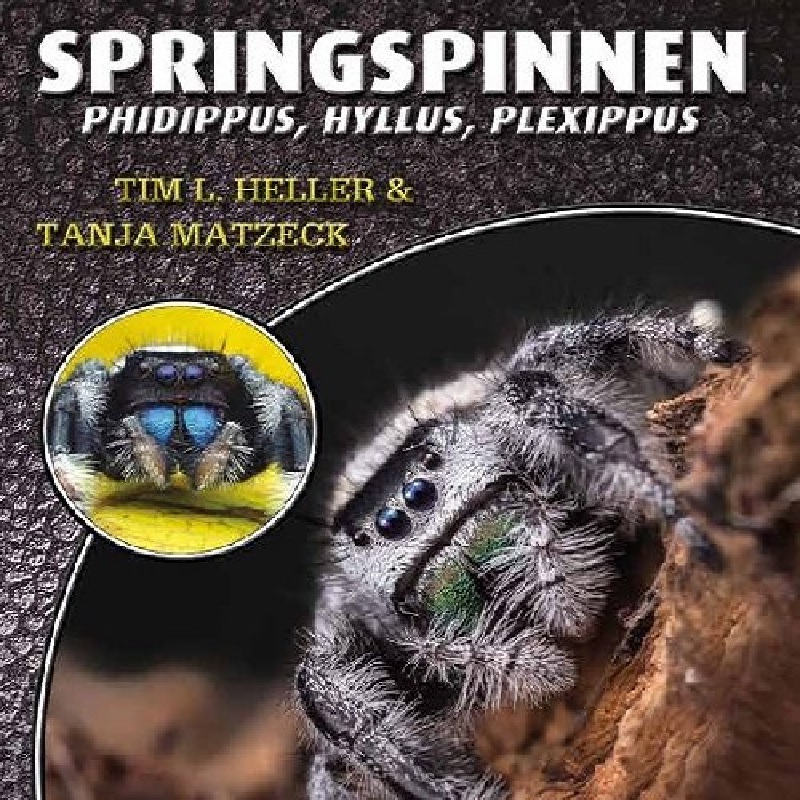
Book Jumping Spiders -
Phidippus, Hyllus & Plexippus
A guide to keeping jumping spiders of the genera Phidippus, Hyllus & Plexippus. Who can resist the charm of jumping spiders? The childlike appearance of their expressive face simply leaves no one cold! In addition, their behavior is extremely exciting to observe, their colors are bright and their requirements for species-appropriate keeping are very easy to meet. No wonder these likeable jumpers are all the rage!
This volume in the "Species by Species" series describes in detail what to look out for when buying and keeping them, introduces the most commonly kept species and color forms and provides plenty of tips on how to keep them successfully - so you can be sure they will breed well!
Species by Species introduces you to the books in this series, which present the most popular terrarium animals. Each volume offers you detailed, practical care instructions and all the information you need to successfully breed your animals.
All important questions from the required tank size to terrarium set-up, technical equipment, species-appropriate nutrition and disease prevention are answered with numerous tricks and tips.
Experienced, long-standing breeders reveal how you can encourage the animals to reproduce and raise healthy young.
All this in full color, generously illustrated and attractively designed - just about your terrarium animal - species by species
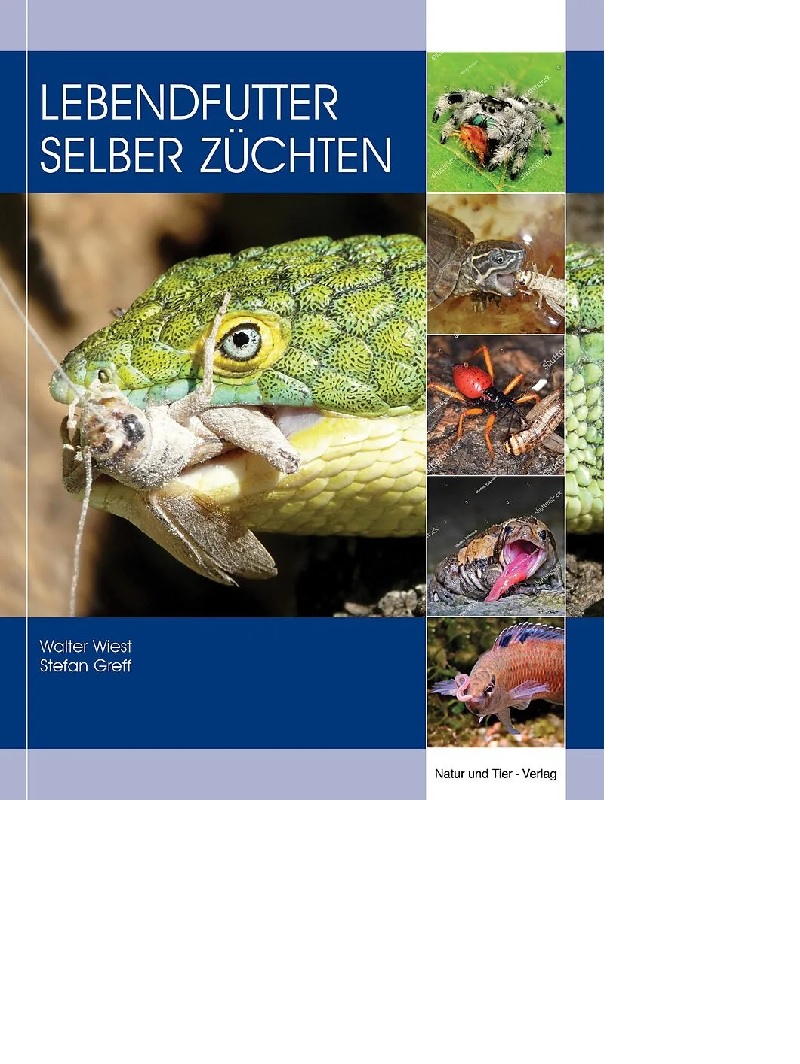
Book "Grow your own live food" - The perfect guide for pet owners
Discover practical and detailed instructions on how you can easily breed food for your reptiles, birds, fish or other animals yourself in the book "Breeding live food yourself". With valuable tips on various food insects, their care and breeding, you can save money and ensure a species-appropriate diet for your pets.
Contents of the book:
Step-by-step instructions for breeding feeder insects
Information on the best types of food for reptiles, birds and fish
Care instructions and breeding conditions for various live food species
Tips for sustainable and cost-effective food production
Why breed your own live food?
Get healthy, fresh food for your animals
Save money and reduce dependence on pet shops
Promote the health and well-being of your animals with species-appropriate food
Whether you are a beginner or an experienced pet owner, this book provides you with everything you need to successfully breed live food yourself.
Marginata 69 - Neuguinea-Schildkröten – die Gattung ElseyaTitelthemaDie verkannten Schönheiten: Neuguinea-Schildkröten (Andreas S. Hennig)Meine Erfahrungen mit Branderhorsts Neuguinea-Schildkröte, Elseya (Elseya) branderhorsti (Ouwens, 1914) (Andreas S. Hennig)Haltung und Nachzucht von Rhodins Neuguinea-Schildkröte, Elseya (Hanwarachelys) rhodini Thomson, Amepou, Anamiato & Georges, 2015 (Andreas S. Hennig)PorträtGeoemyda spengleri, Chinesische Zackenerdschildkröte (Andreas S. Hennig)ReportageMacrochelys temminckii – Erlebnisse und Erfahrungen mit Geierschildkröten Teil 2 (Reiner Praschag)HaltungEine Alternative zur ganzjährigen Haltung der Ägyptischen Landschildkröte im Terrarium – meine Erfahrungen mit der saisonellen Freilufthaltung von Testudo kleinmanni (Ricarda Schramm)EtymologieSägerücken und lebende Landkarten Teil 4: Graptemys gibbonsi, Pascagoula-Höckerschildkröte (Holger Vetter)Kleinanzeigen & Tiervermittlung
Draco 23 - Laubfrösche
Inhalt:
2 Editorial
4 Laubfrösche (Hylidae) – systematische Neuordnung einer Amphibienfamilie Axel Kwet
26 Die Familie Hylidae - Tabellarische ÜbersichtAxel Kwet
40 Die Laubfrösche einer peruanischen LebensgemeinschaftAndreas Schlüter
48 Korallenfinger und Co. – Betrachtungen zu den australischen Hyliden der Gattung LitoriaGunther Schmida
56 Vermehrungsvarianten bei Laubfröschen im TerrariumPeter Janzen
60 Liebenswerte Kläffer im Terrarium Vom Karolinen-Laubfrosch, Hyla cinerea (Schneider, 1799)Kriton Kunz
66 Zur Haltung, Pflege und Vermehrung des Baumhöhlen-Krötenlaubfrosches, Trachycephalus resinifictrix (Goeldi, 1907) im Reptilium LandauThomas Wilms, Birgit Kügelgen & Tobias Schreckenbach
73 Haltung und Zucht von Smilisca phaeotaPeter Janzen
76 Mittel- und südamerikanische Laubkleberfrösche(Dendropsophus-leucophyllatus-Gruppe) Karl-Heinz Jungfer
82 Der Korallenfinger-Laubfrosch (Litoria caerulea) und der Goldene Laubfrosch (Litoria aurea) – zwei Lieblinge der TerrarianerNiklaus Meyer & Andrea Meyer
88 Bücherkiste
94 Magazin
Alles über Boa Constrictor von Stefan Binder
96 Seiten
89 Fotos
2 Grafiken
1 Tabelle
11 Verbreitungskarten
Format: 16,8 x 21,8 cm
Inhalt:
Die Abgottschlange (Boa constrictor) ist der Inbegriff der Riesenschlange. Im Gegensatz zu ihrem landläufigen Ruf ist sie aber weder für den Menschen gefährlich, noch erreicht sie übermässige Körpergrössen. Vielmehr handelt es sich um ein für die Haltung im Terrarium hervorragend geeignetes, äusserst elegantes und attraktives Tier, das selbst dem Anfänger in der Riesenschlangenhaltung empfohlen wird. In diesem Buch erfährt der Schlangenfreund alles, was er für die erfolgreiche Haltung und Zucht der schönen Reptilien wissen muss:- Körperbau und Sinnesleistungen- Systematik: Alle Unterarten und Lokalformen- Sämtliche Farb- und Zeichnungsvarianten- Boas richtig halten: Einrichtung und technische Ausstattung des artgerechten Terrariums- Problemlösungen: Prophylaxe und Therapie von Krankheiten- So vermehrt man seine Boas; Aufzucht der Jungtiere- Brillante Farbfotos
Pressestimmen:
Dieses Buch zu rezensieren, war für mich ein ausgesprochenes Vergnügen. Beim Lesen (...) bestätigt sich der Eindruck, dass der Autor das Thema klar und nachvollziehbar vermitteln kann. (...)Ein Buch, das im Schrank eines (Riesenschlange-)Pflegers nicht fehlen sollte!Bruno Treu in Sauria 25/2 (2003)
NTV, amphibians at the garden pond
André de Saint-Paul, Ingo Brand & Wolfgang Schmidt
104 pages
96 photos
Format: 16,8 x 21,8
With references to"Chemistry in the garden pond""Safety at the garden pond""Design"
Content:
You will not only get a beautifuland interesting small biotope to theown property, but can also be usedmake an important contribution to nature conservation!
Everything you need to know in order for amphibians to settle in your pond
The amphibian-friendly garden pond
Large species part with splendid pictures
With "amphibian calendar" for the garden pond
Press commentaries:
Following a taste of the time more and more garden pond friends lay themselves ponds, many of them become so-called natural ponds. Surely, only the fewest investors consider thereby, what they can cause. For these a book appeared, which can answer each question, which they could ask, exhaustively, if it refers to the topic: Amphibien at the garden pond . Who knows them all, toads, toads, frogs and newts? All animal species that before man had settled in the places of today's ponds had long been resident and indigenous and had been suppressed for the time being. What to do when they return suddenly and inconspicuously? Many gardeners are aware of the fact that this can happen in well-designed gardens and have been described in some articles (...). So what should we do to get to know these new citizens of the garden better and, if possible, to help them even more? Very simple: Buy and read the book discussed here!Rarely has a book summarized so much worth knowing about this topic so succinctly and comprehensibly.Some garden friends, who are not quite firm with the determination, will use the many clear photos beside the text, in order to determine its pond inhabitants correctly. The text leaves also no wish open, there are chapters about the animal species themselves and such, which have apparently secondary meaning, but for a longer existence of pond and animal are extremely important: "Nature as a model", "Legal regulations", "Settlement of amphibians", "Water supply", "Pond technology" and "Safety at the garden pond" are just a few examples. Everything is presented very clearly and comprehensibly for zoological laymen and is also exciting to read.Conclusion: A 5-star book!Walther Rohdich in The Aquarium 08/2002Recommended(...)Altogether (...) a recommendable book for garden owners who are interested in amphibians, as well as for all amphibian friends and those who want to become one.Petra Kölle in DATZ 9/2002(...)(This book) is intended to serve those who want to create a garden pond in their garden that is as close to nature as possible.The book first of all examines the question of whether the garden pond can be a Noah's ark for amphibians and what position amphibians occupy in the biotope garden pond. The next chapter gives a brief overview of amphibians: evolution, systematics, way of life, catching prey, breathing, voice, reproduction, from egg to lurch, migrations and enemies and diseases. This gives everyone the basic knowledge they need to better understand amphibians. (...)In the following kind descriptions all amphibian-types native with us are introduced except for two (...) in text and picture. Thereby, distribution, way of life and reproduction are discussed in detail. The garden ponds for amphibians are taken into account afterwards, whereby also the remaining garden is included in the discussion. The question "Fish and amphibians in a body of water - is that possible?", which is important for many people, is answered as well as questions about legal regulations, settlement in one's own garden and the construction and maintenance of a garden pond. (...)The last part of the book is about safety at the garden pond, care tips and an "amphibian calendar", which gives an overview of important events in the course of the year of the native species. At the end there is a glossary, a bibliography and an index.The book can be considered as quite successful and gives also the interested layman the possibility of making itself fast familiar with the topic. (...) Altogether a recommendable reading for "newcomers" or advanced readers who are interested in this topic.Peter Janzen, DGHT-AG Anuren, in elaphe 3/2002A feel-good garden for frogsA beautiful garden pond is not just a piece of quality of life. It can also make a contribution to nature and species conservation, according to André de Saint-Paul, Ingo Brand and Wolfgang Schmidt in the book "Amphibien am Gartenteich", published by Natur und Tier - Verlag. Location, pond type, water supply, planting and technology - nothing is left out. In addition the Artenteil equipped like the entire book with excellent color photos presents all domestic tail and frog through species with detailed information and refers also to their special needs.Review in Dresdner newest News of 30.05.2002(...)The book shows the right way. More and more garden owners want to create a piece of nature with frogs, toads and newts.One is also reasonably informed about the work involved in setting up and maintaining such a watercourse. The care of the small water is also important, and here the author gives many care tips.Also the amphibian calendar is valuable, which clearly tells each owner of a garden pond what is happening at which time of the year in his water and when he can find which kind of amphibian there.Get a beautiful and interesting small biotope on your own property. Well informed you can make an important contribution to nature conservation!
Marginata No. 29 - Madagascan ray turtle
Schildkrötenforschung in den TropenSternschildkrötenzwillingeGallaguar-Schildkrötenschutz in Indonesien
Inhalt:
Editorial Magazin Termine
REPORTAGEMadagaskars Südwesten – Heimat einer gestreiften ExotinJutta Hammer
REPORTAGE Village des Tortues. Auffangstation für gewilderte Schildkröten Jutta Hammer
HALTUNG UND ZUCHT Haltung und Nachzucht der Madagassischen Strahlenschildkröte. Teil 1 Michael Wirth & Peter Fritz
POSTER Sulawesi-Sumpfschildkröte Leucocephalon yuwonoi Hans-Dieter Philippen
REPORTAGE Zur Situation von Meeresschildkröten in Sri Lanka Sascha Pawlowski
REPORTAGE Erfolgreiches Jahr 2010 im Internationalen Zentrum für Schildkrötenschutz (IZS) im Allwetterzoo Münster Elmar Meier, Martina Raffel & Hans-Dieter Philippen
REPORTAGE Die Papua-Weichschildkröte (Carettochelys insculpta) und ihre Nachzucht in „Down Under“ Egon Heiss
REPORTAGE Conrad Gesner und die Schildkröten Kriton Kunz
REPORTAGE Ein nicht alltäglicher Doppelschlupf von Zwillingen bei der Sternschildkröte (Geochelone elegans) im Allwetterzoo Münster Jochen Scholdei
BuchtippKleinanzeigen Abo & Service Regionalführer
Reptilia 65 - Gürtelschweif
SternschildkröteIndigonatterWaran-Insel
Inhalt:
2 EDITORIAL
3 LESERBRIEFE
4 MAGAZIN
12 TERMINE
14 WESTERN HERP PERSPECTIVESEine LandpartieVon B. Love
16 FOTOREPORTAGEGürtelschweife - die Gattung CordylusVon H. Schwier
24 HALTUNG UND VERMEHRUNGZwerggürtelschweife: Haltung und Vermehrung von Cordylus tropidosternum(Cope, 1869)Von P. Fritz
32 HALTUNG UND VERMEHRUNGCordylus mossambicus FitzSimons, 1958Ein ausdauernder und interessanter PfleglingVon H.-P. Berghof
40 HERPETOFAUNADer Riesengürtelschweif Cordylus giganteus - einzigartig und mysteriös zugleichVon H. Schwier
45 REPORTAGEDie Strahlenschildkröte Madagaskars -eine gepanzerte SchönheitVon J. Hammer
51 PORTRÄT UND POSTERPhilothamnus punctatusVon M. Dobiey
56 HALTUNG UND VERMEHRUNGEdelmolche der Gattung Paramesotriton- der Vietnamesische und der Laos-WarzenmolchVon P. Bachhausen
64 HALTUNG UND VERMEHRUNGDrymarchon couperi - die östliche IndigonatterVon N. Miele
72 REISEDie Insel der WaraneVon A. Gumprecht
88 FAQ - FREQUENTLY ASKED QUESTIONSKornnatternVon K. Kunz
92 REPORTAGESerpentário SanmaruVon M. Junge
95 BIBLIOTHEK
104 BRUTKASTEN Hühnerherz, sei tapferVon H. Werning
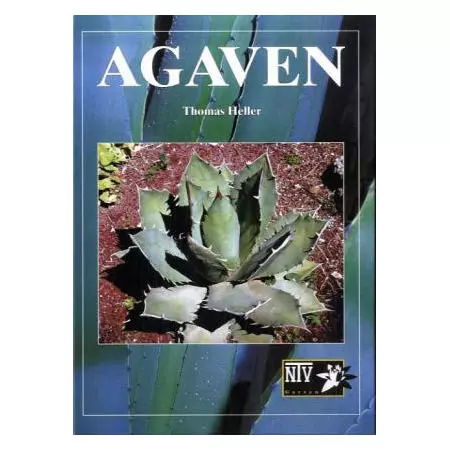
NTV, Agaven - Alles über die prächtigen und attraktiven Schaupflanzen
168 Seiten
199 Farbfotos
2 Karten
Format: 17,5 x 23,2 cm, Hardcover
2. erweiterte Auflage
Autor Thomas Heller
Inhalt:
Agaven sind prächtige, äusserst attraktive Schaupflanzen mit einem hohen dekorativen Wert. Viele kennen sie nur aus botanischen Gärten, wo sie zu den Glanzstücken der Ausstellungen zählen. Dabei kann man diese Pflanzen durchaus auch zu Hause halten, und die verschiedenen Grössenklassen der unzähligen Arten ermöglichen selbst Pflanzenfreunden mit wenig Platz die Wahl für sie geeigneter Spezies. Agaven-Experte Thomas Heller beschreibt in diesem Standardwerk alles rund um Biologie und Kultur der Agaven und lässt auch kulturhistorische Aspekte keineswegs aus. Wer also zusätzlich etwas über Tequila & Co. erfahren will, wird hier ebenfalls bestens bedient. Die hervorragenden Fotos, viele davon von Originalstandorten, machen das Buch darüber hinaus zu einer Augenweide.
Botanisch-geographische Grundlagen
Wirtschaftliche Bedeutung und Nutzung
Alle Informationen rund um die erfolgreiche Kultur: Standort und Temperatur, Pflanzgefässe und Substrat, Wässern und Düngen, Krankheiten und Schädlinge, Vermehrung
Umfangreicher Artenteil mit allen relevanten Agaven-Arten
Brillante Farbfotos
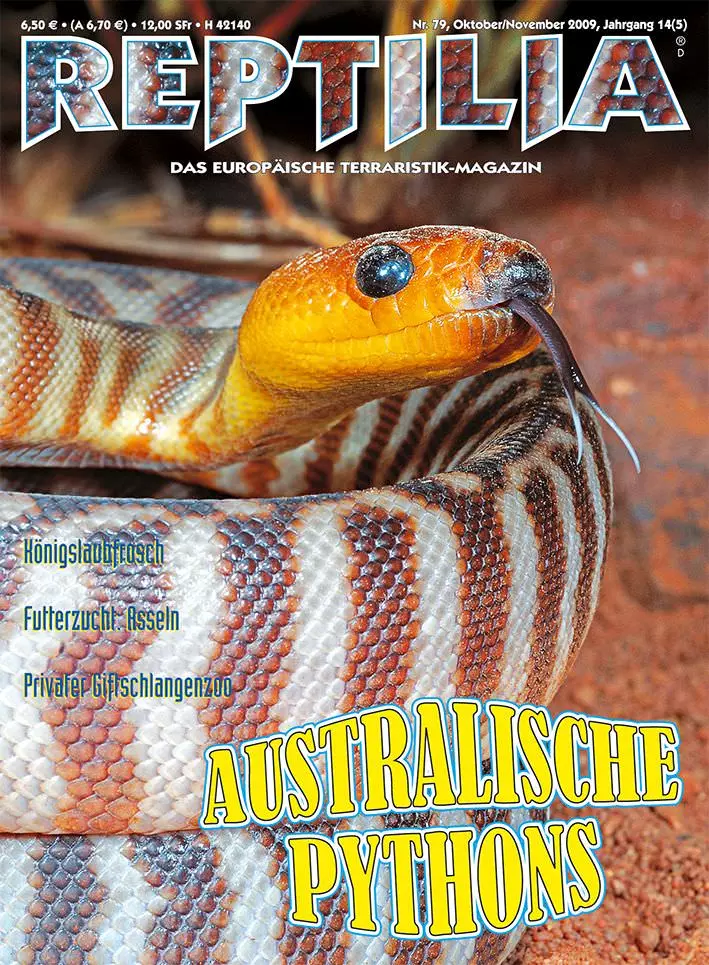
Reptilia 79 - Australische Pythons
KönigslaubfroschFutterzucht AsselnPrivater GiftschlangenzooInhalt:
Die einzigartige Herpetofauna Australiens steht immer im Brennpunkt desInteresses bei Terrarianern. Für die Riesenschlangen des fünften Kontinents gilt das ganz besonders. Wir berichten ausführlich über sie, mit einem Schwerpunkt auf den seltenen Formen Pilbara-Olivpython (Liasis olivaceus barroni), Oenpelli-Python (Morelia oenpelliensis) und Rauschuppenpython (Morelia carinata).
EDITORIAL
MAGAZIN
TERMINE
FOTOSTORY
Pythons Australiens
von S. Winchell
HERPETOFAUNA
Seltene und wenig bekannte Pythons aus Australien – Teil 1: Der Rauschuppenpython, Morelia carinata
von S. Alcini
HERPETOFAUNA
Seltene und wenig bekannte Pythons aus Australien – Teil 2: Der Pilbara-Olivpython, Liasis olivacea barroni
von S. Alcini
HERPETOFAUNA
Seltene und wenig bekannte Pythons aus Australien – Teil 3: Der Oenpelli-Python, Morelia oenpelliensis
von S. Alcini
REPORTAGE
Die Schönste von allen – die Blattschrecke Ancylecha fenestrata
von A. Schmidt
PORTRÄT und Poster
Chamaeleo hoehnelii
von M. Dobiey
REISE
Auf den Spuren von Darwin durch Südamerika. Teil 2: Von Patagonien nach Zentral-Chile
von H. Werning--> Literatur zu allen drei Teilen
HALTUNG UND VERMEHRUNG
Asseln als Futtertiere
von J. Felka
WESTERN HERP PERSPECTIVES
Ist der Handel mit Reptilien und Amphibien zur Reife gelangt?
von B. Love
HALTUNG UND VERMEHRUNG
Der Königslaubfrosch, Pseudacris regilla. Wiedereinführung eines alten Bekannten
von R. Münzer
TERRARIENSCHAUANLAGEN
Das Serpentarium des Snakeparadise in Eschlikon in der Schweiz
von H. Werning
BIBLIOTHEK
ABO & SERVICE
AUCH IN IHRER NÄHE
VORSCHAU
BRUTKASTEN
Bear Country. Quasi live aus dem Yellowstone-Nationalpark
von H. Werning
NTV - Pflanzen im Terrarium
408 Seiten
über 1205 Abbildungen
Format: 17,5 x 23,2 cm
Hardcover
Autor Beat Akeret
Inhalt:
Wer sich den Wunsch erfüllen möchte, sich mit einem Terrarium ein Stück Natur ins Haus zu holen, der kommt bei der naturnahen Gestaltung dieses Lebensraumes für seine Pfleglinge nicht an einer Bepflanzung vorbei. Pflanzen erhöhen nicht nur den Schauwert eines Terrariums, sie verbessern auch das Klima und bieten den Tieren zudem Deckung und Versteckplätze. Manche Amphibien und Reptilien sind außerdem sehr eng an gewisse Pflanzen gebunden. Deshalb erfüllt die Bepflanzung im Terrarium eine ganze Reihe von Funktionen und stellt einen wichtigen Bestandteil der Einrichtung dar.Diese Buch bietet alles Wissenswerte zur Pflege von Terrarienpflanzen, zur Gestaltung naturnaher Terrarien und zur Auswahl geeigneter Pflanzenarten! Mit 400 Seiten und über 1000 Abbildungen wohl das umfassendste deutsche Standardwerk zum Thema Terrarienbepflanzung!