Reptilia 123 - Planting of poison dart frog terrariums

Article no: reptilia123

CHF 13.50

Stock: 0

Ready for dispatch in 1-3 days, delivery time 7 working days

Delivery between Tuesday, 28 April and Wednesday, 29 April
Zahlungsarten
Product information "Reptilia 123 - Planting of poison dart frog terrariums"

Reptilia 123 - Planting of poison dart frog terrariums

Contents:

Cover story: Planting poison dart frog terrariums

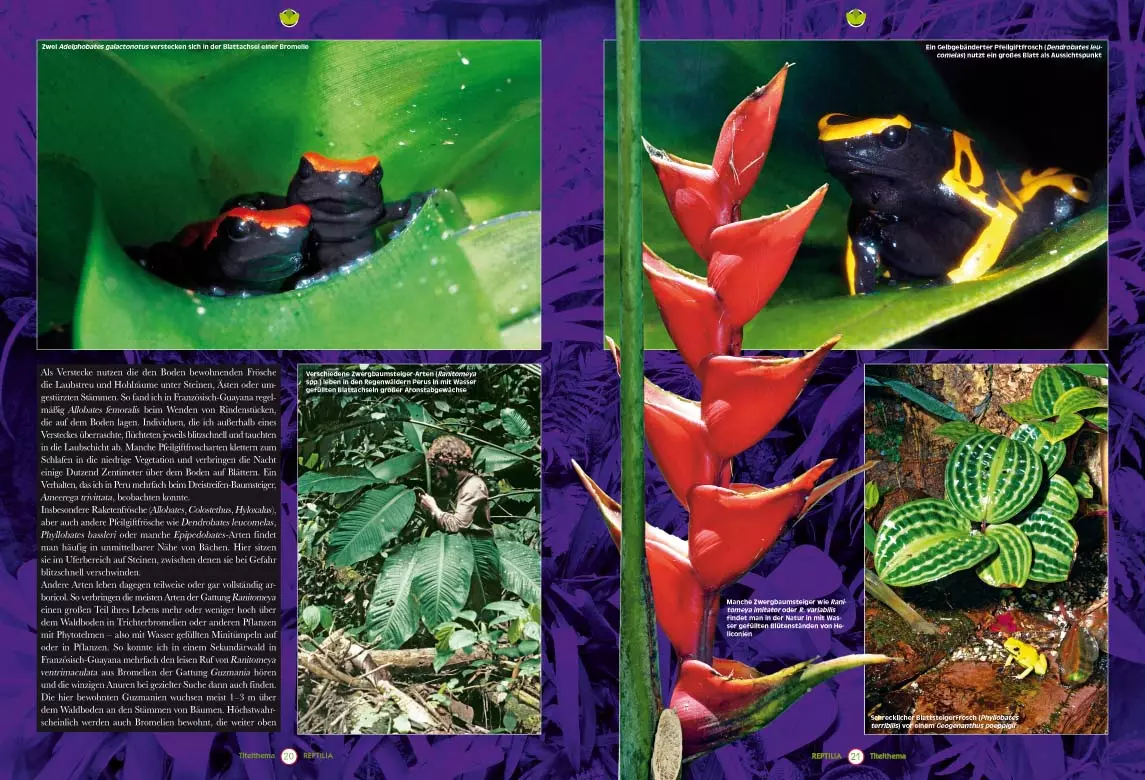
Poison dart frog terrariums can be real gems. Not only because of the "jewels from the rainforest" themselves – but also because of the rainforest around them. Poison dart frogs come to us from biotopes that are also home to countless attractive tropical plants, many of which are available to us and can be cultivated excellently. The experienced terrarium plant specialist Beat Akeret explains in the cover story of this REPTILIA exactly which plants are suitable for poison dart frog terrariums, so that these not only look great and meet the needs of the frogs, but even conjure up an authentic Latin American rainforest section in the living room.

Also in REPTILIA No. 123

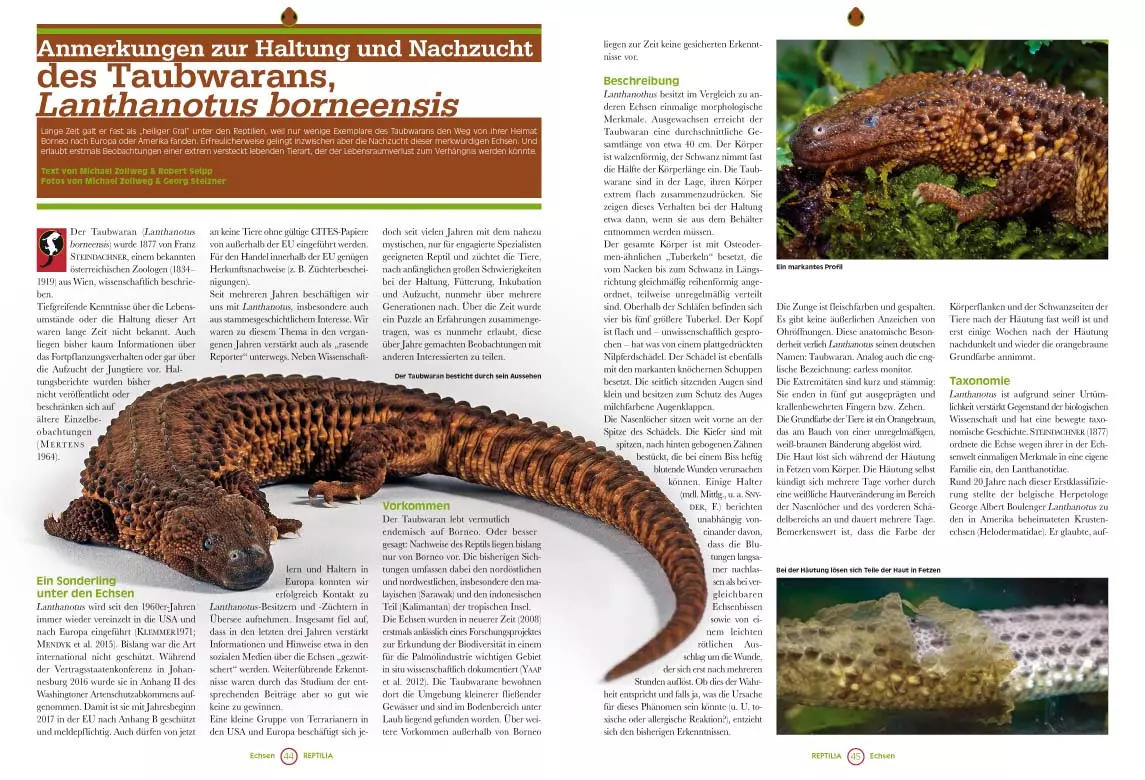
Keeping and breeding one of the most mystical reptiles of all: the Bornean earless monitor in the terrarium
Danger in the magic of blossoms: crab spiders
The great trek 3: with REPTILIA editor-in-chief Heiko Werning from coast to coast through the south of the USA
and much more

4          editorial

            6          MAGAZINE

            14        DATES

            16        WESTERN HERP PERSPECTIVES

                                   Only in America

                                   By B. Love

            18        PHOTOSTORY

                                   Plants in the poison dart frog terrarium

                                   By B. Akeret

            26        Terrarium technology

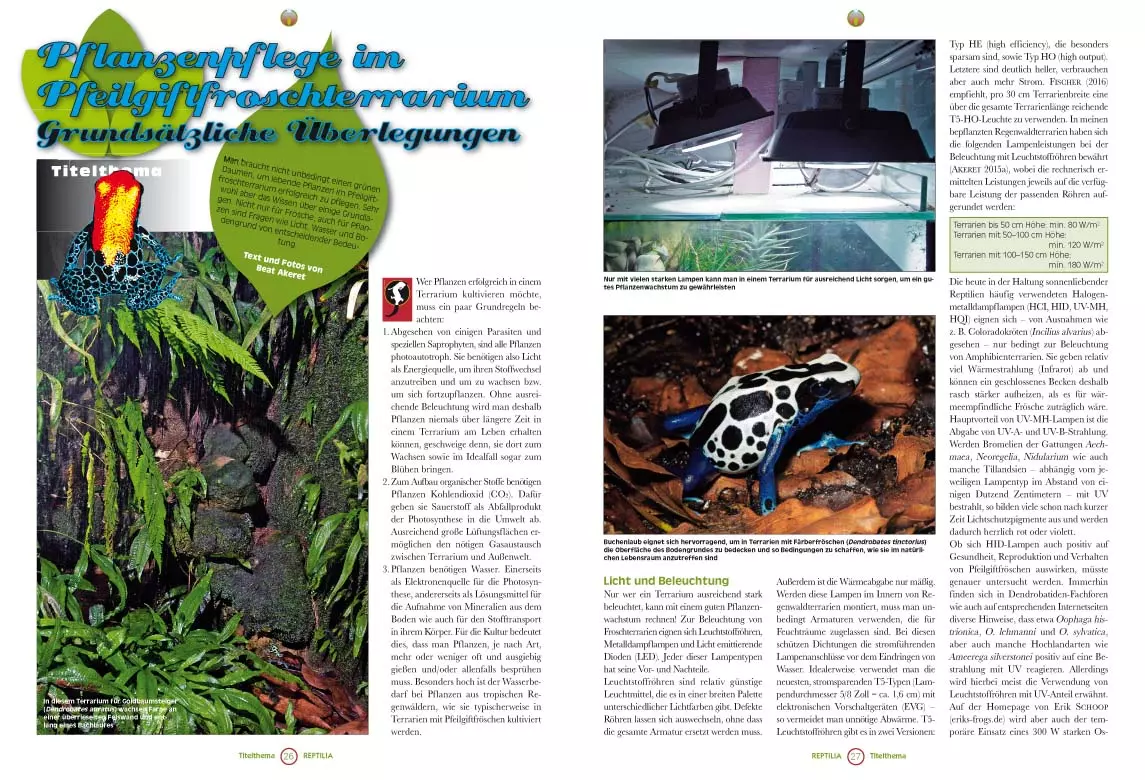
                                   Plant care in the poison dart frog terrarium

                                   Basic considerations

                                   By B. Akeret

            32        plants

                                   Suitable plants for poison dart frog terrariums

                                   By B. Akeret

            44        KEEPING AND BREEDING

                                   Notes on keeping and breeding of the earless monitor, Lanthanotus borneensis

                                   By M. Zollweg & R. Seipp

            54        Terrarium technology

                                   Even more light

                                   Comments by S. Wunderlich and O. Fischer

            61        SERVICE

            64        travel

                                   The great trek

                                   Part 3: Georgia on my Mind

                                   By H. Werning

            76        ALSO NEAR YOU

            80        PREVIEW

            82        INCUBATOR 

                                   If this sets a precedent

                                   Part 2

                                   By H. Werning

Composition
Feeding recommendation
Technical details
Size information

0 of 0 reviews

Give us a rating!

Share your experience with the product with other customers.


Customers also bought

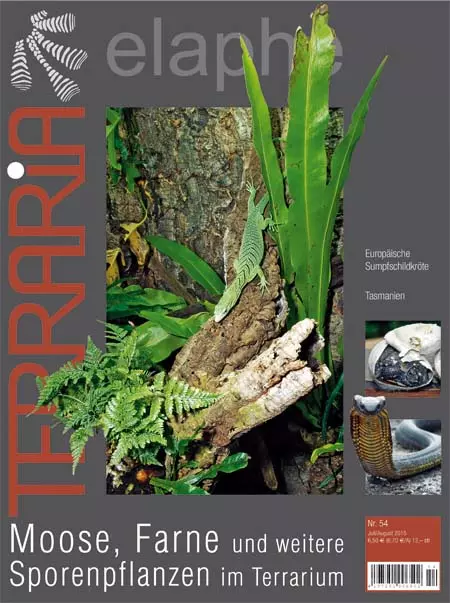
Terraria 54 - Mosses, ferns and further spore plants in the terrarium
Terraria 54 - Mosses, ferns and other spore plants in the terrariumEuropean pond turtleTasmaniaContents:Cover story: Mosses, ferns and other spore plants in the terrariumIn 1892, the English physician Dr N.B. Ward realised that ferns could be cultivated in closed glass containers. This gave rise to Victorian plant display cases planted with ferns and mosses - the forerunners of today's terrariums. However, mosses, ferns and other spore plants are more than just decorative accessories in humid terrariums. Their reproduction by means of alternation of generations, which can also be observed in the terrarium, is particularly interesting. In addition to many interesting aspects of spore plants, the next issue will also contain numerous tips and tricks on how these plants can thrive in the terrarium and how they can best be kept together with reptiles and amphibians.ContentsTerritorialHerpetoramaNew study by the Federal Agency for Nature Conservation: What really jeopardises biodiversity in Germany LookupThorn Devil: The Variable Rain FrogCultural successors: tortoises in ViennaWhat did the first snakes look like?Leafhoppers: In the NewsCover storyWitnesses of the dinosaur era - about terrarium plants with generational changeBeat AkeretMosses - unrecognised dwarfs among terrarium plantsBeat AkeretEpiphytic ferns in the terrariumBeat AkeretNeither moss nor fern. Lycopodiopsida as terrarium plantsBeat AkeretPanoramaTiger otters: an invitation to get to know the reptiles of Tasmania Guillaume GomardResearchNew speciesIn wild Kurdistan - a spectacular large monitor lizard from the Zagros MountainsAxel KwetAmong researchersThe miracle black toad, one of the rarest amphibian species in the worldLuis Fernando Marin da FonteSalamandraTerraristicsMany years of experience in keeping and breeding the European pond turtle. Part 2: Egg laying, incubation, rearing the young, hibernation, husbandry problemsBernd WolffFirst herpetological assistance from Cologne at Saigon ZooThomas Ziegler & Anna RauhausNature and species conservationField notesLate finds of yellow-bellied toad and natterjack toad larvaeJürgen GebhartMysterious deaths of frogs and newtsAxel KwetAlso in your neighbourhoodSubscription & ServicePreviewIncubator The danger seekersHeiko Werning 

CHF 12.00

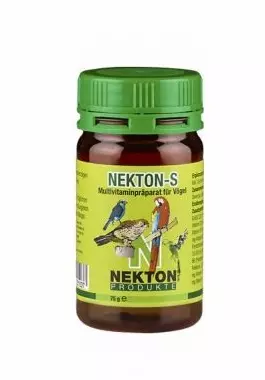
Nekton S - Multivitamin preparation
Weight: 35g
Nekton S - Multivitamin supplement for all bird species Supports the development of metabolic processes Increases the utilisation of all ingested nutrients Promotion of general health Strengthens the body's defences For daily supplementation This basic supplement for all bird species contains all the essential vitamins, amino acids, minerals and trace elements required for a long and healthy life. Daily supplementation is strongly recommended as a preventative measure, as a deficiency in these nutrients is usually difficult to detect in birds or is identified too late. With Nekton S, you can counteract nutrient deficiencies and a large proportion of all illnesses. Composition:Dextrose, calcium carbonate, silicic acid Feeding guide:1g = 1 level measuring spoon Nekton S to 250ml water or 100g soft food. Nekton S is given as a dietary supplement to be added daily to the drinking water. The balanced mixture is readily and happily accepted by birds.

CHF 7.80

Reptilia 40 - Terrarium Planting
Reptilia 40 - Terrarium Planting MarajóCopperheadFrogs of Costa Rica Contents: 2 EDITORIAL 3 READER LETTERS 7 MAGAZINE 17 DATES 20 WESTERN HERP PERSPECTIVESA juvenile snake hunting fiascoby B. Love 22 PHOTO REPORTAGE Terrarium plantingby B. Akeret 31 REPORTAGEPlanting of desert terrariums by B. Akeret 36 REPORTAGEPlanting an epiphyte branch for the terrarium by B. & W. Schwarz 40 REPORTAGECarnivorous plants in the terrarium by A. Glück 47 HERPETOFAUNABiology and distribution of Podocnemis vogli in Venezuelaby M. Merchán, A. M. Fidalgo & C. Pérez 51 PORTRAIT AND POSTERWrestling match in the rainforestby M. Ruckgaber 56 HUSBANDRY AND BREEDINGThe copperhead (Agkistrodon contortrix) – a “beginner's” snake?by D. Schmidt 65 HUSBANDRY AND BREEDINGHusbandry and breeding of Sind rock geckos, Cyrtopodion kachhensis (STOLICKA, 1872)by U. Schlüter 69 REPTORTAGEIn search of frogs in Costa Ricaby T. Eisenberg 75 TRAVELMarajó – Hot and humid Amazon paradiseby L. Dirksen 84 CLASSIFIEDS 90 TIPS & TRICKS 93 LIBRARY 104 GLOSSELiving in scalesby L. Hogeback

CHF 11.20

Reptilia 117 - Amphibian Rarities
Reptilia 117 - Amphibian raritiesFlooridaNight lizardIberian adderContents: Cover story: Amphibian raritiesIn all amphibian groups there are species which, for various reasons, are not kept as frequently in terrariums as fire salamanders, dyer frogs etc.: some species are only imported rarely and in small numbers, some have no lobby, others are highly sought after but not easy to breed.In the cover story of this issue of REPTILIA, we present such rarities in detail - with captivating photos and detailed reports on extremely pleasing breeding successes. We also visit a project in South America in which species sought after by terrarists are selectively propagated - and which simultaneously promotes science, nature conservation and environmental education.EditorialMAGAZINEDATES WESTERN HERP PERSPECTIVESThe fate of books, part 1B. LovePhoto storyAmphibian raritiesK. KunzKeeping and breedingCharming little fellows: Keeping and breeding Riobamba pouched frogs (Gastrotheca riobambae)D. SchmidtKeeping and breedingBreeding a Ryabov’s Phantom Moss Frog (Theloderma ryabovi) in a terrariumE. RyboltovskyReportageSustainable marketing of frogs for terraristics in EcuadorS. CondeKeeping and breedingKeeping and breeding the Iberian viper (Vipera seoanei)A. SchmidServicesKeeping and breedingCare and breeding of the night lizard Lepidophyma smithiG. KöhlerReportageTuataras. The living fossils of New ZealandO. DrewesAlso in your neighbourhoodJourneyThe great trek. Part 1: Melting Pot South FloridaH. WerningPreviewIncubatorNobody warns you about this before you have childrenH. Werning

CHF 12.00

Nekton Rep Calcium + D3
Rep Calcium +D3 Nekton Rep Calcium + D3 is a high-quality calcium supplement for reptiles and amphibians that supports optimal bone and muscle development. Enriched with vitamin D3, it promotes the absorption of calcium in the body and thus contributes to a healthy skeletal structure and an intact metabolism. Especially for reptiles kept in terrariums, a regular supply of calcium and vitamin D3 is crucial to avoid deficiency symptoms such as bone softening or deformities. The powder is easy to dose and can be sprinkled directly over the food or added to the drinking water. Nekton Rep Calcium + D3 is an ideal supplement for all reptile species that have an increased need for calcium, such as tortoises, geckos and agamas. Advantages: Optimum calcium supply: Promotes healthy bone and skeletal development and supports the muscular system. Enriched with vitamin D3: Improves calcium absorption in the body and ensures optimum utilization. Prevents deficiency symptoms: Reduces the risk of calcium deficiencies that can lead to health problems. Easy to use: The powder is easy to dose and can be added directly to the feed or drinking water. High-quality composition: Specially developed for the needs of reptiles and amphibians. Zoo Roco tips: Correct dosage: Pay attention to the recommended dosage depending on the species and age of the animal to avoid overdosing. Combine with UVB lighting: Vitamin D3 needs UVB radiation to be optimally processed. So provide good UVB lighting in the terrarium to maximize the effect of Nekton Rep Calcium + D3. Feeding frequency: Sprinkle the calcium supplement 2-3 times a week on the food or in the drinking water, depending on the animal's needs. Combination with other supplements: In some cases, it may be useful to combine Nekton Rep Calcium + D3 with other nutrients your pet needs, especially if a special diet is required.

From CHF 5.90

Draco 41 - Terrarium planting
Draco 41 - Terrarium plantingContents:EditorialTerrarium plantsBeat AkeretPlants in aquaterrariumsBeat SchmitterA touch of the Mediterranean - planting outdoor enclosures for Mediterranean tortoisesMichael WirthSucculents and other plants for the dry terrariumBeat AkeretClimbing plants and epiphytes - character plants in the forest terrariumBeat AkeretArtificial plants in the terrariumRoger AeberhardHerbs, grasses, houseplants, whatever is beautiful should grow in the tank - selected examples of planted terrariumsBeat Akeret

CHF 18.40

Suggested products

Handbook of food plants for tortoises and other reptiles
Handbook of forage plants 2nd revised editionMarion Minch is not only a successful breeder of diverse tortoises for many years, but also an excellent connoisseur of native wild herbs. She founded and runs samenkiste.de, which is well known to many tortoise keepers and nature lovers. Her name is inextricably linked with reptile care and species-appropriate nutrition for tortoises. Her handbook of food plants summarises the most important native food plants for herbivorous and omnivorous reptiles. She not only considers tortoises, but also iguanas, spiny-tailed dragons and even chameleons. From the basics of plant biology to native wild herbs to suitable food plants for hardy tropical reptile species, this comprehensive work provides the basis for species-appropriate keeping. In the expanded and supplemented 2nd edition, the plant section is divided according to flower colour. This makes it even easier to identify wild herbs. The work has also been supplemented with a wealth of additional information and many pictures.

CHF 46.50

Geckos
Geckos in the terrarium by Astrid FalkThe book offers a comprehensive introduction to geckos and their species-appropriate keeping in terrariums. It explains what you need to think about before buying a gecko and what preparations should be made. The book describes in detail how the terrarium is technically equipped and set up. The care of the animals, their special features and behaviour, their diet, reproduction and rearing of young animals are described, as well as diseases and husbandry problems with tried and tested suggestions for prevention and treatment. Individual gecko species that are particularly suitable for keeping and breeding in terrariums are portrayed in detail in the second part of the book.

CHF 28.50

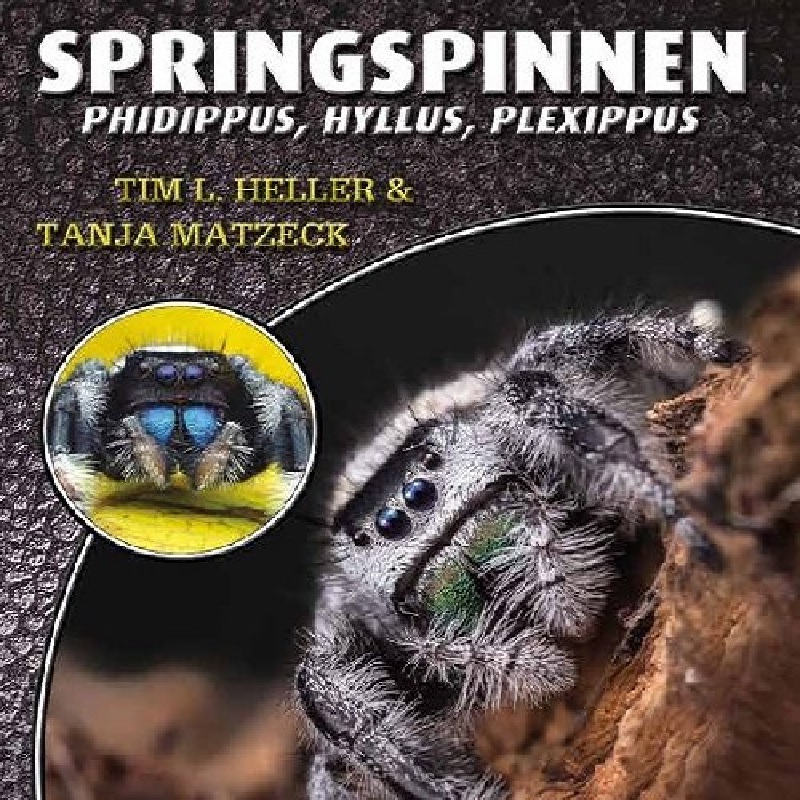
Jumping spiders Phidippus, Hyllus, Plexippus
Book Jumping Spiders - Phidippus, Hyllus & Plexippus A guide to keeping jumping spiders of the genera Phidippus, Hyllus & Plexippus. Who can resist the charm of jumping spiders? The childlike appearance of their expressive face simply leaves no one cold! In addition, their behavior is extremely exciting to observe, their colors are bright and their requirements for species-appropriate keeping are very easy to meet. No wonder these likeable jumpers are all the rage! This volume in the "Species by Species" series describes in detail what to look out for when buying and keeping them, introduces the most commonly kept species and color forms and provides plenty of tips on how to keep them successfully - so you can be sure they will breed well! Species by Species introduces you to the books in this series, which present the most popular terrarium animals. Each volume offers you detailed, practical care instructions and all the information you need to successfully breed your animals. All important questions from the required tank size to terrarium set-up, technical equipment, species-appropriate nutrition and disease prevention are answered with numerous tricks and tips. Experienced, long-standing breeders reveal how you can encourage the animals to reproduce and raise healthy young. All this in full color, generously illustrated and attractively designed - just about your terrarium animal - species by species

CHF 23.90

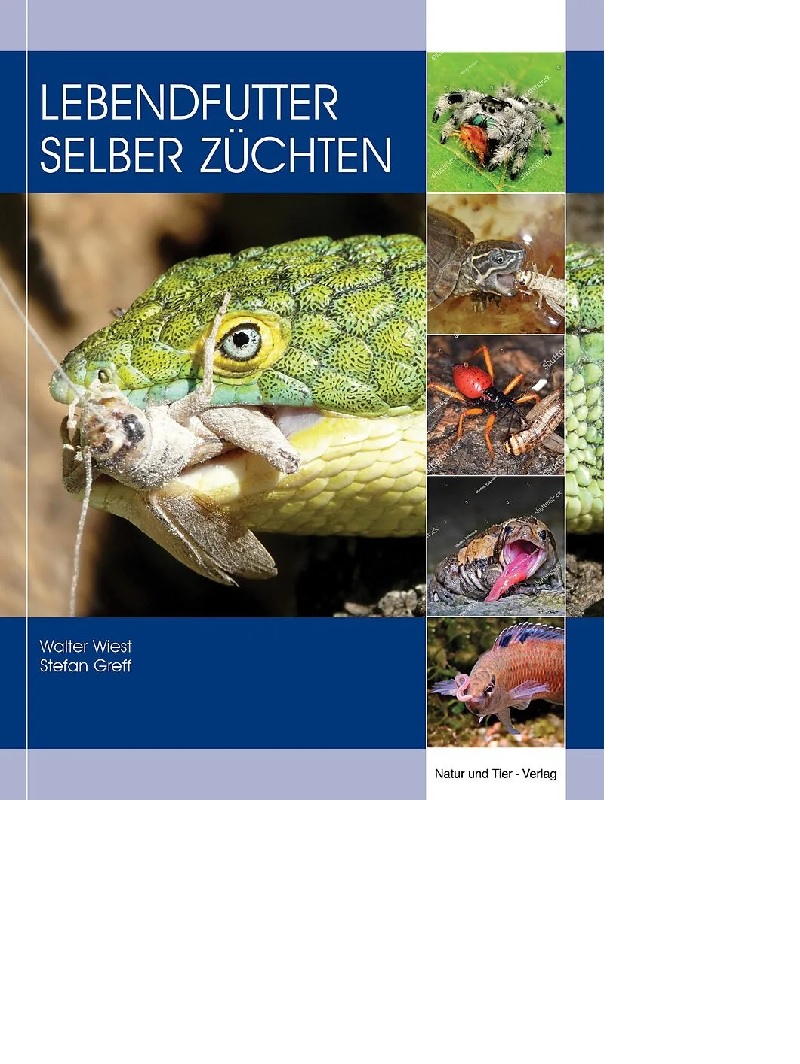
Book Breeding live food yourself
Book "Grow your own live food" - The perfect guide for pet owners Discover practical and detailed instructions on how you can easily breed food for your reptiles, birds, fish or other animals yourself in the book "Breeding live food yourself". With valuable tips on various food insects, their care and breeding, you can save money and ensure a species-appropriate diet for your pets. Contents of the book: Step-by-step instructions for breeding feeder insects Information on the best types of food for reptiles, birds and fish Care instructions and breeding conditions for various live food species Tips for sustainable and cost-effective food production Why breed your own live food? Get healthy, fresh food for your animals Save money and reduce dependence on pet shops Promote the health and well-being of your animals with species-appropriate food Whether you are a beginner or an experienced pet owner, this book provides you with everything you need to successfully breed live food yourself.

CHF 46.50

Marginata 69 - New Guinea tortoises
Marginata 69 - New Guinea tortoises – the genus ElseyaCover storyThe unrecognised beauties: New Guinea tortoises (Andreas S. Hennig)My experiences with Branderhorst's New Guinea tortoise, Elseya (Elseya) branderhorsti (Ouwens, 1914) (Andreas S. Hennig)Keeping and breeding of Rhodin's New Guinea tortoise, Elseya (Hanwarachelys) rhodini Thomson, Amepou, Anamiato & Georges, 2015 (Andreas S. Hennig)PortraitGeoemyda spengleri, Chinese serrated tortoise (Andreas S. Hennig)ReportageMacrochelys temminckii – Experiences and impressions with vulture tortoises part 2 (Reiner Praschag)KeepingAn alternative to year-round keeping of the Egyptian tortoise in the terrarium – my experiences with seasonal outdoor keeping of Testudo kleinmanni (Ricarda Schramm)EtymologySawbacks and living maps part 4: Graptemys gibbonsi, Pascagoula humpback tortoise (Holger Vetter)Classifieds & animal placement

CHF 16.50

Marginata 47 - Turtles of Mexico
Marginata 47 - Turtles of Mexico Rarities from VietnamSearching for turtles in the PeloponneseLeatherback turtle EditorialMagazineTOPICThe turtles of MexicoMaik ShieldsTOPICThe pointed-snouted turtle. A small aquatic turtle for the terrarium Maik ShieldsTOPICSalvin's cross-breasted tortoise. An interesting species from MexicoMaik ShieldsTOPICThe Nayarit tortoise in nature and culture Fabio CupulPORTRAITDermochelys coricea Vandelli, 1761. Leatherback turtleKriton KunzTRAVELMorea – in search of turtles and other reptiles in the west of the Peloponnese (1) Axel KwetTRAVELIn search of the "shy beauty" and the "cave turtles" Torsten Blanck, Sebastian Braun, Timothy McCormack, Hoang Van Ha, Nguyen Tai Thang, Nguyen Van Luc & Minh LeSubscription & ServiceRegional guide

CHF 16.50

Draco 02 - Mediterranean tortoises
Draco 02 - Mediterranean tortoises Contents: 2 Editorial 4 Species and subspecies of Mediterranean tortoises, by A. Pieh 18 Insights into the natural lifestyle of Testudo hermanni hermanni, by K. Matthes 25 Impressions from various habitats of the Moorish tortoise (Testudo graeca) in Morocco – a travel report, by A. Pieh 32 On the reproductive biology of European tortoises using the marginated tortoise (Testudo marginata, SCHÖPF 1792) as an example, by M. Mähn and N. Graf 42 Planning and construction of an outdoor enclosure for European tortoises, by K. Simon 48 Tips for the hibernation of Mediterranean tortoises, by T. Wilms 52 Use of hay cobs as supplementary food for tortoises, by C. Dennert 56 On the keeping and breeding of the Horsfield’s tortoise (Testudo horsfieldii, GRAY 1844), by T. Wilms and B. Löhr 60 The Mediterranean tortoise in veterinary practice, by J. Wiechert 72 The teeth of tortoises, by D. Losansky 79 Book box 87 Magazine

CHF 14.90

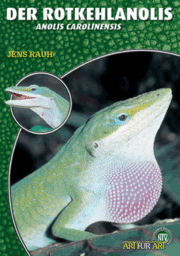
The Carolina anole
All about the red-throated anole by Jens Rauh 62 pages Format: 14.8 x 21 cm 50 colour photos 3rd edition Author Jens Rauh Publisher NTV Contents: The red-throated anole is undoubtedly one of the most common reptile species offered in the pet and terrarium trade. Despite the enormous frequency with which it is seen in the trade, there is still a frightening lack of knowledge about the correct care of this species. This volume from the "Species by Species" series is intended to be a guide for anyone interested in these lizards, enabling them to care for this fascinating and extremely interesting species in a species-appropriate manner over many years and to breed them successfully. Systematics and body structure The fascinating biology: From the life of the red-throated anole All information on species-appropriate keeping: from suitable terrariums to equipment and technology to feeding Successful breeding: Mating stimulation, incubation of the eggs and rearing the young Solutions to problems: How to avoid the most common mistakes in care and how to help sick animals Brilliant photos

CHF 21.90

Reptilia 94 - Terrarium photography
  Philippinen-KrokodilCumberland-SchmuckschildkröteHalsbandleguane im Freilandterrarium Inhalt: Die Terraristik bietet eine unendliche Fülle wunderbarer Fotomotive, ein Eldorado für Hobby-Fotografen! Und wohl jeder Halter hat den Wunsch, seine Pfleglinge, seine Nachzuchten und seine Anlage im Bild festzuhalten. Zumal Fotografieren nie einfacher war als heute, wo jedes Telefon die schnelle Aufnahme erlaubt, die dann direkt ins virtuelle Fotoalbum auf Facebook hochgeladen werden kann, wo alle Freunde sie anschauen können.Profi-Fotograf Benny Trapp aber gibt zahlreiche Tipps und Tricks, wie Sie zu Bildern kommen, bei denen garantiert jeder den „Gefällt mir“-Button drückt, ganz gleich, ob Sie mit einer Kompaktkamera oder einer hochwertigen Spiegelreflexkamera arbeiten. EDITORIALMAGAZINTERMINEIN 5 JAHREN UM DIE WELT Menschen und SchildkrötenA. PachmannWESTERN HERP PERSPECTIVESBörsenbesuch down under B. LoveFOTOSTORYBild schön! Fotografie von Terrarientieren K. KunzPRAXISTerrarientiere fotografieren. Einsatz von Licht und Blitz bei SpiegelreflexkamerasB. TrappPRAXISTipps für bessere Bilder mit KompaktkamerasB. TrappHALTUNG UND VERMEHRUNGPhilippinenkrokodile (Crocodylus mindorensis) im Aquarium des Kölner Zoos. Teil 1: Erfahrungen mit „Off-Exhibit“- Haltung einer der am stärksten bedrohten Krokodilarten der Welt T. Ziegler, R. Sommerlad, W. Brass, K. van der Straeten, D. Karbe & A. RauhausHERPETOFAUNAAuf dem Weg ins All. Die Welt der Buchstaben-Schmuckschildkröte, Trachemys scripta Teil 4: Cumberland- und Südtexas-Schmuckschildkröte A. S. HennigWIRBELLOSEDie Isles of Scilly. Ein Paradies nicht nur für Phasmidenfreunde H.-J. LuefHALTUNG UND VERMEHRUNGErfahrungen mit der Haltung von Halsbandleguanen im FreilandterrariumM. DieckmannTIERE UNSERER HEIMATDie AspisviperR. LeptienBIBLIOTHEKTIPPS & TRICKSTESTLAUFABO & SERVICEAUCH IN IHRER NÄHEREISEThe Rock. Die Herpetofauna GibraltarsU. SchlüterVORSCHAUBRUTKASTENIguana chilenaH. Werning  

CHF 12.00

Marginata 04 - Star tortoises
Marginata 04 - Star Tortoises Turtle fauna of the GambiaIncubation Part 1Aquatic box turtle Part 3 Contents: 2 EDITORIAL 3 MAGAZINE 7 READERS’ LETTERS 8 DATES 10 PHOTO REPORTAGEStar tortoisesHans - Dieter Philippen 16 REPORTIn Search of the Star Tortoise (Geochelone elegans) (SCHOEPFF, 1794) Bernd Wolff 22 REPORTLong-standing breeding of the Indian Star Tortoise (Geochelone elegans) (SCHOEPFF, 1794) Georg Storms & Hans - Dieter Philippen 31 PORTRAITPapua Soft-shelled TurtleCarettochelys insculpta (RAMSAY, 1886)Hans - Dieter Philippen 35 REPORTAGETemperature-dependent sex determination in marsh, aquatic, and land turtlesPart 1Claude Pieau & Mireille Dorizzi 43 REPORTThe turtle fauna of the GambiaEvamaria Minuth & Ulrich Thieme 51 REPORTKeeping and breeding the aquatic box turtle Terrapene coahuila (SCHMIDT & OWENS, 1944)Part 2 Markus Baur & Irmtraud Jasser-Häger 59 MARKETPLACE 60 BOOK TIP 61 CLASSIFIEDS 62 REGIONAL GUIDE 64 AGATHA MARGINATA

CHF 14.70

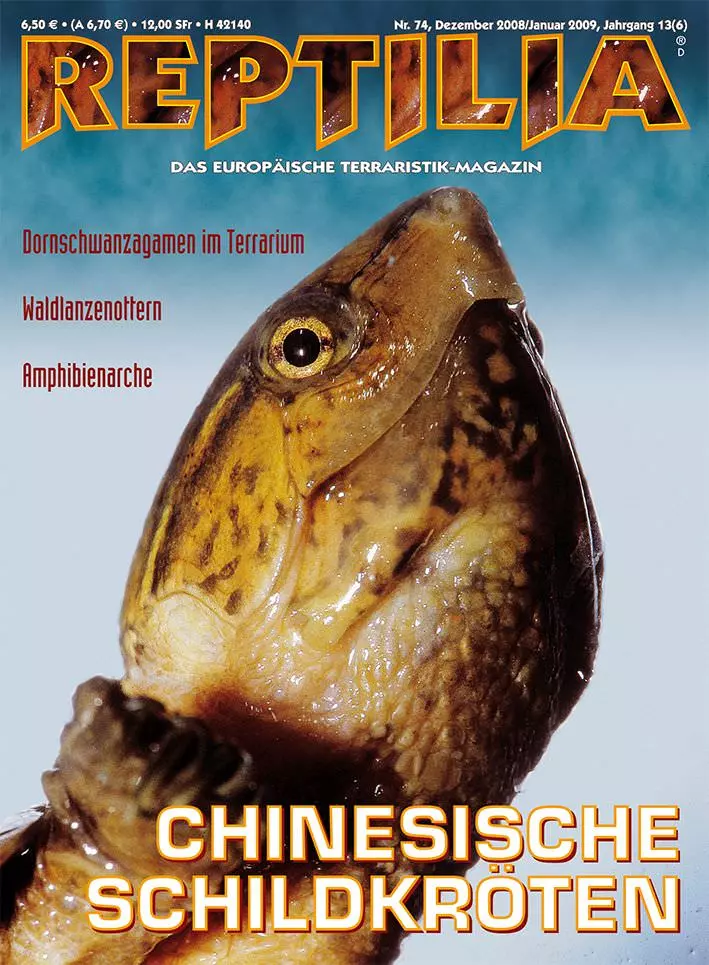
Reptilia 74 - Chinese turtles
Reptilia 74 - Chinese turtles Transport of terrarium animalsForest lance adderAmphibian Ark Contents: EDITORIAL MAGAZINE DATES WESTERN HERP PERSPECTIVESSnake Road, the road of snakes from B. Love PHOTOSTORY Dhe turtles of China von S. Winchell REPORTAGE Commercial breeding of marsh and water turtles in China von T. Zhou, C. Huang, W. P. McCord & T. Blanck KEEPING AND REPRODUCTION Keeping and breeding Cistoclemmys flavomarginata, the yellow-edged box turtle von M. R. Gómez & J. Valverde TRAVEL The Big Bend National Park and its reptiles Part 1: Turtles and lizards von P. M. Kornacker & U. Dederichs PORTRAIT AND POSTER Hyla arborea from B. Trapp HERPETOFAUNA The South American forest lancehead snakes of the genus Bothriopsis von J. M. Dehling KEEPING AND REPRODUCTION Spiny-tailed agamas (Uromastyx):New findings for terrarium practice von M. Frank REPORTAGE Amphibian Ark. Dream or realistic endeavour? Part 2 von B. Akeret REPTILIA ON THE ROAD The new snake attraction in Bangkok von J. Bulian LIBRARY BRUTKASTEN  Travel snippets from the Caribbean Practically live by H. Werning

CHF 12.00

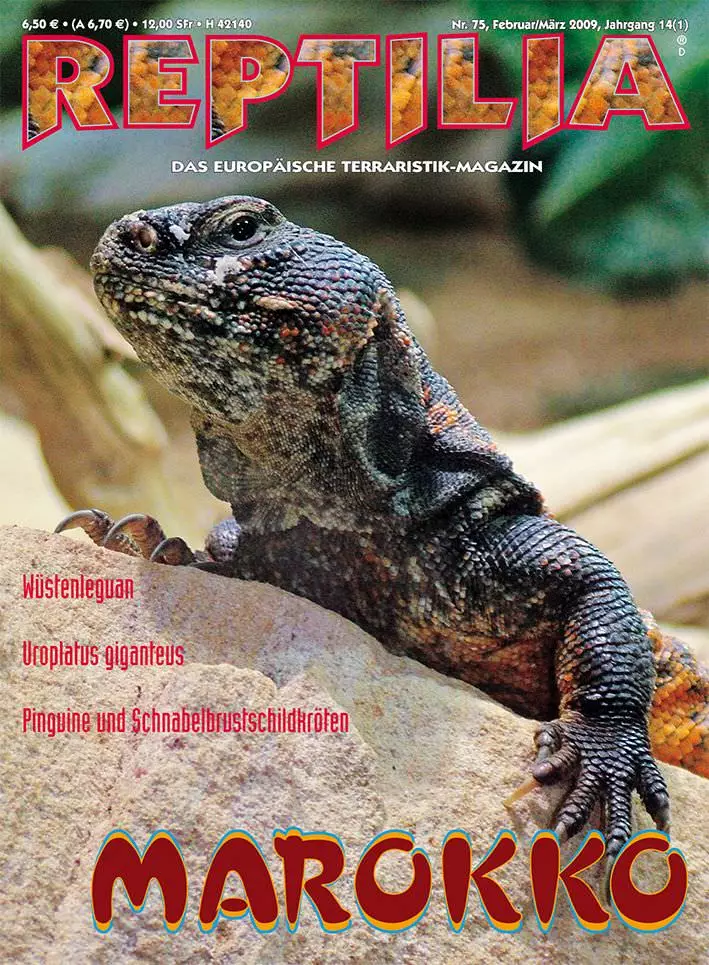
Reptilia 75 - Morocco
Reptilia 75 - Morocco FAQ Terrarium lightingTransport of terrarium animalsPenguins and beaked-breasted tortoises Contents: Morocco - so close to Europe, and yet a completely different world. Culturallyof course, but also in its animal world the country withits vast deserts and the mighty Atlas Mountains is of particular interest. Arabia expert and spinytail researcher ThomasWilms introduces you to Morocco, its spectacular landscapes and the very special herpetofauna. Stephanie de Pury, Sascha Esser and Michel Aymerich report on their exciting search for the lizard snake there, Rolf Leptien has travelled to the south of the country, and finally Hemmo Nickel portrays the remarkable scorpions of Morocco. 2 EDITORIAL3 MAGAZINE11 DATES14 WESTERN HERP PERSPECTIVES            The "crisis" of the Florida soft-shelled turtle            by B. Love16 PHOTOSTORY            Morocco            Treasure trove in north-west Africa            by T. Wilms24 TRAVEL            Morocco: In search of             the lizard snake            by S. de Pury, S. Esser & M. Aymerich32 TRAVEL            On an excursion to the south of Morocco            by R. Leptien38 REPORTAGE            The scorpions of Morocco            Part 1            by H. Nickel, J. Hornung & M. Koch47 PORTRAIT and POSTER            Uroplatus giganteus            by P. Schönecker51 HERPETOFAUNA            The Big Bend National Park and its             reptiles. Part 2: Snakes            by P. M. Kornacker & U. Dederichs59 TERRARIUM PRACTICE             Animal-friendly transport of reptiles            by S. Knauf66 HERPETOFAUNA            African beauty among penguins            Ecological relationships of the             beaked-breasted tortoise in             the Cape of South Africa            by M. Wirth79 FAQ – Frequently Asked Questions            Terrarium lighting – Part 1            by I. Kober & U. Geissel86  ALSO NEAR YOU91  SUBSCRIPTION & SERVICE94  PREVIEW96  BRUTKASTEN            Travel snippets from the Caribbean – Part 2            by H. Werning

CHF 12.00