Handbook of forage plants 2nd revised editionMarion Minch is not only a successful breeder of diverse tortoises for many years, but also an excellent connoisseur of native wild herbs. She founded and runs samenkiste.de, which is well known to many tortoise keepers and nature lovers. Her name is inextricably linked with reptile care and species-appropriate nutrition for tortoises. Her handbook of food plants summarises the most important native food plants for herbivorous and omnivorous reptiles. She not only considers tortoises, but also iguanas, spiny-tailed dragons and even chameleons. From the basics of plant biology to native wild herbs to suitable food plants for hardy tropical reptile species, this comprehensive work provides the basis for species-appropriate keeping. In the expanded and supplemented 2nd edition, the plant section is divided according to flower colour. This makes it even easier to identify wild herbs. The work has also been supplemented with a wealth of additional information and many pictures.
Geckos in the terrarium by Astrid FalkThe book offers a comprehensive introduction to geckos and their species-appropriate keeping in terrariums. It explains what you need to think about before buying a gecko and what preparations should be made. The book describes in detail how the terrarium is technically equipped and set up. The care of the animals, their special features and behaviour, their diet, reproduction and rearing of young animals are described, as well as diseases and husbandry problems with tried and tested suggestions for prevention and treatment. Individual gecko species that are particularly suitable for keeping and breeding in terrariums are portrayed in detail in the second part of the book.
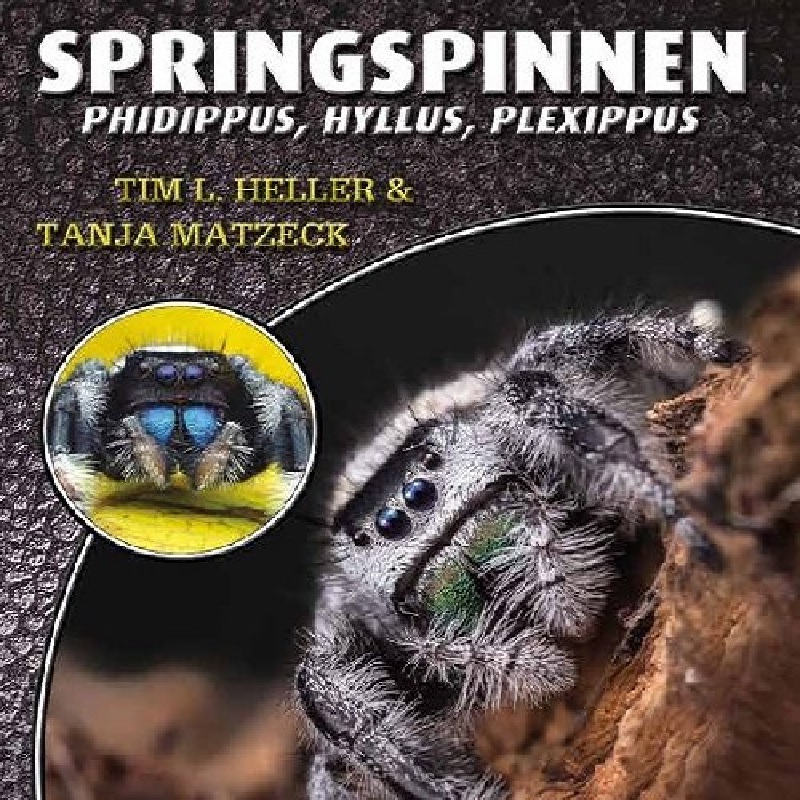
Book Jumping Spiders -
Phidippus, Hyllus & Plexippus
A guide to keeping jumping spiders of the genera Phidippus, Hyllus & Plexippus. Who can resist the charm of jumping spiders? The childlike appearance of their expressive face simply leaves no one cold! In addition, their behavior is extremely exciting to observe, their colors are bright and their requirements for species-appropriate keeping are very easy to meet. No wonder these likeable jumpers are all the rage!
This volume in the "Species by Species" series describes in detail what to look out for when buying and keeping them, introduces the most commonly kept species and color forms and provides plenty of tips on how to keep them successfully - so you can be sure they will breed well!
Species by Species introduces you to the books in this series, which present the most popular terrarium animals. Each volume offers you detailed, practical care instructions and all the information you need to successfully breed your animals.
All important questions from the required tank size to terrarium set-up, technical equipment, species-appropriate nutrition and disease prevention are answered with numerous tricks and tips.
Experienced, long-standing breeders reveal how you can encourage the animals to reproduce and raise healthy young.
All this in full color, generously illustrated and attractively designed - just about your terrarium animal - species by species
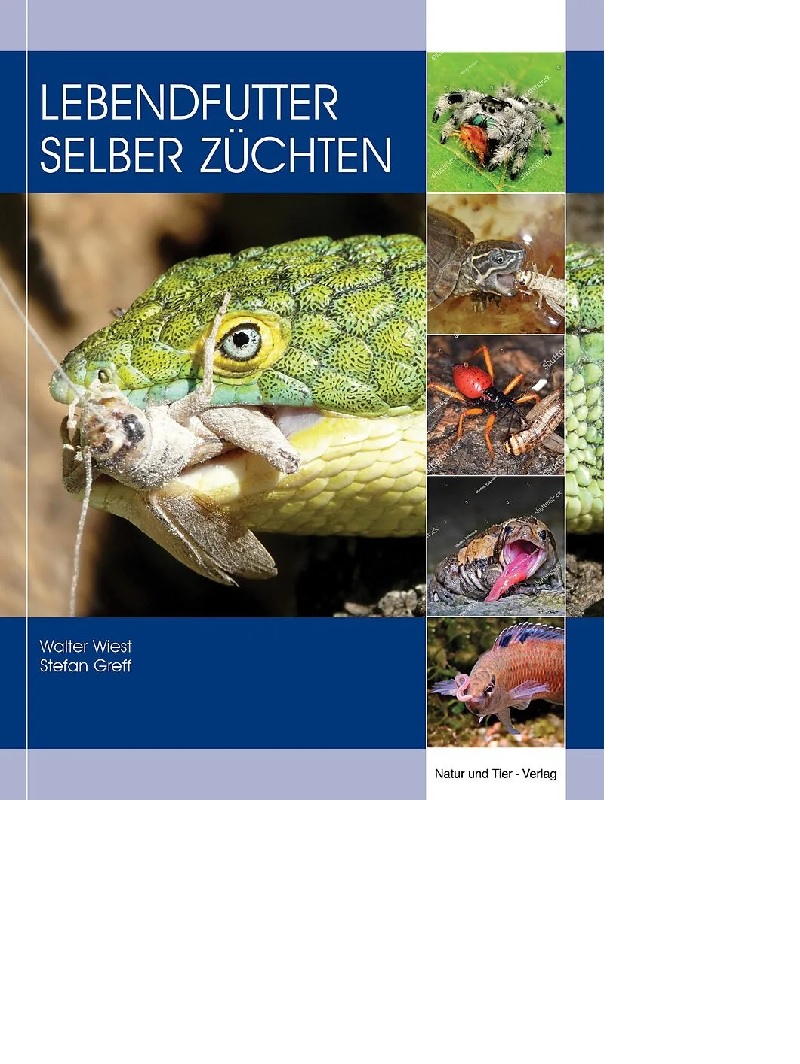
Book "Grow your own live food" - The perfect guide for pet owners
Discover practical and detailed instructions on how you can easily breed food for your reptiles, birds, fish or other animals yourself in the book "Breeding live food yourself". With valuable tips on various food insects, their care and breeding, you can save money and ensure a species-appropriate diet for your pets.
Contents of the book:
Step-by-step instructions for breeding feeder insects
Information on the best types of food for reptiles, birds and fish
Care instructions and breeding conditions for various live food species
Tips for sustainable and cost-effective food production
Why breed your own live food?
Get healthy, fresh food for your animals
Save money and reduce dependence on pet shops
Promote the health and well-being of your animals with species-appropriate food
Whether you are a beginner or an experienced pet owner, this book provides you with everything you need to successfully breed live food yourself.
Marginata 69 - New Guinea tortoises – the genus ElseyaCover storyThe unrecognised beauties: New Guinea tortoises (Andreas S. Hennig)My experiences with Branderhorst's New Guinea tortoise, Elseya (Elseya) branderhorsti (Ouwens, 1914) (Andreas S. Hennig)Keeping and breeding of Rhodin's New Guinea tortoise, Elseya (Hanwarachelys) rhodini Thomson, Amepou, Anamiato & Georges, 2015 (Andreas S. Hennig)PortraitGeoemyda spengleri, Chinese serrated tortoise (Andreas S. Hennig)ReportageMacrochelys temminckii – Experiences and impressions with vulture tortoises part 2 (Reiner Praschag)KeepingAn alternative to year-round keeping of the Egyptian tortoise in the terrarium – my experiences with seasonal outdoor keeping of Testudo kleinmanni (Ricarda Schramm)EtymologySawbacks and living maps part 4: Graptemys gibbonsi, Pascagoula humpback tortoise (Holger Vetter)Classifieds & animal placement
NTV - Grass snakes
Thorsten Schmidt
88 pages
17 x 0.9 x 22.3cm
many colour photos
The splendidly green-coloured, diurnal and completely harmless grass snakes are much sought-after terrarium animals. The fact that they can be easily fed with insects and other invertebrates is another plus point in favour of keeping these lively snakes.This guide tells you everything you need to know to keep and breed grass snakes successfully.Thorsten Schmidt explains here from his rich experience with the animals that properly cared for grass snakes are not at all problematic, but can be easily cared for and also bred. The author explains what to look out for and gives specific tips on setting up and equipping species-appropriate terrariums.
Reptilia 63 - Small monitor lizards
ThailandLizards in the greenhouseRespiratory diseases in tortoises
Contents:
2 EDITORIAL
3 MAGAZINE
11 DATES
14 WESTERN HERP PERSPECTIVESThe luxury point of viewBy B. Love
16 PHOTO REPORTAGESmall monitor lizards in the terrariumBy B. Eidenmüller
24 KEEPING AND BREEDINGKeeping and breeding of the spiny-tailedmonitor lizard (Varanus acanthurus)By S. Arth
34 KEEPING AND BREEDINGVaranus boehmei, keeping and first-timebreeding in the terrariumBy M. Reisinger & D. Reisinger-Raweyai
39 KEEPING AND BREEDINGKeeping, care and breeding ofVaranus macraeiBy A. Dedlmar
42 TRAVELThailand - fascination herpetofaunaBy F. Longhitano
51 PORTRAIT AND POSTERLiophis jaegeriBy A. Kwet
56 REPORTAGEFrog societies in South AmericaBy D. Rödder, G. Zeidan, W. Pertel & R. L. Teixeira
64 PRACTICEKeeping lizards in the greenhouseBy D. Prötzel
71 KEEPING AND BREEDING Truly a jewel in the terrarium: Ampulex compressaBy T. Ramann
75 HERPETIC MEDICINERespiratory diseases in tortoises:recognise, treat, preventBy U. Eggenschwiler
80 TERRARIUM EXHIBITIONSThe reptile and amphibian exhibition of the Dusit Zoo in BangkokBy J. Bulian
87 FAQ - FREQUENTLY ASKED QUESTIONSAcquisition of royal pythons (Python regius)By T. Kölpin
91 HERPETOCULTUREThe lion for Bavaria, the bear for Berlin, the chameleon for...?By J. Wolf
94 LIBRARY
104 INCUBATOR specialAt night in the museumBy H. Werning & L. Hogeback
Reptilia 104 - King PythonsFlagellate spidersDiamondback terrapinWraptail skinkContents:What a rise! From an eccentric that was almost impossible to feed to an almost domesticated animal bred hundreds of thousands of times in just two decades - the royal python has had an unparalleled terrarium career. We offer a colourful overview of the breeding varieties of this giant snake, present the latest new breeds, take a close look at possibly the most expensive morph and discuss the controversial issue of rack keeping in this species.EditorialMAGAZINEDATESPHOTOREPORTAGEFrom problem animal to superstarK. KunzTERRARIUM PRACTICENot animal-friendly? Comments on the rack keeping of royal pythonsS. BroghammerKEEPING AND REPRODUCTIONNew colours for the kingS. BroghammerKEEPING AND REPRODUCTION"Not without a Yellowbelly"S. BroghammerREPORTAGEChampagneS. BroghammerKEEPING AND REPRODUCTIONBreeding the diamondback terrapin, Malaclemys terrapinX. WapelhorstReportageWraptail skinks - or: Some are the same, others are more equalM. ZollwegKEEPING AND BREEDINGKeeping and breeding the African whip spider Damon variegatusE. BruinsKEEPING AND BREEDINGLong-tailed lizards from Okinawa. Terrarium keeping and breeding of Takydromus smaragdinusA. DanierLibraryWESTERN HERP PERSPECTIVESThe white magicB. LoveServicesJourneyHerpetological impressions on safaris in East AfricaM. HeartALSO NEAR YOUPREVIEWBRUTKASTEN Sexual dimorphismM. Zawadzki
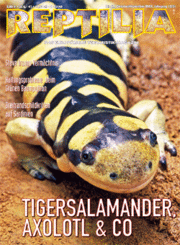
Terraria 49 - Tail amphibians in the terrarium
EvergladesPhelsuma barbonica
Contents:
Cover story: Tail amphibians in the terrarium
Newts and salamanders are among the less favoured terrarium animals. Yet these urodeles offer a wide variety of shapes and an often surprising blaze of colour, not to mention fascinating observation opportunities. We take a detailed look at the famous “father of newts”, Willy Wolterstorff, who was born 150 years ago, and in further articles we present the tiger salamander, the Vietnamese warty newt and, with the lungless salamanders of Central America, a little-known group of urodeles with an even more surprising biology.
TerritorialHerpetorama
Cover storyKeeping and breeding the tiger salamander Ambystoma tigrinum, A. mavortium and A. californienseJens Benthien
With webbed feet and sling tongue. Neotropical lungless salamanders in the wild and in the terrariumThomas Bille
F2 offspring of the Vietnamese warty newt (Paramesotriton deloustali) after six years of rearingPaul Bachhausen
PanoramaField notes from the Everglades National ParkGuillaume Gomard
Research
Among researchersThe poison dart frogs at the Rio CristalinoJonas Benner
New speciesNews on the Iberian wall lizards aroundPodarcis hispanicusAxel Kwet
Vipers of north-eastern Turkey: Gene flow and environmental factors among the taxa of the Vipera-barani-kaznakovi-darevskii complexKonrad Mebert, Nasit Igci, Bayram Göçmen & Sylvain Ursenbacher
Salamandra
TerraristicsPhelsuma borbonica agalegae. An often overlooked beautyJosua Wohler
Subscription & Service
Nature and species conservation
Field notesRare meal for aspisvipersAxel Kwet
The consequences of a horned adder biteHans Pichler
Observations of giant green lizards, (Lacerta trilineata polylepidota), in CreteWerner & Yvonne Lantermann
Also in your neighbourhoodPreview
Incubator Mr. Obama, please take over!Heiko Werning
Alles über die Kettennatter von Dieter Schmidt
64 Seiten
14,8 x 21 cm
zahlreiche Farbfotos
Autor Dieter Schmidt
Inhalt:
Von kaum einer anderen Schlange gibt es derart viele verschiedene attraktive Farbvarianten wie von der Kettennatter. Dass es sich dazu auch noch um eine recht klein bleibende, friedliche Art handelt, die keine allzu grossen Ansprüche an die Terrarienhaltung stellt, macht sie zu einem äusserst beliebten und geeigneten Pflegling. Schlangenexperte Dieter Schmidt hält und züchtet diese Tiere seit Jahrzehnten und beschreibt in diesem Buch praxisnah ihre artgerechte Haltung und Pflege. Und wenn Sie seine Insider-Tipps zur Paarungsstimulation und zum Bebrüten der Eier beherzigen, werden Sie sicher bald eine Schar reizender Jungschlangen aufziehen können.
Systematik und Körperbau
Die faszinierende Biologie: Aus dem Leben der Kettennatter
Alle Informationen zur artgerechten Haltung: Vom geeigneten Terrarium über Einrichtung und Technik bis hin zur Fütterung
Erfolgreich nachzüchten: Paarungsstimulation, Inkubation der Eier und Aufzucht der Jungtiere
Problemlösungen: Wie man die häufigsten Fehler bei der Pflege vermeidet, und wie man kranken Tieren helfen kann
Brillante Fotos
Terraria 38 - Corn snakes naturally beautiful!End of the world? Mayan mysticism and reptilesBush crocodileContents:Cover story: Corn snakes - naturally beautiful!There are now countless colour morphs of the corn snake that have been selected by breeding, products of a veritable reptile industry, often reared in the controversial rack-keeping method. This almost threatens to make us forget that these North American snakes also occur in the wild and have adapted to their habitat. How exciting it is to observe these best-known terrarium snakes in their natural habitat and how diverse the colour and pattern variations are, even in "natural corn snakes", is shown bywill be the cover story of the upcoming TERRARIA/elaphe. TerritorialHerpetoramaCover storyThe local varieties of the corn snake (Pantherophis guttatus)Bernd SKUBOWIUSA visit to the prairie corn snakes in TexasBernd SKUBOWIUSThe Slowinski's corn snake, Pantherophis slowinskii: a rare guest in German terrariumsBernd SKUBOWIUSPanoramaTerraglobalBeware of toolboxes and ventilation holesLester MELÉNDEZThree years of photo safaris through Asia and OceaniaAntonia PACHMANNResearchNew speciesA new belted tail from the Katanga region in the CongoChristian SCHNEIDER & Mirko BARTSTwo new "little hammers" from Panama's tropical forestAndreas HERTZAmong researchersDry forest habitat - the Menabe region in western MadagascarJulian GLOSNew names and old acquaintances - genus revision of the New Caledonian giant geckos (Rhacodactylus) and other gecko genera of New CaledoniaPatrick SCHÖNECKER & Christian LANGNERSalamandraTerraristicsClassicsThe charcoal tortoiseAlexander GutscheF2 offspring of the Laos warty newt (Laotriton laoensis) - an example of a successful conservation breeding project in the newt register of the DGHT-AG UrodelaPaul BACHHAUSENFirst experiences with the New Guinea helmet skink, Tribolonotus novaeguineaeJochen MEYERHomerangeIn the bath with Anolis - a visit to Uwe BarteltHeiko WERNINGNature and species conservationField notesLate discovery of sand lizards in the Hainich National Park (Thuringia)Andreas NÖLLERTPond newts as transport hosts for puffer musselsStephan BÖHMUnusual spawning site of the grass frog, Rana t. temporaria, in a phytotelm in the Hainich National Park, ThuringiaAndreas NÖLLERTMissingWolterstorff's newt (Hypselotriton woltersdorffi)Also in your neighbourhoodSubscription & ServiceGalleryEnd of the world moodPreviewIncubatorBreaking Bad WeddingHeiko WERNING
Marginata 39 - Big-headed turtlesBreeding of Chrysemys picta belliMale flat-sharing communitiesTortoise keeping on the brink of extinction?Contents:EditorialMagazineDates FIELD REPORTIn steep streams. In search of the "eagle-beaked turtles" – Platysternon megacephalum in the wildTorsten BlanckKEEPING AND BREEDINGBig-headed turtles in nature and human care. Part 1Reiner PraschagPORTRAITThree-toed box turtle (Terrapene mexicana triunguis Agassiz, 1852)Hans-Dieter Philippen COMMENTAre we facing the end of turtle keeping?Hans-Dieter Philippen KEEPING AND BREEDINGTrial makes perfect - positive and negative experiences in the care of the Indian tortoise Sebastian Nickl REPORTAGETurtle consumption in the Western Ghats, India Wildlife utilisation using the example of two endangered jungle species Arun Kanagavel, Rajkumar S. & Rajeev Raghavan HOLDINGMale flat share. Keeping males of different species of turtles together?Ewald Roddewig REPORTAGEA turtle hotel in VenezuelaLutz Geissler Book tipSubscription & ServiceRegional guide
CHF 16.50
❅
❆
❅
❆
❅
❆
❅
❆
❅
❆
❅
❆
This website uses cookies to ensure the best experience possible. More information...