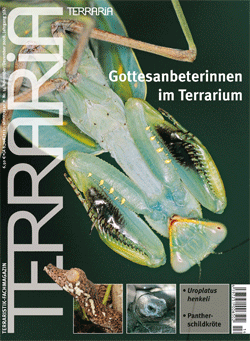
Terraria 14 - Praying Mantises in the Terraria

Article no: terraria14

CHF 12.00

Stock: 0

This article is currently not available

Product information "Terraria 14 - Praying Mantises in the Terraria"

Terraria 14 - Praying Mantises in the Terrarium

Uroplatus henkeli
Panther tortoise

Contents:

2 Editorial
Kriton Kunz
4 Magazine
Gondwanaland – a future-orientated
project at Leipzig Zoo / New findings
on the taxonomy of pythons / snakes and
culture at the Potsdam Natural History Museum /
The Frankfurt Zoological Society and
their activities on Galápagos
12 TERRAglobal
Snake dealer
Joachim Bulian
On the road in the Andes
Maik Dobiey
Cover story: Praying Mantises
16 Praying Mantises: Fascinating
terrarium inhabitants
Timm Adam
28 A terrarium for praying mantises
Timm Adam
33 How to: Tips for species-appropriate care
for praying mantises
Timm Adam
42 Breeding of Mantodea
Timm Adam
46 Lampropeltis triangulum andesianus
rare terrarium jewel with a dubious reputation
Part 2: Reproduction
Thorsten Schmidt
54 Grey giants among themselves – about
panther tortoises and elephants in Addo
Elephant National Park, South Africa
Part 3: Reproduction and lifestyle of the
panther tortoise
Michael Wirth
63 Biology, keeping and breeding of Henkel's
flat-tailed gecko, Uroplatus henkeli
Christian Müttherthies
71 Travel
Herpetological impressions during iguana search
on the French Antilles: Martinique
Stefanie Bach & Patrick Schönecker
82 New Species
Greek wall lizards with a new name /
Two new tree frogs from New Guinea
85 Among Researchers
In the valleys of the Andes: still unknown and
already threatened
Claudia Koch
89 Test run
Aquarium internal filter for terrarium keepers
Kriton Kunz
95 Eye-catcher
Visiting Betty
Heiko Werning
99 Near You
103 Preview
104 Incubator
The invasion of the stray mantises
Heiko Werning

Composition
Feeding recommendation
Technical details
Size information

0 of 0 reviews

Give us a rating!

Share your experience with the product with other customers.


Suggested products

Geckos
Geckos in the terrarium by Astrid FalkThe book offers a comprehensive introduction to geckos and their species-appropriate keeping in terrariums. It explains what you need to think about before buying a gecko and what preparations should be made. The book describes in detail how the terrarium is technically equipped and set up. The care of the animals, their special features and behaviour, their diet, reproduction and rearing of young animals are described, as well as diseases and husbandry problems with tried and tested suggestions for prevention and treatment. Individual gecko species that are particularly suitable for keeping and breeding in terrariums are portrayed in detail in the second part of the book.

CHF 28.50

Handbook of food plants for tortoises and other reptiles
Handbook of forage plants 2nd revised editionMarion Minch is not only a successful breeder of diverse tortoises for many years, but also an excellent connoisseur of native wild herbs. She founded and runs samenkiste.de, which is well known to many tortoise keepers and nature lovers. Her name is inextricably linked with reptile care and species-appropriate nutrition for tortoises. Her handbook of food plants summarises the most important native food plants for herbivorous and omnivorous reptiles. She not only considers tortoises, but also iguanas, spiny-tailed dragons and even chameleons. From the basics of plant biology to native wild herbs to suitable food plants for hardy tropical reptile species, this comprehensive work provides the basis for species-appropriate keeping. In the expanded and supplemented 2nd edition, the plant section is divided according to flower colour. This makes it even easier to identify wild herbs. The work has also been supplemented with a wealth of additional information and many pictures.

CHF 46.50

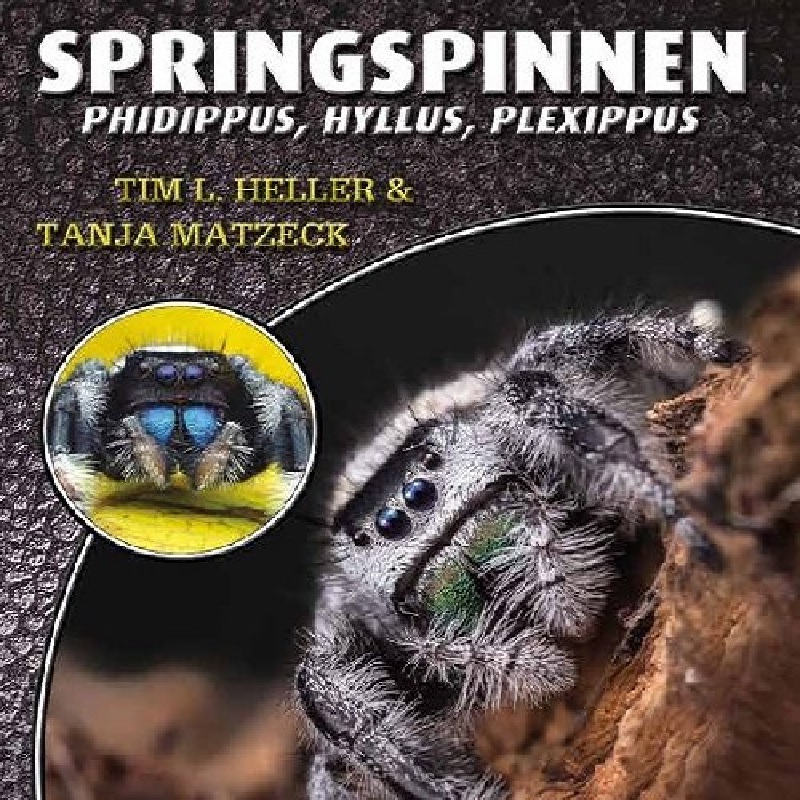
Jumping spiders Phidippus, Hyllus, Plexippus
Book Jumping Spiders - Phidippus, Hyllus & Plexippus A guide to keeping jumping spiders of the genera Phidippus, Hyllus & Plexippus. Who can resist the charm of jumping spiders? The childlike appearance of their expressive face simply leaves no one cold! In addition, their behavior is extremely exciting to observe, their colors are bright and their requirements for species-appropriate keeping are very easy to meet. No wonder these likeable jumpers are all the rage! This volume in the "Species by Species" series describes in detail what to look out for when buying and keeping them, introduces the most commonly kept species and color forms and provides plenty of tips on how to keep them successfully - so you can be sure they will breed well! Species by Species introduces you to the books in this series, which present the most popular terrarium animals. Each volume offers you detailed, practical care instructions and all the information you need to successfully breed your animals. All important questions from the required tank size to terrarium set-up, technical equipment, species-appropriate nutrition and disease prevention are answered with numerous tricks and tips. Experienced, long-standing breeders reveal how you can encourage the animals to reproduce and raise healthy young. All this in full color, generously illustrated and attractively designed - just about your terrarium animal - species by species

CHF 23.90

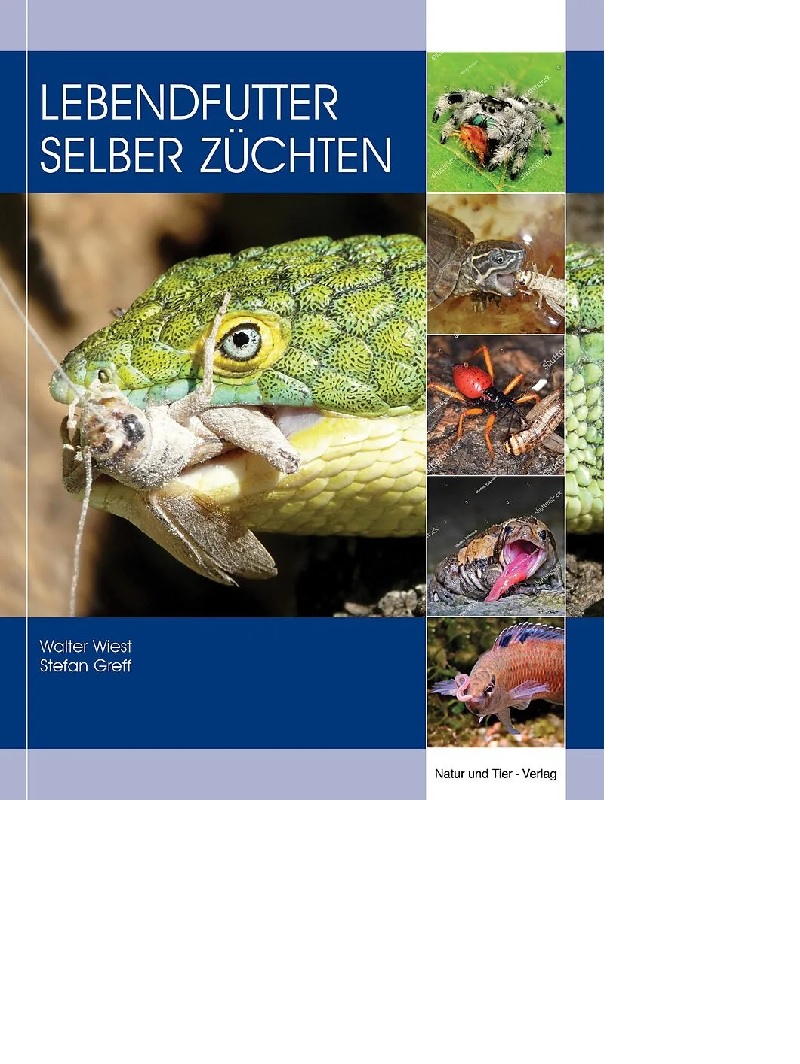
Book Breeding live food yourself
Book "Grow your own live food" - The perfect guide for pet owners Discover practical and detailed instructions on how you can easily breed food for your reptiles, birds, fish or other animals yourself in the book "Breeding live food yourself". With valuable tips on various food insects, their care and breeding, you can save money and ensure a species-appropriate diet for your pets. Contents of the book: Step-by-step instructions for breeding feeder insects Information on the best types of food for reptiles, birds and fish Care instructions and breeding conditions for various live food species Tips for sustainable and cost-effective food production Why breed your own live food? Get healthy, fresh food for your animals Save money and reduce dependence on pet shops Promote the health and well-being of your animals with species-appropriate food Whether you are a beginner or an experienced pet owner, this book provides you with everything you need to successfully breed live food yourself.

CHF 46.50

Marginata 69 - New Guinea tortoises
Marginata 69 - New Guinea tortoises – the genus ElseyaCover storyThe unrecognised beauties: New Guinea tortoises (Andreas S. Hennig)My experiences with Branderhorst's New Guinea tortoise, Elseya (Elseya) branderhorsti (Ouwens, 1914) (Andreas S. Hennig)Keeping and breeding of Rhodin's New Guinea tortoise, Elseya (Hanwarachelys) rhodini Thomson, Amepou, Anamiato & Georges, 2015 (Andreas S. Hennig)PortraitGeoemyda spengleri, Chinese serrated tortoise (Andreas S. Hennig)ReportageMacrochelys temminckii – Experiences and impressions with vulture tortoises part 2 (Reiner Praschag)KeepingAn alternative to year-round keeping of the Egyptian tortoise in the terrarium – my experiences with seasonal outdoor keeping of Testudo kleinmanni (Ricarda Schramm)EtymologySawbacks and living maps part 4: Graptemys gibbonsi, Pascagoula humpback tortoise (Holger Vetter)Classifieds & animal placement

CHF 16.50

Reptilia 15 - Mantella
Reptilia 15 - MantellaBlack-headed dwarf snakeLong-tailed lizardSri LankaContents:Page 2 - EditorialPage 3 - MagazinePage 5 - Report: Can the turtles of Asia still be saved? by E. MeierPage 16 - DatesPage 18 - Western Herp Pespectives: First contact with Baja, by B. LovePage 20 - Photo report: MantellaPage 26 - Herpetofauna: Mantella - Interesting poison frogs from Madagascar, by K. SchmidtPage 35 - Report: Protection of Madagascan colour poison frogs and their habitats, by H. ZimmermannPage 40 - Travel report: In the dry zone of Sri Lanka, by Dr M. GaulkePage 47 - Portrait and poster: Tylototriton verrucosus, by M. Aresté and J. L. FarriolsPage 51 - Keeping and breeding: The South China long-tailed lizard, by U. SchlüterPage 55 - Keeping and breeding: Rhoptropus barnardi - a day gecko from Namibia, by Dr M. MeyerPage 60 - Report: Cockroaches (Blattoptera) - Rulers of the world? by A. HauschildPage 64 - Keeping and breeding: Observations on the black-headed dwarf snake Rhynchocalamus m. melanocephalus (Jan, 1862), by H. EsterbauerPage 69 - Report: King cobra bite with consequences, by T. Ziegler, H. X. Quang and N. Ba TrinhPage 74 - Herpetology and culture: The snake in Celtic mythology, part 2, by L. Batista Carissimi-PrioriPage 81 - Reptilia on the road: The vivarium at Chemnitz Zoo, by A. S. HennigPage 88 - Advice and actionPage 91 - LibraryPage 96 - Incubator: 5,995 characters Resentment

CHF 9.80

Marginata 48 - Turtles in animal protection
Marginata 48 - Turtles in animal welfarePeloponneseRarities from VietnamEuropean pond turtleTable of contents EditorialMagazineTOPIC"Chelonia" - Germany's largest turtle sanctuaryPatrick BoncourtTOPICSanctuary for tortoises in Stuttgart - a feel-good garden for tortoises Humans and animalsNicole Gehringer & Thomas SchällingTOPICTurtle animal welfare Supersize - the Phoenix Herpetological SocietyHeiko WerningPORTRAITEmys orbicularis (Linnaeus, 1758) European pond turtle, East Mediterranean pond turtleBenny Trapp TRAVELIn search of the "shy beauty" and the "Cave turtles" (2)Torsten Blanck, Sebastian Braun, Timothy McCormack, Hoang Van Ha, Nguyen Tai Thang, Nguyen Van Luc & Minh LeSCIENCETrachemys emolli or T. grayi in Honduras? Alexander GutscheTRAVELMorea - in search of turtles and other reptiles in the West the Peloponnese (2)Axel KwetSubscription & ServiceRegional guide

CHF 16.50

Marginata 26 - Eastern Mediterranean Turtle
Marginata 26 - Eastern Mediterranean Turtle AestivationHanoi giant softshell turtleIranian turtles: Part 1 Contents: EDITORIALMAGAZINEDATES REPORTAGEThe Eastern Mediterranean pond turtle (Mauremys rivulata) – a little-known marsh turtleHans-Dieter Philippen REPORTAGEOverview of Mauremys rivulata in TurkeyDincer Ayaz REPORTAGENotes on the Eastern Mediterranean pond turtle (Mauremys rivulata) on CorfuAlexander Pieh & Nicole Braitmayer POSTERThe Gopher Tortoise (Gopherus polyphemus)Hans-Dieter Philippen REPORTAGESustainable restoration of Hoan Kiem Lake in Hanoi to protect Rafetus swinhoeiCelia Hahn, Torsten Schulze, Dang Thuy Linh, Tran Thi Nguyet and Peter Werner BREEDINGThe smallest Southeast Asian hinged tortoise (Cuora amboinensis)Sabine Schoppe REPORTAGEPhysiology of resting phases in reptiles, especially turtles. Part 2: Dry rest (aestivation) – a literature reviewMarkus Baur & Tobias Friz REPORTAGEObservations of freshwater turtles in Iran. Part 1:Emys orbicularisMarkus Auer & Mario Herz BOOK TIPSMALL ADSSUBSCRIPTION & SERVICEREGIONAL GUIDE

CHF 16.50

Marginata 36 - Dwarf tortoises
Marginata 36 - Dwarf tortoisesBreeding Homopus areolatus Part 2Breeding of musk turtlesHibernation in Mediterranean tortoisesContents:EditorialMagazineDatesPHOTOSTORY"Dwarf tortoises" An overview of the smallest forms of tortoiseHans - Dieter PhilippenBreedingExperiences with the husbandry and breeding of the Areolate Flat-shelled Tortoise (Homopus areolatus) under different conditions in Namibia and Switzerland. Part 2: Husbandry and breeding of the species in SwitzerlandVictor MislinBREEDINGThe dwarf Pelomedus tortoise (Pelusios nanus) – the world’s smallest neck-turning tortoise. Experiences with acclimatisation, care and initial breeding attemptsHans - Dieter PhilippenPortraitKalahari tent or ray-eyed tortoise Psammobates oculiferusAlfred Schleicher & Hans - Dieter PhilippenReportageUnusual discovery of a female Okavango flap-breasted Pelomedus turtle (Pelusios bechuanicus)Alfred SchleicherReportageWith the giant tortoises of Prison Island, ZanzibarJens JungnickelReportageTurtles in a caseVienna ZooAttitudeHibernation of European tortoisesThorsten GeierReportageSiamese twin of Testudo graeca iberaBayram GöçmenReportageAs a turtle volunteer in the MaldivesSibylle GausBook tipClassifiedsSubscription & ServiceRegional guide

CHF 16.50

Terraria 62 - Unusual food animals
Terraria 62 - Unusual Food Animals Campbell’s Tree Lizard Succulents Contents: Cover Story: Unusual Food Animals A healthy diet plays a decisive role in the successful care and breeding of our terrarium animals. The famous mealworm as a standard food is far from sufficient. Fortunately, specialist retailers now offer a wide range of suitable food insects such as house crickets, crickets, flies or cockroaches, which are available all year in any quantity. However, many pets also like to eat food animals outside the mainstream and some specialists are even dependent on a special diet for their well-being. In this issue of TERRARIA/elaphe, we take a closer look at some of these little-known, rather unusual food animals such as field slugs, woodlice, moth flies or a small-growing fruit fly variant. 3          Territorial 8          Herpetorama             Results of the 17th CITES Conference in Johannesburg – new regulations for some reptiles and amphibians             Synanthrope: Creeping Schnapps             Leaf Climber: Wasted “Time”             Thorny Devil: A Rural Keel-Tailed Iguana   Cover Story 14        Food Animals             A perennial topic in terraristics             Krition Kunz 20        Slippery Snacks             Breeding and use of the Mediterranean field slug as live food             Frank Täufer 25        Woodlice as Food Animals             Dominik Hoffses 30        A Small-Growing Variant of the Fruit Fly: Drosophila melanogaster “Ant”             Boris Stockmann 34        A Frog Farm for Feeding Reptiles and Amphibians: the Painted Disk-Tongued Frog (Discoglossus pictus)             Frank Pasmans, Sergé Bongaerts & An Martel 39        Moth Flies             A new food animal for small nocturnal hunters             Ingo Fritzsche   Panorama 42        Snake searching in the Ecuadorian Chocó rainforest             Daniel Jestrzemski   Research 50        New Species             A new slender boa from the Bahamas: the Conception Silver Boa (Chilabothrus argentum)             Axel Kwet             A new Borneo bush frog from Mt. Kinabalu             Axel Kwet 52        Among Researchers             The Comoros, a forgotten hotspot of diversity             Oliver Hawlitschek 56        Salamandra   Terraristics 60        Ant plants, leaf cacti and other succulent epiphytes for the terrarium             Beat Akeret   Nature and Species Conservation 70        Field Notes             Grass snake eating             Günther Vater             The feeding behaviour of the wall lizard Part 2             Malte Hornig 72        Project to protect the critically endangered tree lizard Abronia campbelli in eastern Guatemala             Brad Lock & Mónica Torres 84        Terrarino – the children’s page              The fire salamander – not a lucky animal             Alexa Sabarth   81        Subscription & Service 86        Also in your area 88        Preview 90        Incubator              No mercy for Mouse Z             Part 2             Heiko Werning

CHF 12.00

Draco 46 - Paludaria and aqua terrariums
Draco 46 - Paludariums and aqua-terrariums Contents: Editorial Paludariums and aqua-terrariums – a brief introduction to the subjectBeat Akeret No "land under" in aqua-terrariums – land parts for aquatic turtlesAndreas S. Hennig Keeping and breeding moss frogs of the genus Theloderma – some comments from practiceMikhail F. Bagaturov Construction, set-up and technology of an aqua-terrariumBeat Akeret Fishing spiders in the aqua-terrarium – keeping, breeding and rearing spiders of the genus AncylometesReinhard Hübers & Roland Lautensack Optimum care conditions in an aqua-terrarium for day and dwarf geckosJens Westig Plants in paludariums and aqua-terrariumsBeat Akeret Dragons in the aqua-terrarium: keeping and breeding the Philippine sailfin lizard, Hydrosaurus pustulatusMichael Wirth & Florian Riedel 

CHF 18.40

Reptilia 35 - Mud turtles
Reptilia 35 - Mud turtles Phelsum husbandryNose frogsVietnam Contents: 2 EDITORIAL 3 NATURE PROTECTIONNose frogs in danger – Is the semi-aquatic nose frog (Rhinoderma rufum) still found in Chile?by K. Busse 10 MAGAZINE 22 DATES 24 WESTERN HERP PERSPECTIVESMany reasons to be a terrarium keeperby B. Love 26 PHOTO REPORTAGEThe mud turtlesby M. Schilde 32 KEEPING AND BREEDINGKeeping and breeding the white-mouthed box turtle (Kinosternon leucostomum)by M. Schilde 36 KEEPING AND BREEDINGCare and breeding of the Common Musk Turtle (Sternotherus odoratus) as well as Roofed Musk Turtle (Sternorherus carinatus)by A. S. Hennig 41 TRAVELHerpetological news from one of the last lowland rainforests of Vietnamby T. Ziegler 51 PORTRAIT AND POSTERThamnophis cyrtopsisby M. Hallmen 56 KEEPING AND BREEDINGThe Indian star tortoise Geochelone elegans (SCHOEPFF, 1795) – a problematic tropical tortoise?Part 4: Hatching, rearing and diseasesby H.-J. Bidmon 64 KEEPING AND BREEDINGGeneral information on keeping day geckos of the genus Phelsumaby H. Schneider 69 REPORTAGE AND INTERVIEWHealing power from snake venom – New approaches in the development of medicines from animal substancesby K. Kunz 75 REPORTAGEThe art of painting on feathersby R. Fenske 80 REPTILIA ON THE ROADVivarium in the State Museum of Natural History Karlsruheby H. Werning 87 CLASSIFIED ADS 91 ADVICE AND ACTION 94 LIBRARY 104 GLOSSESExposed! (Part 1)by H. Werning

CHF 9.80

Customers also saw

Terrarium Medium / Aquatic Habitat
Size: 60x45x30cm | Size (2): 60x45x30cm
Exo Terra Medium terrarium The Exo Terra terrariums offer a good opportunity for keeping various terrarium animals The Exo Terra Terrarium is the ideal home for reptiles and amphibians, designed by European herpetologists. The front-opening doors allow easy access for feeding and care. A special locking mechanism prevents “escapes” and the doors can be opened independently of one another. The top, made of fine-mesh metal mesh, and the resulting good ventilation allow UVB and infrared light to penetrate the terrarium. It can be easily removed completely for decoration or cleaning purposes. On both sides of the rear of the top, there are 5 sealable cable channels for installing heat mats, waterfalls, sensors, etc. inside the terrarium. The base of the terrarium is raised so that a substrate heater can be fitted to heat part of the enlarged floor area. The extra-high front windows are ideal for thick layers of substrate (so that reptiles can burrow), for water features (paludarium) or for installing a Exo Terra reptile cave. The lifelike background is in the same colour as all other Exo Terra decorative items (water bowls, waterfalls, heat rocks, etc.) and offers extra space for climbing.Accessories (not included) Ventilation through the front window (1) Two doors for escape-proof access (2) Waterproof bottom (3) Raised bottom frame (4) Top made of fine-meshed stainless steel (5) Lock to prevent “escapes” (6) Mesh screen cover can be easily attached (7) Closable holes for hoses and/or cables (8) Recesses at the back for hoses and/or cables (9) 60x45x30cm, 60x45x45cm, 60x45x60cm or 60x45x90cm PLEASE NOTE: The animals shown are NOT suitable for this terrarium size! Suitable for the Compact Top Medium PT2227 and the Light Dome PT2055/PT2057 (10)Hygro-, Thermo- and Combometer PT2477/PT2472/PT2470 (11)Lock PT2620 (12) Background included! The Exo Terra Stone Motif Background is an exceptionally lifelike backdrop that is easy to cut to size. It creates a multi-dimensional habitat that is ideal for climbing reptiles or can simply be used to enhance the natural look of the terrarium. Its colour and texture match those of all Exo Terra decorative items, creating a perfectly harmonised terrarium environment, whether humid or dry.

CHF 189.00

Flower mantids
Everything you need to know about keeping and caring for flower mantids 64 pages numerous colour photos Paperback 2nd edition Author Stephan Schorn Publisher NTV Contents: Classification Physique Anatomy and sensory organs Description Habitat Lifestyle Moulting Taxidermy Keeping in the terrarium Selection, purchase and transport The terrarium Terrarium climate Feeding Propagation

CHF 21.90