Draco 58 - Chameleons

Article no: draco58

CHF 32.00

Stock: 0

Ready for dispatch in 1-3 days, delivery time 7 working days

Delivery between Tuesday, 7 July and Wednesday, 8 July
Zahlungsarten
Product information "Draco 58 - Chameleons"

Draco 58 - Chameleons

Editorial

Chameleons in the terrarium
Manfred Rogner

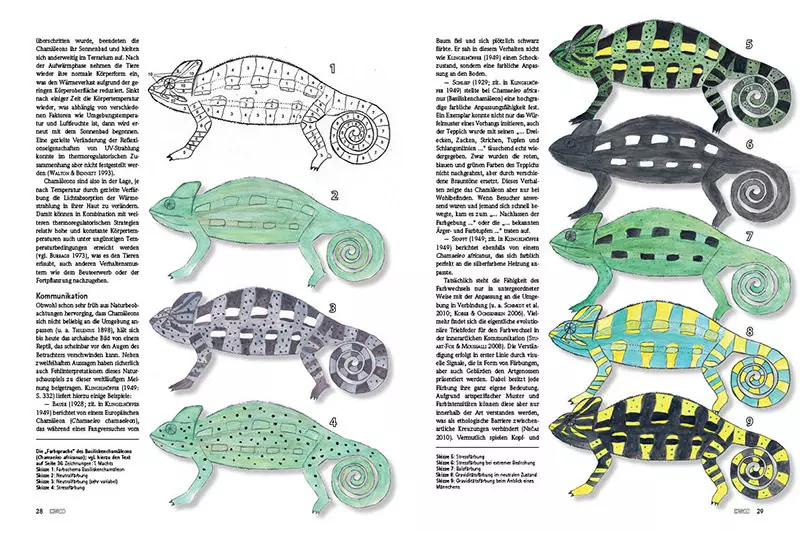
The physiological colour change in chameleons
Tobias Machts

Chameleons in Burundi and first data on biology from terrarium keeping
Nicolá Lutzmann, Benoit Nzigidahera, Max Dehling,
Eberhard Fischer, Onesphore Masabo, David Hellendrung,
Uli Wagner, Walter Herwig, Armin Hummel,
Ralph Lademann, Dominik & Natascha Rochna

In search of the Togo chameleon
Rolf Leptien

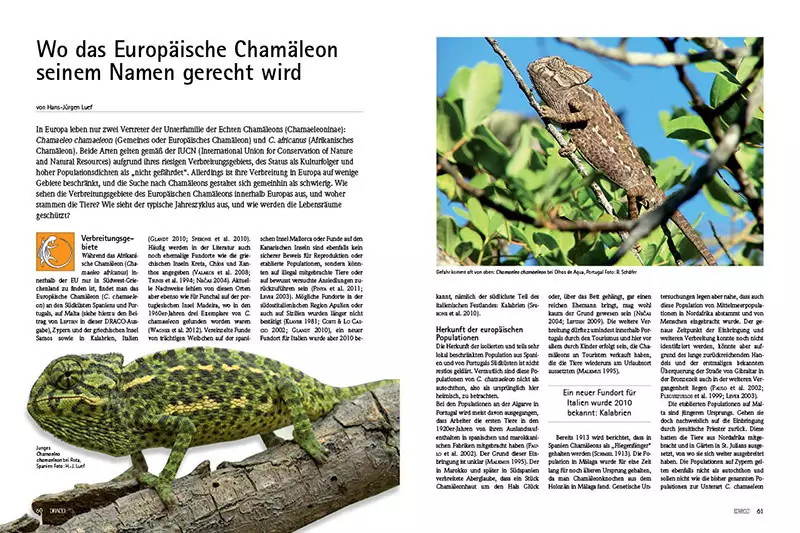
Where the European chameleon lives up to its name
Hans-Jürgen Luef

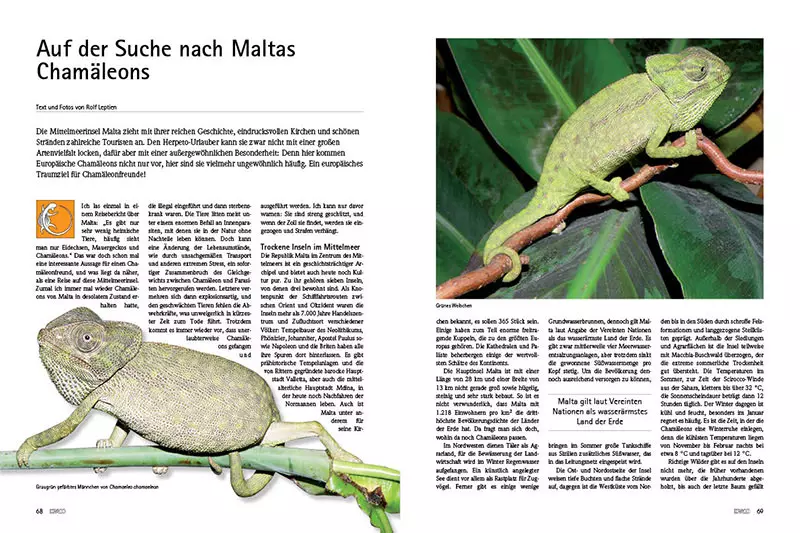
In search of Malta's chameleons
Rolf Leptien

Now a terrarium classic: the Yemen chameleon, Chamaeleo calyptratus
Manfred Rogner

Composition
Feeding recommendation
Technical details
Size information

0 of 0 reviews

Give us a rating!

Share your experience with the product with other customers.


Suggested products

Geckos
Geckos in the terrarium by Astrid FalkThe book offers a comprehensive introduction to geckos and their species-appropriate keeping in terrariums. It explains what you need to think about before buying a gecko and what preparations should be made. The book describes in detail how the terrarium is technically equipped and set up. The care of the animals, their special features and behaviour, their diet, reproduction and rearing of young animals are described, as well as diseases and husbandry problems with tried and tested suggestions for prevention and treatment. Individual gecko species that are particularly suitable for keeping and breeding in terrariums are portrayed in detail in the second part of the book.

CHF 28.50

Handbook of food plants for tortoises and other reptiles
Handbook of forage plants 2nd revised editionMarion Minch is not only a successful breeder of diverse tortoises for many years, but also an excellent connoisseur of native wild herbs. She founded and runs samenkiste.de, which is well known to many tortoise keepers and nature lovers. Her name is inextricably linked with reptile care and species-appropriate nutrition for tortoises. Her handbook of food plants summarises the most important native food plants for herbivorous and omnivorous reptiles. She not only considers tortoises, but also iguanas, spiny-tailed dragons and even chameleons. From the basics of plant biology to native wild herbs to suitable food plants for hardy tropical reptile species, this comprehensive work provides the basis for species-appropriate keeping. In the expanded and supplemented 2nd edition, the plant section is divided according to flower colour. This makes it even easier to identify wild herbs. The work has also been supplemented with a wealth of additional information and many pictures.

CHF 46.50

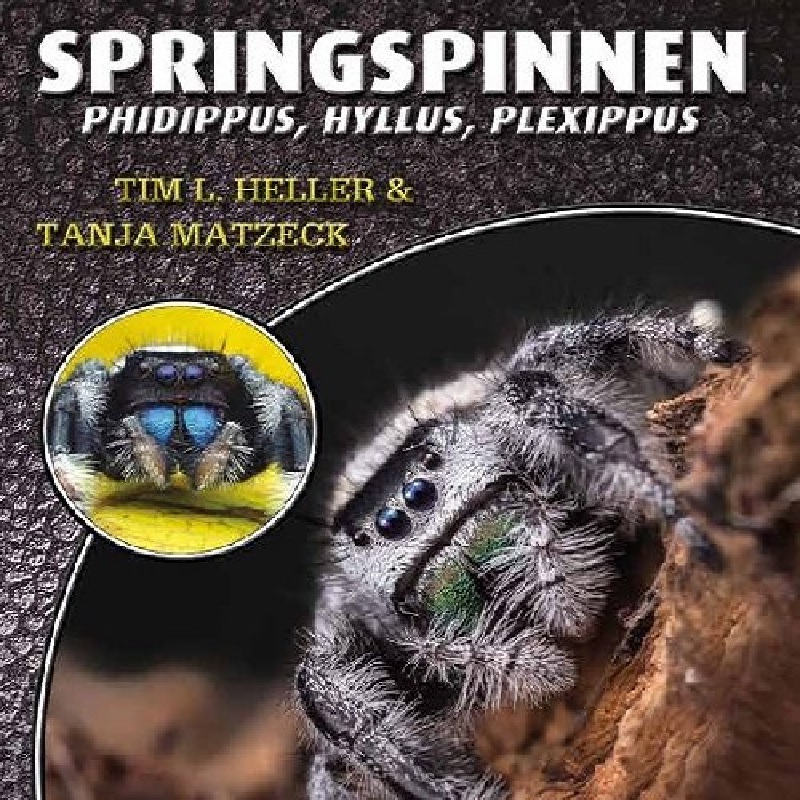
Jumping spiders Phidippus, Hyllus, Plexippus
Book Jumping Spiders - Phidippus, Hyllus & Plexippus A guide to keeping jumping spiders of the genera Phidippus, Hyllus & Plexippus. Who can resist the charm of jumping spiders? The childlike appearance of their expressive face simply leaves no one cold! In addition, their behavior is extremely exciting to observe, their colors are bright and their requirements for species-appropriate keeping are very easy to meet. No wonder these likeable jumpers are all the rage! This volume in the "Species by Species" series describes in detail what to look out for when buying and keeping them, introduces the most commonly kept species and color forms and provides plenty of tips on how to keep them successfully - so you can be sure they will breed well! Species by Species introduces you to the books in this series, which present the most popular terrarium animals. Each volume offers you detailed, practical care instructions and all the information you need to successfully breed your animals. All important questions from the required tank size to terrarium set-up, technical equipment, species-appropriate nutrition and disease prevention are answered with numerous tricks and tips. Experienced, long-standing breeders reveal how you can encourage the animals to reproduce and raise healthy young. All this in full color, generously illustrated and attractively designed - just about your terrarium animal - species by species

CHF 23.90

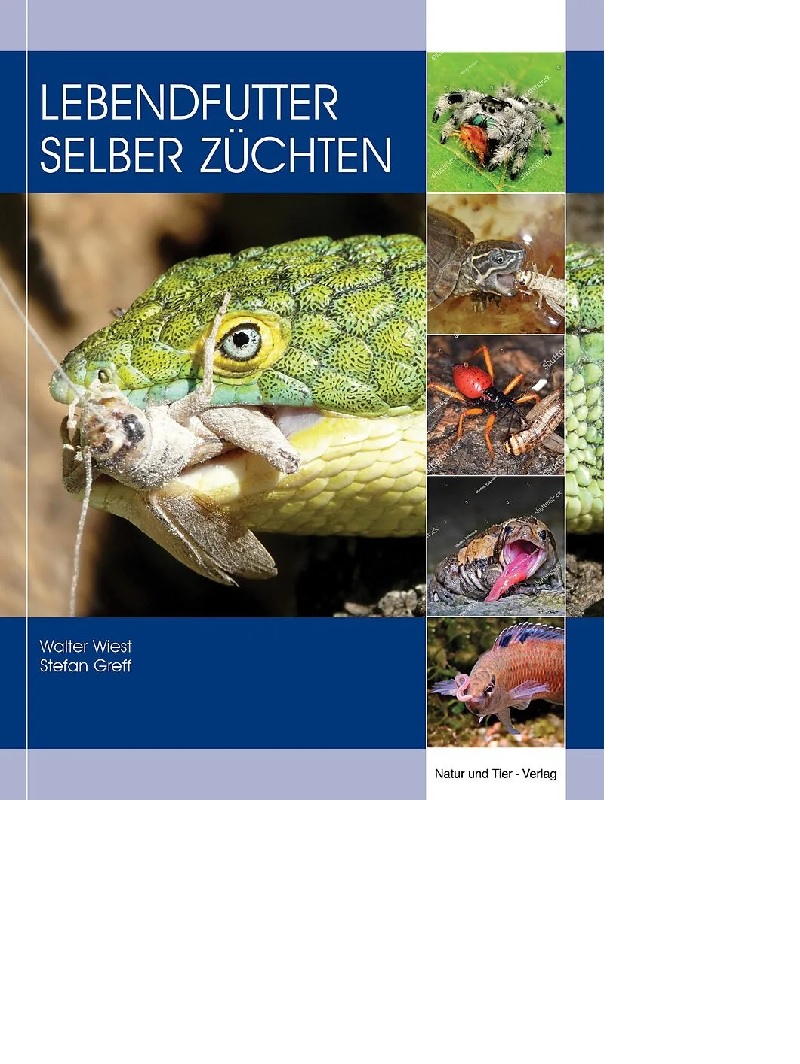
Book Breeding live food yourself
Book "Grow your own live food" - The perfect guide for pet owners Discover practical and detailed instructions on how you can easily breed food for your reptiles, birds, fish or other animals yourself in the book "Breeding live food yourself". With valuable tips on various food insects, their care and breeding, you can save money and ensure a species-appropriate diet for your pets. Contents of the book: Step-by-step instructions for breeding feeder insects Information on the best types of food for reptiles, birds and fish Care instructions and breeding conditions for various live food species Tips for sustainable and cost-effective food production Why breed your own live food? Get healthy, fresh food for your animals Save money and reduce dependence on pet shops Promote the health and well-being of your animals with species-appropriate food Whether you are a beginner or an experienced pet owner, this book provides you with everything you need to successfully breed live food yourself.

CHF 46.50

Marginata 69 - New Guinea tortoises
Marginata 69 - New Guinea tortoises – the genus ElseyaCover storyThe unrecognised beauties: New Guinea tortoises (Andreas S. Hennig)My experiences with Branderhorst's New Guinea tortoise, Elseya (Elseya) branderhorsti (Ouwens, 1914) (Andreas S. Hennig)Keeping and breeding of Rhodin's New Guinea tortoise, Elseya (Hanwarachelys) rhodini Thomson, Amepou, Anamiato & Georges, 2015 (Andreas S. Hennig)PortraitGeoemyda spengleri, Chinese serrated tortoise (Andreas S. Hennig)ReportageMacrochelys temminckii – Experiences and impressions with vulture tortoises part 2 (Reiner Praschag)KeepingAn alternative to year-round keeping of the Egyptian tortoise in the terrarium – my experiences with seasonal outdoor keeping of Testudo kleinmanni (Ricarda Schramm)EtymologySawbacks and living maps part 4: Graptemys gibbonsi, Pascagoula humpback tortoise (Holger Vetter)Classifieds & animal placement

CHF 16.50

The bearded dragon
All about bearded dragons by Peter Maria Müller 168 pages 155 colour photos, maps, tables, drawings Hardcover Format: 17.5 x 23.2 Author Peter Maria Müller Publisher NTV Contents: Hardly any other reptile is as popular with terrarium keepers as the bearded dragon Pogona vitticeps. It owes its success in the terrarium hobby not least to its interesting appearance, exciting behaviour and its calm and very trusting nature. Its husbandry requirements are easy to fulfil, and so it is bred by the thousands every year, making it easy to obtain and also ideal as a terrarium animal for beginners.Their close relatives such as the black-earth bearded dragon (Pogona henrylawsoni) or – although much rarer – Mitchell's bearded dragon (Pogona mitchelli) are also becoming increasingly popular.Peter Maria Müller, himself an experienced breeder of bearded dragons, gives you a detailed introduction to all representatives of the genus and their habitats. An identification key helps, you to differentiate between the individual species. In addition, all important aspects of keeping bearded dragons are explained in a comprehensive and easy-to-understand manner, such as decision-making aids before buying, handling the animals, sex determination, species-appropriate care and nutrition, possible diseases and, finally, successful breeding. Over 150 brilliant colour photos bring you closer to the world of bearded dragons and show the fascination of these popular lizards.

CHF 21.90

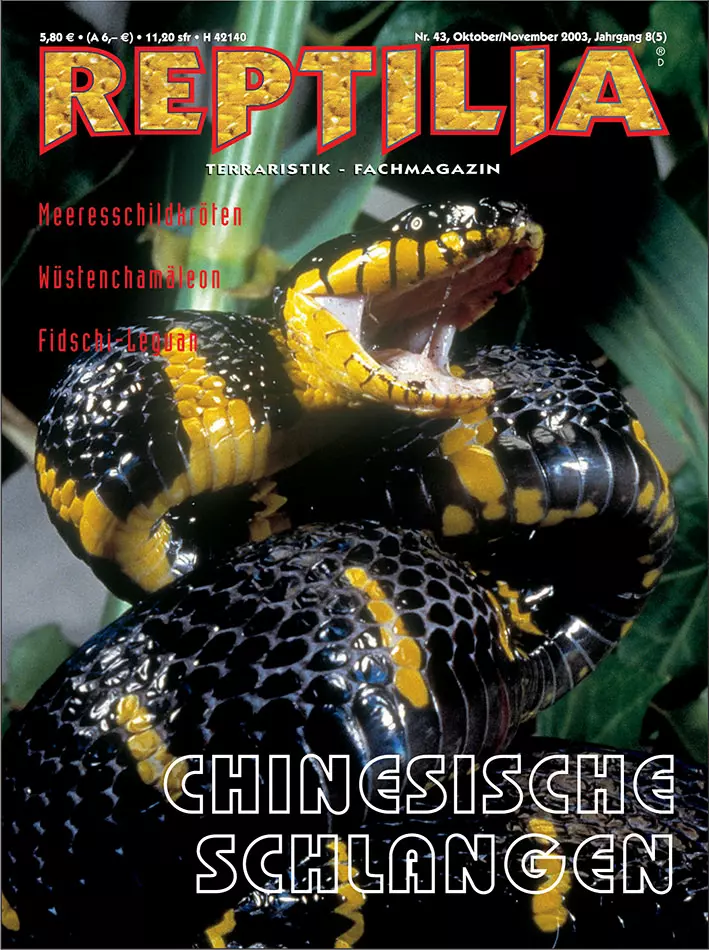
Reptilia 18 - Mimesis
Reptilia 18 - MimesisMaltaBuilding polystyrene terrariumsNutrition of tortoisesContents:Page 2 - EditorialPage 3 - Letters to the editorPage 5 - MagazinePage 11 - DatesPage 14 - Western Herp Perspectives: The Queen of Snakes, by B. LovePage 16 - Photo reportage: Mimicry, by L. AissefairePage 24 - Report: Mimicry - Saving energy through camouflage, by Dr M. GaulkePage 32 - Keeping and breeding: Like a leaf in the wind. The changing leaf Phyllum celebicum in the terrarium, by H. FischerPage 38 - Travelogue: Temples, disc tongues and reptiles - impressions of a trip to Malta, by U. SchlüterPage 43 - Photographic profile: Reptiles and amphibians in the Du Tsingy de Bamaraha nature reserve (western Madagascar), by G. Hallmann, E. Hoffmann, J. Krüger, P. Schlagböhmer and G. TrautmannPage 47 - Portrait and poster: Gastrotheca riobambae, by H. WerningPage 51 - Report: Nutrition of European tortoises, Part 2, by Dr C. DennertPage 59 - Keeping and breeding: A miniature microcodile for the paludarium - The keel skink Tropidophorus grayi, by U. DostPage 64 - Terrarium practice: Styrofoam terrariums, by D. HasselbergPage 69 - Herpetofauna: The Bismarck dwarf python Liasis boa - keeping and reproducing a colourful giant snake, by V. FranzPage 72 - Herpetology and culture: Snakes go to school - Part 2, by M. HallmenPage 81 - Reptilia on the road: Berling-Friedrichsfelde Zoo, by H. WerningPage 84 - Advice and actionPage 90 - LibraryPage 96 - Glossary: Something different, by A. Scheffler

CHF 9.80

Ulmer, Salamander and newts
Ulmer , Salamanders and newts – Everything about these fascinating creatures 96 pages 58 colour photos, 19 drawings hardback 1st edition Author Kurt Rimpp Ulmer Eugen Verlag A piece of the primeval world in the terrarium? Amphibians such as the axolotl, tiger salamander and alpine newt are the descendants of primeval amphibians that have survived to this day. In this book, you will find out how they can be kept optimally in the terrarium and what there is to observe and discover. Tips and advice provide information on the following important points: Where and how do amphibians live in nature? Considerations before purchase  Terrarium and furnishings Care and hibernation  Health and nutrition  A portrait of suitable species

CHF 26.90

Terraria 54 - Mosses, ferns and further spore plants in the terrarium
Terraria 54 - Mosses, ferns and other spore plants in the terrariumEuropean pond turtleTasmaniaContents:Cover story: Mosses, ferns and other spore plants in the terrariumIn 1892, the English physician Dr N.B. Ward realised that ferns could be cultivated in closed glass containers. This gave rise to Victorian plant display cases planted with ferns and mosses - the forerunners of today's terrariums. However, mosses, ferns and other spore plants are more than just decorative accessories in humid terrariums. Their reproduction by means of alternation of generations, which can also be observed in the terrarium, is particularly interesting. In addition to many interesting aspects of spore plants, the next issue will also contain numerous tips and tricks on how these plants can thrive in the terrarium and how they can best be kept together with reptiles and amphibians.ContentsTerritorialHerpetoramaNew study by the Federal Agency for Nature Conservation: What really jeopardises biodiversity in Germany LookupThorn Devil: The Variable Rain FrogCultural successors: tortoises in ViennaWhat did the first snakes look like?Leafhoppers: In the NewsCover storyWitnesses of the dinosaur era - about terrarium plants with generational changeBeat AkeretMosses - unrecognised dwarfs among terrarium plantsBeat AkeretEpiphytic ferns in the terrariumBeat AkeretNeither moss nor fern. Lycopodiopsida as terrarium plantsBeat AkeretPanoramaTiger otters: an invitation to get to know the reptiles of Tasmania Guillaume GomardResearchNew speciesIn wild Kurdistan - a spectacular large monitor lizard from the Zagros MountainsAxel KwetAmong researchersThe miracle black toad, one of the rarest amphibian species in the worldLuis Fernando Marin da FonteSalamandraTerraristicsMany years of experience in keeping and breeding the European pond turtle. Part 2: Egg laying, incubation, rearing the young, hibernation, husbandry problemsBernd WolffFirst herpetological assistance from Cologne at Saigon ZooThomas Ziegler & Anna RauhausNature and species conservationField notesLate finds of yellow-bellied toad and natterjack toad larvaeJürgen GebhartMysterious deaths of frogs and newtsAxel KwetAlso in your neighbourhoodSubscription & ServicePreviewIncubator The danger seekersHeiko Werning 

CHF 12.00

Stick insects
Everything about keeping stick insects by Ingo Fritzsche 64 pages Format: 14.8 x 21 cm with numerous colour photos Author Ingo Fritzsche Publisher NTV Contents: Foreword Distribution and habitat    Relationship and body structure The eggs The terrariums     • Glass terrariums        • Gazeterrariums     • Plastic terrariums The substrate     • Earth     • Sand     • Vermiculite and perlite     • Peat and coco substrates     • Paper Further accessories Lighting Care measures Egg laying and incubation Climate    Food plants Handling the food plants Where do I buy my stick insects? Transport and quarantine Reproduction Growth What to do with the offspring? Defence behaviour Species section Thanks    Further information Literature used and further reading

CHF 17.90

Terraria 17 - Rautenphytons
Terraria 17 - Rhombic pythons Armoured belt-tailPuddle frogs Contents: Rhombic and diamond pythons are not only true jewels among the giant snakes, but they have also become increasingly popular in the terrarium hobby in recent years. Not only is breeding of species once considered extremely difficult now possible, but many of these pythons even come in spectacular colour morphs. Marc Mense, author of the standard work "Rhombic Pythons", presents the species and subspecies of this Morelia complex—which are sometimes difficult for laypeople to distinguish—as well as, of course, the latest trends in colour and pattern varieties. Magazine- City of Heidelberg sends hundreds of lizards to their deaths- Remarkable find of Pipa cf. aspera in French Guiana- Is there parthenogenesis in green water dragons?- New concept for the systematics of New World climbing and pine snakes- Marketplace- Those believed dead mate more often- Legal matters15 TERRAglobalLots of enchanted princes Joachim BulianWitness to the hatching of slender-snouted crocodilesFabio CupulMain topic: Rhombic pythonsShort description and identification key of all extant rhombic pythons – Morelia bredli, Morelia carinata and the Morelia spilota complexMarc Mense Colour and pattern morphs of rhombic pythonsMarc Mense“Carpet Catch” – On the road with a reptile catcher Antonia Pachmann Cuckoo in the foam nest – Allobates spumagonens, a new poison dart frog with extraordinary reproductive behaviourRaffael Ernst Loveable hoppers – keeping and breeding a puddle frog Kriton Kunz Intestinal prolapse in the panther chameleon (Furcifer pardalis) Carsten Schneider Terrarium profile: Cordylus cataphractus Boie, 1828 – the armoured belt-tail Rene de Haas Travel Dominica – Island of the Eyespot AnoleBeat Akeret New speciesFour new “nose frogs” from New GuineaAxel Kwet Three geckos from tropical Asia Mirko Barts Among researchers Herpetofauna in the central Brazilian Cerrado Wilian Vaz-Silva Eye-catcher Turtles under the southern sun – a guest of Peter Buchert Michael Wirth Near youSubscription & ServicePreview IncubatorTravelling with the IguaneroHeiko Werning 

CHF 12.00

Reptilia 76 - Poisonous snakes of Europe
Reptilia 76 - Venomous Snakes of Europe PantanalFringed FingersArgentine Tortoises Contents: Venomous snakes are undoubtedly some of the most fascinating andattractive species in the snake fauna of Europe. Horned viper, asp viper, adder & co. impress with their aesthetics as well as with their sophisticated survival strategies. Mario Schweiger is one of the best experts on these reptiles and presents to youin REPTILIA the European venomous snake faunain detail and up to date. And for terrarium keepers, the report on the many years of successful breeding of Vipera ammodytes should be a particular highlight. Table of Contents:2 EDITORIAL3 MAGAZINE11 DATES14 PHOTOSTORY The Venomous Snakes of Europe An Overview of the Species and Remarks on Individual Taxa by M. Schweiger26 KEEPING AND BREEDING Keeping, Breeding and Rearing of the European Horned Viper Vipera ammodytesby M. Schweiger34 HERPETOFAUNA The Black Adders of the Northern Black Forest by M. Wirth41 KEEPING AND BREEDING Findings on Reproduction of the Argentine Tortoise, Chelonoides chilensis, under Human Care by T. & S. Vinke47 PORTRAIT and Poster Anolis sagrei by H. Werning52 HERPETOFAUNA Fringed-fingered Lizards (Acanthodactylus) in the Wild and in the Terrarium Part 4: The Acanthodactylus-pardalis- Group by U. Schlüter61 TRAVEL A Piece of Paradise. The Pouso Alegre in the Brazilian Pantanal from the Perspective of a Reptile Enthusiast. Part 1 by M. Hallmen70 REPORTAGE The Scorpions of Morocco Part 2 by H. Nickel, J. Hornung & M. Koch77 Library 82 WESTERN HERP PERSPECTIVES Which Venomous Snake is Best for Beginners? by B. Love84 ALSO NEAR YOU89 SUBSCRIPTION & SERVICE91 FAQ – Frequently Asked Questions Terrarium Lighting – Part 2 by I. Kober & U. Geissel94 PREVIEW96 INCUBATOR In the Wild Wedding. An Eastern in Two Parts for Three Young Men “of Southern Appearance”, a Reptile Researcher and a Cockroach Part 1 by H. Werning

CHF 12.00