Handbook of forage plants 2nd revised editionMarion Minch is not only a successful breeder of diverse tortoises for many years, but also an excellent connoisseur of native wild herbs. She founded and runs samenkiste.de, which is well known to many tortoise keepers and nature lovers. Her name is inextricably linked with reptile care and species-appropriate nutrition for tortoises. Her handbook of food plants summarises the most important native food plants for herbivorous and omnivorous reptiles. She not only considers tortoises, but also iguanas, spiny-tailed dragons and even chameleons. From the basics of plant biology to native wild herbs to suitable food plants for hardy tropical reptile species, this comprehensive work provides the basis for species-appropriate keeping. In the expanded and supplemented 2nd edition, the plant section is divided according to flower colour. This makes it even easier to identify wild herbs. The work has also been supplemented with a wealth of additional information and many pictures.
Geckos in the terrarium by Astrid FalkThe book offers a comprehensive introduction to geckos and their species-appropriate keeping in terrariums. It explains what you need to think about before buying a gecko and what preparations should be made. The book describes in detail how the terrarium is technically equipped and set up. The care of the animals, their special features and behaviour, their diet, reproduction and rearing of young animals are described, as well as diseases and husbandry problems with tried and tested suggestions for prevention and treatment. Individual gecko species that are particularly suitable for keeping and breeding in terrariums are portrayed in detail in the second part of the book.
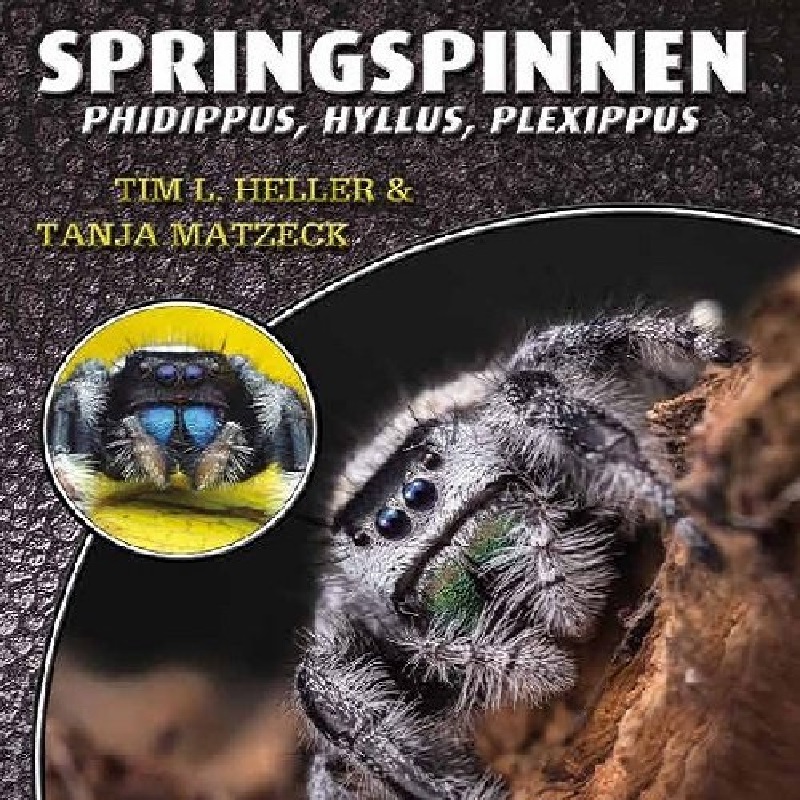
Book Jumping Spiders -
Phidippus, Hyllus & Plexippus
A guide to keeping jumping spiders of the genera Phidippus, Hyllus & Plexippus. Who can resist the charm of jumping spiders? The childlike appearance of their expressive face simply leaves no one cold! In addition, their behavior is extremely exciting to observe, their colors are bright and their requirements for species-appropriate keeping are very easy to meet. No wonder these likeable jumpers are all the rage!
This volume in the "Species by Species" series describes in detail what to look out for when buying and keeping them, introduces the most commonly kept species and color forms and provides plenty of tips on how to keep them successfully - so you can be sure they will breed well!
Species by Species introduces you to the books in this series, which present the most popular terrarium animals. Each volume offers you detailed, practical care instructions and all the information you need to successfully breed your animals.
All important questions from the required tank size to terrarium set-up, technical equipment, species-appropriate nutrition and disease prevention are answered with numerous tricks and tips.
Experienced, long-standing breeders reveal how you can encourage the animals to reproduce and raise healthy young.
All this in full color, generously illustrated and attractively designed - just about your terrarium animal - species by species
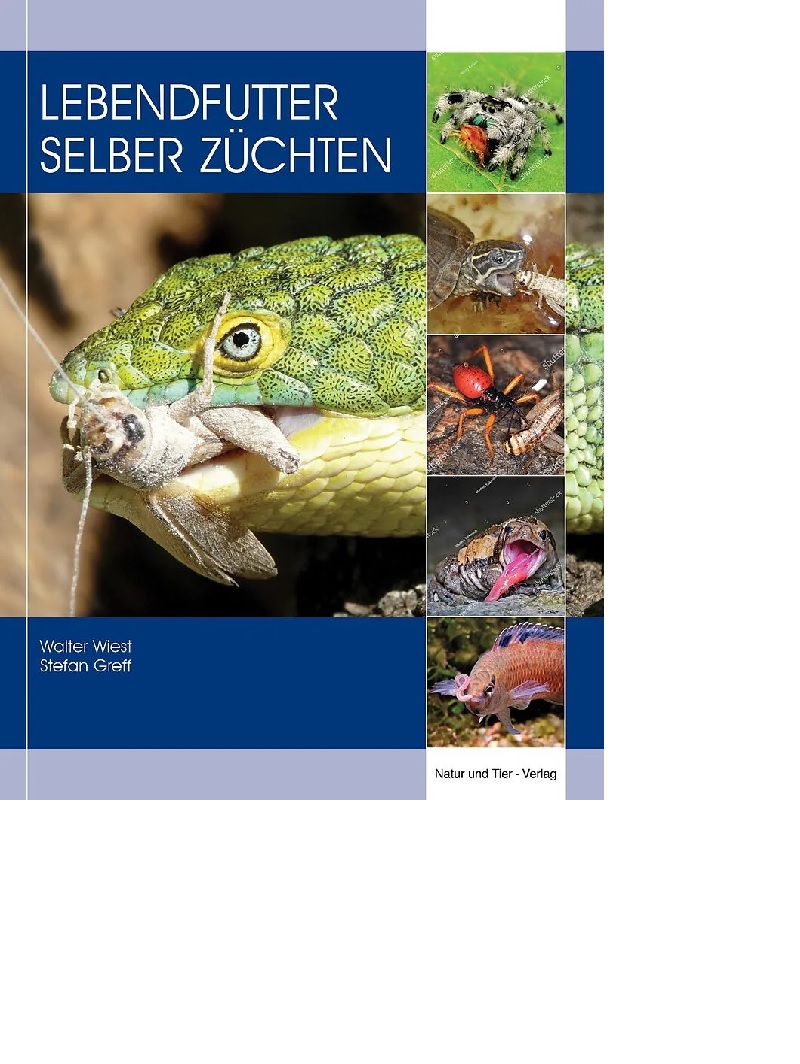
Book "Grow your own live food" - The perfect guide for pet owners
Discover practical and detailed instructions on how you can easily breed food for your reptiles, birds, fish or other animals yourself in the book "Breeding live food yourself". With valuable tips on various food insects, their care and breeding, you can save money and ensure a species-appropriate diet for your pets.
Contents of the book:
Step-by-step instructions for breeding feeder insects
Information on the best types of food for reptiles, birds and fish
Care instructions and breeding conditions for various live food species
Tips for sustainable and cost-effective food production
Why breed your own live food?
Get healthy, fresh food for your animals
Save money and reduce dependence on pet shops
Promote the health and well-being of your animals with species-appropriate food
Whether you are a beginner or an experienced pet owner, this book provides you with everything you need to successfully breed live food yourself.
Marginata 69 - New Guinea tortoises – the genus ElseyaCover storyThe unrecognised beauties: New Guinea tortoises (Andreas S. Hennig)My experiences with Branderhorst's New Guinea tortoise, Elseya (Elseya) branderhorsti (Ouwens, 1914) (Andreas S. Hennig)Keeping and breeding of Rhodin's New Guinea tortoise, Elseya (Hanwarachelys) rhodini Thomson, Amepou, Anamiato & Georges, 2015 (Andreas S. Hennig)PortraitGeoemyda spengleri, Chinese serrated tortoise (Andreas S. Hennig)ReportageMacrochelys temminckii – Experiences and impressions with vulture tortoises part 2 (Reiner Praschag)KeepingAn alternative to year-round keeping of the Egyptian tortoise in the terrarium – my experiences with seasonal outdoor keeping of Testudo kleinmanni (Ricarda Schramm)EtymologySawbacks and living maps part 4: Graptemys gibbonsi, Pascagoula humpback tortoise (Holger Vetter)Classifieds & animal placement
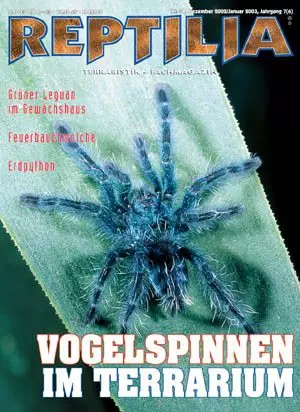
Reptilia 38 - Tarantulas in the terrariumGreen iguana in a greenhouseFire-bellied newtsEarth pythonContents:
2 EDITORIAL
3 READER LETTERS
7 MAGAZINE
15 DATES
16 WESTERN HERP PERSPECTIVES The hymn of natural terrariumsfrom B. Love
18 PHOTO REPORTAGE Large, hairy spiders - An introduction to the Theraphosidae familyby F. Tomasinelli
26 KEEPING AND BREEDINGBreeding of tarantulas with special consideration of their way of life in the wildby B. F. Striffler
32 KEEPING AND BREEDINGThe ‘Malaysian Earth Tiger’ – Keeping and Breeding the Asian Tarantula Cyriopagopus thorelliby F. de Vita & F. Tomasinelli
36 KEEPING AND BREEDINGPoecilotheria subfusca POCOCK, 1895: Group housing and breedingby B. F. Striffler
42 TRAVELAdventure Oman Mountainsby R. Leptien
51 PORTRAIT AND POSTERAzemiops feaeby A. Gumprecht
56 REPORTAGEA life like in paradise - experiences with keeping a green iguana in a tropical hallby C. Ströhlein, idea-Schmetterlings-Paradies Neuenmarkt
61 HERPTOFAUNAThe fire-bellied newts of the genus CynopsPart 1: Keeping and speciesby P. Bachhausen
68 KEEPING AND BREEDINGObservations on the ecology and terrarium husbandry of the Eastern lizard snake, Malpolon monspessulanus insignitus Geoffroy, 1827by H. Esterbauer
74 HERPTOFAUNAThe Burrowing Python (Calabaria reinhardtii)by S. Seidel
78 REPORTAGEThe school vivariumPart 3: Behavioural practical course for a biology classby M. Hallmen
85 RAT & TAT
87 CLASSIFIED ADS
92 LIBRARY
104 GLOSSESFeed animal breeding magazineby N. Nadolny
This issue of your specialist terrarium magazine REPTILIA is dedicated to tarantulas. Alongside a photo feature richly illustrated with impressive photographs, which provides an overview of the family of these popular animals, there are expert and detailed reports on keeping and breeding them. The focus is on the magnificent Poecilotheria species, which – unusually for tarantulas – can almost without exception be kept in groups, as well as the “Malaysian Earth Tiger” Cyriopagopus thorelli. The article by B. Striffler on the breeding of tarantulas, with particular attention to their natural behaviour, also deserves special mention. Here you will discover interesting facts that you will search for in vain in standard books on tarantulas, and which will enable you to draw valuable conclusions regarding husbandry and breeding conditions.Spectacular finds and a life-threatening attack - the result of the exciting travelogue Adventure Oman, which you should not miss. After the brilliant photos of the extremely rarely shown venomous snake Azemiops feae comes a report on an unusual way of keeping the green iguana that could not be more exemplary.Extremely colourful animals that can reach a great age when kept properly are the fire-bellied newts of the genus Cynops, which newt expert P. Bachhausen presents to you in detail through text and images.Observing animals in the wild not only provides fascinating insights into their way of life, but also makes it easy to draw conclusions about the successful care and breeding of these species. The proof of this simple yet effective strategy: the article by H. Esterbauer on the ecology and terrarium husbandry of the Eastern lizard snake, Malpolon monspessulanus insignitus.In this issue of REPTILIA, we are also able to present one of the first reports on the breeding of the unusual ground python Calabaria reinhardtii. S. Seidel, who achieved this success, describes in detail here, amongst other things, the husbandry conditions that stimulated his animals to mate.In the last part of his article on the school vivarium, M Hallmen finally reports on the concrete possibilities that arise from keeping animals in the classroom.As always, REPTILIA once again offers you the full range of comprehensive services: events, classifieds, the magazine featuring interesting facts about Hobby, advice and practical tips, and the library are all included, as is the column, this time offering a satirical take on RODENTIA, the specialist magazine on small mammals published by Natur und Tier Verlag.
Terraria 57 - Reptiles and amphibians in danger
Breeding rare crocodilesGiant lizards on La Gomera
Contents:
Cover story: Reptiles and amphibians in danger
Reptiles and amphibians are among the most endangered animal groups on the planet. The main reason is that humans are destroying their habitats. But environmental factors that have become unbalanced, diseases, environmental toxins, traffic and hunting are also harming them. Herpetologists and terrarium keepers are fighting a desperate but committed battle against the extinction of many species. We are dedicating this probably most important topic of our field of interest an entire special issue of TERRARIA/elaphe and not only trace the current threat situation, but also present encouraging species conservation projects from scientists, conservationists and terrarium keepers on site, in zoos and in private terrariums.
TerritorialHerpetoramaImport ban on salamanders and newts to Switzerland: Why?Cultural followers: Amphibian muralismThorny devil: The gecko beast with the leaf-like flat tailPrivate individuals and zoos protect highly endangered salamanders togetherFirst aid in the wild: Antifungal agent for the Mallorca midwife toad Blattsteiger: Moat 2.0
Cover storyThe biodiversity crisis Amphibians and reptiles in dangerAxel Kwet & Heiko Werning
Honeycomb toads from French Guiana. Observations in the habitat and establishing a conservation breeding projectDavid Massemin & Cédric Libert
PanoramaConcern for a small frog. How a project for nose frogs was initiated and continues to growFrank Oberwemmer
Research
New speciesNewly described, threatened with extinction: the Galápagos giant tortoises of Cerro FatalAxel Kwet
Among researchersGreen toads on the island of FehmarnMoritz Ott
Current situation and endangerment of Madagascar's amphibiansJörn Köhler, Frank Glaw & Miguel Vences
Salamandra
Terrarium husbandryPrivate care and breeding of endangered crocodilesAlexander Meurer
Nature and species conservation
Field notesAquatic turtles with “fur” – observations in GreeceBenny Trapp
An unusually coloured Redi viper (Vipera aspis francisciredi) from the Swiss MünstertalJürgen Gebhart
The return of the giants from La GomeraSergi Conde Lázaro
Terrarino – the children’s page Cool diversity. Endangered and protectedUte Nüsken & Alexa Sabarth
Also in your areaSubscription & ServicePreview
Incubator The forest is a villageHeiko Werning
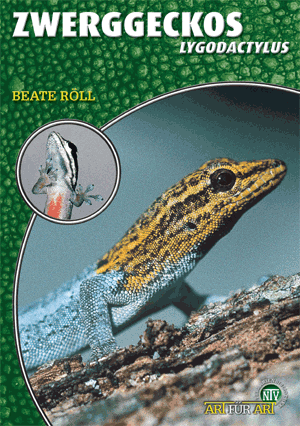
Beate Röll
64 Seiten
14,8 x 21 cm
49 Farbfotos
Inhalt:
Sie lieben kleine, agile, attraktiv gefärbte Echsen oder haben nur wenig Platz für ein Terrarium zur Verfügung? Dann werden Sie die munteren, hübschen Zwerggeckos ganz sicher in ihren Bann ziehen. Ihre geringen Ansprüche an die Pflege können auch von unerfahrenen Haltern leicht erfüllt werden, was diese Tiere zu geradezu idealen Pfleglingen macht. Beate Röll kennt sich mit diesen netten Echsen bestens aus und berichtet aus ihrer langjährigen Erfahrung ausführlich und praxisnah über die artgerechte Haltung und Pflege von Zwerggeckos. Außerdem vermittelt sie Ihnen alle Kenntnisse, die Sie benötigen, um Ihre Tiere erfolgreich zur Vermehrung bringen, die Eier ausbrüten und die Kleinen aufziehen zu können.
Systematik und Körperbau
Die faszinierende Biologie: Aus dem Leben der Zwerggeckos
Alle Informationen zur artgerechten Haltung: Vom geeigneten Terrarium über Einrichtung und Technik bis hin zur Fütterung
Erfolgreich nachzüchten: Paarungsstimulation, Inkubation der Eier und Aufzucht der Jungtiere
Problemlösungen: Wie man die häufigsten Fehler bei der Pflege vermeidet, und wie man kranken Tieren helfen kann
Brillante Fotos
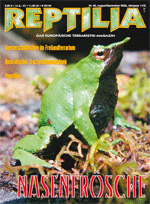
Reptilia 60 - Nose frogs
Aquatic turtles in the outdoor terrariumAustralian spiny-tailed skinkMauritius
Contents:
4 EDITORIAL
5 MAGAZINE
12 DATES
15 PHOTO REPORTAGEFrom Darwin's treasure trove: Nose frogs By H. Werning
22 KEEPING AND BREEDINGThe breeding of the nose frogRhinderma darwinii for more than twodecadesBy K. Busse
30 REPORTAGEThe REPTILIA project "Nose Frogs":Field studies on Rhinodermadarwinii, the Darwin's frogBy P. Ulmer
39 REPORTAGEHalf-swimmers in sight? The search for Rhinoderma rufum continues.By M. Solé
43 TRAVELMauritius for beginnersBy M. Rogner
51 PORTRAIT AND POSTERMontivipera xanthinaBy N. Stümpel & B. Trapp
55 KEEPING AND BREEDINGOn keeping and breeding the Australianspiny-tailed skink Egernia stokesii stokesii (Gray, 1845), with notes on feeding-management. Part 1By S. Knauf
62 PRACTICEUse of a conservatory as a terrarium-location for a desert terrariumPart 2: The inhabitants: Tympanocryptis tetra-porophora (Lucas & Frost, 1895)By T. Ackermann
68 PRACTICE North American aquatic turtles in the outdoor terrarium Part 1: General remarksBy A. S. Hennig
72 HERPETOFAUNASand lovers - The psammophilous snakesof North AfricaBy U. Schlüter
86 FAQ - FREQUENTLY ASKED QUESTIONSAcquisition of tarantulasBy K. Kunz
90 LIBRARY
100 WESTERN HERP PERSPECTIVESAlterna feverBy B. Love
104 INCUBATOR"How do you even get something like this"?By H. Werning
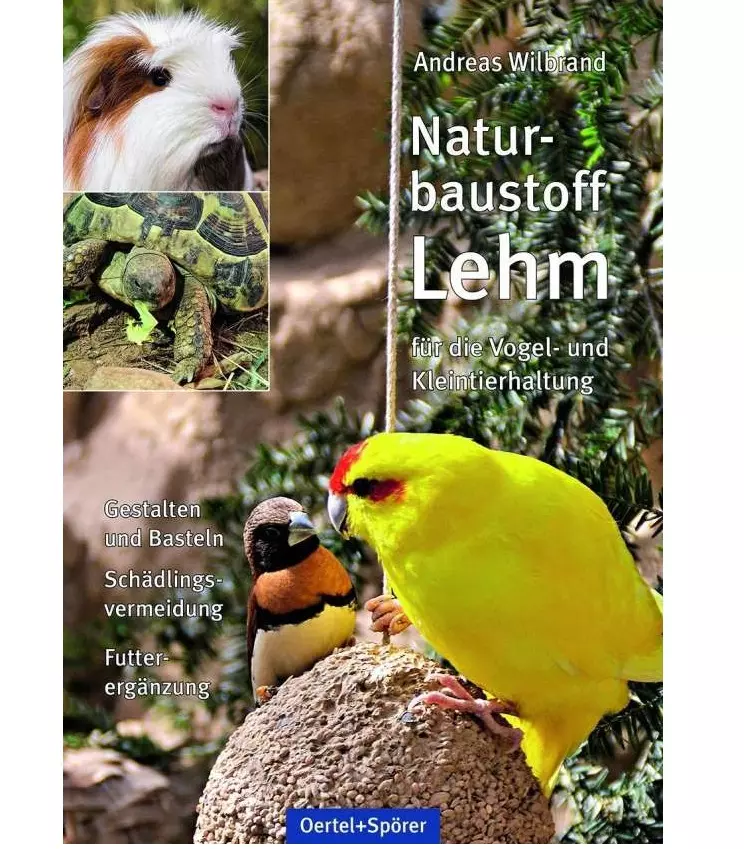
Natural building material clay for keeping birds and small animals
The first clay DIY book for animal lovers - a practical guide with simple instructions, new ideas and health tips!
Designing and crafting
Pest prevention
Feed supplement
Clay is the oldest and most universal building material in the world. The animal world has been demonstrating for millions of years how it can be used to build safe dwellings. And humans also utilised this building material a long time ago and even created huge and artistic buildings from it.
Clay can also be used perfectly for our pets. Building projects for animal housing of all kinds, landscaping in terrariums, soil construction for aquariums, pest control in aviaries, pigeon coops and stables - this book will show you how to do all this and what you need for it.Clay is not only a building material that can almost always be reused, but also contributes to the health of humans and animals. Clay binds toxins, displaces pests and is suitable as a fertiliser. For this reason, the health maintenance of our protégés through clay is also described in detail
Kosmos - Tortoises
Rogner, Heidi124 pages, 120 color photos, 16 x 21.5 cm, hardcoverKosmos Publisher, Series: Praxiswissen
The original Panzertiere are the classics among the Terrarientieren. This guide presents the most popular species and shows step by step how to create natural habitats for land turtles - from the room terrarium to the open-air pool. The book about nutrition, care, health and breeding is detailed and practical. Heidi Rogner is a biologist and geographer. For many years she has been holding and breeding turtles. After she has been co-author of two cosmos books, this is her first book on land turtles. Her husband, the tortoise expert Manfred Rogner, gave her an advisory role.
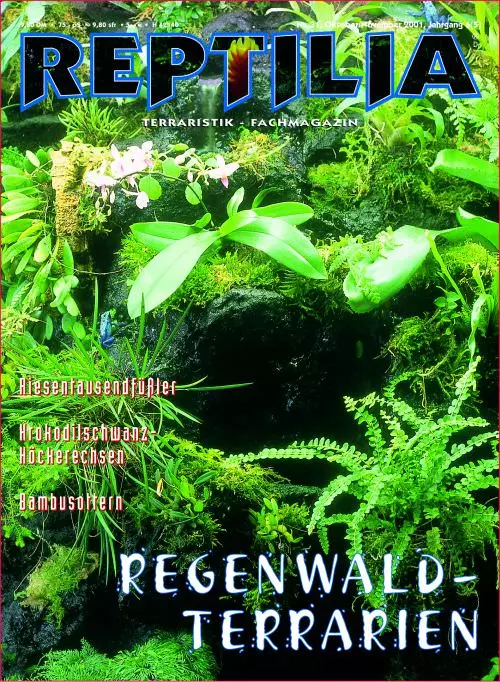
Reptilia 31 rainforest terrariums
Giant millipedesCrocodile-tailed crested lizardsBamboo otters
Contents:
2 EDITORIAL
3 READER LETTERS
5 MAGAZINE
12 DATES
18 WESTERN HERP PERSPECTIVES: Reptile Television, By B. Love
20 PHOTOREPORTAGE: Rainforest terrariums, By M. Schmidt
28 REPORTAGE: Rain for the rainforest – Mist and irrigation in the rainforest terrarium, By P. Nowark
32 REPORTAGE: Materials for back wall design in rainforest terrariums, By T. Doussier
37 REPORTAGE: Plants in the rainforest terrarium, By B. & W. Schwarz
43 TRAVEL: The herpetofauna of south-west Morocco, By U. Schlüter
51 PORTRAIT AND POSTER: Natrix natrix, By H. P. Eckstein & B. Trapp
55 KEEPING AND BREEDING: On the lifestyle, keeping, care and reproduction of the crocodile-tailed humpback lizard Shinisaurus crocodilurus, By M. Rogner
62 HERPETOFAUNA: Information on the lifestyle and husbandry of the bamboo otter Trimeresurus kanburiensis, By J. Bulian
67 REPORTAGE: Saving the giant tortoises on Galápagos, By H. W. Köhler
74 KEEPING AND BREEDING: Tropical giant millipedes, By F. Gast
77 HERPETOCULTURE: Devilish, divine snake. Aspects of snake symbolism from a psychological perspective Part 2: Psychological foundations, the snake as a symbol of the unconscious, ambivalence of the snake symbol, By K. Kunz
87 CLASSIFIED ADS
91 ADVICE AND ACTION
93 LIBRARY
104 GLOSSE: An autumn morning dream, By L. Hogeback