Terraria No. 31 - Collared lizards

Article no: terraria31

CHF 12.00

Stock: 3

Available, delivery time: 1-3 days

Delivery between Tuesday, 13 October and Wednesday, 14 October
Zahlungsarten
Product information "Terraria No. 31 - Collared lizards"
Nordamerikanische Wassernattern
Aufzucht europäischer Landschildkröten

Inhalt:

Halsbandleguane gehören schon lange zu den beliebtesten Echsen im Terrarium. Sie sind farbenprächtig, werden sehr zutraulich und können gut vermehrt werden. Aber auch bei diesen scheinbar so bekannten Evergreens der Terraristik gibt es viel Neues zu berichten. So stellen wir nicht nur in Bild und Text einige „exotische“ Crotaphytus-Arten vor, sondern auch spektakuläre Farbformen des Östlichen Halsbandleguans, von denen einige glücklicherweise bei uns inzwischen gehalten werden. Natürlich darf ein ausgiebiger Haltungs- und Nachzuchtbericht zu C. collaris nicht fehlen. Und über neue Erkenntnisse zur Überwinterung berichtet der wohl bekannteste Experte für diese Tiere, Robert Schumacher.

Editorial
Magazin
Kennzeichnung von Reptilien durch neuen Mini-Transponder / Verschollene Regenbogenkröte auf Borneo wiederentdeckt / Beobachtungen an Europäischen Chamäleons (Chamaeleo chamaeleon) auf Malta / Gemeinschaftsbaue bei sozialen Skinken / Rechtliches

TERRAglobal
Giftige Schönheiten
Maik Dobiey

Titelthema
Sympathieträger aus dem Wilden Westen – Halsbandleguane
Heiko Werning & Michael Wirth

Clowns im Terrarium – Langjährige Haltung und Nachzucht Östlicher Halsbandleguane, Crotaphytus collaris
Michael Wirth & Florian Riedel

Durch die Jahreszeiten der Halsbandleguane in Natur und Terrarium
Yvonne & Robert Schumacher

Zu Besuch beim Mountainboomer, dem Staatsreptil von Oklahoma
Robert Schumacher

Das Schildkrötenjahr Freilandbiologie und Haltung europäischer Landschildkröten über den Jahreslauf Teil 4: Spätsommer und Herbstbeginn

Michael Wirth

Die Gattung Nerodia. Wassernattern aus Nordamerika: Lebensweise sowie Haltung und Vermehrung im Terrarium Teil 2
Dieter Schmidt

Soziale Vogelspinnen? – Teil 2 Beispiele aus Asien und Europa
Frank Schneider, Ingo Wendt & Boris F. Striffler

Erste Erfahrungen bei der Haltung und Nachzucht des Chinesischen Wasserskinks (Tropidophorus sinicus)
Steven Arth

Neue Arten
Aus eins mach zwei: neue Gopherschildkröte aus der Sonora-Wüste beschrieben
Axel Kwet

Abo & Service

Unter Forschern
Malpelo – lebender Fels im Pazifik
Matthias Jurczyk

Blickfang
Schildkrötenhimmel im Schnäppchenparadies. Zu Gast in der „Villa Testudo“ in Metzingen
Michael Wirth

In Ihrer Nähe
Vorschau

Brutkasten
Touristisch im Dschungel Teil 1: Reisende soll man nicht ansprechen
Heiko Werning


Composition
Feeding recommendation
Technical details
Size information

0 of 0 reviews

Give us a rating!

Share your experience with the product with other customers.


Suggested products

Handbook of food plants for tortoises and other reptiles
Handbook of forage plants 2nd revised editionMarion Minch is not only a successful breeder of diverse tortoises for many years, but also an excellent connoisseur of native wild herbs. She founded and runs samenkiste.de, which is well known to many tortoise keepers and nature lovers. Her name is inextricably linked with reptile care and species-appropriate nutrition for tortoises. Her handbook of food plants summarises the most important native food plants for herbivorous and omnivorous reptiles. She not only considers tortoises, but also iguanas, spiny-tailed dragons and even chameleons. From the basics of plant biology to native wild herbs to suitable food plants for hardy tropical reptile species, this comprehensive work provides the basis for species-appropriate keeping. In the expanded and supplemented 2nd edition, the plant section is divided according to flower colour. This makes it even easier to identify wild herbs. The work has also been supplemented with a wealth of additional information and many pictures.

CHF 46.50

Geckos
Geckos in the terrarium by Astrid FalkThe book offers a comprehensive introduction to geckos and their species-appropriate keeping in terrariums. It explains what you need to think about before buying a gecko and what preparations should be made. The book describes in detail how the terrarium is technically equipped and set up. The care of the animals, their special features and behaviour, their diet, reproduction and rearing of young animals are described, as well as diseases and husbandry problems with tried and tested suggestions for prevention and treatment. Individual gecko species that are particularly suitable for keeping and breeding in terrariums are portrayed in detail in the second part of the book.

CHF 28.50

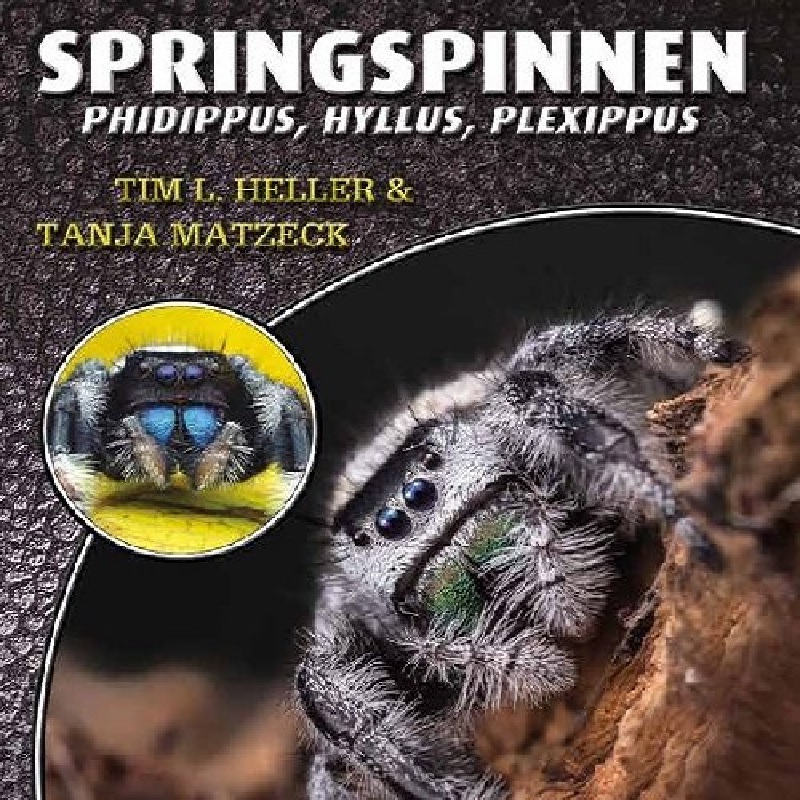
Jumping spiders Phidippus, Hyllus, Plexippus
Book Jumping Spiders - Phidippus, Hyllus & Plexippus A guide to keeping jumping spiders of the genera Phidippus, Hyllus & Plexippus. Who can resist the charm of jumping spiders? The childlike appearance of their expressive face simply leaves no one cold! In addition, their behavior is extremely exciting to observe, their colors are bright and their requirements for species-appropriate keeping are very easy to meet. No wonder these likeable jumpers are all the rage! This volume in the "Species by Species" series describes in detail what to look out for when buying and keeping them, introduces the most commonly kept species and color forms and provides plenty of tips on how to keep them successfully - so you can be sure they will breed well! Species by Species introduces you to the books in this series, which present the most popular terrarium animals. Each volume offers you detailed, practical care instructions and all the information you need to successfully breed your animals. All important questions from the required tank size to terrarium set-up, technical equipment, species-appropriate nutrition and disease prevention are answered with numerous tricks and tips. Experienced, long-standing breeders reveal how you can encourage the animals to reproduce and raise healthy young. All this in full color, generously illustrated and attractively designed - just about your terrarium animal - species by species

CHF 23.90

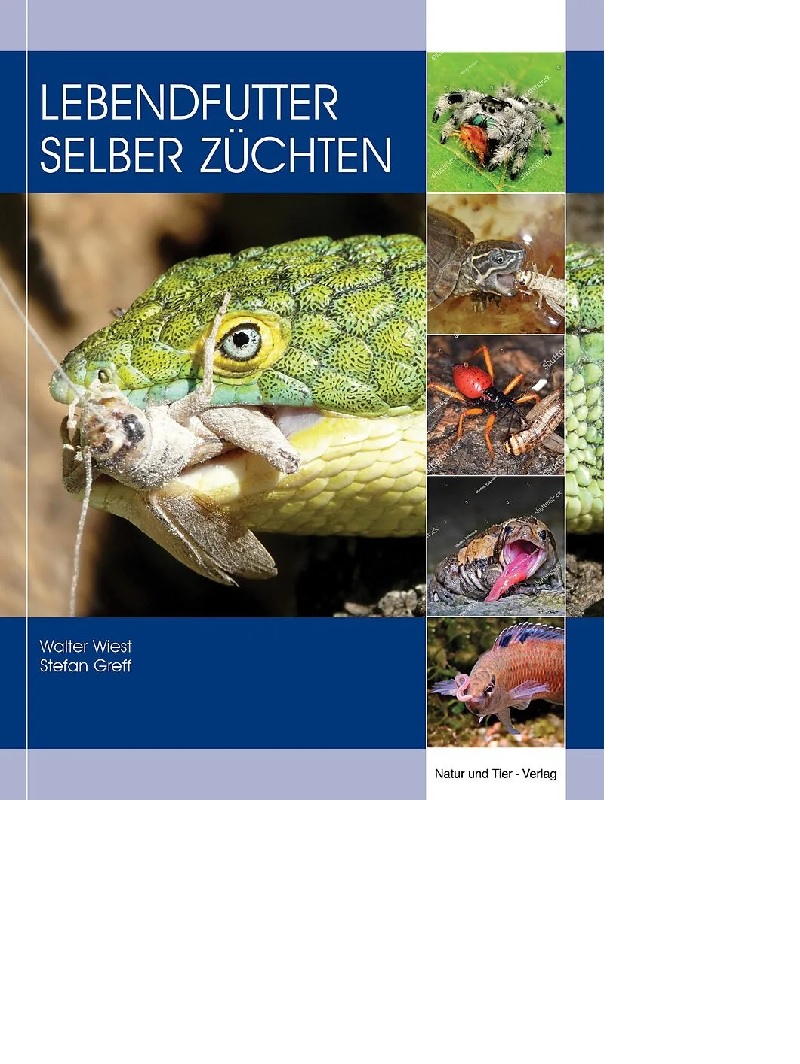
Book Breeding live food yourself
Book "Grow your own live food" - The perfect guide for pet owners Discover practical and detailed instructions on how you can easily breed food for your reptiles, birds, fish or other animals yourself in the book "Breeding live food yourself". With valuable tips on various food insects, their care and breeding, you can save money and ensure a species-appropriate diet for your pets. Contents of the book: Step-by-step instructions for breeding feeder insects Information on the best types of food for reptiles, birds and fish Care instructions and breeding conditions for various live food species Tips for sustainable and cost-effective food production Why breed your own live food? Get healthy, fresh food for your animals Save money and reduce dependence on pet shops Promote the health and well-being of your animals with species-appropriate food Whether you are a beginner or an experienced pet owner, this book provides you with everything you need to successfully breed live food yourself.

CHF 46.50

Marginata 69 - New Guinea tortoises
Marginata 69 - New Guinea tortoises – the genus ElseyaCover storyThe unrecognised beauties: New Guinea tortoises (Andreas S. Hennig)My experiences with Branderhorst's New Guinea tortoise, Elseya (Elseya) branderhorsti (Ouwens, 1914) (Andreas S. Hennig)Keeping and breeding of Rhodin's New Guinea tortoise, Elseya (Hanwarachelys) rhodini Thomson, Amepou, Anamiato & Georges, 2015 (Andreas S. Hennig)PortraitGeoemyda spengleri, Chinese serrated tortoise (Andreas S. Hennig)ReportageMacrochelys temminckii – Experiences and impressions with vulture tortoises part 2 (Reiner Praschag)KeepingAn alternative to year-round keeping of the Egyptian tortoise in the terrarium – my experiences with seasonal outdoor keeping of Testudo kleinmanni (Ricarda Schramm)EtymologySawbacks and living maps part 4: Graptemys gibbonsi, Pascagoula humpback tortoise (Holger Vetter)Classifieds & animal placement

CHF 16.50

The steppe turtles
All about the fascinating steppe turtles 64 Seiten 14,8 x 21 cm zahlreiche Farbfotos Autor Thomas Wilms Inhalt: Schildkröten sind die Sympathieträger unter den Reptilien. Urtümliches Äusseres gepaart mit liebenswertem Wesen und sprichwörtlicher Gemütlichkeit machen sie bei allen Altersgruppen beliebt. Die Steppenschildkröte bildet da keine Ausnahme, ganz im Gegenteil: Ihr „handliches“ Format und die einfach zu erfüllenden Haltungsanforderungen machen sie zu einem äusserst geeigneten Terrarientier. Thomas Wilms, DRACO-Redakteur und Leiter des „Reptiliums“, schildert aus seiner langjährigen erfolgreichen Haltungspraxis sämtliche Aspekte rund um Haltung und Pflege dieser attraktiven Schildkröten. Ausserdem lesen Sie, wie Sie Ihre Tiere zur Paarung stimulieren, die Eier ausbrüten und die niedlichen Jungen aufziehen können. Systematik und Körperbau Die faszinierende Biologie: Aus dem Leben der Steppenschildkröte Alle Informationen zur artgerechten Haltung: Vom geeigneten Terrarium über Einrichtung und Technik bis hin zur Fütterung Erfolgreich nachzüchten: Paarungsstimulation, Inkubation der Eier und Aufzucht der Jungtiere Problemlösungen: Wie man die häufigsten Fehler bei der Pflege vermeidet, und wie man kranken Tieren helfen kann Brillante Fotos

CHF 24.90

Reptilia 94 - Terrarium photography
  Philippinen-KrokodilCumberland-SchmuckschildkröteHalsbandleguane im Freilandterrarium Inhalt: Die Terraristik bietet eine unendliche Fülle wunderbarer Fotomotive, ein Eldorado für Hobby-Fotografen! Und wohl jeder Halter hat den Wunsch, seine Pfleglinge, seine Nachzuchten und seine Anlage im Bild festzuhalten. Zumal Fotografieren nie einfacher war als heute, wo jedes Telefon die schnelle Aufnahme erlaubt, die dann direkt ins virtuelle Fotoalbum auf Facebook hochgeladen werden kann, wo alle Freunde sie anschauen können.Profi-Fotograf Benny Trapp aber gibt zahlreiche Tipps und Tricks, wie Sie zu Bildern kommen, bei denen garantiert jeder den „Gefällt mir“-Button drückt, ganz gleich, ob Sie mit einer Kompaktkamera oder einer hochwertigen Spiegelreflexkamera arbeiten. EDITORIALMAGAZINTERMINEIN 5 JAHREN UM DIE WELT Menschen und SchildkrötenA. PachmannWESTERN HERP PERSPECTIVESBörsenbesuch down under B. LoveFOTOSTORYBild schön! Fotografie von Terrarientieren K. KunzPRAXISTerrarientiere fotografieren. Einsatz von Licht und Blitz bei SpiegelreflexkamerasB. TrappPRAXISTipps für bessere Bilder mit KompaktkamerasB. TrappHALTUNG UND VERMEHRUNGPhilippinenkrokodile (Crocodylus mindorensis) im Aquarium des Kölner Zoos. Teil 1: Erfahrungen mit „Off-Exhibit“- Haltung einer der am stärksten bedrohten Krokodilarten der Welt T. Ziegler, R. Sommerlad, W. Brass, K. van der Straeten, D. Karbe & A. RauhausHERPETOFAUNAAuf dem Weg ins All. Die Welt der Buchstaben-Schmuckschildkröte, Trachemys scripta Teil 4: Cumberland- und Südtexas-Schmuckschildkröte A. S. HennigWIRBELLOSEDie Isles of Scilly. Ein Paradies nicht nur für Phasmidenfreunde H.-J. LuefHALTUNG UND VERMEHRUNGErfahrungen mit der Haltung von Halsbandleguanen im FreilandterrariumM. DieckmannTIERE UNSERER HEIMATDie AspisviperR. LeptienBIBLIOTHEKTIPPS & TRICKSTESTLAUFABO & SERVICEAUCH IN IHRER NÄHEREISEThe Rock. Die Herpetofauna GibraltarsU. SchlüterVORSCHAUBRUTKASTENIguana chilenaH. Werning  

CHF 12.00

Marginata 41 - Steppe tortoises
Marginata 41 - Steppe tortoisesKeeping and breeding big-headed tortoises part 3Wintering of Mediterranean tortoisesForest tortoise breeding at Dortmund ZooContents:EditorialMagazineDatesPHOTOSTORYNews about steppe tortoisesHans - Dieter PhilippenKEEPING AND BREEDINGKeeping and breeding of the steppe tortoise in the Alpine regionWilli HoferBREEDINGNature-identical carapace proportions and shapes in the breeding of steppe tortoisesPetr Velensky & Natasha VelenskaHOLDINGWintering of steppe tortoises and European tortoisesThorsten GeierPORTRAITChinese three-keeled turtle. Chinemys[Mauremys] reevesii (Grey, 1831)Hans - Dieter PhilippenBREEDINGBig-headed tortoises in nature and human care. Part 3Reiner PraschagBREEDINGKeeping and breeding the red-headed box turtle (Podocnemis erythrocephala) Part 2David DrajeskeKEEPING AND BREEDINGBreeding of forest tortoises at Dortmund ZooSimone Karlowski & Stephanie ZechREPORTAGEThe European Studbook Foundation: off to new shores!Henk ZwartepoorteREPORTAGESurprising observation of charcoal tortoisesSusanne VogelBook tipSubscription & ServiceRegional guide

CHF 16.50

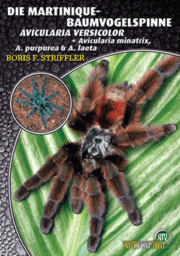
Martinique Tree Tarantula
All about the Martinique tarantula "Avicularia versicolor" and other Avicularia species by  Boris F. Striffler 64 pages Format: 14.8 x 21 cm 46 colour photos About Avicularia versicolor, Avicularia minatrix, Avicularia purpurea and Avicularia laeta Author Boris F. Striffler Publisher NTV Contents: Tarantulas of the genus Avicularia have long been among the most popular terrarium invertebrates. This is not only due to their very attractive colouring, but also to the generally very calm nature of these spiders.Boris F. Striffler has long been involved with tarantulas, both scientifically and as a terrarium keeper. In this volume of the "Species by Species" series, he goes into detail and in an easy-to-understand way about all the aspects of keeping and caring for Martinique tarantulas that are worth knowing. And, of course, he also tells you how to breed your favourites and raise the young spiders. Systematics and body structure The fascinating biology: From the life of the Martinique tarantula All information on species-appropriate keeping: from suitable terrariums to equipment and technology to feeding Successful breeding: Mating stimulation, various methods for egg laying and rearing the young Solutions to problems: How to avoid the most common mistakes in care and how to help sick animals Brilliant photos

CHF 21.90

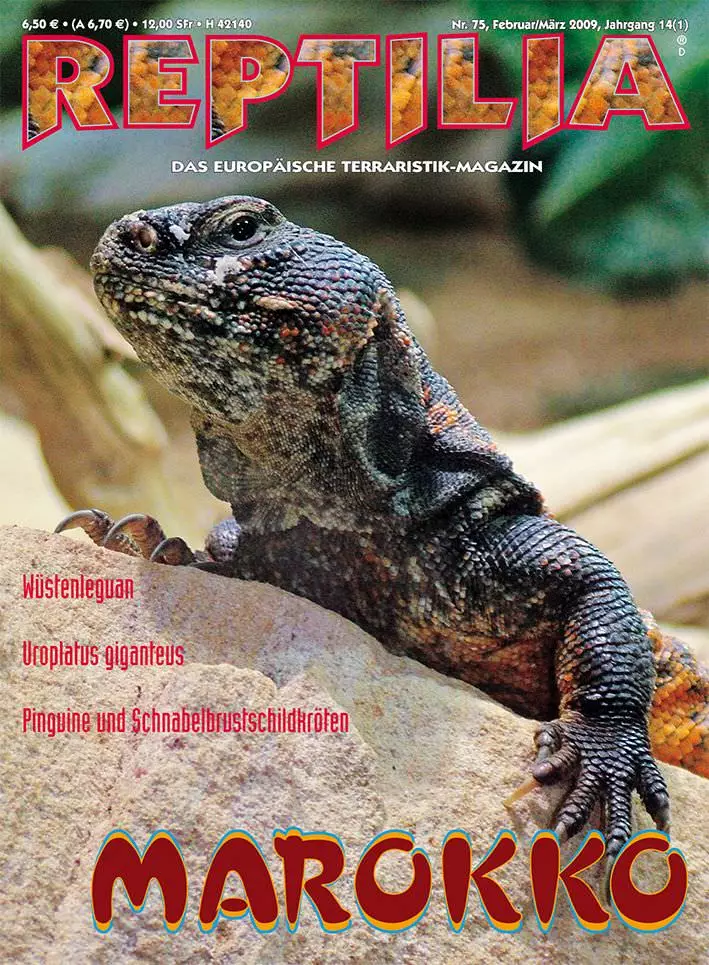
Reptilia 75 - Morocco
Reptilia 75 - Morocco FAQ Terrarium lightingTransport of terrarium animalsPenguins and beaked-breasted tortoises Contents: Morocco - so close to Europe, and yet a completely different world. Culturallyof course, but also in its animal world the country withits vast deserts and the mighty Atlas Mountains is of particular interest. Arabia expert and spinytail researcher ThomasWilms introduces you to Morocco, its spectacular landscapes and the very special herpetofauna. Stephanie de Pury, Sascha Esser and Michel Aymerich report on their exciting search for the lizard snake there, Rolf Leptien has travelled to the south of the country, and finally Hemmo Nickel portrays the remarkable scorpions of Morocco. 2 EDITORIAL3 MAGAZINE11 DATES14 WESTERN HERP PERSPECTIVES            The "crisis" of the Florida soft-shelled turtle            by B. Love16 PHOTOSTORY            Morocco            Treasure trove in north-west Africa            by T. Wilms24 TRAVEL            Morocco: In search of             the lizard snake            by S. de Pury, S. Esser & M. Aymerich32 TRAVEL            On an excursion to the south of Morocco            by R. Leptien38 REPORTAGE            The scorpions of Morocco            Part 1            by H. Nickel, J. Hornung & M. Koch47 PORTRAIT and POSTER            Uroplatus giganteus            by P. Schönecker51 HERPETOFAUNA            The Big Bend National Park and its             reptiles. Part 2: Snakes            by P. M. Kornacker & U. Dederichs59 TERRARIUM PRACTICE             Animal-friendly transport of reptiles            by S. Knauf66 HERPETOFAUNA            African beauty among penguins            Ecological relationships of the             beaked-breasted tortoise in             the Cape of South Africa            by M. Wirth79 FAQ – Frequently Asked Questions            Terrarium lighting – Part 1            by I. Kober & U. Geissel86  ALSO NEAR YOU91  SUBSCRIPTION & SERVICE94  PREVIEW96  BRUTKASTEN            Travel snippets from the Caribbean – Part 2            by H. Werning

CHF 12.00

Reptilia 49 - Food animal breeding
Reptilia 49 - Food animal breedingScorpion crust lizardSpotted pythonChinese mountain dragonContents: 2 EDITORIAL 4 READER LETTERS 5 MAGAZINE 14 DATES 18 WESTERN HERP PERSPECTIVESHurricane Sale in Floridaby B. Love 20 PHOTO REPORTAGE Breeding food animals yourself - a problem?by F. Bruse & H. Werning 27 REPORTAGEEfficient and productive cricket breeding by F. Bruse 33 REPORTAGEBreeding the chocolate cockroach (Shellfordella tartara) by F. Bruse 36 REPORTAGEA simple Drosophila breeding project by F. Bruse 40 HERPETOFAUNANotes on the Motagua lizard (Cnemidophorus motaguae) by U. Schlüter 43 TRAVELHerpetological observations and more from Gambia by U. Thieme 51 PORTRAIT AND POSTERGeoclemys hamiltoniby H. - D. Philippen 56 KEEPING AND BREEDINGKeeping and Breeding the Chinese Mountain Agame (Japalura splendida) by H. Schradin 68 HERPETOFAUNADendrobates pumilioThe strawberry frog on the Bocas Islands by B. Schwarz 72 KEEPING AND BREEDING The black Mexican chain snake (Lampropeltis getula nigrita in the terrariumby M. Thums 79 REPORTAGEAntaresia maculosa (PETERS, 1873)Spotted pythonby D. Hasselberg 85 CLASSIFIED ADS 90 RAT & TAT 93 LIBRARY 104 GLOSSESIn search of Uracentron azureumPart 1by H. Werning

CHF 11.20

Terraria 51 - Amphibian crisis
Terraria 51 - Amphibian crisis ChacoMoroccan day gecko Contents: Cover story: Amphibian crisis The global amphibian crisis is threatening frogs all over the world, and we may be facing a dramatic extinction of species. One glimmer of hope is the so-called amphibian ark, the targeted breeding of particularly endangered species in human care. In the cover story of the next issue of TERRARIA/elaphe, we look at various methods used by zoos, scientific institutions and private keepers to successfully breed frogs in the long term. Territorial Herpetorama Cover story Tailed amphibians in danger a “salamander-eating fungus” spreads in EuropeAxel Kwet Questions about the Salamander EaterInterview with Prof. Frank Pasmans, with questions from Axel Kwet Species conservation and captive breeding of amphibians a new approach to keeping cave-dwelling paddle-footed frogs using Rhacophorus orloviMikhail F. Bagaturov, Anna A. Bagaturova & Rustam K. Berdiev PanoramaImpressions of the herpetofauna in the Chaco of ParaguayStephan Böhm The ruin lizards (Podarcis siculus tyrrhenicus) of the island of GiannutriJürgen Gebhart Research New speciesNew keel-tailed iguanas of the genus TropidurusAxel Kwet Newly described: three Japanese angle-toothed newts from KyushuAxel Kwet Among researchersField study on the Cypriot Levantine viper (Macrovipera lebetina lebetina)Daniel Jestrzemski An observation on ophiophagy in the puff adder (Bitis arietans)Tobias Machts Salamandra TerraristicsThe day gecko of south-western Morocco Quedenfeldtia moerens (Chabanaud, 1916)Uwe Schlüter Also in your neighbourhood Nature and species conservation Field notesFrost effect on the spawn of the grass frogRudolf Malkmus Hail damage to amphibians?Axel Kwet Strange toad observations on the island of SyltWolf-Rüdiger Grosse Subscription & Service GalleryThe Thesaurus of Albertus Seba. Old treasures in the Berlin Museum of Natural HistoryAxel Kwet, Rainer Günther & Aaron Bauer Preview Incubator Smoke detectorRolf Leptien

CHF 12.00

Customers also saw

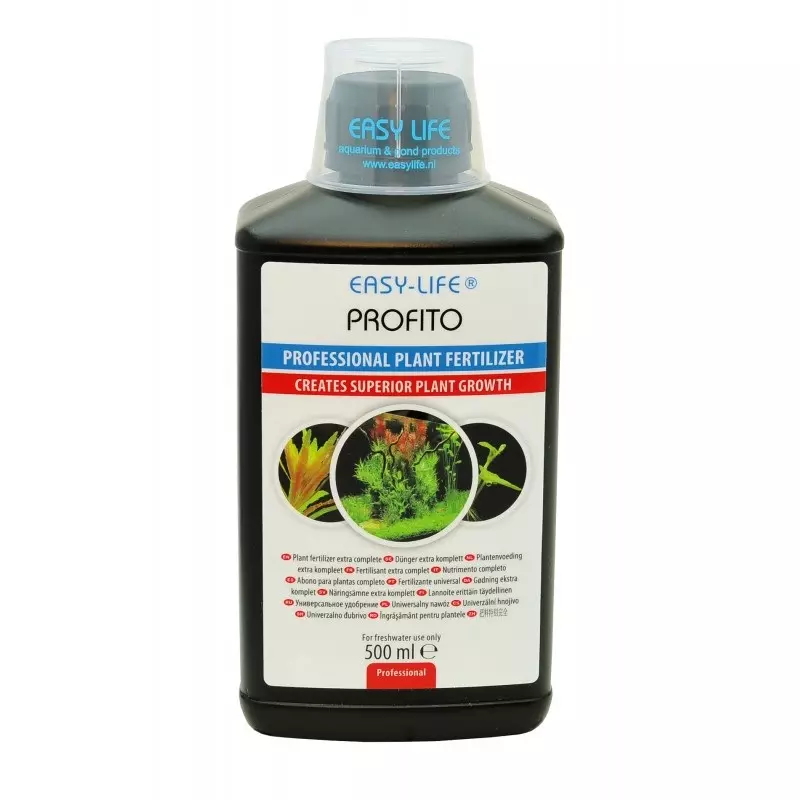
Easy Life Profito - Plant fertilizer
Variant (1): 500ml
Profito plant fertilizer from Easy Life Easy Life's plant fertilizer allows plants to grow stronger and faster, colouring them more intensely than ever before. The composition of this universal fertilizer is so strong that a healthy and luxuriant plant growth is permanently guaranteed. Advantages of ProFito a highly concentrated and complete universal fertilizer all nutrients in one product makes the extra addition of iron and potassium superfluous in most cases ensures strong, healthy and lush plant growth promotes the formation of cytokinins and thus stimulates cell division of larger and wider leaves, particularly intensive leaf coloring relieves the aquarium water improves and maintains the biological balance in the aquarium multi-stabilized Nitrate and phosphate-free very economical in use promotes cell division dosage The dosage is very economical: 10 ml per 100 liters of aquarium water on a weekly basis. You can also add 1/7 of the total dosage daily. The color of the product is dark green - dark brown. Use one third of the dosage in the first weeks. This can then be adjusted later to achieve optimum plant growth (10 ml +/- 40 % per 100 liters per week). The best dosage can be determined by looking at the youngest leaves of a plant. If you are light green, the dosage should be increased. If the aquarium is infested with algae and/or no growth improvement is noticeable, the dosage can be reduced. By the way, the introduction of (several) fast-growing plants can help to counteract the effects of algae.

Variants from CHF 7.90
CHF 12.90