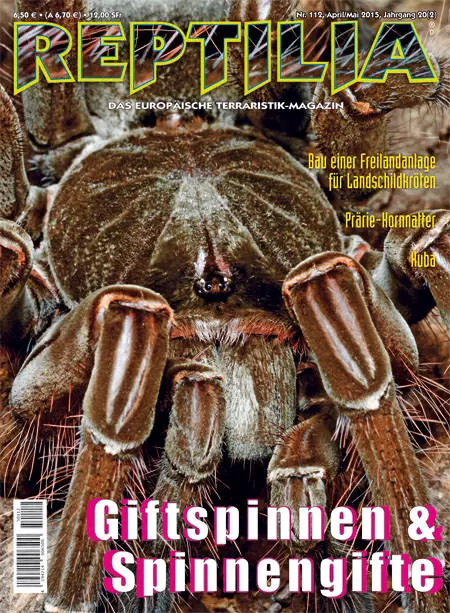
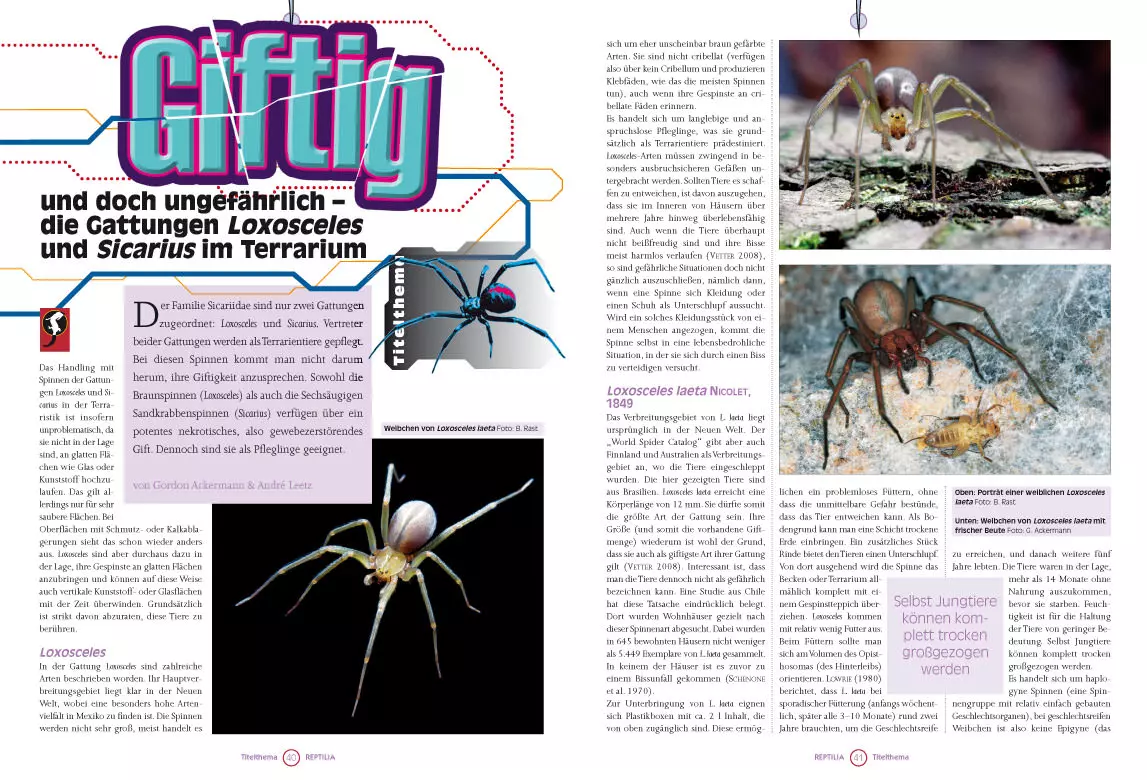
Reptilia 112 - Poison spiders & spider poisons

Product number: reptilia112

CHF 12.00

Stock: 0

Available in 1-3 days, acquisition time 7 days

Delivery between Tuesday, 3 February and Wednesday, 4 February
Zahlungsarten
Product information "Reptilia 112 - Poison spiders & spider poisons"

Reptilia 112 - Giftspinnen & Spinnengifte

Bau einer Freianlage für Landschildkröten
Prärie-Hornnatter
Kuba

Inhalt:
 
Titelthema: Giftspinnen & Spinnengifte

Alle Spinnen sind giftig, auch die in Terrarien besonders beliebten Vogelspinnen. Dennoch sind sie für Menschen weitgehend harmlos, gelten aber oft als gefährlich. Was zum Problem wird, wenn der Gesetzgeber meint, die Bevölkerung vor diesen „gefährlichen Tieren“ schützen zu müssen. Aber wie steht es denn tatsächlich um die Gefährlichkeit giftiger Spinne? Wir geben einen Überblick, wagen einen Streifzug durch die Spinnenfauna in Australien, dem Königreich für alle Gifttiere, und widmen uns der Haltung von Giftspinnen im Terrarium, von der Vogelspinne bis zur Schwarzen Witwe.

Editorial
MAGAZIN
TERMINE

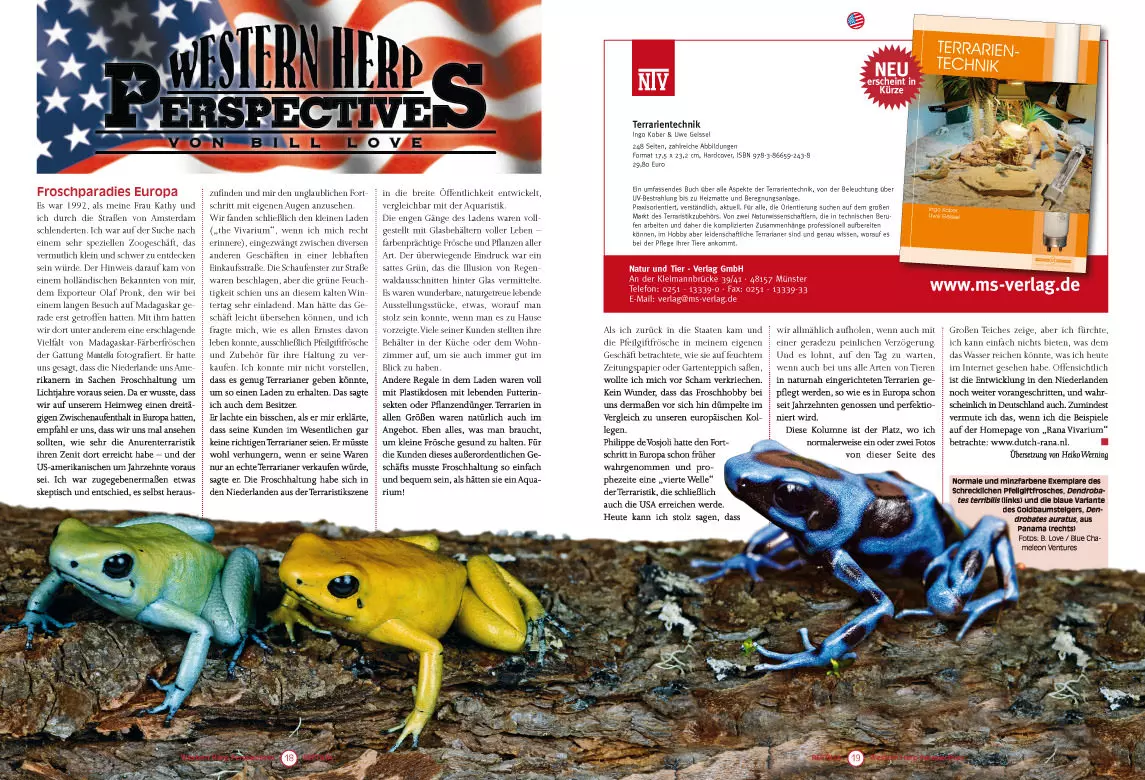
WESTERN HERP PERSPECTIVES
Froschparadies Europa
B. Love

Fotostory
„Giftspinnen“ in der Terraristik
K. Kunz

Reportage
Queenslands Spinnen und deren Gifte Teil 1: Die mygalomorphen Spinnen
T. J. Hauke

  • Literaturverzeichnis

Haltung und Nachzucht
Giftig und doch ungefährlich – die GattungenLoxosceles und Sicarius im Terrarium
G. Ackermann & A. Leetz

Reportage
Wie von der Tarantel gestochen? Die Südrussische Tarantel (Lycosa singoriensis) im Burgenland
H.-J. Luef

TERRARIENPRAXIS
Freianlage für Schildkröten 2.0
M. Hallmen

HALTUNG UND NACHZUCHT
Eine alte Bekannte neu entdeckt: die Prärie-Kornnatter (Pantherophis emoryi emoryi)
K. Kessler

Tiere unserer Heimat
Der Fadenmolch
R. Leptien

Service
Bibliothek
AUCH IN IHRER NÄHE

Reise
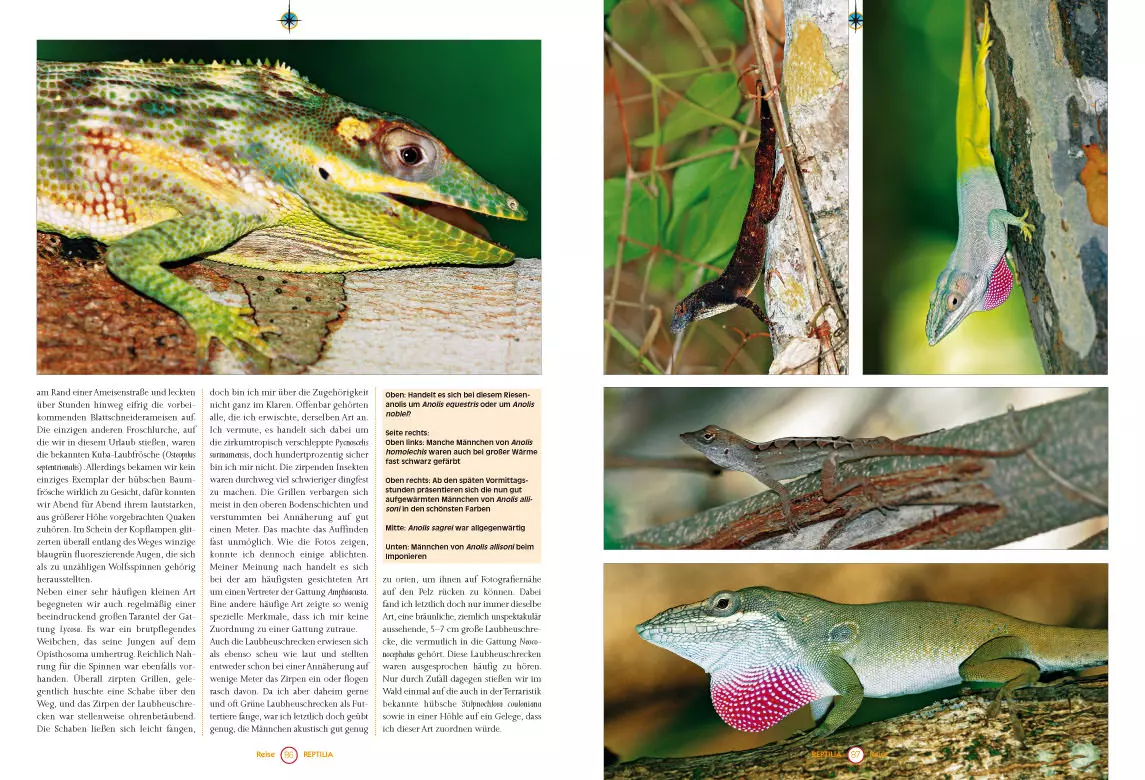
Kuba alles inklusive. Stränden, Cocktails, Anolis und Rollschwanzleguanen
I. Kober

VORSCHAU

BRUTKASTEN
Chuckwalla-Anekdoten Teil 1
H. Werning

Composition
Feeding recommendation
Technical details
Size information

0 of 0 reviews

Leave a review!

Share your experiences with other customers.


Similar products

New
Handbook of food plants for tortoises and other reptiles
Handbuch der Futterpflanzen 2. überarbeitete AuflageMarion Minch ist nicht nur eine langjährig erfolgreiche Züchterin diverser Landschildkröten, sondern auch eine exzellente Kennerin der heimischen Wildkräuter. Die von Ihr gegründete und geführte samenkiste.de ist vielen Schildkrötenhaltern und Naturliebhabern ein Begriff. Ihr Name ist untrennbar mit der Reptilienpflege und der artgerechten Ernährung von Schildkröten verbunden. Ihr Handbuch der Futterpflanzen bildet eine Zusammenfassung über die wichtigsten heimischen Futterpflanzen für herbi- und omnivore Reptilien. Dabei berücksichtigt sie nicht nur Landschildkröten, sondern u.a. auch Leguane, Dornschwanzagamen und sogar Chamäleons. Angefangen von den Grundlagen der Pflanzenbiologie über heimische Wildkräuter bis hin zu geeigneten Futterpflanzen für winterwache tropische Reptilienarten stellt dieses umfassende Werk die Basis für eine artgerechte Haltung dar. In der erweiterten und ergänzten 2. Auflage ist der Pflanzenteil nach Blütenfarbe gegliedert. So wird das Bestimmen der Wildkräuter noch einfacher. Ebenso wurde das Werk um zahlreiche weitere Informationen und viele Bilder ergänzt.

CHF 46.50

New
Geckos
Geckos im Terrarium von Astrid FalkDas Buch bietet eine umfassende Einführung in die Geckos und ihre artgerechte Haltung im Terrarium. Es geht darauf ein, welche Gedanken man sich vor der Anschaffung machen und welche Vorbereitungen getroffen werden sollten. Das Buch beschreibt ausführlich, wie das Terrarium technisch ausgestattet und eingerichtet wird. Die Pflege der Tiere, ihre Besonderheiten und ihr Verhalten, ihre Ernährung, Fortpflanzung und Aufzucht der Jungtiere werden dargestellt, ebenso Krankheiten und Haltungsschäden m it praxiserprobten Vorschlägen zur Vorbeugung und Behandlung. Einzelne Gecko-Arten, die sich besonders gut im Terrarium halten und züchten lassen, werden ausführlich im zweiten Teil des Buches porträtiert.

CHF 28.50

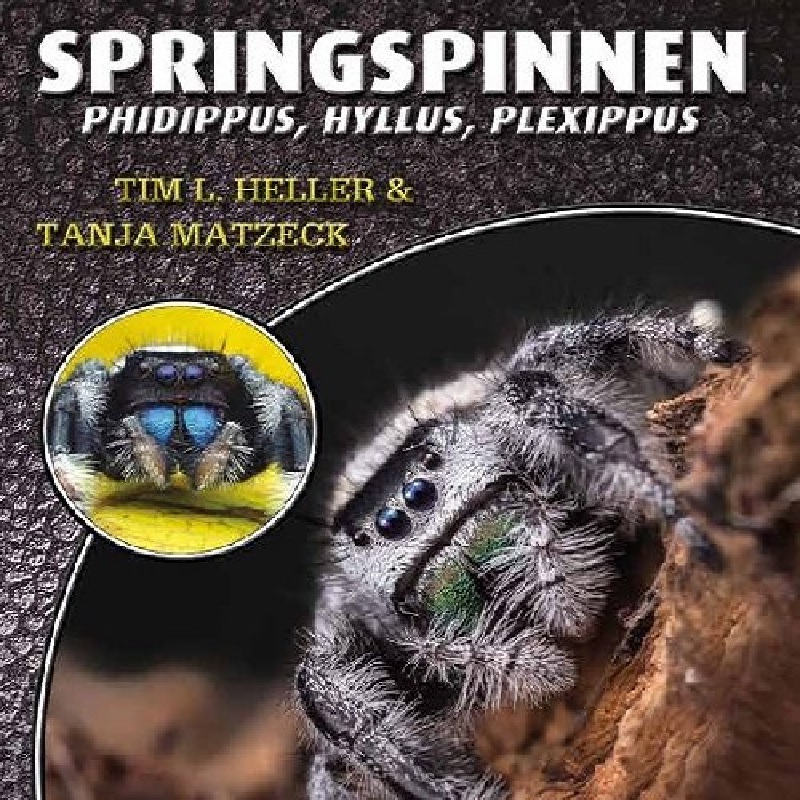
Jumping spiders Phidippus, Hyllus, Plexippus
Book Jumping Spiders - Phidippus, Hyllus & Plexippus A guide to keeping jumping spiders of the genera Phidippus, Hyllus & Plexippus. Who can resist the charm of jumping spiders? The childlike appearance of their expressive face simply leaves no one cold! In addition, their behavior is extremely exciting to observe, their colors are bright and their requirements for species-appropriate keeping are very easy to meet. No wonder these likeable jumpers are all the rage! This volume in the "Species by Species" series describes in detail what to look out for when buying and keeping them, introduces the most commonly kept species and color forms and provides plenty of tips on how to keep them successfully - so you can be sure they will breed well! Species by Species introduces you to the books in this series, which present the most popular terrarium animals. Each volume offers you detailed, practical care instructions and all the information you need to successfully breed your animals. All important questions from the required tank size to terrarium set-up, technical equipment, species-appropriate nutrition and disease prevention are answered with numerous tricks and tips. Experienced, long-standing breeders reveal how you can encourage the animals to reproduce and raise healthy young. All this in full color, generously illustrated and attractively designed - just about your terrarium animal - species by species

CHF 23.90

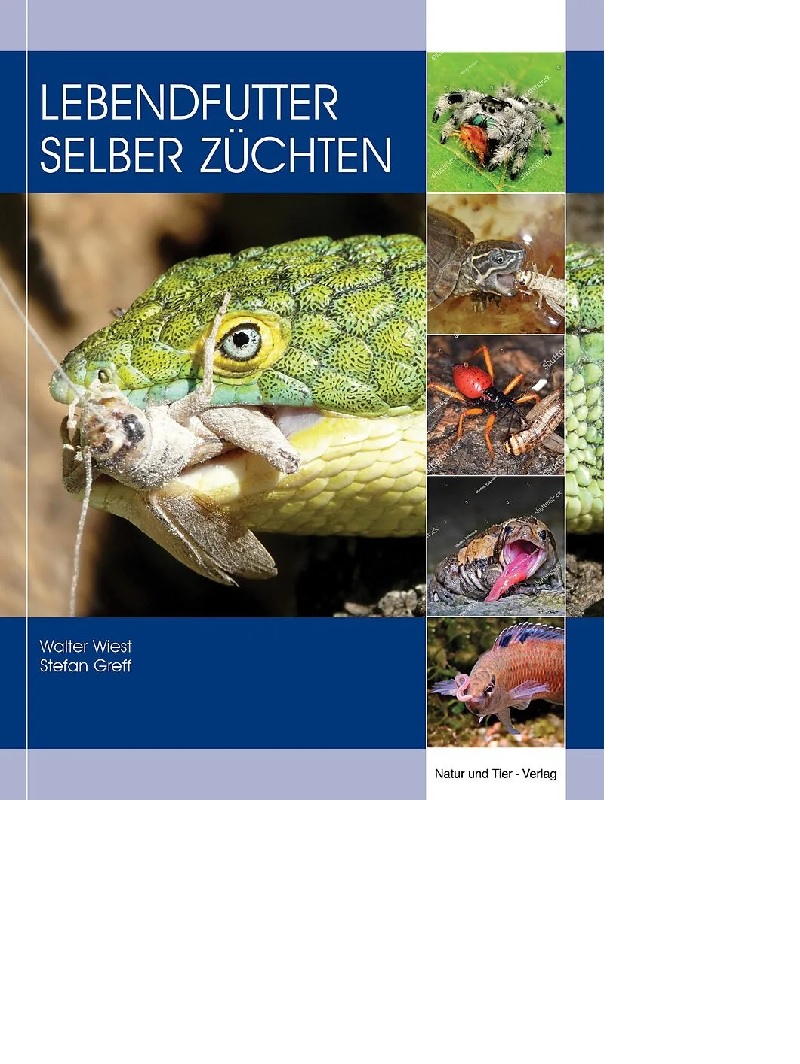
Book Breeding live food yourself
Book "Grow your own live food" - The perfect guide for pet owners Discover practical and detailed instructions on how you can easily breed food for your reptiles, birds, fish or other animals yourself in the book "Breeding live food yourself". With valuable tips on various food insects, their care and breeding, you can save money and ensure a species-appropriate diet for your pets. Contents of the book: Step-by-step instructions for breeding feeder insects Information on the best types of food for reptiles, birds and fish Care instructions and breeding conditions for various live food species Tips for sustainable and cost-effective food production Why breed your own live food? Get healthy, fresh food for your animals Save money and reduce dependence on pet shops Promote the health and well-being of your animals with species-appropriate food Whether you are a beginner or an experienced pet owner, this book provides you with everything you need to successfully breed live food yourself.

CHF 46.50

Marginata 69 - Neuguinea-Schildkröten
Marginata 69 - Neuguinea-Schildkröten – die Gattung ElseyaTitelthemaDie verkannten Schönheiten: Neuguinea-Schildkröten (Andreas S. Hennig)Meine Erfahrungen mit Branderhorsts Neuguinea-Schildkröte, Elseya (Elseya) branderhorsti (Ouwens, 1914) (Andreas S. Hennig)Haltung und Nachzucht von Rhodins Neuguinea-Schildkröte, Elseya (Hanwarachelys) rhodini Thomson, Amepou, Anamiato & Georges, 2015 (Andreas S. Hennig)PorträtGeoemyda spengleri, Chinesische Zackenerdschildkröte (Andreas S. Hennig)ReportageMacrochelys temminckii – Erlebnisse und Erfahrungen mit Geierschildkröten Teil 2 (Reiner Praschag)HaltungEine Alternative zur ganzjährigen Haltung der Ägyptischen Landschildkröte im Terrarium – meine Erfahrungen mit der saisonellen Freilufthaltung von Testudo kleinmanni (Ricarda Schramm)EtymologieSägerücken und lebende Landkarten Teil 4: Graptemys gibbonsi, Pascagoula-Höckerschildkröte (Holger Vetter)Kleinanzeigen & Tiervermittlung

CHF 16.50

Marginata 39 - Grosskopfschildkröten
Marginata 39 - Grosskopfschildkröten Zucht der Chrysemys picta belliMänner-WGsSchildkrötenhaltung vor dem Aus? Inhalt: EditorialMagazinTermine FELDREPORTIn steilen Bächen. Auf der Suche nach den "Adlerschnabelschildkröten"- Platysternon megacephalum in freier WildbahnTorsten BlanckHALTUNG UND ZUCHTGroßkopfschildkröten in Natur und menschlicher Obhut. Teil 1Reiner PraschagPORTRÄTDreizehen-Dosenschildkröte (Terrapene mexicana triunguis Agassiz, 1852)Hans-Dieter Philippen KOMMENTARSteht uns das Aus der Schildkrötenhaltung bevor?Hans-Dieter Philippen HALTUNG UND NACHZUCHTVersuch macht klug - positive und negative Erfahrungen bei der Pflege der Indianer-Zierschildkröte Sebastian Nickl REPORTAGESchildkrötenverzehr im Bereich der Western Ghats, Indien Wildtiernutzung am Beispiel zweier bedrohter Urwaldarten Arun Kanagavel, Rajkumar S. & Rajeev Raghavan HALTUNGMänner-WG. Gemeinsame Haltung von Männchen verschiedener Arten Wasserschildkröten?Ewald Roddewig REPORTAGEEin Schildkrötenhotel in VenezuelaLutz Geißler BuchtippAbo & ServiceRegionalführer

CHF 16.50

Draco 09 - Invertebrates in the terrarium
Draco 09 - Invertebrates in the terrarium Content: 2 - Editorial 3 - Invertebrates, by Dieter Masberg 20 - The Landing Crab, by Harry Wölfel 27 - Phasmids (ghost insects, stick insects and walking leaves), by Sven Bradler and Christoph Seiler 33 - Phasmids as pets, by Christoph Seiler and Sven Bradler 38 - The Australian Pfeffermins stick insect Megacrania batesii - no simple fosterling, by Christoph Seiler and Sven Bradler 41 - essence of darkness - essence of light: The Mysterious Life of the Giant and Rose Beetles, by Arndt Löwenberg 55 - Exotic cord feet in the terrarium, by Timm Adam 67 - Safety in scorpion keeping: 10 golden rules, by Herbert Schiejok 70 - Own experiences with the keeping of Euscorpius carpaticus mauretanicus (THORELL, 1876), by Mario Schedel 74 - Pseudoscorpions in nature and in small terrariums, by Kriton Kunz 82 - Book case 94 - Magazine The content at a glance:Invertebrates - the large army of the animal world, fascinatingly multi-layered, mostly hardly researched and weathered by the otherness to the vertebrates and to us humans since ancient mystery. Dieter Mahsberg's introduction to this unusual DRACO fans out the entire prism of the invertebrates: What characterizes all invertebrates, what groups are there, how do they live? After this overview you will also find a list of all taxa with species numbers that are relevant for keeping - a huge potential of highly interesting animals that will certainly not leave your thirst for research cold!Phasmids (ghost insects, stick insects and wandering leaves)Phasmids are certainly among the stars of the invertebrate boom: Sven Bradler and Christoph Seiler present the basics of the systematics and biology of these interesting animals, which include the longest insect still living today. Learn everything you need to know about the way of life of the well camouflaged invertebrates, marvel at sophisticated protection and defence mechanisms or unusual reproductive strategies. By the way, an extra section of the richly illustrated article is dedicated to the European species: so why not keep your eyes open during your next holiday!Phasmids as petsAnd on we go with the phasmids, because Christoph Seiler and Sven Bradler naturally also explain to you the keeping and breeding of the insects, which are often quite easy to care for, and which as pure herbivores make the time-consuming breeding of feed animals superfluous. The authors name the most important food plants, describe the types of terrariums with which you can meet the different requirements of the animals, and give insider tips on how to reproduce the beautiful insects - and of course they also point out possible sources of error that should be avoided! For beginners in phasmid breeding as well as for old hands an absolute must!The Australian peppermint stick insect Megacrania batesii - no simple fosterlingAnd to make sure that the absolute phasmid experts also get their money's worth, Seiler and Bradler go into detail about the keeping and breeding of this little kept and quite difficult to reproduce species in this article, in which especially the young animals captivate with their rich colors. The secret of the success in the reproduction of the Australian peppermint stick insect begins already with the suitable food, because the animals are very choosy. Seiler and Bradler will give you tips on how to get the plants you need to breed this very special stick insect without spending a lot of money. And, of course, the authors also give you insight into their successful breeding methods, so that after reading this article you have acquired all the prerequisites to try your hand at cultivating this Australian jewel yourself!The hermit crabThey often appear in pet shops and on dealer lists, these cute crustaceans, but hardly anyone knows how to keep them successful. Harry Wölfel presents amazing facts from the biology of these crustaceans, which are not very species-rich but all the more interesting - or did you know that the largest species in this group can reach a range of up to 1 m? Our DRACO author will not only tell you where the land hermit crabs occur and how they "function", but will also explain what to look out for when keeping them, how to set up the terrarium adequately, and he will even give you hints on how to breed them, which is not easy. One of the very few articles in the relevant literature, and in addition so expert and detailed - it's your own fault who as a crab fan escapes this treat!Beings of darkness - Beings of light. The mysterious life of the giant and rose beetlesThese magnificent beetles are certainly among the most beautiful insects of all, and even people who otherwise have nothing to do with "crawling animals" cannot escape the aesthetics of the animals. Did you know why nature has endowed many species of rose beetles with such lavish splendour? Arndt Löwenberg will not only tell you this, but will also give you a comprehensive introduction to the biology of these increasingly cultivated animals. And he gives a practical description of where these pearls and giants of the beetle world come from, how they are kept and bred and what the key to success is!Exotic cord feet in the terrariumUnfortunately, there is almost nothing to be found in the literature about keeping and breeding the quaint string feet. Timm Adam is a competent remedy. What is a string foot, how do these bizarre animals live? The author does not only go into detail about the stars of his contribution, but also about their relatives, for example the Skolopender. But the focus is clearly on the string feet and the role they play in science and terraristics. Are string feet poisonous? How can I set up a suitable terrarium, what do I have to consider with the climatic conditions, how can I feed the animals? And how do you breed these interesting invertebrates? Timm Adam has all the answers ready and does not leave out any hints of problems with their breeding. In short: The ultimate string foot hit!Own experiences with the keeping of Euscorpius carpaticus mauretanicus (Thorell, 1876)If you are fascinated by scorpions, but don't want to bring the most poisonous ones into your house, you are well advised to use specimens of this small species. Their keeping and breeding are not particularly difficult and can therefore be recommended to beginners in scorpion keeping. To make sure that you do everything right from the start, Mario Schedel will show you what to look out for. From the suitable terrarium over aspects like socialization up to the successful offspring all important aspects are covered!Safety in keeping scorpionsTopic number 1 in the keeping of these fascinating arachnids is, of course, always safety, which must be absolutely guaranteed. Scorpion expert Herbert Schiejok points out all the important parameters that have to be observed for a safe keeping, gives tips on which terrarium types are best suited, what has to be taken into account when setting up the tank and what has to be observed when handling the animals in the terrarium. How, for example, do you catch a scorpion safely, how do you move it, and what do I do if the animal has been stabbed in spite of all caution? A responsible terrarium keeper who cares about his own protection and that of his fellow human beings will certainly not miss this contribution!Pseudoscorpions in nature and in the smallest terrariumDo you find scorpions fascinating, but shy away from the risk of a poison sting? You would like to take care of really special animals? How about pseudoscorpions? These tiny creatures, which you can easily find in your garden, in the forest or perhaps even in your house, are very similar to their big relatives, but unlike them they do not have a "tail" with a poison sting. Kriton Kunz overhears with you the secret activities of the funny little guys, presents them fascinating details from the widely unknown biology of the unusual arachnids and gives you tips on where and how you can capture the dwarves. And anyone who has ever maintained or even recreated the bizarre "mini scorpions" in a neatly furnished mini-terrarium will certainly not be able to get rid of them in a hurry!

CHF 16.80

Terraria No. 35 - Reptile search
Terraria No. 35 - Reptile search Rhacophorus feaeTrugnattern Inhalt: Titelthema: Reptiliensuche in der NaturReptilien in freier Natur zu suchen und zu beobachten, macht nicht nur Spaß, sondern dabei lassen sich auch viele wichtige Erkenntnisse für die Haltung der betreffenden Arten sammeln. Allerdings ist es nicht einfach damit getan, rauszugehen und darauf zu hoffen, dass einem die Tiere nur so über den Weg laufen. Worauf es ankommt, um bei der Suche nach Reptilien auch wirklich Erfolg und damit schöne Erlebnisse zu haben, das erfahren Sie in den ausführlichen Beiträgen des Titelthemas der nächsten TERRARIA/elaphe-Ausgabe. TerritorialHerpetoramaTitelthema„Fieldherping“. Die erfolgreiche Suche nach Reptilien im FreilandMichael WirthVon Kratzern, gutem Müll und gebräunten Nacken. Praxistipps für die ReptiliensucheMichael WirthBitte nicht stören! Verantwortungsbewusstes Verhalten bei der Suche nach ReptilienBenny TrappPanoramaTerraglobal. Reptilien rund um Haus und GartenAlfred Schleicher Reptilienerinnerungen à la GuatemalaLester MeléndezForschungUnter Forschern. Vielfalt zwischen Tempeln und Landminen – Herpetologische Feldarbeit in KambodschaTimo HartmannNeue ArtenListe der im Jahr 2011 neu beschriebenen Reptilien Axel KwetSalamandraTerraristikKlassikerDer Grüne LeguanBasiliscus plumifrons, der Stirnlappenbasilisk: Erfahrungen aus 20 Jahren Haltung und Vermehrung im Terrarium. Teil 2: Pflege und NachzuchtIngo KoberGiftbisse von giftigen und „harmlosen“ Schlangen. Teil 2Dieter SchmidtErstnachzucht von Feas Riesenruderfrosch, Rhacophorus feae, im Leningrad Zoo Anna A. Bagaturova & Mikhail F. BagaturovNatur- und ArtenschutzFeldnotizen. Die Rote Liste der Amphibien und Reptilien Deutschlands. Teil 2: Verantwortlichkeit, Gefährdungsursachen, Schutz- und HilfsmaßnahmenKlaus-Detlef Kühnel, Arno Geiger & Richard PodlouckyVermisstHalbschwimmer-Nasenfrosch (Rhinoderma rufum)Alexander GutscheAuch in Ihrer NäheAbo & ServiceGalerie100 Jahre Herpetologia EuropaeaAxel Kwet

CHF 12.00

NTV - Stabschrecken, Gespenstschrecken, Wandelnde Blätter
Alles über die beliebten Stabschrecken, Gespenstschrecken und Wandelnde Blätter. 128 Seiten farbige Fotos 1. Auflage Autor Alexander Esch Wirbellose sind in der Terraristik stark im Kommen, und unter ihnen stehen die Phasmiden in der Beliebtheitsskala ganz oben. Wandelnde Blätter, Stab- und Gespenstschrecken eignen sich selbst für Einsteiger in die Terraristik und faszinieren durch skurrile Körperformen sowie vielseitiges Verhalten. Autor Alexander Esch gibt Ihnen mit diesem Buch einen praxisnahen Leitfaden mit allgemeinen Informationen zur Biologie sowie zur erfolgreichen Haltung und Vermehrung dieser spannenden Insektengruppe an die Hand und stellt die in der Terraristik beliebtesten Arten vor.

CHF 32.40

Marginata 47 - Schildkröten Mexikos
Marginata 47 - Schildkröten Mexikos Raritäten aus VietnamSchildkrötensuche auf der PeloponnesLederschildkröte EditorialMagazinTITELTHEMADie Schildkröten MexikosMaik SchildeTITELTHEMADie Spitzschnauzenschildkröte. Eine kleine Wasserschildkröte für das Terrarium Maik SchildeTITELTHEMASalvins Kreuzbrustschildkröte. Eine interessante Art aus MexikoMaik SchildeTITELTHEMADie Nayarit-Schmuckschildkröte in Natur und Kultur Fabio CupulPORTRÄTDermochelys coricea Vandelli, 1761. LederschildkröteKriton KunzREISEMorea – auf der Suche nach Schildkröten und anderen Reptilien im Westen der Peloponnes (1) Axel KwetREISEAuf der Suche nach der «scheuen Schönheit» und den «Höhlenschildkröten» Torsten Blanck, Sebastian Braun, Timothy McCormack, Hoang Van Ha, Nguyen Tai Thang, Nguyen Van Luc & Minh LeAbo & ServiceRegionalführer

CHF 16.50

Draco 47 - Scorpions
Draco 47 - Skorpione Inhalt: Editorial Skorpione – Jäger der NachtBoris F. StrifflerHaltung und Nachzucht von Skorpionen der Gattung Tityus im TerrariumMichael Seiter Afrikanische Riesenskorpione der Gattung Pandinus – mehr als nur der KaiserskorpionBoris F. StrifflerHaltung und Aufzucht zweier Parabuthus-ArtenHeiko WehnerNordafrikanische SkorpioneBoris F. StrifflerDie Stunde der Geburt: seltene Einblicke in die Brutpflege von Diplocentrus lindoKriton KunzDie Skorpione Europas – Euscorpius, Buthus & Co.Boris F. StrifflerSkorpione als gefährliche Tiere – die landesrechtlichen RegelungenRechtsanwalt Dietrich Rössel Das Instituto Butantan – Institut der GifteBoris F. Striffler

CHF 18.40

Reptilia 94 - Terrarium photography
  Philippinen-KrokodilCumberland-SchmuckschildkröteHalsbandleguane im Freilandterrarium Inhalt: Die Terraristik bietet eine unendliche Fülle wunderbarer Fotomotive, ein Eldorado für Hobby-Fotografen! Und wohl jeder Halter hat den Wunsch, seine Pfleglinge, seine Nachzuchten und seine Anlage im Bild festzuhalten. Zumal Fotografieren nie einfacher war als heute, wo jedes Telefon die schnelle Aufnahme erlaubt, die dann direkt ins virtuelle Fotoalbum auf Facebook hochgeladen werden kann, wo alle Freunde sie anschauen können.Profi-Fotograf Benny Trapp aber gibt zahlreiche Tipps und Tricks, wie Sie zu Bildern kommen, bei denen garantiert jeder den „Gefällt mir“-Button drückt, ganz gleich, ob Sie mit einer Kompaktkamera oder einer hochwertigen Spiegelreflexkamera arbeiten. EDITORIALMAGAZINTERMINEIN 5 JAHREN UM DIE WELT Menschen und SchildkrötenA. PachmannWESTERN HERP PERSPECTIVESBörsenbesuch down under B. LoveFOTOSTORYBild schön! Fotografie von Terrarientieren K. KunzPRAXISTerrarientiere fotografieren. Einsatz von Licht und Blitz bei SpiegelreflexkamerasB. TrappPRAXISTipps für bessere Bilder mit KompaktkamerasB. TrappHALTUNG UND VERMEHRUNGPhilippinenkrokodile (Crocodylus mindorensis) im Aquarium des Kölner Zoos. Teil 1: Erfahrungen mit „Off-Exhibit“- Haltung einer der am stärksten bedrohten Krokodilarten der Welt T. Ziegler, R. Sommerlad, W. Brass, K. van der Straeten, D. Karbe & A. RauhausHERPETOFAUNAAuf dem Weg ins All. Die Welt der Buchstaben-Schmuckschildkröte, Trachemys scripta Teil 4: Cumberland- und Südtexas-Schmuckschildkröte A. S. HennigWIRBELLOSEDie Isles of Scilly. Ein Paradies nicht nur für Phasmidenfreunde H.-J. LuefHALTUNG UND VERMEHRUNGErfahrungen mit der Haltung von Halsbandleguanen im FreilandterrariumM. DieckmannTIERE UNSERER HEIMATDie AspisviperR. LeptienBIBLIOTHEKTIPPS & TRICKSTESTLAUFABO & SERVICEAUCH IN IHRER NÄHEREISEThe Rock. Die Herpetofauna GibraltarsU. SchlüterVORSCHAUBRUTKASTENIguana chilenaH. Werning  

CHF 12.00