Marginata 21 - Greek tortoises

Article no: marginata21

CHF 16.50

Stock: 0

Ready for dispatch in 1-3 days, delivery time 7 working days

Delivery between Tuesday, 28 April and Wednesday, 29 April
Zahlungsarten
Product information "Marginata 21 - Greek tortoises"

Marginata No. 21 Greek Tortoises

Box turtles Part 2
In search of sea turtles
Spanish pond turtle

Contents:

EDITORIAL
READER LETTERS
MAGAZINE
DATES

REPORTAGE
The Greek tortoise (Testudo boettgeri ssp.) – well-known and still fascinating
Hans - Dieter Philippen

REPORTAGE
The Greek tortoise (Testudo boettgeri spp.) from the Iron Gate in Romania
Lutz Geissler

BREEDING IN HUMAN CARE
Basics of rearing juveniles of the Greek tortoise (Testudo boettgeri ssp.)
Thorsten Geier

REPORTAGE
About Greek tortoises in Greece
Michael Wirth, Peter Fritz & Johann Maier

PORTRAIT
Large-headed mud turtle (Claudius angustatus)
Hans-Dieter Philippen

REPORTAGE
Notes on the ecology of Terrapene ornata ornata in the Great Plains region - Part 2
Michael Wirth & Hans Peter Mattern

REPORTAGE
Threats to, protection and use of sea turtles. Part 1: The relationship of humans to sea turtles through the ages
Gerald & Christa Benyr

REPORTAGE
The Threat to the Spanish Pond Turtle (Mauremys leprosa)
José C. Báez & Davinia Torreblanca

REPORTAGE
Successful year 2008 at the International Centre for Tortoise Conservation (IZS) at Allwetterzoo Münster
Elmar Meier, Martina Raffel & Hans-Dieter Philippen

BOOK TIP
CLASSIFIED ADS
SUBSCRIPTION & SERVICE
REGIONAL GUIDE

Composition
Feeding recommendation
Technical details
Size information

0 of 0 reviews

Give us a rating!

Share your experience with the product with other customers.


Suggested products

Handbook of food plants for tortoises and other reptiles
Handbook of forage plants 2nd revised editionMarion Minch is not only a successful breeder of diverse tortoises for many years, but also an excellent connoisseur of native wild herbs. She founded and runs samenkiste.de, which is well known to many tortoise keepers and nature lovers. Her name is inextricably linked with reptile care and species-appropriate nutrition for tortoises. Her handbook of food plants summarises the most important native food plants for herbivorous and omnivorous reptiles. She not only considers tortoises, but also iguanas, spiny-tailed dragons and even chameleons. From the basics of plant biology to native wild herbs to suitable food plants for hardy tropical reptile species, this comprehensive work provides the basis for species-appropriate keeping. In the expanded and supplemented 2nd edition, the plant section is divided according to flower colour. This makes it even easier to identify wild herbs. The work has also been supplemented with a wealth of additional information and many pictures.

CHF 46.50

Geckos
Geckos in the terrarium by Astrid FalkThe book offers a comprehensive introduction to geckos and their species-appropriate keeping in terrariums. It explains what you need to think about before buying a gecko and what preparations should be made. The book describes in detail how the terrarium is technically equipped and set up. The care of the animals, their special features and behaviour, their diet, reproduction and rearing of young animals are described, as well as diseases and husbandry problems with tried and tested suggestions for prevention and treatment. Individual gecko species that are particularly suitable for keeping and breeding in terrariums are portrayed in detail in the second part of the book.

CHF 28.50

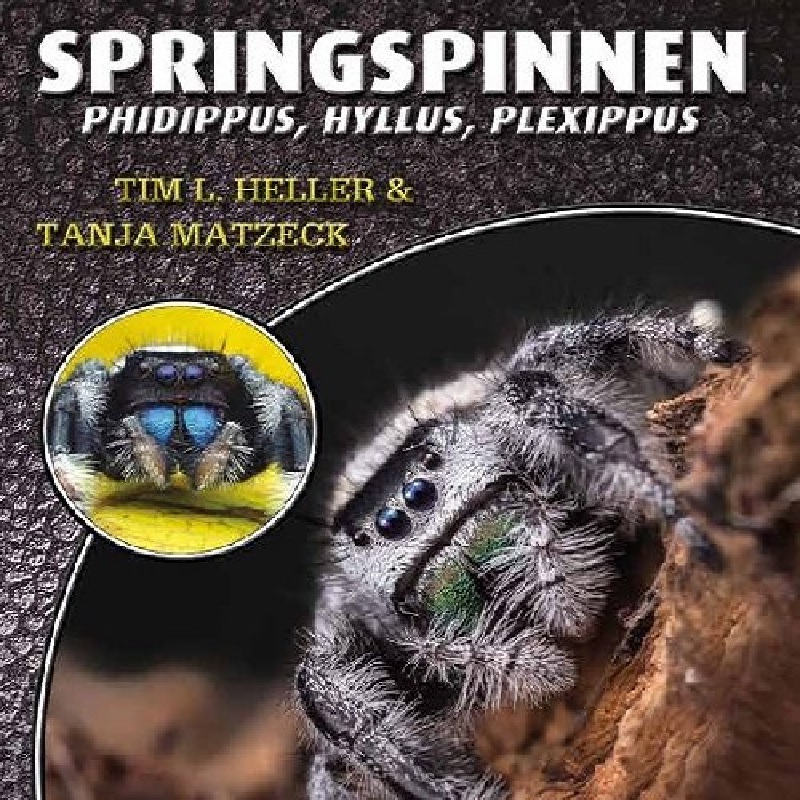
Jumping spiders Phidippus, Hyllus, Plexippus
Book Jumping Spiders - Phidippus, Hyllus & Plexippus A guide to keeping jumping spiders of the genera Phidippus, Hyllus & Plexippus. Who can resist the charm of jumping spiders? The childlike appearance of their expressive face simply leaves no one cold! In addition, their behavior is extremely exciting to observe, their colors are bright and their requirements for species-appropriate keeping are very easy to meet. No wonder these likeable jumpers are all the rage! This volume in the "Species by Species" series describes in detail what to look out for when buying and keeping them, introduces the most commonly kept species and color forms and provides plenty of tips on how to keep them successfully - so you can be sure they will breed well! Species by Species introduces you to the books in this series, which present the most popular terrarium animals. Each volume offers you detailed, practical care instructions and all the information you need to successfully breed your animals. All important questions from the required tank size to terrarium set-up, technical equipment, species-appropriate nutrition and disease prevention are answered with numerous tricks and tips. Experienced, long-standing breeders reveal how you can encourage the animals to reproduce and raise healthy young. All this in full color, generously illustrated and attractively designed - just about your terrarium animal - species by species

CHF 23.90

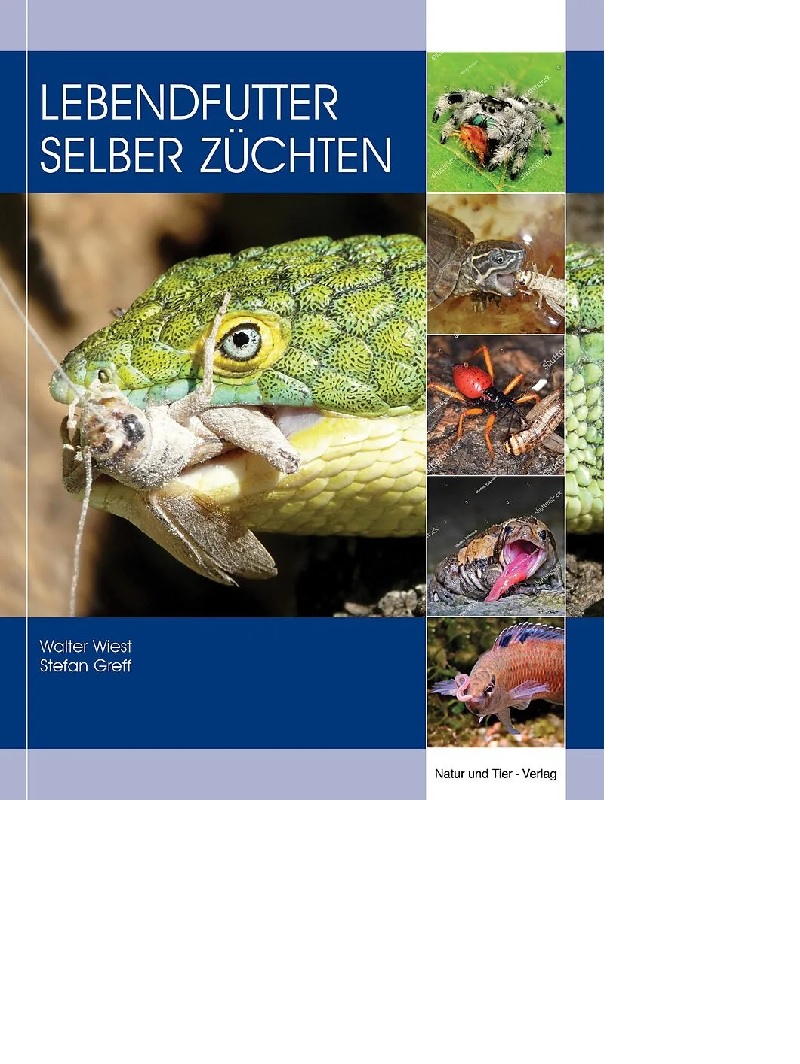
Book Breeding live food yourself
Book "Grow your own live food" - The perfect guide for pet owners Discover practical and detailed instructions on how you can easily breed food for your reptiles, birds, fish or other animals yourself in the book "Breeding live food yourself". With valuable tips on various food insects, their care and breeding, you can save money and ensure a species-appropriate diet for your pets. Contents of the book: Step-by-step instructions for breeding feeder insects Information on the best types of food for reptiles, birds and fish Care instructions and breeding conditions for various live food species Tips for sustainable and cost-effective food production Why breed your own live food? Get healthy, fresh food for your animals Save money and reduce dependence on pet shops Promote the health and well-being of your animals with species-appropriate food Whether you are a beginner or an experienced pet owner, this book provides you with everything you need to successfully breed live food yourself.

CHF 46.50

Marginata 69 - New Guinea tortoises
Marginata 69 - New Guinea tortoises – the genus ElseyaCover storyThe unrecognised beauties: New Guinea tortoises (Andreas S. Hennig)My experiences with Branderhorst's New Guinea tortoise, Elseya (Elseya) branderhorsti (Ouwens, 1914) (Andreas S. Hennig)Keeping and breeding of Rhodin's New Guinea tortoise, Elseya (Hanwarachelys) rhodini Thomson, Amepou, Anamiato & Georges, 2015 (Andreas S. Hennig)PortraitGeoemyda spengleri, Chinese serrated tortoise (Andreas S. Hennig)ReportageMacrochelys temminckii – Experiences and impressions with vulture tortoises part 2 (Reiner Praschag)KeepingAn alternative to year-round keeping of the Egyptian tortoise in the terrarium – my experiences with seasonal outdoor keeping of Testudo kleinmanni (Ricarda Schramm)EtymologySawbacks and living maps part 4: Graptemys gibbonsi, Pascagoula humpback tortoise (Holger Vetter)Classifieds & animal placement

CHF 16.50

Reptilia 05 - Monitor Lizards
Reptilia 05 - Monitor lizards MadagascarStress factor terrarium technologyTestudo Kleinmanni Contents: Page 2 - EditorialPage 3 - Letters to the editorPage 4 - Discussion: What to do after snake bites?Page 6 - MagazinePage 16 - Photo reportage: Monitor lizards, by J. de Ávalos and P. Martínez CarriónPage 22 - Keeping and breeding: Keeping and breeding monitor lizards, by B. EidenmüllerPage 26 - Herpetofauna: The spoilt dragons of Komodo, by H. WerningPage 28 - Monitor lizards - Use by humans, by Dr M. GaulkePage 33 - Travelogue: Journey to the south-east of Madagascar, by W. Schmidt and K. LiebelPage 39 - Portrait and poster: Dendrobates tinctorius, by M. SchmidtPage 43 - Herpetofauna: Testudo kleinmanni, by B. DevauxPage 52 - Terraristics: Stress in the terrarium, by G. VossPage 56 - Herpetofauna: Frogs of the genus Eleutheradactylus in Costa Rica, by J. EhmckePage 60 - Herpetology and Culture: Magic and superstition, Part 2: Snakes and lizards, by L. B. Carissimi-PrioriPage 69 - Reptilia on the road: Terrazoo Moers, by W. SchmidtPage 74 - Advice and actionPage 75 - LibraryPage 80 - Incubator: Column by H. Werning

CHF 9.80

GU, Turtles
GU Aquatic turtles Interesting facts about keeping aquatic and pond turtles 64 pages with numerous colour photos Paperback 8th edition Author Hartmut Wilke Swamp and water turtles have existed on our planet for around 250 million years, and therefore resemble relics from a time long past. This fact and their unique and sometimes very exotic appearance are just two of many factors that explain the steady growth of their fan base, which includes biologist Hartmut Wilke. He has been gathering knowledge about these reptiles for over 20 years and has compiled his concentrated knowledge and practical tips on keeping tortoises for you in this guide. This makes it easy for you to cater to the individual needs of your tortoises so that they stay fit and healthy. With optimal care, nothing stands in the way of a lifelong and happy friendship between you and your pet!

CHF 12.90

Draco 19 - Madagascar
Draco 19 - Madagascar Contents: 2 Editorial 4 The herpetofauna of Madagascar:Diversity, way of life and endangermentFrank Glaw 22 Journey to the east of MadagascarSebastian Wolf 30 Masoala – The eye of the forestNicolá Lutzmann 37 Mysterious Madagascar boas: Sanzinia & Acrantophis Frank Glaw & Kathrin Glaw 44 On the road in the “Reserve Speziale” of AnkaranaHans-Peter Berghof 50 In search of chameleons along the Route National 2 from Antananarivo to the east coast near Ambila-LemaitsoNicolá Lutzmann, Guy Kremer, Nico van Steendam & Achim Flamme 56The gecko genera of MadagascarPatrick Schönecker & Andreas Böhle 68 Biology, care and breeding of the short-headed day gecko (Phelsuma breviceps) BOETTGER, 1894 Patrick Schönecker 7 The “Madagascan poison dart frogs”– Keeping and breeding of Mantella Hartmut Lipp 82 A journey through the Madagascan highlandsAndreas Böhle 90 Magazine

CHF 16.80

NTV - Haplopelma lividum
Haplopelma lividum - All about the blue Thai tarantula 64 pages numerous colour photos Series species by species A5 Paperback Author Karin Manns Publisher NTV The booklet explains everything about the systematics, anatomy, distribution, appearance, life expectancy and natural enemies. It also explains how poisonous the Haplopelma lividum is, which legal regulations apply to it and acquiring this tarantula. From the contents: Foreword Systematics and anatomy Distribution Appearance and behaviour Natural enemies Life expectancy How poisonous is Haplopelma lividum Legal regulations Acquisition and transport Keeping and care The terrarium Technology and climate Socialisation Nutrition How to handle the tarantula Moulting Diseases and injuries Reproduction - Mating - Cocoon construction and rearing Conclusion

CHF 19.90

Draco 23 - Tree Frogs
Draco 23 - Tree frogs Contents: 2 Editorial      4 Tree frogs (Hylidae) – systematic reorganisation of an amphibian family Axel Kwet   26 The family Hylidae - Tabular overviewAxel Kwet  40 The tree frogs of a Peruvian communityAndreas Schlüter  48 Coral fingers and co. – observations on the Australian hylids of the genus LitoriaGunther Schmida  56 Reproduction variants for tree frogs in the terrariumPeter Janzen     60 Adorable barkers in the terrarium From the Caroline tree frog, Hyla cinerea (Schneider, 1799)Kriton Kunz     66 On keeping, care and reproduction of the tree hole toad tree frog, Trachycephalus resinifictrix  (Goeldi, 1907) in the Reptilium LandauThomas Wilms, Birgit Kügelgen & Tobias Schreckenbach       73 Keeping and breeding Smilisca phaeotaPeter Janzen  76 Central and South American tree glue frogs(Dendropsophus-leucophyllatus group) Karl-Heinz Jungfer  82 The coral-fingered tree frog (Litoria caerulea) and the golden tree frog (Litoria aurea) – two favourites of terrarium keepersNiklaus Meyer & Andrea Meyer  88 Book box  94 Magazine

CHF 16.80

NTV, amphibians at the garden pond
NTV, amphibians at the garden pond André de Saint-Paul, Ingo Brand & Wolfgang Schmidt 104 pages 96 photos Format: 16,8 x 21,8 With references to"Chemistry in the garden pond""Safety at the garden pond""Design" Content: You will not only get a beautifuland interesting small biotope to theown property, but can also be usedmake an important contribution to nature conservation! Everything you need to know in order for amphibians to settle in your pond The amphibian-friendly garden pond Large species part with splendid pictures With "amphibian calendar" for the garden pond Press commentaries: Following a taste of the time more and more garden pond friends lay themselves ponds, many of them become so-called natural ponds. Surely, only the fewest investors consider thereby, what they can cause. For these a book appeared, which can answer each question, which they could ask, exhaustively, if it refers to the topic: Amphibien at the garden pond . Who knows them all, toads, toads, frogs and newts? All animal species that before man had settled in the places of today's ponds had long been resident and indigenous and had been suppressed for the time being. What to do when they return suddenly and inconspicuously? Many gardeners are aware of the fact that this can happen in well-designed gardens and have been described in some articles (...). So what should we do to get to know these new citizens of the garden better and, if possible, to help them even more? Very simple: Buy and read the book discussed here!Rarely has a book summarized so much worth knowing about this topic so succinctly and comprehensibly.Some garden friends, who are not quite firm with the determination, will use the many clear photos beside the text, in order to determine its pond inhabitants correctly. The text leaves also no wish open, there are chapters about the animal species themselves and such, which have apparently secondary meaning, but for a longer existence of pond and animal are extremely important: "Nature as a model", "Legal regulations", "Settlement of amphibians", "Water supply", "Pond technology" and "Safety at the garden pond" are just a few examples. Everything is presented very clearly and comprehensibly for zoological laymen and is also exciting to read.Conclusion: A 5-star book!Walther Rohdich in The Aquarium 08/2002Recommended(...)Altogether (...) a recommendable book for garden owners who are interested in amphibians, as well as for all amphibian friends and those who want to become one.Petra Kölle in DATZ 9/2002(...)(This book) is intended to serve those who want to create a garden pond in their garden that is as close to nature as possible.The book first of all examines the question of whether the garden pond can be a Noah's ark for amphibians and what position amphibians occupy in the biotope garden pond. The next chapter gives a brief overview of amphibians: evolution, systematics, way of life, catching prey, breathing, voice, reproduction, from egg to lurch, migrations and enemies and diseases. This gives everyone the basic knowledge they need to better understand amphibians. (...)In the following kind descriptions all amphibian-types native with us are introduced except for two (...) in text and picture. Thereby, distribution, way of life and reproduction are discussed in detail. The garden ponds for amphibians are taken into account afterwards, whereby also the remaining garden is included in the discussion. The question "Fish and amphibians in a body of water - is that possible?", which is important for many people, is answered as well as questions about legal regulations, settlement in one's own garden and the construction and maintenance of a garden pond. (...)The last part of the book is about safety at the garden pond, care tips and an "amphibian calendar", which gives an overview of important events in the course of the year of the native species. At the end there is a glossary, a bibliography and an index.The book can be considered as quite successful and gives also the interested layman the possibility of making itself fast familiar with the topic. (...) Altogether a recommendable reading for "newcomers" or advanced readers who are interested in this topic.Peter Janzen, DGHT-AG Anuren, in elaphe 3/2002A feel-good garden for frogsA beautiful garden pond is not just a piece of quality of life. It can also make a contribution to nature and species conservation, according to André de Saint-Paul, Ingo Brand and Wolfgang Schmidt in the book "Amphibien am Gartenteich", published by Natur und Tier - Verlag. Location, pond type, water supply, planting and technology - nothing is left out. In addition the Artenteil equipped like the entire book with excellent color photos presents all domestic tail and frog through species with detailed information and refers also to their special needs.Review in Dresdner newest News of 30.05.2002(...)The book shows the right way. More and more garden owners want to create a piece of nature with frogs, toads and newts.One is also reasonably informed about the work involved in setting up and maintaining such a watercourse. The care of the small water is also important, and here the author gives many care tips.Also the amphibian calendar is valuable, which clearly tells each owner of a garden pond what is happening at which time of the year in his water and when he can find which kind of amphibian there.Get a beautiful and interesting small biotope on your own property. Well informed you can make an important contribution to nature conservation!

CHF 32.50

Draco 16 - Tarantulas
Draco 16 - Tarantulas Contents: 2 Editorial 4 Tarantulas – Biology & systematicsBoris F. Striffler 20 “Ecdysis”– when tarantulas fly off the handleBoris F. Striffler & Thomas Ziegler 26 Earth Tigers – the Asian tarantulas of the subfamily OrnithoctoninaeVolker von Wirth & Martin Huber 37 South American tree dwellers: Avicularia, Tapinauchenius & PsalmopoeusBoris F. Striffler, Armin Bochtler & Hans-Werner Auer 52 Brachypelma – the colourful tarantulas of MexicoBoris F. Striffler & Achim Graminske 62 Temperature preferences and activity patterns in tarantulasBoris F. Striffler 70 Tarantulas in Venezuela – from the Caribbean to the Tepuis Boris F. Striffler & Dirk Weinmann 79 Book box 86 Magazine 90 Species list

CHF 16.80