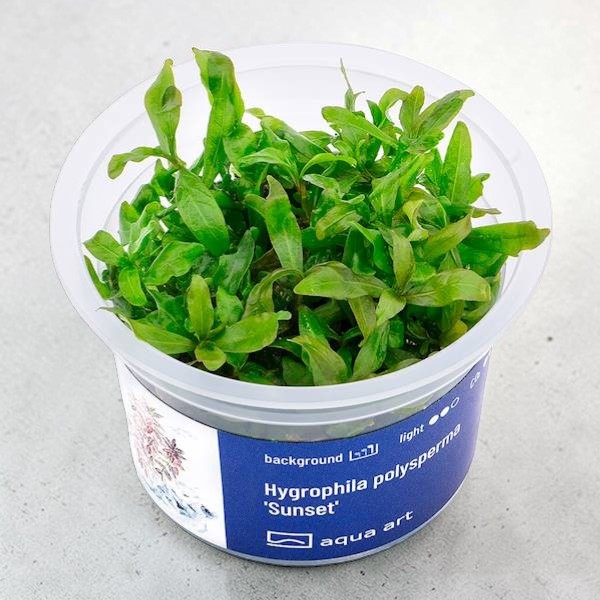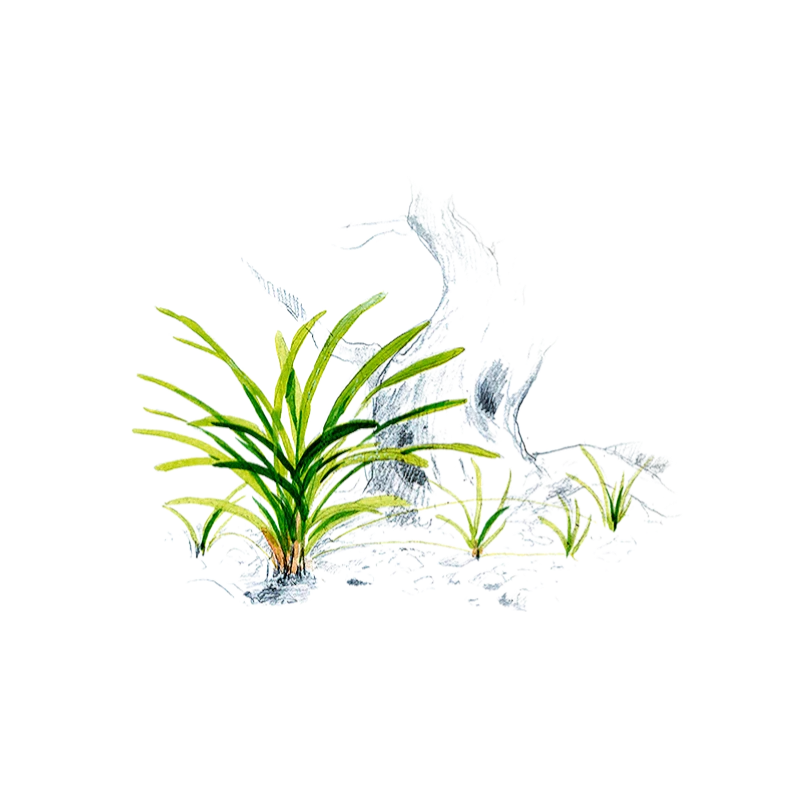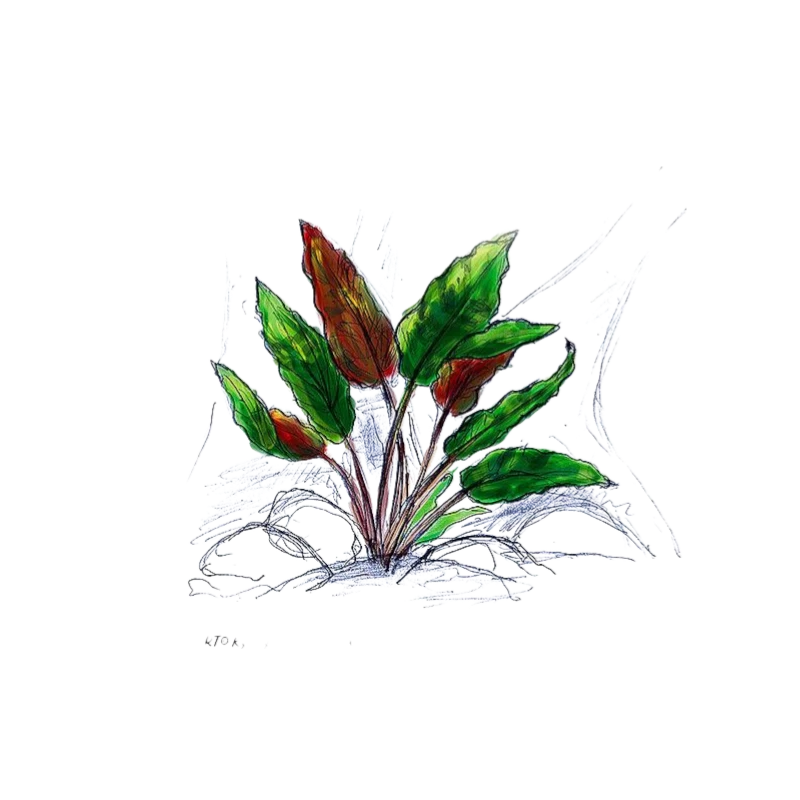
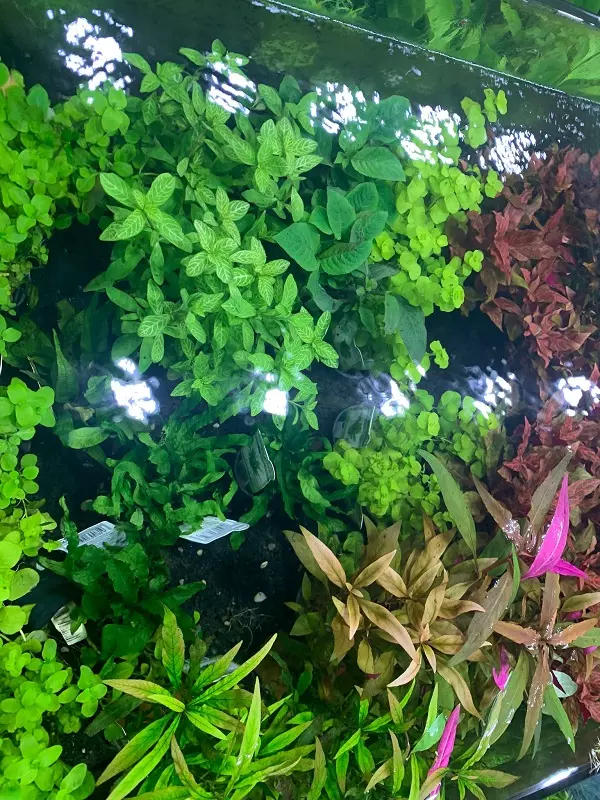
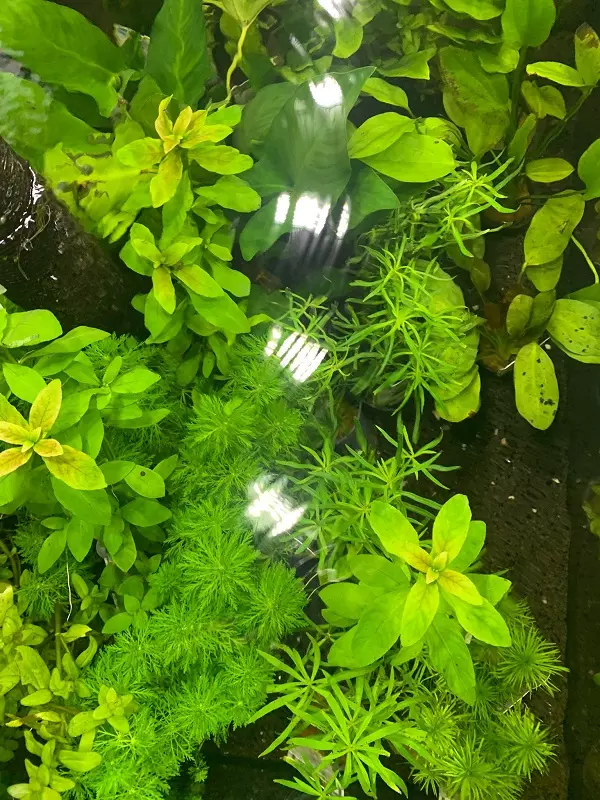
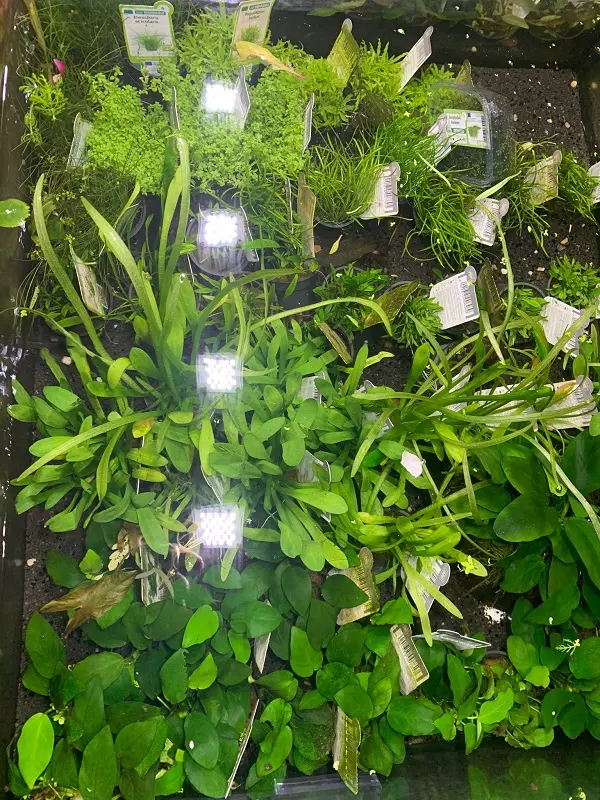
You order the desired quantity of plants from the assortments:
Foreground plants
Middle ground plants
Background plants
The price is per pot!
Different plants are left over for despatch with each consignment, as we always have to order them in units.
With this offer you cannot choose the individual plant yourself - but you get exactly the same quality at a better price.
Composition
Feeding recommendation
Technical details
Size information
4 out of 4 reviews
4.75 by 5 Stars
Give us a rating!
Share your experience with the product with other customers.
Log in
20 October 2026 13:24
Obligation d ecrire
Obligation d ecrire... donc malheureusement je ne noterai plus rien
31 August 2023 11:14
Took some time for delivery but ok
Ok
6 May 2021 08:09
Can be ordered without hesitation!
The selection of plants I chose fitted very well in my aquarium and was successfully installed. No snails, algae or other diseases found in the tank so far. So top product!
Plants from the range at Dennerle
You order the desired quantity of plants from the assortments:
Foreground plants
Middle ground plants
Background plants
The price is per pot!
Different plants are left over for despatch with each consignment, as we always have to order them in units.
With this offer you cannot choose the individual plant yourself - but you get exactly the same quality at a better price.
Microsorium pteropus (on root with suction cup)
max. growth height
up to 40cm
Country of origin
Southeast Asia
Suitability
Community aquariumPerch aquarium
Type
Perennial plant
Family
Scrophulariaceae
Genus
Microsorium
Propagation
Daughter plants from leaves and roots
Growth rate
slowly
pH
5-8
Water hardness
very soft to hard
Notes
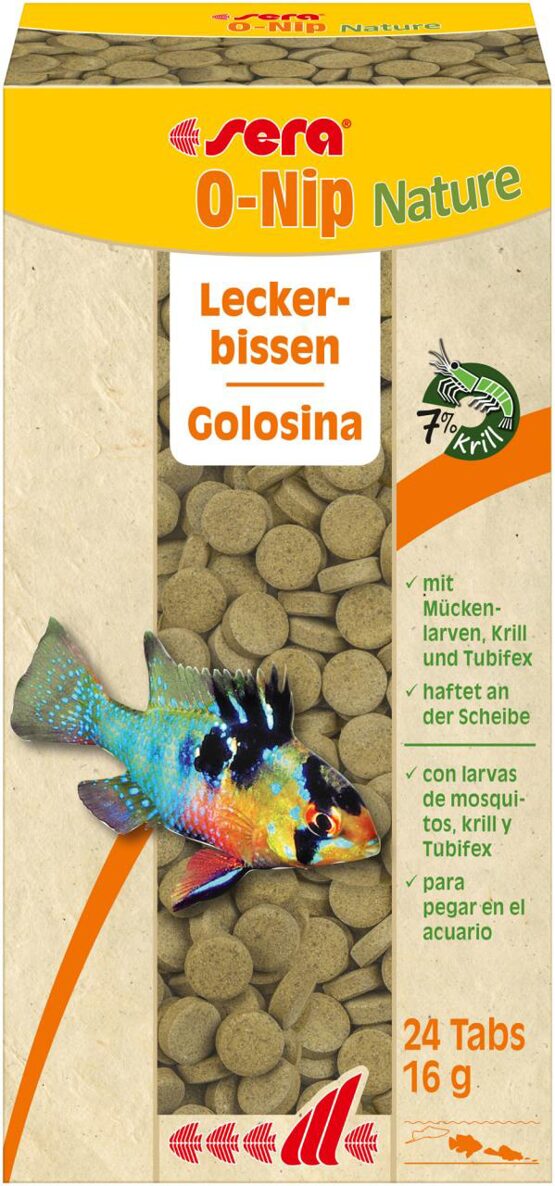
sera O-nip ist ein begehrtes Tablettenfutter für alle Süss- und Meerwasserfische und viele Niedere Tiere.
Es besteht zu je 50 % aus hochwertigem Flockenfutter und gefriervakuumgetrockneten Futtertieren (FD).
Heften Sie sera O-nip mit leichtem Fingerdruck von innen an die Aquariumscheibe.
sera O-nip ist auch ein hochwertiges Futter für Welse und Schmerlen.
VerwendungshinweiseMit diesen kraftvollen Tabletten täglich, je nach Besatz, sparsam füttern.
ZusammensetzungFischmehl, Weizenmehl, Brauereihefe, Ca-Caseinat, Krill, Rote Mückenlarven, Milchpulver, Tubifex, Gammarus, Volleipulver, Spirulina, Seealgen, Lebertran, Kräuter, Luzerne, Brennnessel, Grünlippmuschelmehl, Petersilie, Paprika, Spinat, Karotten, Knoblauch. Gefärbt mit EG-Zusatzstoffen.
QualitätsanalyseRohprotein: 46,3%, Rohfett: 9,0%, Rohfaser: 3,7%, Rohasche: 11,5%, Feuchtigkeit: 5,6%
Zusatzstoffe, Vitamine und Provitamine pro kgVit. A: 27200 IU, Vit. B1: 30 mg, Vit. B2: 65 mg, Vit. C: 400 mg, Vit. D3: 1500 IU, Vit. E: 90 mg
Lobelia cardinalis
Lobelia Cardinalis is a green plant, recommended for the second level of the aquarium and for the paludarium. It looks great in a group and likes to grow above the water surface.Difficulty of growing: easyLight requirements: mediumCO₂ requirements: lowAdult plant height: up to 30 cmGrowth: mediumTemperature: 15-28°CPlacement in aquarium: second levelOrigin: North AmericaShell diameter 6 cmLobelia Cardinalis or Cardinal's Strophica is a plant native to North America. In the wild, it is found in wetlands and along riverbanks. It is distributed from the Gulf of Mexico through the eastern states of the United States to southern Canada.
It grows in the ground and has a well-developed root system. The feathery stems can develop auxiliary roots in leafless areas. Its distinctive ornamental feature is the light green, oval leaves with a prominent pale central vein. It is very comfortable in a paludarium, where it forms a 0.5 m high flower head with red flowers.
Lobelia can be cultivated in aquariums and paludariums. It thrives beautifully in muddy soil as well as underwater.It tolerates temperatures from 15 to 28 °C and can also be kept in a pond. It thrives best at 20-23°C. It does well in soft to medium hard water with a pH between 6.5 and 7.2.Without adequate light the leaves turn yellow, but in bright light the undersides of the leaves turn purple-red. It is not particularly demanding, but regular water changes, fertilizer and CO₂ support its growth and allow it to grow 5 cm per month. Uncut, it grows above the water surface by forming overwater leaves, and may also flower.In the aquarium, lobelia should be planted in a group in the background, but it also works well as a foreground plant. It is used in lobelia avenues or to form showy thickets.
Pruning is necessary to maintain a beautiful habit; use scissors to remove older leaves. You can also cut back the entire plant and use the cut tips as cuttings. A young plant can also be grown from an old leaf. Cuttings rooted in a paludarium can be transplanted to an aquarium. In an aquarium, stem pruning forces the plant to form side shoots.
Planting: The plant must be removed from the cup and thoroughly rinsed from the gel under running water. This is best done by placing the plant in a container of lukewarm water. Most of the gel will then fall off by itself. Divide the contents of the cup into 3-4 cm lumps and then place them in the substrate..
Lilaeopsis brasiliensis - Brazilian grass plant
max. growth height
- 8 cm
Country of origin
Argentina, Paraguay, south-east Brazil
Suitability
Community aquariumNano CubeAquascaping
Type
Stolons
family
Apiaceae
Genus
Lilaeopsis
Propagation
Stolons
Growth rate
medium
pH
6 - 8
Water hardness
0 - 20 °dh
Notes
Lilaeopsis brasiliensis is a decorative foreground plant. In its natural habitat, it colonises the banks of rivers and marshes up to an altitude of over 1,000m. Its grass-like character is similar to that of Helanthium tenellum, which is why it is sometimes referred to as "false tenellus". It is easy to cultivate in the aquarium, prefers cooler water and grows quite slowly, regardless of whether the water is soft or hard. Strong pruning, as with a lawn, promotes compact growth. It needs plenty of light.
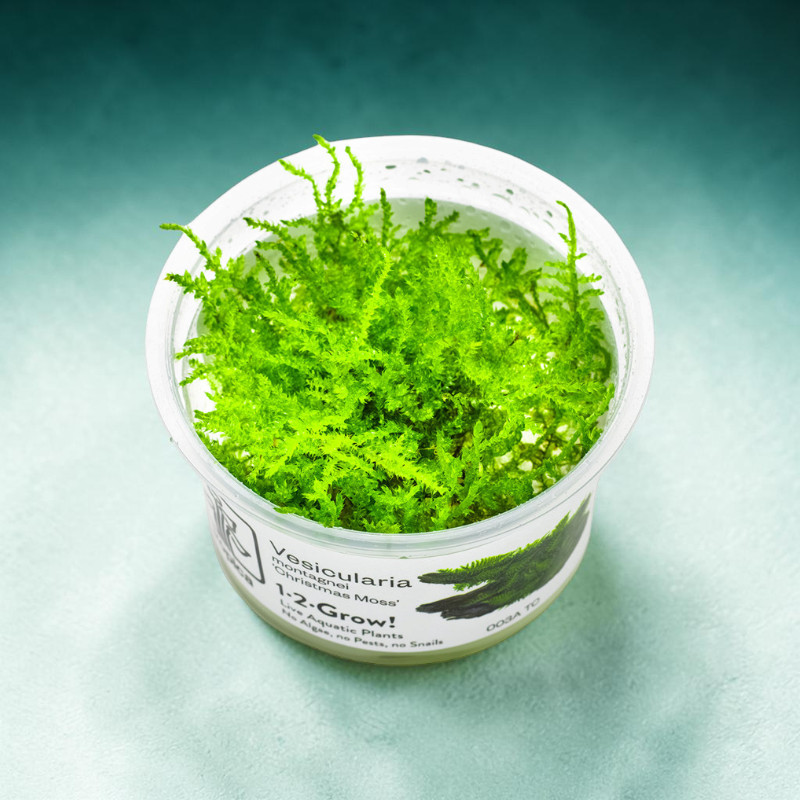
Vesicularia montagnei 'Christmas Moss' – Christmas mossAqua Art Vesicularia montagnei ‘Christmas Moss’ – decorative Christmas moss with fir-tree-like shoots. Ideal for aquascaping, roots, rocks and shrimp aquariums.Vesicularia montagnei ‘Christmas Moss’ from Aqua Art is a particularly attractive aquarium moss that captivates with its unique, fir-tree-like growth habit. The finely branched, rich green shoots are reminiscent of small Christmas trees and lend aquariums and aquascapes a natural, detailed structure.Also known as Christmas moss or Christmas tree moss, this moss originates from Brazil and is one of the most decorative moss species in the aquarium hobby. Its characteristic, horizontally growing side shoots form regularly branched, triangular structures reminiscent of the branches of a fir tree.Unlike ordinary Java moss, Christmas moss usually grows more compactly and, under suitable conditions, forms dense, even mats of moss. The shoots spread mainly horizontally and can develop into beautiful green patches over time.With a growth height of up to 5 cm, Vesicularia montagnei is ideal for the foreground and midground of the aquarium. The moss looks particularly attractive on natural stones, roots and other decorative elements.The delicate moss shoots can be attached to roots or stones and, over time, become firmly anchored to the surface. This allows you to create natural tree canopies, verdant rock formations or densely overgrown root structures.Christmas Moss requires only low to medium light levels and can be cultivated without additional CO₂ fertilisation. However, a consistent supply of nutrients and a moderate addition of CO₂ are beneficial for particularly dense and vigorous growth.Growth is moderate, although under favourable conditions the moss can develop into dense, branched mats. Occasional trimming helps to maintain the characteristic Christmas tree structure and prevents the lower layers of moss from receiving too little light.Christmas moss is also particularly interesting for shrimp aquariums. The fine branches offer dwarf shrimp and juvenile shrimp numerous hiding places. At the same time, biofilms and microorganisms can colonise the moss surfaces, which the shrimp enjoy grazing on.Aqua Art offers Vesicularia montagnei ‘Christmas Moss’ as an in vitro culture. The moss is propagated under controlled laboratory conditions and, according to the manufacturer, is free from snails, parasites and algae.With its distinctive growth habit and versatile uses, Christmas moss is an excellent Wahl for aquarists who wish to design their underwater landscape with natural, lush green moss structures.Your benefits at a glance1 in vitro culture dish of Vesicularia montagnei 'Christmas Moss'Characteristic, fir-tree-like branched moss shootsLush green and densely branched growthIdeal for the foreground and midground of the aquariumGrows to a height of approx. 5 cmLow to medium light requirementsCO₂ addition is not strictly necessaryLaboratory-propagated culture free from snails, parasites and algaeInstructions for usePreparing the in vitro plantOpen the culture cup and carefully remove the Christmas mossRinse off any remaining nutrient gel thoroughly under clean, lukewarm waterTake care to damage the delicate moss shoots as little as possible.Then divide the moss into small portions of about 1–2 cmAttaching it in the aquariumChristmas Moss is particularly well suited for covering roots, stones and other aquascaping elementsSecure the small pieces of moss to the desired surface using suitable plant glue or fine threadSpace the clumps out slightly so that the moss has enough room to spread and form a dense carpet over timeLightingVesicularia montagnei ‘Christmas Moss’ grows even under low to medium light levelsBalanced lighting promotes compact growth and the characteristic branched structureAvoid excessively strong lighting without an appropriate nutrient supply, as this can encourage algae growth on the moss surfacesCO₂ supplyAdditional CO₂ fertilisation is not strictly necessary for keeping this plantHowever, a moderate supply of CO₂ can support the growth and development of dense moss cushionsNutrient supplyAs Christmas moss absorbs nutrients across its entire surface, a balanced supply of macro- and micronutrients is importantIf necessary, a suitable liquid fertiliser for aquarium plants can be usedPruning and propagationIf the moss grows too densely or irregularly, the tips of the shoots can be trimmed with fine garden shearsRegular trimming encourages a compact growth habit and ensures that even the lower layers of moss receive sufficient lightTrimmed pieces of moss can be reattached to roots or stones and will continue to grow under suitable conditionsZoo Roco TipVesicularia montagnei ‘Christmas Moss’ is one of the most beautiful moss species for natural aquascapes. Its fir-tree-like, branched shoots are particularly well suited to creating small trees, overgrown rocks and natural woodland landscapes underwater.Attach small portions of Christmas moss to the upper branches of a slender aquarium root. Once the moss has taken root and spread out, it creates the impression of a small green tree crown.Christmas Moss looks particularly decorative when combined with light green ground cover plants, Bucephalandra, Anubias or compact ferns.The moss is also a lovely addition to shrimp aquariums. The densely branched shoots provide young shrimp with sheltered areas and additional surfaces on which they can search for food.It is better to trim the moss regularly and carefully rather than letting it grow too much. This preserves its characteristic Christmas tree structure and ensures the moss forms beautiful, dense clumps that last.
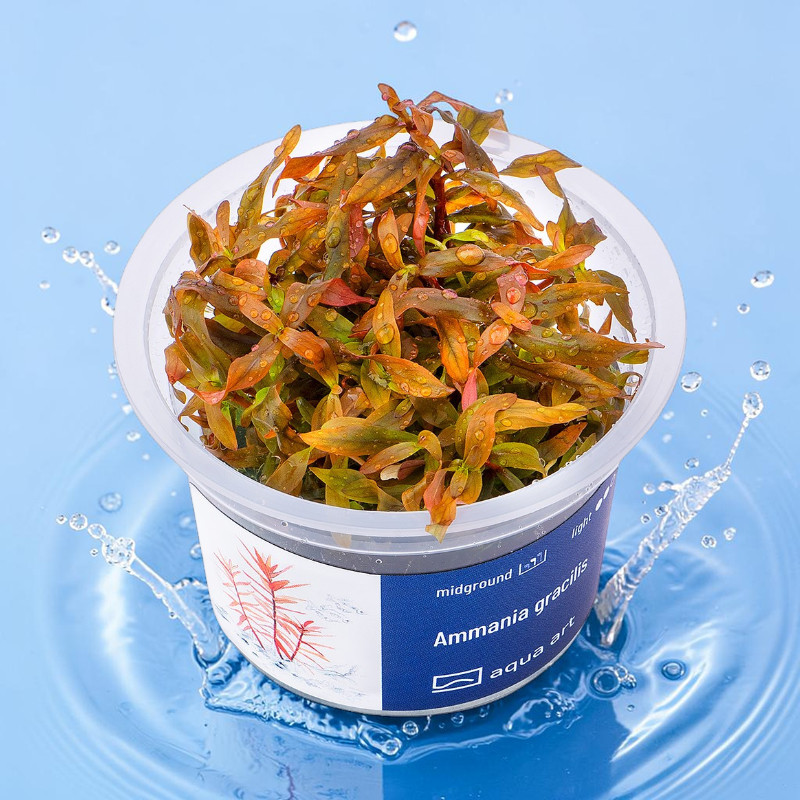
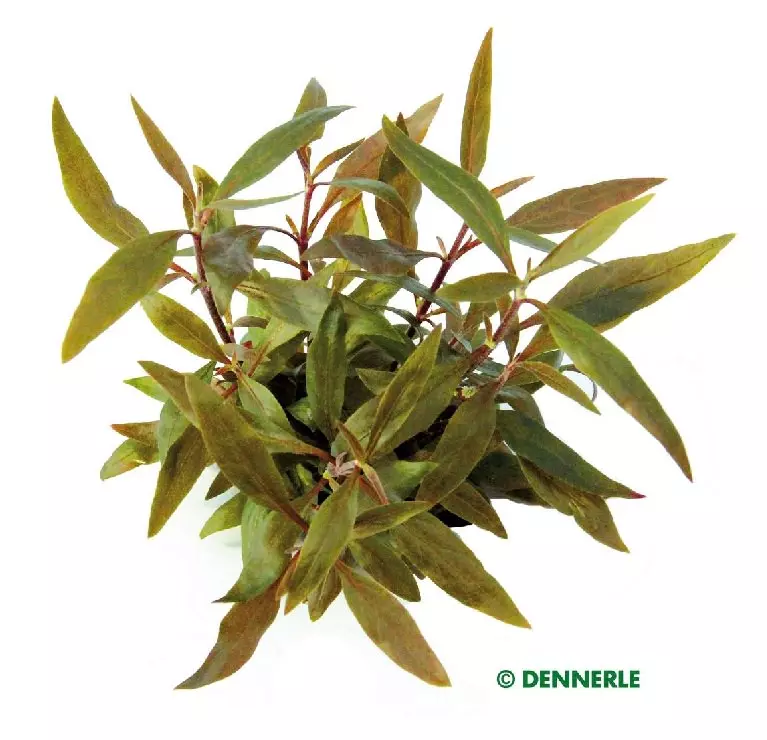
Ammania gracilis – red stem plant for aquascapingAmmania gracilis – a decorative red stem plant for the midground and background. Ideal for aquascaping, with beautiful colouration when provided with light, CO₂ and a good supply of nutrients.Ammania gracilis is an attractive stem plant for freshwater aquariums and is particularly popular in aquascaping. The plant produces elongated, slightly wavy leaves which, depending on light and nutrient levels, can range in colour from greenish to coppery to a rich reddish hue. This allows it to add beautiful splashes of colour to the aquarium and makes it ideal as an eye-catching feature in the midground or background.Under good conditions, Ammania gracilis grows upright and can reach a height of around 20 to 50 cm. To develop an intense red colour, the plant requires medium to strong lighting, a good supply of nutrients and, ideally, CO₂ supplementation. It develops its full colour particularly well under strong light and with sufficient micronutrients.Ammania gracilis is suitable for planted aquariums, aquascapes and ‘ Holland ’ aquariums. Regular trimming keeps the plant compact and encourages bushier branching. The cut shoot tips can be replanted directly into the substrate.Your benefits at a glanceAttractive red stem plant for aquariumsIdeal for the midground and backgroundAdds lovely splashes of colour to the aquascapeGrowth height approx. 20–50 cmParticularly beautiful colouration under good lightingBenefits from CO₂ injection and nutrient fertilisationEasy to propagate by pruningHeight: approx. 20–50 cmInstructions for useBefore planting, carefully remove the pot, rockwool or transport material from the roots. If necessary, divide the plant into smaller sections and plant the individual stems in the substrate, leaving a little space between them. This ensures the shoots receive enough light and can develop well.Ammania gracilis prefers a bright spot in the aquarium. Moderate to strong lighting, as well as a regular supply of macro- and micronutrients, promote healthy growth and vibrant colouration. Adding CO₂ is recommended, as the plant grows significantly more vigorously and with more intense colour when supplied with sufficient CO₂.Regular pruning encourages bushier growth. The cut shoot tips can be replanted as cuttings.Zoo Roco TipTo develop a beautiful red to copper-coloured hue, Ammania gracilis requires plenty of light and a steady supply of nutrients. Do not plant the stems too densely, so that the lower leaves also receive sufficient light. When combined with light-green plants, this creates a particularly beautiful colour contrast in the aquarium.
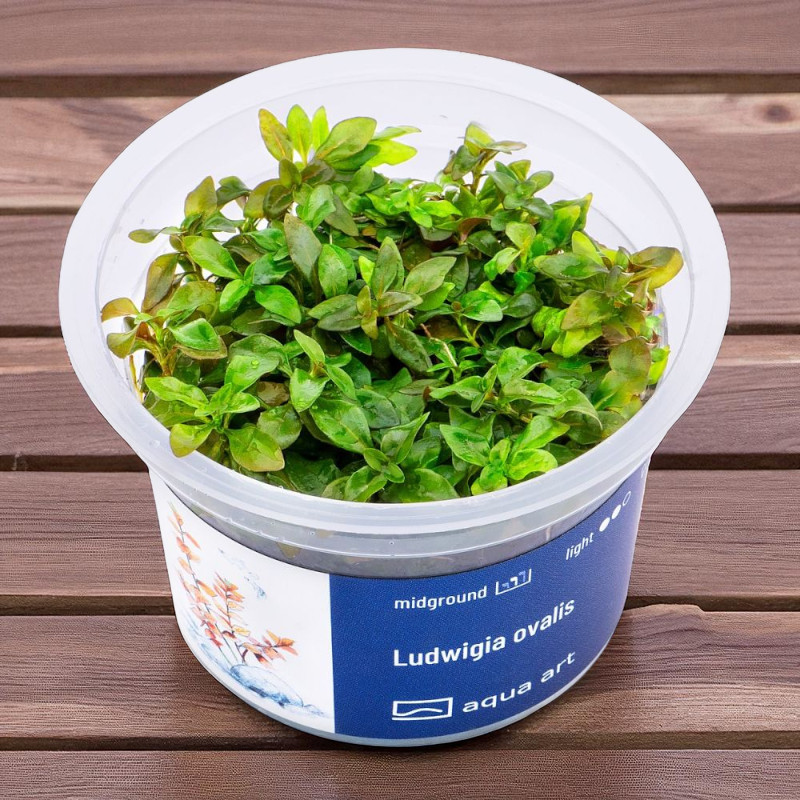
Ludwigia ovalis invitro cup
This plant, with a characteristic oval leaf
oval leaf shape in orange-pink color, is easy to grow and an interesting addition to the aquarium.
interesting addition to the aquarium. The leaves are slightly smaller
than those of the popular Repens variety. Due to their rapid growth
the clumps must be trimmed and thinned out regularly to prevent excessive growth.
prevent excessive growth. The original shape of the leaf blade
makes it an attractive addition to the plant composition in the aquarium.
aquarium.To use this plant, remove it from the cup and rinse the gel.
cup and rinse the gel thoroughly under running water.
Then divide it into small clumps of 1-2 cm and plant them at short intervals.
them at short intervals. As it grows, it will form a
form a uniform group of adult plants.This plant
comes from in vitro cultivation and is free from snails, parasites and algae.
and algae. High-quality gel was used as a medium, so it will establish itself
quickly establish itself in the aquarium.
Light requirement: medium to intensive
Optimum temperature: 10 to 28 °C
Water values: soft to hard
pH value: 4 to 7
CO2 and nutrients: recommended
Propagation: cuttings
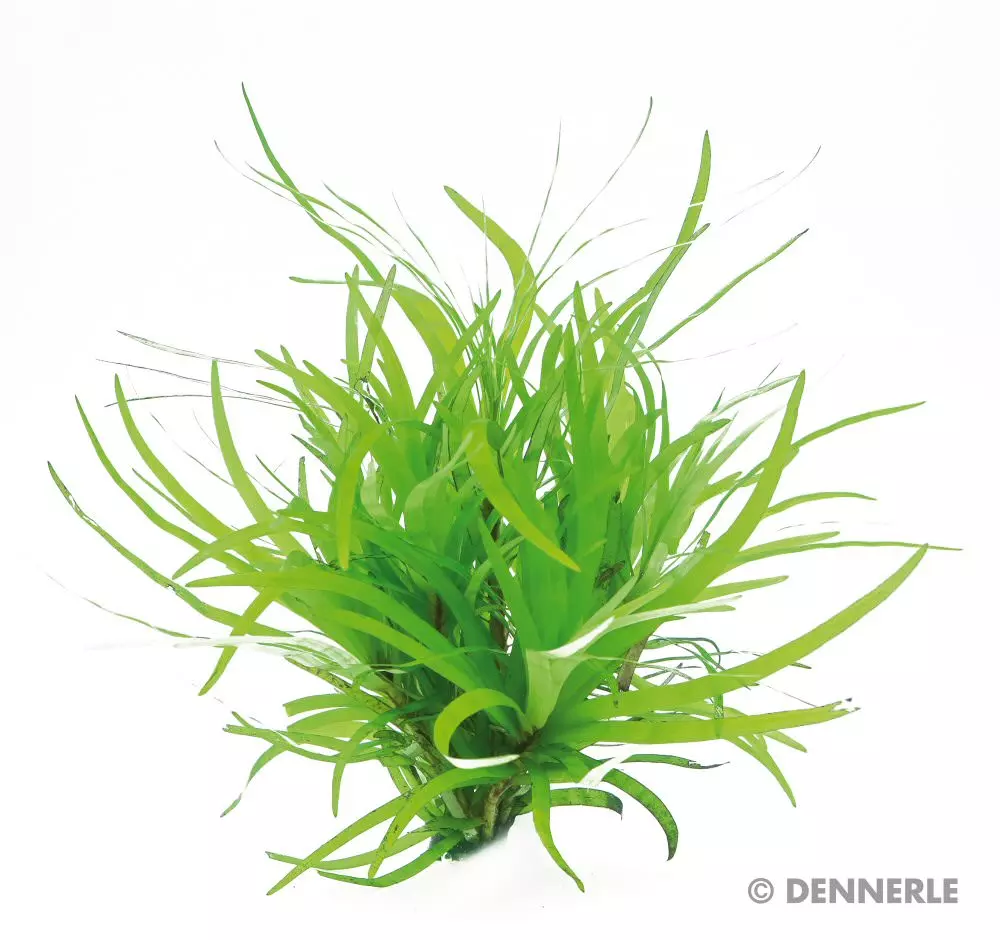
Saggitaria subulata - InVitro
Sagittaria subulata is a versatile and easy-care aquarium plant that creates a harmonious overall picture both in the foreground and in the middle ground. With its narrow, grass-like leaves, it forms dense, natural carpets and brings lively structure to any aquarium.
Under optimal conditions, the plant spreads via runners and quickly creates a dense growth. Depending on the placement and light conditions, it can vary its growth height - from low ground cover to taller, decorative accents in the background.
The occasional flowering is particularly attractive in optimal conditions: Delicate, small flowers can appear above the surface of the water, adding an unusual touch to the aquarium.
Advantages at a glance:
Undemanding aquatic plant for beginners and professionals
Forms dense lawns through natural runners
Flexible growth height depending on location and care
Can develop decorative flowers above the water surface
Supplied free from snails, algae and parasites Product details:
Name: Sagittaria subulataPlanting location: Foreground - middle groundOrigin: South America Growth: FastHeight: Up to 30 cm, depending on conditionsLight requirement: Medium to high
CO₂ supply: not essential, but beneficial
Propagation: by stolons, divisionDelivery form: InVitro (sterile packaging) Manufacturer: Aqua art
Cryptocoryne wendtii 'Mi Oya' In Vitro
Cryptocoryne wendtii 'Mi Oya' is an attractive and uncomplicated aquarium plant that brings natural elegance to the aquarium with its broad, gently wavy leaves in warm brown tones. Its special coloring creates exciting contrasts with green plants and adds depth to the layout.
Thanks to its robust characteristics, it is ideal for beginners and experienced aquascapers alike. The plant grows evenly and forms dense groups that create a harmonious structure, especially in the middle or background.
Thanks to its adaptability, it also copes well with moderate lighting and low CO₂ addition and remains permanently decorative.
Advantages at a glance:Easy to care for and ideal for beginners
Warm brown and olive tones for natural contrasts
Compact, group-forming growth
Suitable for center and background design
Grown in vitro - free from snails and algae
Product details:
Name:
Cryptocoryne wendtii 'Mi Oya'
Type: Medium - background plant
Growth height: approx. 15-30+cm
Light requirement: low to medium
CO₂ supply: not essential, but beneficialpH value: 5 to 8
Growth: slow to medium (~2-3 leaves/month)
Propagation: by stolons, division
Delivery form: In vitro cup (sterile cultivation)
Manufacturer: Aqua Art
Ludwigia ovalis invitro cup
This plant, with a characteristic oval leaf
oval leaf shape in orange-pink color, is easy to grow and an interesting addition to the aquarium.
interesting addition to the aquarium. The leaves are slightly smaller
than those of the popular Repens variety. Due to their rapid growth
the clumps must be trimmed and thinned out regularly to prevent excessive growth.
prevent excessive growth. The original shape of the leaf blade
makes it an attractive addition to the plant composition in the aquarium.
aquarium.To use this plant, remove it from the cup and rinse the gel.
cup and rinse the gel thoroughly under running water.
Then divide it into small clumps of 1-2 cm and plant them at short intervals.
them at short intervals. As it grows, it will form a
form a uniform group of adult plants.This plant
comes from in vitro cultivation and is free from snails, parasites and algae.
and algae. High-quality gel was used as a medium, so it will establish itself
quickly establish itself in the aquarium.
Light requirement: medium to intensive
Optimum temperature: 10 to 28 °C
Water values: soft to hard
pH value: 4 to 7
CO2 and nutrients: recommended
Propagation: cuttings
🌿 Proserpinaca palustris - Decorative aquarium plant with serrated foliage
Structure and color for the middle to background layout
Proserpinaca palustris from Aqua Art is an unusual aquarium plant with finely toothed, fern-like leaves that can take on a fascinating copper-orange coloration in good light. It grows upright and gives the aquascape a special depth effect and structure thanks to its unique texture.
In well-lit tanks with a CO₂ supply, it develops vibrant colors and healthy growth. Its eye-catching appearance makes it ideal as an accent plant in the middle or background.
✅ Advantages at a glance
Unique leaf shape with serrated foliage
Color gradient from green to copper-orange in strong light
Ideal for structured middle and background design
Demanding, but very decorative under optimal conditions
Grown in vitro - free from snails and pesticides
Particularly striking in layouts with contrasting plants
📋 Product details
Name: Proserpinaca palustris
Origin: North and South America
Type: Stem plant
Growth height: approx. 20-40 cm
Light requirement: medium to high
CO₂ supply: recommended to necessary
Growth: medium
Propagation: Cuttings after pruning
Delivery form: In vitro cup (sterile)
Manufacturer: Aqua Art
💡 Zoo Roco tip
Proserpinaca palustris looks particularly impressive when planted in groups and combined with fine-leaved plants such as Myriophyllum or Rotala. Strong light and regular micronutrient fertilization are crucial for intensive colouring.
With Proserpinaca palustris from Aqua Art, you can add variety, color and structure to your aquascape - ideal for sophisticated layouts with character.Customers also searched for: Proserpinaca palustris, Aqua Art, structure-rich aquarium plant, stem plant aquarium, serrated leaves, InVitro plant aquarium, aquascaping plant, buy Proserpinaca, reddish aquarium plant, background plant aquarium
🌿 Hygrophila sp. 'Araguaia' InVitro Reddish-brown accent plant with unique growth habit
Hygrophila sp. 'Araguaia' from Aqua Art is a particularly attractive, compact stem plant with a reddish-bronze color and finely branched growth. It is ideal for the foreground to midground and provides structured contrasts and warm color accents in aquascapes.
This plant is one of the slow-growing Hygrophila species and can be easily shaped and thickened by regular pruning. Supplied as an in-vitro plant, it is free from algae, snails and pesticides - ideal for shrimp tanks and sensitive aquariums.✅ Advantages at a glance:
Compact Hygrophila with reddish-bronze leaves
InVitro - sterile, snail-free & pesticide-free
Ideal for the foreground or middle ground
Slow-growing - easy to shape and grow bushy
Good effect with strong lighting & CO₂ supply
Very decorative in natural aquariums and layouts with contrasting colors📋 Product details:
Name: Hygrophila sp. 'Araguaia'
Type: Stem plant
Placement: Foreground to midground
Growth height: approx. 5-15 cm
Light requirement: medium to high
CO₂ supply: recommended
Growth: slow
Delivery form: In vitro cup (sterile cultivated)
Manufacturer: Aqua Art💡 Zoo Roco tip:
Combine Hygrophila 'Araguaia' with light green plants such as Micranthemum or Hydrocotyle sp. 'Japan'
- to show off the darker coloring particularly well. For a
dense carpet, regular pruning is recommended.Hygrophila 'Araguaia' provides subtle color accents and fine structure in the lower section of the aquarium - ideal for sophisticated layouts and harmonious plant design.
Ludwigia sphaerocarpa 'Pilosa' InVitro Red accent plant for aquascaping
Ludwigia sphaerocarpa 'Pilosa' is a decorative and rare stem plant with a particularly intense red coloration and fine leaf structure - a real eye-catcher for any natural aquarium. This variety is ideal for the mid to background area and adds color depth and contrast to groups of green plants.
As an Aqua Art in vitro plant, it is free from snails, algae and pesticides, making it perfect for shrimp tanks and sensitive aquariums. With good lighting and CO₂ supply, it develops its full color intensity and grows vigorously but controllably.✅ Advantages at a glance:
Intensely red-colored stem plant with a fine texture
Grown in vitro - sterile, free from harmful substances
Ideal for color contrasts in the middle or background
Safe for shrimps and sensitive aquariums
Grows compact & controllable with good care📋 Product details:
Name: Ludwigia sphaerocarpa 'Pilosa'
Type: Stem plant
Placement: Middle to background
Growth height: approx. 20-40 cm
Light requirement: medium to high
CO₂ supply: recommended
Color effect: red to reddish-green
Growth: medium
Delivery form: In vitro cup (sterile cultivation)
Manufacturer: Aqua Art💡 Zoo Roco tip:
For strong red coloration, the plant should be kept under intensive lighting and regularly supplied with iron and micronutrients. A good supply of CO₂ also has a positive effect on growth and color.Ludwigia sphaerocarpa 'Pilosa' from Aqua Art brings structure, contrast and an intense play of colors to the aquarium - perfect for modern aquascaping layouts.
🌿 Bucephalandra sp. 'Ulysses' InVitro Noble perennial plant with character
Bucephalandra sp. 'Ulysses' from Aqua Art is an exclusive, slow-growing aquarium plant that impresses with its dark green to bluish shimmering leaves with slightly wavy edges. This variant is ideal for attaching to roots, stones or decorative elements - without planting in the substrate.
Thanks to in vitro cultivation, it is free from snails, algae and pesticides - ideal for shrimp tanks, nano aquariums and natural aquariums. The plant is robust, easy to care for and decorative - even in low light and without a CO₂ supply.✅ Advantages at a glance:
Staking plant with wavy, dark green leaves
InVitro - sterile, pesticide-free and snail-free
Slow-growing, very easy to care for
Perfect for shrimp tanks, aquascapes and small aquariums
No substrate required - ideal for roots or stones
Eye-catching leaf structure with an elegant shimmer📋 Product details:
Name: Bucephalandra sp. 'Ulysses'
Type: Perennial plant
Placement: Foreground to midground
Growth height: approx. 5-10 cm
Light requirement: low to medium
CO₂ supply: not essential, but beneficial
Growth: slow
Delivery form: In vitro cup (sterile cultivated)
Manufacturer: Aqua Art💡 Zoo Roco tip:
Place Bucephalandra 'Ulysses' on dark hardscape such as lava rock or bogwood - this will show off the shimmering leaves particularly well. Plant glue or a fine nylon thread is suitable for attaching them.With its unique color effect, low requirements and high decorative quality, Bucephalandra 'Ulysses' is the perfect plant for modern aquarium layouts.
Invitro aquarium plant Rotala rotundifoliaColorful stem plant for the background
Rotala rotundifolia is one of the most popular stem plants in the aquarium hobby - versatile, easy to care for and particularly attractive thanks to its delicate, round leaves. Depending on the light intensity and nutrient supply, it develops a vibrant green to bright red, adding lively color accents to any aquarium layout.
The in vitro version is grown under sterile conditions and is therefore free from algae, snails and pesticides - ideal for sensitive aquariums, especially shrimp tanks. Fast-growing and adaptable, Rotala rotundifolia is ideal for the mid to background and harmonizes wonderfully with other fine stem plants in the natural aquarium.
Advantages at a glance:
✅ Changes color depending on the light - from green to red
✅ Fast-growing & ideal for dense groups of plants
✅ InVitro - guaranteed free from harmful substances & snails
✅ Safe for shrimps & sensitive tanks
✅ Perfect for aquascaping & classic plant aquariumsProduct details:
Name: Rotala rotundifolia
Type: Stem plant
Position in aquarium: Middle to background
Growth height: approx. 30-50 cm
Light requirement: Medium to high
CO₂ supply: Recommended for more intense colorationTemperature: 22 - 28°C
Delivery form: In vitro cup (grown sterile)
Color effect: Green to reddish, depending on light & nutrients
Plants from the range at Dennerle
You order the desired quantity of plants from the assortments:
Foreground plants
Middle ground plants
Background plants
The price is per pot!
Different plants are left over for despatch with each consignment, as we always have to order them in units.
With this offer you cannot choose the individual plant yourself - but you get exactly the same quality at a better price.
Eichhornia diversifolia
max. growth height
- 60 cm
Country of origin
Central America, South America
Suitability
Community aquarium
Type
Stem plant
Family
Pontederiaceae
Genus
Eichhornia
Propagation
Cuttings
Growth rate
pH
5 - 7
Water hardness
2 - 8 °dh
Notes
Eichhornia diversifolia is a decorative stem plant from the water hyacinth family Pontederiaceae. The submerged shoots form approx. 10 cm long leaves on the stems. Eichhornia diversifolia grows relatively quickly and should therefore be trimmed back in good time. When the stems reach the water surface, the less decorative simple floating leaves develop. A good supply of nutrients and CO2 is absolutely essential for this beauty from South America. Slightly acidic to neutral water also encourages healthy and vigorous growth. Eichhornia diversifolia is one of the most magnificent stem plants and should therefore be used as a solitary plant in the centre or background of an underwater landscape.
Aquatic plants in vitro
In vitro plants are cultivated in the laboratory under sterile conditions. They are supplied in a 7cm closed container. The small plants are completely free from algae and snails and can be planted directly. This product group is ideal for smaller aquariums and nano cubes as well as for modern aquascaping. How demanding the respective plant is can easily be seen in the top right-hand corner of the packaging. Before planting, only the nutrient medium needs to be rinsed off and the plant portioned.
Taxiphyllum spec. - Flame moss In-Vitro
max. growth height
- 10 cm
Country of origin
Southeast Asia
Suitability
NanoCube
Type
moss
Family
Hypnaceae
Genus
Taxiphyllum
Propagation
Division
Growth rate
slow
pH
5 - 8
Water hardness
0 - 20 °dh
Notes
The home of this as yet not clearly identified moss is Southeast Asia. The name flame moss derives from its special growth habit: The upright shoots are more or less strongly twisted and resemble flickering flames. Care and cultivation are easy, and radical pruning is possible at any time. Particularly attractive design effects can be achieved by tying the moss onto free-standing roots and thin root branches. The characteristic growth is especially well emphasised in this case.
Pogostemon helferi – Wavy-leaved water mint
max. growth height
- 10 cm
Country of origin
Southeast Asia
Suitability
NanoCubeCommunity aquariumAquascaping
Type
Family
Lamiaceae
Genus
Pogostemon
Propagation
Head cuttings, side shoots
Growth rate
medium
pH
6 - 8
Water hardness
0 - 30 °dh
Notes
Although this plant has been scientifically recognised for a long time, it was only "discovered" for aquariums a few years ago. With its highly decorative, strongly wavy leaf edges, it is probably one of the most beautiful foreground plants. At first glance, it looks like a rosette plant, but it is actually a strongly compressed stem plant. If a few basic cultivation conditions are met, Pogostemon helferi forms beautiful plant cushions: good to intensive lighting, temperatures around 25 °C, medium-hard water. Under these conditions, its leaf colour is rich green.
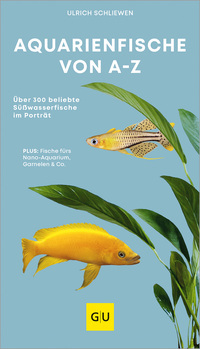
GU Aquarium fish from A-ZA portrait of over 300 popular freshwater fishPlus: Fish for the nano aquarium, shrimps & co.
256 pages
Colour illustrations
Paperback
Portraits of over 300 freshwater fish
Author Ulrich Schliewen
Publisher GU
Whether young or old, beginner or advanced: aquarium enthusiasts are always flirting with new fish species. After all, tropical freshwater fish with their dazzling colours and fascinating behaviour make the aquarium an exciting nature experience. However, this should not tempt you to put too many fish in one tank or even to socialise fish that have different requirements. The fish expert Dr Ulrich Schliewen offers compact knowledge on around 300 fish species in the large GU Aquarium Fish Compass from A to Z - sorted by German species names for beginners. Each fish portrait contains all the important information - from their way of life in the wild, to their husbandry requirements in the aquarium, to care and socialisation tips. Coloured buttons show the required tank size and water temperature at a glance. The most popular shrimps, crabs, crayfish and snails for the aquarium are presented in portraits in an extra chapter.
Vallisneria spiralis Torta
Large screw - swamp screw
max. growth height
30 - 50 cm
Country of origin
Africa, Asia
Suitability
Perch aquarium, community aquarium
Type
Rosette
Family
Hydrocharitaceae
Genus
Vallisneria
Propagation
Stolons
Growth rate
medium
pH
6 - 9
Water hardness
10 - 30 °dh
Notes
A very decorative variety of Vallisneria spiralis with a twisted growth habit. It is also known commercially as ‘screw vallisneria’. With a height of 30-50 cm, the leaves remain significantly shorter than those of the stem form. It is also undemanding in cultivation, only the light intensity should be slightly higher than for the normal V. spiralis. The ‘Torta’ variety is suitable for the middle ground of small aquaria or the background of larger aquaria.
Alternanthera reineckii Mini - aquarium plant
max. growth height
- 10 cm
Country of origin
Cultivated form
Suitability
Aquascaping, community aquarium, NanoCube
Type
Stem plant
family
Amaranthaceae
Genus
Alternanthera
Propagation
Cuttings, side shoots
Growth rate
slow
pH
5 - 8
Water hardness
10 - 20 °dh
This new variety has only been on the market for a few years and is a colourful highlight in the foreground. In the emersed above-water culture, the growth is very similar to the stems of other Alternanthera species. The compact miniature growth can only be recognised under water. This little beauty is particularly recommended as a splash of colour for nano cubes. In combination with a light green Hemianthus carpet, a strong colour contrast can be achieved. However, a very bright, well-lit location is required.