Product information "NTV - Stick insects, ghost insects, changing leaves"
All about the popular stick insects, ghost insects and walking leaves.
128 pages
coloured photos
1st edition
Author Alexander Esch
Invertebrates are on the rise in terraristics, and among them phasmids are at the top of the popularity scale. Shifting leaves, stick insects and ghost insects are suitable even for beginners in the terrarium hobby and fascinate with their bizarre body shapes and varied behaviour. In this book, author Alexander Esch provides you with a practical guide with general information on the biology and successful keeping and breeding of this exciting group of insects and introduces the most popular species in the terrarium hobby.
Composition
Feeding recommendation
Technical details
Size information
0 out of 0 reviews
Give us a rating!
Share your experience with the product with other customers.
Log in
No reviews found. Go ahead and share your findings with others.
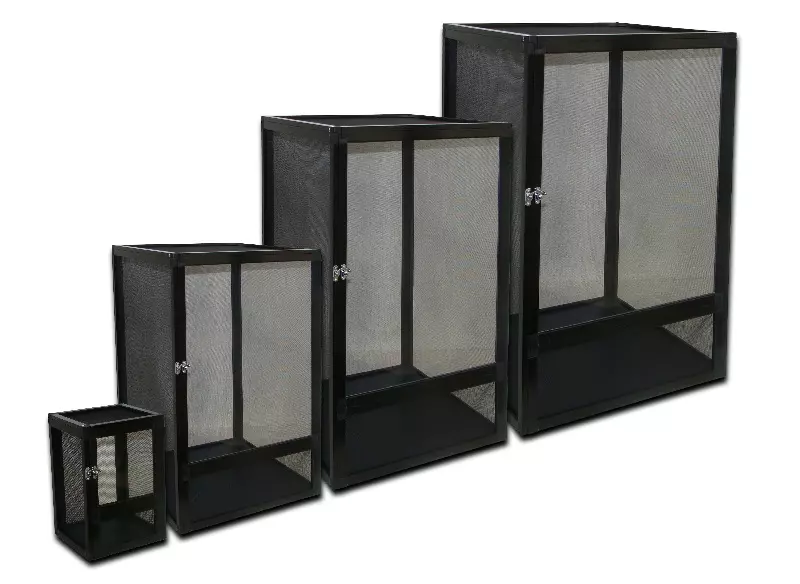
OpenAir Vivarium - Gauze terrarium made of aluminium
This open air gauze terrarium is perfect for species that need a lot of fresh air. It can be set up indoors or outdoors and has a transparent acrylic glass door
Ideal for keeping reptiles outdoors
Suitable for climbing species that need lots of fresh air
Quick and easy to set up - and take down - without any tools
Practical, light and handy
With robust, rust-free aluminium gauze
Transparent acrylic glass door
Matching base tray optionally available
Butterfly breeding also works perfectly in the Pop Up Vivarium and is an experience for young and old alike
Available sizes:small 20 x 20 x 30 cmmedium: 42 x 42 x 66 cmlarge: 50 x 50 x 100 cmXL: 60 x 60 x 120 cm
Handbook of forage plants 2nd revised editionMarion Minch is not only a successful breeder of diverse tortoises for many years, but also an excellent connoisseur of native wild herbs. She founded and runs samenkiste.de, which is well known to many tortoise keepers and nature lovers. Her name is inextricably linked with reptile care and species-appropriate nutrition for tortoises. Her handbook of food plants summarises the most important native food plants for herbivorous and omnivorous reptiles. She not only considers tortoises, but also iguanas, spiny-tailed dragons and even chameleons. From the basics of plant biology to native wild herbs to suitable food plants for hardy tropical reptile species, this comprehensive work provides the basis for species-appropriate keeping. In the expanded and supplemented 2nd edition, the plant section is divided according to flower colour. This makes it even easier to identify wild herbs. The work has also been supplemented with a wealth of additional information and many pictures.
Geckos in the terrarium by Astrid FalkThe book offers a comprehensive introduction to geckos and their species-appropriate keeping in terrariums. It explains what you need to think about before buying a gecko and what preparations should be made. The book describes in detail how the terrarium is technically equipped and set up. The care of the animals, their special features and behaviour, their diet, reproduction and rearing of young animals are described, as well as diseases and husbandry problems with tried and tested suggestions for prevention and treatment. Individual gecko species that are particularly suitable for keeping and breeding in terrariums are portrayed in detail in the second part of the book.
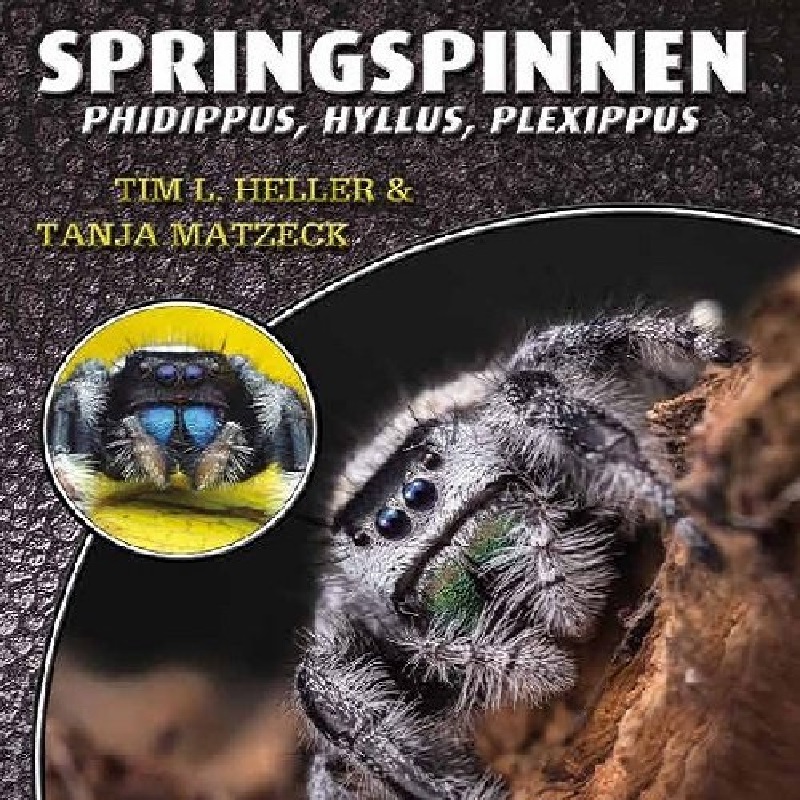
Book Jumping Spiders -
Phidippus, Hyllus & Plexippus
A guide to keeping jumping spiders of the genera Phidippus, Hyllus & Plexippus. Who can resist the charm of jumping spiders? The childlike appearance of their expressive face simply leaves no one cold! In addition, their behavior is extremely exciting to observe, their colors are bright and their requirements for species-appropriate keeping are very easy to meet. No wonder these likeable jumpers are all the rage!
This volume in the "Species by Species" series describes in detail what to look out for when buying and keeping them, introduces the most commonly kept species and color forms and provides plenty of tips on how to keep them successfully - so you can be sure they will breed well!
Species by Species introduces you to the books in this series, which present the most popular terrarium animals. Each volume offers you detailed, practical care instructions and all the information you need to successfully breed your animals.
All important questions from the required tank size to terrarium set-up, technical equipment, species-appropriate nutrition and disease prevention are answered with numerous tricks and tips.
Experienced, long-standing breeders reveal how you can encourage the animals to reproduce and raise healthy young.
All this in full color, generously illustrated and attractively designed - just about your terrarium animal - species by species
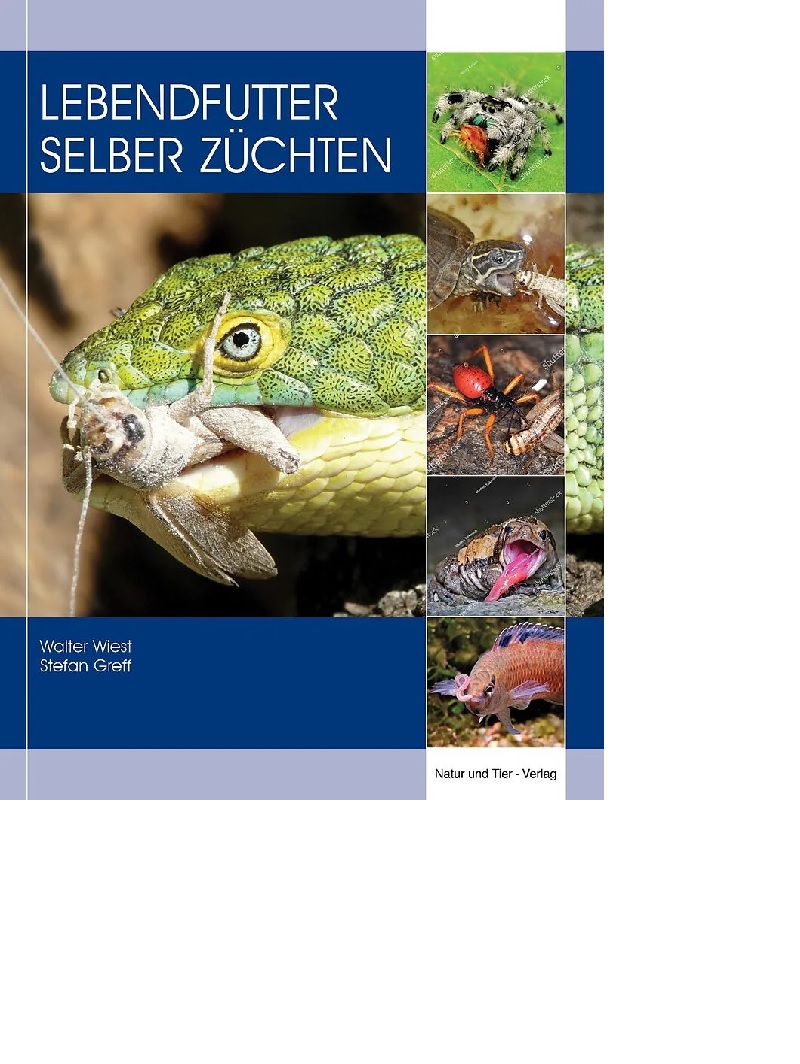
Book "Grow your own live food" - The perfect guide for pet owners
Discover practical and detailed instructions on how you can easily breed food for your reptiles, birds, fish or other animals yourself in the book "Breeding live food yourself". With valuable tips on various food insects, their care and breeding, you can save money and ensure a species-appropriate diet for your pets.
Contents of the book:
Step-by-step instructions for breeding feeder insects
Information on the best types of food for reptiles, birds and fish
Care instructions and breeding conditions for various live food species
Tips for sustainable and cost-effective food production
Why breed your own live food?
Get healthy, fresh food for your animals
Save money and reduce dependence on pet shops
Promote the health and well-being of your animals with species-appropriate food
Whether you are a beginner or an experienced pet owner, this book provides you with everything you need to successfully breed live food yourself.
Marginata 69 - New Guinea tortoises – the genus ElseyaCover storyThe unrecognised beauties: New Guinea tortoises (Andreas S. Hennig)My experiences with Branderhorst's New Guinea tortoise, Elseya (Elseya) branderhorsti (Ouwens, 1914) (Andreas S. Hennig)Keeping and breeding of Rhodin's New Guinea tortoise, Elseya (Hanwarachelys) rhodini Thomson, Amepou, Anamiato & Georges, 2015 (Andreas S. Hennig)PortraitGeoemyda spengleri, Chinese serrated tortoise (Andreas S. Hennig)ReportageMacrochelys temminckii – Experiences and impressions with vulture tortoises part 2 (Reiner Praschag)KeepingAn alternative to year-round keeping of the Egyptian tortoise in the terrarium – my experiences with seasonal outdoor keeping of Testudo kleinmanni (Ricarda Schramm)EtymologySawbacks and living maps part 4: Graptemys gibbonsi, Pascagoula humpback tortoise (Holger Vetter)Classifieds & animal placement
Draco 56 - Terrarium equipmentContents:EditorialTerrarium designPatrick SchöneckerSeven steps to a self-built back wallDiana & Oliver FinkA piece of North American desert in your living room: building and designing a terrarium for collared iguanasJana BuchwaldA near-natural terrarium for the carpet pythonDaniel Renner Redesign of a terrarium for Lampropeltis alternaMalte Hornig Buyable and good: cork backgrounds and other furnishings from specialised retailers and their use in terrariumsDiana & Oliver FinkConstruction of a polystyrene terrarium system for the animal-friendly keeping, breeding and rearing of lizardsHans Esterbauer Lizards and succulents in the winter garden terrariumBeat Akeret
Draco 43 - Day geckos
The genus Phelsuma
Contents:
Madagascar is the first place one associates with phelsumas – and indeed, the majority of known day gecko species are at home on this large island in the Indian Ocean, the fourth largest in the world. Two recognised Madagascar specialists, Philip-Sebastian Gehring and Frank Glaw, inform us about the "state of affairs" in the genus Phelsuma and provide exciting insights into current research topics on the "Darwin’s finches of the Indian Ocean", as the two biologists call them. Madagascar is also the focus of three further articles in this issue. Patrick and Stefanie Schönecker, who have been travelling to the island for many years, take us on an exciting search for phelsumas in Madagascar, introducing worthwhile destinations for beginners and advanced enthusiasts. Additionally, the authors discuss a day gecko in a detailed husbandry and breeding report – one that has risen from a "very little known Phelsuma species" to one of the most popular at present: the cross-striped day gecko, Phelsuma standingi. Hans-Peter Berghof, who has cared for phelsumas for many years, on the other hand, describes first experiences with an extremely rare and scarcely kept species from southern Madagascar: Phelsuma malamakibo.
You can read this and much more in this issue.
EditorialColourful diversity in modern light – day geckos of the genus PhelsumaPhilip-Sebastian Gehring & Frank Glaw
Biology, husbandry and breeding of the cross-striped day gecko – Phelsuma standingi Methuen & Hewitt, 1913Patrick Schönecker & Stefanie Schönecker
Colour-spraying beauties on dream islands – the day geckos of the Inner SeychellesMichael Wirth
Day geckos of the island of MauritiusSilvia Budzinski & Ralph-M. Budzinski
First experiences in the care and breeding of Phelsuma malamakibo Nussbaum, Raxworthy, Raselimananam & Ramanamanjato, 2000Hans-Peter Berghof
The day geckos of the genus Phelsuma from the Comoros island of MayotteHans-Peter Berghof
Phelsuma search in Madagascar – recommended destinations for nature experiences with day geckos Patrick Schönecker & Stefanie Schönecker
Experiences in the care and reproduction of the small Seychelles day gecko, Phelsuma astriata astriata Tornier,1901Silvia Budzinski & Ralph-M. Budzinski
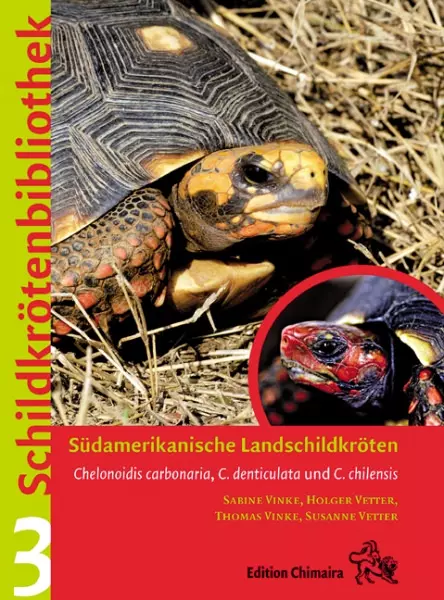
Turtle library 3 - The South American tortoises
Sabine & Thomas Finke, Susanne & Holger Vetter
355 pages
285 color photos
2 drawings 4 distribution maps
Format: 15 x 21.5 cm
Content:
This book is by far the most comprehensive collection of information from all parts of the Southern Turtle's tortoise range: Chelonoidis carbonaria, C. denticulata and C. chilensis.
Reptilia 121 - More lightTerrarium lighting for sun-loving reptiles
CubaTerrarium for emerald monitor lizardsPeacock-eyed terrapinsContents:Cover story: More light! – Terrarium lighting for sun-loving reptilesThere are few topics that occupy terrarium keepers as much as the question of the right lighting, especially for sun-loving species. Which lamps give off the most light, how do I ensure that my animals get enough UV rays, what do I need to do to provide the ideal lighting? In our cover story, we take a closer look at this sometimes complex subject and analyse the suitability of HQI spotlights & co. as terrarium lamps.
EditorialMAGAZINEDATES
WESTERN HERP PERSPECTIVESA political view of today's terrarium challengesB. Love
REPORTAGEThe right terrarium lighting for chameleons and other reptilesM. Grimm
Terrarium technologyMetal halide lamps in terrariumsU. Geissel
Keeping and breedingPeacock-eyed terrapins. The genus SacaliaM. Rogner
ReportageA lifelong dream comes true. 40 years Reptile House UnteruhldingenA. Kwet
TerraristicsA terrarium for the emerald monitor (Varanus prasinus)S. & S. Leber
SERVICE
Animals of our homelandThe little water frogR. Leptien
ALSO NEAR YOU
JourneyCuba all inclusive. Part 2: the centre and the westI. Kober
PREVIEW
BRUTKASTEN A day with ReinerJ. Bulian
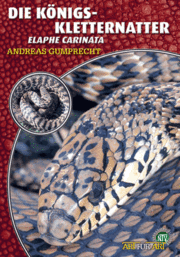
All about the king climbing snake
64 pages
Format: 14.8 x 21 cm
numerous colour photos
Author Andreas Gumprecht
Contents:
Terrarium keeper and snake expert Andreas Gumprecht has been keeping terrarium animals for 25 years now and would like to share his positive experiences with the care and breeding of the king climbing snake with the reader in this guide. br>Let yourself be impressed by perhaps the most imposing representative of the climbing snake complex.
Systematics and body structure
The fascinating biology: From the life of the king climbing snake
All information on species-appropriate keeping: from suitable terrariums to equipment and technology to feeding
Successful breeding: Mating stimulation, incubation of the eggs and rearing of the young
Problem solving: How to avoid the most common mistakes in care and how to help sick animals
Brilliant photos
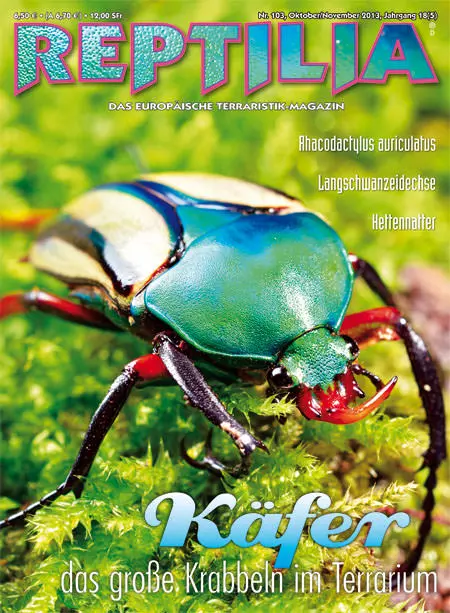
Reptilia 103 - Beetles - the big crawl in the terrarium
Hibernation of tortoisesRhacodactylus auriculatusChain snake
Contents:
Beetles are right on trend in terrariums! In addition to a large number of beautiful rose beetles, many stag beetles and giant beetles are now also being successfully bred – thanks in part to new substrates such as flake soil and Kinshi. In addition, splendid, agile ground beetles, social sugar beetles or whimsical black beetles also make it into terrariums time and again. REPTILIA introduces these beautiful animals and reveals how you can achieve breeding success with these colourful Juwel.
MAGAZINEDATESWESTERN HERP PERSPECTIVESAnnoying contemporariesB. Love
PHOTOREPORTAGEBeetles in the terrarium – A feast of colourF. Rossow
TERRARIUM PRACTICEIt all depends on the substrate!F. Rossow
KEEPING AND REPRODUCTIONBeetle breeding made easy!F. Rossow
KEEPING AND REPRODUCTIONRose chafer beetles – living JuwelH.-G. Kaiser
KEEPING AND REPRODUCTIONThe hump-headed gecko Rhacodactylus auriculatus – a colourful representative of the New Caledonian giant geckosK.-U. Volta
KEEPING AND REPRODUCTIONThe Speckled Chain Snake, Lampropeltis getula holbrooki – An underrated beautyD. Renner
TERRARIUM PRACTICEHibernation of Hermann’s tortoises (Testudo hermanni boettgeri)N. Schaible
ANIMALS OF OUR HOMEThe sea frogR. Leptien
LibraryTips & tricksServices
ALSO NEAR YOU
TRAVELAmphibians and reptiles in northern AfghanistanF. Joisten
PREVIEW
BRUTKASTEN Island of the iguanas part 2H. Werning
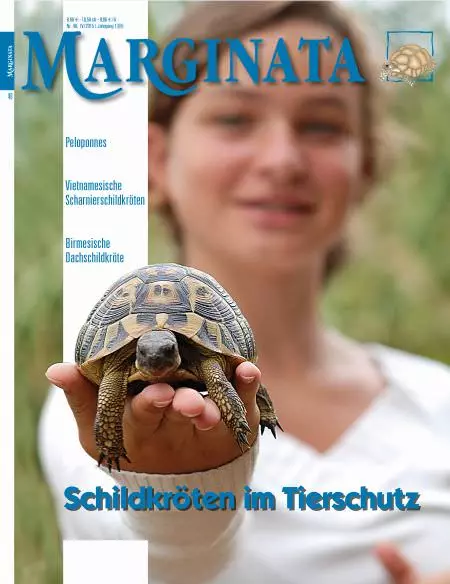
Marginata 48 - Turtles in animal welfarePeloponneseRarities from VietnamEuropean pond turtleTable of contents EditorialMagazineTOPIC"Chelonia" - Germany's largest turtle sanctuaryPatrick BoncourtTOPICSanctuary for tortoises in Stuttgart - a feel-good garden for tortoises Humans and animalsNicole Gehringer & Thomas SchällingTOPICTurtle animal welfare Supersize - the Phoenix Herpetological SocietyHeiko WerningPORTRAITEmys orbicularis (Linnaeus, 1758) European pond turtle, East Mediterranean pond turtleBenny Trapp TRAVELIn search of the "shy beauty" and the "Cave turtles" (2)Torsten Blanck, Sebastian Braun, Timothy McCormack, Hoang Van Ha, Nguyen Tai Thang, Nguyen Van Luc & Minh LeSCIENCETrachemys emolli or T. grayi in Honduras? Alexander GutscheTRAVELMorea - in search of turtles and other reptiles in the West the Peloponnese (2)Axel KwetSubscription & ServiceRegional guide
CHF 16.50
❅
❆
❅
❆
❅
❆
❅
❆
❅
❆
❅
❆
This website uses cookies to provide the best possible experience. More information ...