The expert beginner's guide to the "mini dragons" from Australia.
64 pages
coloured photos
Paperback
Author Manfred Au
Published by Gräfer & Unzer
Like creatures from another planet! Bearded dragons are right at the top of the popularity scale for terrarium animals. They fascinate with their bizarre appearance and inquisitive nature. The mini dragons from Australia are also easy to care for and quickly become trusting. In GU Tierratgeber Bartagamen, bearded dragon expert Manfred Au explains everything you need to know about keeping these diurnal lizards: what to look out for when choosing them - detailed portraits of bearded dragons help with this -, how to acclimatise and care for them properly, what tastes good and keeps them fit. There are also tried and tested tips on health care, hibernation and care in the event of illness. In addition, there are many ideas and suggestions for species-appropriate and varied design of the terrarium, so that the animals are completely comfortable. The behaviour interpreter also explains typical bearded dragon behaviour. And with SOS - what to do? help is guaranteed in an emergency.
Composition
Feeding recommendation
Technical details
Size information
0 of 0 reviews
Give us a rating!
Share your experience with the product with other customers.
Login
No reviews found. Go ahead and share your findings with others.
Handbook of forage plants 2nd revised editionMarion Minch is not only a successful breeder of diverse tortoises for many years, but also an excellent connoisseur of native wild herbs. She founded and runs samenkiste.de, which is well known to many tortoise keepers and nature lovers. Her name is inextricably linked with reptile care and species-appropriate nutrition for tortoises. Her handbook of food plants summarises the most important native food plants for herbivorous and omnivorous reptiles. She not only considers tortoises, but also iguanas, spiny-tailed dragons and even chameleons. From the basics of plant biology to native wild herbs to suitable food plants for hardy tropical reptile species, this comprehensive work provides the basis for species-appropriate keeping. In the expanded and supplemented 2nd edition, the plant section is divided according to flower colour. This makes it even easier to identify wild herbs. The work has also been supplemented with a wealth of additional information and many pictures.
Geckos in the terrarium by Astrid FalkThe book offers a comprehensive introduction to geckos and their species-appropriate keeping in terrariums. It explains what you need to think about before buying a gecko and what preparations should be made. The book describes in detail how the terrarium is technically equipped and set up. The care of the animals, their special features and behaviour, their diet, reproduction and rearing of young animals are described, as well as diseases and husbandry problems with tried and tested suggestions for prevention and treatment. Individual gecko species that are particularly suitable for keeping and breeding in terrariums are portrayed in detail in the second part of the book.
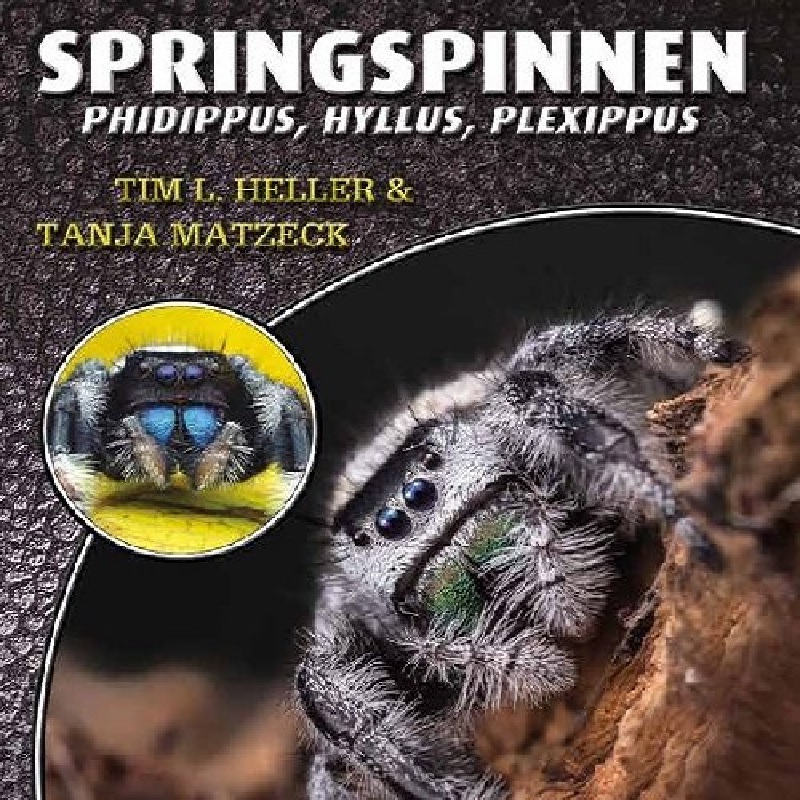
Book Jumping Spiders -
Phidippus, Hyllus & Plexippus
A guide to keeping jumping spiders of the genera Phidippus, Hyllus & Plexippus. Who can resist the charm of jumping spiders? The childlike appearance of their expressive face simply leaves no one cold! In addition, their behavior is extremely exciting to observe, their colors are bright and their requirements for species-appropriate keeping are very easy to meet. No wonder these likeable jumpers are all the rage!
This volume in the "Species by Species" series describes in detail what to look out for when buying and keeping them, introduces the most commonly kept species and color forms and provides plenty of tips on how to keep them successfully - so you can be sure they will breed well!
Species by Species introduces you to the books in this series, which present the most popular terrarium animals. Each volume offers you detailed, practical care instructions and all the information you need to successfully breed your animals.
All important questions from the required tank size to terrarium set-up, technical equipment, species-appropriate nutrition and disease prevention are answered with numerous tricks and tips.
Experienced, long-standing breeders reveal how you can encourage the animals to reproduce and raise healthy young.
All this in full color, generously illustrated and attractively designed - just about your terrarium animal - species by species
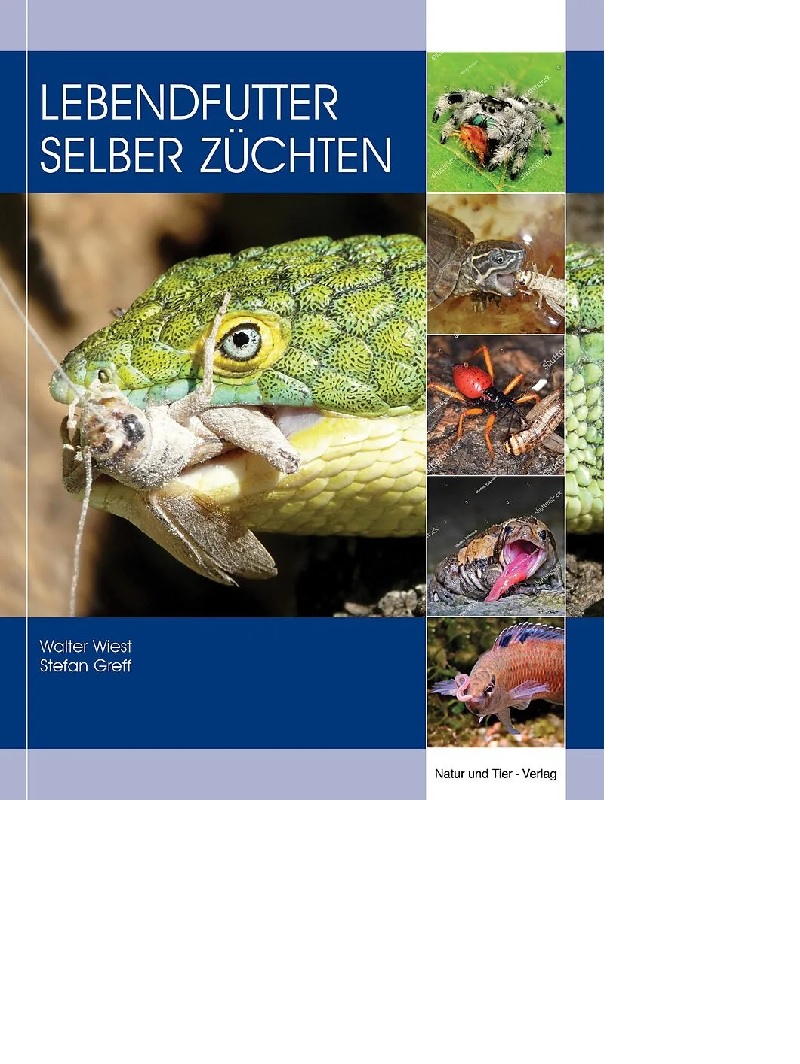
Book "Grow your own live food" - The perfect guide for pet owners
Discover practical and detailed instructions on how you can easily breed food for your reptiles, birds, fish or other animals yourself in the book "Breeding live food yourself". With valuable tips on various food insects, their care and breeding, you can save money and ensure a species-appropriate diet for your pets.
Contents of the book:
Step-by-step instructions for breeding feeder insects
Information on the best types of food for reptiles, birds and fish
Care instructions and breeding conditions for various live food species
Tips for sustainable and cost-effective food production
Why breed your own live food?
Get healthy, fresh food for your animals
Save money and reduce dependence on pet shops
Promote the health and well-being of your animals with species-appropriate food
Whether you are a beginner or an experienced pet owner, this book provides you with everything you need to successfully breed live food yourself.
Marginata 69 - New Guinea tortoises – the genus ElseyaCover storyThe unrecognised beauties: New Guinea tortoises (Andreas S. Hennig)My experiences with Branderhorst's New Guinea tortoise, Elseya (Elseya) branderhorsti (Ouwens, 1914) (Andreas S. Hennig)Keeping and breeding of Rhodin's New Guinea tortoise, Elseya (Hanwarachelys) rhodini Thomson, Amepou, Anamiato & Georges, 2015 (Andreas S. Hennig)PortraitGeoemyda spengleri, Chinese serrated tortoise (Andreas S. Hennig)ReportageMacrochelys temminckii – Experiences and impressions with vulture tortoises part 2 (Reiner Praschag)KeepingAn alternative to year-round keeping of the Egyptian tortoise in the terrarium – my experiences with seasonal outdoor keeping of Testudo kleinmanni (Ricarda Schramm)EtymologySawbacks and living maps part 4: Graptemys gibbonsi, Pascagoula humpback tortoise (Holger Vetter)Classifieds & animal placement
Terraria 55 - Snakes that eat invertebrates
Túngara frogEast Madagascar
Contents:
Cover story: It works without mice: Snakes that eat invertebrates
Most snakes in terraria have to be fed on rodents. However, there are a whole range of often lesser known but highly interesting species that exclusively eat invertebrates such as insects, snails and others. We present a selection of the most interesting representatives and discuss in detail the dwarf snakes of the genus Eirenis and the brown snakes of the genus Storeria. We also reveal how to breed slugs for feeding snail-eating snakes.
Territorial
HerpetoramaWorld's first reproduction of an endangered clawed frog species: Xenopus longipes
Species diversity on the display
Thorny devil: Kermit frog in Costa Rica
Cultural followers: The reign of the terror lizards
Pappochelys – a 240 million year old “turtle grandpa”
Poison dart frog: Death of a turtle breeder
Cover storySnakes that eat invertebratesKriton Kunz
Terraristic remarks on the snakes of the genus StoreriaFrank Täufer
Habitat and terrarium observations on dwarf snakes of the genus Eirenis from south-west SyriaHans Esterbauer
Collect and breed slugsHerbert Stern
PanoramaDiary of a trip to eastern Madagascar. Visiting the Marojejy National Park and the Betampona Nature ReservePeter Baert
Research
New speciesNew moccasin snakes in North AmericaAxel Kwet
Among researchersHerpetology in theory and practice
A journey to the Caribbean north of ColombiaClaudia Koch
Salamandra
TerraristicsFoam maker and top model. Exciting things surrounding the Túngara frog.Part 1: Behaviour and bioacousticsKriton Kunz
Bibliography
Ophiophagy in snakes in terrariaDieter Schmidt
Nature and species protection
Field notesGrass snakes hunting newtsRudolf Malkmus
Common toad clings to common carpJörn Krütgen
Children's page on the reptile of the year: The European pond turtle
The snake plagueAxel Hilger & Axel Kwet
Amphibian action plan for northwest BrazilMirco Solé
Also in your areaSubscription & ServicePreview
Incubator No gecko at allRolf Leptien
Reptilia 118 - MoreliaMadagascarHumpback turtlesProfessional reptile breeding Contents:Cover story: Morelia - tree python, diamond python & Co.Everyone knows the green tree python. The animals are admired for their colouring and their favourite position, curling up over a branch, almost symbolises our idea of a tree-dwelling snake. This species has been successfully kept and bred in terrariums for a long time. However, the other pythons of the Morelia genus are also very popular. We offer an overview of these exceptionally beautiful giant snakes, describe new ways of setting up a terrarium for Morelia viridis in a naturalistic way and look at the keeping and breeding of a species that is still little known, the python with a scaly scales, Morelia carinata.EditorialMAGAZINEDATESWESTERN HERP PERSPECTIVESThe fate of books part 2B. LovePhoto storyPython beauties from the other side of the world: Morelia, the tree and diamond pythonsM. MenseKeeping and breedingKeeping a green tree python in a naturally designed large terrariumR. StallingerKeeping and breedingMorelia carinata – The Python with a Difference!O. JugReportageRare exhibition animal: Morelia bredli at Frankfurt ZooD. RösselKeeping and breedingHumpback turtles – The genus GraptemysM. RognerKeeping and breedingProfessional breeding of terrarium animals for the pet tradeSimone P. ReportageUnder the spell of the big telescopic eyes: jumping spiders on the lookoutU. & J. SchimmelpfennigAnimals of our homelandThe sand lizardR. LeptienSERVICELIBRARYALSO NEAR YOUJourneySearching for reptiles in MadagascarC. SchneiderPREVIEWBRUTKASTEN Why do pigeons of all things have to be the symbol of peace?H. Werning
Reptilia 02 - Day geckosChameleo caylptratusAxolotlSnakes in Greek mythologyContents:Page 2 - EditorialPage 3 - Letters to the editor and discussionPage 7 - MagazinePage 17 - Photo report: Phelsuma, by J. KrügerPage 23 - Keeping and reproduction: Phelsuma standingi, by G. HallmannPage 26 - Report: Phelsuma and species conservation: The Round Island project, by G. HallmannPage 29 - Herpetofauna: Diurnal geckos, by Dr M. MeyerPage 33 - Travelogue: Baja California Part 2: The island world in the Gulf of California, by H. WerningPage 39 - Portrait and poster: Anolis marmoratus marmoratus, by M. SchmidtPage 43 - Keeping and breeding: Axolotl, by J. WistubaPage 47 - Terraristics: Sex determination in reptiles, by Dr M. Bachs TabernerPage 47 - Terraristics: Sexual dimorphism in African spurred tortoises, by A. Romairone / I. Iglesias IzquierdoPage 53 - Herpetofauna: Horned frogs, by M. BatllePage 56 - Herpetology and culture: Mythology: The snakes of Olympus, by L. B. Carissimi-PrioriPage 61 - Keeping and reproduction: Chamaeleo calyptratus, by W. SchmidtPage 69 - Veterinary medicine: Internal parasites in reptiles and amphibians, by Dr C. López del CastilloPage 73 - LibraryPage 75 - Advice and actionPage 80 - Incubator: Glossary by H. Werning
All about keeping water turtles
128 Seiten
116 Farbfotos
Format: 16,8 x 21,8 cm
Autor Andreas S. Hennig
Inhalt:
Der erfahrene Terrarianer Andreas S. Hennig gibt in diesem neuen Ratgeber eine umfassende Einführung in die Haltung von Wasserschildkröten.Er stellt Biologie, Pflege- und Nachzuchtbedingungen der beliebten urtümlichen Tiere ausführlich und praxisnah vor und zeigt auf, worauf man für eine erfolgreiche Haltung und Vermehrung von Anfang an achten muss und wie man Probleme erst gar nicht aufkommen lässt.Kompakte Information, bestechende Bilder - ein Muss für alle Schildkrötenfans!
Draco 11 - Day geckos
Contents:
2 Editorial
4 day geckos of the genus PhelsumaJens Krüger
20 A terrarium for PhelumenHartmut Lipp
27 On the diet of day geckos of the genus Phelsuma Gerhard Hallmann
30 Group keeping and socialisation of PhelsumaHartmut Lipp
38 Phelsuma berghofi Krüger, 1996Biology, care and reproductionHand Peter Berghof
43 Experiences in the care and breeding of Phelsuma hielscheri Rösler, Obst & Seipp, 2001 from Isalo National Park Hans Peter Berhof & Roland Gebhard
47 On the keeping and breeding of Phelsuma inexpectata Mertens, 1966Oliver Pürkel
51 Taxonomy, care and breeding of the subspecies of Phelsuma lineata Hartmut Lipp
58 Selective colour breeding in Phelsuma madagascariensis grandis Rudolf Gerhardt
61 It doesn’t always have to be green – the less colourful representatives of the genus Phelsuma Hand Peter Berghof
68 Phelsums on Mauritius – A situation study Holger Schneider
77 To Madagascar – For the sake of day geckos Klaus Liebel & Wolfgang Schmidt
85 Book box
91 Magazine
Terraria 24 - Breeding lizards successfully
Breeding of the spotted turtle Snake fauna of the Pantanal
Contents:
In an extensive, excellently researched article, our regular author Uwe Schlüter uses the example of lizards to illustrate the effects of incubation conditions on lizard eggs and the young animals developing in them. A highly interesting topic for all lizard breeders! TERRARIA editor Mike Zawadzki has been involved for many years in the keeping and breeding of pityusic and Balearic lizards; in this issue, he presents his exciting results. Werner and Yvonne Lantermann present their experiences with rearing young pearl lizards.
EditorialMike Zawadzki
Magazine Fire at Instituto Butantan – largest collection of venomous snakes in the world destroyedMarkus Monzel
Legal: Infection of a healthy animal stock by purchased sick animalsDietrich Rössel
Legal: Disturbing animals in the rented flatDietrich Rössel
Calling tadpoles detected for the first timeAlexander Gutsche
Marketplace:Exclusive condominium from 2000,- Euro
Vietnamese geckos of the genus GekkoMirko Barts
TERRAglobal In the forest Maik Dobiey
Cover topic: Breeding lizards successfully Influence of environmental factors on lizard eggs and hatchlings Uwe Schlüter
Keeping and breeding pityusic and Balearic lizards Mike Zawadzki
Notes on the breeding and rearing of young pearl lizards (Timon lepidus)Werner & Yvonne Lantermann
New Zealand stick insects in Cornwall, England – an example of established neozoaHans-Jürgen Luef
Travel The snake fauna of Pouso Alegre – a herpetological highlight in the Pantanal Martin Hallmen, Luiz Vincente Campos & Christine Strüssmann
Spotted jokers. The spotted turtles (Clemmys guttata) of the Cape Cod Peninsula Leo Spinner
The Agusan Valley in Mindanao, Philippines Maren Gaulke
New species Two spectacular monitors from the Philippines and Indonesia Axel Kwet
Among researchers Field research between unicorns and dragons – the amphibians and reptiles of the Cat Tien National Park in South Vietnam Peter Geißler
Eye-catcher Nano terraristics at its finest Kriton Kunz
Near youSubscription & ServicePreview
Incubator 80 mosquitoes for one frog. Part 2 Heiko Werning
All about the fat-fingered geckos by Mirko Barts
61 pages
14.8 x 21 cm
45 colour photos
2nd edition
Author Mirko Barts
Publisher NTV
Contents:
Fat-fingered geckos have been on the rise for years. Their attractive appearance, their endearing nature and the low demands they place on keeping in the terrarium have quickly boosted their popularity. The experienced and successful terrarium keeper Mirko Barts covers in this book of the “Species by Species” series the species-appropriate keeping and care of fat-fingered geckos in every detail, from correct housing to healthy feeding. And of course, this guide also tells you how to breed your geckos, incubate the eggs and raise the tiny young.
Systematics and body structure
The fascinating biology: From the life of the fat-fingered geckos
All information on species-appropriate keeping: from suitable terrarium to equipment and technology to feeding
Successful breeding: Mating stimulation, incubation of the eggs and raising the young
Problem solving: How to avoid the most common mistakes in care and how to help sick animals
Brilliant photos
The dwarf bearded dragon (Pogona henrylawsoni)
Area of origin:
The origin of the dwarf bearded dragon (Pogona henrylawsoni) is Australia.
Habitat:
The bearded dragon can be found in semi-deserts, steppes and tree steppes. The bearded dragon is actually quite common in its natural habitat. The bearded dragon likes to live alone. However, its territory in the wild is close to other members of the same species. The males occupy a territory that covers several square metres. They sit and nap frequently. They also like to stay in populated and agricultural areas.
The matching camouflage colouring and the spiny scales help the contours of the bearded dragons to disappear in their surroundings.
Care:
Temperature and humidity are very important when keeping dwarf bearded dragons. The average temperature during the day is 35 °C, at night it may cool down to 20 °C. However, the bearded dragon should have different temperature zones that you can switch between. Stones illuminated by a lamp provide a basking spot. Wood and roots are very attractive and provide the dwarf bearded dragons with the necessary climbing opportunities and sleeping places. It is always important to observe the distance between the lamps and the furniture when setting up the enclosure, as bearded dragons are animals that are alternately warm and cold, they usually realise too late if they are already burnt.The humidity should be between 30 % and 40 % during the day and between 50 % and 60 % at night.
Dwarf bearded dragons should be given the opportunity to dig. A thick layer of clay and sand is therefore a suitable substrate.
The terrarium should be at least 120 cm x 60 cm x 8 cm for two animals.
Food:
Bearded dragons are so-called omnivores. They need fresh green food as well as insects. You have to be very careful with too many insects, as this unfortunately leads to them becoming overweight. The older the bearded dragon gets, the more they become vegetarians and sometimes refuse to eat insects altogether.
Feeding example:MO: courgette, chicory, chives, carrot, hay, Golliwoog food plantMI: Endive, daisies, dandelion, hay and two insects (crickets, desert locusts or zophobas etc.)FR: Pumpkin, rocket, hazelnut leaves, hay, Golliwoog food plantSO: chicory, dandelion, desert locusts, Argentine cockroaches, hay
When feeding green food, care must be taken to ensure that it is not too wet and is cut into bite-sized pieces, as bearded dragons do not often have access to juicy greenery in the wild. Hay is well tolerated as it is dried.If diarrhoea occurs, more hay can be added to the food, it usually disappears after a week, otherwise a vet who is familiar with reptiles should be consulted.
Terra FanPrevents stuffy stagnant air and provides air circulation throughout the terrariumThe fan pulls the old air out with a transformer and with two fans, it gives new air in. This cycle provides optimal air circulation and prevents fogged windows. The fans are essential for animals such as chameleons that need good ventilation.Prevents fogged windows due to stuffy airProvides optimal air circulation
CHF 43.90
❅
❆
❅
❆
❅
❆
❅
❆
❅
❆
❅
❆
This website uses cookies to ensure the best experience possible. More information...