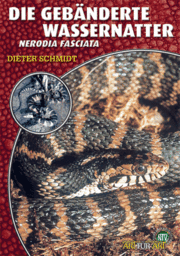
The banded water snake

Article no: 978-3-937285-23-8

CHF 18.50

Stock: 0

Ready for dispatch in 1-3 days, delivery time 14 working days

Delivery between Tuesday, 14 July and Wednesday, 15 July
Zahlungsarten
Product information "The banded water snake"

All about the banded water snake from Dieter Schmidt

  • 64 pages
  • 14.8 x 21 cm
  • numerous color photos
  • Author Dieter Schmidt

Content:

Watermans have always been one of the most popular terrariums. The Wassernatter, the water-racketeer, shows all the advantages of being a friend of the serpent of his caregiver. It is attractively drawn, easily satisfied with fish as food, is not too large, and has a tempered temperament.
Dieter Schmidt, the experienced snake expert, will give you a wealth of experience in this guidebook and explain everything you need to know about the successful keeping and care of this popular species. The author goes into the multiplication of the animals and the rearing of the young - so you will soon be able to celebrate such successes.

  • Systematics and physique
  • The fascinating biology: From the life of the Banded Watercats
  • All information on species-appropriate husbandry: From the appropriate terrarium to equipment and technology to feeding
  • Successfully reproducing: mating stimulation and rearing of the young animals
  • Troubleshooting: How to avoid the most common mistakes in care, and how to help sick
  • animals
  • Brilliant photos
Composition
Feeding recommendation
Technical details
Size information

0 of 0 reviews

Give us a rating!

Share your experience with the product with other customers.


Suggested products

Handbook of food plants for tortoises and other reptiles
Handbook of forage plants 2nd revised editionMarion Minch is not only a successful breeder of diverse tortoises for many years, but also an excellent connoisseur of native wild herbs. She founded and runs samenkiste.de, which is well known to many tortoise keepers and nature lovers. Her name is inextricably linked with reptile care and species-appropriate nutrition for tortoises. Her handbook of food plants summarises the most important native food plants for herbivorous and omnivorous reptiles. She not only considers tortoises, but also iguanas, spiny-tailed dragons and even chameleons. From the basics of plant biology to native wild herbs to suitable food plants for hardy tropical reptile species, this comprehensive work provides the basis for species-appropriate keeping. In the expanded and supplemented 2nd edition, the plant section is divided according to flower colour. This makes it even easier to identify wild herbs. The work has also been supplemented with a wealth of additional information and many pictures.

CHF 46.50

Geckos
Geckos in the terrarium by Astrid FalkThe book offers a comprehensive introduction to geckos and their species-appropriate keeping in terrariums. It explains what you need to think about before buying a gecko and what preparations should be made. The book describes in detail how the terrarium is technically equipped and set up. The care of the animals, their special features and behaviour, their diet, reproduction and rearing of young animals are described, as well as diseases and husbandry problems with tried and tested suggestions for prevention and treatment. Individual gecko species that are particularly suitable for keeping and breeding in terrariums are portrayed in detail in the second part of the book.

CHF 28.50

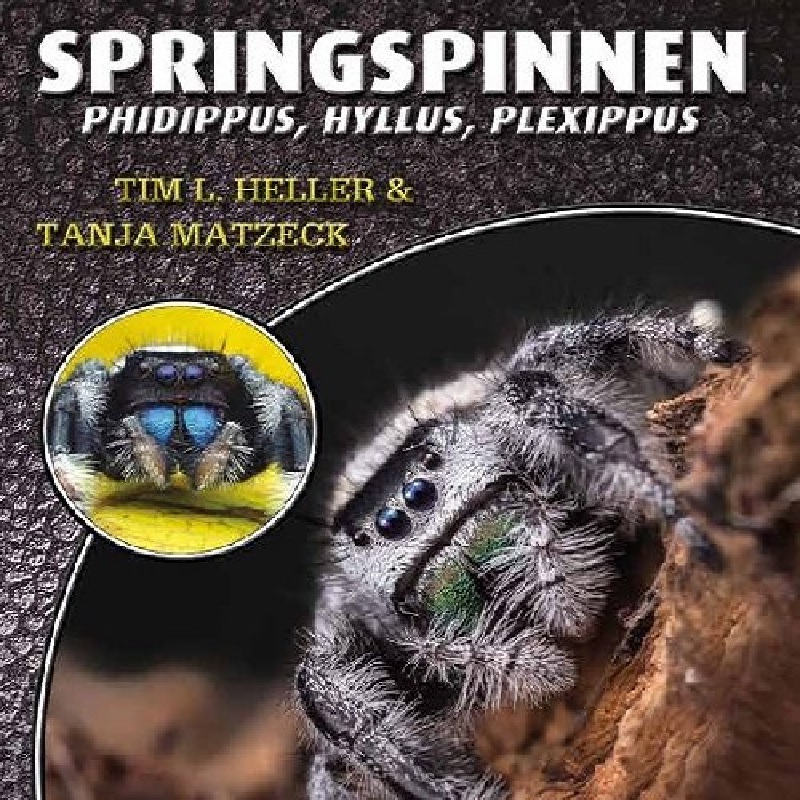
Jumping spiders Phidippus, Hyllus, Plexippus
Book Jumping Spiders - Phidippus, Hyllus & Plexippus A guide to keeping jumping spiders of the genera Phidippus, Hyllus & Plexippus. Who can resist the charm of jumping spiders? The childlike appearance of their expressive face simply leaves no one cold! In addition, their behavior is extremely exciting to observe, their colors are bright and their requirements for species-appropriate keeping are very easy to meet. No wonder these likeable jumpers are all the rage! This volume in the "Species by Species" series describes in detail what to look out for when buying and keeping them, introduces the most commonly kept species and color forms and provides plenty of tips on how to keep them successfully - so you can be sure they will breed well! Species by Species introduces you to the books in this series, which present the most popular terrarium animals. Each volume offers you detailed, practical care instructions and all the information you need to successfully breed your animals. All important questions from the required tank size to terrarium set-up, technical equipment, species-appropriate nutrition and disease prevention are answered with numerous tricks and tips. Experienced, long-standing breeders reveal how you can encourage the animals to reproduce and raise healthy young. All this in full color, generously illustrated and attractively designed - just about your terrarium animal - species by species

CHF 23.90

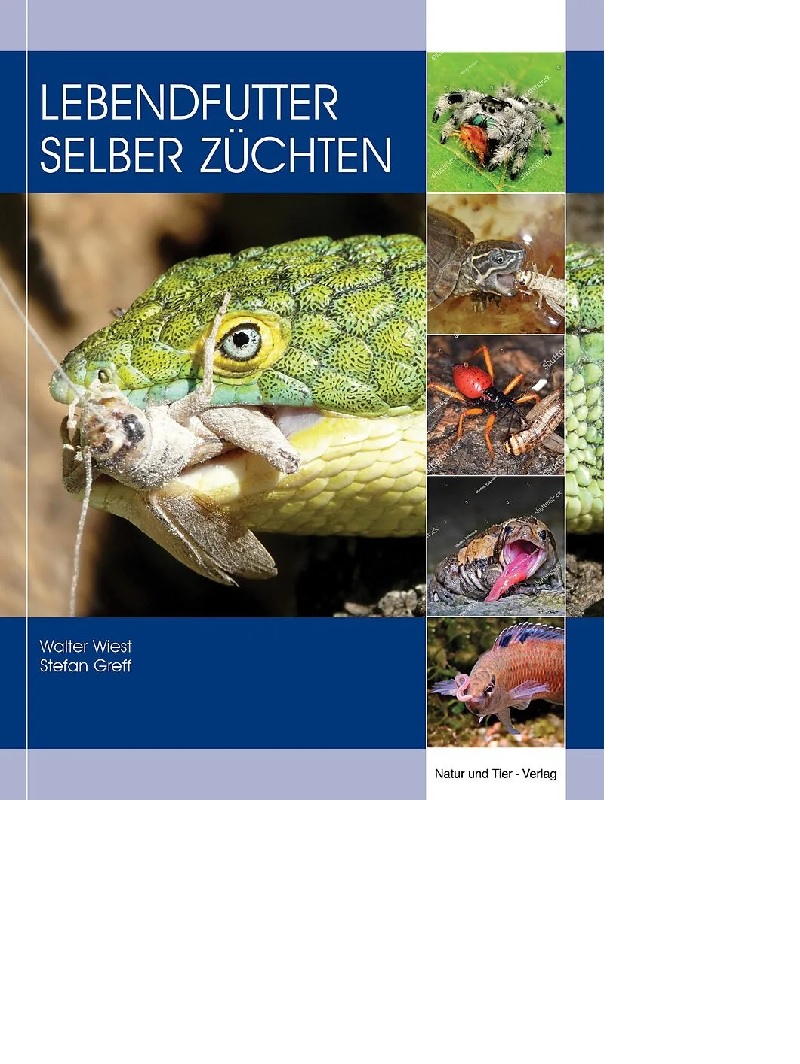
Book Breeding live food yourself
Book "Grow your own live food" - The perfect guide for pet owners Discover practical and detailed instructions on how you can easily breed food for your reptiles, birds, fish or other animals yourself in the book "Breeding live food yourself". With valuable tips on various food insects, their care and breeding, you can save money and ensure a species-appropriate diet for your pets. Contents of the book: Step-by-step instructions for breeding feeder insects Information on the best types of food for reptiles, birds and fish Care instructions and breeding conditions for various live food species Tips for sustainable and cost-effective food production Why breed your own live food? Get healthy, fresh food for your animals Save money and reduce dependence on pet shops Promote the health and well-being of your animals with species-appropriate food Whether you are a beginner or an experienced pet owner, this book provides you with everything you need to successfully breed live food yourself.

CHF 46.50

Marginata 69 - New Guinea tortoises
Marginata 69 - New Guinea tortoises – the genus ElseyaCover storyThe unrecognised beauties: New Guinea tortoises (Andreas S. Hennig)My experiences with Branderhorst's New Guinea tortoise, Elseya (Elseya) branderhorsti (Ouwens, 1914) (Andreas S. Hennig)Keeping and breeding of Rhodin's New Guinea tortoise, Elseya (Hanwarachelys) rhodini Thomson, Amepou, Anamiato & Georges, 2015 (Andreas S. Hennig)PortraitGeoemyda spengleri, Chinese serrated tortoise (Andreas S. Hennig)ReportageMacrochelys temminckii – Experiences and impressions with vulture tortoises part 2 (Reiner Praschag)KeepingAn alternative to year-round keeping of the Egyptian tortoise in the terrarium – my experiences with seasonal outdoor keeping of Testudo kleinmanni (Ricarda Schramm)EtymologySawbacks and living maps part 4: Graptemys gibbonsi, Pascagoula humpback tortoise (Holger Vetter)Classifieds & animal placement

CHF 16.50

The bearded dragon
All about bearded dragons by Peter Maria Müller 168 pages 155 colour photos, maps, tables, drawings Hardcover Format: 17.5 x 23.2 Author Peter Maria Müller Publisher NTV Contents: Hardly any other reptile is as popular with terrarium keepers as the bearded dragon Pogona vitticeps. It owes its success in the terrarium hobby not least to its interesting appearance, exciting behaviour and its calm and very trusting nature. Its husbandry requirements are easy to fulfil, and so it is bred by the thousands every year, making it easy to obtain and also ideal as a terrarium animal for beginners.Their close relatives such as the black-earth bearded dragon (Pogona henrylawsoni) or – although much rarer – Mitchell's bearded dragon (Pogona mitchelli) are also becoming increasingly popular.Peter Maria Müller, himself an experienced breeder of bearded dragons, gives you a detailed introduction to all representatives of the genus and their habitats. An identification key helps, you to differentiate between the individual species. In addition, all important aspects of keeping bearded dragons are explained in a comprehensive and easy-to-understand manner, such as decision-making aids before buying, handling the animals, sex determination, species-appropriate care and nutrition, possible diseases and, finally, successful breeding. Over 150 brilliant colour photos bring you closer to the world of bearded dragons and show the fascination of these popular lizards.

CHF 21.90

Draco 60 - The reptiles of Europe
Draco 60 - The reptiles of Europe Contents: EditorialReptiles in Europe – a current overview Axel Kwet & Benny TrappThe Spanish reptile fauna Axel Kwet & Benny Trapp The vipers of EuropeAxel Kwet & Benny TrappReptiles of the Greek Aegean IslandsAxel Kwet & Benny TrappIberian mountain lizards and Spanish wall lizards – two evolutionary-biological model cases Axel Kwet & Benny TrappList of the reptiles of EuropeAxel Kwet & Benny Trapp

CHF 32.00

Terraria No. 26 - Snakes of South America
Terraria No. 26 - Snakes of South America Peru-BuntleguanTheloderma leporosum > Inhalt: Südamerika ist Heimat einer überwältigenden Vielfalt an Schlangen. Einige davon zählen zu den begehrtesten, aber auch geheimnisvollsten Terrarienpfleglingen überhaupt, allen voran die Grünen Hundskopfschlinger der Gattung Corallus. Über sie berichtet einer der profiliertesten Züchter dieser faszinierenden Tiere, Harald Quirmbach. Weitere Einblicke in die reiche Schlangenfauna des Kontinents bietet Experte Christian Neumann, und TERRARIA-Redakteur Kriton Kunz porträtiert die Gattung Xenodon, zu der mit der bis vor kurzem als Lystrophis pulcher geführten Südamerikanischen Hakennasennatter einer der aktuellen Shootingstars der Terraristik gehört. EditorialMagazinGondwanaland – ein zukunftsweisendes Projekt im Zoo Leipzig. Teil 2: Bepflanzung und BaufortschritAndreas S. Hennig Neue Taxonomie für Gefleckte WalzenskinkeUwe Schlüter 15 Jahre HammKritón Kunz Erstimport des Pazifischen Schmuckhornfroschs, Ceratophrys stolzmanniKriton Kunz Rechtliches, Fehlende Sachkunde: Gewerbsmäßige Zucht und Handel mit Tieren können untersagt werden!Dietrich Rössel Mäuse-Bombardement gegen Braune NachtbaumnatterKriton Kunz „Most Wanted“ – die Suche nach 100 verschwundenen AmphibienartenAxel Kwet TERRAglobalIm Zauberwald der Anden Maik Dobiey TitelthemaVon Froschfressern und Schlangenjägern – Biogeografie und Anpassung südamerikanischer Schlangen Christian Neumann Die Königinnen Südamerikas: Corallus batesii und Corallus caninus Harald Quirmbach Südamerikanische Hakennasennattern und ihre Verwandten Kriton Kunz Erstnachzucht des Moosfroschs Theloderma leporosum Alexei A. Evsyunin, Sergei A. Ryabov & Kriton Kunz Der Peruanische Buntleguan, Polychrus peruvianus (Noble, 1924) Uwe Schlüter Zoropsis spinimana im Terrarium Reinhard Hübers Reise Die Herpetofauna auf Samos – außergewöhnliche Artenvielfalt auf einer InselHans-Jürgen Luef Neue ArtenWinzling in KannenpflanzenAxel Kwet Neue Blindschleichen in EuropaAxel Kwet Unter Forschern Herpetologie im Untergrund: globale Feldforschungen an Blindwühlen Alexander Kupfer Blickfang Von Halbaffen, Pfeilgiftfröschen und Geckos. Zu Gast bei Ute Thut und Dennis Peukert Teil 2Michael Wirth In Ihrer NäheAbo & ServiceVorschau Brutkasten Nächte mit Charlene Ludger Hogeback

CHF 12.00

Terraria 54 - Mosses, ferns and further spore plants in the terrarium
Terraria 54 - Mosses, ferns and other spore plants in the terrariumEuropean pond turtleTasmaniaContents:Cover story: Mosses, ferns and other spore plants in the terrariumIn 1892, the English physician Dr N.B. Ward realised that ferns could be cultivated in closed glass containers. This gave rise to Victorian plant display cases planted with ferns and mosses - the forerunners of today's terrariums. However, mosses, ferns and other spore plants are more than just decorative accessories in humid terrariums. Their reproduction by means of alternation of generations, which can also be observed in the terrarium, is particularly interesting. In addition to many interesting aspects of spore plants, the next issue will also contain numerous tips and tricks on how these plants can thrive in the terrarium and how they can best be kept together with reptiles and amphibians.ContentsTerritorialHerpetoramaNew study by the Federal Agency for Nature Conservation: What really jeopardises biodiversity in Germany LookupThorn Devil: The Variable Rain FrogCultural successors: tortoises in ViennaWhat did the first snakes look like?Leafhoppers: In the NewsCover storyWitnesses of the dinosaur era - about terrarium plants with generational changeBeat AkeretMosses - unrecognised dwarfs among terrarium plantsBeat AkeretEpiphytic ferns in the terrariumBeat AkeretNeither moss nor fern. Lycopodiopsida as terrarium plantsBeat AkeretPanoramaTiger otters: an invitation to get to know the reptiles of Tasmania Guillaume GomardResearchNew speciesIn wild Kurdistan - a spectacular large monitor lizard from the Zagros MountainsAxel KwetAmong researchersThe miracle black toad, one of the rarest amphibian species in the worldLuis Fernando Marin da FonteSalamandraTerraristicsMany years of experience in keeping and breeding the European pond turtle. Part 2: Egg laying, incubation, rearing the young, hibernation, husbandry problemsBernd WolffFirst herpetological assistance from Cologne at Saigon ZooThomas Ziegler & Anna RauhausNature and species conservationField notesLate finds of yellow-bellied toad and natterjack toad larvaeJürgen GebhartMysterious deaths of frogs and newtsAxel KwetAlso in your neighbourhoodSubscription & ServicePreviewIncubator The danger seekersHeiko Werning 

CHF 12.00

Reptilia 117 - Amphibian Rarities
Reptilia 117 - Amphibian raritiesFlooridaNight lizardIberian adderContents: Cover story: Amphibian raritiesIn all amphibian groups there are species which, for various reasons, are not kept as frequently in terrariums as fire salamanders, dyer frogs etc.: some species are only imported rarely and in small numbers, some have no lobby, others are highly sought after but not easy to breed.In the cover story of this issue of REPTILIA, we present such rarities in detail - with captivating photos and detailed reports on extremely pleasing breeding successes. We also visit a project in South America in which species sought after by terrarists are selectively propagated - and which simultaneously promotes science, nature conservation and environmental education.EditorialMAGAZINEDATES WESTERN HERP PERSPECTIVESThe fate of books, part 1B. LovePhoto storyAmphibian raritiesK. KunzKeeping and breedingCharming little fellows: Keeping and breeding Riobamba pouched frogs (Gastrotheca riobambae)D. SchmidtKeeping and breedingBreeding a Ryabov’s Phantom Moss Frog (Theloderma ryabovi) in a terrariumE. RyboltovskyReportageSustainable marketing of frogs for terraristics in EcuadorS. CondeKeeping and breedingKeeping and breeding the Iberian viper (Vipera seoanei)A. SchmidServicesKeeping and breedingCare and breeding of the night lizard Lepidophyma smithiG. KöhlerReportageTuataras. The living fossils of New ZealandO. DrewesAlso in your neighbourhoodJourneyThe great trek. Part 1: Melting Pot South FloridaH. WerningPreviewIncubatorNobody warns you about this before you have childrenH. Werning

CHF 12.00

Reptilia 62 - Gopher tortoises
Reptilia 62 - Gopher tortoises Giant crab spiderAgalychnis moreletiiAmeives Contents: 2 EDITORIAL 3 MAGAZINE 16 DATES 18 WESTERN HERP PERSPECTIVESHerp Art - a sign of maturityBy B. Love 20 PHOTO REPORTAGEThe tortoises of North AmericaAn overview of the genus GopherusBy S. Winchell 28 HERPETOFAUNAGopherus flavomarginatus, the Mexican gopher tortoiseBy R. Gonzáles Trápaga & G. Aguirre León 35 HERPETOFAUNAThe gopher tortoise (Gopherus polyphemus) – a civil engineerBy H. R. Mushinsky & E. D. McCoy 41 REPORTAGEScrew trees (Pandanaceae) as microhabitats for reptiles and amphibians in MadagascarBy P.-S. Gehring 43 TRAVELHerpetological excursion to YbbstalBy S. Fallend 51 PORTRAIT AND POSTERRhacophorus pardalisBy M. Gaulke 56 PRACTICEThe diet of ameives and monitor tegus inthe wild and in captivityBy U. Schlüter 63 KEEPING AND BREEDINGKeeping and breeding of Morelet’s leaffrog, Agalychnis moreletii (Duméril, 1853)By T. Eisenberg 72 PRACTICE North American aquatic turtles in the outdoor terrarium Part 3: Description of an outdoor enclosure for the seasonal keeping of North American aquatic turtlesBy A. S. Hennig & D. Symanski 76 KEEPING AND BREEDINGEight-eyed hunters of the nightBrief remarks on the keeping and breeding of Heteropoda venatoria and Holconia sp.By K. Kunz 86 FAQ - FREQUENTLY ASKED QUESTIONSQuestions about purchasing and keeping snakesBy D. Schmidt 92 TERRARIUM EXHIBITSParque "Reptilandia" near Dominical, Costa RicaBy T. Eisenberg 95 LIBRARY 104 INCUBATORHigh mountain hallucinationsBy H. Werning

CHF 11.20

Marginata No. 31 - Moorish pond turtles in Morocco
Marginata No. 31 - Moorish pond turtles in Morocco Zucht der Madagassischen Strahlenschildkröte, Teil 3Zucht von Kinosternon cruentatumSchildkröten im Unterricht Inhalt: EditorialMagazinTermineREPORTAGEDie Maurische Bachschildkröte, Mauremys leprosa (Schweiger, 1812) in MarokkoMario SchweigerHALTUNG UND NACHZUCHTWiederholte Nachzucht der Madagassischen Strahlenschildkröte (Astrochelys radiata) im Zoo RotterdamHenk ZwartepoortePOSTER Die Namibische Bushmanland-Zeltschildkröte, Psammobates tentorius verroxi Hans - Dieter PhilippenHALTUNG UND ZUCHTHaltung und Nachzucht der Madagassischen Strahlenschildkröte Teil 3Michael Wirth und Peter FritzHALTUNG UND ZUCHT Pflege und Vermehrung der Rotwangen-Klappschildkröte, Kinosternon scorpioides cruentatumSebastian NicklREPORTAGEZeitgemäßer Umgang mit „Problemschildkröten“ – Verwahrung, Euthanasie oder gar Nutzung zur Arterhaltung?Tobias Friz, Markus Baur & Rudolf W. HoffmannREPORTAGEBilder einer Ausstellung – Schildkröten einmal anders. Ungewöhnliche Ausstellung im HochharzHans - Dieter PhilippenBuchtippKleinanzeigenAbo & ServiceRegionalführer  

CHF 16.50