Terraria 07 - South American tortoises

Article no: terraria7

CHF 11.20

Stock: 0

Ready for dispatch in 1-3 days, delivery time 7 working days

Delivery between Thursday, 3 December and Friday, 4 December
Zahlungsarten
Product information "Terraria 07 - South American tortoises"

Terraria 07 - South American tortoises

Contents:

  • 2 Editorial
    Kriton Kunz
    TITLE TOPIC
  • 4 • The tortoises of South America
    Hans - Dieter Philippen
  • 10 • Farming and protection of red-footed tortoises
    (Chelonoides carbonaria) in Venezuela
    Christian Neumann & Saúl Gutiérrez
  • 15 • Aspiration and Reality: On the naturalistic husbandry and breeding of the red-footed tortoise (Chelonoidis carbonaria)
    Christian Neumann
  • 22 • Experiences with the husbandry and breeding of the yellow-footed tortoise
    Lies Niessen
    SCIENCE
  • 27 Herpetorama
    Lizard taxonomy / spider venoms
  • 29 New species
    Elseya albagula / dendrobatids & Hypsiboas from Guyana / microteiids from Amazonia
  • 32 Among researchers
    Of snake skinks and other “herps” –
    Experiences during an internship semester on the Peloponnese
    Michael Stadler & Philipp Herrmann
  • 36 Snakes, dragons, crocodiles –
    on the trail of reptilian creatures in Mayan symbolism
    Kriton Kunz
  • 44 The venomous snakes of Kakamega Forest in Kenya
    Maik Dobiey
  • 54 Lifestyle, care and breeding of the giant Ameiva
    (Ameiva ameiva ameiva) from Guyana
    Uwe Schlüter
  • 63 Borneo crested lizards (Bronchocela cristatella) in the terrarium –
    difficult and delicate?
    Lutz Baedermann
    Journey
  • 68 In the mountain forests of Mount Kinabalu/Borneo. Part II
    Rudolf Malkmus
    TERRARIUM PRACTICE
  • 82 Test run
    Novel heater / thermostat with dimming
  • 84 Prelude
    Nutrition of Mediterranean tortoises
    Mats Blohm
  • 88 Eye-catcher
    A new enclosure for dyeing poison frogs
    Peter Janzen
  • 92 Also in your area
  • 95 TERRAnet
    Mediterranean tortoises / praying mantises
  • 97 TERRAglobal
    In the village of the queens
    Joachim Bulian
    Perils of a herpetologist
    Manuel Acevedo
  • 104 TERRAwinn
Composition
Feeding recommendation
Technical details
Size information

0 out of 0 reviews

Give us a rating!

Share your experience with the product with other customers.


Suggested products

Handbook of food plants for tortoises and other reptiles
Handbook of forage plants 2nd revised editionMarion Minch is not only a successful breeder of diverse tortoises for many years, but also an excellent connoisseur of native wild herbs. She founded and runs samenkiste.de, which is well known to many tortoise keepers and nature lovers. Her name is inextricably linked with reptile care and species-appropriate nutrition for tortoises. Her handbook of food plants summarises the most important native food plants for herbivorous and omnivorous reptiles. She not only considers tortoises, but also iguanas, spiny-tailed dragons and even chameleons. From the basics of plant biology to native wild herbs to suitable food plants for hardy tropical reptile species, this comprehensive work provides the basis for species-appropriate keeping. In the expanded and supplemented 2nd edition, the plant section is divided according to flower colour. This makes it even easier to identify wild herbs. The work has also been supplemented with a wealth of additional information and many pictures.

CHF 46.50

Geckos
Geckos in the terrarium by Astrid FalkThe book offers a comprehensive introduction to geckos and their species-appropriate keeping in terrariums. It explains what you need to think about before buying a gecko and what preparations should be made. The book describes in detail how the terrarium is technically equipped and set up. The care of the animals, their special features and behaviour, their diet, reproduction and rearing of young animals are described, as well as diseases and husbandry problems with tried and tested suggestions for prevention and treatment. Individual gecko species that are particularly suitable for keeping and breeding in terrariums are portrayed in detail in the second part of the book.

CHF 28.50

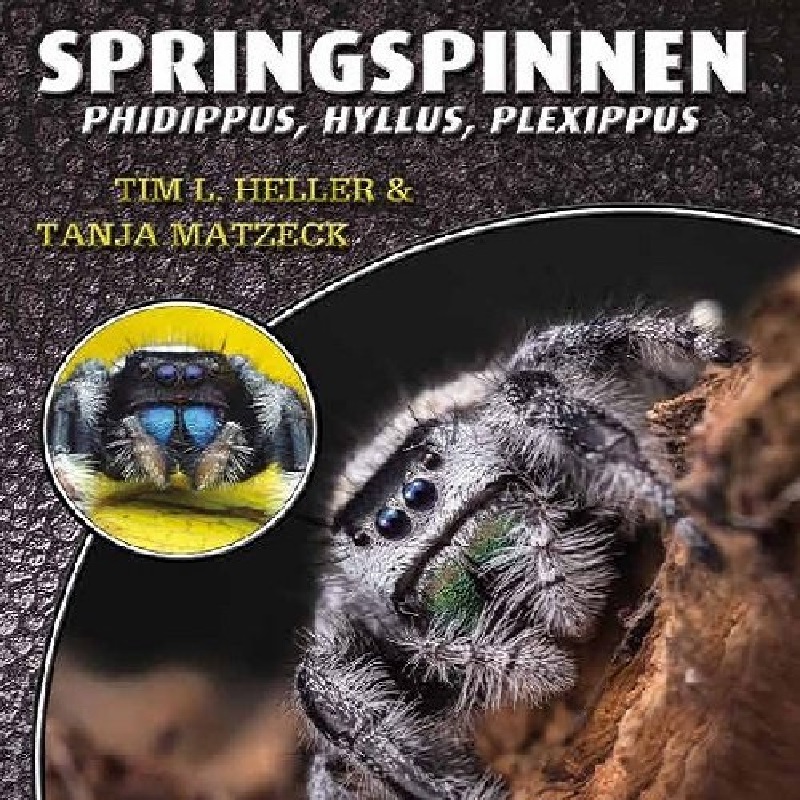
Jumping spiders Phidippus, Hyllus, Plexippus
Book Jumping Spiders - Phidippus, Hyllus & Plexippus A guide to keeping jumping spiders of the genera Phidippus, Hyllus & Plexippus. Who can resist the charm of jumping spiders? The childlike appearance of their expressive face simply leaves no one cold! In addition, their behavior is extremely exciting to observe, their colors are bright and their requirements for species-appropriate keeping are very easy to meet. No wonder these likeable jumpers are all the rage! This volume in the "Species by Species" series describes in detail what to look out for when buying and keeping them, introduces the most commonly kept species and color forms and provides plenty of tips on how to keep them successfully - so you can be sure they will breed well! Species by Species introduces you to the books in this series, which present the most popular terrarium animals. Each volume offers you detailed, practical care instructions and all the information you need to successfully breed your animals. All important questions from the required tank size to terrarium set-up, technical equipment, species-appropriate nutrition and disease prevention are answered with numerous tricks and tips. Experienced, long-standing breeders reveal how you can encourage the animals to reproduce and raise healthy young. All this in full color, generously illustrated and attractively designed - just about your terrarium animal - species by species

CHF 23.90

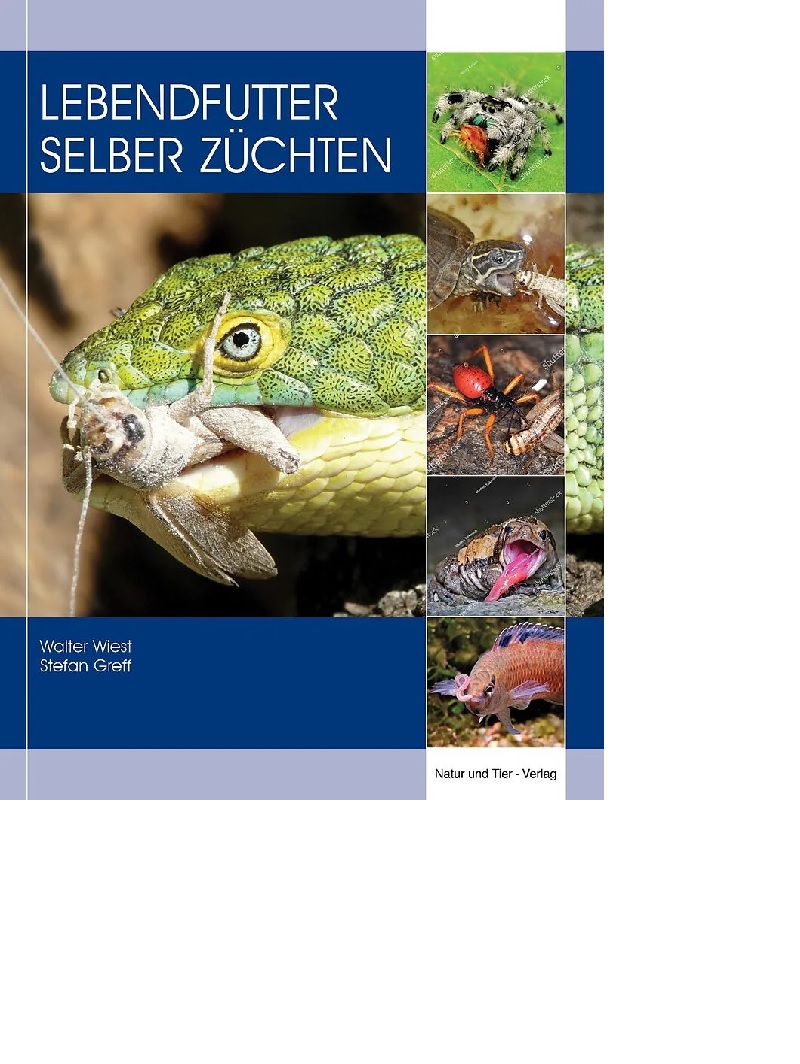
Book Breeding live food yourself
Book "Grow your own live food" - The perfect guide for pet owners Discover practical and detailed instructions on how you can easily breed food for your reptiles, birds, fish or other animals yourself in the book "Breeding live food yourself". With valuable tips on various food insects, their care and breeding, you can save money and ensure a species-appropriate diet for your pets. Contents of the book: Step-by-step instructions for breeding feeder insects Information on the best types of food for reptiles, birds and fish Care instructions and breeding conditions for various live food species Tips for sustainable and cost-effective food production Why breed your own live food? Get healthy, fresh food for your animals Save money and reduce dependence on pet shops Promote the health and well-being of your animals with species-appropriate food Whether you are a beginner or an experienced pet owner, this book provides you with everything you need to successfully breed live food yourself.

CHF 46.50

Marginata 69 - New Guinea tortoises
Marginata 69 - New Guinea tortoises – the genus ElseyaCover storyThe unrecognised beauties: New Guinea tortoises (Andreas S. Hennig)My experiences with Branderhorst's New Guinea tortoise, Elseya (Elseya) branderhorsti (Ouwens, 1914) (Andreas S. Hennig)Keeping and breeding of Rhodin's New Guinea tortoise, Elseya (Hanwarachelys) rhodini Thomson, Amepou, Anamiato & Georges, 2015 (Andreas S. Hennig)PortraitGeoemyda spengleri, Chinese serrated tortoise (Andreas S. Hennig)ReportageMacrochelys temminckii – Experiences and impressions with vulture tortoises part 2 (Reiner Praschag)KeepingAn alternative to year-round keeping of the Egyptian tortoise in the terrarium – my experiences with seasonal outdoor keeping of Testudo kleinmanni (Ricarda Schramm)EtymologySawbacks and living maps part 4: Graptemys gibbonsi, Pascagoula humpback tortoise (Holger Vetter)Classifieds & animal placement

CHF 16.50

Reptilia 77 - Moss frogs - the genus Theloderma
Reptilia 77 - Moss frogs - the genus Theloderma Travelling antsStar tortoiseAnolis roquet summus Contents: The fantastic masters of camouflage of the Asian frog genus Theloderma (moss or lichen frogs) are highly sought-after, extremely attractive terrarium inhabitants. Several species are endangered and urgently require conservation breeding projects – another reason to strive for their propagation. And the fact that their representatives also display many interesting behaviours, such as waving with the hind legs or “toe-twitching” in the context of catching prey, makes working with them even more exciting.REPTILIA editor Kriton KUNZ, who maintains one of the world’s most species-rich Theloderma collections, along with the Russian Theloderma experts Sergei RYABOV and Ivan ARININ, present these remarkable frogs in detail in the feature topic of this REPTILIA. Table of contents: EDITORIAL MAGAZINEBreakthrough in REPTILIA’s nose frog project: opening of a research and breeding station in Conceptión/Chile in collaboration with Leipzig Zoovby H. Werning DATES WESTERN HERP PERSPECTIVESThe hidden value of reptile excursions vby B. Love PHOTOSTORYMarvellous masters of camouflage. The moss frogs of the genus Thelodermaby K. Kunz KEEPING AND BREEDINGKeeping and breeding of Theloderma gordoni in the terrarium vby I. Arinin KEEPING AND BREEDING Experience with the first breeding of paddle frogs of the species Theloderma horridum in the Exotic Terrarium of the City of Tula vby A. A. Evsyunin TRAVEL EPiece of paradise. The Pouso Alegre in the Brazilian Pantanal from the perspective of a reptile friend. Part 2by M. Hallmen PORTRAIT and posterKinabalu bamboo viper. Parias malcolmiby J. M. Dehling KEEPING AND BREEDING The banded hook-nosed snake of the genus Lystrophis. Keeping and breeding a little beauty by A. Hutwalker REPORT First confiscated, then bred: Star tortoises (Geochelone elegans) at Allwetterzoo Münster vby J. Scholdei REPORTTravelling ants. Predatory nomads of the tropics vby D. J. C. Kronauer KEEPING AND BREEDINGBeauty has a name: Anolis roquet summus (Lazell, 1972) vby H. Herfurth LIBRARY ALSO IN YOUR AREA SUBSCRIPTION & SERVICE PREVIEW INCUBATOR In wild Wedding. An Eastern in two parts for three young men of “southern appearance”, a reptile researcher and a cockroach – Part 2 vby H. Werning

CHF 12.00

Marginata 12 - Giant tortoises
Marginata 12 - Giant tortoises Food plants 7Flat-backed tortoisesEuropean Studbook Foundation Contents: 2 EDITORIAL 3 READER LETTERS 4 MAGAZINE 6 REPORT The giant tortoises of the Galapagos and Seychelles Islands and of the Mascarene Archipelago Roger Bour 16 BREEDING IN HUMAN CARE 15 years of experience in breeding the Galapagos giant tortoise at Zurich Zoo, Switzerland Samuel C. Furrur 24 REPORTAGE Keeping and care of Aldabra giant tortoises (Dipsochelys dussumieri) at Prague Zoo Petr Velensky & Natasha Velenska 31 PORTRAIT The yellow-spotted tortoise Hans - Dieter Philippen 35 DATES 36 SHORT REPORTAGE Limitation of outdoor enclosures for tortoises Rolf Hecht 41 REPORTAGE Food plants for tortoises (Part VII) Susanne Vogel 46 REPORTAGE Hope for the conservation of the flat-backed tortoise (Pyxis planicauda Grandidier, 1867) in its natural habitat? Roland Hilgartner & Mamisolo Raoilison Hilgartner 50 REPORTAGE European Studbook Foundation Hans - Dieter Philippen 56 OBITUARY In memoriam John L. Behler Hans - Dieter Philippen 59 SHORT REPORTAGE Hatching of an eyeless juvenile of Eurotestudo h. hermanni Heinz Frühauf 60 BOOK TIP 61 CLASSIFIEDS 62 REGIONAL GUIDE

CHF 14.70

Reptilia 82 - The Fox-faced Lidgecko
Reptilia 82 - The Fox-faced Lidgecko Californian chain snakeNorthern Madagascar boaReptile rescue centre Contents: It is undoubtedly one of the strangest lizards in our terrariums, the Fox-faced Lidgecko (Aeluroscalabotes felinus), with its feline-like silent movements and almost ghostly appearance. And it has had one of the most remarkable terrarium careers in recent times. Just a few years ago, this species was practically unknown and a sensation for specialists, but today it has almost become a fashionable gecko.No wonder, because these easy-to-hold animals captivate with their appearance as well as their behaviour. Siriporn Maier and Thomas Bamann present the keeping and breeding of this exceptional gecko in detail and in a way that is easy to understand, even for beginners. EDITORIAL MAGAZINE DATES WESTERN HERP PERSPECTIVES The China-Connection B. Love PHOTOSTORY Fox-faced geckos – fascinating goblins of the night S. Maier & T. Bamann KEEPING AND REPRODUCTION A wild cat in the terrarium – keeping fox-faced geckos S. Maier & T. Bamann KEEPING AND REPRODUCTION Breeding the fox-faced gecko S. Maier & T. Bamann TRAVEL Mysterious Peru C. Koch PORTRAIT and poster Rhacophorus nigropalmatus J. M. Dehling KEEPING AND REPRODUCTION Keeping and breeding the Californian chain snake, Lampropeltis californiae R. Meierkord REPORTAGE The Berlin Reptile Centre L. Dirksen KEEPING AND REPRODUCTION Acrantophis madagascariensis – keeping and breeding of the Northern Madagascar boaM. Borer HERPETOFAUNA The genus Ambystoma in Mexico G. Casas-Andreu & X. Aguilar-Miguel HERPETOFAUNA Observations on common toads M. Felke ANIMALS OF OUR HOME The grass snake R. Leptien SUBSCRIPTION & SERVICE ALSO NEAR YOU PREVIEW BRUTKASTEN Alone among sheep. Part 2 H. Werning

CHF 12.00

NTV, Discover the amphibians
NTV, Discover the amphibians and learn all about these animals. 56 pages colour photos throughout Large format: 20.7 x 28 cm Hardcover Author Kriton Kunz Contents: Every child knows a frog that swims around in its pond and croaks cheerfully, or the black and yellow fire salamander. But how do these friendly animals live? What do they eat, how do they survive the winter? How does a tadpole become a small frog? And what other amazing amphibians are there? "Entdecke die Amphibien" explains what amphibians are, their special features and their incredible abilities in an entertaining and child-friendly way. Fantastic records from the world of frogs, salamanders and the like are included, as well as an exciting quiz about these colourful survival artists. Including 20 great stickers 

CHF 17.90

Reptilia 95 - Chameleon & Co. The genus Furcifer
  Krokodil-AnlageAsiatische FalltürspinnenHaltung von Schmuckschildkröten Inhalt: Das Pantherchamäleon, Furcifer pardalis, gehört zu den beliebtesten Echsen überhaupt. Diese extrem farbenprächtigen, imposanten Chamäleons aus Madagaskar werden inzwischen in verschiedenen Lokalformen erfolgreich und dauerhaft in unseren Terrarien nachgezüchtet. Die Gattung Furcifer hält aber noch viele weitere hochinteressante Arten bereit – freuen Sie sich auf ein in jeder Hinsicht buntes Titelthema mit viel Praxisbezug! EDITORIALMAGAZINTERMINEIN 5 JAHREN UM DIE WELTBrüllaffen, Klappschildkröten und VulkaneA. PachmannWESTERN HERP PERSPECTIVESAuf Reptiliensuche in AustralienB. LoveFOTOSTORYChamäleons der Gattung FurciferP. NecasHERPETOFAUNAAbenteuer Komorenchamäleon – auf der Suche nach Furcifer cephalolepisR. LeptienPORTÄTIm Porträt: das Teppichchamäleon, Furcifer lateralis P. NecasIm Porträt: das Pantherchamäleon, Furcifer pardalisP. NecasZUCHTDie Entstehung einer neuen Designermorphe der Kornnatter (Pantherophis guttatus)A. SchmidHALTUNG UND VERMEHRUNGPhilippinenkrokodile (Crocodylus mindorensis) im Aquarium des Kölner Zoos. Teil 2: Bau einer Schauanlage für eine der am stärksten bedrohten Krokodilarten der Welt T. Ziegler, R. Sommerlad, W. Brass, K. van der Straeten, D. Karbe & A. RauhausHERPETOFAUNAAuf dem Weg ins All. Die Welt der Buchstaben-Schmuck-schildkröte, Trachemys scripta. Teil 5: Haltung und Vermehrung von Buchstaben-SchmuckschildkrötenA. S. HennigWIRBELLOSEAußergewöhnliche Falltürspinnen aus Asien: die Gattung Cyclocosmia F. Schneider, B. F. Striffler & I. WendtABO & SERVICETerrarienschauanlagen international Der „Rimba Reptile Park“ auf Bali M. HallmenTiere unserer Heimat Die ErdkröteR. LeptienBibliothekTipps & TricksTestlaufAUCH IN IHRER NÄHEREISEZwischen Anolis und Cycluren: Unterwegs auf Puerto RicoH. WerningVORSCHAUBRUTKASTENIguana chilena, Teil 2 H. Werning  

CHF 12.00

Reptilia 18 - Mimesis
Reptilia 18 - MimesisMaltaBuilding polystyrene terrariumsNutrition of tortoisesContents:Page 2 - EditorialPage 3 - Letters to the editorPage 5 - MagazinePage 11 - DatesPage 14 - Western Herp Perspectives: The Queen of Snakes, by B. LovePage 16 - Photo reportage: Mimicry, by L. AissefairePage 24 - Report: Mimicry - Saving energy through camouflage, by Dr M. GaulkePage 32 - Keeping and breeding: Like a leaf in the wind. The changing leaf Phyllum celebicum in the terrarium, by H. FischerPage 38 - Travelogue: Temples, disc tongues and reptiles - impressions of a trip to Malta, by U. SchlüterPage 43 - Photographic profile: Reptiles and amphibians in the Du Tsingy de Bamaraha nature reserve (western Madagascar), by G. Hallmann, E. Hoffmann, J. Krüger, P. Schlagböhmer and G. TrautmannPage 47 - Portrait and poster: Gastrotheca riobambae, by H. WerningPage 51 - Report: Nutrition of European tortoises, Part 2, by Dr C. DennertPage 59 - Keeping and breeding: A miniature microcodile for the paludarium - The keel skink Tropidophorus grayi, by U. DostPage 64 - Terrarium practice: Styrofoam terrariums, by D. HasselbergPage 69 - Herpetofauna: The Bismarck dwarf python Liasis boa - keeping and reproducing a colourful giant snake, by V. FranzPage 72 - Herpetology and culture: Snakes go to school - Part 2, by M. HallmenPage 81 - Reptilia on the road: Berling-Friedrichsfelde Zoo, by H. WerningPage 84 - Advice and actionPage 90 - LibraryPage 96 - Glossary: Something different, by A. Scheffler

CHF 9.80

Ulmer, Salamander and newts
Ulmer , Salamanders and newts – Everything about these fascinating creatures 96 pages 58 colour photos, 19 drawings hardback 1st edition Author Kurt Rimpp Ulmer Eugen Verlag A piece of the primeval world in the terrarium? Amphibians such as the axolotl, tiger salamander and alpine newt are the descendants of primeval amphibians that have survived to this day. In this book, you will find out how they can be kept optimally in the terrarium and what there is to observe and discover. Tips and advice provide information on the following important points: Where and how do amphibians live in nature? Considerations before purchase  Terrarium and furnishings Care and hibernation  Health and nutrition  A portrait of suitable species

CHF 26.90