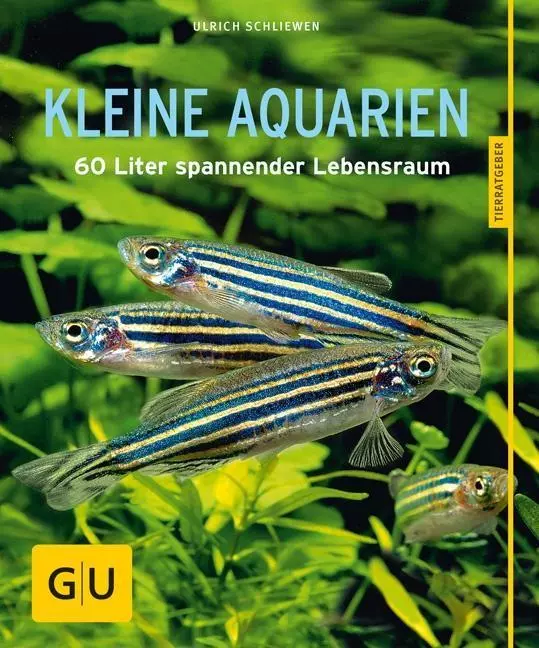

Small aquariums - Underwater world in miniature format
64 pages
color illustrations
practical tips
Author Ulrich Schliewen
Publisher GU
Underwater world in miniature: Small aquariums are particularly popular because they also fit into the smallest apartment. The first guide on this topic shows which fish and plants are suitable for small pools of up to 60 cm in length and are comfortable together. With many practical tips on the right equipment of the aquarium and the proper care of its inhabitants.
Composition
Feeding recommendation
Technical details
Size information
0 of 0 reviews
Leave a review!
Share your experiences with other customers.
Login
No reviews found. Share your insights with others.
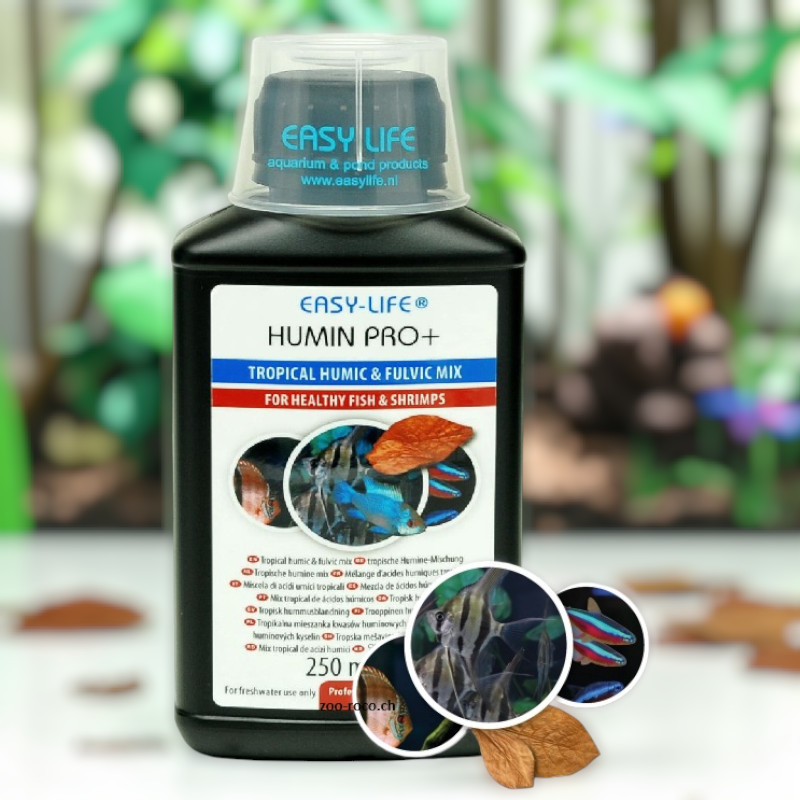
Easy-Life Humin Pro+
Easy-Life Humin Pro+ is a high-quality water conditioner for freshwater aquariums. The combination of humic acids and fulvic acids ensures natural water conditions, such as those found in tropical habitats. The product promotes vitality, colorfulness and health in fish, shrimps, snails and plants and at the same time supports the biological balance in the aquarium.
Advantages at a glance
Promotes intense colors and natural vitality
Strengthens the immune system and increases resistance
Reduces stress during fish stocking and transportation
Improves breeding and rearing success
Supports the biological balance in the aquarium
Increases the nutrient uptake of plants
No unwanted brown coloration of the water
Product details
Water conditioner with humic acids and fulvic acids
Suitable for all freshwater aquariums
Ideal for discus, angelfish, shrimps and other sensitive species
Available in sizes: 250 ml, 500 ml and 1000 ml
Dosage: 10-20 ml per 50 liters of aquarium water, use weekly
Free from artificial additives and colorants
Zoo Roco tip
Use Easy-Life Humin Pro+ regularly after every water change to soothe your aquarium inhabitants and strengthen the natural protective barrier of their mucous membranes. Ideal in combination with Easy-Life Filter Medium for a stable, healthy aquarium environment.
Natural care for healthy water and vital aquarium inhabitants - with Easy-Life Humin Pro+.Difference to the product Catappa:Below you will find some information to help you better understand the differences between Catappa-X and Humin Pro+: Catappa-X is made from a special blend and extract of catappa leaves.
It has strong antioxidant properties that protect cells from stress and inflammation, promoting fish health. Catappa leaves also contain natural plant dyes that provide more intense and vibrant fish colors. Catappa-X therefore focuses primarily on color enhancement and health promotion. Humin Pro+ is a combination of fulvic and humic acids - organic molecules formed from the decomposition of plant and animal material found in soil, peat, streams and natural waters. Humic acids can replicate the tropical water conditions found in the natural habitat of many aquarium fish. Humin Pro+ is particularly recommended for tropical fish, while Catappa-X is suitable for all fish species. In addition, humic substances stimulate enzyme activity not only in fish, but also in plants and microorganisms in the aquarium. Aquatic plants can absorb nutrients more efficiently, while beneficial microorganisms continue to thrive - ensuring a healthy and stable ecosystem in the aquarium.
Customers also searched for:
Easy Life Humin Pro+, water conditioner aquarium, humic acid aquarium, fulvic acid water, freshwater aquarium care, aquarium vitality, fish health, aquarium colors, aquarium care Switzerland, water treatment aquarium, Easy Life Switzerland, aquarium additive
JBL pH Test 3.0-10.0 - Quick test to determine the acidity in ponds as well as in freshwater and marine aquariums
Easy and reliable monitoring of the water values of aquariums and ponds.
Determines the ideal pH values for freshwater and seawater
Quick test: fill plastic vial with sample water, add reagent, read value of the sample off colour chart
When to use: for setting up a new aquarium: daily for one week, afterwards weekly
1 quick test, pH Test 3-10 Test for approx. 80 measurements
Healthy aquarium/healthy pond with conditions close to natureThe right water values are dependent on the fish stock and the plants in the aquarium/pond. Even if the water looks clear it can be contaminated. With bad values diseases or algae can appear in the aquarium/pond. To maintain a healthy aquarium/pond with conditions close to nature it is important to check and adapt the water values regularly.
For each water analysis JBL provides water tests in the form of quick tests or colour change tests. These determine a certain value or several values in one go. With these water tests you can recognise algae problems and negative nitrate, nitrite, potassium, magnesium values etc.
Why test?The well-being of aquarium and pond dwellers and the growth of aquatic plants depend to a large extent on the pH level being kept as constant as possible. The pH level can also affect many substances dissolved in the water. Fluctuations in the pH level are definitely to be avoided.
GU Aquarienfische von A-Z
Über 300 beliebte Süsswasserfische im PorträtPlus: Fische fürs Nano-Aquarium, Garnelen & Co.
256 Seiten
farbige Abbildungen
Taschenbuch
über 300 Süsswasserfische im Porträt
Autor Ulrich Schliewen
Verlag GU
Ob Jung oder Alt, Anfänger oder Fortgeschrittene: Aquarianer liebäugeln immer wieder mit neuen Fischarten. Denn die tropischen Süsswasserfische mit ihren schillernden Farben und faszinierenden Verhaltensweisen machen das Aquarium zum spannenden Naturerlebnis. Doch das sollte nicht dazu verführen, zu viele Fische in ein Becken zu setzen oder gar Fische zu vergesellschaften, die unterschiedliche Ansprüche haben. Der Fische-Experte Dr. Ulrich Schliewen bietet im Grossen GU Kompass Aquarienfische von A bis Z kompaktes Wissen zu rund 300 Fischarten - Einsteiger gerecht sortiert nach deutschen Artnamen. Jedes Fisch-Porträt beinhaltet alle wichtigen Infos - von der Lebensweise in der Natur, über die Haltungsansprüche im Aquarium bis hin zu Pflege- und Vergesellschaftungstipps. Farbige Buttons zeigen auf einen Blick die benötigte Beckengrösse und Wassertemperatur. In einem Extra-Kapitel werden die beliebtesten Garnelen, Krebse, Krabben und Schnecken fürs Aquarium in Porträts vorgestellt.
JBL GH Test - GH quick test to determine the total hardness in freshwater aquariums and ponds
Simple and reliable control of water values in ponds/aquariums. Determines the ideal total hardness for freshwater aquariums and ponds
Colour change test: fill plastic cuvette with sample water, add reagent drop by drop until colour changes from red to green. Number of drops = level of GH (total hardness)
When to use: for setting up a new aquarium: once a week
Online Laboratory: regular control for a healthy aquarium/pond with conditions close to nature. JBL has water tests in the form of quick tests or colour change tests for every water analysis. Testing aquarium water for healthy, clear water
Package contents: 1 quick test, GH Test. Incl. reagent and plastic vial. Refill reagent avaiable separately
Healthy aquarium/healthy pond with conditions close to natureThe right water values are dependent on the fish stock and the plants in the aquarium/pond. Even if the water looks clear it can be contaminated. With bad values diseases or algae can appear in the aquarium/pond. To maintain a healthy aquarium/pond with conditions close to nature it is important to check and adapt the water values regularly.For each water analysis JBL provides water tests in the form of quick tests or colour change tests. These determine a certain value or several values in one go. With these water tests you can recognise algae problems and negative nitrate, nitrite, potassium, magnesium values etc.Why test?Depending on origin and consistency of the subsoil, water may contain varying quantities of alkaline earth salts, usually in the form of calcium and magnesium salts. General hardness, by definition, is the sum of calcium and magnesium ions suspended in the water. Most fish and plants thrive well at a general hardness of between roughly 8 and 20°dH. Excessive total hardness values, should, however, be counteracted by the appropriate measures.JBL Online LaboratoryRegular control for a healthy aquarium/pond with conditions close to nature. Enter your water values into the JBL Online Laboratory and get an in-depth analysis of your values within seconds.Recommended general hardness values:Freshwater aquarium (community aquarium): 8-25 °dGHLake Malawi/Lake Tanganyika aquarium: 5-20 °dGHPlant aquarium with few fish (aquascaping): 3-10 °dGHMarine aquarium: not measurable with GH test because GH too high. Please test calcium and magnesium separatelyPond: 6-20 °dGH
JBL Biotopol water conditioner
Prepares tap water quickly to biotope-compatible aquarium water and is suitable for every water change and new aquariums.
Prepares tap water quickly to biotope-compatible aquarium water.
Tactilely protects mucous membranes, gills, skin and fins.
For every water change and new aquariums.
Immediately neutralizes toxic heavy metals and chlorine. Vitamin B complex has been proven to reduce stress in fish.
Aloe vera plant extract protects the mucous membranes of the fish.
Refill bags available.
Many aquarists mistakenly believe that their tap water is never chlorinated. But be careful: as soon as waterworks work on the pipe system, it is then heavily chlorinated for disinfection. And even if no chlorine is added to the tap water, disinfectant substitutes are often added to make the water low-germ drinking water. JBL Biotopol is highly recommended for this purpose and especially for neutralizing heavy metals. A special feature of JBL Biotopol is the valuable ingredient aloe vera (a plant extract), which effectively protects the skin not only of humans but also of fish.
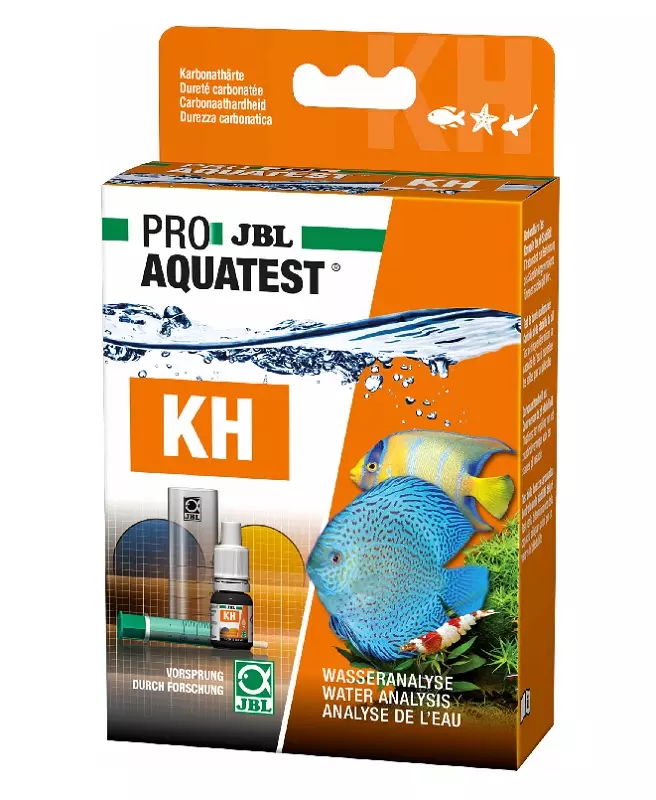
JBL KH Test - Quick test to determine the carbonate hardness in freshwater and saltwater aquariums and ponds
Simple and reliable control of water values in aquariums and ponds.
Determination of the optimal carbonate hardness for freshwater and saltwater
Colour change test: Fill plastic cuvette with water sample, add reagent drop by drop until colour changes from blue to yellow. Number of drops = level of carbonate hardness
When to use: when setting up a new aquarium: once a week
1 quick test, KH Test. Incl. reagent and plastic vial. Refill reagent avaiable separately
Healthy aquarium/healthy pond with conditions close to natureThe right water values are dependent on the fish stock and the plants in the aquarium/pond. Even if the water looks clear it can be contaminated. With bad values diseases or algae can appear in the aquarium/pond. To maintain a healthy aquarium with conditions close to nature it is important to check and adapt the water values regularly.
For each water analysis JBL provides water tests in the form of quick tests or colour change tests. These determine a certain value or several values in one go. With these water tests you can recognise algae problems and negative nitrate, nitrite, potassium, magnesium values etc.
Why test?The well-being of aquarium and pond dwellers and the growth of aquatic plants depend to a large extent on the KH level being kept as constant as possible. The carbanate hardness is one of the most important water values since it keeps the pH level stable. The KH should never drop below 4 °dKH.
Urzeitkrebs FibelBereits vor den Dinosauriern lebten die Urzeitkrebse auf unserer Erde. Sie haben damit die Faszination lebendiger Fossilien. Die rasante Entwicklung vom unscheinbaren Ei aus trockener Erde zum archaisch aussehenden Lebewesen begeistert Kai Alexander Quante seit seiner Kindheit. Heute ist der Aquarianer ein anerkannter Fachmann und erfahrener Praktiker im Bereich Ökologie, Aquarieneinrichtung, Aufzucht, Pflege, Vermehrung und Vergesellschaftung von Urzeitkrebsen im Aquarium. Neben den (auch als Fischfutter) bekannten Salinenkrebsen Artemia, über Triops, Feenkrebse und Muschelschaler zeigt der Autor in diesem praktischen Handbuch die Haltung, Zucht und Fütterung von Urzeitkrebsen in einer Aquarienwelt, die Jung und Alt begeistern wird.
Praxishandbuch AquariumGut gepflegte Aquarien geben uns Einblick in die faszinierende Welt unter Wasser. Damit in den "Minibiotopen" alles problemlos funktioniert und sich die Bewohner wohlfühlen, berichtet der Aquarienexperte Ulrich Schliewen im Standardwerk Praxishandbuch Aquarium kompetent über die natürlichen Lebensräume und das interessante Verhalten der Fische. Alles Wichtige zu Wasser und Technik wird leicht verständlich erläutert. Themen wie Dekoration und Bepflanzung, Einrichtung und Pflege, Vergesellschaftung von Fischen sowie Vermehrung und Zucht lassen keine Fragen offen. Der umfassende Porträtteil mit über 400 Fischarten, Amphibien und Wirbellosen bietet einen hervorragenden Überblick und eröffnet vielfältige Kombinationsmöglichkeiten fürs Traumaquarium. Als Extras: "Nano-Aquarien - Kleinstfische im Minibecken" sowie "Einstieg in die Meerwasseraquaristik - ein Zuhause für Nemo". Viele praxisorientierte Tipps, Checklisten, Tabellen, Tests und Sonderelemente wie der Quickfinder (Wissen von A bis Z im Überblick, mit themenbezogenen Kapitelverweisen), Frage-und-Antwort-Seiten (praxisbezogene Wissensvermittlung), Wissenschaft-und-Praxis-Seiten (aktuelles Fachwissen, praktisch genutzt für alle Aquarianer, ob Anfänger oder Fortgeschrittene) sowie die Rubrik "Was tun, wenn ..." (kompetente Hilfe bei Alltagsproblemen) machen das Buch zum unentbehrlichen Standardwerk für jeden Aquarianer.
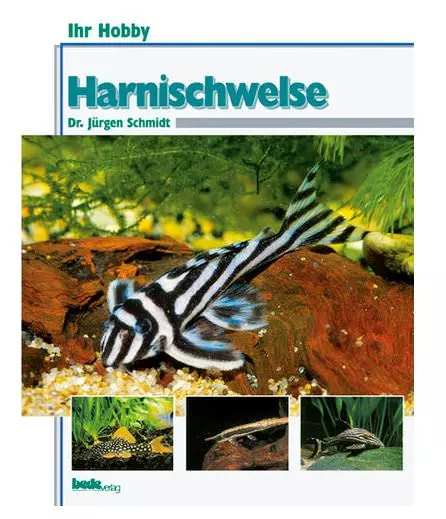
Ihr Hobby Welse von Dr. Jürgren SchmidtUnter den Welsen gibt es viele klein bleibende Arten, die zum Teil gegenwärtig im Fachhandel angeboten werden. Darunter findet sich eine Vielzahl hochinteressanter Arten. Die bei den Fütterungen und vor allem nachts richtig Leben ins Aquarium bringen. Der interessierte Aquarianer wird es nicht verpassen, wenn abends das Licht ausgeht. Welse sind einfach faszinierend. Dem Inhalt: -Das Welsaquarium -Die Fortpflanzung der Welse -Artenteil.
Das NTV - Verhalten der Aquarienfische ist eine Zusammenfassung der Beiträge zum Symposium.
208 Seiten
Fotos, Zeichnungen, grafische Darstellungen und Tabellen
gebunden
Autoren Rüdiger Riehl und Hartmut Greven
Das Buch ist eine Zusammenfassung der Beiträge zum Symposium "Verhalten der Aquarienfische (2)", das vom 26. bis 28. Mai 2000 im Löbbecke Museum und Aquazoo der Stadt Düsseldorf stattfand.Zu Wort gekommen sind Wissenschaftler, die meist schon längere Zeit Phänomene der Fortpflanzung von Aquarienfischen bearbeiten, aber auch Aquarianer, die ihre Fische über Jahre hinweg mit grösster Sorgfalt und bewundernswertem Einfühlungsvermögen beobachten und züchten. So demonstriert das Buch in beispielhafter Weise eine sich ergänzende Zusammenarbeit zwischen Wissenschaft und Hobby-Aquaristik.
232 exciting pages Cichlids from West Africa with 237 color photos!
232 pages
237 color photos
Hardcover
Authors H. Linke and dr. staeck
Publisher Tetra-Verlag
The book, with its 232 pages and 237 color photographs, is an ideal handbook for identification, care and breeding.
232 spannende Seiten über Buntbarsche aus Ostafrika mit 201 Farbfotos!
232 Seiten
201 Farbfotos & Karten
Zeichnungen
Hardcover
6 Auflage 2014
Autor Dr. Wolfgang Staeck
Verlang Tetra-Verlag
Das Buch hat 232 Seiten und ist ein Standardwerk über die Malawi und die Tangajikasee-Cichliden. Sie gehören zu den beliebtesten Aquarienfischen da sie leicht zu pflegen sind. Im Buch wird über die Auswahl der Arten sowie die Pflege im Aquarium geschrieben. Auch wird über die Fortpflanzungs- und Lebensweisen berichtet.
My Aquarium - The great GU Praxish book for every aquarium lover
287 pages
many color photos
bound
Author Ulrich Schliewen
Publisher Gräfe & Unzer
The author describes in this book the natural habitat and the interesting behavior of the fish. Everything is explained easily, so is everything about water and technology. It also describes the decoration, planting, furnishing and care, socialization of fish and also the propagation and breeding. With 400 species of fish, amphibians and invertebrates in the portrait. With tips, checklists, tables, tests and the Quickfinder, the book becomes a standard wake-up for every aquarium enthusiast.
Der Wels Atlas Band 1 beschreibt verschiedene Welsfamilien
944 Seiten
über 900 Fotos
gebunden im Schutzumschlag
Autor Hans-Georg Evers und Ingo Seidel
Verlag Mergus
Die Harnischwelse bilden die grösste Gruppe südamerikanischer Welse. Viele Arten sind beliebte Aquarienpfleglinge. Dieser Band ist der erste von zwei Teilen einer ausführlichen Bearbeitung der Familie Loricariidae. Schwerpunkte dieses in der zweiten Auflage erweiterten Bandes sind ein einleitender Teil mit Vorstellung der Lebensräume und ausführlichen Pflege- und Zuchthinweisen sowie die Besprechnung der Unterfamilien Hypoptopomatinae und Loricariinae. Ein weiterer Teil stellt die Welsfamilien Cetopsidae, Nematogenyidae und Trichomycteridae vor.
The sea water atlas volume 2 describes invertebrates
736 Seiten
675 Fotos
gebunden
Autor Dr. Harry Erhardt und Dr. Horst Moosleitner
Verlag Mergus
Meerwasser Atlas Band 2 behandelt die Wirbellosen, von den Schwämmen, den Stein- und Lederkorallen bis zu den Nacktschnecken. In über 670 Fotos werden mehr als 600 Arten vorgestellt. Die Vielfalt in Form und Farbe, die Lebensgewohnheiten und Bedürfnisse wirbelloser Tiere im Aquarium und in der Natur werden in Bild und Text anschaulich dargestellt. Taucher und Aquarianer finden hier ein gelungenes Werk. Meerwasser Atlas Band 2 und 3 bilden eine Einheit.
Die Garnelen-Fibel enthält alle Informationen die für ein glückliches Garnelenleben nötwendig sind.
Vor einigen Jahren entdeckte man ihre Vorliebe für Algen, seitdem ist der Siegeszug der Garnelen in unsere Aquarien nicht mehr aufzuhalten. Ihre agile Art, die relativ unkomplizierten Haltung und nicht zuletzt der Einsatz als Gesundheitspolizei, machen Sie zu einer absoluten Bereicherung für beinahe jedes Aquarium. Es ist eine Freude ihnen zuzusehen wie sie gemeinsam fressen, sich streiten und sich wieder versöhnen.Mittlerweise bietet auch der Handel viele Arten in den unterschiedlichsten Farben an und hält für jeden etwas Passendes bereit.
Die beiden Autoren, Carsten und Frank Logemann, die seit Jahren von der Leidenschaft für Garnelen gepackt worden sind, haben in dieser Fibel das notwendige Wissen über Haltung und Pflege, Einrichtung des Aquariums, die notwendige Technik, Futter, Paarung und Vermehrung sowie Krankheiten zusammengetragen und unterhaltsam und anschaulich dargestellt. Die zwölf bekanntesten Arten werden ausführlich mit ihren besonderen Ansprüchen beschrieben.Auch die ausgezeichneten Fotos und Zeichnungen werden dazu beitragen, neue Liebhaber dieser lustigen und fleissigen Gesellen zu finden.
GU - Nano aquariums 12-35 liters
Proper care and stocking of freshwater mini aquariums.
Aquariums provide insights into decorative miniature underwater worlds. Especially easy to handle are the nano aquariums, which have their own charm. With its contents of 12 to 35 liters are space-saving alternative to the big aquarium. Whether filled with shrimp or with delicate miniature fish, the nano aquarium is always a looker and prepared so well just children great pleasure and an easy introduction to the aquarium hobby.
The authors Dr. Ulrich Schliewen and Jakob Geck have dedicated their lives to the fish and tell you so vividly and concrete biotope examples of how the world of the Nanos works. You will receive valuable tips on the ecology, to the correct device and to maintain the mini-aquarium.
Dähne, Krabben Fibel - Alles über Krabben zuhause.
96 Seiten
160 Fotos
gebunden
April 2011
Autoren Monika Rademacher und Oliver Mengedoht
Im Rahmen des Wirbellosen-Booms der vergangenen Jahre haben sich auch die Krabben einen festen Liebhaberkreis in der Aquaristik und Terraristik erobert. Die Autoren sind im deutschsprachigen Raum die bekanntesten Praktiker in Bezug aus Haltung, Pflege und Vermehrung von Süsswasser-, Land- und Mangrovenkrabben. In dieser handlichen Fibel findet man endlich alle wichtigen Informationen und Praxistipps zu diesen faszinierenden und farbenfrohen Lebewesen und ihrer artgerechten Haltung in Aquarien, Terrarien oder Aquaterrarien.
Lobelia cardinalis
Lobelia Cardinalis is a green plant, recommended for the second level of the aquarium and for the paludarium. It looks great in a group and likes to grow above the water surface.Difficulty of growing: easyLight requirements: mediumCO₂ requirements: lowAdult plant height: up to 30 cmGrowth: mediumTemperature: 15-28°CPlacement in aquarium: second levelOrigin: North AmericaShell diameter 6 cmLobelia Cardinalis or Cardinal's Strophica is a plant native to North America. In the wild, it is found in wetlands and along riverbanks. It is distributed from the Gulf of Mexico through the eastern states of the United States to southern Canada.
It grows in the ground and has a well-developed root system. The feathery stems can develop auxiliary roots in leafless areas. Its distinctive ornamental feature is the light green, oval leaves with a prominent pale central vein. It is very comfortable in a paludarium, where it forms a 0.5 m high flower head with red flowers.
Lobelia can be cultivated in aquariums and paludariums. It thrives beautifully in muddy soil as well as underwater.It tolerates temperatures from 15 to 28 °C and can also be kept in a pond. It thrives best at 20-23°C. It does well in soft to medium hard water with a pH between 6.5 and 7.2.Without adequate light the leaves turn yellow, but in bright light the undersides of the leaves turn purple-red. It is not particularly demanding, but regular water changes, fertilizer and CO₂ support its growth and allow it to grow 5 cm per month. Uncut, it grows above the water surface by forming overwater leaves, and may also flower.In the aquarium, lobelia should be planted in a group in the background, but it also works well as a foreground plant. It is used in lobelia avenues or to form showy thickets.
Pruning is necessary to maintain a beautiful habit; use scissors to remove older leaves. You can also cut back the entire plant and use the cut tips as cuttings. A young plant can also be grown from an old leaf. Cuttings rooted in a paludarium can be transplanted to an aquarium. In an aquarium, stem pruning forces the plant to form side shoots.
Planting: The plant must be removed from the cup and thoroughly rinsed from the gel under running water. This is best done by placing the plant in a container of lukewarm water. Most of the gel will then fall off by itself. Divide the contents of the cup into 3-4 cm lumps and then place them in the substrate..
CHF 6.50
❅
❆
❅
❆
❅
❆
❅
❆
❅
❆
❅
❆
This website uses cookies to ensure the best experience possible. More information...