Reptilia 01 - Crocodiles

Article no: reptilia01

CHF 9.80

Stock: 0

This article is currently not available

Product information "Reptilia 01 - Crocodiles"

Reptilia 01 - Crocodiles

Bearded dragons
Fire Salamanders
Baja california
GAUDÍ and herpetology

Contents:

2 - Editorial
6 - Magazine
14 - Keeping and breeding: Bearded crocodiles, by J. Bergadá and J. Pether
23 - Travelogue: Crocodiles in Ghana, by S. Zwernemann
26 - Report: Hamburger made from crocodile meat, by M. Schmidt
29 - Terraristics: Keeping guidelines for crocodiles
30 - Pros and cons: keeping crocodiles
33 - Travelogue: Baja California, by H. Werning
39 - Portrait and poster: Hyla meridionalis, by M. Aresté and J. L. Farriols
43 - Terraristics: Sexing of snakes, by Dr M. Bachs
46 - Keeping and reproduction: Acrantophis dummeriliby W. Wengler
49 - Herpetofauna, Fire Salamanders, by X. Rivera and A. de Saint Paul
58 - Herpetology and culture: Gaudí and herpetology, by E. Filella
64 - Veterinary medicine - Shell necrosis in turtles, by C. Lopez del Castillo
71 - Report: Species conservation in the jungle of French Guiana, by S. Alviani
73 - Library
77 - Advice and action
80 - Incubator: Glossary by H. Werning

Composition
Feeding recommendation
Technical details
Size information

0 of 0 reviews

Give us a rating!

Share your experience with the product with other customers.


Suggested products

Handbook of food plants for tortoises and other reptiles
Handbook of forage plants 2nd revised editionMarion Minch is not only a successful breeder of diverse tortoises for many years, but also an excellent connoisseur of native wild herbs. She founded and runs samenkiste.de, which is well known to many tortoise keepers and nature lovers. Her name is inextricably linked with reptile care and species-appropriate nutrition for tortoises. Her handbook of food plants summarises the most important native food plants for herbivorous and omnivorous reptiles. She not only considers tortoises, but also iguanas, spiny-tailed dragons and even chameleons. From the basics of plant biology to native wild herbs to suitable food plants for hardy tropical reptile species, this comprehensive work provides the basis for species-appropriate keeping. In the expanded and supplemented 2nd edition, the plant section is divided according to flower colour. This makes it even easier to identify wild herbs. The work has also been supplemented with a wealth of additional information and many pictures.

CHF 46.50

Geckos
Geckos in the terrarium by Astrid FalkThe book offers a comprehensive introduction to geckos and their species-appropriate keeping in terrariums. It explains what you need to think about before buying a gecko and what preparations should be made. The book describes in detail how the terrarium is technically equipped and set up. The care of the animals, their special features and behaviour, their diet, reproduction and rearing of young animals are described, as well as diseases and husbandry problems with tried and tested suggestions for prevention and treatment. Individual gecko species that are particularly suitable for keeping and breeding in terrariums are portrayed in detail in the second part of the book.

CHF 28.50

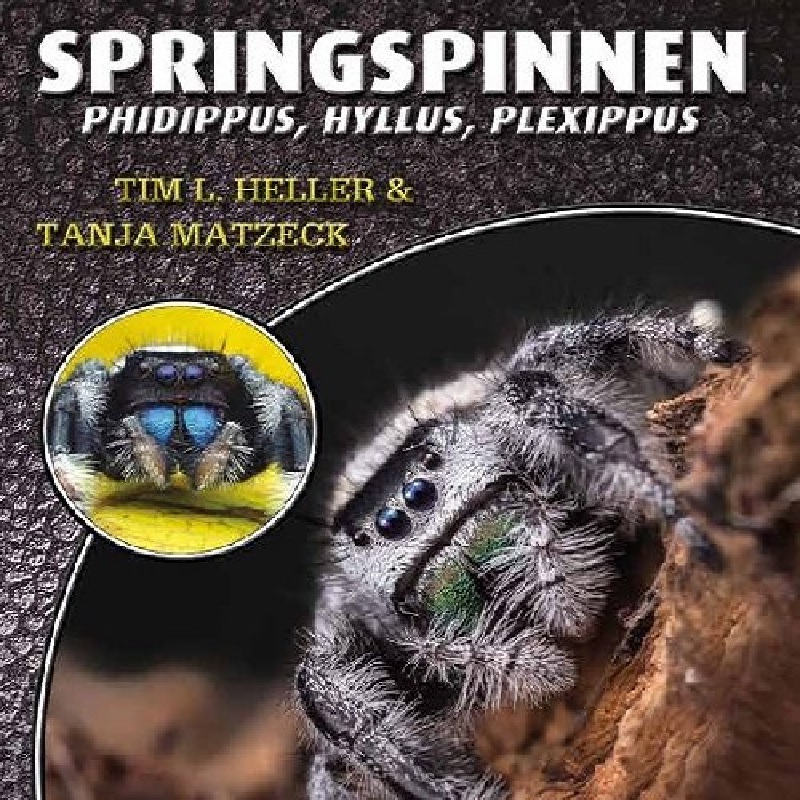
Jumping spiders Phidippus, Hyllus, Plexippus
Book Jumping Spiders - Phidippus, Hyllus & Plexippus A guide to keeping jumping spiders of the genera Phidippus, Hyllus & Plexippus. Who can resist the charm of jumping spiders? The childlike appearance of their expressive face simply leaves no one cold! In addition, their behavior is extremely exciting to observe, their colors are bright and their requirements for species-appropriate keeping are very easy to meet. No wonder these likeable jumpers are all the rage! This volume in the "Species by Species" series describes in detail what to look out for when buying and keeping them, introduces the most commonly kept species and color forms and provides plenty of tips on how to keep them successfully - so you can be sure they will breed well! Species by Species introduces you to the books in this series, which present the most popular terrarium animals. Each volume offers you detailed, practical care instructions and all the information you need to successfully breed your animals. All important questions from the required tank size to terrarium set-up, technical equipment, species-appropriate nutrition and disease prevention are answered with numerous tricks and tips. Experienced, long-standing breeders reveal how you can encourage the animals to reproduce and raise healthy young. All this in full color, generously illustrated and attractively designed - just about your terrarium animal - species by species

CHF 23.90

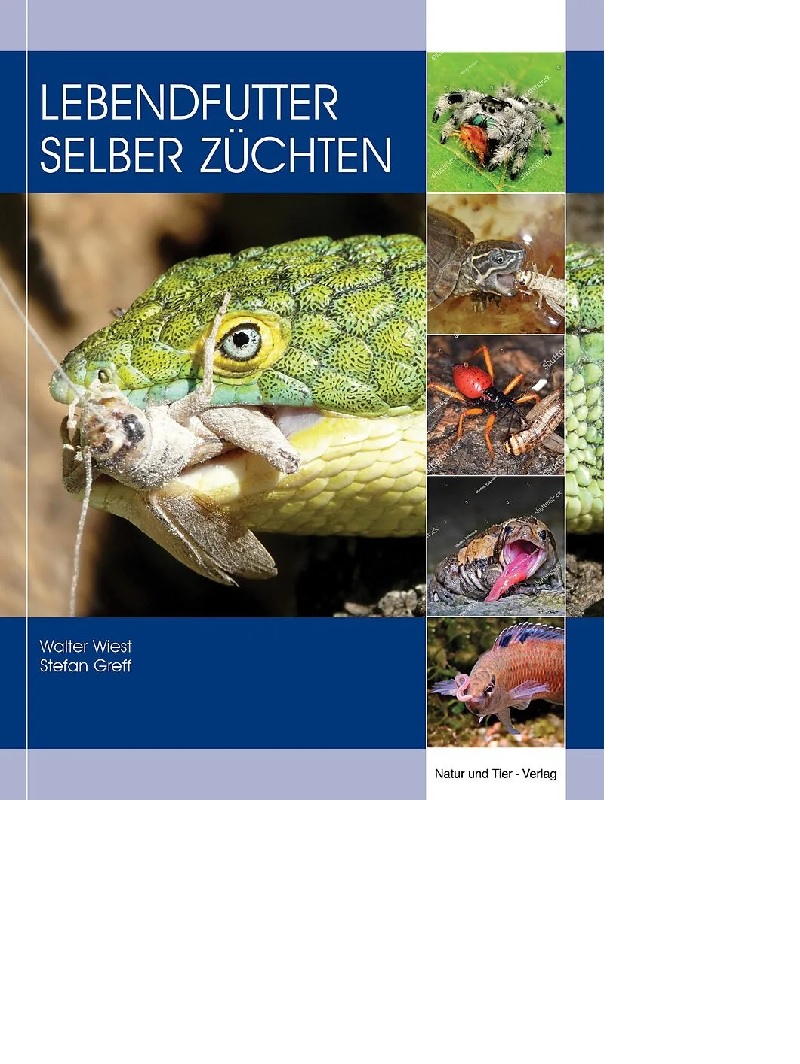
Book Breeding live food yourself
Book "Grow your own live food" - The perfect guide for pet owners Discover practical and detailed instructions on how you can easily breed food for your reptiles, birds, fish or other animals yourself in the book "Breeding live food yourself". With valuable tips on various food insects, their care and breeding, you can save money and ensure a species-appropriate diet for your pets. Contents of the book: Step-by-step instructions for breeding feeder insects Information on the best types of food for reptiles, birds and fish Care instructions and breeding conditions for various live food species Tips for sustainable and cost-effective food production Why breed your own live food? Get healthy, fresh food for your animals Save money and reduce dependence on pet shops Promote the health and well-being of your animals with species-appropriate food Whether you are a beginner or an experienced pet owner, this book provides you with everything you need to successfully breed live food yourself.

CHF 46.50

Marginata 69 - New Guinea tortoises
Marginata 69 - New Guinea tortoises – the genus ElseyaCover storyThe unrecognised beauties: New Guinea tortoises (Andreas S. Hennig)My experiences with Branderhorst's New Guinea tortoise, Elseya (Elseya) branderhorsti (Ouwens, 1914) (Andreas S. Hennig)Keeping and breeding of Rhodin's New Guinea tortoise, Elseya (Hanwarachelys) rhodini Thomson, Amepou, Anamiato & Georges, 2015 (Andreas S. Hennig)PortraitGeoemyda spengleri, Chinese serrated tortoise (Andreas S. Hennig)ReportageMacrochelys temminckii – Experiences and impressions with vulture tortoises part 2 (Reiner Praschag)KeepingAn alternative to year-round keeping of the Egyptian tortoise in the terrarium – my experiences with seasonal outdoor keeping of Testudo kleinmanni (Ricarda Schramm)EtymologySawbacks and living maps part 4: Graptemys gibbonsi, Pascagoula humpback tortoise (Holger Vetter)Classifieds & animal placement

CHF 16.50

Reptilia 03 - Poisonous snakes
Reptilia 03 - Venomous snakesCave turtleAmazonas - Frogs in the tropical forestCrocodile cult - Aborigines in MalaysiaScorpions - The special reproductive biologyContents:Page 2 - EditorialPage 3 - Letters to the editorPage 6 - MagazinePage 17 - Photo report: Venomous snakes, by E. Barcenas and J. GuañabensPage 24 - Herpetofauna: Crotalus adamanteus, by J. BergadáPage 27 - Terraristics: Keeping venomous snakes, by P. LammersPage 30 - Herpetology and medicine: Venomous effects, by Dr M. Korthals AltesPage 33 – Travel report: Amazonas: In search of Dendrobates galactonotus, by B. PieperPage 39 - Portrait and poster: Salamandra salamandra, by M. Aresté and J. L. FarriolsPage 43 - Herpetofauna: How scorpions ensure their reproduction, by Dr D. MahsbergPage 49 - Herpetology and ecology: Toad migrations by A. de Saint-PaulPage 53 - Herpetofauna: Geochelone carbonaria, by S. MétraillerPage 56 - Herpetofauna: Toad lizards, by B. BaurPage 60 - Species and nature conservation: The extinction of reptiles and amphibians, by M. Viader StaubPage 71 - Herpetology and culture: The crocodile people of Malaysia, by Dr C. López del CastilloPage 74 - Advice and actionPage 75 - LibraryPage 80 - Incubator: Glossary by H. Werning

CHF 9.80

Terraria 25 - Livebearers
Terraria 25 - Livebearing Reptiles Breeding of tarantulasDiadem snakeSpur-thighed tortoise Contents: Not all reptiles lay eggs. A whole range of species bear live young, to the delight of many terrarium enthusiasts. However, even though the often problematic artificial incubation of clutches is no longer necessary: Even with livebearing reptiles, many things can go wrong when breeding them in the terrarium, and keepers often find it difficult to recognise the causes of problems. Uwe Schlüter presents the different forms of livebearing in reptiles and explains everything you need to know to breed these species as successfully as possible. In addition, we present some livebearing reptiles in the terrarium, including the Madagascar dog-headed boa, Sanzinia madagascariensis, or the strange crocodile night lizard, Lepidophyma flavimaculatum. EditorialMagazineHatching of a completely healthy hatchling of the North African spiny-tailed agama from a mould-infested eggColour change in the monocled cobra from juvenile to adultLuminous heavy metal detectorsDinosaurs with braking assistance?Hundreds of Madagascan tortoises confiscated in MalaysiaPhotosynthesis in salamandersLegal TERRAglobal specialLizards of the Barkly TablelandGunther Schmida Cover storyLivebearing reptilesUwe Schlüter The crocodile night lizard. Lepidophyma flavimaculatum (Duméril, 1851) Jochen Meyer Care and breeding of the northern Canary Islands skink (Chalcides viridanus) Uwe Schlüter Keeping and breeding a crowned beauty: the diadem snake (Spalerosophis diadema [Schlegel, 1837]) Sascha & Stefanie Esser Giants of the desert. The African spurred tortoiseLeo Spinner JourneyCuc Phuong. Spiders and other animals in Vietnam's oldest national parkGordon Ackermann Breeding of tarantulas Karin Manns New speciesDiversity of Philippine banded monitors deciphered – and three new taxa described André Koch Among researchers Searching for venomous snakes in Austria Johannes Hill Eye-catcher Of prosimians, poison dart frogs and geckos. Visiting Ute Thut and Dennis Peukert Michael Wirth Near youSubscription & ServicePreview Incubator On the wall, on the lookout Mike Zawadzki

CHF 12.00

Terraria 03 - Anolis in the terrarium
Terraria 03 - Anolis in the Terrarium Ornate TurtlesNamaqualand Contents: 2 Editorial Mike ZawadzkiMAIN TOPICAnolis in the Terrarium 4 Anolis – Keeping, Care and Breeding Manfred Rogner 14 A Terrarium for Eternity Design of Rot-Resistant Walls and Epiphyte Branches of a Paludarium for Anolis Holger Herfurth 18 Terrarium Keeping of Anolis – A Field Report Based on the Example of Anolis bahorucoensis bahorucoensis Dieter Bundt 32 Anolis loysianus, a Spiny-Scaled Bark Anole from Cuba Axel Fläschendräger SCIENCE 36 Herpetorama Beware of Conspecifics! / Hydraulic Pump / On the Trail of the Blind 38 New Species Bronchocela vietnamensis / Snakes from Northern Madagascar / Scaphiophryne menabensis 41 Among Researchers In the Centre of the Corridor Philipp Wagner 45 Ornate Turtles – The Genus Pseudemys Part 2: The Species and Subspecies with Information on Distribution and Lifestyle Andreas S. Hennig 54 Melanophryniscus – Not Just Black Toads Part 3: The “Brazilians” Axel Kwet 62 The Devil’s Flower Idolomantis diabolica (SAUSSURE, 1869) Part 2 Christian J. Schwarz, Jürgen E. Mehl & Jürg Sommerhalder 70 The Forgotten Beauty A Few Words on Keeping and Breeding Diadophis punctatus Kriton Kunz 74 TRAVEL Namaqualand Mats BlohmTERRARIUM PRACTICE 82 Test Run Fixing Rod for Snakes from M&S ReptilesMesh Cover from Exo Terra 84 Prelude Understanding Literature – No Problem Timo Plochowietz 87 Eye-Catcher Madagascar in Saxony – Visiting the Phelsuma Breeder Hans-Peter Berghof Heiko Werning 93 Also in Your Area 96 TERRAnet Macro Photography / Anolis Page 98 TERRAglobal The Reptiles in the Culture of Mexico Fabio Cupul Mouse Breeding, a Self-Service Store? Joachim Bulian 104 TERRAwinn

CHF 11.20

Terraria 07 - South American tortoises
Terraria 07 - South American tortoises Contents: 2 Editorial Kriton Kunz TITLE TOPIC 4 • The tortoises of South America Hans - Dieter Philippen 10 • Farming and protection of red-footed tortoises (Chelonoides carbonaria) in Venezuela Christian Neumann & Saúl Gutiérrez 15 • Aspiration and Reality: On the naturalistic husbandry and breeding of the red-footed tortoise (Chelonoidis carbonaria) Christian Neumann 22 • Experiences with the husbandry and breeding of the yellow-footed tortoise Lies Niessen SCIENCE 27 Herpetorama Lizard taxonomy / spider venoms 29 New species Elseya albagula / dendrobatids & Hypsiboas from Guyana / microteiids from Amazonia 32 Among researchers Of snake skinks and other “herps” – Experiences during an internship semester on the Peloponnese Michael Stadler & Philipp Herrmann 36 Snakes, dragons, crocodiles – on the trail of reptilian creatures in Mayan symbolism Kriton Kunz 44 The venomous snakes of Kakamega Forest in Kenya Maik Dobiey 54 Lifestyle, care and breeding of the giant Ameiva (Ameiva ameiva ameiva) from Guyana Uwe Schlüter 63 Borneo crested lizards (Bronchocela cristatella) in the terrarium – difficult and delicate? Lutz Baedermann Journey 68 In the mountain forests of Mount Kinabalu/Borneo. Part II Rudolf Malkmus TERRARIUM PRACTICE 82 Test run Novel heater / thermostat with dimming 84 Prelude Nutrition of Mediterranean tortoises Mats Blohm 88 Eye-catcher A new enclosure for dyeing poison frogs Peter Janzen 92 Also in your area 95 TERRAnet Mediterranean tortoises / praying mantises 97 TERRAglobal In the village of the queens Joachim Bulian Perils of a herpetologist Manuel Acevedo 104 TERRAwinn

CHF 11.20

Terraria No. 36 - Breeding of giant snakes
  Grays KielskinkPortugal Inhalt: Titelthema: Nachzucht von Riesenschlangen – Probleme und ErfolgeViele Vertreter der Riesenschlangen sind in der Natur besonders gefährdet, gleichzeitig gehören sie zu den beliebtesten Pfleglingen in unseren Terrarien. Wir wagen eine Bestandsaufnahme: Wie sieht es aus mit diesen faszinierenden Reptilien in der Terraristik? Außerdem berichtet Michèl Kroneis über immer wiederkehrende Probleme beim Schlupf Grüner Baumpythons, Ralf Mößle über die erfolgreiche Terrarien-Nachzucht der größten Schlange überhaupt, der Grünen Anakonda. TerritorialHerpetoramaTitelthemaRiesenschlangenhaltung im Lauf der Zeit Hans-Dieter PhilippenHaltung, Pflege und Zucht der Großen Anakonda (Eunectes murinus) Ralf MößleDer Grüne Baumpython: vom mysteriösen Absterben schlupfreifer Jungtiere Michél KroneisPanoramaTerraglobalMedizin-Echsen Fabio Cupul Knapp am Tod vorbei. Teil 1Joachim BulianTerarristik – ein brandgefährliches HobbyStephan MüllerHerpetologische Streifzüge durch die Montados PortugalsRudolf MalkmusForschungNeue ArtenAus eins mach drei: zwei neue Arten bei den afrikanischen Gelenkschildkröten Axel KwetUnter Forschern Die Stecknadel im Heuhaufen – auf Schlangensuche im Nationalpark Ulu Temburong, Brunei Silke Schweiger & Thomas WampulaStammesgeschichte der Froschgattung Gephyromantis in Madagaskar Nathalie KaffenbergerSalamandraTerraristikKlassiker. Die SteppenschildkröteGrays Kielskink (Tropidophorus grayi Günther, 1861) Maren GaulkeSoziale Vogelspinnen aus Afrika Ingo Wendt, Frank Schneider & Boris F. StrifflerWeitere Beobachtungen zum Geschlechtsdimorphismus bei der Bergbachmolchart Neurergus crocatus Jürgen FleckNatur- und ArtenschutzFeldnotizen. Ameise versus JungkröteJörg Rozycki Tote Eidechsennatter in Spähhaltung Axel KwetGriechische Teichmolche in Österreich. Bereicherung oder Bedrohung? Hans-Jürgen LuefVermisstDelcourts Riesengecko (Hoplodactylus delcourti)Auch in Ihrer NäheAbo & ServiceGalerieVerschwenderische SchönheitVorschauBrutkastenFamilienausflug, Teil 2Heiko Werning  

CHF 12.00

Draco 10 - Animals, Terrariums, Habitats
Draco 10 - Animals, Terrariums, Habitats Contents: 2 Editorial4 Deserts – cold land under a hot sunSurvival strategies of desert-dwelling amphibians and reptilesThomas Wilms & Heiko Werning26 Planning, building and setting up a desert terrariumThomas Ackermann41 Colourful jewels in the terrarium – experiences with the long-term care and breeding of Uromastyx ornata (Heyden, 1827) up to the second filial generationThomas Wilms, Hans Dietmar Müller & Beate Löhr 50 The bearded toadhead Phrynocephalus mystaceus (Pallas, 1776) in the terrariumHans Dietmar Müller58 The fringed-fingered lizards (Acanthodactylus) of North AfricaUwe Schlüter 66 The kings of the North American desert: ChuckwallasHeiko Werning74The horned vipers (Cerastes) of North AfricaUwe Schlüter79 Namibia – hot land on a cold currentFelix Hulbert & Mirko Barts 94 Magazine

CHF 16.80

Marginata 15 - Snake-necked turtles
Marginata 15 - Snake-necked turtles Genetic variability of western tortoisesTuscan tortoises part 2Food plants for aquatic turtles part 3 Contents: 2 EDITORIAL 3 READER LETTERS 4 MAGAZINE 8 DATES 10 REPORTAGEThe snake-necked turtles of Indo-AustraliaHans - Dieter Philippen 18 BREEDING IN HUMAN CAREKeeping and breeding the Australian long-necked turtle (Chelodina longicollis)Stefan Thierfeldt & Sabine Höfler-Thierfeldt 24 BREEDING IN HUMAN CAREKeeping and breeding the white-nosed snake-necked turtle (Chelodina spec.) Steffen Szymanski 31 PORTRAITSouth African tent-footed tortoise (Psammobates tentorius, BELL 1828)Irmtraud Jasser-Häger & Matts Blohm 35 REPORTAGEFood plants for aquatic turtles (Part III)Susanne Vogel 40 REPORTAGETuscany – In search of Eurotestudo hermanni (Part II)Michael Wirth & Walter Matzanke 48 REPORTAGEGenetic studies on western tortoisesGiorgio Berorelle, Vassili Goutner, Barbara Livoreill and Stefano Mazzotti 54 REPORTAGENotes on incubation and hatching of a wet clutch of red-bellied slider turtles Martin Leonard Voss 58 SHORT REPORTAGEComments on frequent carcass findings of leatherback turtlesAlfred Schleicher 60 BOOK TIP 61 CLASSIFIEDS 62 REGIONAL GUIDE

CHF 14.70