NTV, amphibians at the garden pond

Article no: 978-3-931587-09-3

CHF 32.50

Stock: 0

Ready for dispatch in 1-3 days, delivery time 14 working days

Delivery between Monday, 7 September and Tuesday, 8 September
Zahlungsarten
Product information "NTV, amphibians at the garden pond"

NTV, amphibians at the garden pond

André de Saint-Paul, Ingo Brand & Wolfgang Schmidt
  • 104 pages
  • 96 photos
  • Format: 16,8 x 21,8
  • With references to
    "Chemistry in the garden pond"
    "Safety at the garden pond"
    "Design"

Content:

You will not only get a beautiful
and interesting small biotope to the
own property, but can also be used
make an important contribution to nature conservation!

  • Everything you need to know in order for amphibians to settle in your pond
  • The amphibian-friendly garden pond
  • Large species part with splendid pictures
  • With "amphibian calendar" for the garden pond

Press commentaries:

Following a taste of the time more and more garden pond friends lay themselves ponds, many of them become so-called natural ponds. Surely, only the fewest investors consider thereby, what they can cause. For these a book appeared, which can answer each question, which they could ask, exhaustively, if it refers to the topic: Amphibien at the garden pond . Who knows them all, toads, toads, frogs and newts? All animal species that before man had settled in the places of today's ponds had long been resident and indigenous and had been suppressed for the time being. What to do when they return suddenly and inconspicuously? Many gardeners are aware of the fact that this can happen in well-designed gardens and have been described in some articles (...). So what should we do to get to know these new citizens of the garden better and, if possible, to help them even more? Very simple: Buy and read the book discussed here!
Rarely has a book summarized so much worth knowing about this topic so succinctly and comprehensibly.
Some garden friends, who are not quite firm with the determination, will use the many clear photos beside the text, in order to determine its pond inhabitants correctly. The text leaves also no wish open, there are chapters about the animal species themselves and such, which have apparently secondary meaning, but for a longer existence of pond and animal are extremely important: "Nature as a model", "Legal regulations", "Settlement of amphibians", "Water supply", "Pond technology" and "Safety at the garden pond" are just a few examples. Everything is presented very clearly and comprehensibly for zoological laymen and is also exciting to read.
Conclusion: A 5-star book!

Walther Rohdich in The Aquarium 08/2002


Recommended
(...)Altogether (...) a recommendable book for garden owners who are interested in amphibians, as well as for all amphibian friends and those who want to become one.

Petra Kölle in DATZ 9/2002


(...)(This book) is intended to serve those who want to create a garden pond in their garden that is as close to nature as possible.
The book first of all examines the question of whether the garden pond can be a Noah's ark for amphibians and what position amphibians occupy in the biotope garden pond. The next chapter gives a brief overview of amphibians: evolution, systematics, way of life, catching prey, breathing, voice, reproduction, from egg to lurch, migrations and enemies and diseases. This gives everyone the basic knowledge they need to better understand amphibians. (...)
In the following kind descriptions all amphibian-types native with us are introduced except for two (...) in text and picture. Thereby, distribution, way of life and reproduction are discussed in detail. The garden ponds for amphibians are taken into account afterwards, whereby also the remaining garden is included in the discussion. The question "Fish and amphibians in a body of water - is that possible?", which is important for many people, is answered as well as questions about legal regulations, settlement in one's own garden and the construction and maintenance of a garden pond. (...)
The last part of the book is about safety at the garden pond, care tips and an "amphibian calendar", which gives an overview of important events in the course of the year of the native species. At the end there is a glossary, a bibliography and an index.
The book can be considered as quite successful and gives also the interested layman the possibility of making itself fast familiar with the topic. (...) Altogether a recommendable reading for "newcomers" or advanced readers who are interested in this topic.

Peter Janzen, DGHT-AG Anuren, in elaphe 3/2002


A feel-good garden for frogs
A beautiful garden pond is not just a piece of quality of life. It can also make a contribution to nature and species conservation, according to André de Saint-Paul, Ingo Brand and Wolfgang Schmidt in the book "Amphibien am Gartenteich", published by Natur und Tier - Verlag. Location, pond type, water supply, planting and technology - nothing is left out. In addition the Artenteil equipped like the entire book with excellent color photos presents all domestic tail and frog through species with detailed information and refers also to their special needs.

Review in Dresdner newest News of 30.05.2002


(...)The book shows the right way. More and more garden owners want to create a piece of nature with frogs, toads and newts.
One is also reasonably informed about the work involved in setting up and maintaining such a watercourse. The care of the small water is also important, and here the author gives many care tips.
Also the amphibian calendar is valuable, which clearly tells each owner of a garden pond what is happening at which time of the year in his water and when he can find which kind of amphibian there.
Get a beautiful and interesting small biotope on your own property. Well informed you can make an important contribution to nature conservation!

Composition
Feeding recommendation
Technical details
Size information

0 of 0 reviews

Give us a rating!

Share your experience with the product with other customers.


Suggested products

Handbook of food plants for tortoises and other reptiles
Handbook of forage plants 2nd revised editionMarion Minch is not only a successful breeder of diverse tortoises for many years, but also an excellent connoisseur of native wild herbs. She founded and runs samenkiste.de, which is well known to many tortoise keepers and nature lovers. Her name is inextricably linked with reptile care and species-appropriate nutrition for tortoises. Her handbook of food plants summarises the most important native food plants for herbivorous and omnivorous reptiles. She not only considers tortoises, but also iguanas, spiny-tailed dragons and even chameleons. From the basics of plant biology to native wild herbs to suitable food plants for hardy tropical reptile species, this comprehensive work provides the basis for species-appropriate keeping. In the expanded and supplemented 2nd edition, the plant section is divided according to flower colour. This makes it even easier to identify wild herbs. The work has also been supplemented with a wealth of additional information and many pictures.

CHF 46.50

Geckos
Geckos in the terrarium by Astrid FalkThe book offers a comprehensive introduction to geckos and their species-appropriate keeping in terrariums. It explains what you need to think about before buying a gecko and what preparations should be made. The book describes in detail how the terrarium is technically equipped and set up. The care of the animals, their special features and behaviour, their diet, reproduction and rearing of young animals are described, as well as diseases and husbandry problems with tried and tested suggestions for prevention and treatment. Individual gecko species that are particularly suitable for keeping and breeding in terrariums are portrayed in detail in the second part of the book.

CHF 28.50

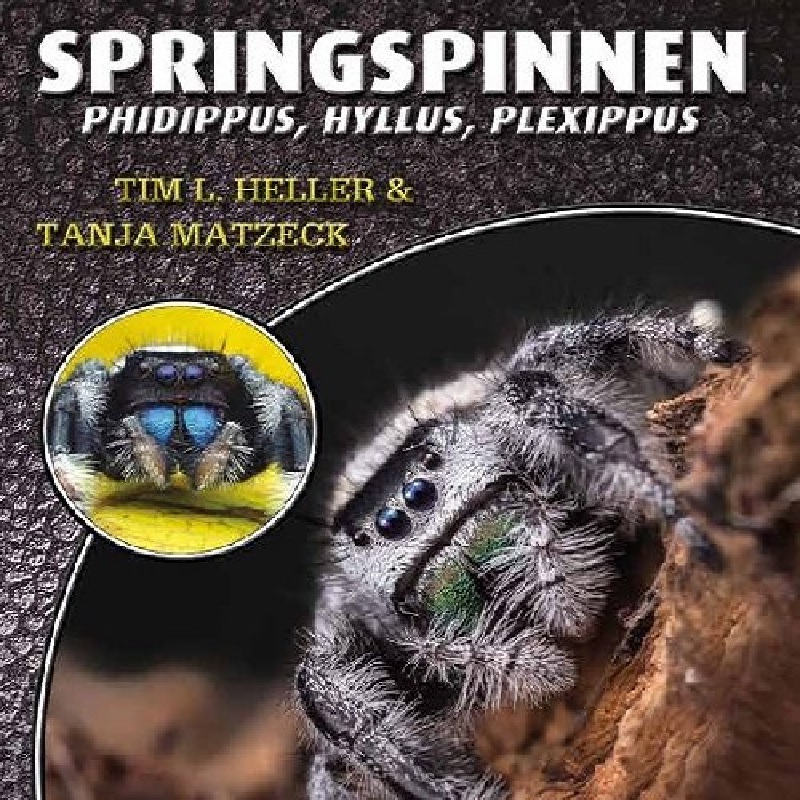
Jumping spiders Phidippus, Hyllus, Plexippus
Book Jumping Spiders - Phidippus, Hyllus & Plexippus A guide to keeping jumping spiders of the genera Phidippus, Hyllus & Plexippus. Who can resist the charm of jumping spiders? The childlike appearance of their expressive face simply leaves no one cold! In addition, their behavior is extremely exciting to observe, their colors are bright and their requirements for species-appropriate keeping are very easy to meet. No wonder these likeable jumpers are all the rage! This volume in the "Species by Species" series describes in detail what to look out for when buying and keeping them, introduces the most commonly kept species and color forms and provides plenty of tips on how to keep them successfully - so you can be sure they will breed well! Species by Species introduces you to the books in this series, which present the most popular terrarium animals. Each volume offers you detailed, practical care instructions and all the information you need to successfully breed your animals. All important questions from the required tank size to terrarium set-up, technical equipment, species-appropriate nutrition and disease prevention are answered with numerous tricks and tips. Experienced, long-standing breeders reveal how you can encourage the animals to reproduce and raise healthy young. All this in full color, generously illustrated and attractively designed - just about your terrarium animal - species by species

CHF 23.90

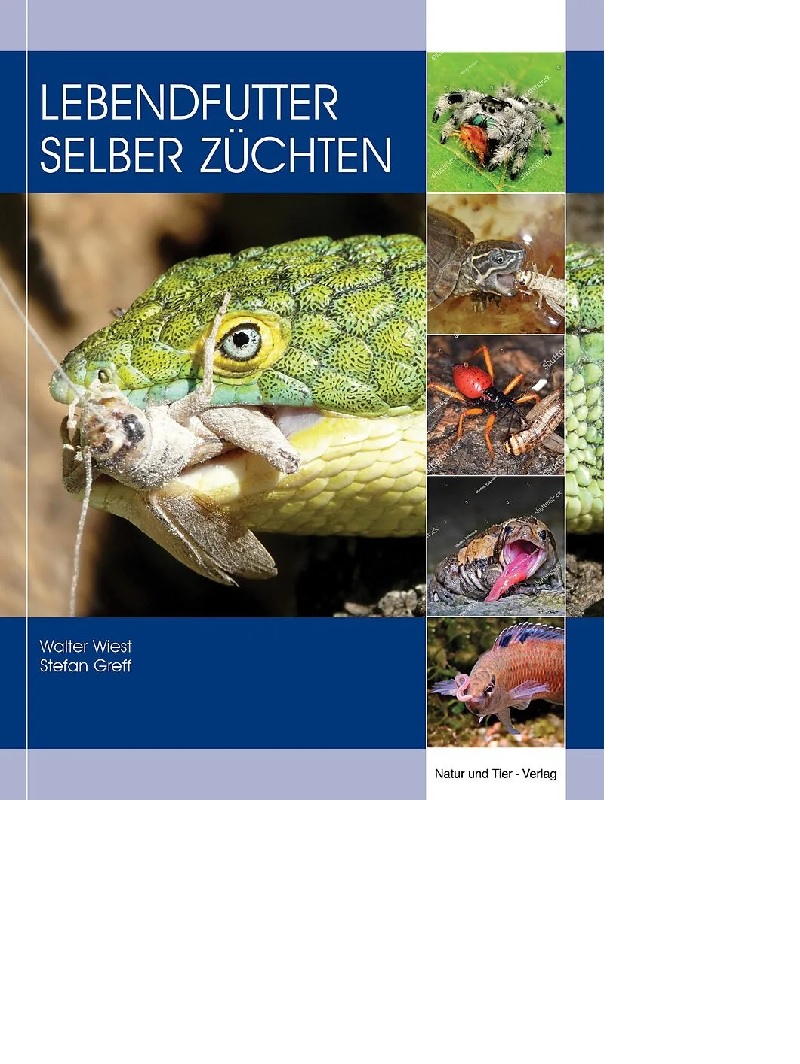
Book Breeding live food yourself
Book "Grow your own live food" - The perfect guide for pet owners Discover practical and detailed instructions on how you can easily breed food for your reptiles, birds, fish or other animals yourself in the book "Breeding live food yourself". With valuable tips on various food insects, their care and breeding, you can save money and ensure a species-appropriate diet for your pets. Contents of the book: Step-by-step instructions for breeding feeder insects Information on the best types of food for reptiles, birds and fish Care instructions and breeding conditions for various live food species Tips for sustainable and cost-effective food production Why breed your own live food? Get healthy, fresh food for your animals Save money and reduce dependence on pet shops Promote the health and well-being of your animals with species-appropriate food Whether you are a beginner or an experienced pet owner, this book provides you with everything you need to successfully breed live food yourself.

CHF 46.50

Marginata 69 - New Guinea tortoises
Marginata 69 - New Guinea tortoises – the genus ElseyaCover storyThe unrecognised beauties: New Guinea tortoises (Andreas S. Hennig)My experiences with Branderhorst's New Guinea tortoise, Elseya (Elseya) branderhorsti (Ouwens, 1914) (Andreas S. Hennig)Keeping and breeding of Rhodin's New Guinea tortoise, Elseya (Hanwarachelys) rhodini Thomson, Amepou, Anamiato & Georges, 2015 (Andreas S. Hennig)PortraitGeoemyda spengleri, Chinese serrated tortoise (Andreas S. Hennig)ReportageMacrochelys temminckii – Experiences and impressions with vulture tortoises part 2 (Reiner Praschag)KeepingAn alternative to year-round keeping of the Egyptian tortoise in the terrarium – my experiences with seasonal outdoor keeping of Testudo kleinmanni (Ricarda Schramm)EtymologySawbacks and living maps part 4: Graptemys gibbonsi, Pascagoula humpback tortoise (Holger Vetter)Classifieds & animal placement

CHF 16.50

Reptilia 75 - Morocco
Reptilia 75 - Morocco FAQ Terrarium lightingTransport of terrarium animalsPenguins and beaked-breasted tortoises Contents: Morocco - so close to Europe, and yet a completely different world. Culturallyof course, but also in its animal world the country withits vast deserts and the mighty Atlas Mountains is of particular interest. Arabia expert and spinytail researcher ThomasWilms introduces you to Morocco, its spectacular landscapes and the very special herpetofauna. Stephanie de Pury, Sascha Esser and Michel Aymerich report on their exciting search for the lizard snake there, Rolf Leptien has travelled to the south of the country, and finally Hemmo Nickel portrays the remarkable scorpions of Morocco. 2 EDITORIAL3 MAGAZINE11 DATES14 WESTERN HERP PERSPECTIVES            The "crisis" of the Florida soft-shelled turtle            by B. Love16 PHOTOSTORY            Morocco            Treasure trove in north-west Africa            by T. Wilms24 TRAVEL            Morocco: In search of             the lizard snake            by S. de Pury, S. Esser & M. Aymerich32 TRAVEL            On an excursion to the south of Morocco            by R. Leptien38 REPORTAGE            The scorpions of Morocco            Part 1            by H. Nickel, J. Hornung & M. Koch47 PORTRAIT and POSTER            Uroplatus giganteus            by P. Schönecker51 HERPETOFAUNA            The Big Bend National Park and its             reptiles. Part 2: Snakes            by P. M. Kornacker & U. Dederichs59 TERRARIUM PRACTICE             Animal-friendly transport of reptiles            by S. Knauf66 HERPETOFAUNA            African beauty among penguins            Ecological relationships of the             beaked-breasted tortoise in             the Cape of South Africa            by M. Wirth79 FAQ – Frequently Asked Questions            Terrarium lighting – Part 1            by I. Kober & U. Geissel86  ALSO NEAR YOU91  SUBSCRIPTION & SERVICE94  PREVIEW96  BRUTKASTEN            Travel snippets from the Caribbean – Part 2            by H. Werning

CHF 12.00

Terraria 16 - Outdoor terrariums
Terraria 16 - Outdoor Terrariums New Species 2008 Socialisations Contents: Spring is approaching, the outdoor season begins. And what could be nicer for a terrarium keeper than to care for their charges outdoors in the warm season, under natural conditions in their own garden. Our cover story deals with the various facets ofoutdoor terrarium keeping. The well-known outdoor terrarium keeper Martin Hallmen presents, this time in detail, the planning and construction of an outdoor terrarium for tortoises. Werner Lantermann reports on experiences with keeping European lizards outdoors. And Helmut Kreyerhoff not only has wonderful outdoor terrariums for garter snakes, but also shows how to use them to take fantastic "nature photos" of the charges. Magazine - A reptile zoo including export station in Arusha, Tanzania - The beet-tailed viper gecko Teratolepis fasciata – or not? - The more similar, the safer – especially in the dry season … - It also works without … - Legal matters - Marketplace14 TERRAglobal Machu Picchu Maik DOBIEY Onan – Memories of a Legend Karl-Heinz SWITAKCover Story: Outdoor Terrarium Facilities18 Construction of an outdoor facility with greenhouse for year-round keeping of Greek tortoises (Testudo hermanni boettgeri) Martin HALLMEN30 First experiences with European lizards in the outdoor terrarium Werner & Yvonne LANTERMANN37 Naturalistic photography of garter snakes in the outdoor terrarium Helmut KREYERHOFF44 Cockroaches in the terrarium – a brief overview Alexandra CHEBOTAEVA50 Thoughts on and experiences with the socialisation of reptiles using a special case: corn snakes with leopard geckos Karin MANNS56 Frogs in the leaf litter – representatives of the genera Ischnocnema, Haddadus and Proceratophrys in Santa Teresa, Espírito Santo Weslei PERTEL, Rogério L. TEIXEIRA & Dennis RÖDDER62 Travel Zambia – in the heart of Africa Philipp WAGNER72 New Species List of amphibian and reptile species newly described in 2008 Axel KWET88 Near You91 Subscription & Service94 Preview96 Incubator Shit happens Heiko WERNING

CHF 12.00

Herpeton, Greek Land Turtles
Herpeton - Greek tortoisesGreek tortoises are among the most frequently kept reptiles. Dipl. Biol. Uwe Dost has been keeping Greek tortoises for over 20 years and regularly breeds them. In his book, he passes on his knowledge and experience from his many years of experience with Greek tortoises. The book is particularly practice-orientated, as the author deals with experienced and inexperienced tortoise keepers on an almost daily basis and is very familiar with the questions and needs of pet owners. In addition to keeping tortoises outdoors in the garden, this book also describes keeping them in terrariums in detail. Whatever the reason for keeping tortoises (temporarily) in an indoor terrarium, the terrarium must be set up and technically equipped to meet the needs of the animals. Hibernation is also discussed in particular detail and demonstrated using illustrated "step-by-step" instructions. Contents: Lifestyle and behaviour in the natural habitat, setting up an outdoor enclosure, setting up and technical equipment of a terrarium, nutrition, hibernation, reproduction, rearing young animals, health, and much more.

CHF 27.90

The corn snake
All about corn snakes from Kriton Kunz 64 Seiten 14,8 x 21 cm zahlreiche Farbfotos Autor Kriton Kunz Inhalt: Vielleicht der Klassiker der Terraristik schlechthin ist die Kornnatter. Sie vereint in sich alle Eigenschaften, die eine Schlange zu einem geeigneten und auch dem Einsteiger empfehlenswerten Pflegling machen: Wunderschöne Färbung, attraktive Farbvarianten, ruhiges, umgängliches Wesen und leichte Haltbarkeit. Damit Sie Ihre Kornnattern vom ersten Tag an richtig und artgerecht pflegen können, vermittelt Ihnen Kriton Kunz, REPTILIA-Redakteur und erfahrener Schlangenhalter, in diesem Band der Reihe „Art für Art“ ausführlich und leicht verständlich alles, was Sie für die erfolgreiche Haltung dieser faszinierenden Art wissen müssen. Selbstverständlich erfahren Sie auch, wie Sie Ihre Tiere zur Vermehrung bringen, die Eier ausbrüten und die Jungtiere aufziehen können. Systematik und Körperbau Die faszinierende Biologie: Aus dem Leben der Kornnatter Alle Informationen zur artgerechten Haltung: Vom geeigneten Terrarium über Einrichtung und Technik bis hin zur Fütterung Erfolgreich nachzüchten: Paarungsstimulation, Inkubation der Eier und Aufzucht der Jungtiere Problemlösungen: Wie man die häufigsten Fehler bei der Pflege vermeidet, und wie man kranken Tieren helfen kann Brillante Fotos

CHF 21.90

Draco 49 - Outdoor facilities for turtles
Draco 49 - outdoor enclosures for tortoises Contents: Editorial A new home for tortoisesPeter Buchert Cold frame or greenhouse – the perfect shelter in a tortoise enclosureMichael Wirth Preparing to lay eggs: It's the mound that counts!Michael Wirth Always appropriate to size – the successful keeping and rearing of hatchlings and young animals in an outdoor terrariumMichael Wirth All for the sake of warmth – optimising tortoise enclosuresMichael Wirth The zoo moat – the invisible enclosure fencingMichael Wirth

CHF 18.40

Marginata 35 - Chinese three-legged turtle
Marginata 35 - Chinese three-legged turtleReintroduction of Testudo graeca in SpainBreeding the areolate flat tortoiseTurtle breeding at the Tennessee AquariumContents:EDITORIALMAGAZINEDATESPHOTOSTORYChinese three-keeled turtles (Mauremys [Chinemys] reevesii Gray, 1835)Hans - Dieter PhilippenREPORTAGEGlobal distribution of the Chinese three-keeled turtle (Mauremys [Chinemys] reevesii)Hans - Dieter PhilippenBREEDINGKeeping and breeding Chinese three-keeled turtles (Mauremys [Chinemys] reevesii Gray, 1831) on a slightly different scale – China’s turtle farmsTorsten Blanck, Ting Zhou, & Pi-Peng LiPORTRAITPinta Galápagos tortoise (Chelonoidis nigra abingdoni) – “Lonesome George”Hans - Dieter PhilippenBREEDINGRemarkable breeding successes in the Tennessee aquariumBill HughesREPORTAGEEvidence of viable populations of the Greek tortoise (Testudo graeca) establishing themselves outside their original range in the southof the iberian peninsulaJosé c. Báez, Jesús Duarte, M.A. Farfan & Raimundo RealBREEDINGExperiences with the husbandry and reproduction of the Areolate Flat-shelled Turtle (Homopus areolatus) under different conditions in Namibia and Switzerland. Part I: Husbandry and reproduction of the species in Namibia (Southern Africa)Alfred SchleicherREPORTAGEUnusual hatching of a Hermann’s tortoise (Testudo hermanni hermanni)Robert FröschBOOK TIPSMALL DISPLAYSSUBSCRIPTION & sERVIcEREGIONAL GUIDE

CHF 16.50

Tortoises Volume 1 - Hibernation
Hibernation in European tortoises Natural preparation and successful hibernation. Guide to keeping European tortoises, Volume 1 (2nd edition) A challenge for tortoise lovers, a necessity for their pets: the annual hibernation. This guide is aimed at readers who are looking for basic information as well as experienced keepers. It provides clear and concise information on the fundamental importance of hibernation for the species and their health. A separate chapter also deals with naturalised keeping in outdoor enclosures, which is a prerequisite for successful hibernation. Preparing for, carrying out and ending hibernation, including associated problems and mistakes, are described in detail. There is also important information from vet Frank Mittenzwei, a monthly overview of hibernation and lots of helpful illustrations. A really helpful guide for tortoise lovers.

CHF 23.90

Customers also saw

Tetra Pond FilterZym
Promotes the development of natural filter bacteria, for healthier water. Creates ideal conditions for establishing beneficial filter bacteria Accelerates the breakdown of organic debris, such as fish waste, uneaten food, and sludge Promotes and accelerates the natural breakdown of ammonia and nitrite. Packaging Units 10 Kps.

CHF 16.90