Product information "Echinodorus grisebachii Amazonicus - Narrow-leaved Amazon sword plant"
Echinodorus grisebachii Amazonicus
Schmalblättrige Amazonasschwertpflanze
max. Wuchshöhe
- 50 cm
Herkunftsland
Brasilien
Eignung
Barschaquarium Gesellschaftsaquarium
Typ
Rosettenpflanze
Familie
Alismataceae
Gattung
Echinodorus
Vermehrung
Adventivpflanzen am Blütenstiel
Wuchsgeschwindigkeit
schnell
pH
5 - 8
Wasserhärte
0 - 20 °dh
Hinweise
Die Heimat dieser Schwertpflanze ist das Amazonasgebiet in Brasilien. Sie wird auch als „Schmalblättrige Amazonas-Schwertpflanze“ bezeichnet, ist sehr gutwüchsig und in Aquarien ab 200 L zu pflegen. Die submersen Blätter sind 2-3 cm breit und flaschengrün. Für Südamerika-Bepflanzungen mit Skalaren oder Diskusfischen ist diese Art in Kombination mit anderen Echinodorus-Arten besonders gut geeignet. Ein freier, heller Standplatz fördert das vitale Wachstum und die Bildung von Blütenstanden mit Adventivpflanzen.
Echinodorus grisebachii Bleherae
Grosse Amazonas - Schwertpflanze
max. Wuchshöhe
60 - 80 cm
Herkunftsland
Brasilien
Eignung
Barschaquarium, DiskusaquariumGesellschaftsaquarium
Typ
Rosettenpflanze
Familie
Alismataceae
Gattung
Echinodorus
Vermehrung
Adventivpflanzen am Blütenstiel
Wuchsgeschwindigkeit
schnell
pH
5 - 9
Wasserhärte
10 - 20 °dh
Hinweise
Die grosse Amazonas-Schwertpflanze ist vielleicht die beliebteste Pflanze in der Aquaristik. Ihre Blätter sind mit 3-6 cm breiter als bei der ´amazonicus´ und die Wuchshöhe bis zu 60 cm lässt diese Art noch dominanter erscheinen. Ältere Büsche mit z. T. mehr als 50 Blättern sind ein imposanter Blickfang. Der Bodengrund muss aber mindestens 10 cm hoch sein, damit das Wurzelwerk sich entsprechend entfalten kann. In Kombination mit Helanthium-Arten (Zwergechinodorus) gelingen wunderschöne Südamerika-Unterwasserlandschaften.
Invitro aquarium plant Rotala rotundifoliaColorful stem plant for the background
Rotala rotundifolia is one of the most popular stem plants in the aquarium hobby - versatile, easy to care for and particularly attractive thanks to its delicate, round leaves. Depending on the light intensity and nutrient supply, it develops a vibrant green to bright red, adding lively color accents to any aquarium layout.
The in vitro version is grown under sterile conditions and is therefore free from algae, snails and pesticides - ideal for sensitive aquariums, especially shrimp tanks. Fast-growing and adaptable, Rotala rotundifolia is ideal for the mid to background and harmonizes wonderfully with other fine stem plants in the natural aquarium.
Advantages at a glance:
✅ Changes color depending on the light - from green to red
✅ Fast-growing & ideal for dense groups of plants
✅ InVitro - guaranteed free from harmful substances & snails
✅ Safe for shrimps & sensitive tanks
✅ Perfect for aquascaping & classic plant aquariumsProduct details:
Name: Rotala rotundifolia
Type: Stem plant
Position in aquarium: Middle to background
Growth height: approx. 30-50 cm
Light requirement: Medium to high
CO₂ supply: Recommended for more intense colorationTemperature: 22 - 28°C
Delivery form: In vitro cup (grown sterile)
Color effect: Green to reddish, depending on light & nutrients
SuperFish window scraper 46 - 65 cmWindow scraper for easy removal of algae and other dirt from aquarium glass. Stainless steel with a long service life.Caution! Blades are NOT included in the package. (Can be ordered separately)The sharp razor blade removes stubborn algae deposits from aquarium glassExtralong handle (46 - 65 cm)The razor blade is easy to replaceStainless steel with long life.
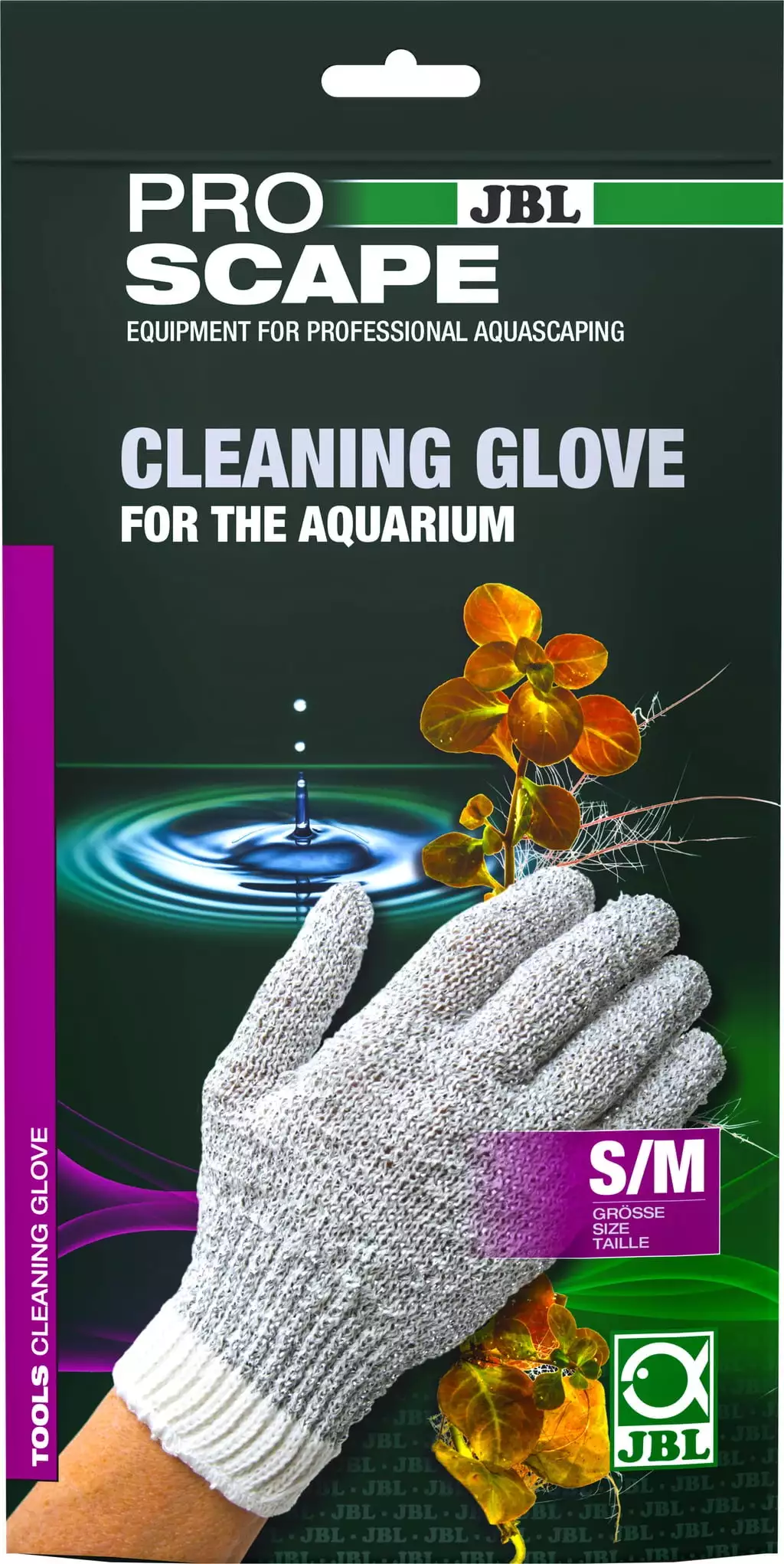
JBL ProScape care gloveCare glove for cleaning the glass and objects
Easy cleaning with fun!
Reaches all nooks and crannies in the aquarium.
Removes algae from plant leaves and decorative material.
For cleaning technical equipment and pump parts.
Echinodorus argentinensis / Argentine frogspoon
max. growth height
- 60 cm
Country of origin
Argentina, Brazil, Uruguay
Suitability
Perch aquariumCommunity aquarium
Type
family
Alismataceae
Genus
Echinodorus
Propagation
Adventitious plants on the flower stalk
Growth rate
medium
pH
5 - 9
Water hardness
0 - 20 °dh
Hints
Beginner plant
The distribution of sword plants extends from the USA to Argentina. E. argentinensis is one of the larger species and requires sufficient space in an underwater landscape. It is very suitable for open aquaria and its sturdy leaves look decorative above water. With a little patience, flowering shoots with white flowers will also form. A nutrient-rich substrate and medium to good lighting are required.
SuperFish BLADES to window scraper stainless steel10 stainless steel blades to window scraper from SuperFish.The sharp razor blade removes stubborn algae deposits from aquarium glassThe razor blade is easy to replaceStainless steel with long lifeContents: 10 pieces.
Anubias barteri var. glabraAnubias barteri var. glabra' or Anubias minima. This is a recommended species for aquaria with little light. Ideal for medium-sized tanks. The plant is easy to grow, does not require intensive fertilization and reproduces by dividing the rhizome. In vitro plant.Difficulty of cultivation: easyLight requirement: lowCO₂ requirement: lowHeight of the adult plant: 15-25 cmGrowth: slowTemperature: 20 - 22°CPlacement in the aquarium: Middle groundOrigin: AfricaCup diameter 6 cmAnubias Barteri Var. Glabra is a green plant from the Asteraceae family that is native to the swamps of Africa. It can grow both under water and in water. It can be found in the trade under the name Anubias minima. Unlike other Anubias, it is easy to plant in the substrate and has characteristic lanceolate leaves that grow up to 15 cm long. It can reach a height of 25 cm, but grows slowly so that it can also be cultivated in small aquariums.
The plant has a rhizome from which roots grow that wrap tightly around the spot where it is planted , making it ideal for planting on roots or lava rock. It is suitable for a second or third planting
Anubias thrives at different temperatures. It is suitable for cooler tanks as well as warm, tropical aquariums, e.g. with discus fish.It tolerates hard, soft, acidic and alkaline water. It prefers weak, diffuse lighting. It can become overgrown with algae under prolonged and intensive lighting. It is therefore advisable to plant it in darker or even shady areas of the aquarium.This plant does not like neglected aquaria and prefers the water to be changed regularly and no dirt to accumulate on its leavesIt grows slowly but forms a very attractive shape, especially in a group that forms a green, decorative clump. It feels very comfortable in tanks with a low water level and looks great in 'dachshund' type aquariums, where it creates the effect of an aesthetically pleasing tank. Thanks to it, we can create very interesting compositions. It is also well suited for aquariums with cichlids and other herbivorous fish
It does not require special care, it is enough to remove older leaves, which stimulates the rhizome to form cuttings. If you want to obtain new cuttings, you can regularly divide the rhizome into 2-3 cm long sections.
To attach the Anubias to roots or stones, a very thin string, thread or a special adhesive for attaching aquarium plants is sufficient.
The in vitro culture of plants is carried out in tissue culture laboratoriesThanks to the sterile production conditions, the cuttings are free from snails, algae or pathogens.Planting:The plant must be removed from the cup and thoroughly rinsed of the gel under running waterThis is best done by placing the plant in a container of lukewarm water. Most of the gel will then fall off by itself.
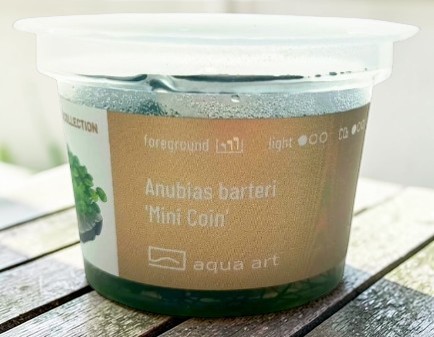
Anubias Barteri Nana 'Petite'
Anubias Barteri Nana 'Petite' is a very small, uniformly filigree Anubias variety. Selection has resulted in a miniature form that is ideal for nano aquariums.Difficulty of cultivation: easy Light requirement: low CO₂ requirement: low Height of the adult plant: up to 5 cm Growth slow Temperature: 20-30 °C Placement in aquarium: In the foreground Origin: cultivation 6 cm cup diameter Anubias barteri is a succulent green plant of the rhizome family, naturally native to the swamps of Cameroon and Nigeria, growing in fast-flowing waters. It can grow both under and above water. "Petite" is a selected cultivar of Anubias barteri. This species does not occur in nature in such a miniature form. Consistent selection by Singapore botanists has resulted in a delicate, compact version of Anubias barteri for nano-aquariums. The variety is rarely seen in the trade and represents a kind of rarity. The plant has a rhizome that forms roots that strongly entwine the area in which it is planted. It is therefore ideal for planting on roots or rocks, such as volcanic lava.The very decorative, tiny, heart-shaped leaves are stiff and fleshy, shiny on the surface and have a velvety texture on the underside. At the same time, they are very hard and stiff, so herbivorous fish are not interested in them. The height of this miniature plant is less than 5 cm. Therefore, it is well suited for the foreground. However, it can also be used for eye-catching trees in the background. Under good conditions, it can produce a delicate white flower. Anubias Barteri Nana 'Petite' can handle a variety of temperatures. It can thrive in cooler tanks as well as in warm, tropical aquariums with discus fish, for example. It likes water with a pH of 5.5-8.0, up to 15 ° dH. it prefers weak, diffuse lighting, reaching more like 0.3 W/l. In case of prolonged and intense lighting, it may become overgrown with algae. Therefore, it is advisable to plant it in darker or even shaded areas of the tank. The plant does not like neglected aquariums, it prefers water that is changed regularly and does not leave dirt on its leaves. It grows slowly, but forms a very attractive shape, especially when it grows in a group to form a green, decorative clump. It is very comfortable in tanks with low water levels and looks great in nano aquariums. Therefore, it is a popular plant for many aquascapers. With it can create very interesting miniature compositions. It also does well in aquariums with cichlids and other herbivorous fish. It is often used in shrimp tanks and nano aquariums for fighting fish. It does not require special care, it is enough to remove older leaves, which stimulates the rhizome to form offshoots. If you want to get new cuttings, you can divide the rhizome into 2-3 cm long sections from time to time. To attach the Anubias to roots or stones, it is enough to use very thin string, thread or special glue for fixing aquarium plants.
Planting: The plant must be removed from the cup and thoroughly rinsed from the gel under running water. This is best done by placing the plant in a container of lukewarm water. Most of the gel will then fall off by itself.
Echinodorus argentinensis / Argentine frogspoon
max. growth height
- 60 cm
Country of origin
Argentina, Brazil, Uruguay
Suitability
Perch aquariumCommunity aquarium
Type
family
Alismataceae
Genus
Echinodorus
Propagation
Adventitious plants on the flower stalk
Growth rate
medium
pH
5 - 9
Water hardness
0 - 20 °dh
Hints
Beginner plant
The distribution of sword plants extends from the USA to Argentina. E. argentinensis is one of the larger species and requires sufficient space in an underwater landscape. It is very suitable for open aquaria and its sturdy leaves look decorative above water. With a little patience, flowering shoots with white flowers will also form. A nutrient-rich substrate and medium to good lighting are required.
Vallisneria spiralis (Glattblättrige Sumpfschraube)
max. Wuchshöhe
- 100 cm
Herkunftsland
Tropischer Kosmopolit
Eignung
Barschaquarium, Diskusaquarium, Gesellschaftsaquarium
Typ
Rosettenpflanze
Familie
Hydrocharitaceae
Gattung
Vallisneria
Vermehrung
Ausläufer
Wuchsgeschwindigkeit
schnell
pH
6 - 9
Wasserhärte
10 - 30 °dh
Hinweise
Vallisneria spiralis gehört auch zu den Klassikern in der Aquaristik. Die anspruchslose Wasserpflanze bildet bandförmige Blätter zwischen 0,8 und 1,5 cm Breite. Manchmal werden Blattlängen bis zu 1 m erreicht. Die Pflege und Kultur ist einfach und bestens zur Gestaltung einer grünen, lebenden Rückwand geeignet. Ausläufertriebe, die in den vorderen Bereich wachsen, sollte man rechtzeitig entfernen. Der Artname „spiralis“ bezieht sich nicht auf die Blätter, sondern auf die spiralig gedrehten Blütenstängel. Sie ist auch eine ideale Pflanze für Barschaquarien.
Vallisneria nana / Grasartige Sumpfschraube
max. Wuchshöhe
- 70 cm
Herkunftsland
Australien
Eignung
Barschaquarium, Gesellschaftsaquarium, NanoCube, Aquascaping
Typ
Rosettenpflanze
Familie
Hydrocharitaceae
Gattung
Vallisneria
Vermehrung
Ausläufer
Wuchsgeschwindigkeit
mittel
pH
6 - 9
Wasserhärte
10 - 30 °dh
Hinweise
Eine neue Vallisnerie in der Aquaristik ist Vallisneria nana. Der Artname „nana“ bedeutet: zwergig. Dieses Wuchsverhalten zeigt die Pflanze allerdings nur am Naturstandort in Australien. In unseren Aquarien erreichen die Pflanzen durchaus Wuchslängen von 30-70 cm. Somit ist die sehr schmalblättrige Art eher für den Hintergrund geeignet. Kultur und Pflege sind sehr einfach, doch auch hier gilt es, das Wachstum der Ausläufer zu kontrollieren. CO2-Gaben fördern den Wuchs aller Vallisnerien zusätzlich.
Anubias nana auf Wurzel (Zwergspeerblatt auf Wurzel)
Das Zwergspeerblatt gehört zu den beliebtesten Aquarienpflanzen. Dies ist eine hervorragende Vordergrundpflanze mit sehr geringen Ansprüchen. Das Rhizom, ein verdickter Spross, darf nicht mit Bodengrund überdeckt werden. Am besten bindet man die Anubas barteri nana auf einen Stein oder eine Wurzel auf. So wächst die Pflanze am besten. Sie eignet sich nicht nur für Gesellschaftsaquarien oder Nano Cubes, sondern auch hervorragend für Cichliden vom Malawi- oder Tanganjikasee zu verwenden. Zwischen diesen Steinaufbauten sehen die kleinen Anubias barteri nana wunderschön aus und sehr dekorativ.
max. Wuchshöhe
5-10 cm
Herkunftsland
Westafrika
Eignung
Gesellschaftsaquarium, NanoCube und Barschaquarium (Cichliden)
Typ
Aufsitzerpflanze
Familie
Araceae
Gattung
Anubias
Vermehrung
Teilung des Rhizom
Wuchsgeschwindigkeit
langsam
pH
5-9
Wasserhärte
sehr weich bis sehr hart
Hinweise
Auf einen Stein oder eine Wurzel aufbinden.
Anubias barteri var. nana 'Bonsai' - Kleinstes ZwergspeerblattDennerle A21.3
max. Wuchshöhe
- 5 cm
Herkunftsland
Zuchtform
Eignung
Aquascaping, Barschaquarium, Gesellschaftsaquarium, NanoCube
Typ
Aufsitzerpflanze
Familie
Araceae
Gattung
Anubias
Vermehrung
Seitensprosse am Rhizom
Wuchsgeschwindigkeit
langsam
pH
5 - 9
Wasserhärte
0 - 30 °dh
Hinweise
Auf einen Stein oder eine Wurzel aufbinden.
Kleiner geht es wirklich nicht mehr! Sie ist wohl die kleinste Anubias der Welt und eine echte Bereicherung für jede Unterwasserlandschaft. In der Kultur und Pflege ist sie gleichermaßen robust wie die Stammform, benötigt aber ein wenig mehr Licht, um schöne, kompakte Polster zu bilden. Die Zwergform kann man schon in einem 10 L Nano Cube verwenden. Sehr natürlich wirken die Pflanzen aufgebunden auf filigranen Wurzeln. Das rote Moorholz ist dafür am besten geeignet. Aber auch auf dekorativen Steinen macht die Bonsai-Anubias eine gute Figur.
Anubias barteri nana
Dwarf spear leaf, multi-stemmed - XXL - Mother plant
Dennerle A21
max. growth height
5 - 10 cm
Country of origin
West Africa
Suitability
Aquascaping, perch aquarium, community aquarium, NanoCubes
Type
Perennial plant
family
Araceae
Genus
Anubias
Propagation
Division of the rhizome
Growth rate
slow
pH
5 - 9
Water hardness
0 - 30 °dh
Hints
Tie to a stone or root. Easy to care for and undemanding.
The dwarf spear leaf, as it is known by its German trade name, is one of the most popular aquarium plants of all. It is an excellent foreground plant that requires very little care. When planting, attention must be paid to the rhizome. This thickened shoot must not be covered with substrate. The small Anubias grows best when tied up on stones and roots (see Mbuna trees on page 78). The dwarf spear leaves are very often used for cichlids from Lake Malawi and Lake Tanganyika. Here they look particularly decorative between the stone structures.
Echinodorus Dschungelstar Nr. 2 / Schwertpflanze Kleiner Bär
max. Wuchshöhe
- 25 cm
Herkunftsland
Zuchtform
Eignung
Barschaquarium, Gesellschaftsaquarium
Typ
Rosettenpflanze
Familie
Alismataceae
Gattung
Echinodorus
Vermehrung
Adventivpflanzen am Blütenstiel
Wuchsgeschwindigkeit
mittel
pH
5 - 8
Wasserhärte
0 - 20 °dh
Hinweise
Die Sorte ´Kleiner Bär´ ist seit 1995 im Handel und zählt nach wie vor zu den beliebtesten rotblättrigen Sorten. Im Aquarium bildet die Pflanze eine kompakte Rosette mit rostroter bis tief dunkelroter Farbe. Ältere Pflanzen erreichen eine Wuchshöhe bis 25 cm. Wie bei vielen Echinodorus-Sorten unterscheiden sich emerse und submerse Blätter enorm. Der ´Kleine Bär´ ist in der Gewächshauskultur kräftig grün und treibt schon nach wenigen Tagen im Aquarium die ersten roten Unterwasserblätter. Ein immer wieder faszinierendes Schauspiel!
Echinodorus Ozelot - aquarium plant
max. growth height
- 30 cm
Country of origin
cultivated form
Suitability
Perch aquarium, community aquarium
Type
Rosette plant
family
Alismataceae
Genus
Echinodorus
Propagation
Adventitious plants on the flower stalk
Growth rate
medium
pH
5 - 8
Water hardness
5 - 20 °dh
Notes
The popular variety Echinodorus 'Ozelot' has been on the market for some time. Its striking pattern of spots is striking, reminiscent of the fur of the ocelot cat. The plant is very vigorous with narrow elliptical leaves. New leaves show an intense brown-red to dark red color. Over time, they turn dark olive green with the typical spotted pattern. The growth height of this attractive variety is only 20-30 cm. It is therefore also suitable for use in medium-sized aquaria.
Echinodorus Dschungelstar Nr. 9 / Froschlöffel Getüpfelter Harbich
max. Wuchshöhe
- 25 cm
Herkunftsland
Zuchtform
Eignung
Barschaquarium, Gesellschaftsaquarium
Typ
Rosettenpflanze
Familie
Alismataceae
Gattung
Echinodorus
Vermehrung
Adventivpflanzen am Blütenstiel
Wuchsgeschwindigkeit
mittel
pH
5 - 8
Wasserhärte
0 - 20 °dh
Hinweise
Die Blattform der Nr. 9 erinnert an die rein grüne Sorte ´Harbich´. Hinzu kommt hier aber eine sehr schöne, rote Fleckenzeichnung. Die fast kreisrunden emersen Blätter sind nur über Wasser zu beobachten, im Aquarium sind sie kürzer gestielt und die Blattform ist deutlich gestreckter. Die olivgrünen Blätter mit rötlichbrauner Zeichnung sind oftmals am Blattrand gewellt. Mit einer Wuchshöhe bis 25 cm ist diese Sorte auch für kleinere Aquarien gut geeignet. Wie alle Dschungelstar-Sorten ist sie sehr pflegeleicht.
Cryptocoryne usteriana - in vitro
max. Wuchshöhe
- 70 cm
Herkunftsland
Philippinen
Eignung
Barschaquarium, Gesellschaftsaquarium
Typ
Rosettenpflanze
Familie
Araceae
Gattung
Cryptocoryne
Vermehrung
Ausläufer
Wuchsgeschwindigkeit
langsam
pH
6 - 8
Wasserhärte
7 - 21 °dh
Hinweise
Eine eindrucksvolle Wasserkelch Art ist die Cryptocoryne usteriana von den Philippinen. Sie wächst im Gegensatz zu vielen anderen Wasserkelch Arten permanent unter Wasser und ist daher für die emerse Kultur im Gewächshaus nicht geeignet. Aufgrund dieser Tatsache ist sie nur sehr selten im Handel anzutreffen. Die bullosen Blätter werden bis 70cm lang, die Blattfarbe ist leuchtend mittelgrün mit rötlicher Blattunterseite. Bei mittlerer Beleuchtung wächst Cryptocoryne usteriana ideal in hartem, alkalischen Wasser und daher bestens für Cichliden vom Malawi- und Tanganjikasee geeignet. Auch bei geringer CO2 Gabe wächst die Pflanze noch recht gut und ist in der Pflege sehr anspruchslos. Der bekannteren Cryptocoryne aponogetifolia sieht sie zum Verwechseln ähnlich.
Wasserpflanzen In-Vitro
In Vitro - Pflanzen werden im Labor unter sterilen Bedingungen kultiviert. Sie werden in einer 7cm großen, geschlossenen Dose ausgeliefert. Die kleinen Pflänzchen sind absolut Algen und Schneckenfrei und können direkt eingepflanzt werden. Ideal ist diese Produktgruppe für kleinere Aquarien und Nano Cubes sowie für das moderne Aquascaping. Wie anspruchsvoll die jeweilige Pflanze ist, lässt sich ganz leicht an der oberen rechten Ecke der Verpackung erkennen. Vor dem Einsetzen muss lediglich das Nährmedium abgespült und die Pflanze portioniert werden
Cryptocoryne wendtii Braun
Brauner Wasserkelch
(ehemals Cryptocoryne wendtii Tropica)
max. Wuchshöhe
- cm
Herkunftsland
Sri Lanka
Eignung
Gesellschaftsaquarium, NanoCubes und Aquascaping
Typ
Rosettenpflanze
Familie
Araceae
Gattung
Cryprocoryne
Vermehrung
Ausläufer
Wuchsgeschwindigkeit
mittel
pH
5-8
Wasserhärte
sehr weich bis sehr hart
Hinweise
Die braune Farbvariante der Cryptocoryne wendtii ist ebenfalls sehr beliebt und in vielen Pflanzenlandschaften einsetzbar. Ihre Blattränder sind leicht gewellt, die Blätter sind teilweise auch bullös geformt. Die Blattfarbe ist grün bis braun, zum Teil auch braun geflammt. Bei guter Beleuchtung werden ihre Blätter tief dunkelbraun. In Kombination mit anderen grünen Wasserkelchen wirkt dies sehr kontrastreich. Wie fast alle Cryptocorynen aus Sri lanka wächst sie gut im härteren Wasser und ist somit bestens für Cichliden-aquarien geeignet.
Vallisneria australis Gigantea (Riesen-Sumpfschraube)
max. Wuchshöhe
- 200 cm
Herkunftsland
Australien
Eignung
Barschaquarium, Diskusaquarium, Gesellschaftsaquarium
Typ
Rosettenpflanze
Familie
Hydrocharitaceae
Gattung
Vallisneria
Vermehrung
Ausläufer
Wuchsgeschwindigkeit
mittel
pH
6 - 9
Wasserhärte
25 - 30 °dh
Hinweise
Die Riesenvallisnerie ist eine sehr variable Wasserpflanze, die in Australien beheimatet ist. Ihre langen, schmalen Blätter können bei guten Bedingungen gigantische Ausmaße annehmen, Blattlängen bis 3 m sind keine Seltenheit. Sehr beliebt ist die Riesenvallisnerie bei Diskus-Aquarien und Aquarien für die ostafrikanischen Buntbarsche aus dem Malawi- und Tanganjikasee. Diese Fische benötigen härteres Wasser, was allerdings für viele Pflanzen problematisch ist. Die Vallisneria australis ´Giganta´ jedoch bevorzugt diese Wasserwerte.