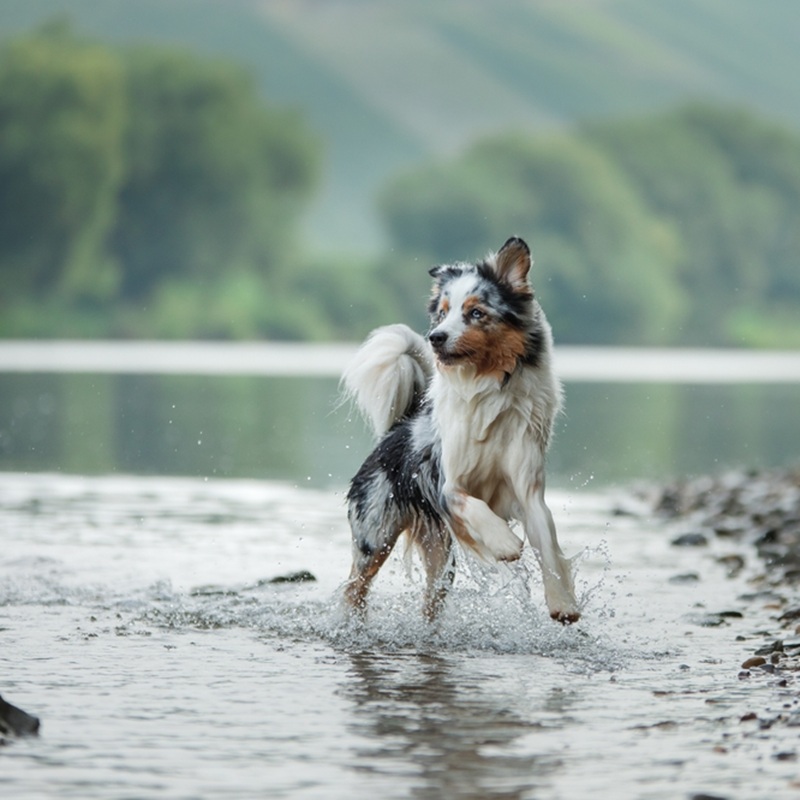

Australian Shepherd
Profile Australian Shepherd / Berger Australian
History of the Australian Shepherd
Although the name "Australian Shepherd" suggests otherwise, the breed as we know it today developed in the USA. The FCI standard explains the naming with reference to Basque shepherds who came to the United States via Australia and brought dogs of this type with them.
Appearance
Body shape:
The Australian Shepherd is a medium-sized, well-muscled, agile working dog. He appears balanced, athletic and is slightly longer rather than tall. His build is designed for endurance, agility and quick changes of direction.
Coat:
The coat is of medium length and provides reliable protection from the weather. It is straight to slightly wavy, with an undercoat that is thicker or thinner depending on the season and climate. Particularly typical are the merle varieties, which give the Aussie its striking appearance.
Nature and character
The Australian Shepherd is very intelligent, attentive and eager to work. They often bond closely with their owner and want to complete tasks instead of just "running along". Many Aussies are sensitive and react strongly to mood, routines and body language. At the same time, they can be vigilant and, depending on their lineage, tend towards protective or controlling behavior if they are not taught clear rules and calmness.
Grooming
Grooming is usually moderate but regular: Brushing about once or twice a week helps to remove loose undercoat and prevent matting (especially behind the ears, on the pants and collar). Brushing should be more frequent during shedding periods. Bathing is only necessary when needed, checking ears, claws and teeth is more important.
Health
Frequently mentioned issues are hip and elbow dysplasia as well as hereditary eye problems (e.g. cataracts). Serious breeding therefore works with appropriate examinations and eye screenings. The MDR1 gene mutation (multidrug resistance) is also important: Affected dogs are less able to tolerate certain medications. A DNA test helps to identify risks and inform vets.
Training
The Australian Shepherd learns quickly and willingly, but also quickly learns wrong patterns if rules are unclear. Reward-based training with clear structures, meaningful activities and a consistent daily routine works best. Impulse control, frustration tolerance and a well-developed recall are very important. Calm training is just as important to ensure that the dog does not remain in work mode and look for "jobs" for itself (e.g. herding children, bicycles or joggers).
What special features does this breed have
The Aussie is a working dog that wants to be kept physically and mentally busy. Many Australian Shepherds love dog sports, trick training, nose work and everyday tasks. They can be very cooperative, but sometimes seem "too clever" if they lack structure. If exercise and rest are not suitable, some dogs develop nervousness, controlling behavior or unwanted herding.
Suitable for first-time dog owners?
Basically yes, but only if you are really active, take training seriously and are prepared to work intensively on training, exercise and rest. The Aussie is often too demanding for people who are looking for an uncomplicated "just go with the flow" dog.
Family dog or not?
It can be a very good family dog, especially in active households with clear rules and enough time. It is important that children respect the dog and that herding behavior is taught early on. In very chaotic families without structure or without sufficient activity, it can become more difficult because the dog then often starts to control moving things or to be constantly "on his toes".
Login
Suggested products




Customers also saw