
Large Münsterländer
FCI standard number: 118
Country of origin: Germany
Classification: FCI Group 7 Pointing Dogs
Height at withers bitch: 58–63 cm
Height at withers male: 60–65 cm
Weight female: approx. 30 kg
Weight male: approx. 30 kg
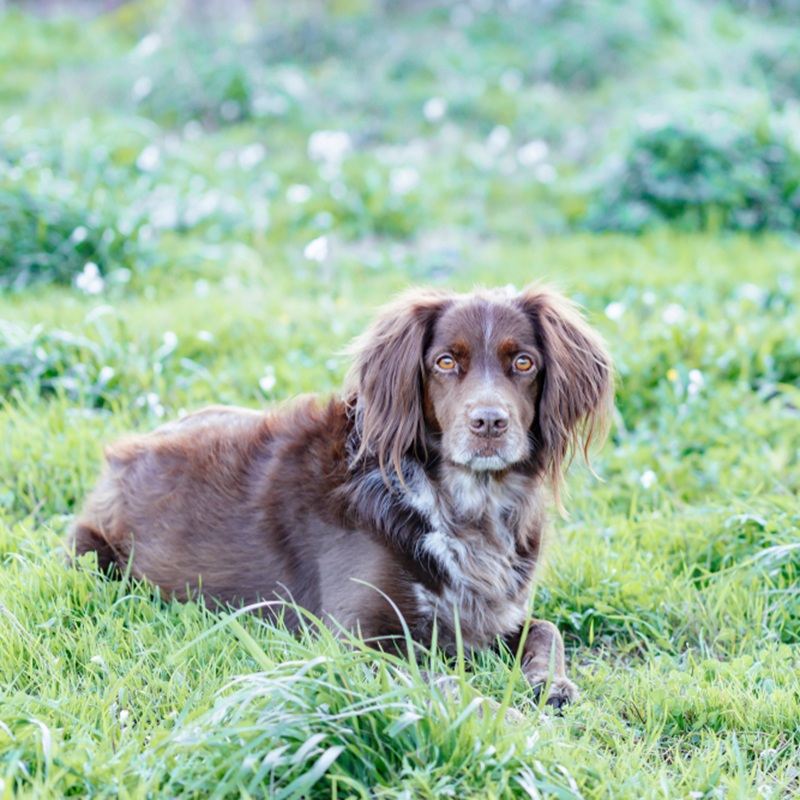
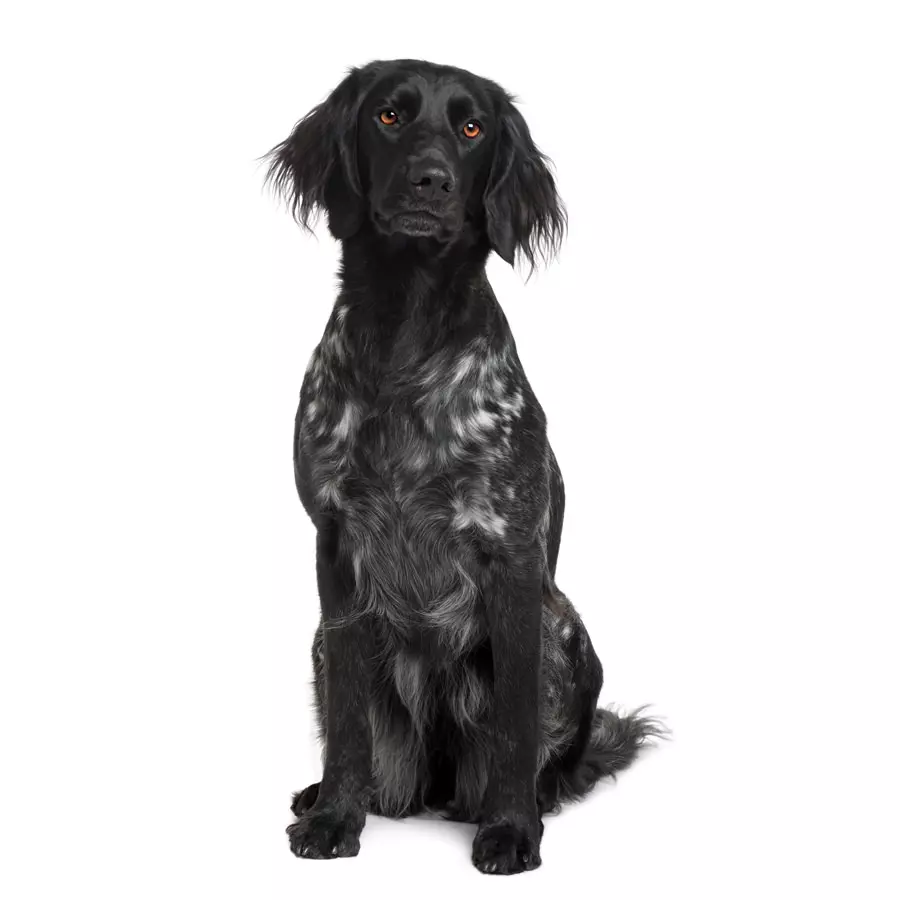
Coat colour: White with black patches and spots, black moulded or pure black; the head is black, possibly with a white snip or blaze.
Coat texture: Long and dense, but sleek, not curly or sticking out; typical long coat with good feathering on legs, tail and ears.
Neck circumference: approx. 40–50 cm. This is only a guideline and should always be measured individually
The Great Munsterlander
History of the Scottish Terrier
According to the FCI, the historical development of the Grosser Münsterländer can be traced back to the white-coloured bird and pickling dog of the Middle Ages, via the rummaging and guard dog to the pointing dog of the 19th century. After the German Longhair Club excluded the black colour from breeding in 1909, the targeted pure breeding of the black and white longhair type began in 1919, from which the Grosse Münsterländer emerged. Scheduled breeding began in 1922.
Appearance
Body shape: The Großer Münsterländer is strong, muscular and yet sleekly built. It appears intelligent and noble, with a clean outline and well-balanced proportions. Body length and height at the withers should be as equal as possible.
Coat: The coat is long, dense and close-fitting. It is significantly longer and densely feathered, particularly on the forelegs and hind legs, the tail and the ears. On the head, the hair is short and close-fitting.
Nature/character
The most important characteristics include docility, docility and reliable hunting ability, especially after the shot. The character is lively, but not nervous. The VDH also describes him as lovable, eager to work and a pleasant family member if sufficiently exercised.
Grooming
The long coat needs regular brushing to prevent matting and to keep it clean. The feathering on the legs, tail and ears in particular should be groomed. As the breed likes to work in fields, woods and water, it is also important to check paws, ears and coat after outings. Overall, the breed is considered easy to care for if the coat is groomed consistently.
Health
The Grosser Münsterländer is generally regarded as a robust and hardy breed. Nevertheless, breeding organisations pay attention to genetic health, in particular HD and ED. Ears should also be checked regularly, as long-haired dogs with drooping ears are more likely to suffer from inflammation.
Education
Training should be consistent, fair and meaningful. The Grosser Münsterländer is intelligent, willing to learn and eager to work, but needs tasks that suit his abilities. Because he is a strong hunting dog, pure exercise is usually not enough; he also needs mental exercise and clear leadership.
What are the special features of this breed?
Its versatility as a hunting dog is special. According to the standard, it should be usable for work in the field, in the forest and in the water before and after the shot. Added to this are his close bond with humans, his great willingness to work and his love of water. He is therefore not a pure companion dog, but a dog with a clear task and working dog disposition.
Suitable for first-time dog owners?
Rather only to a limited extent. Although he is docile and docile, he is also a real hunting dog with a lot of energy, willingness to work and a need for meaningful exercise. It is more suitable for beginners if they are very active, well prepared and can really keep the dog busy.
Family dog or not?
Yes, basically yes, but not for every family. With sufficient exercise, he can be a friendly, patient and pleasant family dog. However, without suitable activity, his strong working and hunting instincts can quickly become a problem. He is therefore best suited to active families who do a lot with him and do not underchallenge him.
Login
Suggested products





Customers also saw