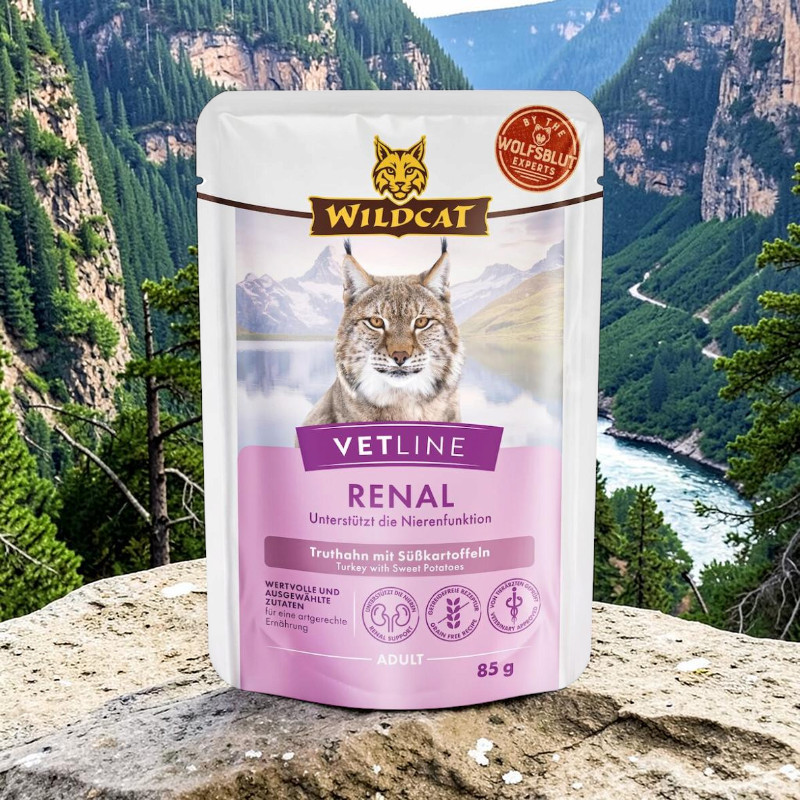
Product information "Wildcat Fel Adult Renal Turkey"
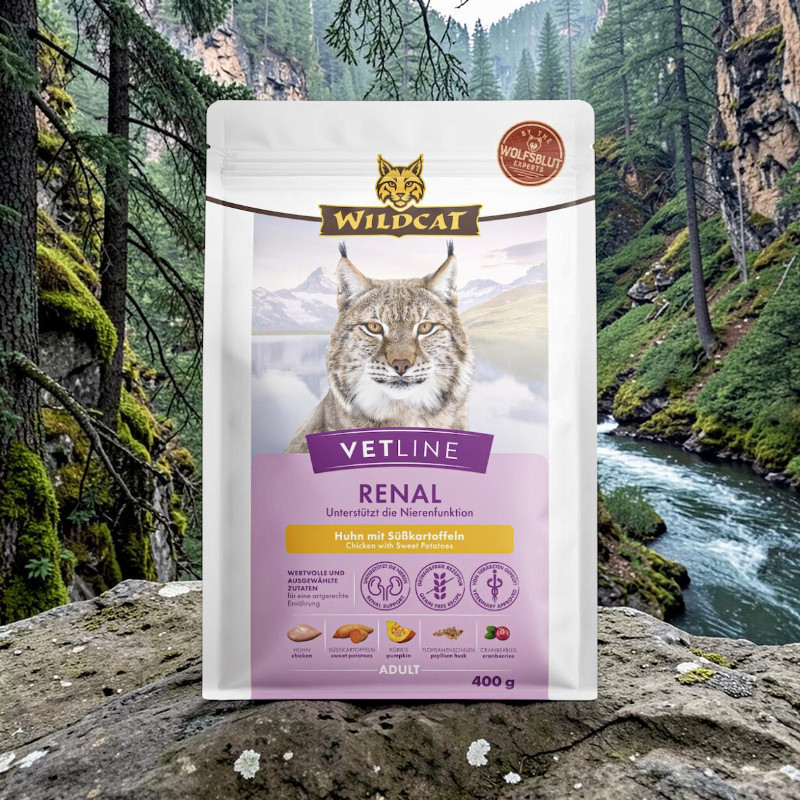
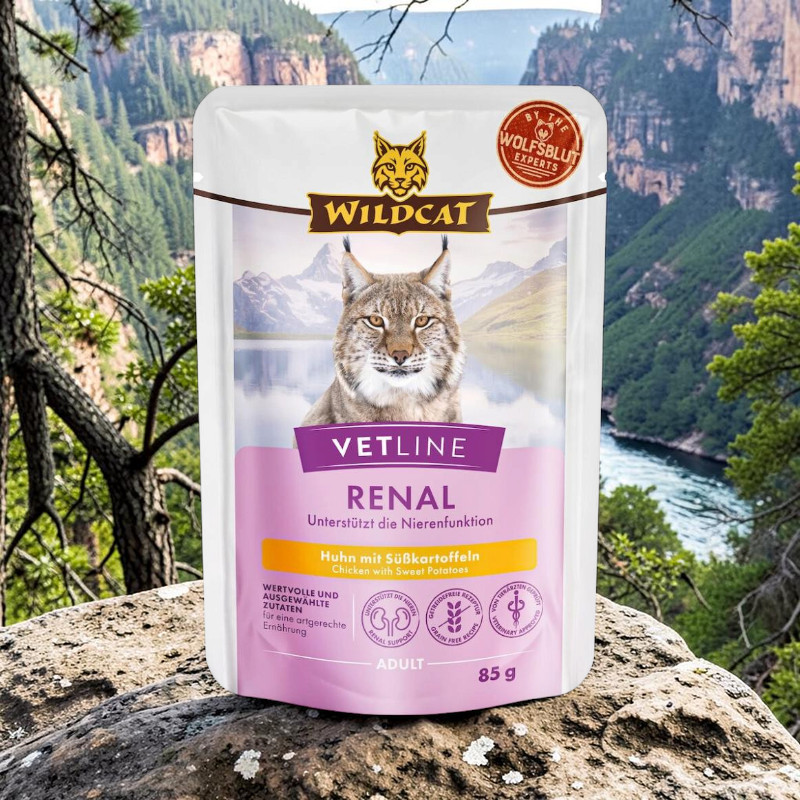
Wildcat VetLine Renal Turkey
Wildcat VetLine Renal Turkey with 53% turkey. Grain-free wet diet food to support kidney function and reduce the formation of oxalate and urate stones. Available in 85 g and 200 g.
Wildcat VetLine Adult Renal Turkey is a specially formulated complete dietetic food for adult cats with chronic renal insufficiency. The adapted formula supports kidney function and may also help to reduce the formation of calcium oxalate and urate stones.
The kidneys perform vital functions in a cat’s metabolism. They filter waste products from the blood, regulate water and electrolyte balance, and help maintain mineral balance. In chronic kidney failure, this filtering capacity gradually declines. A targeted diet can help to relieve the strain on the kidneys and support the quality of life of affected cats.
The Wildcat VetLine Renal Turkey formula contains a limited protein content and a reduced phosphorus content. The adjusted protein content can reduce the amount of nitrogenous metabolic by-products, whilst the reduction in phosphorus is particularly important in cases of chronic kidney disease.
With 53% turkey as the main ingredient, this wet food provides selected animal proteins. The tasty recipe may also appeal to cats whose appetite has diminished due to their illness.
The food is supplemented with sweet potatoes, pumpkin, Jerusalem artichokes and alfalfa. These plant-based ingredients provide additional nutrients and fibre. The mannan-oligosaccharides (MOS) and fructo-oligosaccharides (FOS) they contain act as prebiotic fibre and can support a balanced gut flora.
Another distinctive feature is the addition of 0.35% potassium citrate. This has a urine-alkalising effect and can help to reduce the risk of calcium oxalate stones forming. The adapted formula is also suitable for providing nutritional support in certain disorders of uric acid metabolism.
The linseed oil contained in the food provides valuable fatty acids. With a fat content of 8.7% and an energy content of 122 kcal per 100 g, the food offers a comparatively high energy density, which can be helpful for cats with a low food intake.
The moisture content of 76% also supports daily fluid intake. Adequate hydration is particularly important for cats with kidney disease.
Wildcat VetLine Renal was developed in collaboration with vets and nutritionists. The recipe is grain-free and contains no added maize, soya or flavour enhancers.
The diet wet food is available in convenient 85 g and 200 g sizes, allowing for individual portioning.
Wildcat VetLine Adult Renal Turkey is a complete dietetic food for specific nutritional purposes. It should only be used on veterinary advice and is not a substitute for medical treatment.
Your benefits at a glance
- Available in 85 g and 200 g wet food
- Dietary complete feed for adult cats
- Contains 53% turkey as a selected source of animal protein
- Limited protein content to support kidney function
- Reduced phosphorus and sodium content
- Contains 0.35% potassium citrate to alkalise the urine
- Grain-free formula with prebiotic fibres MOS and FOS
- 76% moisture content to support fluid intake
Available sizes
Instructions for use
Wildcat VetLine Adult Renal Turkey is a complete dietetic food for adult cats, designed to support kidney function in cases of chronic renal failure and to reduce the formation of calcium oxalate and urate stones.
Feeding should only take place following veterinary assessment and recommendation. Kidney diseases and different types of urinary stones require different nutritional management strategies.
Where possible, divide the daily ration into several smaller meals. This can make it easier for cats to eat, particularly those with a reduced appetite.
Recommended duration of use
- In cases of chronic renal failure, initially for up to 6 months
- To reduce the formation of calcium oxalate stones, initially for up to 6 months
- To reduce the formation of urate stones, initially for up to 6 months
- In cases of irreversible disorders of uric acid metabolism, lifelong feeding may be necessary
- Veterinary advice should be sought before use and before extending the duration of feeding
Changing your cat’s diet
- Unless otherwise recommended by a vet, the switch to Wildcat VetLine Renal should be made gradually over a period of approximately 14 days.
- In the event of acute health problems, a more rapid change to the diet may be necessary. In this case, follow your vet’s instructions
Important notes
- Not suitable for kittens
- Not suitable for pregnant or nursing cats
- Do not use in cases of liver failure with impaired bile secretion
- Do not use in cases of pancreatitis or hyperlipidaemia
- Do not combine with other special diets without consulting your vet
- Check body weight and food intake regularly
- Ensure fresh drinking water is available at all times
- Store opened packs in the fridge and feed them to your cat as soon as possible
- In the event of a prolonged refusal to eat, repeated vomiting or a marked deterioration in general health, veterinary advice should be sought immediately
Zoo Roco Tip
Cats with chronic kidney disease often require special attention when it comes to feeding. In addition to the adapted nutrient composition, it is important that the cat eats sufficiently and drinks enough fluids.
Wildcat VetLine Renal Turkey contains reduced phosphorus levels and selected animal proteins. This enables the food to provide nutritional support for the veterinary treatment of chronic kidney disease.
Serve the wet food at a slightly warm temperature, or at room temperature. This allows the aroma to develop more fully, which can be particularly helpful for cats with a reduced appetite.
Provide several drinking options in quiet places. A cat fountain may also encourage some cats to drink more frequently.
For cats with kidney disease, we recommend regularly monitoring body weight and recording any changes in appetite, drinking behaviour and urine output.
Do not mix the Renal food with ordinary cat food or unsuitable treats without consulting your vet. Doing so may alter the carefully balanced phosphorus and protein content of the daily ration.
Regular veterinary check-ups to monitor kidney function and general health help to adapt the diet to the progression of the disease.