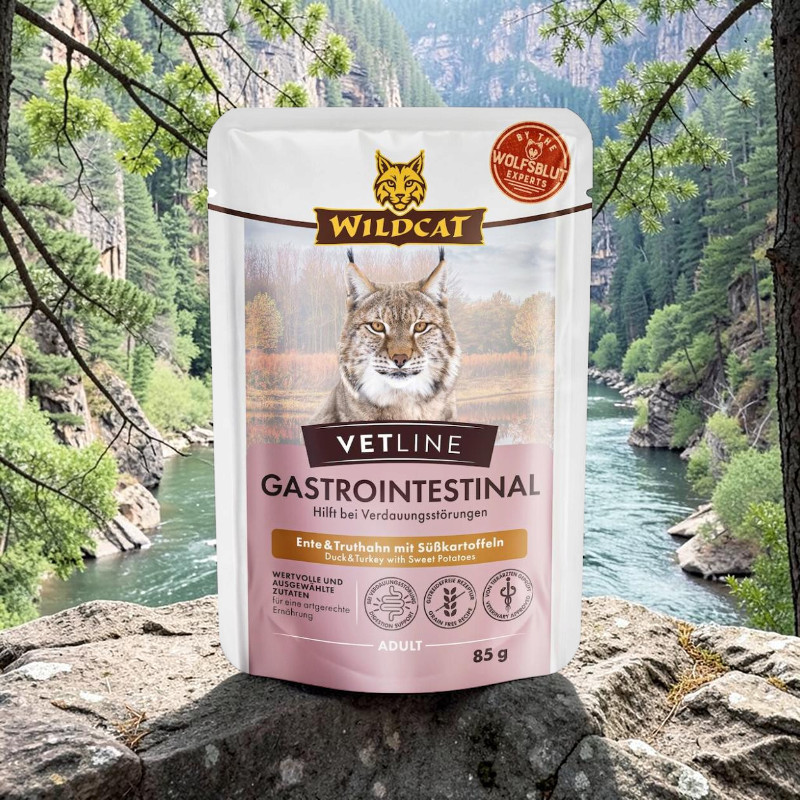
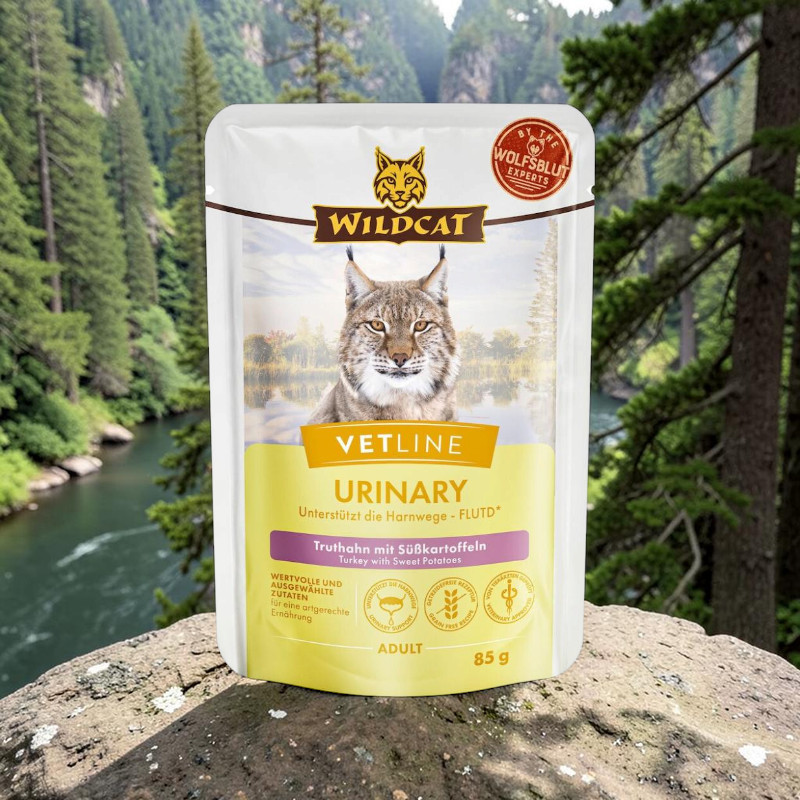
Product information "Wildcat Fel Adult Gastrointestinal Duck+Turkey"
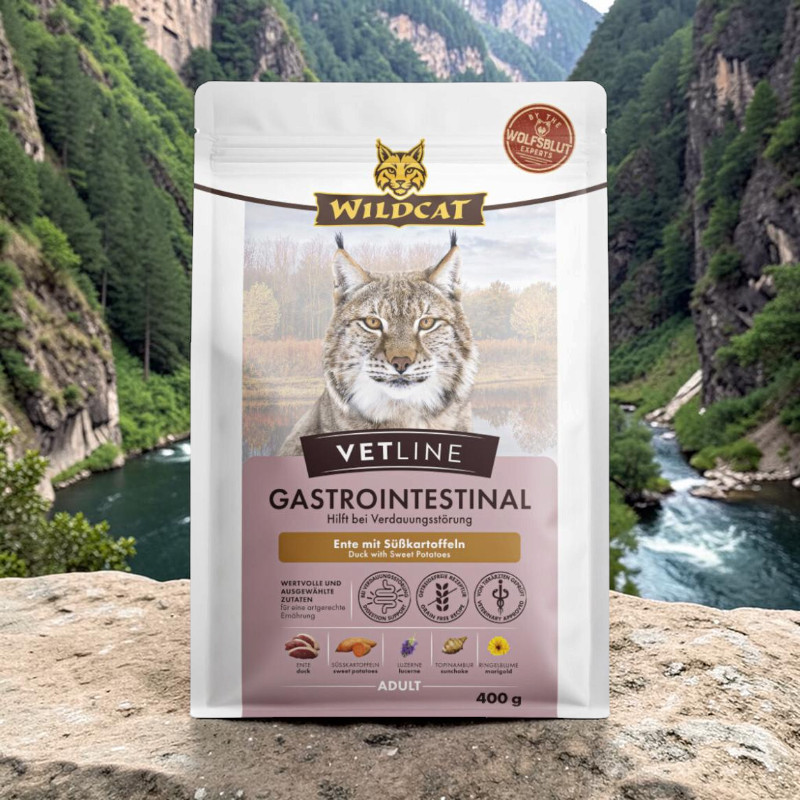
Wildcat VetLine Gastrointestinal Duck & Turkey
Wildcat VetLine Gastrointestinal with 33 % duck and 27 % turkey. Grain-free wet diet food for cats with digestive problems. In 85 g and 200 g.
Wildcat VetLine Adult Gastrointestinal Duck & Turkey is a specially formulated complete dietetic food for adult cats with digestive problems. The easily digestible formula supports nutrient absorption in cases of intestinal malabsorption and serves to compensate for inadequate digestion, for example in cases of exocrine pancreatic insufficiency.
A sensitive gastrointestinal tract can manifest itself in various ways in cats. Soft stools, diarrhoea, flatulence, vomiting or a reduced appetite can be signs of digestive problems. A specially formulated diet can help to relieve the digestive tract and ensure an adequate supply of nutrients.
The recipe contains 33 % duck and 27 % turkey as selected animal protein sources. These provide important amino acids and ensure a savoury flavour. Good food acceptance is particularly important for cats with a reduced appetite.
With a crude fat content of 5,2 % this wet food offers an adjusted fat supply. The selected, easily digestible ingredients are intended to support digestion and facilitate nutrient absorption.
A special feature is the increased electrolyte content. With sodium and potassium, the formula contains important minerals that are particularly significant in cases of digestive disorders with fluid loss. As a result, the food can help to support the supply of electrolytes.
In addition to duck and turkey, the recipe contains sweet potatoes and pumpkin as plant-based ingredients. The wet food is supplemented with Jerusalem artichoke, alfalfa and dried eggs.
The prebiotic fibres mannan-oligosaccharides (MOS) and fructooligosaccharides (FOS) contained in the food serve as a nutrient basis for certain beneficial gut bacteria. They can support a balanced gut flora and thus contribute to normal digestive function.
Salmon oil provides valuable omega-3 fatty acids, whilst the omega-6 fatty acids it contains contribute to normal skin and coat function.
With a moisture content of 78 % this wet food also contributes to daily fluid intake. This is particularly important for cats with gastrointestinal complaints, as larger quantities of fluid can be lost through diarrhoea or vomiting.
Wildcat VetLine Gastrointestinal was developed in collaboration with vets. The formula is grain-free and contains neither added maize nor gluten or soya.
The diet wet food is available in the practical sizes 85 g and 200 g. This allows the amount of food to be adjusted individually to your cat’s needs
Wildcat VetLine Gastrointestinal is a complete dietetic food for special nutritional purposes. Use should follow veterinary recommendation and does not replace medical treatment.
Your benefits at a glance
- Available in 85 g and 200 g
- Wet food
Complete dietetic food for adult cats
- With 33 % duck and 27 % turkey
- Easily digestible formula for gastrointestinal problems
- Adjusted fat content of 5,2 %
- Increased sodium and potassium content to support electrolyte supply
- With prebiotic fibres MOS and FOS
- Grain-free formula with 78 % moisture
Available sizes
Instructions for use
Wildcat VetLine Adult Gastrointestinal Duck & Turkey is a complete dietetic food for adult cats for the alleviation of intestinal malabsorption and for the compensation of inadequate digestion and exocrine pancreatic insufficiency.
Feeding should take place following veterinary recommendation. Persistent digestive problems can have various causes and should be clarified before longer-term diet feeding.
Recommended period of use
- For intestinal malabsorption up to 12 weeks
- To compensate for inadequate digestion initially 3 to 12 weeks
- In cases of chronic exocrine pancreatic insufficiency, lifelong feeding may be necessary
- Veterinary advice should be sought before use and before extending the feeding period
Feed change
- Unless otherwise recommended by a vet, the feed change should take place gradually over about 14 days
- In cases of acute gastrointestinal illnesses, an immediate switch to a therapeutic food may be advisable; in this case, follow the veterinary instructions
Feeding and storage
- If possible, divide the daily food amount into several smaller meals; this can make food intake easier for sensitive cats
- Serve the wet food at room temperature if possible and provide your cat with fresh drinking water at all times
- Opened packs should be stored well sealed in the fridge and used promptly
Important notes
- Not suitable for kittens
- Not suitable for pregnant or nursing cats
- Use only following veterinary recommendation
- Check food intake and stool consistency regularly
- Seek veterinary advice in the event of persistent diarrhoea or repeated vomiting
- If there is pronounced weakness, blood in the stool or signs of dehydration, consult a veterinary practice immediately
Zoo Roco Tip
Cats with sensitive digestion often benefit from a well-tolerated, consistent feeding routine. Particularly during and after gastrointestinal illnesses, it is important not to place unnecessary strain on the digestive tract through frequent feed changes or unsuitable treats.
Wildcat VetLine Gastrointestinal Duck & Turkey combines easily digestible ingredients with an adjusted fat supply and an increased electrolyte content. This allows the food to support veterinary treatment in certain digestive disorders from a nutritional physiology point of view.
Divide the daily food amount into several small portions. Especially in cats with a sensitive stomach or reduced appetite, this can make food intake easier.
Offer the wet food at room temperature if possible. Slightly warmed food develops a more intense smell and can therefore be more attractive for cats with little appetite.
Also ensure adequate water intake. In diarrhoea and vomiting, the body loses fluids and electrolytes, which is why there is a risk of dehydration.
During a vet-prescribed gastrointestinal diet, you should avoid offering additional treats or unsuitable feedingstuffs wherever possible. This can impair the effect of the balanced nutrition.
Observe your cat’s appetite, stool consistency and general well-being and have persistent complaints assessed by a vet.